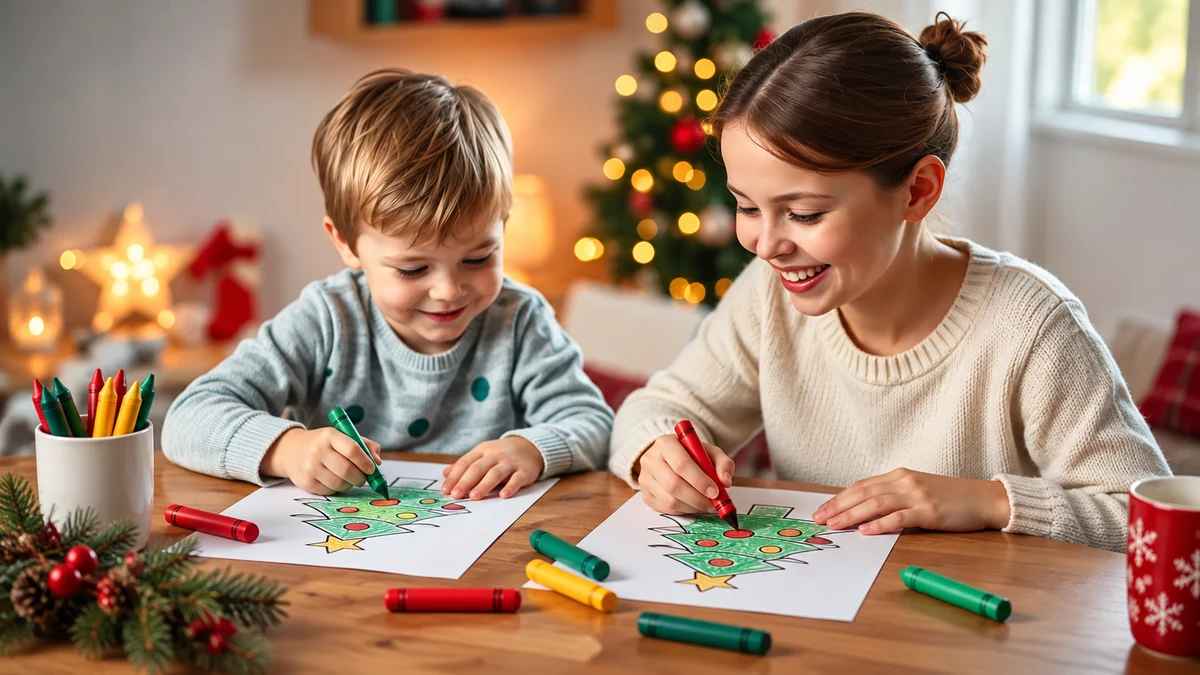
These 15 Christmas games offer practical ways for grandparents, parents and children to spend time together. Choose simple rules, adapt the materials and pace to the people taking part, and keep participation optional. Photo games, stories, crafts and gentle challenges can also become keepsakes to enjoy after the celebration.
Christmas games for three generations can turn a family gathering into a chance to share memories and try something playful together. Here are 15 ideas to adapt for your own guests, space and interests.
Why choose games for different generations?
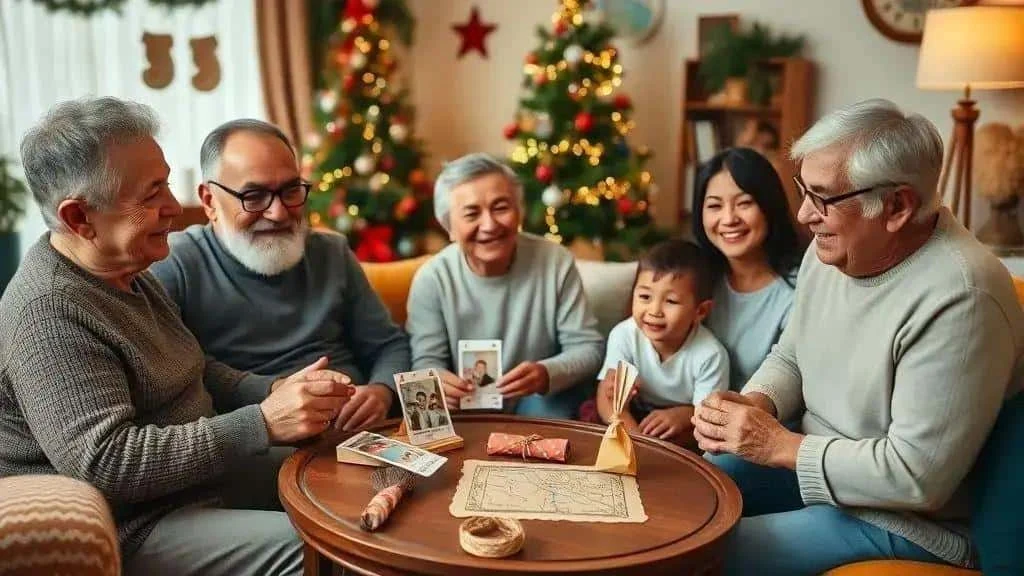
Shared games can give grandparents, parents and children an easy starting point for conversation. They need not involve elaborate equipment or a competition. What matters is choosing an activity people want to join and adjusting it when needed.
What different generations can share
- Family connections: familiar photographs and objects can prompt stories that younger relatives have not heard.
- Learning through play: children can practise describing pictures, taking turns and following simple rules with supportive adults.
- An enjoyable challenge: memory and guessing games offer something to think about. They are entertainment, not a treatment or a promise to prevent cognitive decline.
- Different ways to participate: adaptable rules let people contribute through speaking, drawing, choosing pictures or helping a teammate.
Start with a clear explanation and offer alternatives where useful. A spoken clue can also be written or illustrated. Practical examples include matching family photographs, guessing festive objects and following short picture clues.
Ask what would make the game comfortable rather than making assumptions based on age. Supportive chairs, easy-to-hold materials and a shorter round may help. Many games need only paper, pens and suitable everyday objects.
Simple preparation for grandparents, parents and children
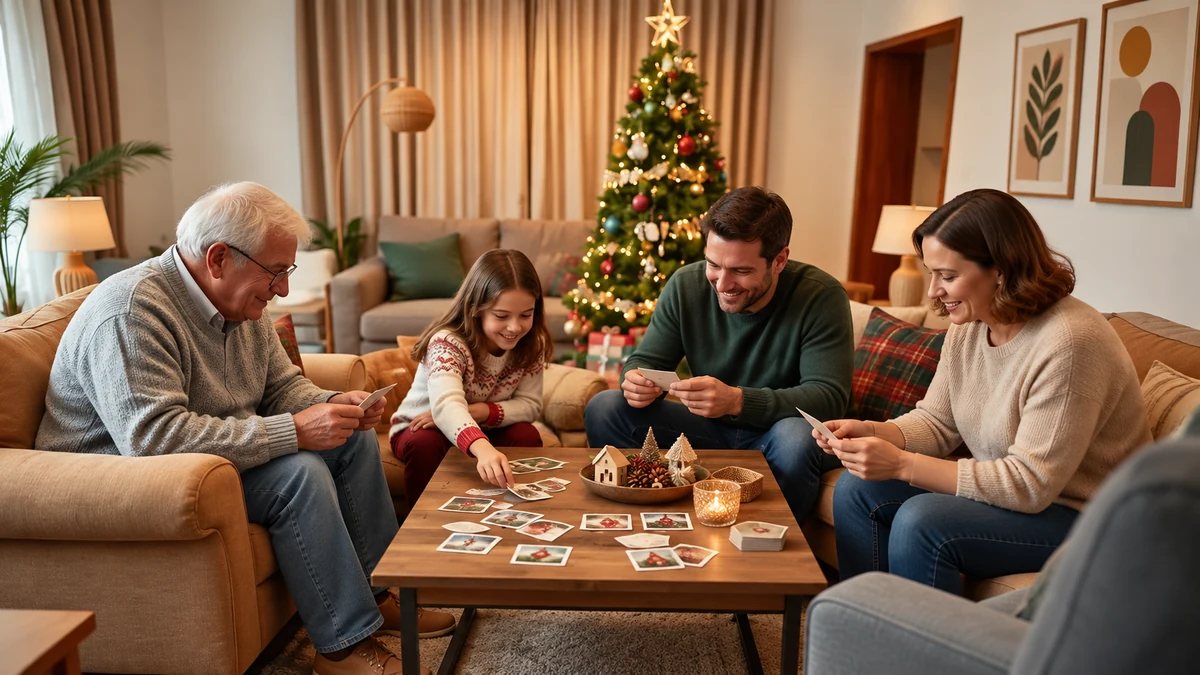
A few practical choices can make a gathering more welcoming for grandparents, parents and children without a large budget.
A basic games kit
- Comfortable seating: provide stable chairs and any usual supports people need.
- Clear, secure flooring: remove loose rugs, trailing cables and clutter. Do not lay a loose blanket on the floor as a substitute for a suitable non-slip surface. Source: Guy’s and St Thomas’ — preventing falls at home
- Family photographs and cards: use large prints or a tablet for matching and guessing games, with the permission of the people pictured.
- Simple craft materials: paper, coloured pens and age-appropriate stickers can become clues or prizes. Check reused materials for sharp edges and small loose parts.
- A clock or timer: use one if it makes the game easier to organise; leave out time limits if they make anyone uncomfortable.
- Small rewards: handmade certificates or suitable keepsakes can recognise participation without making food or tiny objects the default prize.
Adaptations and safety
- Useful lighting: make cards and pathways easy to see, avoiding glare.
- Comfortable sound levels: keep music low enough for conversation and offer quiet alternatives.
- Age-appropriate materials: keep small parts away from young children and follow toy age recommendations. Large cards are often easier to share. Source: Office for Product Safety and Standards — buying toys safely
- Flexible breaks: offer pauses and stop when anyone needs a rest. A fixed interval is not right for every group.
- Accessible placement: leave clear routes and put materials within comfortable reach.
Organising the space and timing
- Choose a clear activity area: allow room to sit and move without squeezing around furniture.
- Use a few activity stations: a photo table, a craft corner and a guessing game can give people choices. Moving between them need not be compulsory.
- Try short rounds: eight to twelve minutes can be a planning starting point, then adjust to the group’s enjoyment.
- Show the plan: a simple written list helps guests see what is available.
- Leave time for refreshments: a separate snack break gives everyone a chance to chat and eat without rushing a game.
Sharing the roles
- Host: explains the rules clearly and demonstrates a turn.
- Timekeeper: keeps an eye on the pace and suggests a break when useful.
- Memory keeper: writes down favourite moments or takes agreed photographs.
- Helpers: bring materials and support anyone who asks. Rotate roles so that helping does not exclude someone from playing.
Keeping participation enjoyable
- Invite stories: ask whether someone would like to share a memory connected to a photograph or object.
- Keep rules manageable: a short demonstration is often clearer than a long explanation.
- Be encouraging: recognise effort and good teamwork without putting people on the spot.
- Vary the pace: offer both quiet games and more animated options.
- Let people choose: joining, watching or sitting out should all be welcome.
15 games for three generations: rules and variations
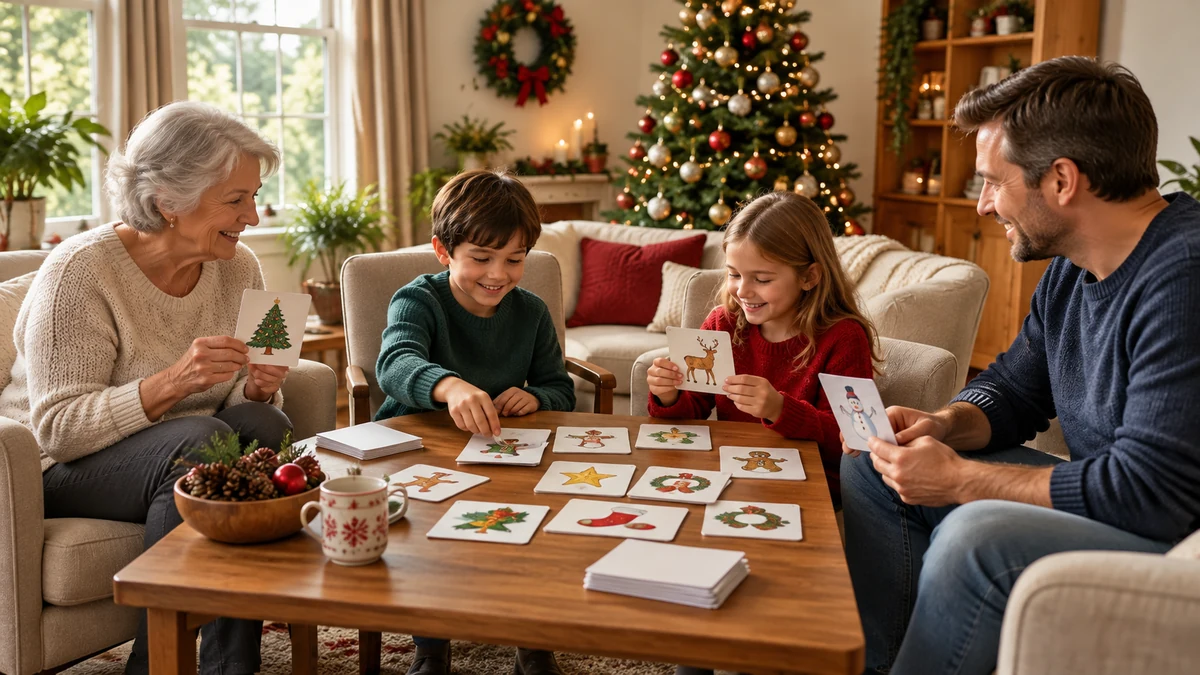
Family photo pairs: make two copies of each of twelve suitable family photographs and mount them on large cards. Shuffle them face down. Players turn over two cards at a time, keeping a pair when the pictures match.
- Variation: use a digital matching activity if everyone can comfortably see and operate the device.
- Adaptation: use fewer pairs, enlarge the pictures or keep the cards face up for a simple matching game.
Christmas charades
Write festive characters or objects, such as a tree, present or reindeer, on cards. One player acts out the idea while the team guesses. A one-minute limit is optional.
- Variation: use picture cards for children who are not yet reading.
- Adaptation: allow spoken clues or seated gestures for anyone who prefers them.
Christmas picture bingo
Create cards with festive pictures or Christmas foods. Draw matching pictures from a separate set and call them out. Agree whether a line or a full card wins before starting.
- Variation: offer handmade certificates or play cooperatively to complete everyone’s cards.
- Adaptation: show and describe each picture. Use pencils or suitable large markers, keeping small counters away from young children.
A treasure hunt with picture clues
Hide suitable objects in easy-to-reach places and prepare short written or illustrated clues. Mixed-generation pairs can solve them together.
- Variation: use family memories as clues, with enough explanation for younger relatives to take part.
- Adaptation: keep the route short, clear and on one level, or bring a set of clues to a seated player.
Decorating a tree together
Divide suitable decorations into baskets and let participants choose tasks. One person can select colours while another hangs ornaments within easy reach. Treat this as teamwork rather than a race.
- Variation: choose one colour or style for each section.
- Adaptation: decorate a tabletop tree or low branches. An adult should handle electrical lights and any higher work separately; do not ask children to climb or reach high as part of the game.
Christmas karaoke
Choose familiar songs and invite mixed-generation pairs to sing together. People can also listen or join only in the chorus.
- Variation: reveal a few title or lyric cues to help a willing singer recall the song, without making it an embarrassing test.
- Adaptation: offer large-print words and adjust the sound to the listeners’ preferences.
A simple decoration workshop
Set out paper, suitable glue and other age-appropriate materials. Pairs make a decoration at a comfortable pace, then share the idea behind it.
- Variation: invite each person to nominate something they like about another decoration.
- Adaptation: provide pre-cut shapes for anyone who finds scissors difficult to use.
Pass the present
Pass a light, soft object around a seated group while music plays. When it stops, the holder may share a memory or try a simple sound or gesture. Passing on the task is always allowed.
- Variation: use questions about favourite family traditions instead.
- Adaptation: pass slowly, keep the object within reach and avoid throwing.
A story chain
Someone begins a Christmas story with one sentence. Each person adds another sentence. Record it only if everyone agrees.
- Variation: introduce a familiar family object into the story.
- Adaptation: let people write, point to a picture, ask a partner to read or skip a turn.
Christmas drawing and guessing
Draw a festive word or phrase for teammates to guess. Use a large board or paper that the group can see.
- Variation: willing players can try their non-dominant hand, with no expectation of neatness.
- Adaptation: allow a verbal description or selection from picture clues instead of drawing.
A family memories quiz
Ask friendly questions about shared occasions, such as where a particular Christmas was spent. Give enough clues for people who were not there, and avoid sensitive or embarrassing subjects.
- Variation: include old photographs as clues.
- Adaptation: offer multiple-choice answers or solve the quiz as one team.
Drawing from a description
One person describes a festive object while another draws without seeing the object. Compare the picture afterwards. There is no need for a blindfold.
- Variation: pair a grandparent and child, then swap describing and drawing.
- Adaptation: keep the object visible if that makes the activity more comfortable, or use longer descriptions and extra time.
A seated sock-pairing relay
Place clean, brightly patterned socks on a table. Teammates take turns finding a pair and passing the next turn along. This keeps the playful relay idea without running or changing footwear.
- Variation: ask players to match colours or patterns rather than exact pairs.
- Adaptation: use fewer pairs, bring the basket within reach and leave out the timer.
A simple cooking activity in pairs
Choose a reliable biscuit recipe or a preparation activity suited to the group. Adults manage ovens, hot mixtures and sharp tools; children can measure or mix appropriate ingredients with supervision.
- Variation: decorate ready-baked biscuits and package a few as gifts, after checking dietary needs.
- Adaptation: offer a comfortable seated station and tasks that do not involve heat.
A memory circle with a familiar object
Pass around a safe, non-fragile object or its photograph. Invite each person to share a related memory, with no pressure to speak.
- Variation: collect agreed stories in a small booklet or audio recording.
- Adaptation: accept a short answer, written note or picture instead of a longer story.
Adapting games to different ages and physical needs
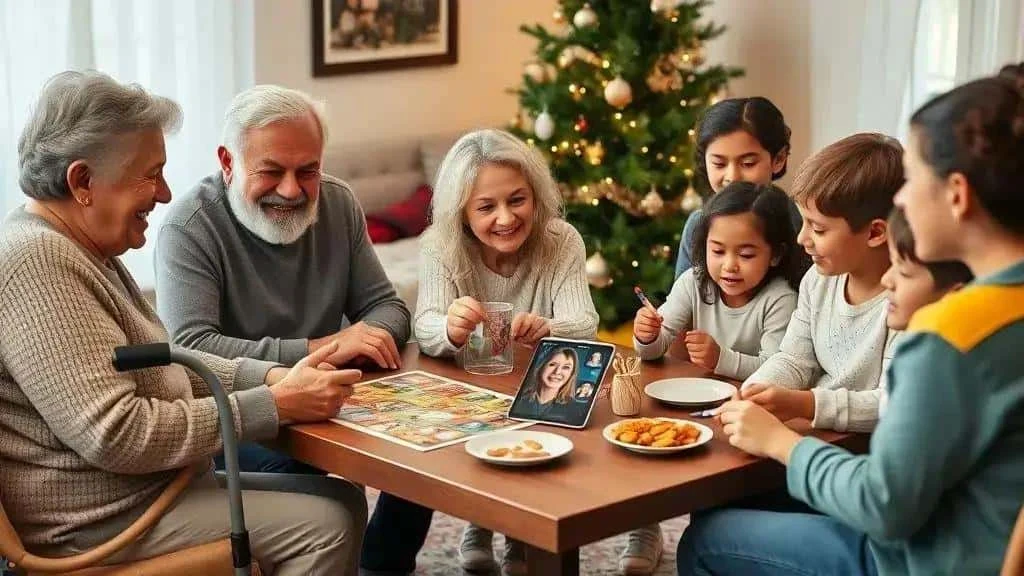
Small adjustments can make participation easier, but needs differ. Ask the people involved and offer alternatives rather than assuming one adaptation suits everyone.
Starting points for different age groups
- Younger children: use short explanations, a few clear choices and suitable materials, with adult supervision.
- Teenagers and younger adults: offer more challenging clues or a role in planning, if that appeals to them.
- Adults and older relatives: ask what they enjoy. Some may prefer lively challenges, others a story game or a comfortable seat.
Adapting to physical needs
- Limited mobility: bring activities to an accessible space, use stable seating and avoid tasks that depend on balance.
- Reduced vision: try large, high-contrast cards and offer spoken descriptions or a familiar zoom function.
- Hearing difficulties: provide written or pictured instructions, face the person when speaking and reduce competing noise.
- Grip or fine-movement difficulties: use larger, easy-to-hold pieces and allow a partner to move them when asked.
Simplifying rules without losing the fun
- Demonstrate a turn: show the game and check whether another explanation would help.
- Remove unnecessary steps: keep the central idea and reduce complicated scoring.
- Mix teams thoughtfully: pair people with complementary interests and preferences rather than assigning ability by age.
- Make help optional: let someone ask for assistance without a points penalty.
- Value cooperation: recognise working together as well as correct answers.
Accessible materials and equipment
- Large cards: use thick paper, clear print and good contrast.
- Visible markers: choose pieces that are easy to recognise and handle, and appropriate for the youngest participants.
- Familiar devices: a tablet, large-display timer or microphone may help if people are comfortable using it.
- Tactile options: suitable fabrics and textured objects can add another way to identify an item.
Comfort and safety
- Notice discomfort: stop or change the activity if someone feels tired, unwell or uneasy.
- Check small parts: keep unsuitable counters, loose decorations and accessible batteries away from young children.
- Keep routes clear: tidy materials before moving to the next activity.
- Ask before helping: respect personal preferences around movement, touch and participation.
- Respect privacy: ask before photographing or recording anyone and before sharing the result.
Turning activities into keepsakes or small products
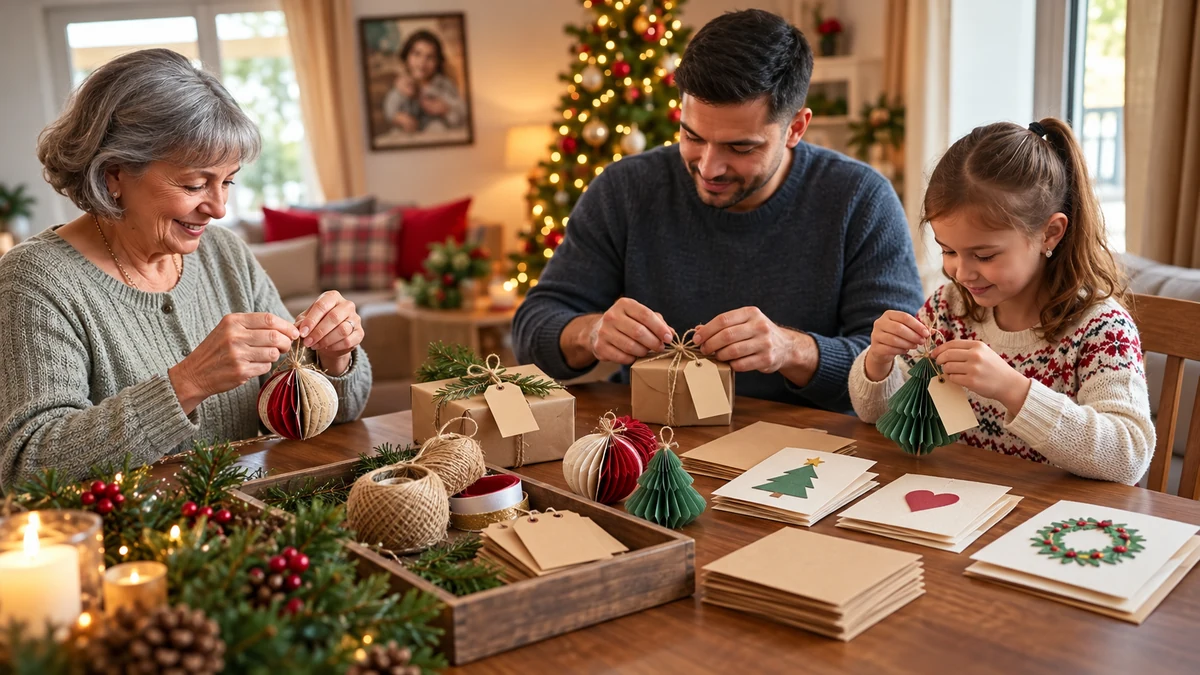
A game can leave behind a photo card, decoration or shared story. If you want to sell something inspired by the activity, treat that as a separate small project with realistic costs and the relevant safety requirements.
Keepsake ideas
- Personalised decorations: use photographs on sturdy card or suitable unbreakable ornaments. Keep decorative items distinct from toys and use materials according to their instructions.
- Cards and mini albums: turn approved family photographs into a small collection, comparing home-printing and print-shop costs.
- Decorated treats: package suitable biscuits in food-safe materials. Check each recipient’s needs; a lactose-free product is not necessarily safe for someone with a milk allergy. Source: Alder Hey — cow’s milk protein allergy
- Craft kits: include clear instructions and age-appropriate materials, with any relevant warnings.
- Handmade certificates: recognise something enjoyable about each person’s contribution.
Planning a small product range
- Choose a manageable idea: start with something you can make consistently.
- Make a sample: ask for feedback on appearance and usefulness, while recognising that family approval is not product-safety testing.
- Record materials: include quantities, prices and packaging.
- Set out the process: record the actual time needed rather than assuming every unit will be quick.
- Present it clearly: provide an honest description and any required product information.
- Calculate costs: include materials, labour, packaging, fees and other relevant costs before choosing a selling price.
- Start small: a limited trial or pre-orders may avoid unnecessary stock.
- Describe it honestly: use clear photographs and accurate details when sharing with potential buyers.
Packaging, pricing and sales channels
- Packaging: choose suitable protection and make recycling or handmade claims only when accurate.
- Illustrative calculation: £4 in materials plus half an hour valued at £15 per hour gives £11.50 before other costs. Adding a 40% mark-up gives £16.10. That is a mark-up on cost, not a 40% profit margin, and these figures are an example rather than a recommended price.
- Possible channels: local fairs, small shops or appropriate online listings may suit the product, subject to their rules and fees.
- Bundles: combine compatible items only if the price, packaging and any food information remain clear.
Workshops and shared experiences
- In-person sessions: plan materials, accessibility, supervision and any relevant insurance or venue requirements before charging participants.
- Online workshops: provide clear instructions and check the suitability of any materials sent to participants.
- Gift experiences: vouchers for a family workshop need clear booking, expiry and cancellation terms.
Good practice when making or selling
- Food responsibilities: use safe preparation and accurate allergen information. If starting a food business, check local requirements; UK guidance says to register with the local authority at least 28 days before trading. Source: Food Standards Agency — starting a food business at home
- Material safety: avoid small detachable parts for young children and do not describe a craft item as a safe toy without meeting the relevant requirements.
- Keep records: track costs, orders and feedback to see whether the project is worthwhile.
- Review honestly: improve quality and clarity without promising guaranteed income.
Bringing music, food and family memories into the games
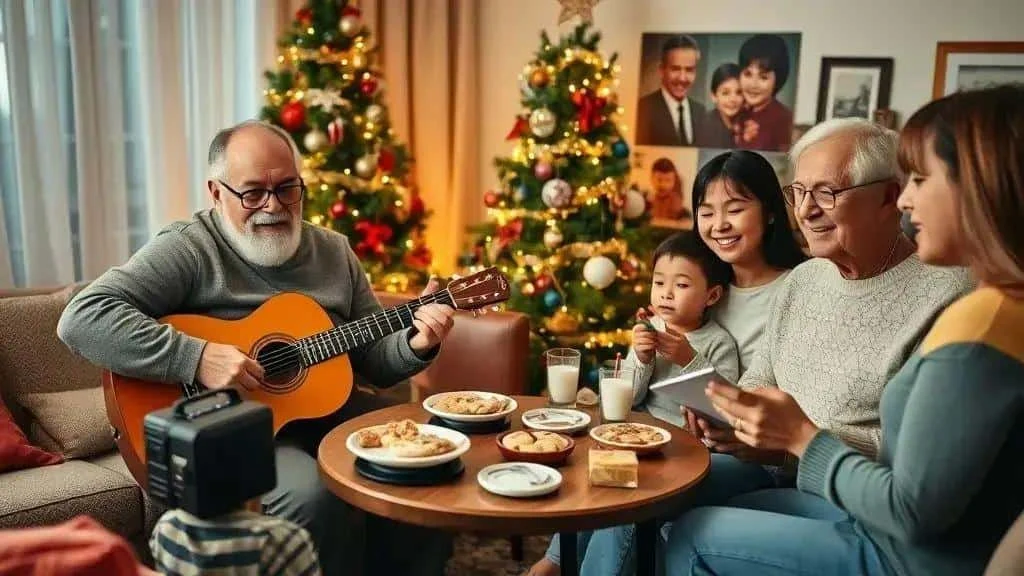
Songs, familiar flavours and photographs can give an activity a personal connection. Let guests choose what they would like to share.
Music across the generations
- A shared playlist: invite each person to suggest a few songs and explain their choices if they wish.
- Mixed-generation duets: offer familiar songs for willing pairs, with listening as an equally welcome option.
- Simple instruments: use age-appropriate instruments that are intact and suitable for the participants.
- Comfortable listening: ask about volume and reduce background noise. Slowing a recording is not a universal solution to hearing difficulties.
Food and shared memories
- Family recipes: invite relatives to explain a dish and its connection to a past celebration.
- A separate snack table: keep food organised and offer a seated eating break rather than combining snacks with active games.
- Suitable choices: ask about allergies and dietary requirements, check labels and prevent cross-contact. Do not assume that one free-from option suits every guest.
- Practical portions: serve food in an appropriate form for the people eating it and help young children eat seated and supervised.
Activities combining music, food and memories
- Songs and stories: play a chosen song and invite a short related memory, with no pressure to respond.
- Guess the family dish: show a photograph from an old celebration and offer clues about the food.
- Biscuit decorating: pair children with adults and use suitable ingredients and tools.
- A sound guessing game: identify recordings or safe instruments at a table. Use non-food rewards if eating would interrupt the game.
- A shared recipe booklet: collect clearly written family recipes and the stories people want to include.
Recording and sharing memories
- Short audio recordings: save stories with permission and agree who may access them.
- A family photo corner: provide a comfortable place to take photographs without obstructing the room.
- Memory cards: invite guests to write something they enjoyed and add it to a shared display.
A few final practical points
- Check dietary needs in advance: keep ingredient and packaging information available rather than relying on a decorative label alone.
- Keep food preparation clean: wash hands, use clean utensils and surfaces, and prevent cross-contact. Disposable gloves do not replace handwashing.
- Balance the pace: leave time for quiet conversation and breaks between more animated activities.
- Send home suitable keepsakes: package food safely with necessary information, or choose a photograph or craft instead.
Final thoughts
Christmas games can bring three generations together through simple ideas and shared interests. Flexible rules and thoughtful preparation matter more than a packed schedule.
Try the activities that appeal to your family, adapt them as you go and value the conversations as much as the game itself.
Thank you for reading. Visit the I Love Christmas blog for more festive activities, recipes and ideas for spending time together.
FAQ — Christmas Games for Three Generations
How can someone with limited mobility join in?
Offer seated games, stable comfortable chairs and materials within reach. Ask what helps and make moving, reaching or physical challenges optional.
What inexpensive materials can I use?
Printed photographs, card, pens and suitable reusable objects can cover many activities. A familiar phone or tablet may also be useful if everyone can see and use it comfortably.
How long should each game last?
A short round of around eight to twelve minutes can be a starting point, but follow the group’s interest and comfort. Take breaks whenever needed rather than treating a schedule as a rule.
How should I organise mixed-generation teams?
Let people choose roles and pair different interests or strengths. Offer help without a penalty and recognise cooperation, not just speed or correct answers.
Can the activities become keepsakes or products to sell?
Yes, photo cards, decorations and craft kits can become keepsakes. Selling them requires realistic costs, suitable materials and any applicable product or food-business requirements; income is not guaranteed.
How should I handle food activities?
Ask about dietary needs, check ingredients, keep preparation clean and prevent cross-contact. Choose suitable foods and supervise children. Lactose-free does not necessarily mean milk-allergy-safe, and gloves do not replace handwashing.
Sources and Further Reading
- Guy’s and St Thomas’ — preventing falls at home
- Office for Product Safety and Standards — buying toys safely
- Food Standards Agency — food allergies and intolerances
- Food Standards Agency — starting a food business at home
- Alder Hey — cow’s milk protein allergy