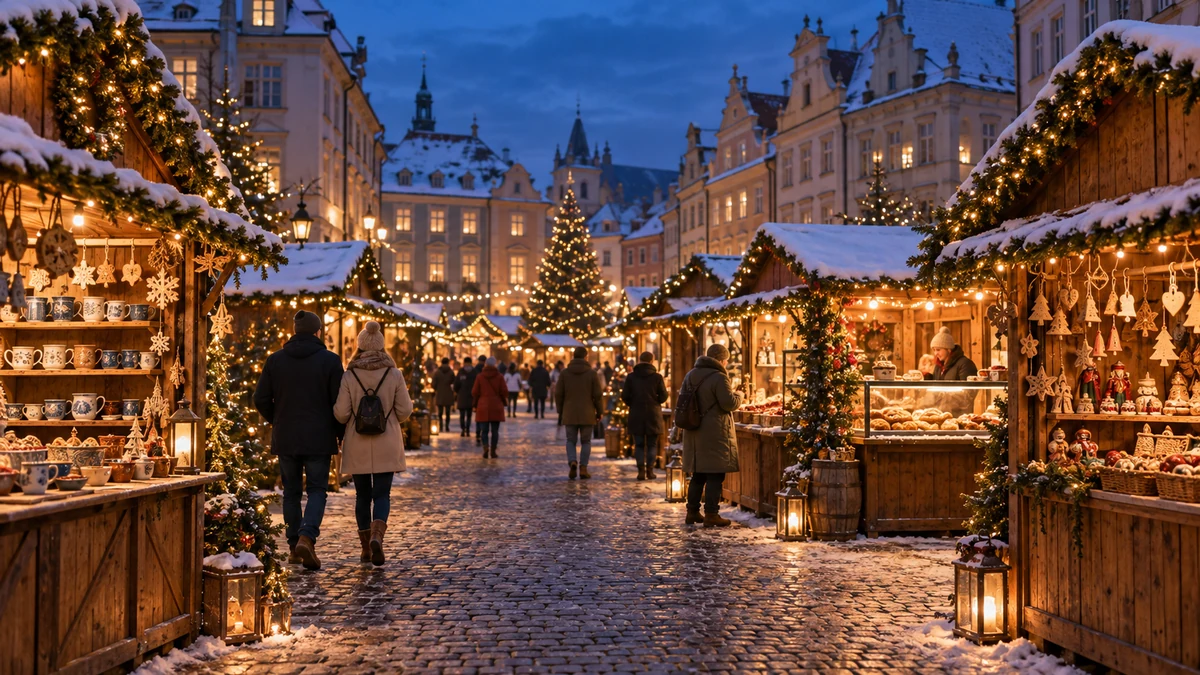
This 10-day Central European Christmas market itinerary links Prague, Vienna, Salzburg, Budapest and Bratislava over nine nights. It includes a suggested allocation of days, transport and accommodation advice, seasonal food, shopping and packing tips. Check the markets’ dates for your travel year and railway timetables before booking: this is an ambitious five-city route with a substantial transfer between Salzburg and Budapest.
Planning a Central European Christmas market trip? Picture illuminated squares, warm pastries and wooden stalls dressed with greenery. This guide offers a practical starting point for enjoying the markets without overlooking the time needed to travel between them.
Illustrations in this article are conceptual images, not documentary photographs or evidence of a particular historical event, destination, venue or access route.
Planning the route: cities and logistics

Decide how much time to give each city and identify the markets you most want to visit. Five cities in ten days means frequent hotel changes; if you prefer a gentler pace, leave out Salzburg and spend longer in the other stops.
- Prague — three nights: Old Town Square and Wenceslas Square are the main starting points. Allow two afternoons and a morning for markets and other sightseeing. Source: Prague City Tourism: Wenceslas Square Christmas Market
- Vienna — two nights: Consider the markets at Rathausplatz and Belvedere, with time for a café or a concert if the programme suits you. Source: Vienna Tourist Board: Christmas markets
- Salzburg — one night: The Christmas market on Domplatz and Residenzplatz has the cathedral and old town as its backdrop. Source: Salzburg tourism: Advent and Christmas markets
- Budapest — two nights: Look at Vörösmarty Square and the market by St Stephen’s Basilica. A separate riverside walk can fit around the food stalls and sightseeing. Source: Vörösmarty Classic Xmas: official market information
- Bratislava — one night: The compact old town is well suited to an afternoon and evening on foot, allowing for weather and accessibility needs.
How to divide the ten days
- Day 1: Arrive in Prague, check in and take a short orientation walk before your first evening market visit.
- Days 2 and 3: Explore Prague’s main markets, leave room for smaller neighbourhood events and include indoor breaks.
- Day 4: Travel to Vienna. Select a train that leaves enough time to check in and visit a market that evening; confirm the journey duration when booking.
- Day 5: Spend a full day in Vienna, combining markets with a café, museum or concert.
- Day 6: Take the train to Salzburg, check in and visit the old town market in the afternoon or evening.
- Day 7: Travel from Salzburg to Budapest. This is the longer transfer in the route and involves travelling back east; do not also plan village detours. Keep any evening outing optional.
- Day 8: Enjoy a full day in Budapest, with markets, local food and an optional thermal bath visit after checking admission and suitability.
- Day 9: Travel to Bratislava, leave your luggage at your accommodation and explore the centre.
- Day 10: Depart via your chosen airport or station. Any final shopping depends on your departure time and transfer arrangements.
Transport and connections
Compare intercity trains through the national rail operators and, if useful, an Interrail pass. A pass is not automatically cheaper: include seat reservations, the services covered and the conditions for your residence. Stations are not always beside the markets, and winter disruption is possible. Source: Interrail: current pass arrangements
- Timing: Check the actual timetable, changes and station names. Add time for hotel transfers, finding platforms and a sensible connection buffer.
- Luggage: Pack lightly. A manageable case is easier to carry on steps and move between stations and hotels.
- Alternative transport: If comparing a flight with a longer train journey, include airport transfers, check-in, baggage charges and the full door-to-door journey.
Where to stay
Choose accommodation near the old town or a convenient tram, underground or railway connection. Compare the total cost and travel time rather than assuming that a central room will always save money.
- Accommodation type: An apartment with a kitchen can help if you plan to prepare some meals.
- Booking: Compare options well ahead of popular December weekends and check cancellation terms before paying.
Practical ways to enjoy the markets
Visit around dusk for the lights, and try a quieter daytime visit where opening hours allow. Carry some local cash in small denominations as card acceptance varies. Check the currency for each stop rather than assuming that euros are accepted everywhere.
- Check the season’s opening dates and daily hours: some markets close before Christmas, while others continue afterwards.
- Look up neighbourhood events individually. Smaller markets may run only on selected days or weekends.
- Weather: Wear layers, waterproof footwear and gloves that let you handle your phone and purchases comfortably.
- Leave time to ask about local food and the makers behind the crafts, rather than treating every stop as a quick souvenir hunt.
Day by day: ten Christmas market stops
- Day 1 — Prague’s Old Town Square: Enjoy the square as the lights come on. You may find hot trdelník, a sweet spit-baked pastry, alongside craft stalls. Evenings can be busy, so choose a quieter visit if crowds are uncomfortable for you.
- Day 2 — More of Prague: Explore Wenceslas Square and check the tourist office’s listings for smaller neighbourhood markets. Ask where wooden ornaments or glass gifts were made if their local origin matters to you.
- Day 3 — A final day in Prague: Revisit a favourite market, explore another part of the city or allow time for an indoor attraction. Stay in Prague tonight, ready for the journey to Vienna on day four.
- Day 4 — Arrive in Vienna: After checking in, choose one market, such as Rathausplatz. Try Glühwein if you drink alcohol, or ask for an explicitly alcohol-free punch. Check local transport ticket and validation rules before boarding.
- Day 5 — Vienna’s other markets: Compare Belvedere, Spittelberg and Karlsplatz, choosing a manageable selection rather than rushing through them all. A café or a booked concert makes a useful break from the cold.
- Day 6 — Salzburg: Visit the stalls on Domplatz and Residenzplatz and explore the old town. If you want to visit Hohensalzburg Fortress, check its opening hours and access separately rather than relying on a late-night visit.
- Day 7 — Travel to Budapest: After the longer journey, keep plans simple. If you arrive in time, try lángos around Vörösmarty Square. The square is not a riverside market with Parliament immediately behind it; plan a separate river walk for those views.
- Day 8 — Budapest’s markets and optional baths: Visit the market at St Stephen’s Basilica and return to any stalls you missed. A thermal bath is optional: check the venue’s age rules, accessibility and visitor guidance before booking. Source: Advent Basilica: official market information
- Day 9 — Bratislava: Explore the old town and the Christmas markets around Main Square and Hviezdoslav Square, checking the current programme. Take café breaks and confirm opening hours for your specific date. Source: Visit Bratislava: Christmas markets
- Day 10 — Departure and final purchases: If time permits, collect a final gift or revisit a nearby stall. Leave a generous margin for packing, luggage collection and getting to your departure point.
Quick tips for each stop
- Payment: Keep small local notes and coins available, alongside a suitable payment card.
- Opening hours: Confirm each market’s dates and daily schedule before travelling there.
- Food: Choose small portions if you want to sample several specialities.
- Transport: Compare rail tickets in advance and check reservation requirements for the exact services you choose.
- Packing: Leave space for purchases and protect fragile gifts.
- Photography: Dusk can be atmospheric; a quieter daytime visit may make it easier to photograph details without blocking other visitors.
- Comfort: Wear warm layers and footwear with suitable grip. Cobbles, steps, ice and wet paving can make walking harder.
What to eat and drink
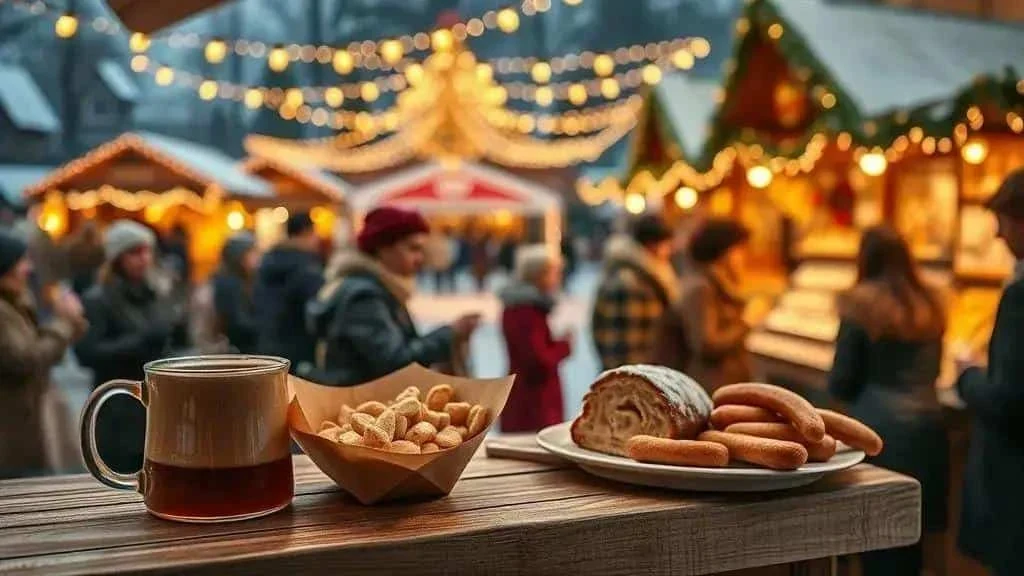
- Trdelník: This spit-baked sweet pastry is sold at many visitor-focused stalls in Prague, often with cinnamon sugar. Share a portion if it is large; its presence on a stall does not by itself establish a Czech origin.
- Lángos: Hungarian fried dough is often topped with garlic, sour cream and cheese. Check the dough, frying fat and toppings for your dietary needs; removing cheese alone does not make it vegan.
- Sausages and bratwurst: Grilled sausages may be served with mustard and bread. Choose a smaller portion if you want room for other dishes.
- Roasted chestnuts: A warm paper cone can be an easy snack while walking. Check any added ingredients and the price before buying.
- Glühwein or mulled wine: Spiced hot wine remains an alcoholic drink; heating does not reliably remove the alcohol. For an alcohol-free option, ask specifically for non-alcoholic fruit punch or another suitable drink.
- Apple strudel: A pastry filled with apple and often cinnamon, sometimes served warm with cream or custard. Ask about ingredients and accompaniments if you have dietary restrictions.
- Candied almonds: These crunchy sweets are often sold in gift bags. They contain nuts, and shared equipment may also introduce other allergens.
- Smoked cheese and cured meats: Sample small portions with bread if they suit your diet. Vegetarians may wish to ask about the cheese’s rennet as well as avoiding meat.
- Gingerbread and Lebkuchen: Decorated biscuits and spiced baked goods can make gifts. Check their ingredients, storage instructions and best-before date rather than assuming a long shelf life.
- Other local dishes: Soups, stews and potato pancakes offer savoury alternatives. Find out what is in them before ordering.
A practical approach to tasting
Buy smaller portions or share dishes where suitable. Ask stallholders about quieter periods rather than relying on fixed hours that may not match a particular market’s schedule.
Dietary requirements
- Vegetarian and vegan: Look for clearly described options and ask about stock, dairy, eggs, honey and cooking fats as relevant to your diet.
- Gluten-free: Ask about both ingredients and preparation. A food that is naturally free of gluten may still be unsuitable if it has been prepared on shared equipment.
- Nut allergies: Ask about nuts, peanuts and cross-contact. If the vendor cannot provide the information you need, choose somewhere else rather than guessing.
Ideas for a tasting selection
A simple snack: roasted chestnuts and a small hot drink, choosing an alcohol-free option if preferred.
A savoury selection: a sausage, a small cheese portion and apple strudel to finish, adjusted for your dietary needs.
A sweet selection: a shared trdelník, candied almonds and hot chocolate, if these ingredients are suitable for everyone sharing.
Useful habits
- Carry small notes and coins because card payment is not universal.
- Ask about ingredients and preparation whenever you have a dietary restriction.
- Try a speciality from the city you are visiting, while keeping portions manageable.
Accommodation, travel and shopping without the stress

Stay near the old town or a convenient public transport stop if that suits your budget. Being able to return for a rest or to drop off shopping can make a busy itinerary more comfortable.
- Early planning: Start comparing rooms a few months ahead where possible, especially for popular weekends. Availability and prices vary; early booking is not a guarantee of the lowest rate.
- Facilities: A kitchen may help with meals. Ask whether a hotel can store luggage before check-in or after check-out rather than assuming it will.
- Location: Check the actual walking route to the markets, including steps, hills and evening transport options.
Making transport work for you
Public transport can link stations, hotels and markets conveniently, but service frequency and punctuality vary. Compare individual fares with daily or regional passes for the journeys you will actually make.
- Tickets: Buying a ticket does not always activate or validate it. Follow the operator’s instructions for paper tickets, apps and passes before travelling.
- Intercity journeys: Check seat reservations, luggage arrangements and connection times. Compare the full journey rather than just the time shown for one train or flight.
- Useful apps: Download official local transport tools, offline maps and a translation tool before leaving.
- Luggage: Keep bags manageable and valuables with you. Check locker availability, size and operating hours before relying on station storage.
Shopping without the stress
Think about what you want to buy and how to carry it home. Ask for protective packaging for delicate items and retain receipts, whether for returns, customs or an eligible VAT refund.
- Payment: Keep some local cash available and check your card’s foreign transaction charges.
- VAT refunds: Eligibility depends on residence and the applicable rules. Check minimum purchase amounts, participating retailers, export deadlines and customs validation before buying; a receipt alone does not guarantee a refund. Source: Your Europe: VAT and tourist refunds
- Packaging: Use suitable protective wrapping, a sturdy container and clothing as extra cushioning where appropriate.
- Baggage allowances: Check size and weight limits before buying heavy objects. Before buying food to take home, check the current UK rules for your destination, particularly for meat and dairy products. Source: GOV.UK: bringing food into Great Britain
Security and purchase records
Keep essential documents and backup information secure, avoid carrying all your money together and photograph receipts where useful. Do not leave valuables unattended while browsing.
- Returns: Ask about the seller’s policy before buying and retain proof of purchase.
- Authenticity: Ask who made the item and where. For valuable pieces, obtain a clear description and appropriate documentation rather than assuming every market stall sells locally made goods.
- Travel insurance: Choose cover suited to the trip and read the limits and exclusions for health, cancellation, luggage and valuable purchases.
Before leaving for a market
- Carry: a secure wallet with small local notes, your phone and a useful offline map.
- Wear: warm layers and comfortable waterproof footwear.
- Bring: a folding shopping bag and a secure bag for essential documents.
- Check: opening hours, the forecast and the route back to your accommodation.
- Agree: a meeting point with your group in case you become separated.
Budget and lower-waste choices
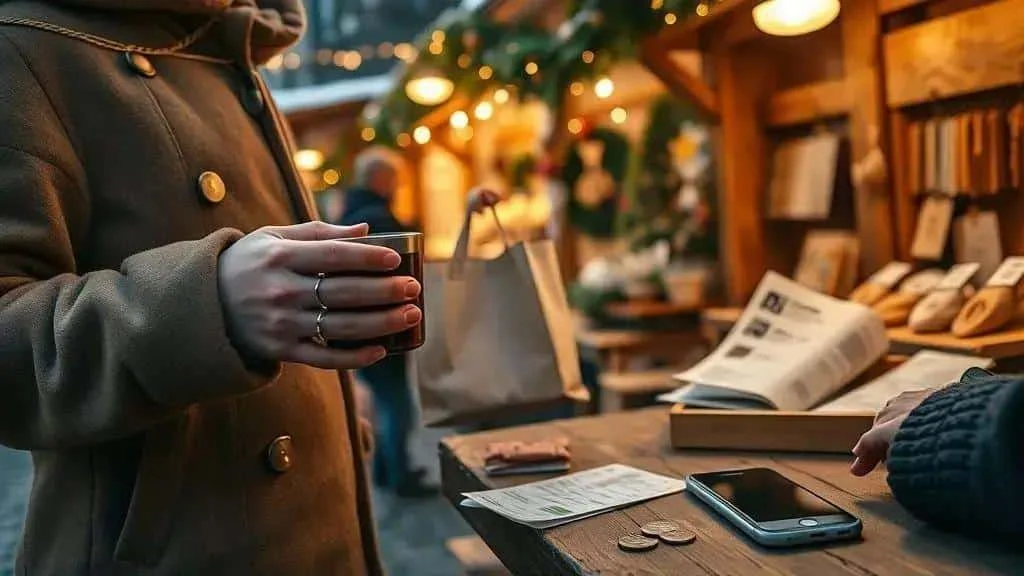
A multi-city Christmas trip needs a realistic budget. Planning purchases, transport and meals can help control costs, while reusable items and considered shopping can reduce avoidable waste.
Ways to manage costs
- Transport: compare advance fares and passes, including reservation fees. Buy a day ticket only when it makes sense for your planned journeys.
- Meals: share suitable dishes, check prices before ordering and compare nearby cafés or shops with market stalls.
- Accommodation: compare apartments with kitchens and hotels just outside the busiest areas, allowing for the cost and time of transport.
- Attractions: look for free events and check whether market entry, skating, concerts or other activities require separate tickets.
Practical lower-waste habits
- Bring a reusable cup if stallholders accept it, or use the market’s returnable mug scheme where available. A folding bag helps avoid extra shopping bags.
- Buying directly from local makers can support their work. Ask about materials and production rather than assuming that every handmade item has a smaller environmental footprint.
- Decline unnecessary wrapping where practical, while keeping enough protection for fragile goods.
- Choose gifts that will be used and enjoyed, considering their durability, size and weight.
Building a budget
- Daily allowance: estimate meals, local transport, activities and shopping from current prices. Budget separately for accommodation, intercity travel and getting to and from the region.
- Contingency: set aside a buffer for unexpected costs; around 10–15% can be a starting point, adjusted to your own circumstances.
- Payment: combine a suitable card with some local cash and allow for exchange or withdrawal charges.
- VAT refunds: treat any eligible refund as conditional, not as money you can rely on to fund the trip.
Thoughtful gift shopping
- Ask about the maker, materials and origin of glass, jewellery or food gifts. Keep useful product information with the receipt.
- Request suitable protective packing. If considering delivery home, confirm the shipping cost, insurance and any import charges before paying.
- Compare prices between stalls and respect displayed prices. Do not assume that bargaining is expected.
A budget-conscious packing checklist
- A reusable cup where accepted, plus a folding shopping bag.
- Small local notes and a card with suitable overseas fees.
- Offline maps and any travel tickets you have already booked.
- A small sturdy box or light protective wrapping for fragile purchases.
- A gift list focused on useful, manageable items and makers you want to support.
Final thoughts
Ten days can provide a varied introduction to Central Europe’s Christmas markets. This five-city route is busy, so check the longer transfers carefully and remove a stop if you would enjoy a slower pace. Leave room for food, rest and unexpected discoveries.
Thank you for reading. For more seasonal travel ideas, recipes and celebrations, visit I Love Christmas. Check the latest official event and transport information before setting off, and enjoy the markets at a pace that suits you.
Frequently asked questions about a 10-day Christmas market trip
When is a good time to visit Central European Christmas markets?
Late November and December are common market periods, but opening dates differ by city and event. Check the official dates for your travel year before booking, especially around Christmas and New Year.
How should I travel between the cities?
Compare intercity rail services and reservation requirements. Allow for local transfers as well as train time, and remember that the Salzburg-to-Budapest leg makes this a busy itinerary.
How much should I budget each day?
Build a budget from current accommodation, transport and food prices rather than relying on a single average. Separate daily spending from intercity tickets, flights and major purchases, and include a contingency.
How can I avoid problems with luggage and purchases?
Travel lightly, leave room for gifts and protect fragile items. Check baggage limits and food import rules, retain receipts and confirm VAT refund eligibility before assuming that a purchase qualifies.
What should I do about dietary restrictions?
Ask about ingredients and cross-contact. Vegetarian, vegan or gluten-free options may be available, but a dish’s appearance or name is not enough to establish that it is suitable.
What about insurance and personal security?
Arrange appropriate travel insurance and read its exclusions and limits. Keep documents and valuables secure, avoid leaving bags unattended and retain purchase records for any claim.
Sources and Further Reading
- Prague City Tourism: Wenceslas Square Christmas Market
- Vienna Tourist Board: Christmas markets
- Salzburg tourism: Advent and Christmas markets
- Vörösmarty Classic Xmas: official market information
- Advent Basilica: official market information
- Visit Bratislava: Christmas markets
- Interrail: current pass arrangements
- Your Europe: VAT and tourist refunds
- GOV.UK: bringing food into Great Britain