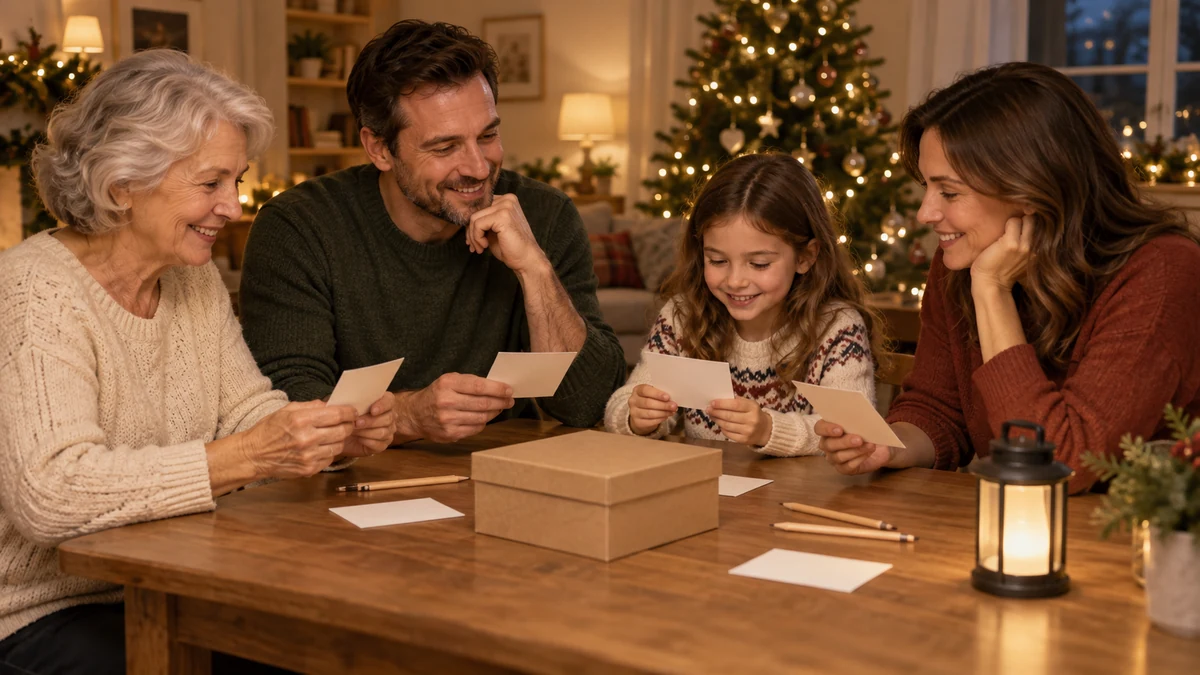
Family rituals for the New Year can be simple: collect memories in a jar, share a meal, write down a hope or make a small keepsake together. Adapt the activity to your family’s beliefs, ages and available time, using familiar materials and allowing everyone to choose how they participate.
Small family rituals for the New Year can give a celebration a personal meaning. These practical ideas are intended to be adapted and repeated in any year, without an elaborate budget or a perfect family gathering.
Illustrations in this article are conceptual images, not documentary photographs or evidence of a particular historical event, destination, venue or access route.
Getting started: creating a meaningful family ritual
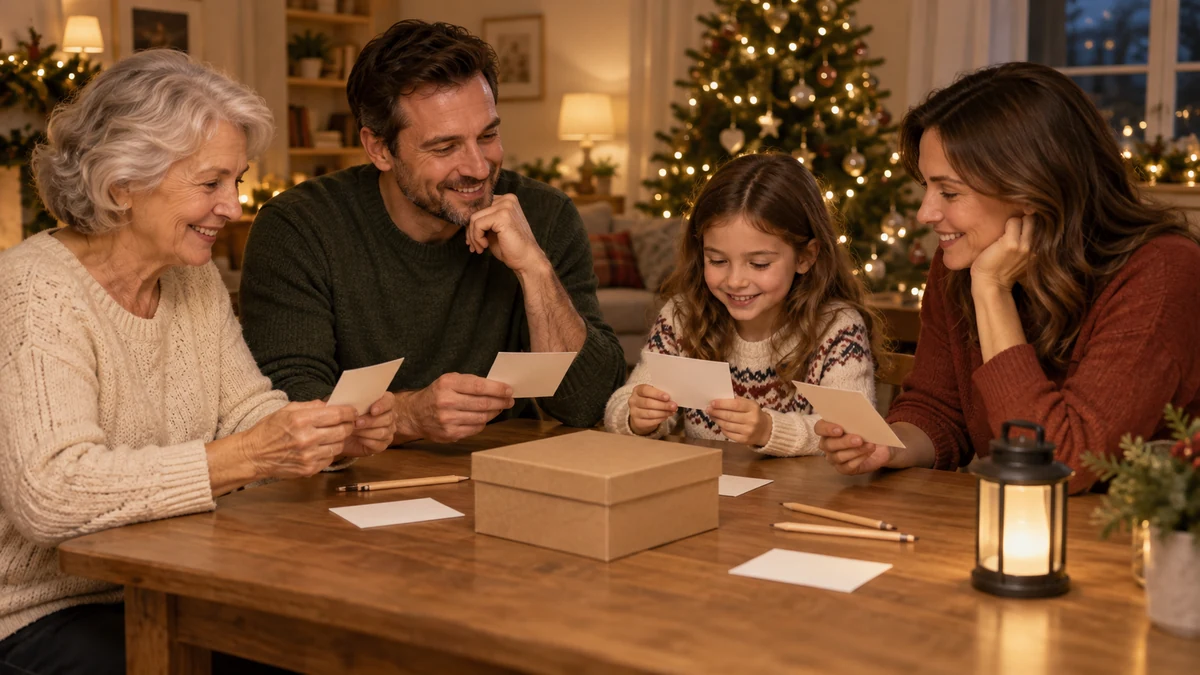
Begin with a purpose: spending time together, remembering the year or choosing a small intention for the next one. A clear focus makes it easier to select an activity that feels relevant.
Useful elements
- Time and frequency: agree a manageable length, perhaps 15–30 minutes, and whether you want to repeat it annually or at another interval.
- Place and atmosphere: use a comfortable corner, a table or another suitable space with enough light for the activity.
- A shared symbol: a memory jar, written messages or a small familiar object can become the centre of the gathering. LED lights can add atmosphere without an open flame.
- Participation: offer simple ways to contribute, including listening or helping with materials.
Planning step by step
- Invite the family: choose a workable time and explain the idea without making attendance or participation an obligation.
- Plan together: ask for suggestions and choose an activity that feels comfortable to those joining in.
- Share tasks: someone can prepare the table, another organise materials, and children can draw cards if they wish.
- Choose the keepsake: decide whether to use a memory jar, a time capsule or an envelope of wishes, and how it will be stored.
- Begin simply: start with a short welcome or quiet moment. Anyone who wants to can share a memory or intention; passing is always an option.
- Record with permission: a photograph, short audio recording or written note can preserve the occasion, but ask before recording or sharing anyone’s contribution.
Involving children
- Adapt the task: offer drawing, sticking pictures or reading a short message according to the child’s interests and abilities.
- Appreciate the contribution: a family-made stamp or playful certificate can be a keepsake, without making participation a competition.
- Use clear language: explain the idea with an example such as, ‘Let’s keep a memory we would like to remember.’
Practical care and using fewer materials
- Safety: supervise craft tools and prefer LED lights with secure battery compartments. Keep small parts and loose batteries away from children.
- Keep costs low: reuse clean paper and decorations rather than buying a new set of supplies.
- Make it flexible: prepare a short version for busy days and a longer one only if everyone wants it.
Simple rituals to try with children
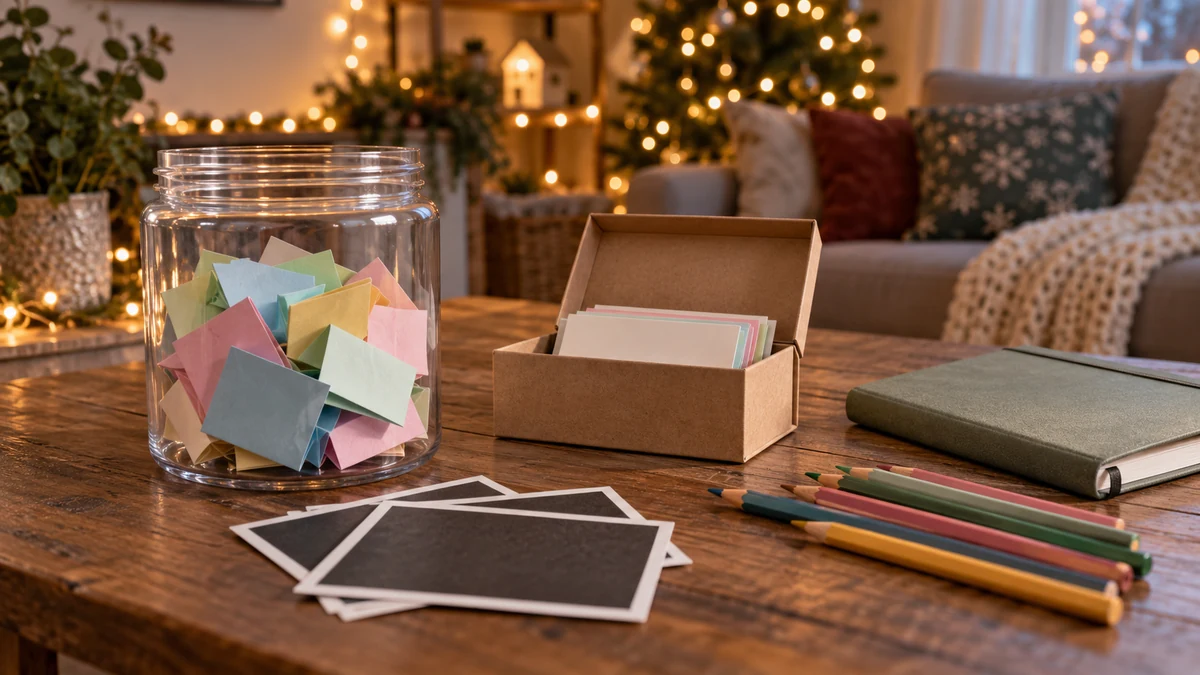
Choose a short activity children can understand and enjoy. Paper crafts, drawing and a few spoken words are often enough; there is no need to make the moment solemn or complicated.
Activity ideas
- A memory jar: invite each child to draw a moment they want to remember and place it in a container to open another year.
- A wish envelope: write or draw a hope on paper and put it in a decorated envelope or a suitable non-breakable ornament.
- A gratitude chain: write or draw on coloured paper strips, then join them into a chain with age-appropriate help.
- A lights moment: switch on suitable LED candles or torches for a short symbolic countdown, keeping battery compartments secured.
Adapting to different ages
- Pre-school children, roughly ages 3–5: offer drawing, simple sticking and help with putting an idea into words.
- School-age children, roughly ages 6–10: short written messages or a small organising task may appeal.
- Teenagers: invite them to suggest the format, write privately or lead a short part if they want to. Do not require personal goals to be read aloud.
Practical materials to reuse
- Turn clean wrapping-paper offcuts into cards or strips.
- Use a sturdy reusable container; choose a non-breakable one for young children rather than a glass jar they will handle.
- Choose age-appropriate, non-toxic craft materials and supervise scissors, including rounded-tip ones.
- Use suitable LED lights or small torches instead of real flames, with batteries secured and out of reach.
A short children’s activity
- Set up: spend a few minutes arranging a small table with the materials and comfortable lighting.
- Explain: describe what everyone can do in a few simple sentences.
- Make the keepsake: each child can draw, write or dictate something to place in the container or envelope.
- Share optionally: anyone who wants to can show a picture or say a few words. A brief contribution is enough.
- Add a shared gesture: switch on the LED lights together or hold a short quiet moment.
- Finish gently: an adult can say thank you, with a wave or hug only if each person wants one.
Keeping the activity enjoyable
- Keep the sequence short and familiar, and stop if the children have had enough.
- Rotate small tasks so willing participants can try different roles.
- Ask before taking photographs, and keep any agreed pictures with the memories rather than sharing them automatically.

A meal can provide a natural setting for remembering the year. A short, familiar activity may suit grandparents, parents and children, provided it respects different beliefs and comfort levels.
Planning the meal
- Accessible seating: offer supportive chairs and easy access to anyone who needs them, keeping everyone included in conversation.
- Easy serving: choose dishes that can be shared comfortably, with appropriate portions and assistance where wanted.
- A comfortable setting: gentle background music, clear lighting and simple decorations can work well; keep noise low enough for conversation.
- Dietary needs: ask about allergies and other requirements beforehand, retain ingredient information and prepare suitable alternatives carefully.
A moment of prayer or thanks
Keep a prayer or expression of thanks brief and optional. A contribution of around 30–60 seconds may be enough, but silence is equally welcome. Different families might prefer:
- A religious moment: a short prayer led by someone who wishes to do so, without requiring everyone to join.
- A secular moment: a little quiet followed by optional reflections on the year.
- A shared alternative: a piece of music or a short welcoming message that guests can interpret in their own way.
Simple table rituals
- A welcome: begin with a shared greeting or another gesture everyone is comfortable with; holding hands is optional.
- A memory: invite guests to share a brief moment from the year, with no expectation that every memory must be cheerful.
- A word of thanks: anyone who wishes can finish a phrase such as, ‘I am grateful for…’
- A reading or blessing: choose a short passage or prayer that suits the group, making participation voluntary.
- A toast: offer drinks appropriate to each guest, including children and people who do not drink alcohol.
Sharing roles across generations
- Children: offer small tasks such as placing napkins or showing a drawing, if they would like to help.
- Teenagers: ask whether they would enjoy choosing music or recording an agreed moment, rather than assigning them a role automatically.
- Older relatives: invite a recipe, story or remembered custom without putting anyone on the spot.
Keeping the tradition going
- A jar of thanks: collect optional notes and agree which may be read at the next gathering.
- A brief record: take photographs or audio only with permission and without interrupting the conversation.
- Review together: afterwards, ask what people enjoyed and what could be simpler next time.
Creative activities and keepsakes for the year
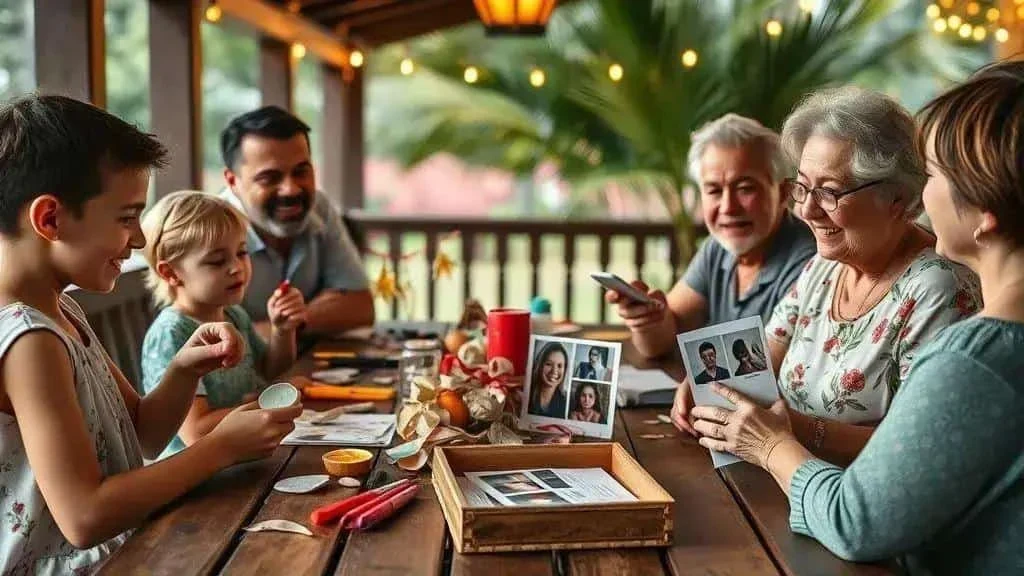
A few small objects can help preserve memories without turning the activity into a large craft project. Keep what matters to your family and let the format change over time.
Simple keepsake ideas
- Memory container: collect drawings and notes about moments people would like to remember.
- Time capsule: gather small dry keepsakes, photographs and messages to open on an agreed date.
- Photo display: peg a few agreed photographs to a safely positioned string, away from young children’s reach.
- Intention cards: write a manageable hope or goal for the coming year, keeping private contributions in their own envelopes.
- Personalised bookmarks: let children draw on reused sturdy card for something the family can use afterwards. Lamination is optional and unnecessary for a simple paper keepsake.
Materials
- A clean reusable container, decorated simply; use a non-breakable version for children.
- A cardboard box, lined with clean reused paper if desired.
- String, pegs and photographs, kept away from young children when not supervised.
- Kraft or reused card and coloured pens.
- Suitable scissors, non-toxic glue and tape, used according to age guidance.
Making a memory jar or container
- Prepare the container: clean and dry it thoroughly. An adult can use a glass jar, while a sturdy box or non-breakable tub is better for young children to handle.
- Set out materials: provide paper and suitable pens or crayons, with help for anyone who needs it.
- Write or draw: invite a short memory or picture. Nobody has to explain a private contribution.
- Add the notes: fold them and place them inside, sharing aloud only by choice.
- Close and label: note the intended opening date and store the container somewhere dry and safe.
Making a time capsule
- Choose a box: use sturdy cardboard or a clean tin with no sharp edges.
- Choose the contents: add photographs, drawings, written hopes and a shared note; avoid food, damp items or batteries.
- Add instructions: write down when to open it and who will look after it.
- Close and decorate: seal the box with suitable tape if you wish.
- Store it: place it in a dry cupboard and add a calendar reminder.
Keeping it manageable
- Keep it enjoyable: offer a short session and extend it only while people remain interested; 20–40 minutes is an optional planning range, not a requirement for children.
- Offer choices: let each person select a comfortable role or simply watch.
- Record lightly: agree any photographs or video beforehand and avoid recording private messages.
- Reuse supplies: clean paper and existing decorations can reduce purchases and waste.
- Agree a return date: decide when to reopen the keepsakes, while allowing plans to change.
Lower-cost rituals with less waste
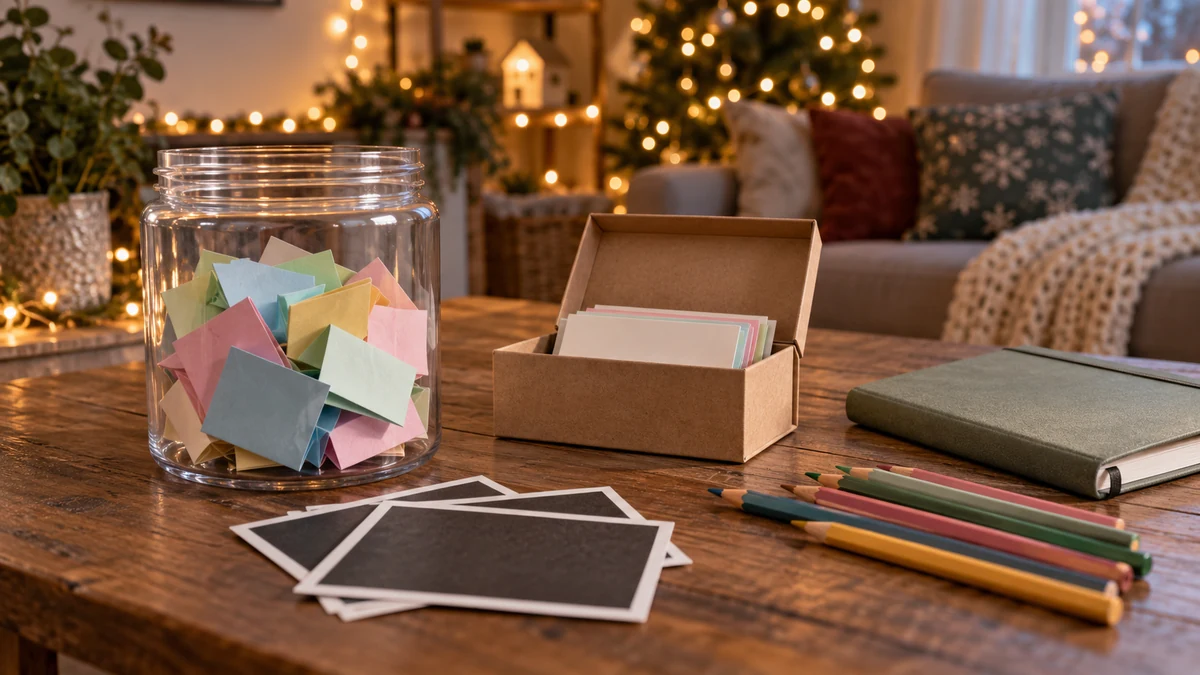
Start with what you already have. Reuse is often more practical than buying a new set of supposedly sustainable craft materials for a single evening.
Useful materials to reuse
- Existing containers can hold memories or savings; choose a safe type for the intended users and do not put lights into a container unless their instructions permit it.
- Reused or recycled paper works for cards, paper chains and labels.
- Ribbon and string from previous packaging can decorate a box or envelope.
- Natural decorations such as suitable pine cones or fallen leaves may be useful where collecting them is permitted. Avoid sharp, toxic or mouldy materials.
- Existing LED candles can be reused, with secure batteries and appropriate disposal when they no longer work.
A simple low-waste activity
- Choose a focus: remembering the year, saying thanks or setting one small intention.
- Gather supplies: arrange the container, clean paper and pens you already have.
- Write or draw: invite a memory, hope or word of thanks and fold the paper.
- Collect the notes: place them in the container, with private notes kept separate if requested.
- Mark the moment: switch on a suitable LED light or share a short quiet pause.
- Keep a record if wanted: take an agreed photograph or note, then put the materials away for reuse.
Saving money
- Share spare craft materials with relatives or neighbours where useful.
- Reuse decorations from earlier celebrations rather than buying new ones for every activity.
- Choose keepsakes with an ongoing purpose, such as bookmarks or reusable storage boxes.
- Prepare only the materials you expect to use, keeping the activity short enough to remain enjoyable.
Quick versions for busy households
- Five minutes: each willing person adds a note to a ready-prepared container and shares a few words if they want to.
- Ten minutes: write or draw an intention, switch on an LED light and make a simple toast.
- A weekly version: add an optional note each week and open the collection at the end of the year.
Practical sustainability and safety
- Lighting safety: keep real flames away from children and craft materials. LED lights avoid an open flame but still require secure battery compartments and appropriate use.
- Explain your choices: show children how reusing paper or a box avoids buying another item, without claiming that every natural or recycled material has no environmental impact.
- Keep it useful: reuse supplies afterwards and adjust the activity if it begins creating clutter rather than meaningful memories.
A tradition that fits your family
A meaningful New Year ritual can be brief, inexpensive and flexible. Shared time matters more than a polished craft or a compulsory round of cheerful reflections.
Try a memory container, a meal with optional thanks or a small creative activity, adapting it to your household’s needs and budget.
Thank you for reading. Share your ideas if you wish, and visit the I Love Christmas blog for more seasonal inspiration.
FAQ: family rituals for the New Year
How can I keep children interested?
Offer a short practical task, such as drawing or adding a note, with age-appropriate help. Allow them to stop or watch rather than insisting on a fixed session length.
Should I use candles with children?
Prefer suitable LED candles or torches with secured battery compartments. Keep loose batteries and small parts out of reach; avoid open flames around children and craft materials.
What can go in a memory jar or time capsule?
Dry notes, drawings, agreed photographs and small suitable keepsakes. Keep private messages private, and avoid food, damp materials or batteries in a stored time capsule.
How can I reduce cost and waste?
Use clean paper, existing boxes and decorations you already own. Choose safe containers for children and keep useful materials for the next activity rather than buying disposable supplies.
How often should we repeat the ritual?
Annually may suit a New Year tradition, while a short weekly or monthly version may appeal to some households. Agree a rhythm that feels welcome, without turning it into an obligation.