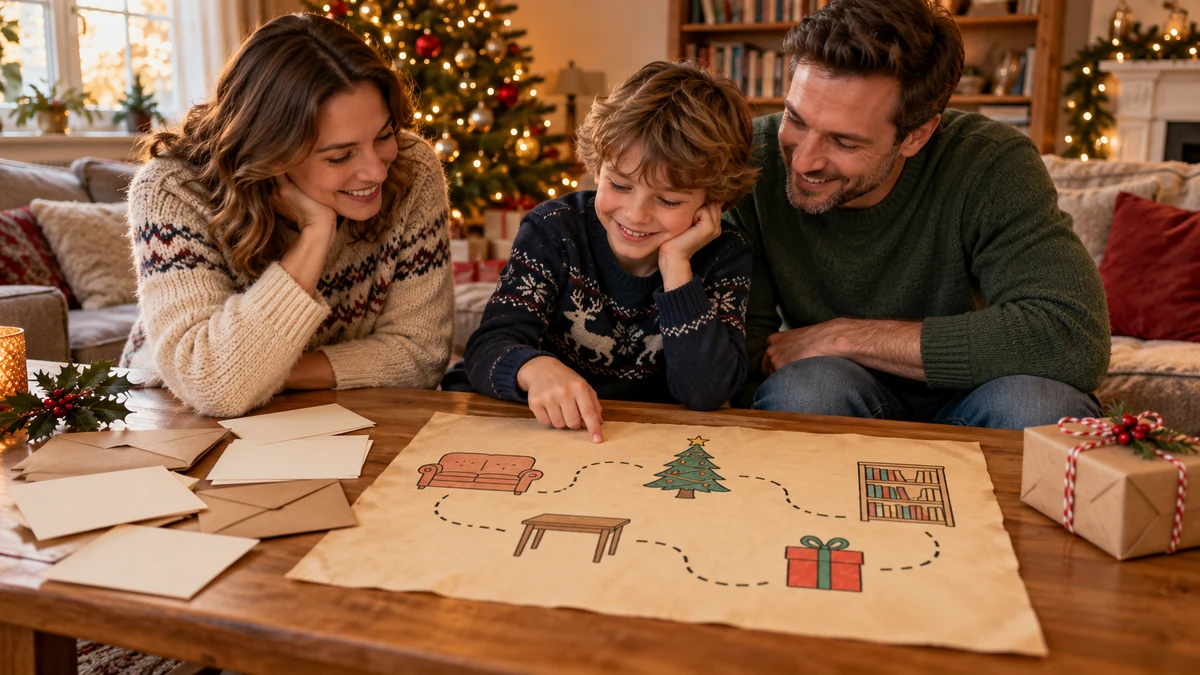
This adaptable Christmas treasure hunt guide covers safe spaces, clue sequences, ideas for different ages, materials, prizes and a setup checklist. It also outlines things to consider if you want to develop your own party activity service.
A Christmas treasure hunt at home can turn an ordinary afternoon into a festive adventure, with simple clues, a homemade map and a shared surprise at the end. Here are practical ways to organise it around your family’s ages, available space, time and budget.
Illustrations in this article are conceptual images, not documentary photographs or evidence of a particular historical event, destination, venue or access route.
The pictures illustrate a homemade game; they are not printable playing cards or a downloadable game set. Follow the instructions to create and check your own cards and route.
Quick Planning: Aim, Space and Duration
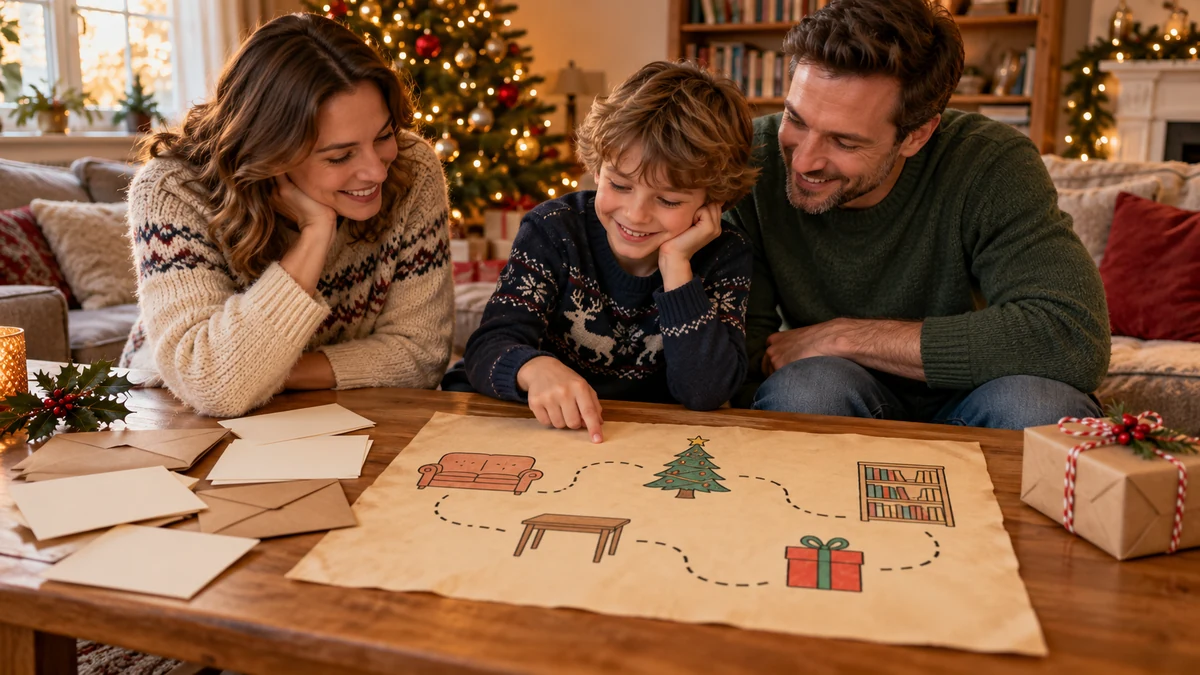
Start by deciding what you want from the activity: entertainment, learning or a surprise. Choosing your aim, space and timing before writing the clues makes the hunt easier to organise.
Decide on the Aim
Your aim shapes the game. For young children, choose short visual clues. For teenagers, try riddles and simple challenges. Think about whether you want laughter, mystery or cooperation.
Choose the Space
Divide your home into safe, accessible zones. Consider:
- Clear areas in the sitting room or hallway; use a kitchen only if cooking has stopped and an adult has checked it.
- Bedrooms only with the household’s permission. Keep balconies, stairs and unsafe storage areas out of bounds.
- Outdoor spaces only when conditions are suitable and an adult can supervise throughout.
Set the Duration and Pace
Choose an approximate length and a suitable number of clues. These are planning suggestions, not fixed rules:
- Around 15–20 minutes: four to six straightforward clues.
- Around 30–45 minutes: seven to ten clues mixing small tasks and riddles.
- An hour or more: consider this only for groups who enjoy a longer game, with breaks and opportunities to finish early.
Number of Clues and Difficulty
Adapt the hunt to the people taking part:
- Ages 3–6: picture clues and arrows, with one or two simple steps and close adult guidance.
- Ages 7–12: short riddles and gentle activities; start with three to six clues and extend if the group wants more.
- Teenagers and adults: written puzzles, simple codes and creative tasks. Use the occasional false lead only if everyone enjoys that style of game.
Suggested Setup Schedule and Checklist
A short schedule helps you organise the final preparations:
- 20–30 minutes beforehand: put the prize in place and hide the final clue.
- 15 minutes beforehand: position the other clues and walk through the route.
- Five minutes beforehand: gather everyone and explain the boundaries, rules and how to ask for help.
Essential checklist:
- Printed or handwritten clues on sturdy paper
- Pens, removable tape and card envelopes rather than loose plastic bags
- Age-appropriate prizes or keepsakes
- A map or list of permitted areas
- A clock or timer, if timing adds to the fun
Quick Ways to Save Time
Reuse clue templates and number their backs. Keep hiding places reachable without moving furniture. Test the sequence yourself and prepare alternatives in case someone discovers a clue too early.
Creating Imaginative Clues for Different Ages

Variety keeps a treasure hunt interesting. Combine pictures, small tasks and short puzzles, choosing formats that suit the group.
Clues by Age Group
- Ages 3–6: use familiar pictures, colours and large objects. Try a photograph of a teddy, securely fixed floor arrows or large puzzle pieces that reveal the next location.
- Ages 7–12: introduce simple riddles, ready-cut picture puzzles, symbol maps or optional activities such as singing a song to receive the next clue.
- Teenagers and adults: try letter-substitution codes, clues that need decoding before they reveal a place, or team puzzles that encourage collaboration.
- Mixed-age groups: give younger players a picture clue and older players a riddle that lead to the same place.
Useful Formats and Materials
Choose items that are easy to handle and sturdy enough for the activity:
- Card or thick paper for the clues.
- Numbered envelopes to organise the sequence.
- Coloured labels and removable tape that will not damage surfaces.
- Sturdy card sleeves for protection indoors; avoid loose plastic bags around young children. Source: Child Accident Prevention Trust: preventing suffocation
- Large, age-appropriate props such as a cardboard key or an oversized picture token. Keep small parts away from children who may put them in their mouths. Source: Child Accident Prevention Trust: choosing safe toys
What Makes a Clue Work?
- Keep it clear: use words and pictures the players can understand.
- Give a next step: each clue should point to a particular action or place.
- Balance challenge with progress: place easier clues between more demanding puzzles.
- Offer help: prepare a hint for anyone who gets stuck.
Examples to Adapt at Home
- For ages 3–6: hand over a picture of the Christmas tree with “Look where the presents wait”. Put the next clue beside the presents, clear of lights, cables and breakable decorations.
- For ages 7–12: try “I have cushions, but I am not a bed. We sit here when stories are read.” The answer is the sofa; place the next clue on a cushion without asking anyone to move the furniture.
- For teenagers: shift each letter forward by one to make a code. “BOOK” becomes “CPPL”; tell players to move each letter back one place. Identify the intended book with a coloured bookmark on a reachable shelf.
- Optional sensory clue: an adult can offer a familiar, mild scent such as a closed spice jar opened briefly under supervision, with a picture clue leading to the kitchen table. Skip scents for anyone with allergies or sensitivities; do not use essential oils or ask children to taste anything.
Adjusting Difficulty and Including Everyone
Make the challenge flexible:
- Prepare easy, medium and harder versions and let the team choose.
- Offer large, high-contrast images, spoken clues or tactile alternatives according to each participant’s preferences. Do not rely on colour alone.
- Choose cooperation or friendly competition. In a cooperative game, shared encouragement or a large picture token at each stage can mark progress.
Hints and Ground Rules
Explain the permitted areas, adult supervision and any use of devices before starting. You could offer:
- One spoken hint at each stage.
- An optional “help” card. If you use scoring, agree a small adjustment in advance, but never penalise someone for an accessibility need.
Test and Adjust
Walk through the hunt alone or with a volunteer. Check the timing, whether each clue has a clear answer, and whether the route stays unobstructed. Note what works for another occasion.
Setting Up the Hunt Step by Step
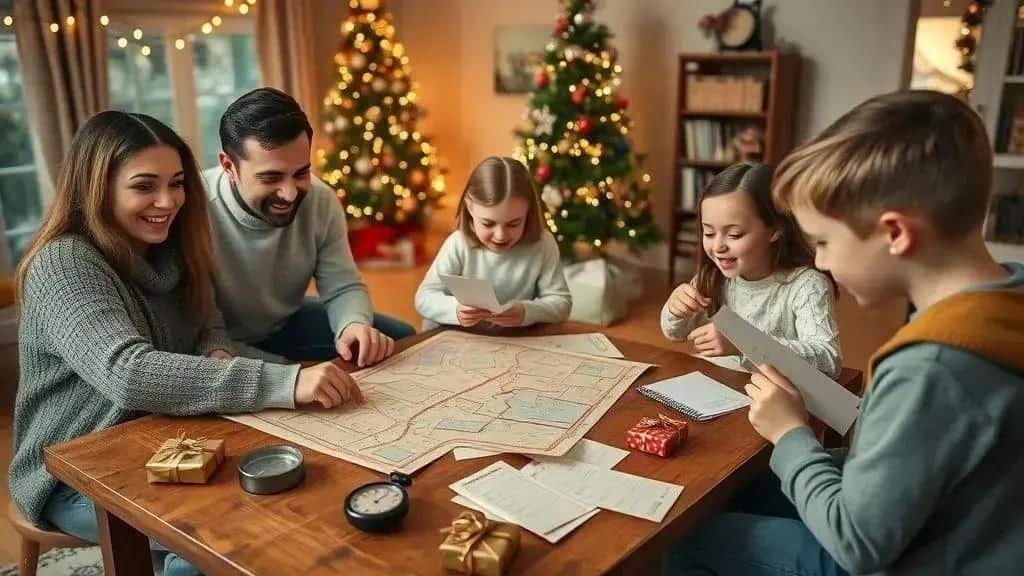
- Choose the final treasure: use a suitable gift box, keepsakes or a surprise family activity, and place it at the finishing point.
- Choose the number of clues: four to six may suit a short game; seven to ten can support a longer one. Adjust for age, attention and the space available.
- Write clear clues: use short sentences, highlighted key words and pictures for younger children. Prepare a helpful hint for each stage.
- Number and protect the clues: mark the sequence on the back and use card envelopes or sleeves to reduce tearing.
- Plan the route: link safe, nearby spaces such as the sitting room and hallway. Keep balconies, hot appliances, cooking areas and stairs out of the game.
- Prepare the starting point: hand over the first envelope or simple map after explaining the rules and permitted areas.
- Brief the players: explain the approximate duration, how to ask for help, and the rules against climbing furniture, running or entering excluded areas.
- Choose teams or individual play: balance ages and use large labelled cards or symbols to identify teams.
- Add little surprises: alternate riddles with optional songs or a simple picture puzzle.
- Watch the pace: use a timer if helpful, and offer hints before frustration takes over.
- Be ready to adapt: replace a clue found early with one of your prepared alternatives.
- Celebrate the finish: share the prize or a short activity. Take a photograph only with the children and parents or carers happy to participate, and agree separately before sharing it. Ask what everyone enjoyed. Source: NSPCC: photographing and filming children
Essential Materials
- A numbered envelope or card for each clue
- Pens, removable tape and age-appropriate scissors used with supervision
- Sturdy paper or card sleeves
- A simple map or list of permitted areas
- Suitable prizes, large picture tokens or keepsakes
- A clock or timer and a short list of rules
Tips While the Game Is Running
- Test the route before the players arrive.
- Keep spare clues ready in case a hiding place is discovered early.
- Balance the challenges so younger children can contribute and older players stay interested.
- Keep supervising rather than relying on the rules alone to keep everyone within the safe areas.
Simple Materials, Decorations and Maps
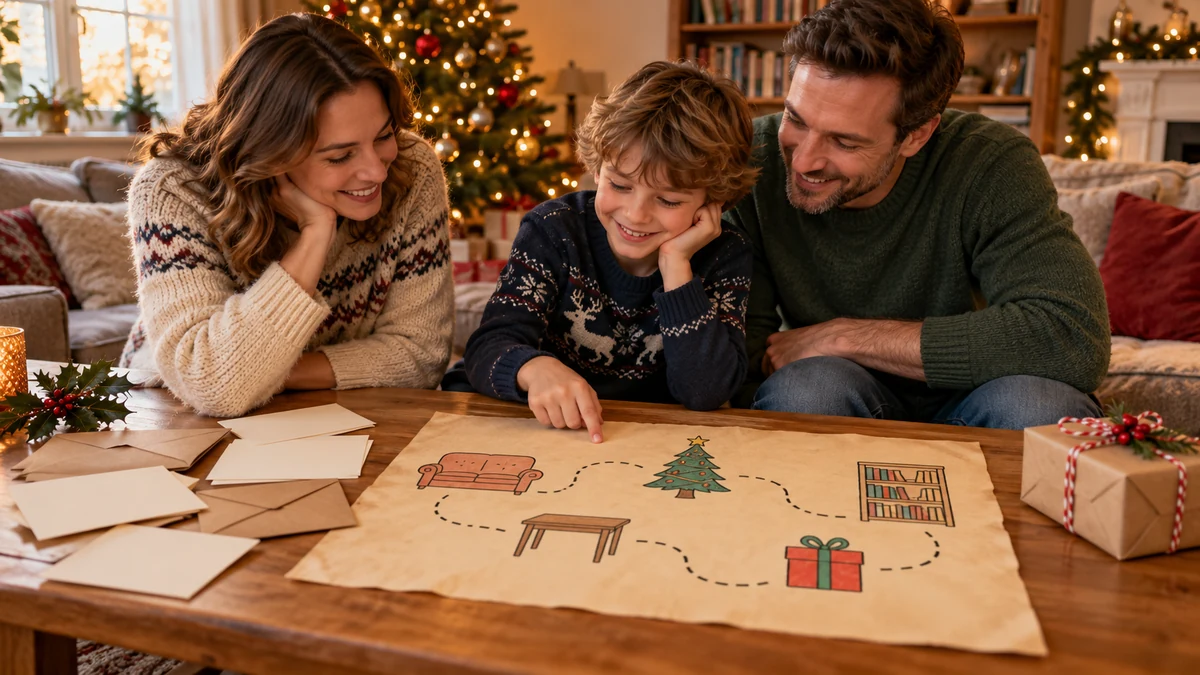
A few everyday supplies can make the hunt feel special without a complicated setup or a large budget.
Useful Supplies
- Thick paper or card for sturdy clues.
- Numbered envelopes to keep the sequence organised.
- Coloured pens and markers for clear words and symbols.
- Tape, glue and suitable scissors for supervised craft preparation.
- Card sleeves to protect clues in dry indoor areas.
- Labels and arrows to show the route without creating a trip hazard.
- Age-appropriate prizes such as books, notebooks or suitable toys, with wrapping removed before younger children play.
- Existing festive lights and decorations positioned out of reach and away from the route.
Affordable Decorations
Use what you already have. Decorated boxes can become treasure chests, while reused paper makes simple envelopes. Keep the overall display uncluttered so players can follow the clues.
- Turn clean cereal boxes or old gift boxes into treasure containers.
- Add hand-drawn symbols or stamped patterns to labels.
- Use suitable LED lights or flameless candles rather than real flames, with cables out of the way and battery compartments securely closed. Keep accessible button batteries out of children’s reach. Source: Child Accident Prevention Trust: loose button batteries
Drawing a Simple Map
- Sketch the layout: draw the main rooms, doors and large pieces of furniture on A4 paper.
- Mark the boundaries: show safe and excluded areas using both clear symbols and contrasting colours.
- Add recognisable pictures: a tree, sofa or table can work well. Put a small key in one corner.
- Number your planning copy: link each number to a clue so you can check and replace it easily.
- Adapt the players’ map: use pictures for younger children and simple codes or coordinates for older players.
Protecting and Organising Clues
Put each clue in a card envelope and number the back to avoid mixing them up. Keep a master list of the hiding place, clue and backup option. For teams, combine a colour with a symbol so their sets are easy to distinguish.
- Keep the clues in a separate box until setup begins.
- Prepare two or three spare clues for unexpected discoveries.
- Give each team a matching symbol on its clues and map, rather than loose ribbons worn around the body.
Finishing Touches
Print your own templates for speed and add simple Christmas stickers if appropriate for the ages involved. Decorative edges and washi tape can make the set feel special. Ask someone else to check the words and map before the game starts.
Prizes, Variations and Developing a Party Service

Thoughtful prizes and adaptable formats can make a Christmas treasure hunt appealing at home or at a party. Keep the reward suitable for the participants, and treat the business ideas below as planning suggestions rather than a ready-to-launch service.
Prize Ideas
- Final treasure: a box with suitable toys, a book or a voucher for a family activity. Check age labels and any food allergies before including treats.
- Small stage rewards: large picture cards or age-appropriate stickers. Avoid hard sweets and small loose objects for young children.
- Shared experiences: a film afternoon with suitable snacks, a short craft session or a homemade invitation to a special tea.
- Non-food options: a notebook, age-appropriate colouring materials or a supervised planting activity. Choose useful items rather than assuming every labelled “eco” gift is sustainable.
Different Formats
- Simple home hunt: four to six clues, printable materials and a modest final prize, assembled by the family.
- Hosted hunt: setup at the venue, physical maps, eight to ten clues and an activity leader.
- Themed hunt: a story about Father Christmas, elves or a workshop, with simple decorations and comfortable costumes.
- Team game: friendly competition for larger groups, with shared rewards.
- Regular activity kits: small seasonal hunts offered at agreed intervals, with clear information about what each kit contains.
Designing Clear Packages
If developing a service, you could distinguish three options:
- Basic: a digital clue file, PDF map and materials list, sent by email.
- Printed kit: prepared clues, numbered envelopes, suitable prizes and setup instructions, delivered or collected.
- Hosted package: venue setup, an agreed period with an activity leader, simple decorations and a specified set of gifts.
Working Out Costs and Prices
Include the materials, preparation, travel and time needed to run the activity. A selling price needs to cover more than the visible contents of the kit.
- Direct costs: printing, packaging, prizes and travel. These may vary with each booking rather than being fixed business costs.
- Time: planning, correspondence, setup, delivery and clearing away.
- A markup is not the same as a profit margin. Choose your pricing after allowing for all costs and relevant business obligations; there is no guaranteed suitable percentage for every booking.
The Brazilian source suggested the following figures. They are illustrative amounts in Brazilian reais, not verified current market rates, UK prices or earnings forecasts:
- Basic package: R$40–80.
- Printed kit: R$120–220.
- Hosted package: R$300–600.
Steps for Developing a Service
- Initial enquiry: ask about the date, number and ages of participants, venue and accessibility requirements.
- Venue discussion: confirm permitted areas, supervision and practical restrictions.
- Written proposal: explain the package, price, responsibilities and cancellation arrangements clearly.
- Booking confirmation: agree payment arrangements and the setup time before proceeding.
- Preparation: print and test the clues, assemble the kits and inspect the materials.
- Delivery: arrive with enough time to set up and brief the responsible adults or activity leaders.
- After the event: request feedback and share photographs only where the appropriate permission has been agreed. Offer future bookings without pressuring families.
Presenting and Promoting the Activity
- Use genuine photographs of your own materials and accurate package descriptions. Obtain permission before using identifiable people in marketing.
- Share real, permitted testimonials and examples of hunts you have actually tested; do not invent customer experiences.
- Consider local community listings, social media and relevant party-venue partnerships.
- Offer clearly described gift vouchers or optional combinations with decoration services, explaining exactly what is included.
Operational and Safety Considerations
- Use safe, reachable hiding places and explain which areas are excluded.
- Carry replacement supplies and spare clues.
- Before offering paid activities, check the requirements relevant to your location and role, including business arrangements, safeguarding and appropriate insurance. A simple disclaimer does not replace those responsibilities. Source: GOV.UK: setting up a business Source: GOV.UK: eligibility for roles working with children
- Agree who supervises throughout and brief that person properly; do not leave children without a responsible adult.
Optional Additions
- A photograph at the finish, with permission and a clear agreement about its use.
- Personalised clues using children’s first names, with parental agreement and careful handling of that information.
- A short, age-appropriate craft activity after the hunt.
Ready for Your Christmas Treasure Hunt?
You now have a planning sequence, adaptable clues and prize ideas. Test the route and adjust the difficulty to the people joining in.
Clear boundaries, adult supervision and a few spare clues make it easier to keep the afternoon enjoyable. Let the group set a comfortable pace.
Thank you for reading! Follow our updates on the I Love Christmas blog. Happy Christmas, and enjoy the hunt!
FAQ: Christmas Treasure Hunts at Home
How long should a home treasure hunt last?
Start with around 15–20 minutes and four to six simple clues for a short game. Older groups may enjoy 30–45 minutes and seven to ten clues. Treat these as flexible starting points, with breaks or an earlier finish when needed.
What materials do I need for the clues?
Thick paper or card, numbered envelopes, pens, removable tape, suitable prizes and a simple map are enough. Card sleeves can protect clues indoors without loose plastic bags.
How can I adapt the clues for different ages?
Use pictures and arrows with adult help for ages 3–6, short riddles and tasks for ages 7–12, and simple codes or collaborative puzzles for teenagers and adults. Adjust for individual needs as well as age.
What safety precautions should I take?
Set clear boundaries, keep hiding places reachable without climbing, supervise throughout and keep the route clear of cables, heat, small loose objects and accessible batteries. Avoid loose plastic bags and keep all prizes age-appropriate.
Could I develop this into a paid service?
You could develop and test your own packages, calculate costs and describe the service accurately. Check local business and safeguarding requirements first, clarify supervision and cancellation arrangements, and use only genuine testimonials and photographs with permission.
Sources and Further Reading
- Child Accident Prevention Trust: preventing suffocation
- Child Accident Prevention Trust: choosing safe toys
- Child Accident Prevention Trust: loose button batteries
- NSPCC: photographing and filming children
- GOV.UK: setting up a business
- GOV.UK: eligibility for roles working with children