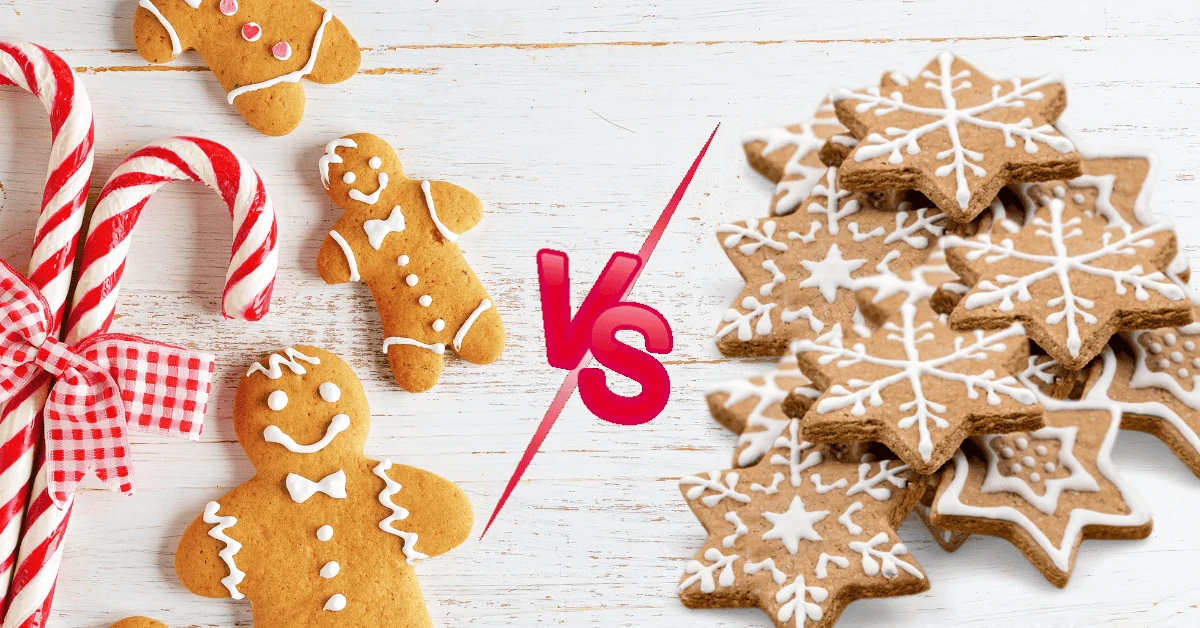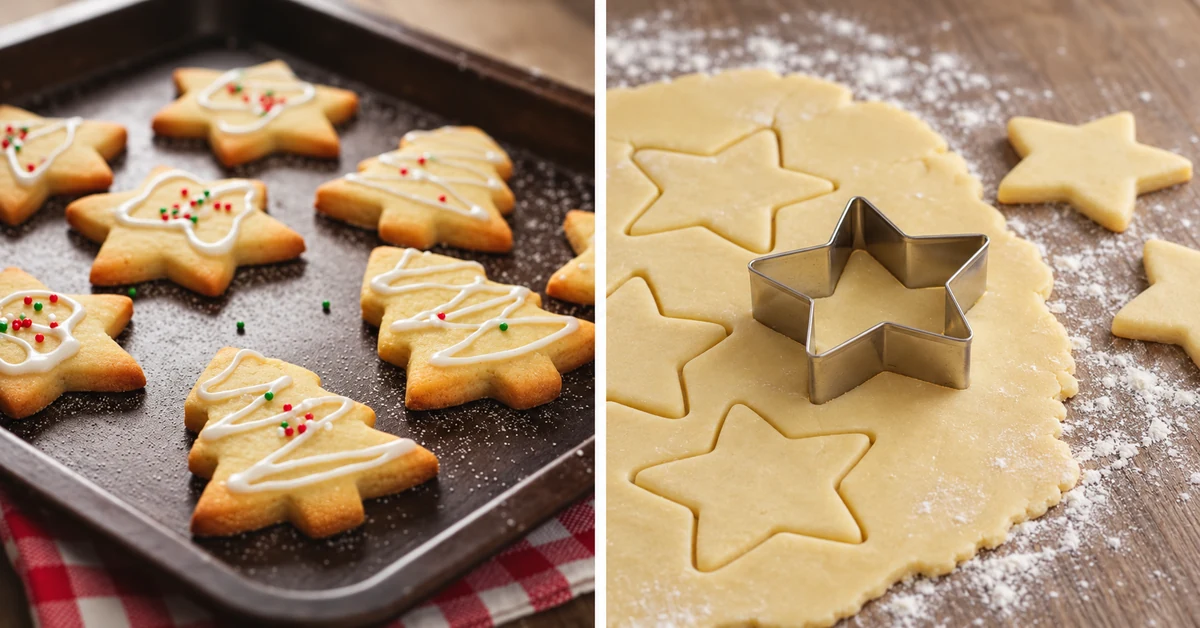
To make shaped Christmas biscuits, a set of cutters for festive biscuits can be a useful addition to your baking cupboard. Stars, trees and gingerbread people make a simple batch feel seasonal.
You may see them sold as Christmas biscuit cutters or Christmas cookie cutters. Both names usually refer to tools that cut rolled dough into shapes; a biscuit mould or stamp may work differently, pressing a design into the surface.
For a related language curiosity, read our guide to biscoito and bolacha in Brazilian Portuguese.
This guide explains how to choose and use cutters for your Christmas biscuits, with practical tips for different materials and designs.
How to Use Christmas Biscuit Cutters
Roll the dough on a clean, lightly floured work surface, following your recipe’s guidance on thickness and chilling. Dust the cutter lightly with flour if the dough sticks, avoiding so much extra flour that the biscuits become dry.
Press the cutter straight down through the dough, then lift it carefully. Transfer the shapes to a lined baking tray, leaving the spacing recommended by the recipe.
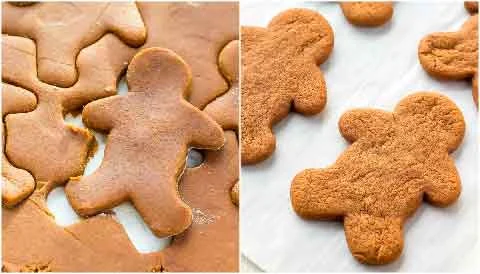
Position your Christmas biscuit cutter close to the previous shape to use the dough efficiently. Lift away the scraps carefully, then gather and reroll them as your recipe allows; repeated rolling can make some doughs tougher.
Types of Christmas Biscuit Cutters
Christmas biscuit cutters come in different shapes and sizes. Sets often combine several festive designs, but a small set you will actually use may be better value than a large collection.
As well as the shape, consider the material, depth and ease of cleaning. Simple outlines are often easier to handle than intricate designs, especially when baking with children.
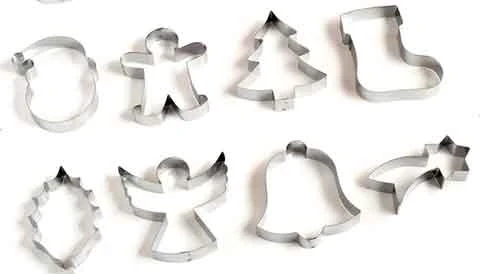
Which Material Should You Choose?
A Christmas biscuit cutter may be made from stainless steel, coated metal or food-contact plastic. Choose a product intended for use with food and follow the manufacturer’s care instructions.
Stainless-steel biscuit cutters can give clean edges and withstand regular use when well made. Check for smooth joins and sharp or damaged edges. Price alone does not tell you whether a cutter is safe or suitable.
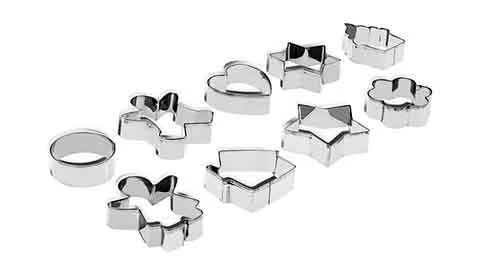
If metal Christmas biscuit cutters are outside your budget, food-contact plastic cutters can be a practical alternative. Check their condition before use and wash them as directed; they are not necessarily suitable for a dishwasher or heat.
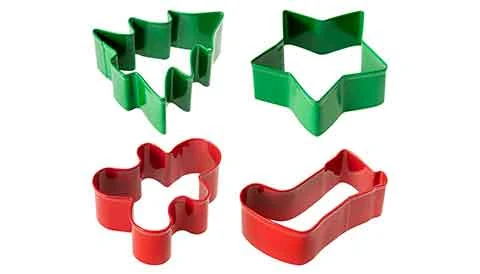
Colourful cutters can make the activity inviting and inspire icing choices for your Christmas biscuits. Their colour is a design feature, though, rather than a guide to food safety or quality.
Embossing cutters and stamps add a pattern as well as an outline. Sometimes marketed as 3D Christmas biscuit cutters, they can create decorative details before baking, provided the dough is suitable for holding an impression.
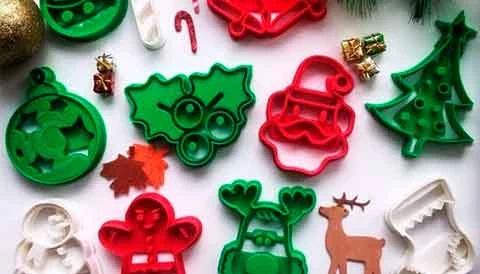
A clear stamped design can look attractive even without elaborate icing. Follow the cutter’s instructions, release the dough gently and choose a recipe that does not spread excessively if preserving the pattern matters.
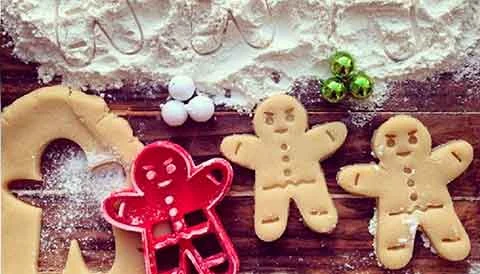
Choosing Cutters for Your Christmas Baking
The best cutter for your kitchen depends on the shapes you like, your recipe and your budget. Compare the size, material and cleaning instructions before buying, and start with a few versatile designs.
Above all, enjoy making Christmas biscuits together. An adult should supervise children and handle the oven and hot trays. For a baking idea, try our Grandma-Style Christmas Biscuits with Colourful Icing.
Share this guide with a friend who enjoys baking, or tell us which festive shapes you prefer. Keep the activity relaxed and enjoyable, and follow our social channels for more Christmas ideas.
Discover More Christmas Recipes
Grandma-Style Christmas Biscuits with Colourful Icing
Brazilian Christmas Farofa with Bacon and Calabresa Sausage
Brazilian Sardine Traybake with Blender Batter
Related Reading
Christmas Biscuits: A Festive Baking Tradition Around the World
Biscoito or Bolacha? Understanding the Brazilian Biscuit Debate
The Meaning of Christmas: Faith, Family and Shared Traditions