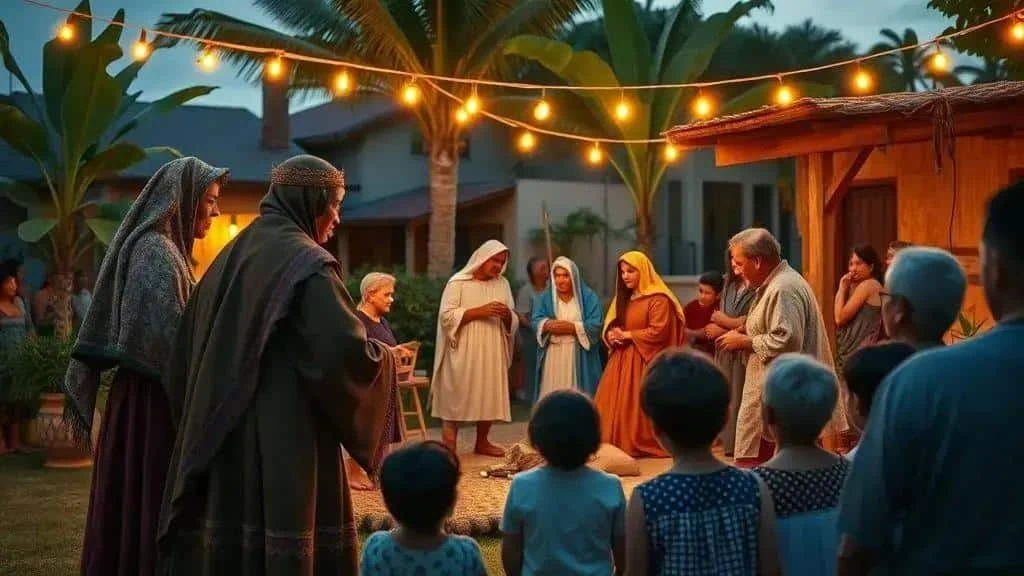
The auto de Natal is a Brazilian Christmas theatre tradition combining the Nativity story with music and, in some productions, dance and local performance customs. Families, schools and community groups pass on different versions through rehearsals, workshops and performances. Costumes, sets and repertoire can change while the Christmas story remains central.
Brazil’s Christmas theatre tradition brings together storytelling, familiar characters and community celebration. An auto de Natal may resemble a Nativity play to a British audience, but its local history and performance styles deserve attention in their own right. Here is a guide to its roots, its characters and the practical work behind a small production.
Illustrations in this article are conceptual images, not documentary photographs or evidence of a particular historical event, destination, venue or access route.
The history of the auto de Natal in Brazil
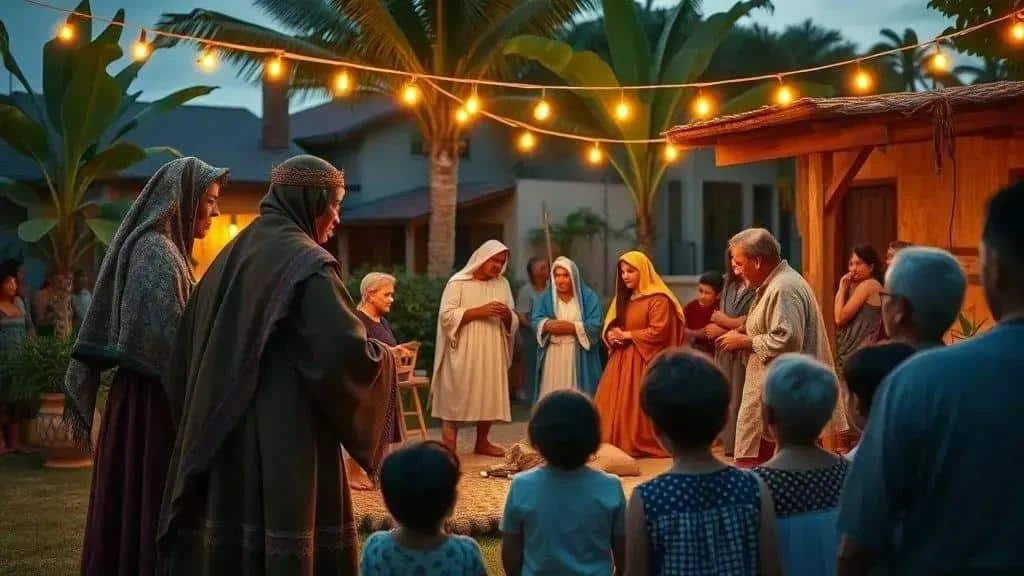
The auto de Natal belongs to a history of religious drama with Portuguese and wider European antecedents. In Brazil, that history developed within colonial society and later community life. Different productions adapted religious stories to local audiences through everyday speech, music and movement; there is no single origin story that explains every regional form.
Historical roots
In the sixteenth century, Jesuit missionaries used drama as part of religious instruction and conversion. Research supported by Brazil’s National Library discusses these antecedents, including the work of José de Anchieta. This missionary setting was part of colonial power, rather than simply an equal exchange between cultures. Later Christmas performances developed in varied local settings. Source: Biblioteca Nacional: research on the Portuguese antecedents of Brazilian Christmas pastorals
Popular performance and cultural exchange
Singing, percussion, dance and improvisation appear in some Brazilian Christmas performances. Related traditions such as pastoril and reisado have their own histories and may share a festive setting or particular elements with an auto. Congada is also a distinct tradition and should not be treated as another name for a Nativity play. Indigenous and Afro-Brazilian contributions should be identified from the history of the particular group, not assumed for every production.
Characters and community roles
Shepherds, the Magi, angels, Herod and locally developed comic characters can appear alongside the central Nativity figures. An auto may use humour or social commentary to connect with its audience, although the balance between devotion, comedy and criticism varies with the script and community.
Regional variety
Christmas performance traditions differ between towns as well as between regions. In north-eastern Brazil, lapinha and pastoril provide documented examples of Nativity-related singing and performance. Elsewhere, rural and urban groups may develop their own scripts, musical arrangements and staging. These are useful starting points for research, rather than fixed rules about how an entire region performs.
Passing the tradition on
Families, schools, cultural organisations and community festivals can help pass on scripts, songs and practical skills. Amateur groups often adapt a performance to the people and resources available. Sustained teaching and documentation support continuity, but neither festivals nor modern technology can guarantee it on their own.
Regional differences and popular influences
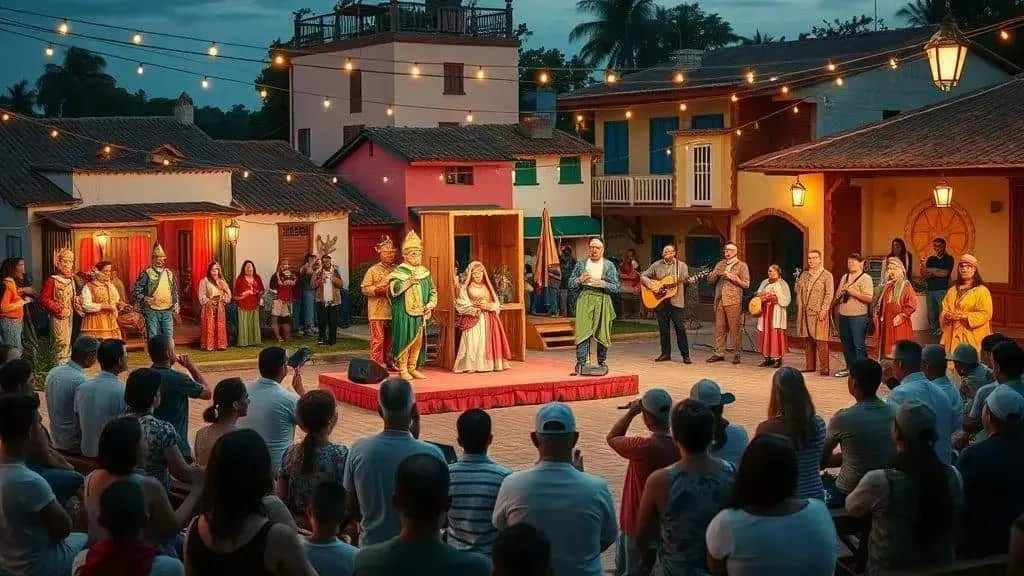
Local history, musical practice and the people taking part shape each auto de Natal. Understanding those differences is more useful than expecting every performance to follow a standard national format.
Examples and approaches to regional research
North-eastern Brazil: The Joaquim Nabuco Foundation describes lapinha as a Nativity-related performance associated with the Christmas season. Pastoril also has established local forms. Singing, dance and colourful costumes may be prominent, but masks, percussion and comic characters are not compulsory features of every group. Source: Fundação Joaquim Nabuco: Lapinha
Minas Gerais and inland communities: A local production might draw on rural settings, choral singing or instruments such as the viola caipira. Check the group’s repertoire and local accounts before presenting these choices as a regional rule. Christmas-related traditions can coexist without being interchangeable.
Urban productions in the south-east: Theatre companies and community groups may adapt an auto for a theatre, school or festival. Contemporary language, lighting and scenery can be used alongside older material. The extent of that adaptation depends on the production rather than its location alone.
Northern and central-western Brazil: Look for the history and practice of the specific community. Do not assume that a flute, rattle or natural setting represents an Indigenous ritual. Where a production draws on a living cultural tradition, involve its practitioners and acknowledge their contribution accurately.
Popular influences
Depending on the group and script, influences may be expressed through:
- Rhythm and percussion — instruments such as the pandeiro, zabumba, ganzá or atabaque may support songs and movement where they belong to the local repertoire.
- Masks and costumes — simple materials, colours and decorative details can communicate a group’s particular visual style.
- Improvisation and humour — performers may address the audience directly or include gentle social satire.
- Religious and cultural connections — some performances reflect several traditions, but their meaning should be explained by the communities concerned rather than reduced to a general claim of religious mixing.
Performances may take place in squares, churches, schools or theatres. A production can be part of a community celebration or a more formal programme. The venue, audience and purpose all influence its length, sound requirements and style of presentation.
Preserving variety — recording and teaching should allow room for local differences. Workshops, oral histories and community festivals can help groups pass on their own versions without forcing them into a single model.
Characters and dramatic roles in a Christmas performance
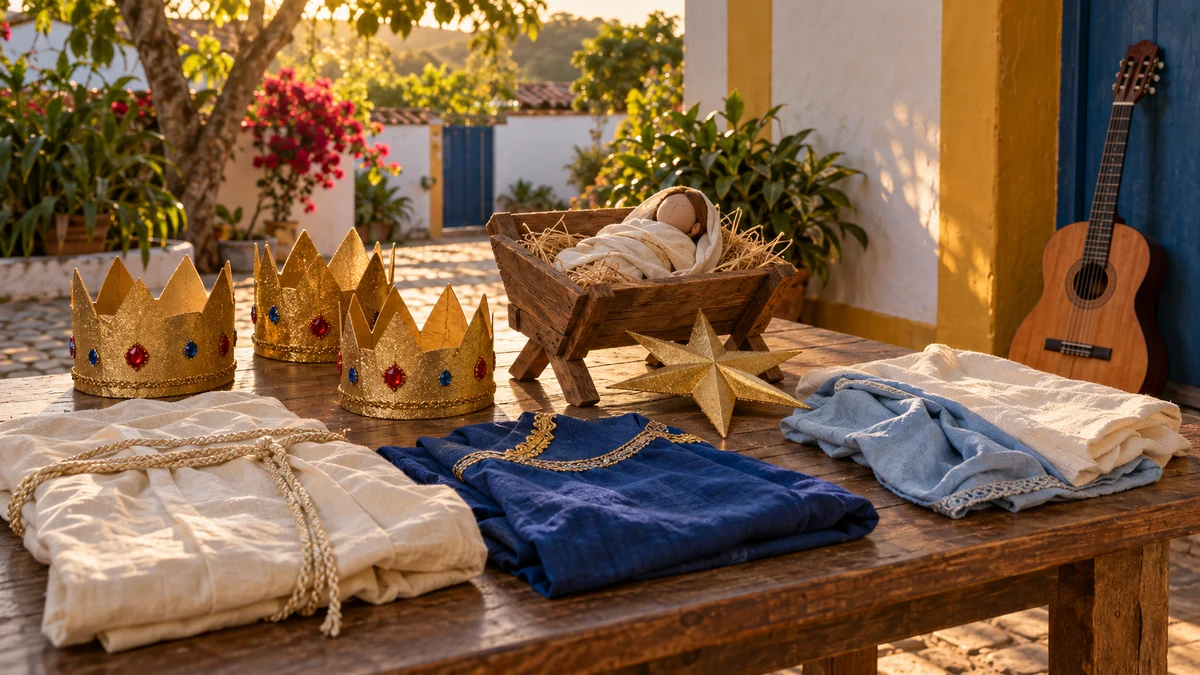
Characters and dramatic roles combine biblical figures with characters developed through popular performance. A role might carry the story, invite sympathy, provide humour or question the behaviour of those in power.
Central characters
Mary and Joseph form the family at the heart of the story. A doll is a practical way to represent the infant Jesus in a community production. Shepherds can offer an everyday perspective, while the Magi bring gifts and the angel acts as a messenger. Herod provides conflict in scripts that include him. Present these characters thoughtfully, without using ethnicity or unfamiliar clothing as a comic stereotype.
Popular and comic characters
Some scripts include a fool, a cattle herder, an older adviser or other locally recognised figures. These characters can use improvisation and satire to draw the audience into the story. Historical scripts may also contain dated labels or caricatures; review those choices with the group rather than reproducing demeaning portrayals uncritically.
What the roles do
Different roles help to narrate events, build sympathy, create laughter or introduce social comment. Direct interaction with the audience can work well, but participation should be voluntary. Give performers a clear way to respond if a spectator prefers simply to watch.
Characterisation and costume
Coloured fabric, cardboard crowns, lightweight staffs and soft wings can make roles recognisable. Keep masks clear of the eyes and mouth and avoid sharp edges, loose trailing fabric or unsafe props. The aim is to make the character readable from a distance while allowing the performer to move, see and hear comfortably.
Choosing and adapting characters
Choose roles that suit the cast and make sense to the intended audience. Adapt dialogue and jokes to familiar speech while keeping each character’s purpose clear. If you modernise an established local version, discuss the changes with the people who know and practise it.
Variety and inclusion
Contemporary groups may cast roles flexibly, introduce locally relevant characters or arrange music for the performers available. Discuss access needs and comfort with the cast, rather than assuming what anyone can do. Inclusion works best when people have a meaningful role in shaping the production.
Sets, costumes and music: preparing an auto de Natal
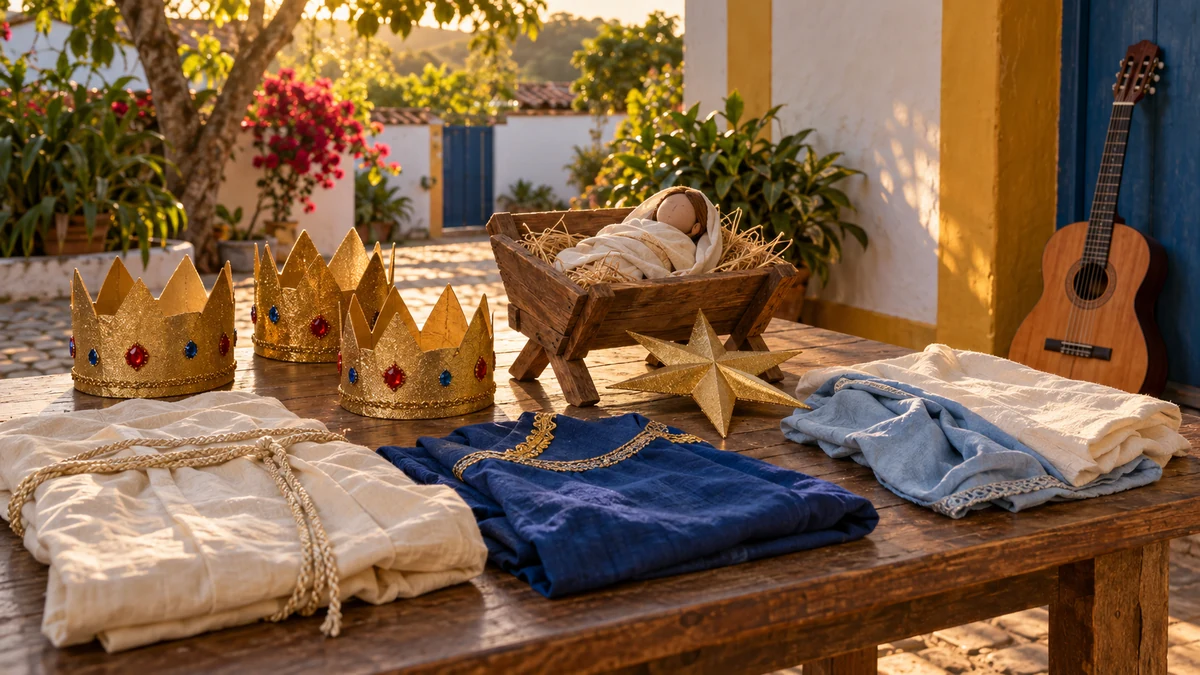
Planning the scenery, costume and music helps a modest production feel coherent. A few well-chosen objects can communicate the story without an elaborate set. Safety, access and a manageable workload should guide the design from the outset.
Materials and budget
List the materials you need and identify safe items that can be reused, such as fabric, lightweight decorative panels and household objects suitable as props. Prioritise stability, clear movement routes and the venue’s fire requirements. A raised stage is a load-bearing structure: use a suitable professionally supplied system, or perform at ground level, rather than building one from scrap timber. Source: HSE: event venue and site design
- A clear ground-level performance area or a properly specified stage, with suitable access and any required edge protection; do not improvise a platform from pallets or loose boards.
- Suitable fabric for curtains and costumes, checked against the venue’s fire precautions and kept away from heat sources.
- Battery-operated lanterns and suitable LED lights for simple lighting, with cables secured and equipment appropriate for the setting.
- Tape, paint and appropriate craft adhesives for finishing props; adults should handle hot glue and follow the products’ ventilation and safety instructions.
Costume and characterisation
Use colour and shape to distinguish roles: rich colours for the Magi, earthy tones for shepherds or light fabric for angels are possible choices. Everyday clothes can be adapted with simple crowns, staffs and soft wings. Focus on a clear silhouette, comfortable movement and secure fastenings rather than complicated decoration.
- Reuse suitable clothes and add securely attached fabric details.
- Make lightweight cardboard crowns with smooth edges and a comfortable fit.
- If padding is needed, keep it light and secure, and check that it does not restrict movement or cause overheating.
Music and sound
Choose songs and arrangements that suit the community and the cast. Acoustic arrangements and familiar local repertoire can work well; guitar, pandeiro, accordion or other appropriate instruments may be enough. For an outdoor performance, test microphones and speakers in advance and keep sound levels comfortable for performers and audiences.
Practical tip: prepare a cue list for musical entrances and scene changes. If using recordings or protected music, check the relevant permissions and licensing requirements before the performance.
Props and practical scenery
Lightweight scenic panels and a few symbolic objects, such as a star, a manger and gifts, can tell the story without a realistic set. Secure panels against tipping, especially outdoors, and keep exits clear. Simple painted backgrounds are often easier to manage than detailed structures that need repeated assembly.
Steps for preparing a production
- Choose the story and running time: identify the main scenes and estimate how long each needs.
- Plan the space: mark the performance area, audience seating, entrances, exits and accessible routes.
- List materials: separate scenery, costume, sound and lighting requirements.
- Form small teams: assign responsibility for scenery, costumes, music and production.
- Prepare props and accessories: favour safe, lightweight pieces that can serve more than one scene.
- Rehearse with music: coordinate dialogue and musical cues, adjusting volume and timing.
- Test costumes and make-up: check comfort, visibility, skin sensitivities and safe changes between scenes.
- Run a technical dress rehearsal: check sound, lighting, scene changes and sightlines from the audience area.
- Invite the local community: share clear information with schools, churches and neighbours, including access arrangements and any booking requirements.
Keep the community involved throughout the process. With appropriate consent, record useful notes and selected parts of the work so that future groups can build on what you have learnt.
Organising a community auto de Natal step by step
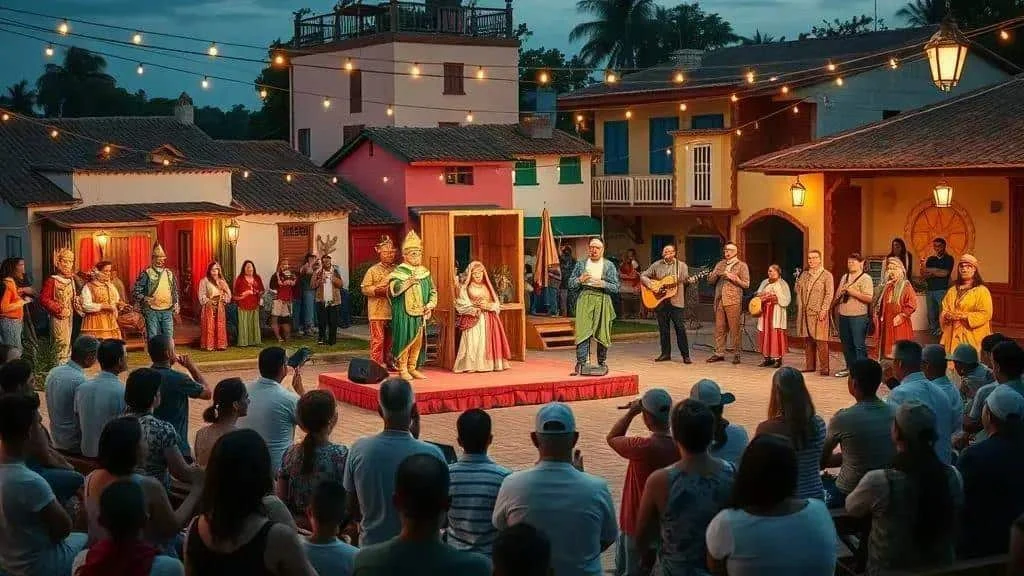
- Agree the purpose, audience and date: decide whether the emphasis is devotional, cultural or educational, and make a realistic bad-weather plan.
- Choose the venue and check permissions: confirm capacity, wheelchair access, toilets, lighting and local event requirements. Use the venue’s established safety arrangements where possible.
- Build the team: allocate direction, production, scenery, costume, sound, lighting, communications and volunteer support.
- Adapt the script: simplify scenes where necessary, set a manageable running time and use language the audience can follow.
- Invite an inclusive cast: discuss rehearsal availability, access needs and safeguarding. Check the rules that apply to child performers locally; for a production in the UK, a child performance licence may be required in some circumstances, so consult the relevant council. Source: GOV.UK: child performance licences
- Set a rehearsal timetable: use predictable sessions of manageable length and allow separate time for acting and technical work.
- Prepare practical scenery: use stable, lightweight panels and props that meet the venue’s fire precautions. Keep the performance at ground level unless a suitable stage has been professionally specified and installed.
- Organise costumes and accessories: adapt existing clothes, make lightweight crowns and wings, and test movement, comfort and costume changes.
- Arrange music and sound: choose live music or permitted recordings, prepare cues and rehearse with the microphones that will be used.
- Plan the day’s logistics: mark entrances, exits, changing space and audience areas. Have a competent person arrange the electrical supply. If a generator is necessary, it must be suitably positioned outdoors, away from people, openings and enclosed spaces, with safe cabling and professional advice.
- Plan safety and first aid: assess the event’s risks, agree appropriate first-aid provision and fire precautions, and brief the team on evacuation and emergency contacts. The UK’s HSE event guidance is a useful planning resource, but local rules apply to a production in Brazil. Source: HSE: getting started with event safety
- Prepare a budget and funding plan: list costs and seek suitable donations or support from local organisations. Check applicable fundraising and raffle rules before collecting money or selling tickets.
- Promote the performance: send invitations and share useful details through schools and community channels. Obtain appropriate consent before publishing rehearsal photographs, particularly images of children.
- Hold a full technical rehearsal: run the performance with sound, lighting and scene changes, then correct any timing or positioning problems.
- Use an event-day checklist: confirm costumes, props, sound, lighting, drinking water, signs, first-aid arrangements and the welcome team.
- Allow a gentle warm-up: set aside time for voice, movement and concentration, adapting activities to the people taking part.
- Review and document the work: gather feedback and retain useful production notes. Record performances only with the necessary permissions and a clear plan for how recordings will be used and stored.
Practical tips
- Invite schools and younger participants where suitable, with proper supervision and safeguarding rather than treating children as a way to attract an audience.
- Reuse sound materials where safe, but do not let a low budget compromise structural, electrical or fire safety.
- Have a workable alternative for rain, strong wind or equipment failure, including the possibility of postponement.
- Brief volunteers on scene changes, audience support, access routes and when to seek help.
- Document spending and practical lessons. Share photographs or video only within the permissions agreed with participants.
Preserving the tradition through teaching, festivals and adaptation
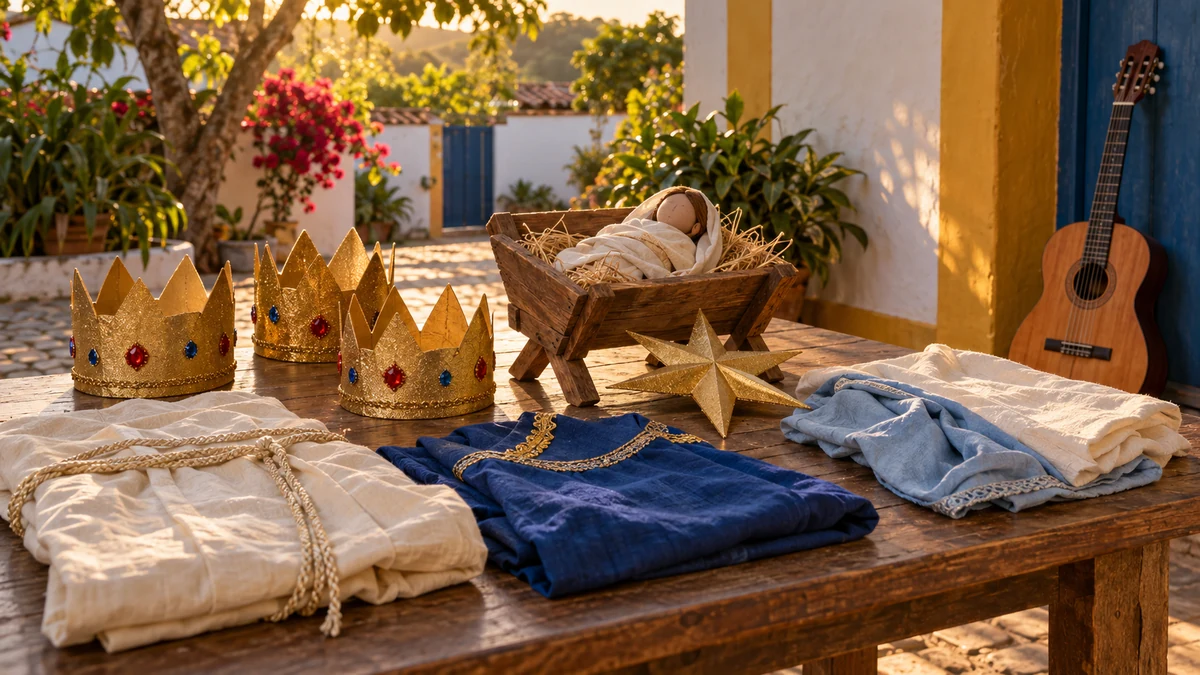
Practical teaching, local events and thoughtful documentation can all support the auto de Natal. When people of different generations rehearse together, they can pass on dialogue, songs and backstage skills. That work is most valuable when the community helps decide what should be retained and what can change.
Education and workshops
Workshops in schools and cultural centres can introduce acting, costume-making and simple prop design. Hands-on activities, such as making cardboard crowns or a small manger prop, give participants a way to understand how a performance is assembled. Match tools, materials and supervision to their age and experience.
Educational projects can connect the performance with local history and the people who practise it. Discuss cultural influences with care and use documented examples rather than assigning a single origin to every song or costume. Repeated practice helps participants develop skills as well as familiarity with the repertoire.
Festivals and exchanges
Local and regional festivals can bring groups together, introduce audiences to different versions and create opportunities for collaboration. Depending on the event, ticket income, sponsorship or cultural funding may help cover costs. These opportunities are useful possibilities, not a guarantee that an amateur group will become financially sustainable.
Discussions, demonstrations and exhibitions can complement performances by making room for research and shared experience. A programme that includes practitioners’ voices helps explain why local differences matter.
Adaptation and documentation
Digitised scripts, properly stored recordings and labelled photographs can preserve valuable information. Social media and short videos may introduce the tradition to new audiences, but they do not replace teaching or live performance. Respect copyright, participants’ consent and any community limits on sharing material.
Shorter versions, contemporary dialogue or new arrangements of familiar music can make a production practical for a different setting. Explain substantial changes and retain the meaning of the source material rather than presenting every adaptation as an unchanged tradition.
Partnerships and funding
Schools, churches, cultural groups and local businesses may be able to help with space, equipment or funding. Public grants and cultural support schemes have their own eligibility and reporting requirements; check current rules before including an award in the budget.
Community fundraising and appropriately priced workshops can contribute between performance seasons. Keep participation accessible where possible and make costs, payments and the use of funds clear.
Passing on practical knowledge
Annotated scripts, materials lists, rehearsal plans and recordings with explanatory notes are useful teaching tools. Mentoring across generations gives experienced performers a way to explain local speech, humour and techniques directly to newcomers.
Community involvement, careful records and respectful adaptation can give the auto de Natal room to continue. Preserving it means supporting the people who perform it, not simply collecting a script or recording a single show.
Keeping the tradition meaningful
The auto de Natal brings together popular theatre, Christmas storytelling and community memory. Its variety is part of its value: a school production, a local group and an established theatre company may approach the same story differently.
Practical teaching, opportunities to perform and dialogue with experienced participants can help a group develop its own thoughtful version.
If you are planning a performance, begin with a manageable script, a safe venue and the people who want to take part.
Ask local cultural organisations about workshops and performances, and check the arrangements before inviting family members or a school group.
Explore more Christmas traditions and ideas on the I Love Christmas blog.
Frequently asked questions about the auto de Natal
What exactly is an auto de Natal?
It is a Christmas theatrical performance centred on the Nativity story. Brazilian versions may include songs, dance, humour and local performance customs, with considerable variation between groups.
Who can take part in a community production?
People of different ages can contribute as performers, musicians, makers or organisers. Allocate roles around interests, access needs and availability, and put appropriate safeguarding and supervision in place.
How can we organise one on a small budget?
Choose a short script, adapt suitable clothes, use simple props and invite volunteers with relevant skills. A clear ground-level performance space can avoid the cost and risks of an improvised raised stage.
What permissions and safety arrangements should we check?
Check local event requirements, venue capacity, access, fire precautions, music permissions and any rules for child performers. Arrange first aid and an emergency plan appropriate to the event, and brief the team. Requirements vary by location.
How can we interest younger audiences without losing the tradition?
Use a clear running time, involve younger participants in practical workshops and discuss adaptations with experienced performers. Share permitted recordings where useful, while explaining the local history behind the material.
What helps preserve the tradition over time?
Regular teaching, opportunities to perform, annotated scripts and mentoring can all help. Keep records with the appropriate permissions and support the people who pass on the skills; no single measure guarantees continuity.
Sources and Further Reading
- Biblioteca Nacional: research on the Portuguese antecedents of Brazilian Christmas pastorals
- Fundação Joaquim Nabuco: Lapinha
- HSE: event venue and site design
- HSE: getting started with event safety
- GOV.UK: child performance licences