
Jumping seven waves is a popular Brazilian New Year custom associated with wishes, gratitude and renewal. It has strong connections with Afro-Brazilian religious traditions and devotion to Iemanjá. Meanings vary between communities and individuals; taking part does not require leaving objects in the sea or entering unsafe water.
Brazil’s seven waves tradition is a familiar sight in accounts of seaside New Year celebrations. Why do people jump the waves, and what does the gesture mean? This guide considers its cultural background, personal significance and practical ways to approach it respectfully, including celebrating from dry land.
Illustrations in this article are conceptual images, not documentary photographs or evidence of a particular historical event, destination, venue or access route.
Origins and history of the seven waves tradition

The seven waves tradition belongs to Brazil’s varied religious and popular culture. Its associations with Afro-Brazilian devotion, particularly to Iemanjá, deserve recognition. A single, precisely documented origin for the act of jumping seven waves is harder to establish, so it should not be assigned an invented founding date or a universal explanation.
Afro-Brazilian roots and devotion to the sea
Iemanjá is honoured in Afro-Brazilian religions, including different traditions of Umbanda and Candomblé. Flowers, prayers and gatherings by the water can express gratitude and requests for protection. These religions and their communities have distinct practices: a popular New Year gesture is not a complete description of either faith.
Black religious communities and their leaders are central to this history. Research by Joana Bahia and Farlen Nogueira in the journal Religare examines offerings to Iemanjá and the public presence of Umbanda Omolocô. This provides a more grounded context than treating seaside customs simply as anonymous holiday superstitions. Source: Joana Bahia and Farlen Nogueira: offerings to Iemanjá and Umbanda Omolocô in public space (Religare)
Cultural exchange and the limits of a simple origin story
Brazilian religious life includes many forms of exchange and adaptation. However, that broader history does not establish a specific Indigenous origin for jumping seven waves. Indigenous peoples have diverse traditions, and general statements about their relationship with nature should not be used as evidence for this particular custom.
The wider history of devotion at the coast and the precise history of the seven jumps are related questions, but they are not identical. Public festivals, religious communities and family memories all contribute to the way the custom is understood today. Where an exact date or line of transmission is uncertain, it is better to say so.
What does the number seven mean?
Seven can carry religious or personal significance, but explanations differ. Some people connect it with spiritual ideas; others make seven wishes or give thanks for seven things. These interpretations should be attributed to the people who hold them, rather than presented as a rule shared by every Afro-Brazilian tradition.
Today, religious observance and informal family celebrations may take place alongside one another at the coast. A visitor might see flowers, hear songs or watch people making private wishes. The visible similarity of the gestures does not mean that everyone shares the same beliefs or reasons for being there.
Spiritual and symbolic meanings of jumping the waves

For many participants, the seven waves tradition marks a transition: a chance to reflect on the past year, give thanks or express hope for the next. Protection and renewal are matters of belief and symbolism, not outcomes that the action can guarantee.
How the gesture is understood
The sea may represent life, change or a spiritual presence; jumping can suggest moving beyond an obstacle. For someone practising a particular religion, the meaning may be more specific and guided by their community. For another person, it may be a family custom remembered from childhood.
Personal and shared significance — a quiet wish can acknowledge a loss, an achievement or a hope. Sharing that moment with relatives may also strengthen a sense of belonging. Neither experience needs to be performed for a photograph or explained to other visitors.
Offerings and practical care
Flowers, candles and perfume appear in some accounts of devotion to Iemanjá, but this is a description of practices, not a shopping list for visitors. Follow the guidance of the community hosting a ceremony and the rules of the beach. For an informal celebration, a prayer, reflection or flower kept on land avoids adding material to the sea.
- Flowers: can carry symbolic meaning. Keep arrangements free of loose packaging and take your own materials home unless a properly organised ceremony provides another approved arrangement.
- Candles: require fire precautions and permission where applicable. A biodegradable container is not necessarily heatproof; an unlit symbol or flameless light is a simpler choice for a family gathering.
- Perfume or scented oils: should not be poured into the sea as a visitor’s improvised offering. A natural origin or a dissolving container does not establish that a substance is harmless to marine life.
Taking part respectfully
Respect local practices and religious spaces. Ask a practitioner or organiser whether visitors are welcome, what participation involves and whether photographs are permitted. Observing quietly is a valid choice; there is no need to imitate a ceremony you do not understand.
- Location: choose an accessible place on dry sand away from the reach of waves. If considering any water activity, ask the lifeguards on duty about conditions and permitted areas.
- Timing: although the custom is associated with midnight, a symbolic celebration on land or a daytime visit is a safer option than entering the sea in darkness.
- Intention: think about a wish or something for which you are grateful. This can be done without approaching the water.
- Approaching the sea: small-looking waves are not proof of safety. Stay ashore if conditions, visibility, swimming ability or local advice make entering unsuitable.
- The seven waves: participants traditionally associate successive waves with wishes or thanks. You can instead watch seven waves from a safe place on land.
- Offering: choose a spoken wish or a symbolic object that stays with you. Do not throw containers, ribbons or other materials into the water.
- Gratitude: finish with a quiet acknowledgement or a shared moment with your companions, according to everyone’s wishes.
Understanding the spiritual significance of the custom helps visitors approach it with attention rather than treating it as a compulsory tourist activity. Respect for the communities involved and care for the coast belong in the same conversation.
Preparing for a beach celebration
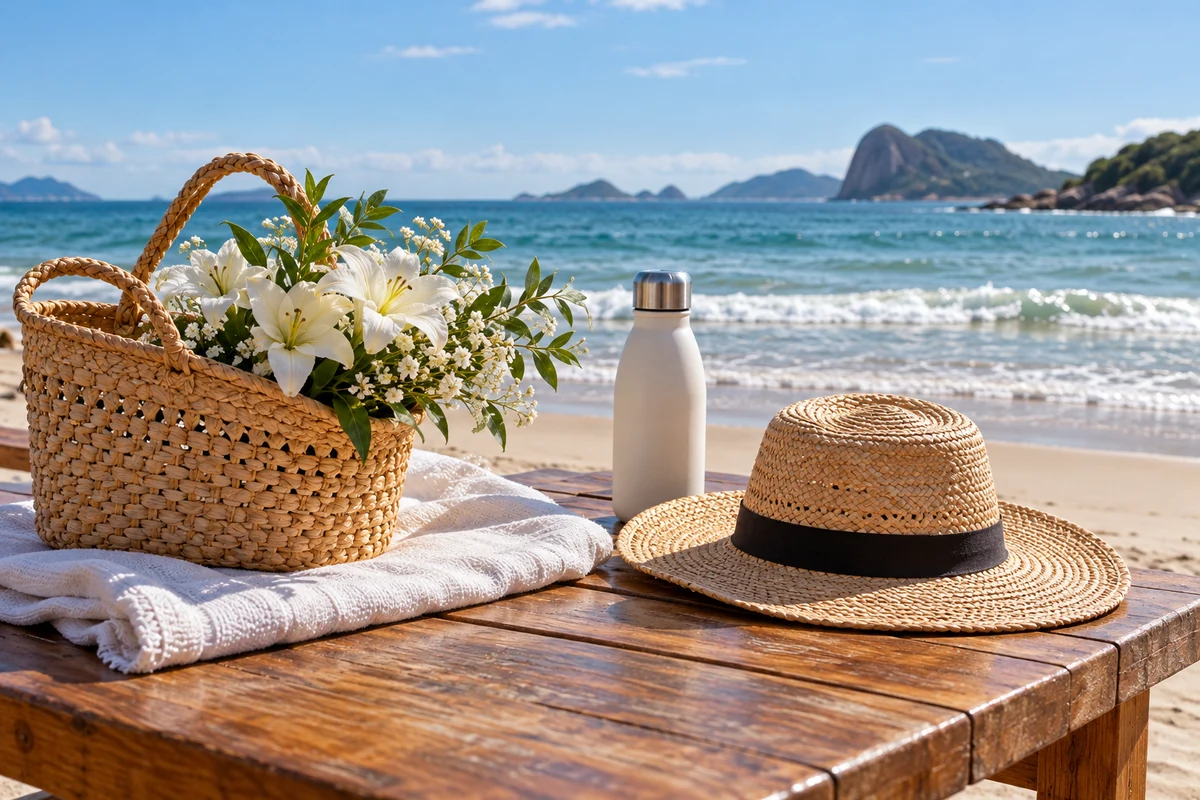
Before visiting the coast, check the weather, tides and local warnings. The seven waves tradition is not a reason to override water safety advice. Calm-looking shallows can still have currents and uneven ground; no depth or number of companions guarantees safety.
What to bring
- Comfortable clothing — white clothing is associated with many Brazilian New Year celebrations, but follow the occasion and your needs. Colour does not provide protection in the water.
- A towel and spare clothes — useful for an ordinary daytime beach visit, without implying that entering the sea is part of the plan.
- A flower or personal symbol — if you wish, bring something you can hold and take home rather than leave behind.
- A reusable bag or container — to carry your belongings and collect your own materials after the gathering.
- Water and daytime sun protection — bring drinking water; during daylight use shade, clothing and suitable sunscreen.
- Suitable footwear — for the walk and hot or uneven surfaces. Footwear does not make rocks, surf or slippery access routes safe.
Water safety considerations
- Check tides and weather — follow warnings about storms, swell and dangerous conditions rather than assuming that a particular tide is always safe.
- Choose a beach with lifeguards on duty and follow their advice. A busy beach or an empty lifeguard tower is not a substitute for an active patrol.
- Stay with your companions — agree a meeting point and a return plan, but do not treat a group as protection against sea conditions.
- Avoid glass and sharp objects on the beach, and keep the area clear of trip hazards.
- Supervise children closely and agree assistance with anyone who needs it, respecting their independence and mobility requirements.
Understanding the ritual without taking unnecessary risks
- Choose your intention: think of a wish, a thank-you or something you hope to leave behind.
- Choose a safe place to pause: remain on dry land, clear of waves and access routes. Ask local staff where it is appropriate to gather.
- Assess whether water entry is appropriate: do not enter after drinking alcohol, at night or against lifeguard advice. Remaining ashore is always an option. Source: RNLI: alcohol and water safety
- Face the sea from your chosen spot: take a moment to look and listen without moving into the surf.
- Acknowledge one wave at a time: the traditional gesture involves a jump; a land-based adaptation is to count seven waves silently while thinking of your intentions.
- Pause as needed: there is no need to keep pace, complete a sequence or move closer to the water to make the moment meaningful.
- Finish with gratitude: use words, a quiet gesture or a shared reflection. Keep any flowers or other personal objects with you.
- Leave thoughtfully: collect your belongings and allow space for other visitors, worshippers and beach staff.
Important: this land-based version is a practical suggestion for visitors, not a replacement instruction for a religious ceremony. For formal participation, ask the community involved and respect its guidance alongside local safety rules.
Regional variation and Afro-Brazilian religious connections
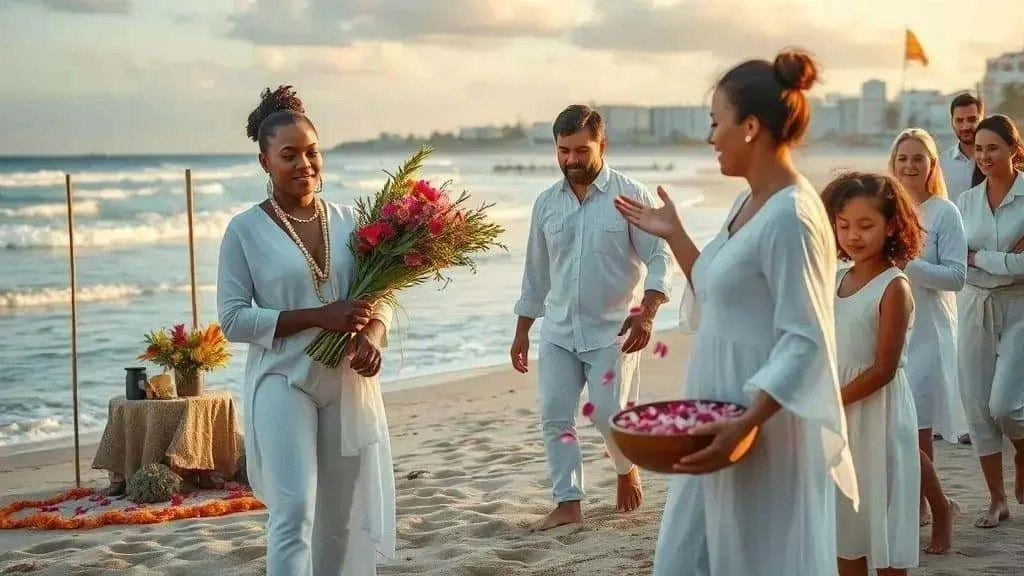
Across Brazil, the seven waves custom takes different forms. Religious festivals, urban New Year parties and private family gatherings should not be treated as interchangeable, nor should one version be described as the rule for an entire region.
Bahia and the north-east
In Salvador, devotion to Iemanjá is prominently associated with the festival on 2 February and with Candomblé communities, among other participants. That festival is distinct from New Year’s Eve. Bahia’s public guidance on its celebrations also brings together cultural respect and environmental care; visitors should follow the arrangements for the particular event. Source: Government of Bahia: Iemanjá celebrations, culture and environmental care
Rio de Janeiro and the south-east coast
On Rio’s beaches, including Copacabana, religious observance and popular New Year celebrations can share the same public space. White clothes and wishes made by the water are visible features, but an individual may be participating devotionally, socially or as part of a family tradition.
Southern Brazil and smaller coastal towns
A smaller town does not necessarily have a less religious celebration, and southern Brazil should not be described as lacking Afro-Brazilian traditions. Ask about the specific community and occasion. The size of a gathering tells you little about the depth of its meaning.
Avoiding generalisations about Indigenous traditions
Indigenous peoples’ relationships with water, land and ceremony are diverse. Plant offerings or songs cannot by themselves demonstrate a shared origin for the seven waves custom. When discussing a named people’s practice, use a specific, reliable account rather than a broad claim about all Indigenous cultures.
Religious meaning and urban adaptations
A gesture may become widely adopted outside its religious setting without losing its connections to that setting. A respectful account recognises those connections, the diversity within Afro-Brazilian religions and the right of practitioners to explain their own traditions.
- Salvador: distinguish the February festival of Iemanjá from a December New Year gathering.
- Rio de Janeiro: religious and secular celebrations may take place alongside one another at the coast.
- Smaller coastal communities: learn about local arrangements rather than assuming that all gatherings follow the same pattern.
Respecting those differences
Ask before joining a ceremony, handling ritual objects or photographing people. Follow organisers’ guidance about materials and access, and avoid treating a community’s sacred practices as entertainment. An informal personal reflection can take place without borrowing ritual language or leaving an offering.
Beliefs, gestures and offerings associated with the custom
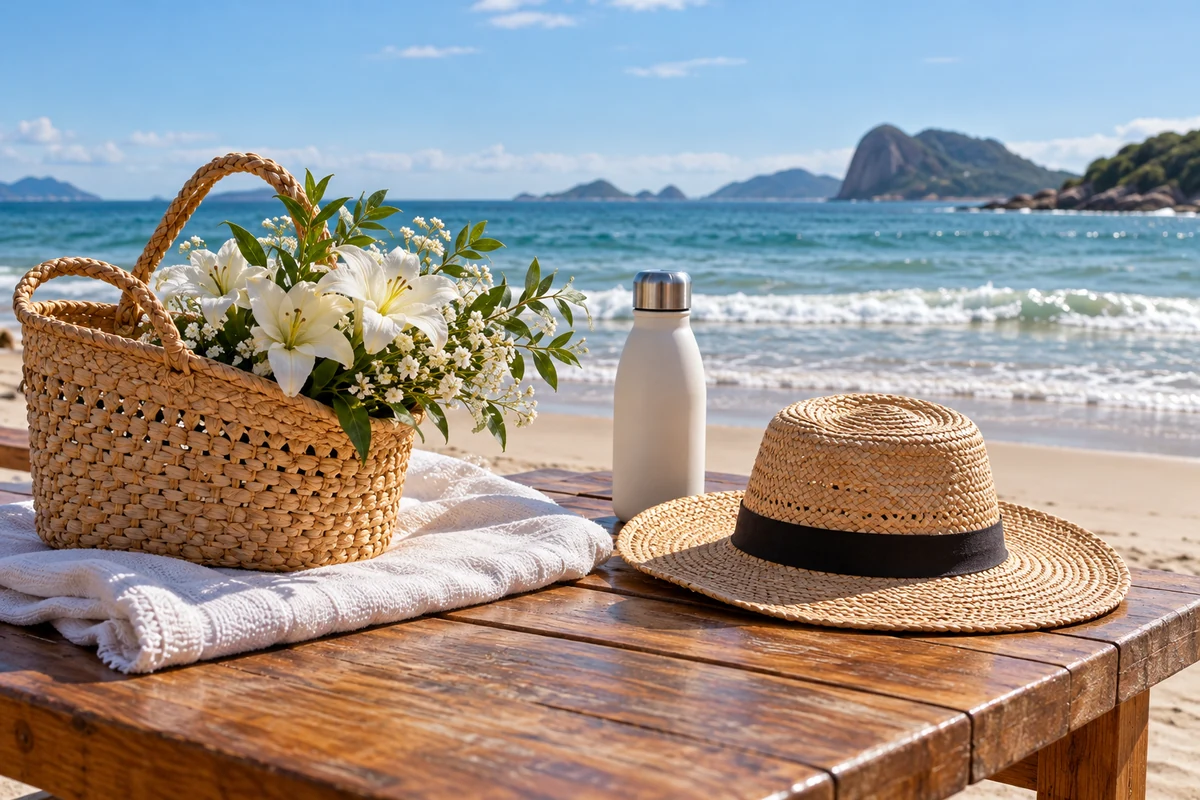
The seven waves tradition brings together faith, hope and popular symbolism. Some people ask for protection or prosperity; others remember someone they have lost. Describing those meanings does not establish that a particular gesture changes future events.
Popular interpretations
A wish for each wave and hopes for good luck are common ways of explaining the custom. Family versions can add their own details. There is no need to present a particular hand, a fixed wording or an identical sequence as a universal religious requirement.
Offerings: description and visitor responsibility
Objects used in a community’s practice can have meanings that are not apparent to an observer. Do not assume that biodegradable means harmless or that a visitor should copy what they see. For your own informal celebration, keep materials out of the water and take them home.
- White flowers — associated with some offerings; a flower held on land can also be a personal symbol.
- Petals in bowls — keep any bowl on land and remove it afterwards, regardless of whether it is made from wood, fibre or another material.
- Small candles — do not use flames in makeshift containers or near loose fabric, vegetation or crowds. Follow the site’s rules.
- Perfumes and oils — keep them out of the sea rather than assuming that a small amount or natural ingredient is environmentally safe.
- Ribbons and white cloth — if used in a personal display, secure and retrieve them. Natural fibres should not be left on the beach either.
Songs, prayers and gestures
Some ceremonies include songs and prayers, with language and form determined by the community. Giving thanks can also be a private act. Visitors should not invent sacred phrases or assume that a song heard at one gathering belongs to every tradition.
Preparing a respectful personal gesture
- Keep it simple: choose a spoken wish or an object that remains in your possession, instead of preparing materials to release into the sea.
- Set up away from the water: if using a small display, keep it stable, clear of pathways and out of the wind’s reach.
- Express your intention: think or speak quietly about what the moment means to you.
- Keep objects on land: do not throw bowls, bottles, flowers or other items into the water as part of this suggested visitor activity.
- Avoid improvised flames: a dissolving or compostable container is not a safe candle holder. An unlit object avoids the need for fire management.
- Take your materials home: collect everything you brought, including organic material, rather than waiting to see whether it breaks down.
Cultural respect and environmental care
Be considerate about both the people and the place. Ask questions at an appropriate time, accept a refusal and avoid disturbing ritual objects belonging to others. Care for the coast is compatible with respect for the communities that preserve these traditions.
Practical tips for a family beach visit

Plan the location, timing, journey and adult responsibilities before leaving. A short visit on dry land can be more manageable than a crowded midnight gathering, particularly with children or anyone who finds crowds tiring.
Choosing a location
Look for lifeguards on duty if water activities are being considered, and obey local flags and warnings. RNLI guidance explains that currents can pull people away even from shallows; check the local system when abroad rather than assuming that every country uses identical flags. Source: RNLI: key water safety messages
Useful things to pack
- Sun protection for daytime — use shade, suitable clothing and sunscreen according to its instructions, with reapplication as needed.
- Drinking water — bring enough for the conditions and everyone in the group.
- A small first-aid kit — carry supplies you know how to use and any usual medication as prescribed; this is not a reason to give everyone preventive medicines.
- Activity-appropriate equipment — inflatable rings and toys are not safety equipment. The RNLI warns that inflatables can be blown offshore; a buoyancy aid does not make unsafe conditions suitable for children or non-swimmers. Source: RNLI: inflatable toys and offshore winds
- Footwear for the route — choose it for the terrain and stay away from slippery rocks and exposed edges.
- Any personal symbolic item — bring only what you can carry away, without loose packaging or fragile glass.
- A bag for your waste — take all of your materials away after the gathering.
Organising the group
Agree explicitly who is supervising each child and hand over that responsibility clearly. Adults looking after children should remain attentive and sober. Do not assume that someone else is watching while everybody takes photographs or prepares a display.
A practical sequence for the visit
- Check conditions: confirm the weather, warnings, access arrangements and whether lifeguards are actually on duty.
- Agree a meeting point: choose a clear landmark on land in case someone becomes separated.
- Set boundaries: explain where children may go and stay close enough to supervise them properly.
- Choose an appropriate activity: no equipment replaces supervision or safe conditions. Counting waves from dry land avoids the need to enter the water.
- Give each person time: take turns sharing a wish, without pushing, rushing or requiring anyone to approach the surf.
- Keep the celebration contained: retain your personal items and do not release materials into the sea.
- Leave the area clear: collect your belongings and rubbish, following local disposal arrangements.
What to do in an emergency
Carry a charged phone and know how to describe your location. If someone is in difficulty, alert the lifeguards and emergency services; do not enter the water and become another casualty. In Brazil, call the fire and rescue service on 193. At the UK coast, call 999 or 112 and ask for the Coastguard. Follow the operator’s instructions and provide first aid only within your ability. Source: Araruama official bulletin: Rio de Janeiro fire brigade advice on night swimming and emergency number 193 Source: RNLI: key water safety messages
Sharing the beach considerately
Keep access routes open, avoid loud sound beside ceremonies and ask before taking photographs. Explain the outing to children in advance, including that it is possible to observe, to make a quiet wish or to decide not to join in.
Reducing the environmental impact of a celebration
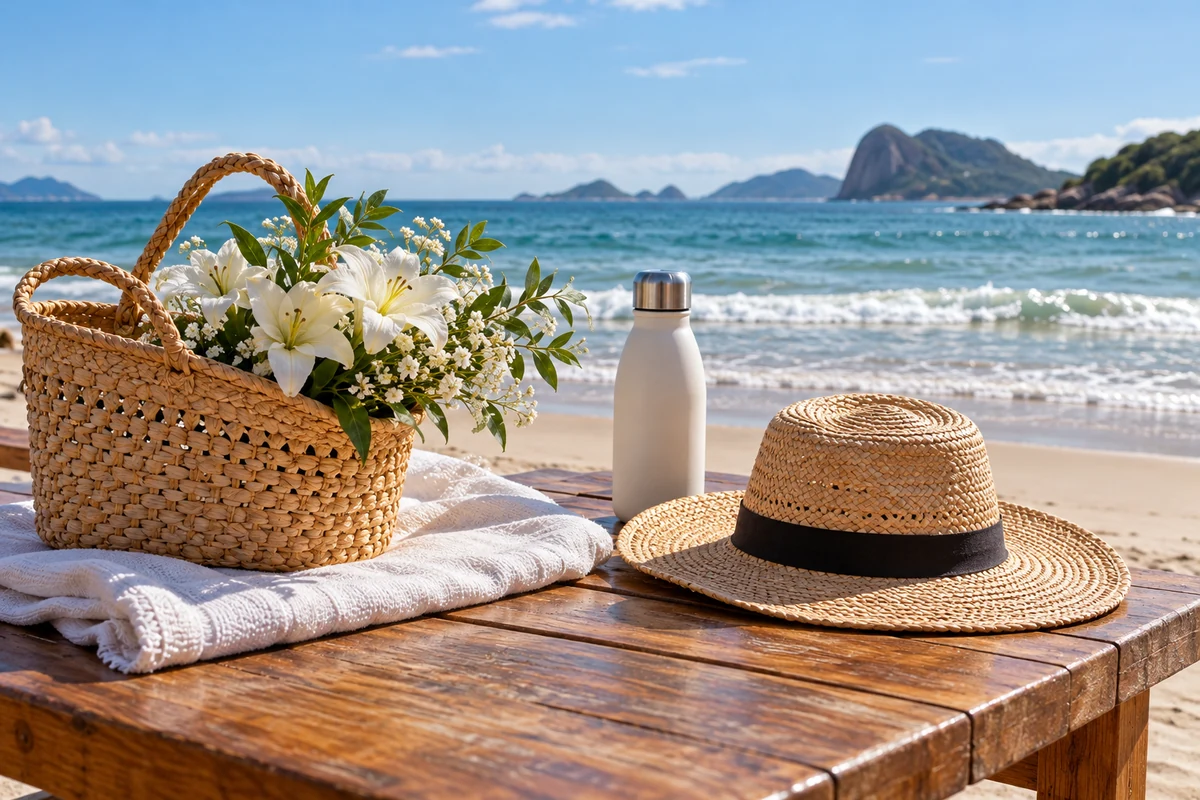
A lower-impact approach to the seven waves tradition starts with bringing less and leaving nothing from your own gathering behind. No material choice guarantees zero impact. Environmental advice should be discussed respectfully with organisers, not used to stereotype religious communities.
Materials and symbolic alternatives
For an informal gathering, a word of thanks or a personal object kept on land can replace a physical release into the water.
- Natural flowers — enjoy or hold them on land, remove packaging and take them home afterwards.
- Reusable containers — keep them with you; wood, leaves and coconut fibre are not permission to leave objects in the sea.
- Flameless symbols — an unlit decoration avoids fire; if using a battery light, retrieve it and keep batteries away from children.
- Scented products — leave oils and perfumes out of your beach activity rather than pouring them into the water.
Practical ways to reduce waste
Avoid releases of balloons, glitter, packaging and other materials. Plan what will happen to everything you bring before the visit. A product labelled compostable may require conditions that do not exist on a beach or in the sea.
- Keep glass and loose plastic out of your beach gathering and use durable items that you can safely carry away.
- Collect your own leftovers, including organic material, without disturbing other people’s ceremonial objects.
- Choose a suitable place and time, following restrictions for protected areas, wildlife and public access.
Planning a lower-waste gathering
- Plan the gesture: decide whether words, a quiet reflection or a small reusable object will be enough.
- Agree with the group: explain the plan to keep your materials on land and take them home.
- Bring bags for waste: separate items for recycling only where local facilities accept them.
- Celebrate without a release: watch the waves or share good wishes while keeping all objects in your possession.
- Check before leaving: look for dropped packaging and belongings, and use the appropriate bins or take waste home.
Working with the local community
Speak with organisers, residents and religious practitioners when planning a larger gathering. Helping visitors understand the setting can improve both behaviour and appreciation of the tradition, without claiming authority over someone else’s ceremony.
- Join an organised beach clean when appropriate, following its guidance about sharp items and ceremonial materials.
- Share a short packing and waste plan with your group before the visit.
- Ask local practitioners for guidance if you are invited to take part in a formal ceremony.
Local rules and safety
Check municipal and site rules about access, fires, candles, events and waste. Protected areas may have additional restrictions. Follow lifeguards’ instructions and never enter the sea merely to complete a ritual sequence.
A simple way to begin
Choose a quiet land-based reflection, bring only what you need and leave the coast clear of your materials. These choices allow you to acknowledge the meaning of the occasion while respecting the place and the people around you.
A thoughtful way to mark a new beginning
The tradition of jumping seven waves connects personal hopes with a wider Brazilian cultural and religious story. Learning about that story adds depth to a familiar New Year image without turning it into a promise of luck or protection.
Respectful participation includes listening to practitioners, accepting local differences and recognising when to stay on land. A moment of gratitude can remain meaningful without entering the water or leaving an object behind.
Thank you for reading. Share your own memories respectfully and visit the I Love Christmas blog for more stories about traditions, celebrations and the ways families make them their own.
Frequently asked questions about Brazil’s seven waves tradition
Where does the seven waves tradition come from?
It has strong associations with Afro-Brazilian religious life and devotion to Iemanjá, alongside popular New Year customs. An exact founding date or a single explanation for every community should not be assumed.
How can visitors avoid disrespecting the religious background?
Learn from the community involved, ask before joining a ceremony or taking photographs, and accept that some practices may not be open to visitors. Quiet observation is a valid form of interest.
What can I offer without adding waste to the sea?
For an informal personal celebration, use a spoken wish, reflection or flower that stays with you on land. Biodegradable materials are not automatically harmless; follow local rules and take your own items home.
When and where should I take part?
A daytime visit and a symbolic gesture on dry land are sensible alternatives to entering the sea at midnight. Follow local warnings and lifeguard advice; do not enter after alcohol, in darkness or in unsuitable conditions.
Can children join the celebration?
They can share an age-appropriate moment on land with close adult supervision. Do not treat inflatable toys or buoyancy aids as permission to enter unsafe water. Children can count waves or share wishes without going into the sea.
What should I do if someone is in difficulty in the sea?
Alert lifeguards and emergency services; do not attempt an untrained water rescue. In Brazil call 193. At the UK coast call 999 or 112 and ask for the Coastguard, then follow the operator’s instructions.
Sources and Further Reading
- Joana Bahia and Farlen Nogueira: offerings to Iemanjá and Umbanda Omolocô in public space (Religare)
- Government of Bahia: Iemanjá celebrations, culture and environmental care
- RNLI: alcohol and water safety
- RNLI: key water safety messages
- RNLI: inflatable toys and offshore winds
- Araruama official bulletin: Rio de Janeiro fire brigade advice on night swimming and emergency number 193