The history of New Year fireworks reaches back to Chinese gunpowder traditions and the gradual development of public displays. In Brazil and elsewhere, fireworks became part of major celebrations. Their cultural appeal now sits alongside questions about safety, noise, waste and the needs of people and animals nearby.
The history of New Year fireworks spans centuries, from early Chinese pyrotechnics to large contemporary events. Why do so many celebrations mark midnight with light and sound? This guide explores the background, Brazilian customs and ways to enjoy the occasion more considerately.
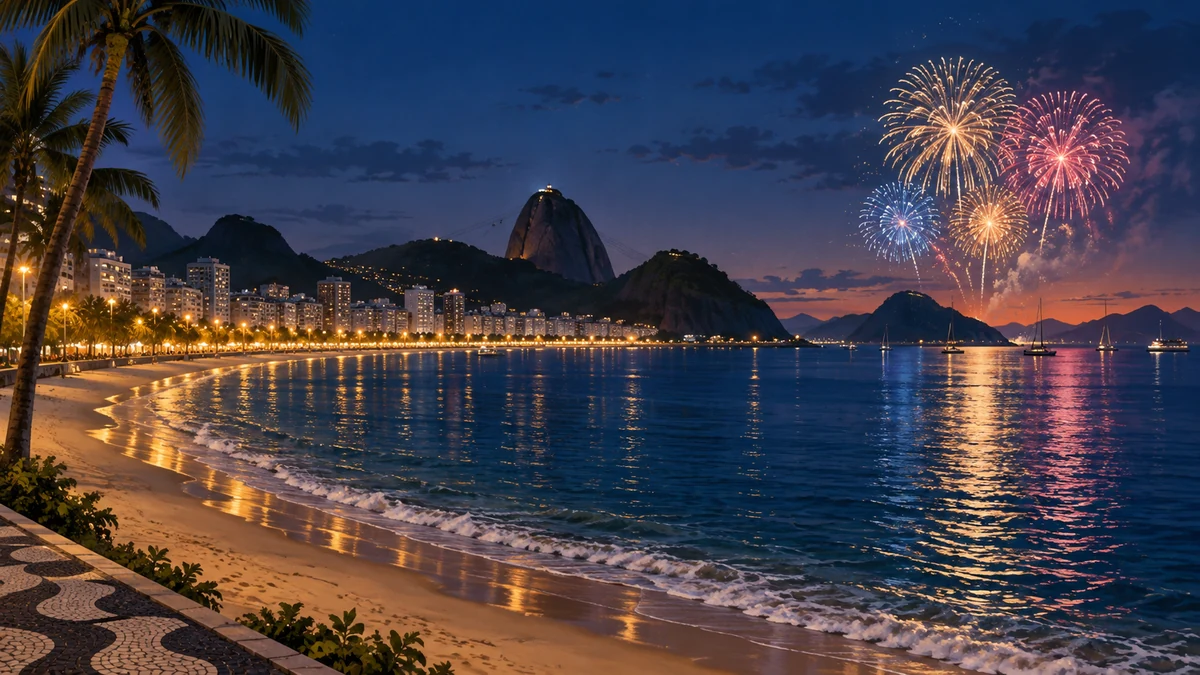
Illustrations in this article are conceptual images, not documentary photographs or evidence of a particular historical event, destination, venue or access route.
The origins and development of fireworks

Fireworks developed from gunpowder technology in China. Their earliest history is complex: firecrackers, rockets and later aerial displays did not all appear together, and there is no single neat invention date for every form.
Early pyrotechnics had ceremonial and celebratory uses. Driving away harmful spirits is one traditional explanation for loud firecrackers; it describes a belief, not a physical effect or a universal meaning.
The spread beyond China
Knowledge of gunpowder travelled beyond China over time, through contact between societies as well as trade and warfare. Its development in the Middle East and Europe involved different military and ceremonial applications.
Elaborate displays later became associated with court festivities and civic occasions in Europe. Their presentation developed alongside stagecraft, architecture and public spectacle, rather than following a single straightforward sequence everywhere.
Colour, technology and modern displays
Developments in chemistry expanded the colours and effects available to display designers. Different materials produce different visual results; this is part of the history of professional pyrotechnics, not an invitation to experiment with mixtures at home.
Electronic firing and timing systems made more complex coordination possible, including displays set to music. Technology does not make fireworks risk-free: specialist planning, suitable locations and trained operators remain essential.
A cultural inheritance: fireworks have taken on different roles across societies, from ritual and court entertainment to large public celebrations.
How fireworks travelled from China to the West
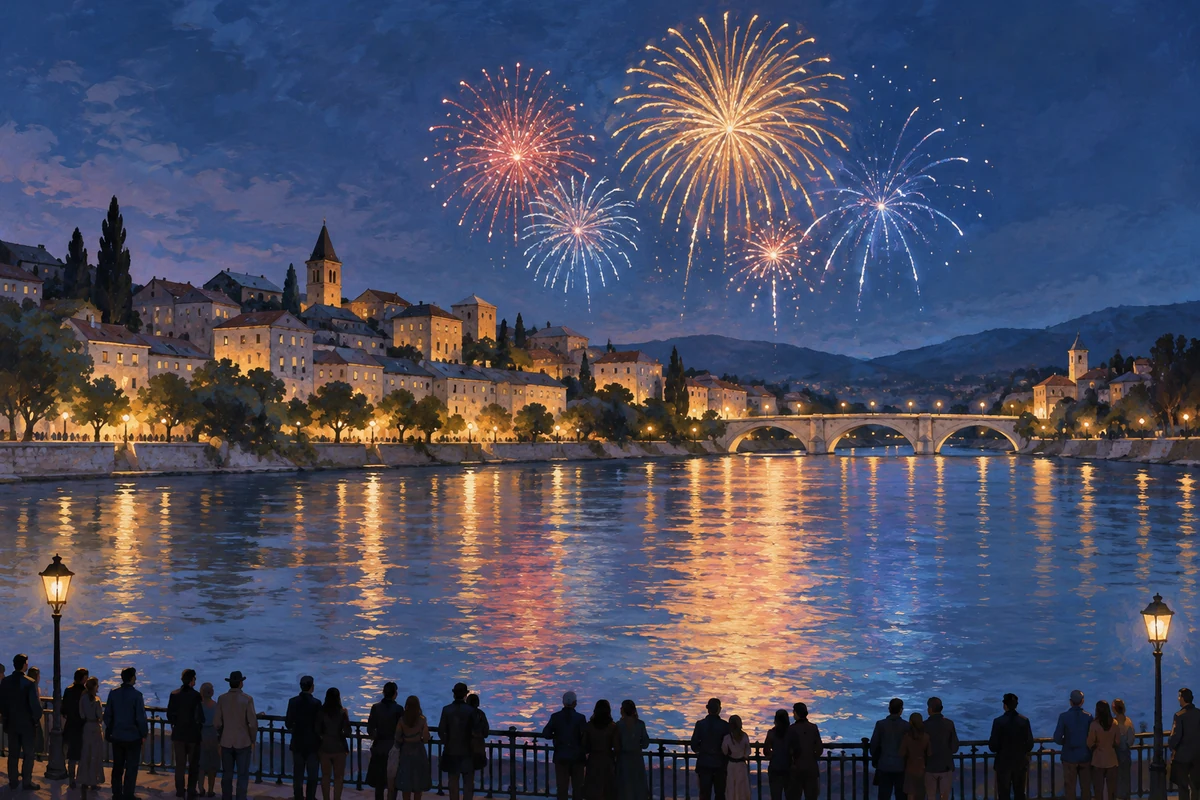
The spread of gunpowder knowledge involved many people and routes over centuries. Trade, diplomacy, conflict and the movement of skilled workers all form part of that wider story.
The Silk Roads provide a useful context for exchanges across Eurasia, but they should not be treated as one delivery route with a firmly established timetable for every firework technique.
Trade and cultural exchange
Techniques changed as knowledge travelled. Written accounts, demonstrations and practical experience allowed later makers to adapt what they learned, although the surviving record is incomplete.
Developments in the Middle East and Europe added to the technology’s history. Avoid reducing that process to a single person, caravan or invention when the evidence does not support such precision.
Contact during the medieval period, including the movement of armies and specialists, helped connect regions. The detailed routes and timing of individual innovations remain subjects for historical research.
In Europe, gunpowder had both military and ceremonial uses. Methods and presentation developed over time, and fireworks became part of court and civic entertainment.
Wider maritime connections later helped carry celebratory practices to other regions. Local communities adapted them rather than simply reproducing one identical tradition worldwide.
New Year fireworks in Brazil: customs and public celebrations
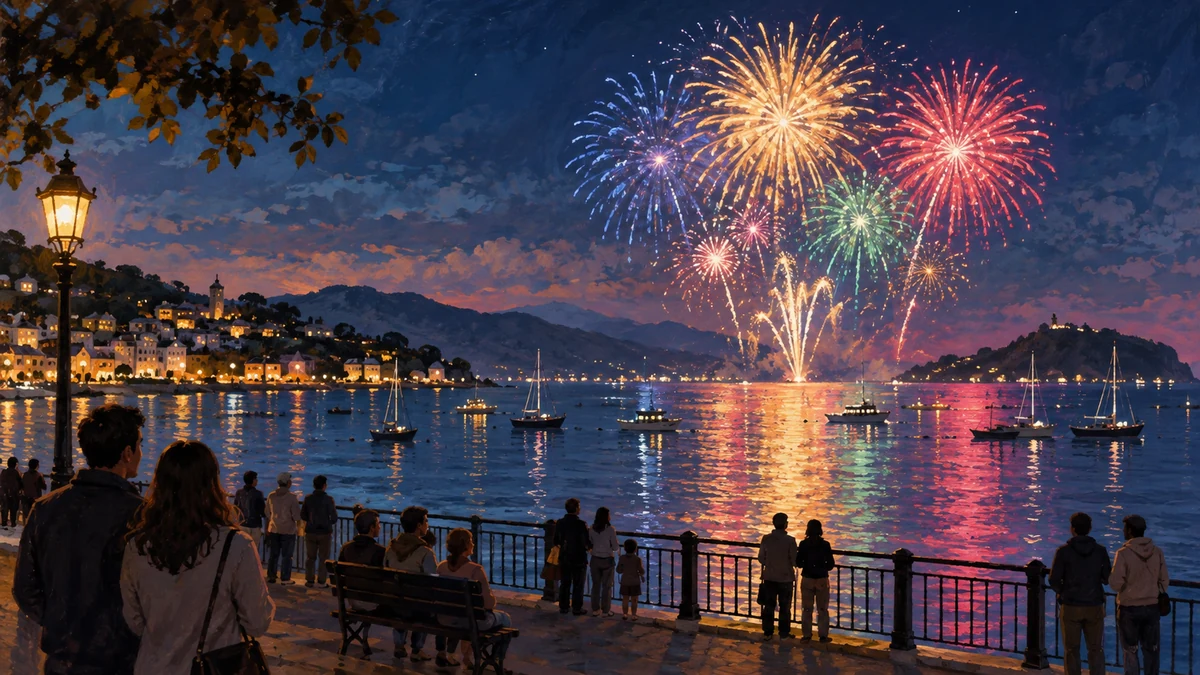
In Brazil, the turn of the year can combine religious observance, family customs, music and public festivities. The mix varies by place and community, and not every celebration includes fireworks.
Familiar customs
Wearing white is associated with hopes for peace in many Brazilian New Year celebrations. Coastal observances connected with Iemanjá have Afro-Brazilian religious significance and should be described respectfully, rather than reduced to a generic party superstition.
- Jumping seven waves is a familiar custom for some people, but entering the sea at night carries risks. A reflection or wish made safely on dry land is an alternative.
- Some traditions involve offerings. Visitors should respect local guidance and avoid releasing boats, packaging, candles or other material into the sea.
- Quiet reflection, gratitude and hopes for the coming year can also be part of the occasion.
Street parties and community events
Some cities organise public concerts and other celebrations, while smaller gatherings take place locally. Programme details, admission arrangements and facilities differ, so check the organiser’s current information.
A community event may include a professional fireworks display or other entertainment, but neither is guaranteed. Local music and cultural performances can be important in their own right.
Large public displays
Copacabana in Rio de Janeiro is a well-known setting for New Year celebrations and fireworks over the sea. The programme and operating arrangements change, so past crowd figures or display details should not be treated as a promise for the next edition.
Cities such as Salvador, Recife and Fortaleza also host New Year festivities. Check each city’s announcement to see whether its current programme includes fireworks, concerts or other attractions.
Organisation and local impact
A large display requires planning for spectators, technical operations, emergency access and the surrounding environment. Costs, permissions and responsibilities depend on the location and scale of the event.
Attending considerately
Stay within spectator areas and follow staff instructions. Choose suitable hearing protection where appropriate, but leave if the noise is distressing. Do not bring pets to a fireworks crowd; arrange a secure, familiar place for them away from it.
Lower-noise displays and non-pyrotechnic light events may reduce some disturbance. “Quiet” does not necessarily mean silent, and bright lights, music or crowds can still affect people and wildlife.
Safety, local rules and responsible choices
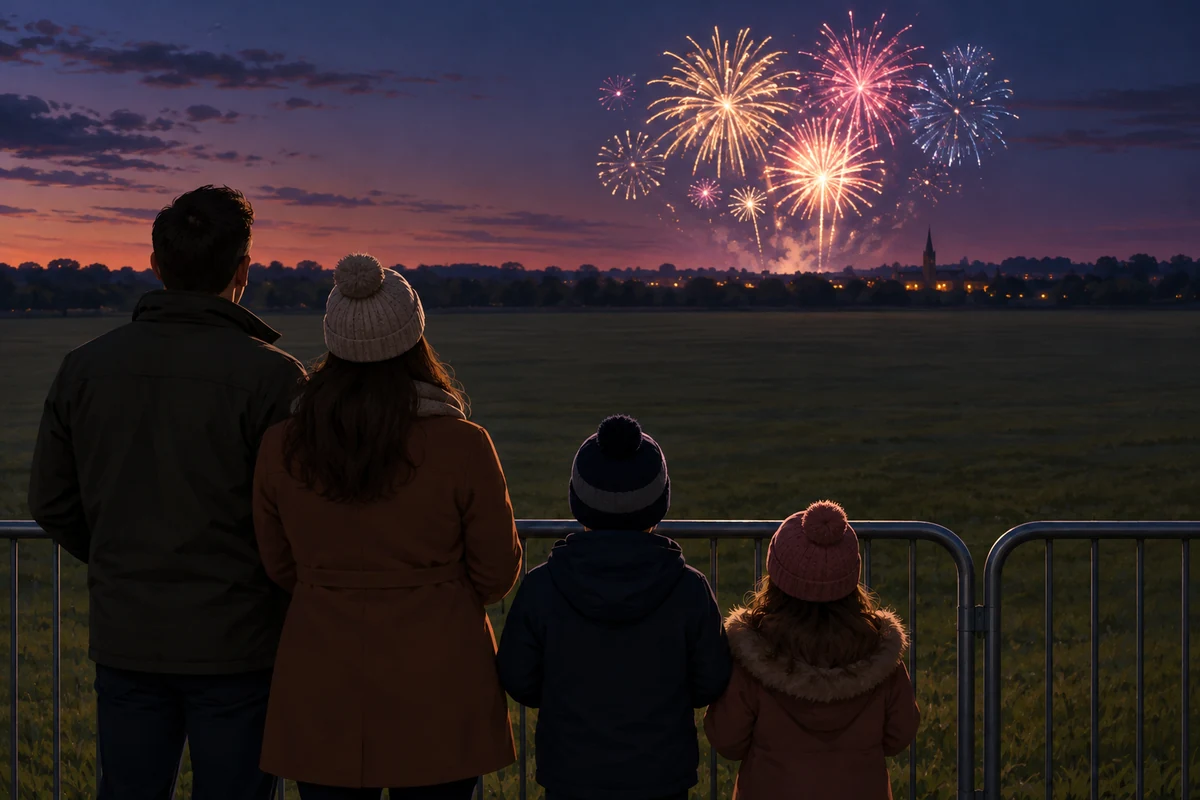
Fireworks are explosive products, not harmless decorations. A professionally organised display is a better choice than improvising a home event, and this cultural overview is not a substitute for the Firework Code or specialist event guidance.
Laws and permissions
In England, consult GOV.UK and your local council for current rules. Consumer fireworks have age and time restrictions, and professional-category products are not for home use. In Brazil, check the relevant local authorities; do not assume an INMETRO claim alone establishes that a product or display is lawful.
Public-event requirements depend on the jurisdiction and venue. Organisers need to establish the applicable permissions, professional responsibilities, insurance and emergency arrangements before proceeding.
Buying and storing products
If purchasing lawful consumer fireworks, use a reputable seller and follow the product instructions and official guidance. Never make, modify or dismantle a firework, and keep products away from children.
- Storage: follow the manufacturer’s directions and keep products away from heat, flames and incompatible materials.
- Transport: obtain the retailer’s guidance and comply with applicable rules; protect the original packaging from damage.
- Condition: do not use damaged or water-affected products. Ask the supplier or local authority about appropriate disposal.
Essential precautions
- Location: there is no universal ten-metre rule that makes any site suitable. The product’s requirements, surroundings and available space all matter.
- Distance: follow the required separation and official guidance; keep spectators out of the operating area.
- Preparation: use the Firework Code and specialist advice rather than relying on a short online checklist.
- Handling: only appropriate adults should handle lawful consumer products, following every instruction. Professional fireworks require professionals.
- A failed firework: never go back to a firework that has been lit and never try to relight it. Keep others away and obtain appropriate advice; do not approach after an arbitrary short wait.
Looking after people at home
Keep children supervised and away from the operating area. Do not carry fireworks in pockets or hold products that are not designed for that use. Protective equipment is not a substitute for correct distances, handling and an appropriate venue.
Professional events
Larger displays belong with competent professional operators. Organisers should establish suitable exclusion areas, crowd management, permissions, insurance and an emergency plan, using the relevant authorities’ guidance.
If someone is injured
- Check for danger: do not enter an active firing area or put yourself at risk to reach someone.
- Get emergency help: call 999 or 112 in the UK for serious injury. In Brazil, 193 reaches the fire service and 192 SAMU. Alert event first aiders where available.
- Cool a burn: use cool running water for 20 minutes, keeping the rest of the person warm. Do not use ice, butter or creams, and do not remove clothing stuck to the skin. Source: NHS: burns and scalds
- Serious burns: arrange urgent medical care. After cooling, loosely cover with a suitable clean dressing or cling film laid over the area, not wrapped around a limb; do not put cling film over the face.
- Other injuries: follow the emergency call handler’s advice. Eye injuries need urgent assessment; do not rub the eye, press on it or remove embedded debris.
Animals and the environment
Plan for pets before the noise begins. Provide a secure, familiar indoor space and seek veterinary advice for animals that become very distressed. Organisers should consider nearby wildlife, livestock and sensitive habitats as well as spectators.
Effects on air quality, animals and communities

Fireworks can create smoke, noise and debris beyond the viewing area. The scale and duration of the impact depend on the products, weather, location and event, so broad claims about every display should be treated cautiously.
Air quality and residue
Fireworks can cause short-lived increases in airborne particles, including PM2.5. Residue may settle on nearby surfaces. The amount and consequences vary; it is not accurate to assume the same contamination occurs around every display.
- Particles and metals: some colour-producing compounds contribute to the material released during a display.
- Local assessment: weather, background pollution and the site affect air quality and where residue settles. Specific environmental claims need site-specific evidence.
Effects on animals
Sudden noise and flashes can frighten domestic animals and disturb wildlife. Frightened pets may try to escape, so secure surroundings and an advance plan are important.
- Birds and other wildlife may be disturbed near display sites. Avoid assuming every event has the same effect on migration or breeding.
- Coastal and waterside events also need attention to habitats and residue. Claims about underwater noise or marine effects require evidence for the actual location and equipment.
Effects on people
Some people find loud bangs, flashes or smoke particularly difficult, including those with sensory sensitivities, respiratory conditions or traumatic experiences. Preferences and needs vary, and a quieter alternative may be more suitable.
- Air-quality concerns: anyone affected by smoke should avoid the exposure and follow their usual health advice. Do not assume a display’s crowd area is suitable for everyone.
- Well-being: advance information about timing and noise helps people decide whether to attend or make other arrangements.
Waste and fire risk
Displays can leave casings and other debris, while hot material can ignite dry vegetation or nearby objects. Clear-up must be planned, and spectators should not pick up unexploded items or hot remnants.
Reducing the impact
Useful measures include:
- Considering quieter alternatives, such as a suitable light installation, or lower-noise professional effects where appropriate.
- Publishing the timetable so neighbours can prepare for the event.
- Using competent operators with a clear plan for safety, residue and disposal.
- Planning specialist clear-up rather than asking untrained volunteers to handle suspected unexploded fireworks.
Local policy and community input
Councils and environmental authorities can advise on local restrictions and sensitive sites. Listening to residents helps organisers balance a celebration’s appeal with the needs of people who have not chosen to attend.
Community measures can include clear advance notices, animal-welfare advice and appropriate environmental monitoring where required.
Symbolism and New Year beliefs
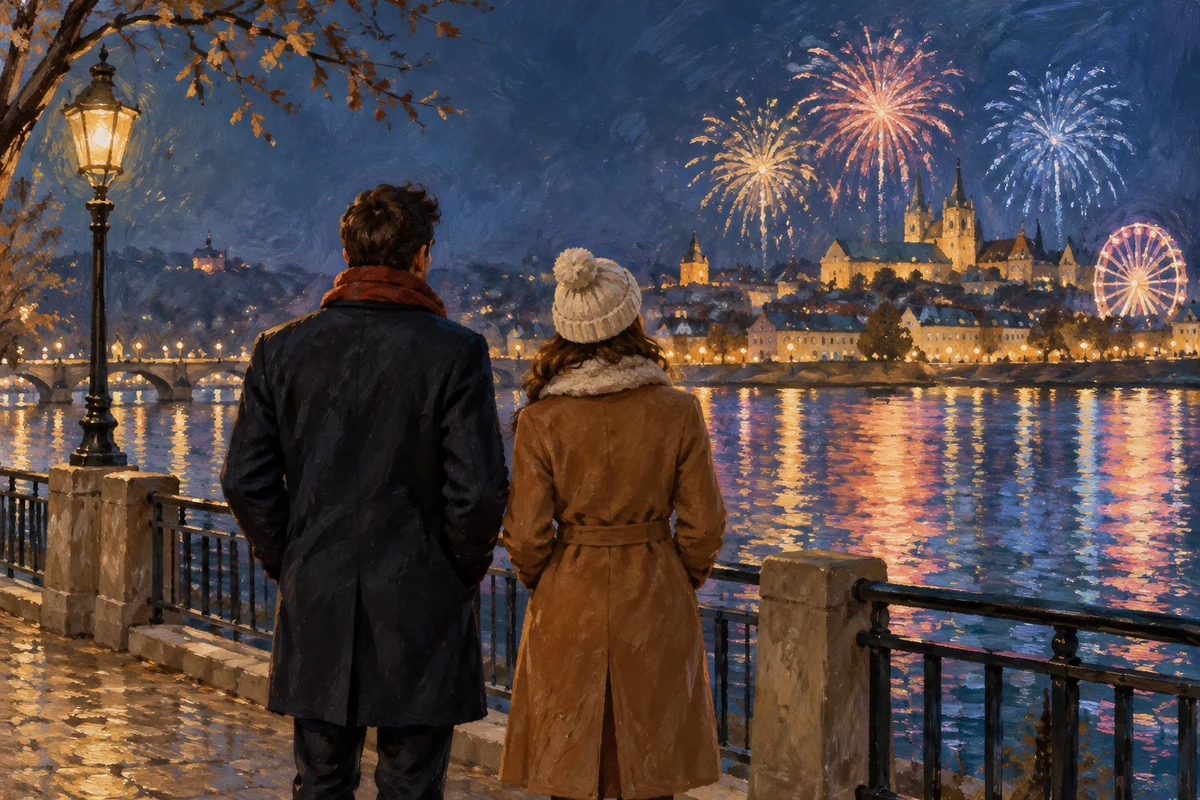
Fireworks carry symbolic meanings that differ between cultures. A burst of light at midnight may suggest a fresh start, a shared celebration or simply the excitement of a spectacle.
Beliefs about noise and light
Some historical traditions connect loud bangs with driving away harmful spirits. Such explanations belong to cultural belief and should not be presented as evidence that fireworks bring protection or change events.
Personal interpretations
- The first burst: some people give the first moment of a display a personal meaning, but there is no universal rule about luck.
- Making a wish: a spectator may use the moment to think about a hope or express gratitude.
- Sharing the occasion: watching together can mark friendship or family connection without a supernatural interpretation.
Colours and meaning
People sometimes attach their own meanings to colours. The following are possible personal associations, not an established international code for fireworks:
- Red: energy or affection.
- Green: hope or renewal.
- Blue: calm or reflection.
- Gold: achievement or celebration.
Customs alongside the display
Brazilian beach celebrations may bring together white clothing, religious observances and other family customs. The meaning of a ritual belongs to its participants; visitors should respect it without entering unsafe water or leaving material in the sea.
Contemporary meanings
Today, a public fireworks display may represent a city’s celebration, a shared occasion or a tourist attraction. Those meanings can coexist with disagreement about noise, cost and environmental impact.
An individual response
For one person, fireworks may suggest hope; for another, they may be uncomfortable or frightening. A considerate celebration leaves room for different reactions rather than assuming everyone enjoys the same experience.
Alternatives: light shows, drones and quieter celebrations
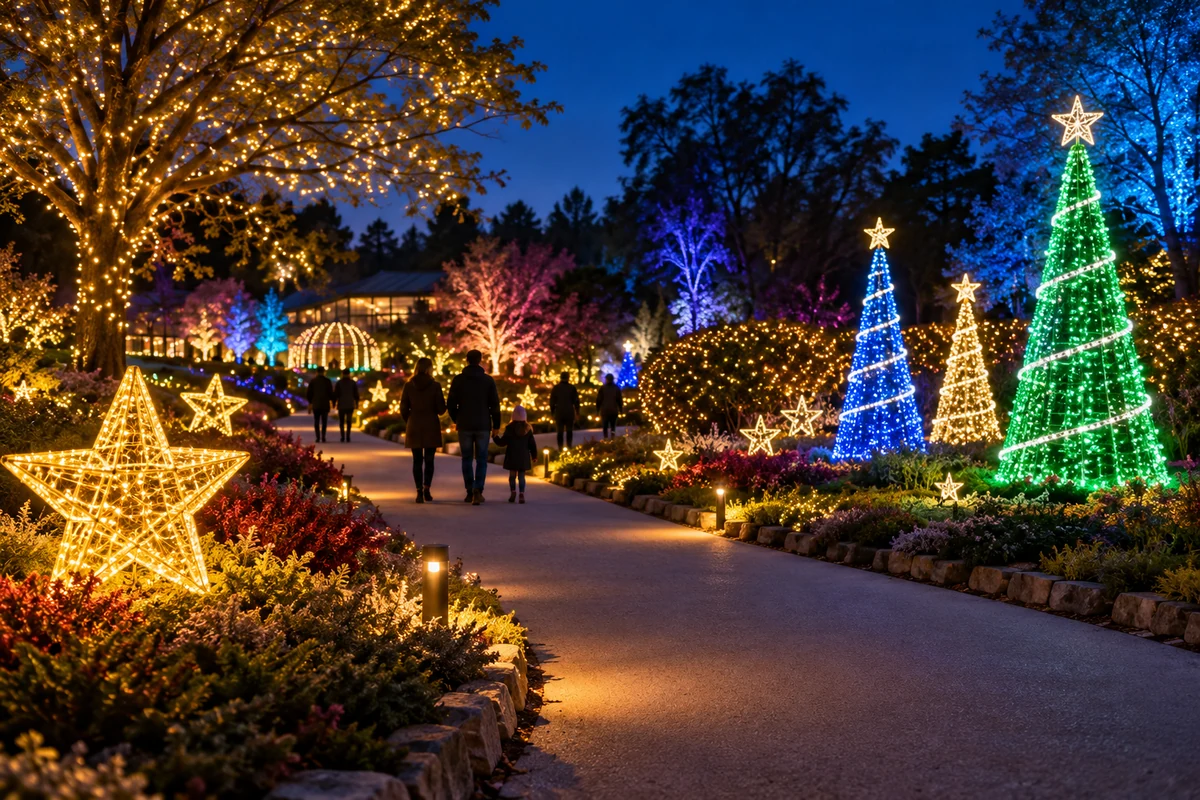
Non-pyrotechnic options can avoid explosive bangs and combustion at the display itself. They are not automatically silent, risk-free or environmentally harmless: energy use, equipment, light, sound and wildlife still need consideration.
Possible alternatives
- Drone displays: coordinated aircraft can create illuminated shapes, but need competent operators, appropriate aviation permissions and suitable conditions.
- Projection mapping: animations can be shown on suitable surfaces, subject to permission and consideration of nearby residents and wildlife.
- LED lighting with music: installations can change colour and pattern, with sound levels adjusted for the audience and neighbourhood.
- Laser shows: these need specialist safety planning because beams can endanger eyes and aircraft. They are not a casual do-it-yourself alternative.
- Lower-noise fireworks: they may reduce bangs but still involve pyrotechnics, light and residue. Ask for evidence behind any “silent” or “eco-friendly” claim.
- Reusable lights and decorations: these can suit smaller celebrations. Do not release confetti, balloons or sky lanterns into nature, even when a product is labelled biodegradable.
Potential benefits
- Less sudden noise: a well-chosen alternative may be easier for some people and animals to tolerate.
- Less combustion at the event: light-based options avoid firework smoke, although their wider environmental footprint still matters.
- More choice: quieter sessions and clear information can help people decide what suits them; flashing lights may still be unsuitable for some visitors.
- Adjustable presentation: technical systems can offer flexible timing and effects, provided they are properly designed and operated.
Where alternatives may be useful
Consider quieter options near homes, care facilities, hospitals or sensitive habitats. Assess the actual site rather than assuming that a drone or light show cannot disturb people or wildlife.
Planning a professional light or drone event
- Set the brief: decide what the event is for, who it serves and how long it should run.
- Assess the site: use qualified advice on wildlife, aviation, electrical safety and neighbouring uses.
- Choose competent suppliers: verify relevant permissions, insurance and experience rather than relying on a general marketing claim.
- Plan the layout: leave technical operating areas and audience access to the responsible professionals.
- Inform the community: give clear information about dates, times, sound and lighting.
- Arrange appropriate testing: tests also need to respect permissions, neighbours and safety controls.
- Prepare for changes: have an agreed cancellation or alternative plan for weather, technical problems or restrictions.
Practical considerations
- Ask about equipment maintenance, battery management and responsible disposal, alongside any environmental claims.
- Provide accessible spectator arrangements, clear signs and trained staff appropriate to the event.
- Follow specialist advice for sensitive sites, including any monitoring required by the relevant authority.
- At home, simple decorative lighting or a small suitable projection may be enough. Secure battery compartments and use equipment as directed.
Careful planning and community discussion help organisers choose an appropriate celebration without treating any technology as impact-free.
A thoughtful way to celebrate
New Year fireworks bring together history, symbolism and spectacle. They also raise practical questions about safety, noise and the surrounding environment that deserve attention before an event.
Consider a well-organised professional display or a suitable quieter alternative. Respect people who prefer not to take part, and make plans that account for animals and nearby communities too.
Thank you for reading. Visit the I Love Christmas blog for more festive history, traditions and practical ideas for the end of the year.
Frequently asked questions about New Year fireworks
Are fireworks allowed where I live?
Check the rules for your location and the product category. In England, GOV.UK and your local council provide guidance; New Year’s Eve has a 1 am cut-off under the general rules. Other UK nations and other countries can have different requirements. A public event may need additional permissions. Source: GOV.UK: fireworks and the law
How can I help my pets during fireworks?
Prepare a secure, familiar space before the noise begins, close windows and curtains where suitable, and let pets hide if they want to. Do not take them to a display or punish a fearful reaction. Ask a vet in advance if they become very distressed.
What environmental effects can fireworks have?
They can produce smoke, airborne particles, noise and residue, as well as a fire risk. The size and duration of the effects depend on the event, weather and location; specific claims need appropriate evidence.
What alternatives are available?
Professionally planned drone shows, projections and lighting can avoid firework combustion and explosive bangs. They still need safety and environmental assessment. For a small gathering, reusable decorative lights may be sufficient.
What should I do after a firework injury?
Avoid putting yourself in danger and call emergency services for serious injury. Cool a burn under cool running water for 20 minutes, avoid ice and creams, and seek medical advice. Eye injuries need urgent care: do not rub the eye or remove embedded material.
Sources and Further Reading
- GOV.UK: fireworks and the law
- RoSPA: fireworks safety
- NHS: burns and scalds
- Smithsonian: origins of rockets and fireworks
- DEFRA: particulate matter
- GOV.UK: organising non-professional fireworks displays