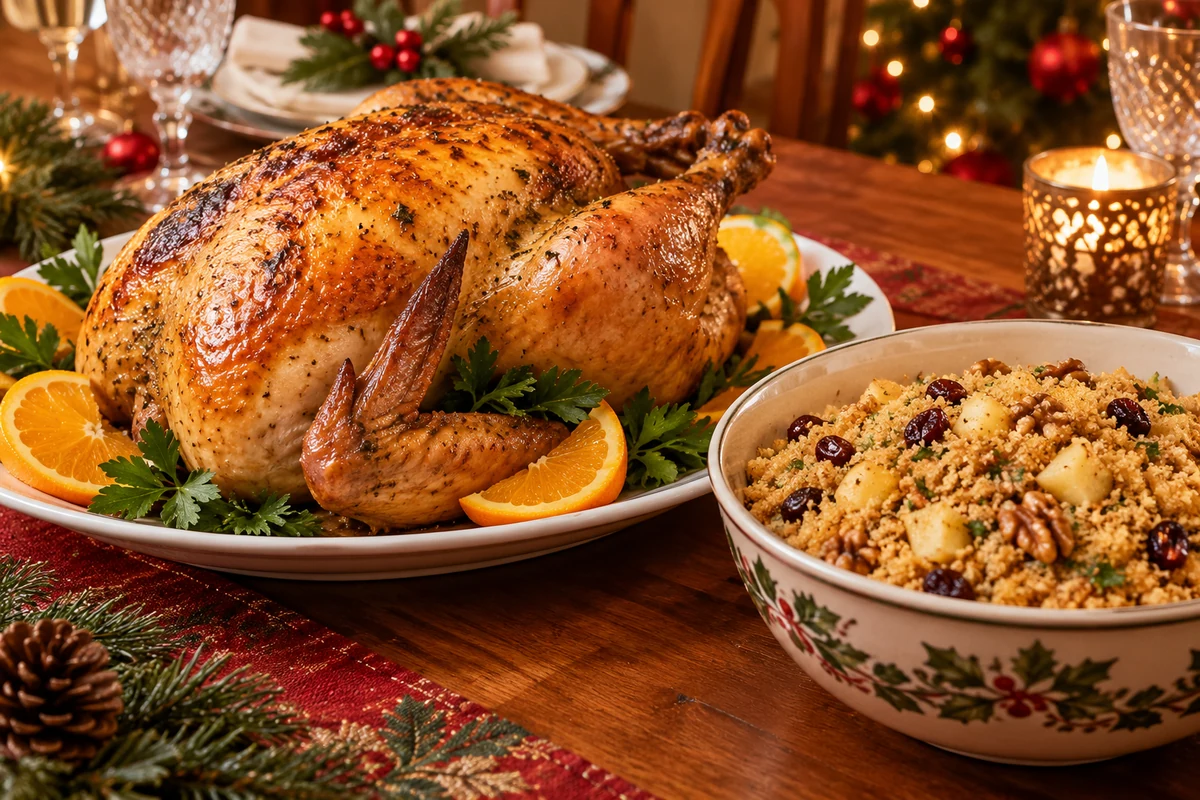
Christmas Chester with fruit farofa pairs roast poultry with toasted cassava flour, apples, dried fruit and nuts. Chester is a Brazilian branded chicken product, often sold already seasoned. This UK adaptation cooks the farofa separately for more predictable cooking; it also explains alternatives, preparation, temperature checks and accompaniments.
Christmas Chester with fruit farofa brings a familiar Brazilian sweet-and-savoury combination to the festive table. Although often described as a stuffed roast in Brazil, the method here serves the farofa alongside the bird. If Chester is unavailable, choose a roasting chicken and follow the cooking instructions for its actual weight.
Ingredients for Chester with fruit farofa
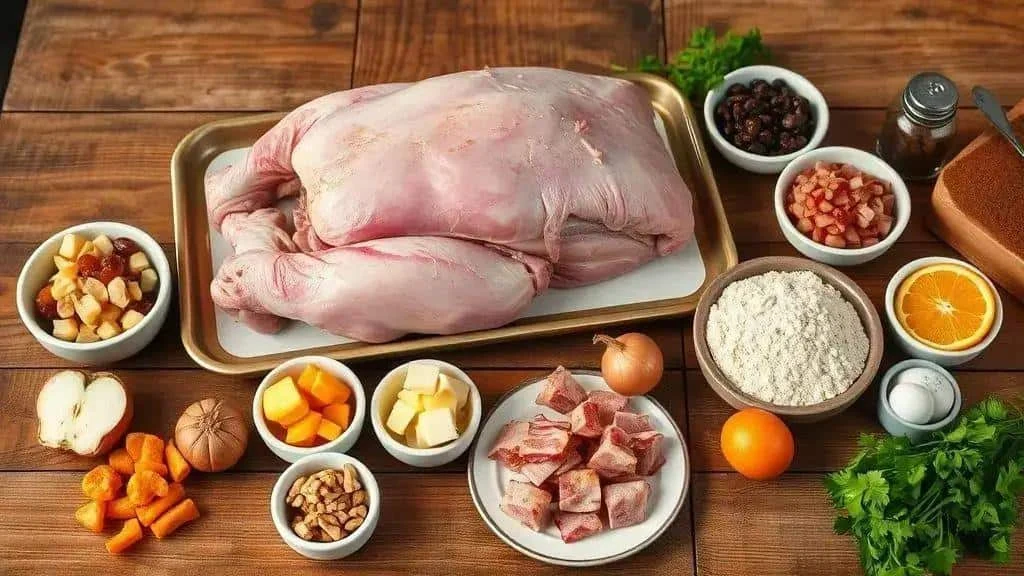
For Chester with fruit farofa, assemble the ingredients below. Use a 240 ml measuring cup for the cup quantities, and check whether your bird is already seasoned before adding salt.
- 1 Chester, about 3–4 kg – fully thawed if frozen, giblets removed. A roasting chicken is a practical UK alternative; a turkey needs its own cooking instructions, not the same timing.
- Salt, only as needed – omit extra salt on a pre-seasoned Chester unless its label advises otherwise. The original two-tablespoon quantity is not appropriate for every bird or type of salt.
- 1 teaspoon ground black pepper – or white pepper for a different flavour.
- 4 tablespoons unsalted butter for the bird – softened; alternatively, use 3 tablespoons olive oil or a suitable dairy-free spread.
- 4 garlic cloves, finely chopped – or 2 teaspoons garlic paste, checking whether it contains added salt.
- 1 medium onion, chopped – for the farofa. Two spring onions give a milder alternative.
- 2 large eating apples, peeled and diced – Gala or Fuji work well. A little lemon juice can reduce browning if preparing them ahead.
- 100 g dried apricots – chopped; dates or dried figs are alternatives.
- 80 g raisins or sultanas – or dried cranberries.
- 80 g pitted prunes – chopped; use more apricots if preferred.
- 100 g chopped walnuts or other nuts – almonds or Brazil nuts also work. Omit for a nut-free version and check other labels.
- 4 tablespoons butter for the farofa – separate from the butter for the bird; alternatively, use 3 tablespoons vegetable oil.
- 2 cups toasted Brazilian farinha de mandioca – the coarse cassava flour used for farofa, not tapioca starch or fine baking cassava flour. Breadcrumbs give a different, non-traditional accompaniment if this ingredient is unavailable.
- 150 g diced bacon, optional – for a smoky savoury note. Calabresa sausage is another option, cooked according to its label. Omitting bacon makes the farofa meat-free, not the poultry dish.
- 2 tablespoons soft brown sugar – or 1 tablespoon honey. Reduce or omit if your dried fruit is very sweet.
- Zest of 1 orange and 60 ml orange juice – for the farofa. Reserve the juice used to soak the fruit rather than adding a second full measure later. Apple juice is an alternative.
- ½ cup chopped parsley and spring onion – reserve a little for the bird if desired; parsley alone is also suitable.
- 2 chopped hard-boiled eggs, optional – fold into the farofa at the end. For a creamier variation, omit the eggs and add up to 60 ml cream sparingly; this changes the crumbly texture.
- ½ teaspoon paprika and ½ teaspoon grated nutmeg, optional – for the farofa. Use only one, or less, if preferred.
Tips and substitutions
Quantities: adjust the amount of farofa to the number of guests rather than the cavity size. It is cooked and served separately in this version.
Without bacon: the listed butter or oil is usually sufficient. Well-browned onion or sautéed mushrooms add savoury flavour without pretending to reproduce bacon exactly.
More fruit and herbs: reduce the cassava flour a little and add extra apple or herbs for a softer, fruitier side. This is a flavour variation rather than a nutritional claim.
Prepare the dried fruit: soak it in the measured warm orange juice for 10–15 minutes. Drain over a bowl and reserve the liquid for finishing the farofa.
How to prepare Chester with fruit farofa
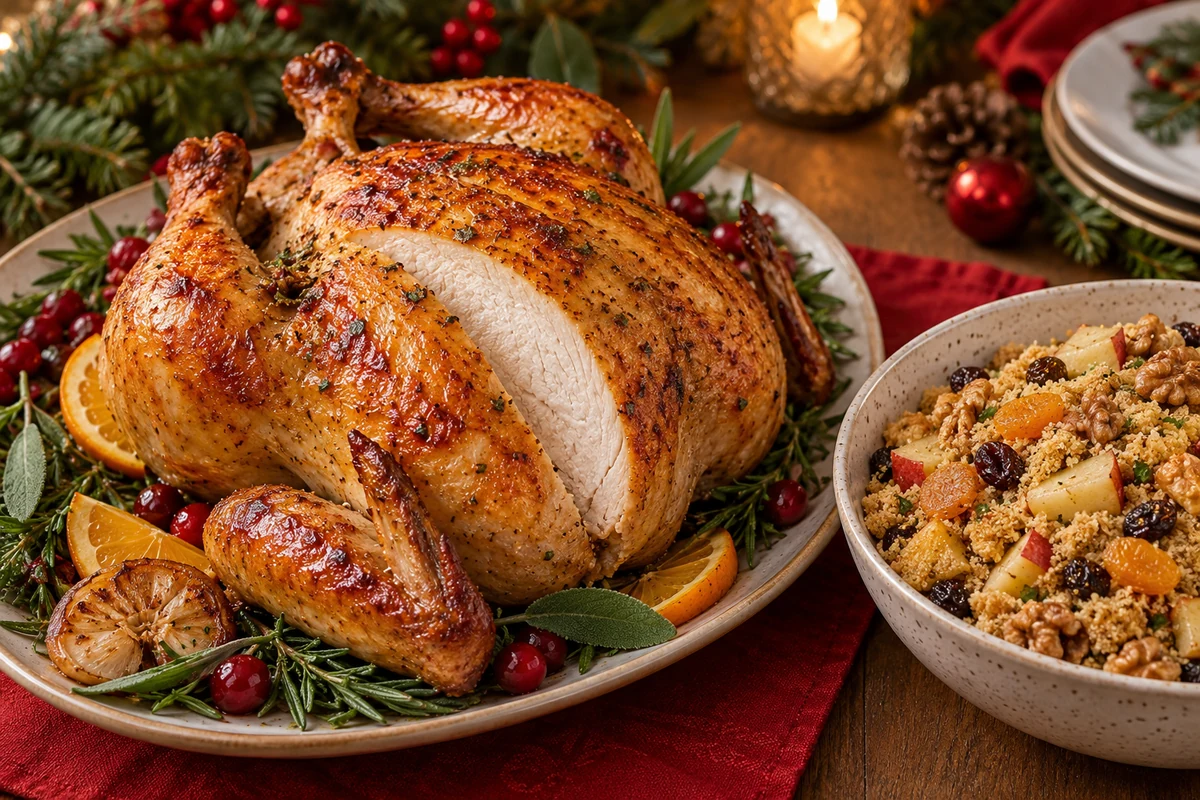
Prepare Chester with fruit farofa in two parts: roast the bird according to its packaging, then make the farofa on the hob while it cooks. The timing depends on the product, weight and oven.
- Prepare the bird: remove giblets and packaging from the cavity and pat the skin dry with kitchen paper. Do not wash raw poultry.
- Season appropriately: add pepper and only the salt needed for an unseasoned bird. Chester is commonly sold pre-seasoned, so do not automatically add salt inside and outside.
- Spread butter under the skin: loosen the breast skin gently and add 2 tablespoons of the bird’s butter mixed with 2 garlic cloves and a little of the herbs. Spread the remaining 2 tablespoons over the skin.
- Prepare the fruit farofa (see the
farofa method
below):
cook it separately and serve it beside the roast. Keep its utensils and ingredients away from raw poultry. - Leave the cavity unstuffed: this allows the bird and the farofa to cook independently. Do not use the unstuffed timing for a filled bird; a stuffed version needs its own suitable recipe and cooking checks.
- Arrange the bird: tuck the wing tips underneath. If you tie the legs, use food-safe kitchen string loosely and follow the product instructions.
- Preheat the oven: follow the temperature on the bird’s packaging. For an unseasoned roasting chicken, use the appropriate weight-based roasting instructions rather than treating it as an identical product.
- Place in a roasting tin: a rack helps keep the bird above the collected juices. Use a tin deep enough to catch drips without overflowing.
- Roast: follow the manufacturer’s cooking time and start checking before the estimated finish. A fixed 2–2½ hours cannot cover every 3–4 kg bird, oven and preparation.
- Check with a food thermometer: probe the thickest parts of breast and thigh without touching bone. Each should reach 75°C for 30 seconds, or an equivalent safe combination such as 70°C for 2 minutes.
- Baste if needed: use the hot tray juices sparingly, following the packaging guidance. Frequent oven opening slows cooking, and basting does not replace checking the centre.
- Protect the skin: loosely cover with foil if it browns before the meat is cooked, then uncover towards the end if needed.
- Optional glossy finish: mix an additional 1 tablespoon honey with 1 tablespoon orange juice and brush on during the final 15–20 minutes. These are extra glaze ingredients, separate from the farofa quantities; watch closely for scorching.
- Rest: once properly cooked, leave the bird loosely covered for about 20 minutes before carving.
- Carve carefully: remove legs and thighs, then slice the breast and serve with the prepared farofa alongside.
- Store leftovers: portion, cool and refrigerate the meat and farofa within 1–2 hours. Eat within 48 hours of cooking or freeze promptly; reheat once until steaming hot throughout.
Making the fruit farofa
- Soak the dried fruit: put the apricots, prunes and raisins in the 60 ml warm orange juice for 10–15 minutes, stirring occasionally. Drain and keep the soaking juice.
- Cook the bacon and onion: melt 2 tablespoons of the farofa butter in a large frying pan. Cook the optional bacon thoroughly until browned, add the onion and soften it, then stir in the remaining 2 garlic cloves briefly without burning them.
- Add apples and sugar: stir in the diced apples and brown sugar, or the chosen honey alternative. Cook for 3–4 minutes until the apples begin to soften.
- Add dried fruit and nuts: stir in the drained fruit and chopped nuts, cooking for another minute.
- Add the cassava flour: sprinkle it in gradually and stir to toast it lightly. Add the remaining 2 tablespoons of farofa butter as needed for a loose, pleasantly crumbly texture.
- Finish with citrus and herbs: add the orange zest, herbs and reserved soaking juice a little at a time. Stir in the optional paprika and nutmeg, then the chopped hard-boiled eggs if using. Heat through and adjust seasoning; there is no need to add a second 60 ml of juice.
- Check the texture: the farofa should be moist enough to eat comfortably but not wet or clumped. Stop adding liquid when it reaches that point; if using the optional cream, add it sparingly instead of some juice.
Variations on Chester with fruit farofa
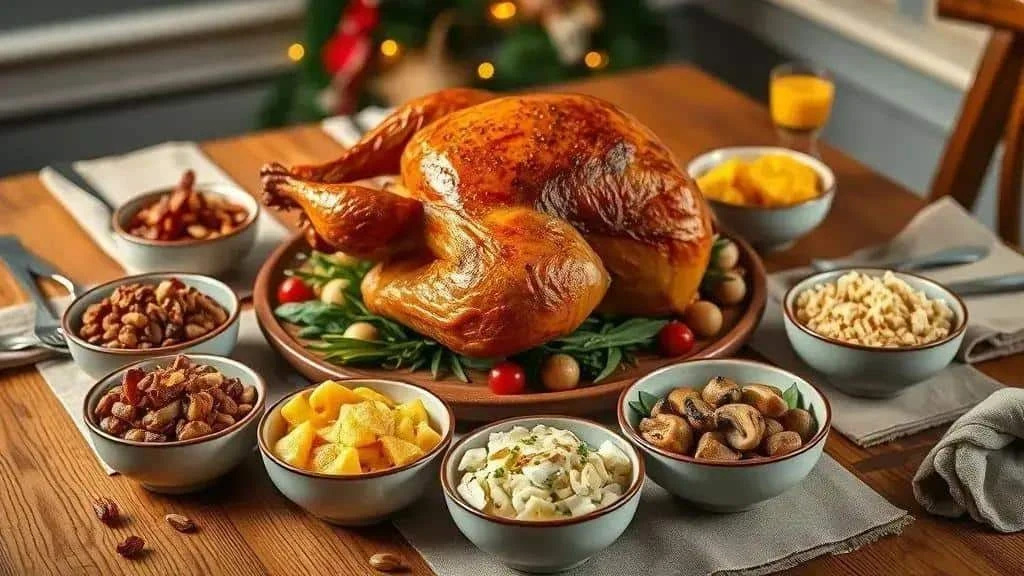
Adapt Chester with fruit farofa to your guests by changing the side dish or replacing the whole centrepiece. Check every ingredient when catering for allergies.
Vegetarian alternative
Serve the farofa as part of a vegetarian meal, or pair it with a plant-based roast cooked according to its own instructions. Replace bacon with sautéed mushrooms and use a suitable spread or olive oil for a vegan version, also omitting eggs and cream.
- Substitutions: use shiitake or chestnut mushrooms instead of bacon and plant-based fat instead of butter where required.
- Method adjustment: sauté mushrooms separately until cooked and their excess moisture has evaporated. Fold into the farofa without reducing the time needed to soften the apples.
Gluten-free variation
Choose cassava flour labelled gluten-free and check seasonings, processed meats and the bird’s ingredients. Avoid cross-contact in utensils and storage.
- Substitutions: use the coarse cassava flour intended for farofa instead of breadcrumbs. Tapioca starch, known as polvilho, is not a direct substitute.
- Method adjustment: toast the flour as directed and check seasoning after adding it. Gluten-free status does not itself indicate a lower salt requirement.
Port and citrus variation
For an adult version, replace the 60 ml orange juice used for soaking with port, then add the reserved liquid cautiously. Keep the orange zest for its fragrance.
- Substitutions: use all port, or half port and half orange juice. Heating does not guarantee an alcohol-free dish; keep the juice version for anyone avoiding alcohol.
- Method adjustment: reduce the brown sugar to 1 tablespoon initially because port and dried fruit are already sweet.
Bacon and nut variation
Use the optional 150 g bacon and 100 g nuts already listed for a savoury, crunchy contrast. These are not additional quantities to add twice.
- Substitutions: replace walnuts with Brazil nuts or almonds, or use calabresa sausage instead of bacon, following its cooking directions.
- Method adjustment: cook the bacon thoroughly before adding fruit. Reserve a little crisp bacon to sprinkle over the finished dish if preferred.
Variation with less added fat
Omit the bacon and use 1 tablespoon butter plus 1 tablespoon olive oil for the farofa, adding more diced apple if desired. Keep the separate coating for the bird in mind when assessing the whole meal.
- Substitutions: use olive oil in place of the reduced butter if needed; do not add it on top of the original four tablespoons of farofa butter.
- Method adjustment: add reserved orange juice gradually for moisture, stopping before the farofa becomes soggy.
Pineapple and coconut variation
Add 1 cup diced pineapple and ½ cup toasted desiccated coconut for a tropical variation. Drain the pineapple well and adjust the other liquid accordingly.
- Substitutions: use pineapple in place of the apricots and cashews instead of walnuts if preferred.
- Method adjustment: toast coconut in a dry frying pan, stirring for about 2 minutes until lightly golden. Watch carefully because it burns quickly.
Tips for any variation
Balance: prepare the farofa separately from the bird. Texture: add fat and liquid gradually so it remains crumbly. Seasoning: taste the cooked farofa and adjust salt and citrus before serving.
Choosing and preparing the bird
- Check the use-by date: choose intact packaging and a product you can thaw, store and cook within its stated limits.
- Look for obvious spoilage: avoid leaking packaging, unusual sliminess or an unpleasant smell. Normal appearance and smell do not prove that raw poultry is safe, so follow storage instructions too.
- For frozen birds: check the packaging is undamaged and the product is properly frozen. Heavy ice or freezer burn can affect quality.
- Consider the weight: a 3–4 kg bird may serve around 8–10 people with several sides, depending on appetite and usable meat. Use the manufacturer’s serving estimate where available.
Preparing raw poultry step by step
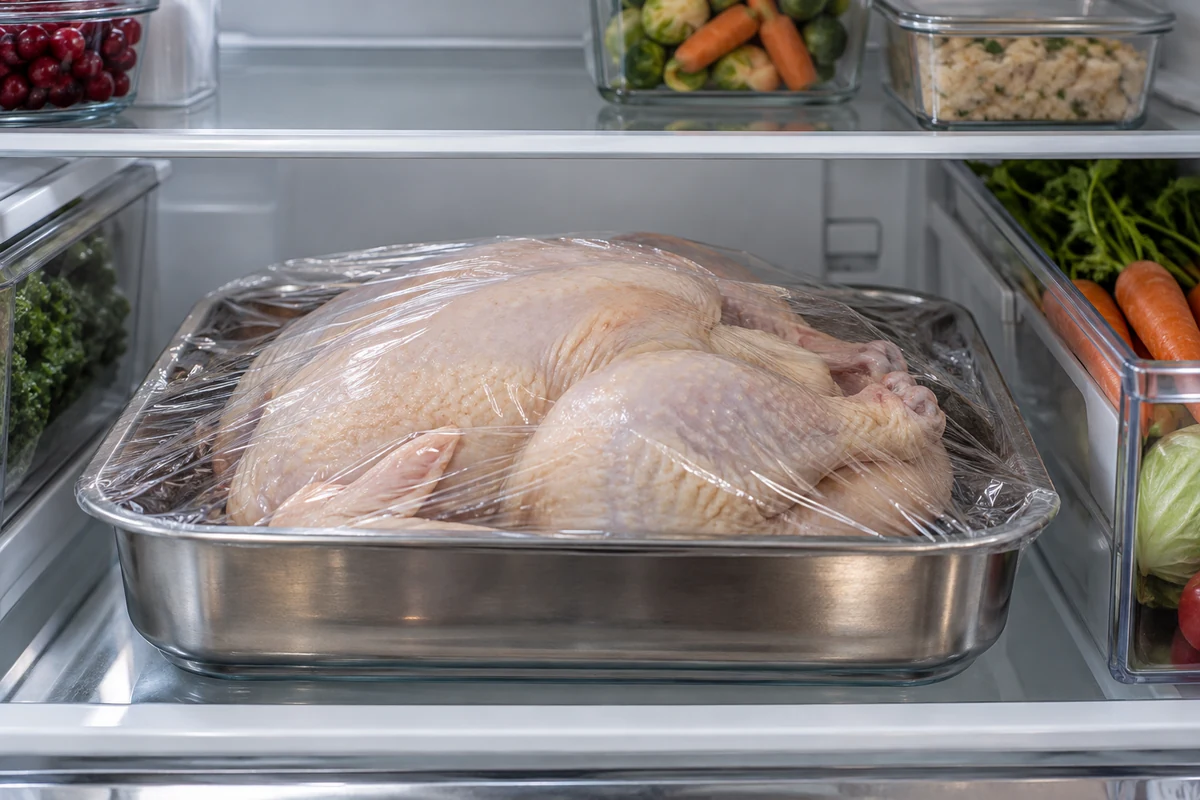
- Thaw safely: follow the packet’s fridge-thawing instructions, using a deep tray on the bottom shelf. A large bird can take longer than a day; check it is fully thawed and cook within 24 hours of defrosting. Do not thaw on the worktop.
- Remove the giblets: take out any giblet bag and neck before cooking. If keeping them for stock, handle them as raw poultry and cook thoroughly.
- Do not wash the bird: splashes can spread bacteria around the sink and worktop. Cooking thoroughly, rather than rinsing, is the important step.
- Pat the skin dry: use kitchen paper and discard it immediately. Dry skin colours more readily in the oven.
- Trim only if necessary: remove loose excess fat or skin without stripping away the skin protecting the breast.
- Season with clean hands: spread the butter and herbs gently, then wash your hands before touching taps, containers or ready-to-eat food.
Kitchen hygiene
- Clean surfaces: thoroughly clean worktops and utensils after contact with raw poultry, following the instructions on any food-safe cleaning product.
- Separate chopping boards: use one for raw poultry and another for fruit, herbs and other ready-to-eat ingredients.
- Wash your hands: use soap and water after handling the bird or its packaging, then dry them thoroughly.
- Refrigerate correctly: keep raw poultry covered in a deep tray on the lowest shelf at 5°C or below. Follow its use-by date and the 24-hour limit after full defrosting.
- Clean the probe and utensils: clean them between checks and before they touch cooked food.
Quick planning tips
Buy in good time: allow enough time and fridge space for thawing. Soften dried fruit: use the measured juice and reserve it for the farofa. Cook separately: leave the cavity empty and serve the farofa alongside.
Accompaniments and drinks for Christmas dinner
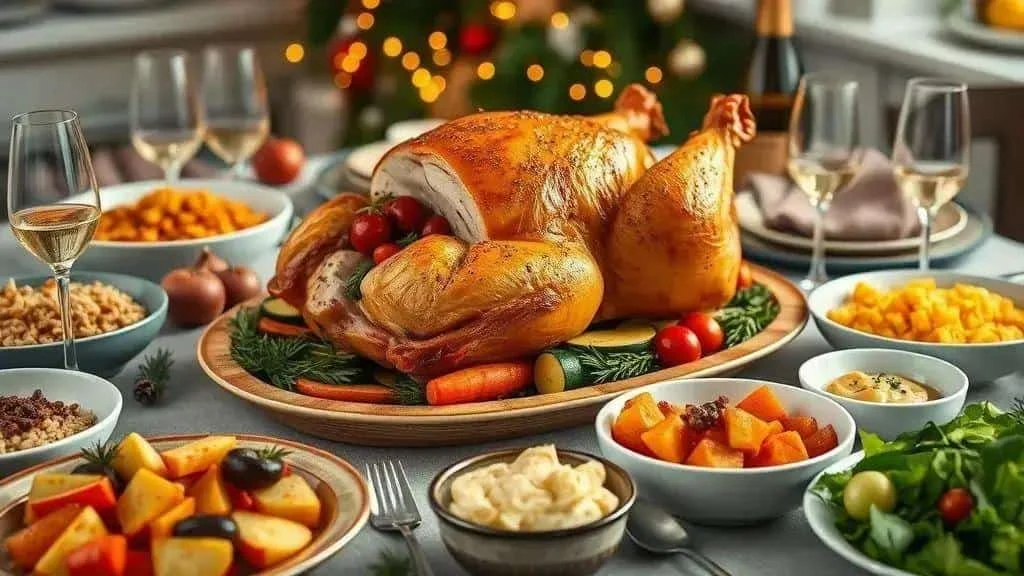
Pair Chester with fruit farofa with contrasting textures and a little acidity to balance the sweetness of the dried fruit.
Classic side dishes
- Arroz à grega: Brazilian-style rice with vegetables and herbs provides a simple savoury accompaniment.
- Roast potatoes: chunks roasted with rosemary add a crisp contrast.
- Roast vegetables: carrots, courgettes and red onion with olive oil and herbs bring colour and a lightly caramelised flavour.
- Mashed potatoes: a creamy mash with a little nutmeg works well beside sliced poultry.
- Green salad with citrus dressing: mixed leaves and rocket with orange vinaigrette offer a fresh contrast.
- Farofa on the side: serve in a separate bowl so guests can choose their portion.
Drinks to serve alongside
- Brut sparkling wine: a dry option for adults who drink alcohol; serve chilled according to the bottle’s guidance.
- Aromatic white wine: Sauvignon Blanc or dry Riesling can complement the fruit in the farofa; chill according to the wine’s style.
- Light red wine: Pinot Noir is another option that is less likely to overwhelm the poultry.
- Alcohol-free choices: sparkling water with lemon, orange juice with ginger, or chilled hibiscus tea provide alternatives for everyone.
Dietary needs and children’s portions
- Without bacon: make the farofa with mushrooms or simply fruit and nuts, checking allergies first.
- Without gluten: use suitable cassava flour and check all processed ingredients and seasonings, not just the flour.
- For children: offer smaller portions, plain mash and cooked vegetables. Remove bones carefully and adapt nut pieces to the child’s age and needs.
Serving and presentation
- Carve just before serving: arrange breast slices and pieces of leg on a warm platter.
- Use separate serving dishes: let guests help themselves to farofa, mash and vegetables.
- Keep garnishes simple: fresh herbs and orange slices add colour. Use clean garnishes that have not touched raw poultry.
- Serve promptly: warm plates help, but an unspecified low oven is not a substitute for controlled hot holding. Avoid leaving cooked food sitting lukewarm while waiting for guests.
Portions and advance preparation
- Allow for bones: roughly 300–400 g raw whole-bird weight per guest is a planning estimate, depending on appetite and the number of sides. It is not an individual serving of cooked meat.
- Prepare ahead: farofa and some sides can be made the day before, cooled promptly and kept refrigerated within their storage limits.
- Reheat carefully: cover poultry portions with foil and add a splash of stock to limit drying. Reheat once until steaming hot throughout; a set oven time alone cannot verify this.
Offer smaller portions first: guests can try several accompaniments without filling their plates with more than they want.
What makes Christmas fruit farofa distinctive?
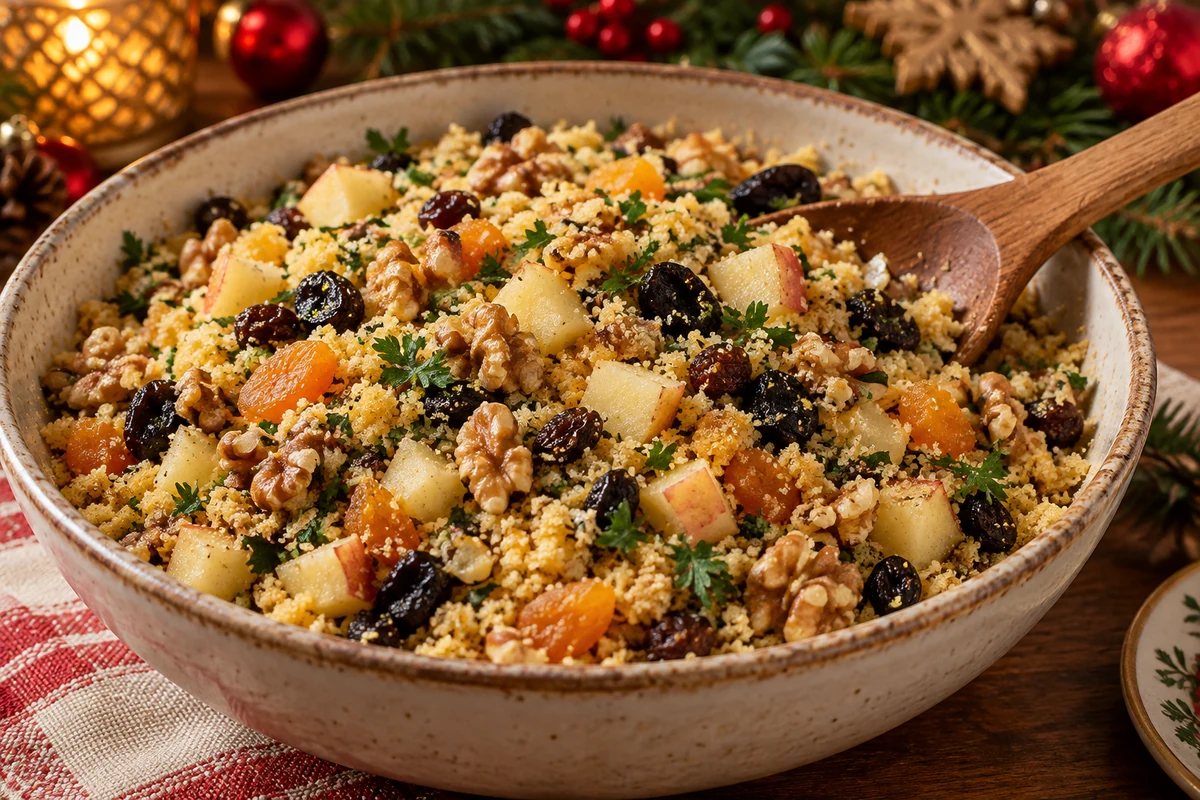
- A Brazilian festive accompaniment: fruit farofa brings together dried fruit and toasted cassava flour in a sweet-and-savoury side familiar at many Brazilian Christmas tables.
- Sweet and savoury contrast: dried fruit works with the richer flavour of butter and optional bacon.
- Soaking changes the texture: apricots, prunes and raisins become softer after a short soak. Use juice for the alcohol-free version and avoid adding all the liquid automatically.
- Nuts add crunch: chopped walnuts, almonds or Brazil nuts give a different texture from the fruit and flour.
- A versatile side: serve it in a bowl beside the roast, or use it in a separately cooked vegetable dish. This method does not put it inside the raw bird.
Useful preparation details
- Toast gently: even pre-toasted cassava flour can benefit from a short stir in the pan with the other ingredients. Stop before it becomes dry or burnt.
- Control moisture: add the reserved soaking liquid gradually. Too much makes the farofa clump; too little can leave it dusty.
- Use fat sparingly: butter and oil can both be used, but mixing them does not prevent sogginess. The total quantity and the liquid from fruit matter more.
- Keep some pieces intact: fold the fruit gently so the farofa retains visible pieces and colour.
- Season at the end: taste after adding the flour, then adjust salt, pepper and citrus so no one flavour overwhelms the fruit.
Common mistakes
- Using unstuffed timings for a stuffed bird: filling the cavity changes heat penetration. Keep the farofa separate for the method described here.
- Adding too much soaking liquid: drain fruit first and return only enough juice to give the desired texture.
- Losing the texture contrast: overcooking fruit or stirring too vigorously can turn it mushy. Add nuts late enough to retain some crunch, if using them.
Storing and using leftovers
- Refrigeration: cool the farofa promptly in a shallow container and refrigerate within 1–2 hours. Use within 48 hours of cooking, including any time before reheating.
- Freezing: freeze cooled portions promptly in airtight containers. About a month is a practical quality target for this mixture; thaw in the fridge and use within 24 hours of defrosting.
- Using leftovers: reheat once until steaming hot throughout, stirring to heat evenly. Serve alongside another meal or in cooked squash, observing the original storage deadline.
Quick planning tips
Taste the cooked mixture: adjust seasoning before serving. Presentation: a little freshly grated orange zest adds fragrance without extra liquid.
A Brazilian-inspired Christmas centrepiece
Roast Chester with fruit farofa combines golden poultry with a colourful, crumbly accompaniment. Cooking the two separately makes it easier to control texture and check the bird thoroughly; the recipe variations have not all been kitchen-tested.
Thank you for reading. Follow our social channels for more seasonal ideas, and visit the I Love Christmas blog for festive recipes and practical preparation tips.
Enjoy your festive meal and return for more ideas for the Christmas table.
FAQ: Christmas Chester with fruit farofa
How do I choose a suitable bird?
Choose intact packaging, an appropriate use-by date and a size suited to your guests. Chester is a Brazilian branded chicken product, usually already seasoned; a roasting chicken is a practical UK alternative, with its own cooking instructions.
Can I make the fruit farofa ahead?
Yes, for example the day before. Cool and refrigerate promptly, use within 48 hours of cooking and reheat once until steaming hot throughout. A fixed 10–15 minutes may not be enough for every dish size.
How long does a 3–4 kg Chester take to roast?
Follow the product’s instructions for temperature and timing. Verify the thickest breast and thigh with a clean probe: 75°C for 30 seconds, or an equivalent safe combination such as 70°C for 2 minutes. Do not rely only on time or colour.
How do I stop the fruit farofa becoming soggy?
Cook it separately, drain soaked fruit and add the reserved juice gradually. Keep it crumbly rather than wet, and serve it beside the roast instead of packing it into the cavity.
Which substitutions work for dietary needs?
Use suitable gluten-free cassava flour and check every other ingredient for a gluten-free meal. For a vegetarian meal, replace the bird as well as the bacon. For a vegan farofa, also replace butter and omit the optional eggs and cream.
Sources and Further Reading
- Perdigao: traditional Chester product information (Portuguese)
- UK government: cooking and reheating food safely
- UK government: chilling, freezing and defrosting food safely