
For budget Christmas and New Year travel, compare flexible dates, fares and accommodation, consider less crowded destinations and check the full cost of alternative routes. Look for suitable free events and keep an emergency reserve appropriate to your trip, alongside any necessary travel insurance.
Budget Christmas and New Year travel starts with practical choices: flexible dates, carefully checked offers and local experiences that fit your spending limit. Here are some ways to plan, compare costs and enjoy the festive season without stretching your finances.
Illustrations in this article are conceptual images, not documentary photographs or evidence of a particular historical event, destination, venue or access route.
Planning ahead and keeping costs down

Planning early gives you time to compare options for budget Christmas and New Year travel. It does not guarantee the lowest price, but it can help you avoid rushed decisions.
Practical steps to save money
- Set a realistic budget: Work out your total spending limit and divide it between transport, accommodation, food and activities.
- Be flexible with dates: Moving your trip by a few days may change flight and accommodation costs considerably.
- Use alerts and comparison tools: Follow prices for suitable flights and hotels, checking the complete booking terms before acting on an offer.
- Compare nearby airports and connecting routes: Include transfers, extra travel time and connection risks when deciding whether a lower fare represents a saving.
- Compare accommodation early: Hostels, family-run guesthouses and lawful holiday rentals outside the centre may suit your budget, depending on transport costs.
- Check points and card benefits: Compare the value of reward bookings with cash prices, including taxes, fees and any restrictions.
- Plan some simple meals: Local markets and self-catering facilities can help you manage food costs.
- List easily overlooked expenses: Add local transport, baggage charges, visitor taxes and souvenirs to your calculations.
- Check flexibility and insurance: A flexible rate may be useful if your plans could change. Read the cancellation conditions and any insurance exclusions.
- Choose affordable experiences: Public events, street markets and suitable walking routes can provide enjoyable days without expensive admission charges.
Useful tools and quick planning tips
- Price calendars: Compare different departure and return dates rather than searching only one fixed itinerary.
- Discount tools: Check legitimate voucher offers, but review the permissions and reputation of any browser extension before installing it.
- Coach and shared transport options: Compare reputable services for short and medium-distance journeys.
- A list of priorities: Decide which experiences matter most and where you are comfortable spending less.
Choosing affordable Christmas and New Year destinations

Look beyond the most heavily promoted destinations, but check their transport, accommodation and holiday opening arrangements before assuming they will be cheaper.
Options to compare in Brazil
- Less crowded coastal destinations: Compare smaller beach towns on the Paraná coast, in southern Bahia or along the coast of Piauí. Festive-season prices and transport availability vary widely.
- Historic towns and mountain regions: Tiradentes, Ouro Preto and towns in the Serra Gaúcha offer cultural interest, although popular places can still be expensive over the holidays.
- Regional cities with public events: Check local programmes for free celebrations and cultural activities that could reduce entertainment costs.
- A base outside a major visitor centre: Nearby towns may offer lower room rates, but include the cost and availability of transport back after evening events.
Comparing international destinations
- Start with your departure point: Uruguay and Argentina may be practical regional options for travellers already in Brazil. For a UK departure, compare the full cost of closer destinations before choosing a long-haul trip.
- Look at daily costs as well as flights: Smaller towns outside major tourist centres may offer better-value meals and rooms, but savings are not universal.
Choosing a destination that fits your budget
- Compare the total: Add fares, transfers, accommodation, meals and charges. The cheapest flight does not necessarily produce the cheapest holiday.
- Consider other transport: For shorter journeys, compare reputable coaches, shared transfers and other suitable services with flying.
- Check accommodation choices: Compare hostels, guesthouses and lawful holiday rentals, including cleaning charges and travel to the places you want to visit.
- Check practical services: Consider access to transport, communication and medical care, rather than choosing somewhere on price alone.
Saving money once you arrive
- Compare dates around the peak: Arriving before or after the main celebration may reduce costs, depending on local demand.
- Check public celebrations: Some events are free, but verify admission rules, booking requirements and transport home.
- Compare local places to eat: Markets and family-run restaurants can offer good value; check menus rather than assuming every local venue is cheaper.
- Use suitable public transport: Compare fares and routes, paying particular attention to holiday timetables and the last service home.
Finding flight and accommodation offers

Combine flexible dates with price alerts and careful comparisons. The aim is to find an affordable trip that works for you, rather than chase every advertised discount.
Practical ways to compare flights
- Set price alerts: Tools such as Google Flights and Skyscanner can help you follow suitable routes. Airline websites are also worth checking directly.
- Search nearby dates: Compare a few days either side of your preferred trip. No particular weekday or departure time is always cheapest.
- Check alternative routes carefully: A connection on separately purchased tickets can leave you responsible for a missed onward flight. Include that risk, baggage arrangements and transfer time in the comparison. Source: Civil Aviation Authority: delays and connecting flights
- Use price information as a guide: Fare graphs may help you understand recent prices, but cannot guarantee what a ticket will cost tomorrow.
- Compare low-cost airlines fairly: Add the baggage, seat and other services you actually need before comparing the final price.
- Treat flash sales cautiously: Check the seller, dates and total cost. A countdown is not a reason to exceed your budget or skip important checks.
Making the most of accommodation offers
- Compare early and late-booking risks: Booking ahead gives you more time to choose. Last-minute discounts may exist, but waiting over busy holidays can leave fewer suitable rooms.
- Filter by accommodation type: Consider guesthouses, hostels or lawful holiday rentals according to your needs, privacy preferences and transport plans.
- Read cancellation conditions: If plans may change, compare flexible rates and note the refund deadline.
- Read recent reviews: Pay attention to cleanliness, location, accessibility and recurring concerns, as well as the price.
- Check vouchers and cashback terms: Compare the final direct-booking price with any promotion, and do not depend on unconfirmed cashback to make a trip affordable.
Habits that make comparisons more useful
- Keep searches organised: Record comparable dates, baggage allowances and room conditions so you can recognise a genuine saving.
- Do not rely on incognito mode for discounts: Private browsing is not a dependable way to lower fares. Skyscanner states that its searches do not increase prices because you have searched repeatedly. Source: Skyscanner: repeated searches and flight prices
- Compare more than one seller: Check a manageable selection of trusted platforms and the provider’s own website.
- Assess loyalty rewards realistically: Points may reduce the cash price, but taxes, fees and availability can limit their value.
- Check payment costs: Review currency conversion and card charges before paying an overseas seller.
Before accepting an offer
- Check documents and entry requirements: Make sure the trip is practical before buying a fare you cannot refund.
- Confirm the details without rushing: Check names, dates, airports and cancellation conditions before completing payment.
- Add the remaining costs: Include baggage, transfers and meals when judging the value of an offer.
- Keep a comparison record: Save links and dated notes or screenshots, remembering that an unbooked price may change.
Shorter trips within Brazil

These ideas are most relevant if you are already in Brazil or planning a longer visit. They are not necessarily economical short breaks from the UK, where long-haul fares and travel time must also be considered.
Regional itinerary ideas
- The southern coast, in Paraná and Santa Catarina: Compare smaller beach towns, local places to eat and intercity coach connections. A quieter location can still become busy over New Year.
- Historic Minas Gerais: Tiradentes and São João del-Rei offer historic streets and cultural interest. Compare guesthouses and plan walking routes that suit the terrain and your mobility.
- Mountain towns in Rio Grande do Sul and Santa Catarina: Look beyond the best-known festive attractions and check the cost, access and conditions of walks or craft markets.
- Alternative north-eastern beach destinations: Smaller places on the Piauí coast or in northern Ceará may be worth comparing, especially once onward transport is included.
Planning a manageable short itinerary
- Limit travel time: Choose a destination within a comfortable journey from your starting point rather than spending most of a short break in transit.
- Choose one base: Day trips can reduce repeated packing and accommodation changes, provided the transport is practical.
- Compare shared transport: Reputable coaches and shared transfers may cost less than private journeys, particularly when their schedules fit your plans.
- Plan simple meals: Combine local cafés with market shopping, and pack suitable snacks for longer outings.
- Check low-cost activities: Beaches, squares, public events and permitted walking routes may be free, but check access, safety and any local charges.
Keeping everyday costs manageable
- Share suitable costs: Travelling with others may make accommodation and transport more affordable when everyone agrees on the budget.
- Ask about accommodation rates: A guesthouse may offer a longer-stay discount. Keep written confirmation and use a payment method with appropriate protection.
- Compare less busy dates: A small change in timing may reduce crowding or prices, although festive demand varies.
- Use local shops: Buying ingredients for a simple meal can help if you have safe storage and somewhere to prepare them.
- Look up free events: Check the local cultural programme before paying for activities you may not need.
Allowing time for rest and practical arrangements
- Leave breathing space: A realistic itinerary allows time to rest and avoids expensive last-minute changes caused by exhaustion.
- Plan safe journeys: Check recent accommodation information, evening transport and how to get help locally.
- Choose your priorities: Budget for the meal or paid activity that matters most, then organise the rest around it.
Packing, documents and unexpected expenses
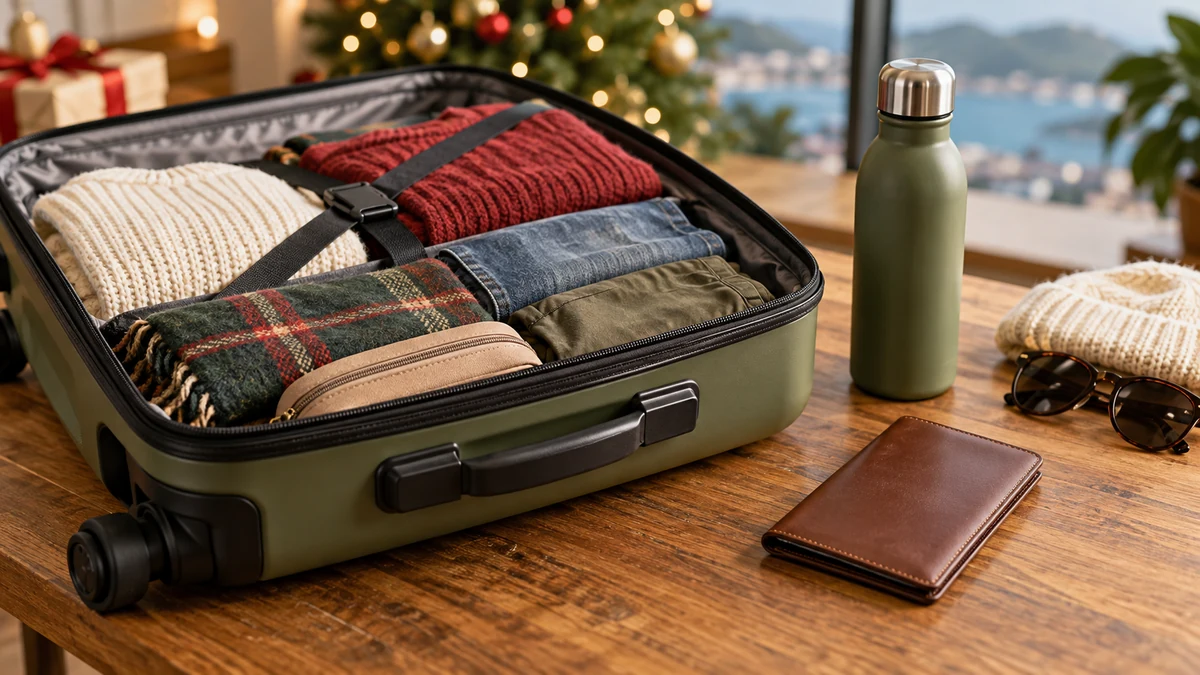
Preparing luggage and documents can reduce stress and avoidable costs on a budget Christmas and New Year trip.
A practical packing checklist
- Versatile clothing: Choose items that work together and suit the destination’s weather, with layers where appropriate.
- Hand-luggage essentials: Keep permitted essential medicines, documents, valuables, a charger and a change of clothes accessible.
- Organised packing: Packing cubes or suitable compression bags can help organise belongings, but do not reduce their weight.
- Baggage limits: Check dimensions and weight allowances and weigh your bag before travelling.
- Liquids: Check the rules at every airport on your route, including the return journey. Many airports still limit ordinary hand-luggage liquids to containers of 100 ml; rules and exceptions vary. Source: GOV.UK: hand-luggage liquids
Documents and practical precautions
- Originals and secure copies: Carry required original documents and keep protected digital or paper copies separately.
- Payment arrangements: Check your bank’s travel guidance and consider a separate backup payment method.
- Entry and health requirements: Check official passport, visa and relevant vaccination advice early enough to prepare properly.
- Travel insurance: Choose cover suited to your destination, activities and circumstances, and read exclusions and excesses rather than assuming every emergency is covered.
Preparing for additional costs
- An emergency reserve: Keep accessible funds appropriate to your trip and circumstances. A fixed percentage of a small budget may not cover a significant disruption.
- Extra charges: Include applicable baggage charges, visitor taxes and other fees in the total.
- Cash and exchange rates: Compare withdrawal and conversion charges while avoiding carrying more cash than you can keep secure.
- Cancellation terms: Flexible bookings can limit some losses when plans change, but check what is refundable and by when.
- Essential medicines: Bring an appropriate supply and supporting documentation, checking destination rules for the medicines you use.
Useful digital and packing habits
- Protected document copies: Secure copies on your phone or in protected storage can help if an original is lost, but do not replace required travel documents.
- Track daily spending: A simple app or notebook helps you compare actual expenses with your plan.
- Chargers and adapters: Check plug types and voltage compatibility. Follow your airline’s rules for power banks and lithium batteries rather than packing them in checked luggage without checking.
- Pack thoughtfully: Choose useful multi-purpose items without leaving out essentials simply to reduce baggage costs.
Enjoying local celebrations without overspending

Researching local programmes can help you enjoy the festive atmosphere on a modest budget. Combine suitable free activities with a few carefully chosen paid experiences.
Finding free or affordable events
- Check official local listings: Councils, tourism offices and cultural venues may advertise public concerts or seasonal celebrations.
- Use community information carefully: Local groups can suggest markets and performances; confirm details with the organiser before travelling or paying.
- Look at public spaces and cultural centres: Check whether seasonal activities need advance reservations, even when admission is free.
Managing food and drink costs
- Compare local options: Markets and smaller restaurants may offer good value. Consider hygiene, dietary needs and actual menu prices.
- Take suitable snacks: Water and food for longer outings can reduce impulse purchases, provided the venue permits them and they can be stored safely.
- Share where appropriate: Sharing dishes with friends can make trying different foods more affordable, taking allergies and portion sizes into account.
Transport between celebrations
- Check public transport timetables: Some places add festive services, while others reduce them. Confirm your return journey before relying on it.
- Share a licensed taxi or booked ride: Splitting the fare may help, but check capacity, pricing and safe pick-up arrangements.
- Plan sensible walking routes: Nearby events may be easy to combine on foot when the route, weather and accessibility suit your group.
Choosing good-value activities
- Check admission arrangements: Arriving early may help at a free event, but does not guarantee entry or a particular view.
- Compare advance tickets: Some organisers offer lower early prices. Buy through an authorised seller and check what the ticket includes.
- Explore community venues: Workshops, cultural events and fairs may offer inexpensive ways to take part.
Practical precautions
- Limit unnecessary valuables: Carry what you need and keep it secure, especially in crowded places.
- Agree on meeting points: Make a plan for getting separated and for returning safely after the event.
- Follow local rules: Respect access restrictions and organisers’ instructions throughout the celebration.
Making room for what matters
- Choose meaningful experiences: Set aside money for a special meal or performance if that is a priority, and spend less elsewhere.
- Consider genuine volunteering opportunities carefully: Check the duties, entry or work requirements and any promised benefits in advance. Volunteering is not a guaranteed route to free admission.
- Research before setting off: Knowing which events are free and how to reach them helps you build a practical itinerary.
Final thoughts
Thoughtful planning can make budget Christmas and New Year travel more manageable. Compare the whole trip, leave room for unexpected costs and choose experiences that fit your circumstances.
Thank you for reading. Explore our other seasonal travel ideas and planning guides for more inspiration.
Visit the I Love Christmas blog for more festive features and practical ideas.
Frequently asked questions about budget Christmas and New Year travel
When should I book flights and accommodation?
Start comparing early and follow prices for suitable dates. There is no universally cheapest booking day, and waiting for a last-minute festive deal can reduce your choices.
How can I reduce risks without overspending?
Check recent accommodation information, plan safe transport and protect your documents. These precautions can reduce some risks, but no budget or checklist guarantees safety.
What should my travel budget include?
Include transport, accommodation, meals, local journeys, charges and activities, plus a realistic emergency reserve and appropriate insurance. The reserve should suit your circumstances rather than a fixed percentage alone.
Which tools can help me compare offers?
Flight comparison tools, provider websites, price alerts and flexible-date calendars can help. Compare final prices and conditions, including any fees attached to reward bookings or promotions.
How can I enjoy local celebrations on a budget?
Check official free-event listings, compare local meal options and plan affordable transport. Verify admission rules and any volunteering commitments before relying on them.
Sources and Further Reading
- GOV.UK: hand-luggage liquids
- Skyscanner: repeated searches and flight prices
- Civil Aviation Authority: delays and connecting flights