Nuremberg or Munich Christmas market? Nuremberg is a good choice for a concentrated old-town visit centred on the Christkindlesmarkt, gingerbread and traditional decorations. Munich suits travellers who want several different markets and a broader city break. Both have historic markets; neither has a monopoly on authenticity.
Nuremberg or Munich Christmas market — which belongs on your winter itinerary? This guide compares the atmosphere, food, shopping and practical arrangements, with confirmed dates for the 2026 season where available.
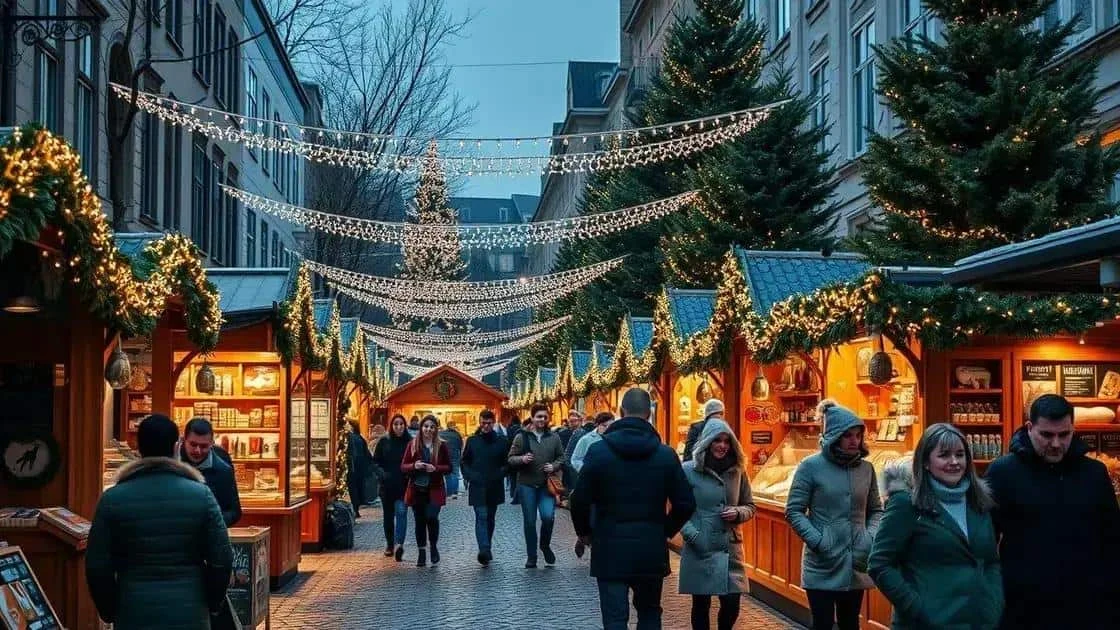
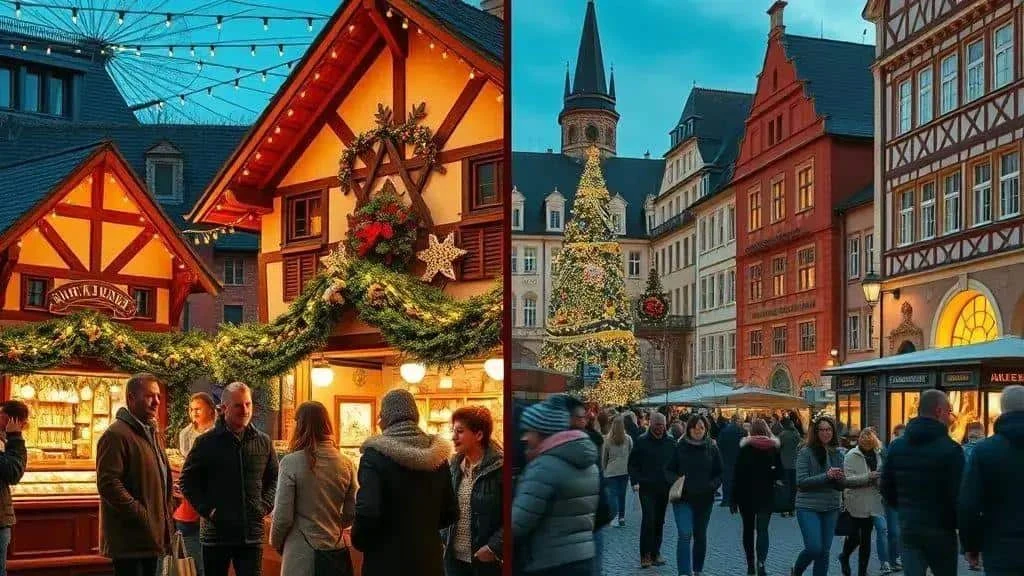
Illustrations in this article are conceptual images, not documentary photographs or evidence of a particular historical event, destination, venue or access route.
History and Atmosphere: Christmas in Nuremberg and Munich
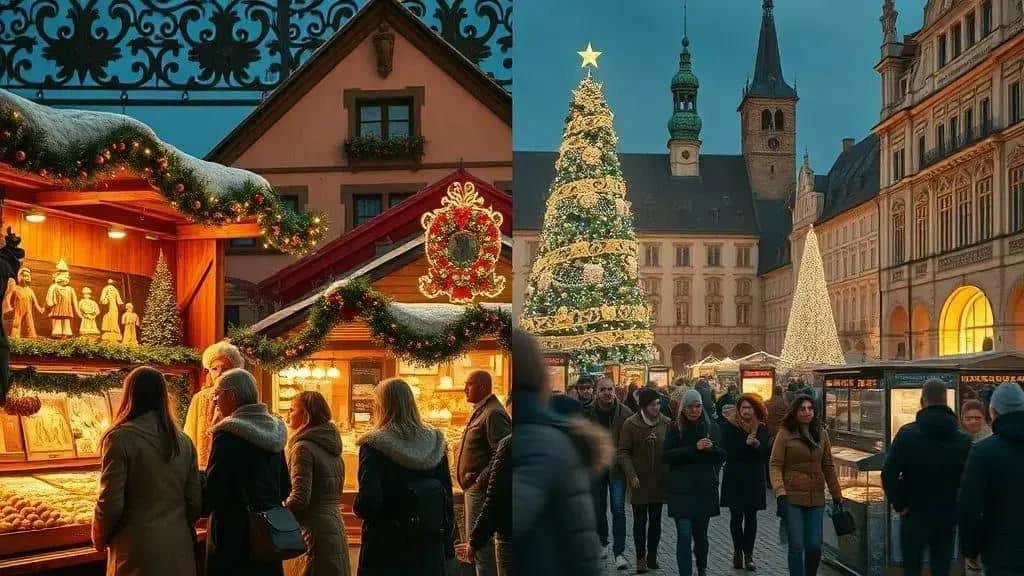
The Christmas markets in Nuremberg and Munich offer different settings within Bavaria. Nuremberg’s Hauptmarkt concentrates much of the festive activity around its historic square. Munich’s main market is equally rooted in tradition, but sits within a larger choice of city-centre and neighbourhood events.
Your experience also depends on the time and the particular market. In Nuremberg, look for lebkuchen, roasted almonds and local sausages. In Munich, mulled wine, pretzels and Bavarian dishes sit alongside the international food offered at events such as Tollwood.
What Gives Each Market Its Character?
Nuremberg is known for its Christkind, who delivers the opening prologue, and stalls selling traditional decorations, wooden toys and local gingerbread. Munich also has a historic Christmas-market tradition, alongside concerts, smaller markets and contemporary winter events.
Both cities offer craft shopping. Rather than assuming everything in one city is handmade locally, ask individual sellers where and how their products are made. The range varies between stalls and markets.
- Nuremberg’s atmosphere: a concentrated historic setting, traditional stalls and a strong association with the Christkindlesmarkt.
- Munich’s atmosphere: a lively city break with a traditional central market and a choice of other festive venues.
- Music: check the programme for choirs, concerts and other performances in either city; events vary by date and venue.
- Lights and decorations: Nuremberg’s stalls frame the Hauptmarkt, while Munich’s Marienplatz market has its prominent Christmas tree and town-hall backdrop.
Nuremberg makes an appealing choice for a compact old-town itinerary and traditional market scenes. Munich offers more scope to combine markets with museums, restaurants and evening events. Neither central market is necessarily quiet at peak times.
Choose according to whether you prefer a focused traditional-market visit or several different markets within a larger city break. Both places can deliver a memorable festive atmosphere.
Dates, Locations and the 2026 Calendar

For 2026, the main Nuremberg Christkindlesmarkt runs from 27 November to 24 December. The main Munich Christkindlmarkt runs from 20 November to 24 December. Other markets have separate dates, so check the exact venue rather than assuming one calendar covers the whole city. Source: Nuremberg Christkindlesmarkt: official dates Source: City of Munich: Christkindlmarkt
The Main Locations
- Nuremberg: Hauptmarkt is the setting for the main Christkindlesmarkt and its opening ceremony.
- Munich: the main market centres on Marienplatz and extends towards Rindermarkt. Tollwood takes place on Theresienwiese; the Residenz area has a separate festive event.
Opening Hours and Important Exceptions
Opening hours differ by venue and day. Nuremberg lists normal main-market hours of 10 am–9 pm, with a special Christmas Eve schedule. Tollwood’s 2026 market opens at 2 pm on weekdays and 11 am at weekends. The main Nuremberg and Munich markets finish on 24 December: do not plan to visit them on Christmas Day or Boxing Day. Source: Tollwood: Winter Festival questions and opening hours
Special dates: Nuremberg’s 2026 opening prologue is scheduled for 5.30 pm on 27 November. Munich’s market calendar also includes the closure for Totensonntag. Check each official programme for concerts, children’s events and any other exceptions. Source: City of Munich: Christmas markets 2026
Planning Your 2026 Visit
- Check the official market websites for the current calendar, daily hours and programme before booking.
- Where morning opening is available, a Tuesday-to-Thursday visit may be calmer than a weekend evening; this is a planning preference, not a guarantee of empty stalls.
- Book accommodation early if you need particular dates, family rooms or accessible facilities during Advent.
- Allow separate days for the two cities if possible. A same-day trip requires careful train planning and leaves less time for either market.
Check current train and local transport timetables: public transport is usually the simplest way to reach the centres. Look at the forecast too, as rain, ice or snow may affect your journey and comfort outdoors.
Crafts, Stalls and Traditional Products
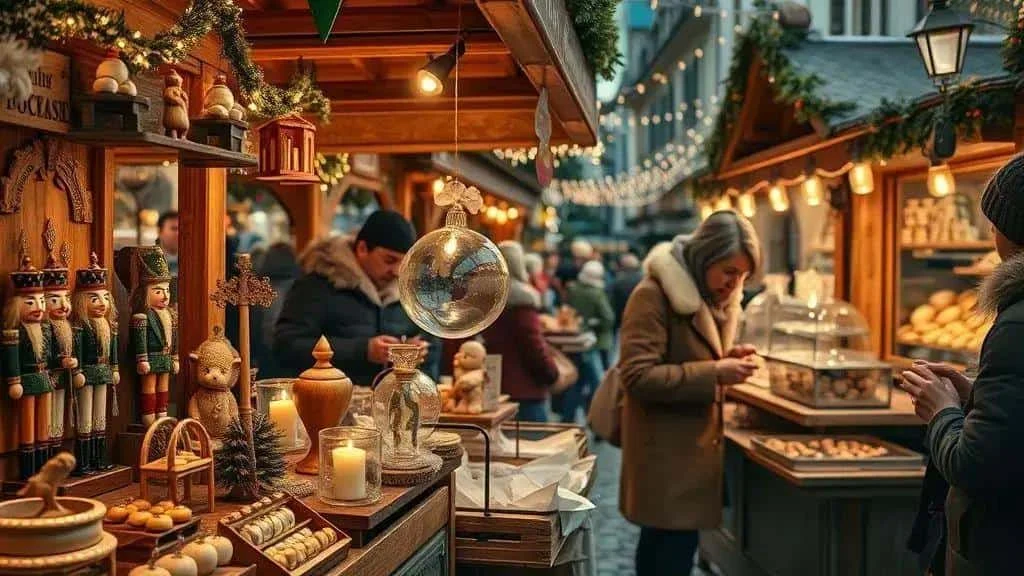
For many visitors, craft shopping is a highlight of a Bavarian Christmas market. You will find a mix of small souvenirs, traditional decorations and more expensive pieces; their origins and production methods need checking individually.
Products to Look For
- Lebkuchen and regional sweets: Nuremberg gingerbread, roasted almonds and packaged confectionery make popular gifts.
- Glass decorations: baubles and figures may be hand-blown or hand-painted; ask the seller rather than relying on appearance alone.
- Wooden toys: rocking horses, small figures and other toys are common traditional-market purchases. Check their origin, age suitability and safety information.
- Nutcrackers and Christmas pyramids: these familiar German wooden decorations are particularly associated with the Erzgebirge region of Saxony, rather than being exclusively Bavarian.
- Candles and wooden decorations: carved stars and Schwibbogen candle arches are other possibilities; the arches also have strong Erzgebirge associations.
- Woollen clothing and accessories: scarves, gloves and hats can be useful purchases, but check the materials and maker if you want handmade goods.
- Food gifts: mustards, cheeses, sausages and preserves may be available. Check storage needs and the current rules for bringing food back to the UK.
Buying from Market Stalls
Stalls range from small wooden huts to larger covered spaces. Some events include craft demonstrations, but do not assume you will see glassblowing or carving at every market. For payment, carry some euros as well as a card and check what each stall accepts.
How to Check a Craft’s Provenance
- Look closely at the finish, but remember that small irregularities alone do not prove an item is handmade.
- Ask who made the piece, where it was produced and which materials or techniques were used.
- Read labels and any accompanying documentation; distinguish the seller’s location from the actual place of manufacture.
- Compare similar items and ask questions about unexpectedly cheap or expensive pieces. Price alone is not proof of authenticity.
Practical Shopping Tips
- Bring a bag and protective wrapping for fragile purchases.
- Ask for secure travel packaging; decorative gift wrapping may not provide enough protection for glass.
- Check your baggage allowance and pack fragile items carefully, ideally in a rigid protective container.
- Respect displayed prices. You can politely ask about a multiple-purchase offer, but do not assume bargaining is customary.
If you value individual pieces and the story behind them, seek out makers who explain their work. In either city, compare several stalls before buying and avoid treating a whole market as a guarantee of local manufacture.
Food and Drinks to Try
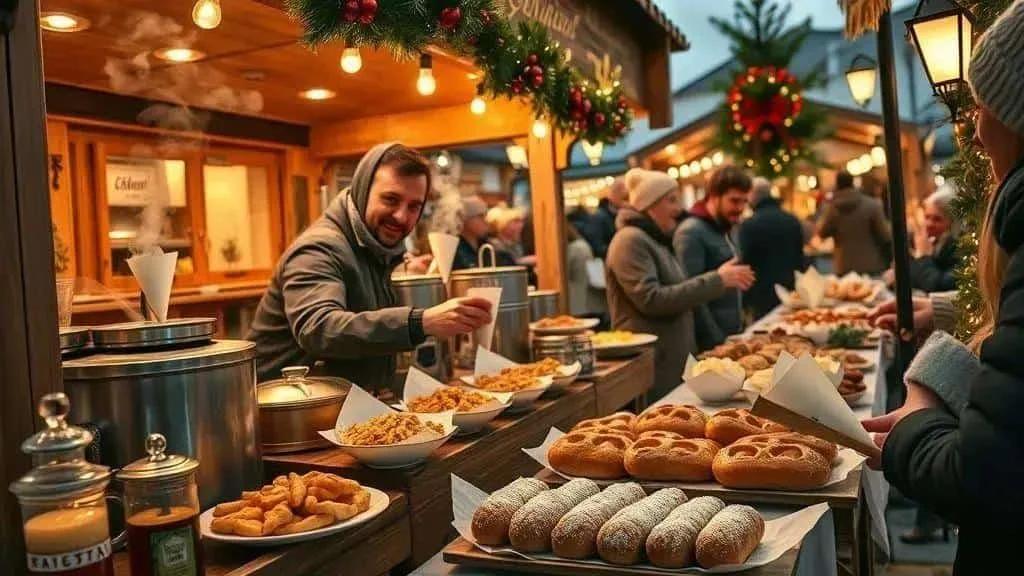
Food is part of the pleasure of a Christmas-market visit. Start with the local specialities, check dietary requirements carefully and leave time to enjoy what you buy.
Traditional Food and Drink
- Nürnberger Lebkuchen — Nuremberg’s spiced gingerbread comes in different varieties, often sold individually or in gift boxes. It is normally enjoyed as a baked confection rather than necessarily served warm.
- Nürnberger Rostbratwurst — small grilled sausages, often served together in a bread roll, are a local speciality.
- Weißwurst — the Bavarian white sausage is traditionally eaten with sweet mustard and a pretzel, often earlier in the day. Look for it in local restaurants as well as any stalls offering it.
- Brezn, or pretzel — a familiar savoury option, available in different sizes and useful alongside a snack or meal.
- Glühwein — spiced mulled wine may be made with red or white wine. For an alcohol-free drink, ask explicitly for an alkoholfrei option or check the ingredients of Kinderpunsch.
- Feuerzangenbowle — this alcoholic drink involves a rum-soaked sugar cone burned over spiced wine. Watch any preparation from a safe distance and do not assume the alcohol has all burned off.
- Gebrannte Mandeln — sugar-coated roasted almonds are often sold in paper cones.
- Kartoffelpuffer — potato pancakes may be served with apple sauce or another accompaniment, depending on the stall.
- Cheeses and preserves — these can be enjoyable purchases, subject to refrigeration requirements and the rules for taking them home.
Where to Look in Each City
Nuremberg is especially associated with lebkuchen and its small sausages; the Hauptmarkt is a natural starting point. Munich offers Bavarian dishes alongside the international food at Tollwood and other events. The individual market matters more than a blanket claim that one city has better food.
Tips for Ordering
- Carry euros and check card acceptance before ordering, especially at small stalls.
- Some drinks come with a refundable mug deposit, or Pfand. Return the mug as instructed to reclaim the deposit; the drink itself is not refundable.
- Ask directly about vegetarian or vegan ingredients and any allergens. A vegan label does not establish that a food is safe for every allergy or free from cross-contact.
- Choose smaller portions when offered, or share suitable dishes if you want to try several things.
Choosing Food for Your Visit
For a quick stop, consider bratwurst with a drink, such as Glühwein for adults who choose alcohol, or a pretzel and an alcohol-free alternative. Families may prefer food they can share. Hot chocolate or alcohol-free punch provides another option; alcohol should not be relied on to keep you warm.
Prices change by season and stall. Compare the displayed prices for mulled wine, sausage dishes and sweets or snacks, and budget separately for any mug deposit. Old price ranges are not a reliable guide to what you will pay now.
Children’s Activities and Family Visits
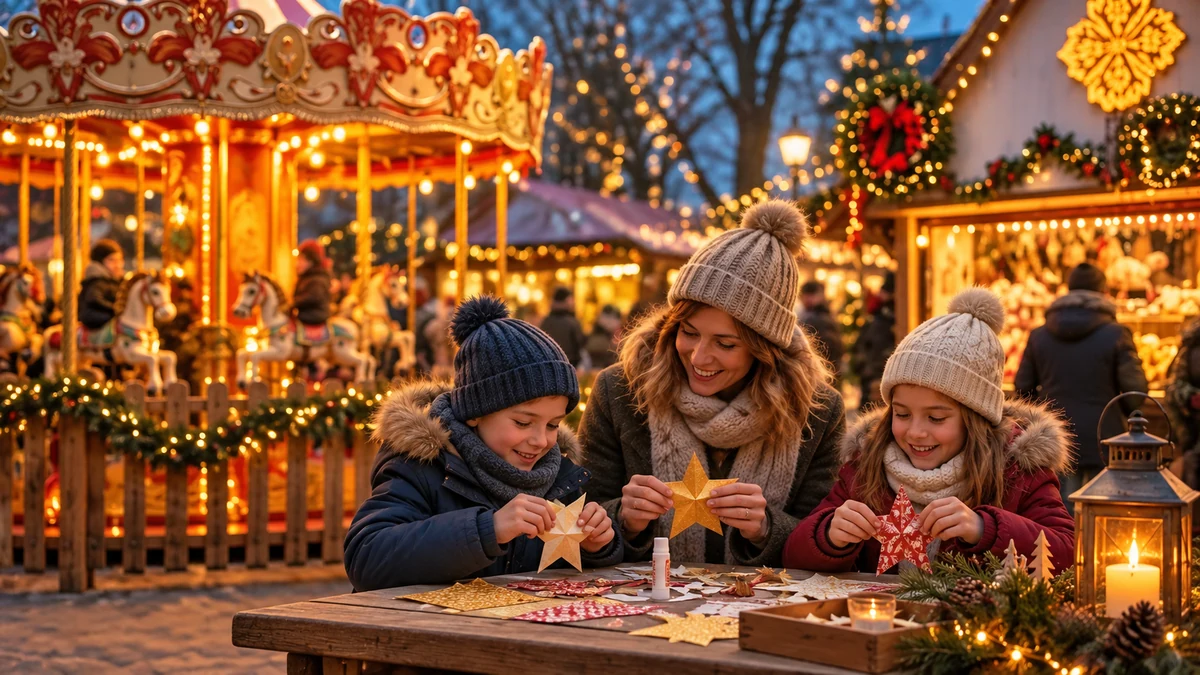
Both cities offer family activities, but these are venue-specific and may need booking. A festive setting does not remove the need for adult supervision, crowd awareness and regular breaks.
Activities to Look For
- Carousels and small rides: Nuremberg’s separate children’s market includes rides. Check charges and age, height or other restrictions before joining a queue.
- Puppet theatre and performances: check the children’s programme, including Nuremberg’s Sternenhaus, for the language, running time, ticketing and recommended age.
- Craft workshops: some programmes offer supervised making activities. Confirm the materials, booking arrangements and whether a parent must remain present.
- Seasonal appearances: check the official programme for any Christkind, St Nicholas or Father Christmas events rather than assuming they happen daily.
- Games and children’s areas: look for the facilities marked on the event map and supervise children according to the activity’s rules.
Booking Family Activities
Children’s events often have limited places and fixed times. Free admission or registration does not necessarily mean walk-in access. Munich’s Himmelswerkstatt, for example, has specific arrangements; check the current instructions and arrive by the stated time rather than assuming an early arrival guarantees a place.
Practical Family Tips
- A compact pushchair may help, but cobbles and crowds can make access awkward. Check routes before setting off.
- Dress in warm layers and bring gloves that are easy to remove for activities.
- Agree what to do if separated, including a meeting point and how to approach clearly identifiable event staff or police.
- Locate toilets, baby-changing facilities and accessible routes on the event map.
- Bring water and appropriate snacks, and plan a quieter indoor break if children become tired or cold.
Safety and Comfort
Keep children close in food queues and busy eating areas. Take care with hot drinks and food, keeping alcoholic drinks out of children’s reach. A quieter weekday session, where available, may be easier than a crowded weekend evening.
Managing the Family Budget
- Choose one or two paid activities and look for genuinely free events in the published programme; carousels and workshops are not automatically free.
- Share suitable portions where practical, taking account of allergies and individual needs.
- Check community concerts and public performances for any ticketing requirements before adding them to your plan.
Craft sessions and music can add interest to a family visit. A shorter outing with a warm break may work better than trying to fit in every ride, stall and performance.
Getting There, Opening Hours and Safety
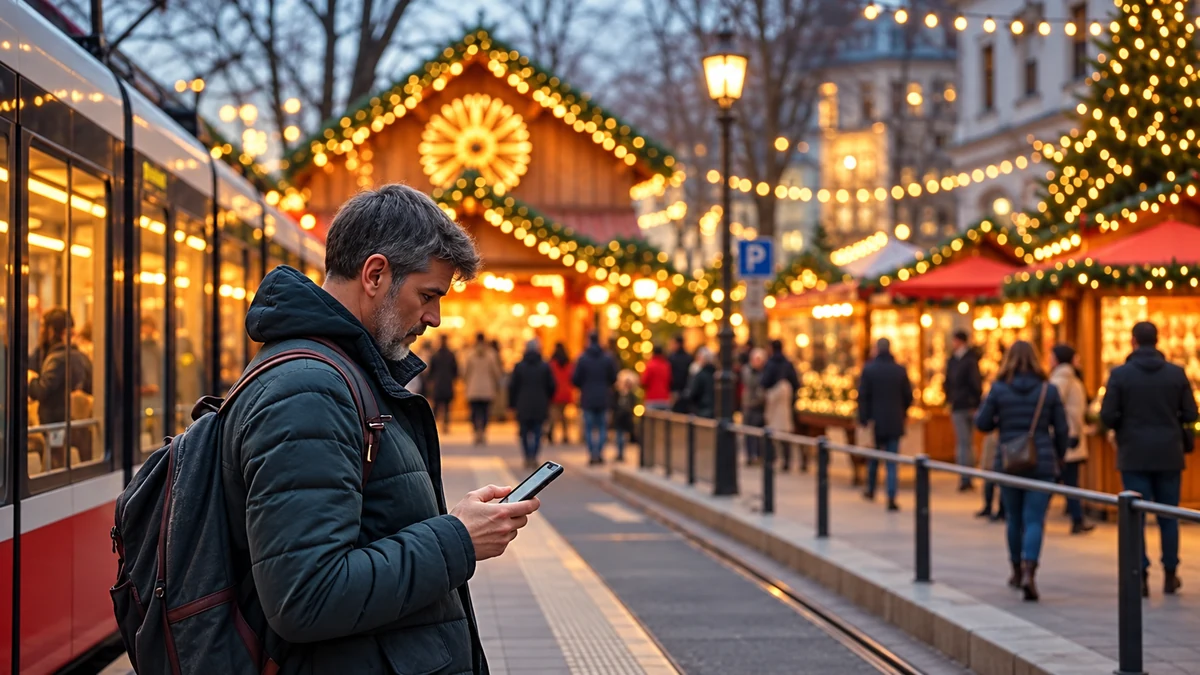
Plan your journey before travelling so you can spend time at the markets rather than searching for parking or a late-night connection.
Public Transport Options
- Rail and local connections: use the current journey planner for trains to the city and onward connections. Nuremberg Hauptbahnhof is a useful arrival point; Munich’s Marienplatz has local rail and underground access.
- Underground and late services: check the actual timetable for your return journey. Do not assume extra or all-night services run on your chosen date.
- Tickets and validation: check the correct fare area, train type and any validation requirement before boarding.
- Taxis and booking services: these may help with luggage or a late return. Use recognised services and follow the current pick-up arrangements.
Driving and Parking
- Park and ride: compare an outer parking site plus public transport with the cost and availability of central parking.
- City-centre parking: spaces may be limited and nearby streets restricted during events.
- Pedestrian areas and closures: follow local signs and event instructions rather than relying solely on a satnav route.
Opening Hours and Busy Periods
Check each venue’s daily hours: a morning visit is possible at some markets, while others open later. Weekend evenings are often busy, but weather, opening ceremonies and special events also affect crowds.
- If you dislike crowds, consider avoiding Friday and Saturday early evenings and allow extra time for stations and entrances.
- The main Nuremberg and Munich markets finish on Christmas Eve, with special hours. They do not simply operate a reduced service on 25 and 26 December.
- Arriving near a venue’s opening time can make browsing easier, although it does not guarantee short queues.
Personal Safety
- Event staff and police: identify information points on arrival. In an emergency, seek appropriate emergency assistance rather than waiting at a general enquiry desk.
- Bags and valuables: keep bags closed and valuables secure, particularly in crowded queues and on public transport.
- Entry checks: some events may have bag restrictions or controlled entrances. Follow staff instructions and check rules in advance.
- Children: agree a simple separation plan and consider a discreet contact card. Keep young children with a responsible adult throughout.
Useful Things to Bring
- Carry a modest amount of cash and a payment card as a backup.
- Wear comfortable footwear with suitable grip and layers for both outdoor browsing and indoor breaks.
- Bring a charged phone or power bank and save useful maps and return-journey details offline.
- Check accessibility in advance, including step-free routes, suitable toilets and the effect of cobbles or temporary stalls.
Before You Set Off
Check official alerts for transport disruption, weather, changed hours and special events. Leave some flexibility in your itinerary, particularly if travelling between cities.
Which Market Suits Your Trip?
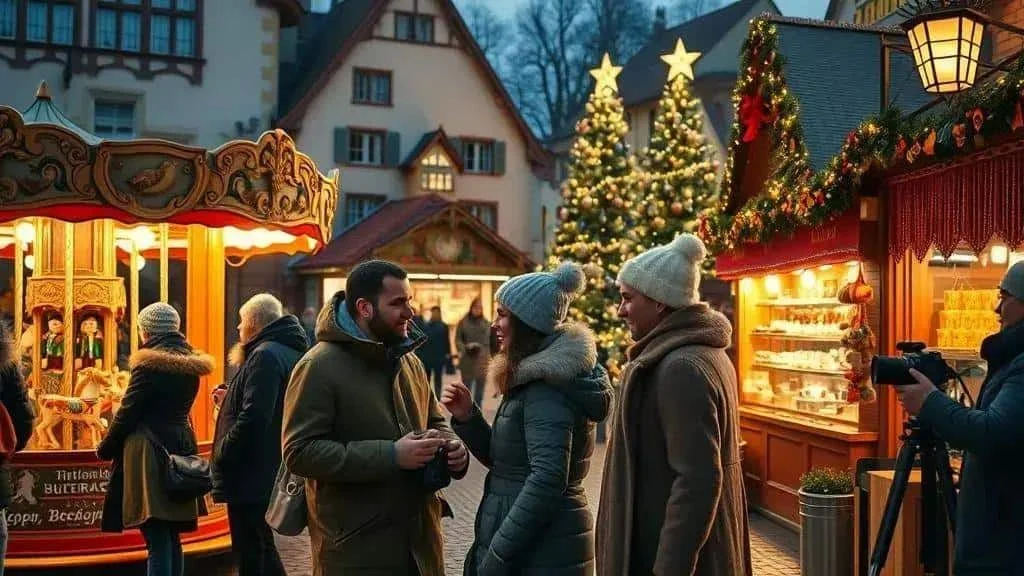
Use these suggested itineraries as a starting point, adapting them to your dates, interests and available time.
For a First Visit
In Nuremberg: start with the Hauptmarkt and a browse through the traditional market and gingerbread stalls.
- Choose a morning session if you prefer daylight and potentially quieter browsing.
- Have a local lunch and explore more of the city rather than automatically rushing to a train straight away.
- If visiting both cities, give Munich its own day where possible and see Marienplatz as the lights come on.
For Families with Children
One good option: Nuremberg combines its main market with a separate children’s market, but Munich also has family programmes worth checking.
- Plan around the confirmed time of any children’s activity and book if required.
- Include regular warm breaks and identify toilets and places to sit.
- Bring snacks and choose a less busy session that fits your children’s routine.
For Food Lovers
Munich makes a useful base for comparing traditional markets with the international food at Tollwood.
- Plan a few food stops and include alcohol-free drinks; there is no need to try several alcoholic specialities in one evening.
- Look at the Tollwood food stalls and neighbourhood markets for different menus.
- Share suitable portions if you want variety while keeping spending manageable.
For Craft Shopping
Nuremberg is an appealing starting point for traditional decorations and local specialities, with provenance still worth checking stall by stall.
- Talk to sellers about the maker, materials and place of production.
- If you find a particular handmade item you want, ask about availability rather than assuming it will still be there later.
- Arrange protective packaging and consider baggage limits before buying large or fragile pieces.
For Couples
Choose either city’s historic market setting, or allow a longer trip to enjoy both without rushing.
- In Nuremberg, look for quieter views around the Hauptmarkt without blocking walkways.
- In Munich, combine the illuminated centre with a booked performance or an evening meal, subject to the current programme.
- Reserve a restaurant if you have a particular venue or dining time in mind.
For Photographers
Try daylight for architectural detail and the period around dusk for illuminated stalls. Weather and crowds matter more than a fixed rule about which city photographs best.
- Capture both small details and wider scenes, taking care around fragile goods.
- Arrive before dusk if you want time to find a suitable viewpoint without obstructing other visitors.
- Respect people’s privacy, stallholders’ requests and any restrictions on photographic equipment.
For a Smaller Budget
Compare accommodation, transport and food costs as a whole; choosing a weekday may help, but does not guarantee cheaper market prices.
- Browse and compare stalls in either city rather than assuming Nuremberg is always cheaper for crafts.
- Compare public transport and park-and-ride costs with central parking.
- Set a food budget and share suitable portions where that works for your group.
Final Thoughts
Nuremberg suits a focused visit to a celebrated traditional market, while Munich offers a broader choice of markets within a larger city break. Both have history, festive food and craft shopping, so your itinerary matters more than declaring one universally better.
Check dates and opening hours, plan your transport and make time for warm breaks. Dress for the weather and protect any fragile purchases on the journey home.
Thank you for reading. Follow our social channels for more festive inspiration, and explore the I Love Christmas blog for further guides and ideas.
FAQ: Nuremberg and Munich Christmas Markets
When are the Nuremberg and Munich Christmas markets open?
In 2026, Nuremberg’s main Christkindlesmarkt runs from 27 November to 24 December, and Munich’s main Christkindlmarkt from 20 November to 24 December. Other venues have separate dates and exceptions, so check the official calendar for your visit.
Which city is better for authentic crafts?
Both offer traditional goods. Nuremberg is a popular choice for a concentrated craft-shopping visit, but authenticity depends on the individual product and maker. Ask about provenance in either city.
Which foods and drinks should I try?
Nuremberg is known for lebkuchen and its small grilled sausages. In Munich, look for Bavarian dishes and pretzels, alongside international food at Tollwood. Check ingredients and choose alcoholic or alcohol-free drinks according to your needs.
Are the markets suitable for children?
Both cities have family programmes, but check age limits, bookings and supervision rules. Keep children close in crowds, plan warm breaks and agree what to do if separated.
What is the easiest way to get there?
Public transport is often convenient for the centres. Check the current rail and local transport journey planners, or compare park-and-ride options if driving. Confirm your return service rather than assuming extra night transport is available.
How can I keep costs down?
Compare travel and accommodation costs, set a spending limit, share suitable food portions and look for free events in the official programme. Include mug deposits and paid children’s activities in your budget.
Sources and Further Reading
- Nuremberg Christkindlesmarkt: official dates
- City of Munich: Christkindlmarkt
- City of Munich: Christmas markets 2026
- Tollwood: Winter Festival questions and opening hours
- Nuremberg: children’s programme