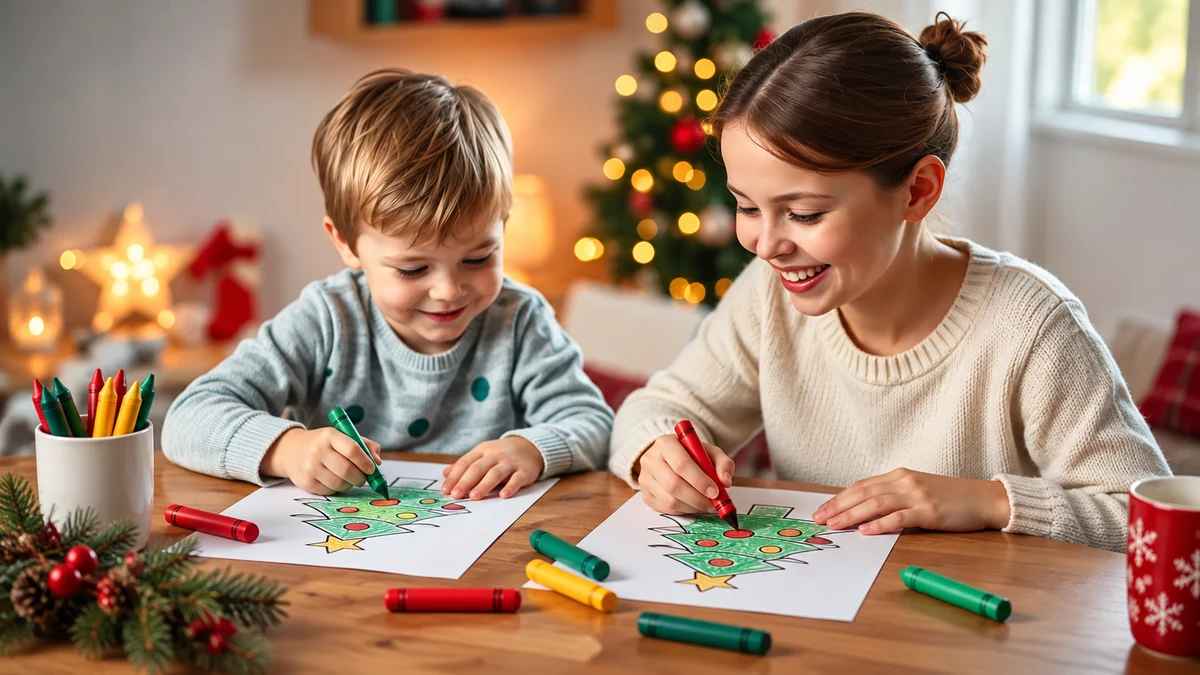
Christmas crafts, puzzles, action songs and simple movement games can offer enjoyable opportunities to practise hand skills and coordination. Choose materials and tasks for the individual child, supervise actively and allow breaks. These are play ideas, not a treatment programme or a promise of particular developmental gains.
Christmas activities for children’s coordination can be as simple as folding paper, completing a picture puzzle or copying a gentle movement. The aim is to enjoy making and playing together. Here are adaptable ideas for home, with alternatives to small parts, sharp tools and activities that may not suit every child.
What Children Can Practise Through Christmas Play
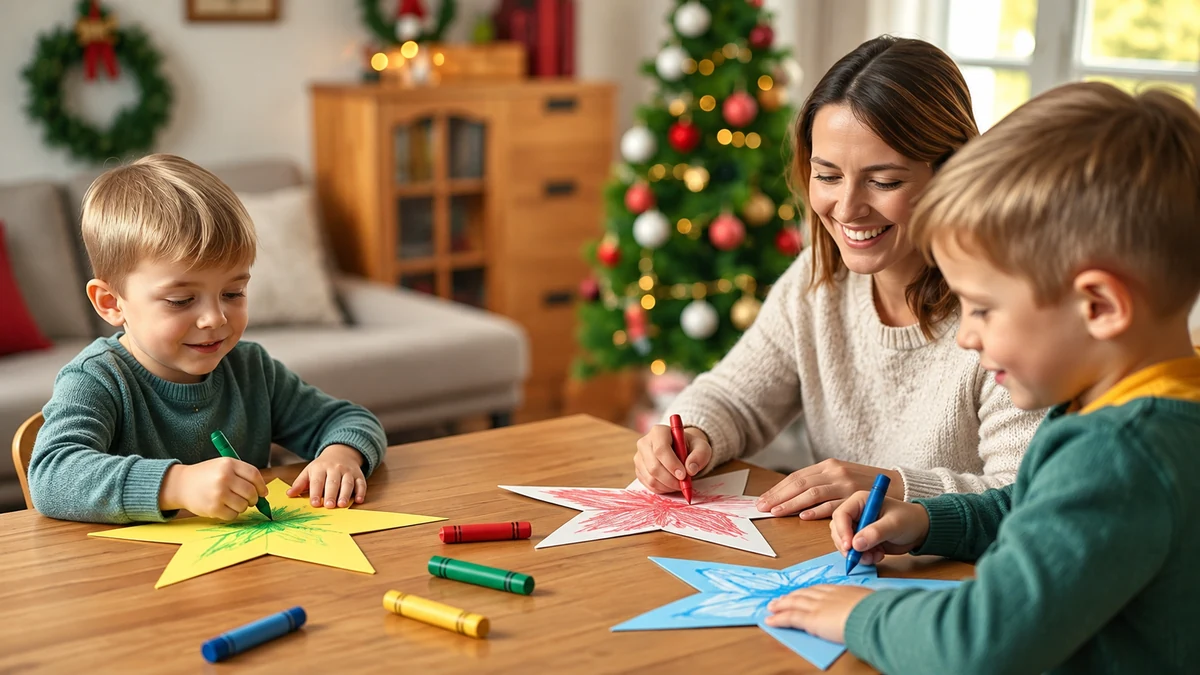
Craft and movement activities use different combinations of looking, reaching, holding and planning. Children’s abilities and interests vary, so start with something manageable. If you are concerned about development, ask a health visitor, GP or relevant children’s therapy service for individual advice.
Opportunities During Play
- Hand skills: folding, tearing paper and placing suitable puzzle pieces give children opportunities to practise controlled movements.
- Whole-body movement: reaching, stepping or moving around clear floor markers can involve balance and body awareness.
- Hand–eye coordination: drawing, placing shapes and fitting pieces together involve guiding a movement by looking.
- Planning: following a short sequence offers practice in deciding what comes next.
- Choice and confidence: let children choose colours or roles and take satisfaction in their own work, without expecting a perfect result.
- Sensory preferences: offer a choice of textures and sound levels. More stimulation is not always helpful, and a craft session is not sensory integration therapy.
- Playing together: sharing materials can offer practice in turn-taking and asking for help.
Festive Activities to Try
- Paper or felt decorations: use large shapes and suitable glue. Keep hot-glue guns, wire and sharp tools for adults, away from the children’s workspace.
- Wrapping an empty box: fold paper and secure it with tape; skip long ribbons and loops for young children.
- Cutting and collage: use suitable children’s scissors only when the child is ready, with supervision; tearing paper is another option.
- Action songs and short routes: copy a few comfortable movements or move around well-spaced floor markers.
- Decorating at a reachable height: choose non-breakable decorations and a stable display, without climbing or pulling on a tree.
- Baking together: follow a complete recipe, give adults responsibility for heat and sharp tools, and do not let children taste raw dough or flour.
Adapt the activity to the child rather than expecting them to meet a festive milestone. Stop or change the task if it causes discomfort, distress or frustration.
Puzzles and Decorations for Hand Skills
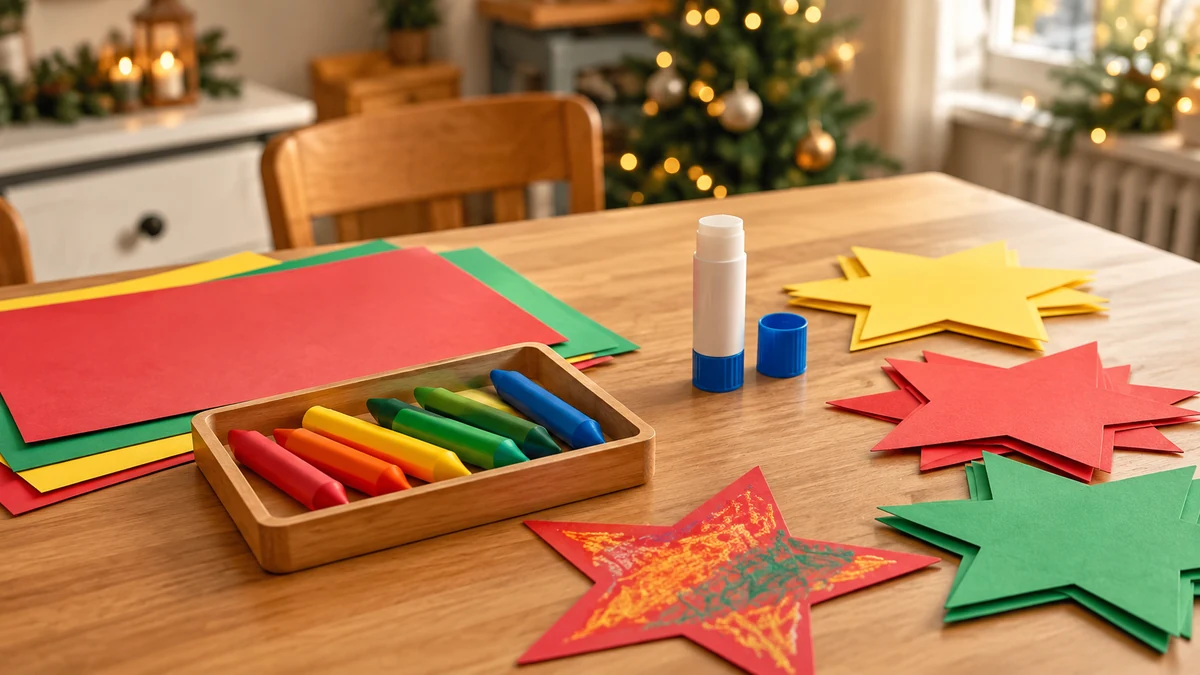
Puzzles and simple decorations can involve holding, placing and coordinating both hands. Use a stable, comfortable work surface, with materials within easy reach. A small, enjoyable task is preferable to pushing through fatigue.
Skills Used in These Activities
- Placement: picking up and positioning a suitable piece involves controlled hand movement.
- Grasp and release: large pieces can provide useful practice without relying on beads or buttons.
- Looking and moving together: aligning a shape with its space involves hand–eye coordination.
- Problem-solving: matching a picture or choosing a pattern gives the child something to work out at their own pace.
Activity 1: A Christmas Picture Puzzle
Choose a puzzle appropriate to the child’s ability and the manufacturer’s age guidance. A few large pieces may be a better starting point than a complex picture.
- Materials: a suitable puzzle, a stable surface and comfortable lighting.
- Lay out the pieces: turn them picture-side up, using only a few at a time if that helps.
- Choose a starting point: try an edge or a recognisable part of the picture, without insisting on one method.
- Look for matches: notice colours or familiar objects together.
- Offer a clue: point out a feature rather than immediately taking over.
- Adjust the challenge: change the number or size of pieces when the child is ready.
Activity 2: A Festive Lacing Card
A purpose-made, age-appropriate lacing card offers a threading activity without loose decorative beads or exposed wire.
- Materials: a suitable lacing card and the short lace supplied with it, used according to the product instructions.
- Prepare the card: place it on a clear surface and check for damage.
- Show one movement: demonstrate passing the lace through a hole slowly.
- Try a short sequence: invite the child to continue through a few holes, with help if wanted.
- Finish together: let an adult manage any fastening, following the kit instructions.
- Put it away: store the lace out of reach after play; do not turn it into a loop worn around the neck.
Activity 3: A Simple Felt Decoration
Older children who are ready for a supervised sewing task can try a suitable felt kit. Others can arrange or glue large felt shapes instead.
- Materials: pre-cut felt shapes, suitable thread and a blunt needle from an age-appropriate kit, or child-suitable glue for a no-sew version.
- Choose the shape: a star, stocking or heart provides a recognisable outline. An adult can cut it out.
- Prepare the holes: use a pre-punched kit or have an adult prepare them before the session.
- Demonstrate a simple stitch: work slowly and supervise the needle throughout; a blunt point does not remove every risk.
- Close the shape: a flat decoration needs no loose stuffing. An adult can secure the final thread.
- Add detail: use large felt pieces or drawn patterns instead of loose beads and buttons.
Choosing Tasks and Materials
- Younger children: offer large, suitable puzzle pieces, paper tearing or drawing, with close supervision.
- Children ready for more steps: try simple collage or supported cutting, following tool and material age guidance.
- Older children: offer more detailed patterns or a supervised sewing kit if these suit their skills and interests.
- Small parts: keep beads, buttons and other small loose items away from under-threes and any child who mouths objects. Supervision does not make an unsuitable material suitable.
Keeping the Activity Enjoyable
- Clear workspace: a stable table and shallow trays make materials easier to see and reach.
- Flexible length: start with a brief session and follow the child’s cues rather than a fixed target.
- Encourage effort: notice what the child tried, not just how the decoration looks.
- Add a story: imagine where the decoration will go or who might enjoy seeing it.
Christmas Movement Games and Simple Routes
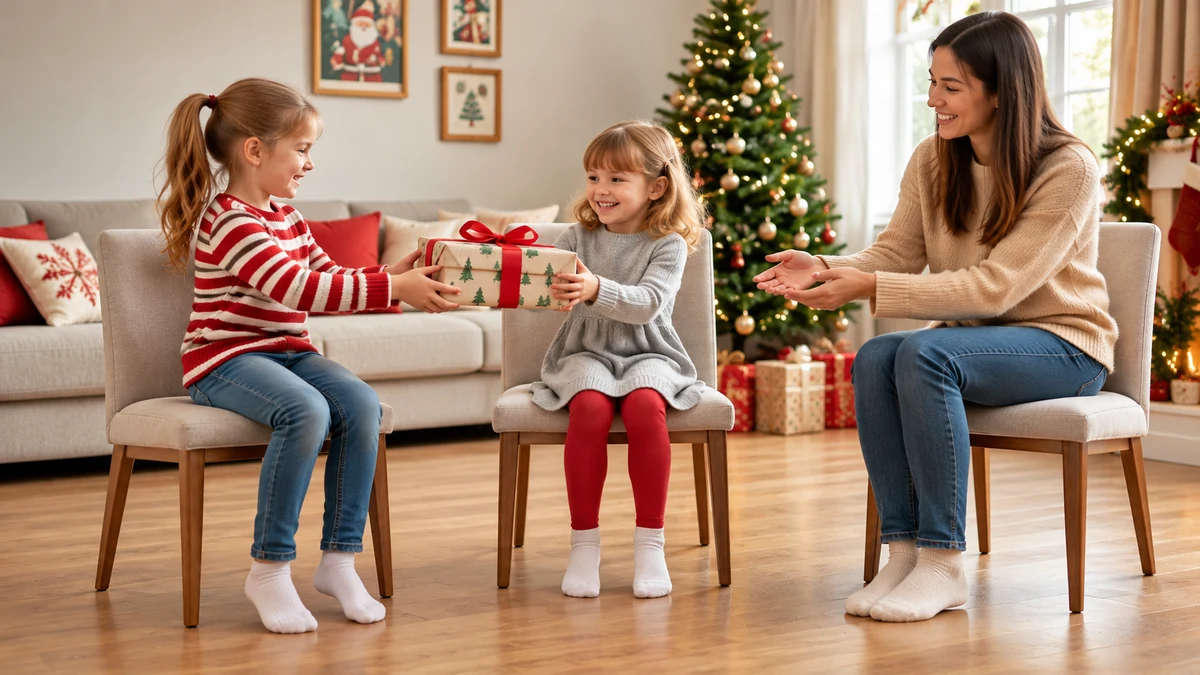
Action songs and a short route can offer opportunities to practise moving and stopping. Make seated versions equally welcome. These suggestions are not a prescribed exercise programme; adapt them to the child’s existing abilities and any professional advice.
Setting Up a Short Route
- Clear the space: remove trip hazards and choose a stable, non-slippery floor.
- Choose simple actions: move towards a marker, turn around a well-spaced cone or reach towards a picture from a comfortable position.
- Keep equipment stable: use flat, secure markers and suitable cones. Avoid loose cushions, collapsing boxes and improvised tunnels to climb over or under.
- Keep the order clear: begin with two or three actions rather than a complicated course.
- Allow pauses: let each child finish comfortably without racing a timer.
- Demonstrate first: show each action slowly and offer an alternative.
- Change one thing at a time: add a step only when the current route is comfortable; do not narrow it to create a balance test.
Simple Christmas Music Games
- Christmas statues: move gently while music plays, then pause in a comfortable position. Seated hand or arm movements work too.
- Choose a comfortable volume and movements the child enjoys.
- Pause the music and give time to stop safely; nobody needs to be eliminated.
- Welcome different ways of joining in and take breaks whenever needed.
- Follow Father Christmas: a leader demonstrates simple actions such as waving, tapping knees or stepping in place; others copy if they wish.
- Invite a different leader for each turn.
- Start with one or two actions rather than a long sequence.
- Leave space between participants and offer seated versions.
- Deliver the presents: move a light, empty box between clear locations, or pass it from person to person while seated.
- Set the collection and delivery points within easy reach.
- Let the child carry or pass the box in a comfortable way, without climbing or jumping over it.
- Adjust the distance to the child rather than increasing difficulty automatically.
Adapting Movement Play
- Early movers: keep actions simple, offer close support and avoid unstable obstacles.
- Children comfortable with sequences: combine a few familiar actions without pressure to move faster.
- Older children: invite them to design a short, suitable sequence and explain it to others.
Practical Safety
- Stay attentive: an adult should watch the activity and intervene when needed; supervision cannot guarantee that accidents will not happen.
- Check the space: remove sharp, unstable or breakable objects and keep routes clear.
- Begin gently: use comfortable movements and stop for pain, dizziness, distress or unusual fatigue. A brief warm-up is not a guarantee against injury.
- Keep feedback kind: celebrate participation without comparing children.
- Invite the family: adults and siblings can join in while respecting each child’s pace and space.
Step-by-Step Christmas Craft Sessions
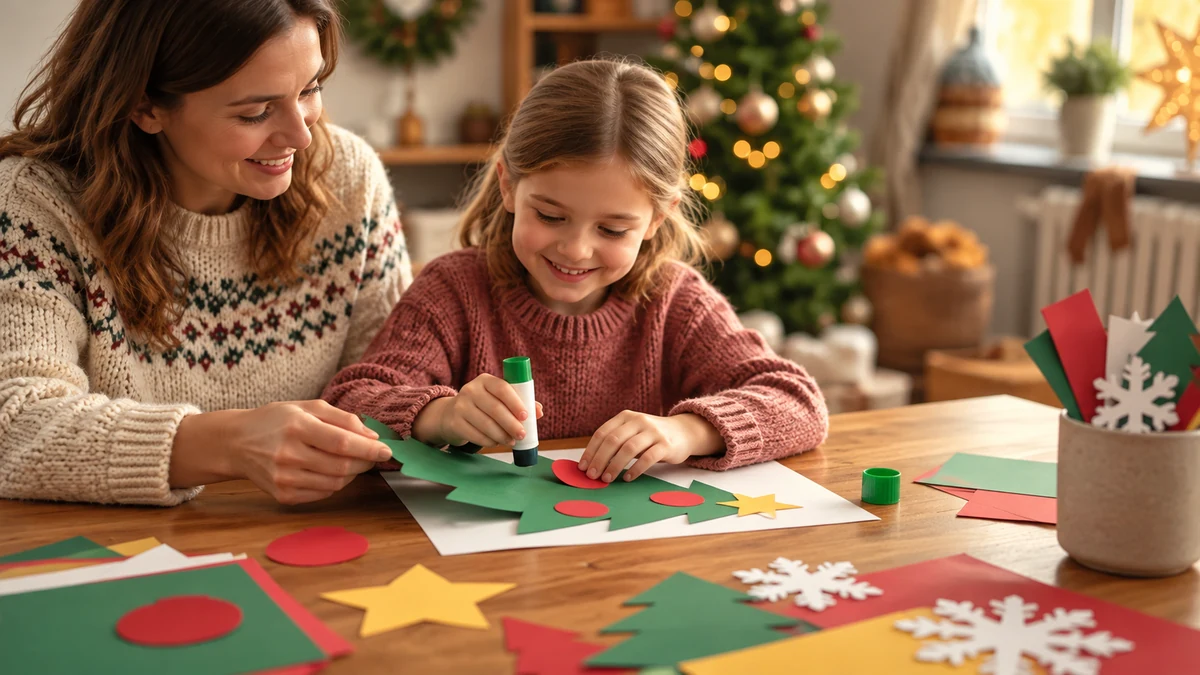
Simple crafts offer opportunities to practise using the hands while making something festive. Choose one activity rather than laying out every material at once. The projects below favour large shapes and clear steps.
Materials to Choose From
- Felt: large pieces in a few colours, with pre-cut shapes where helpful.
- Thread: only for a suitable, supervised sewing activity, stored away afterwards.
- Blunt needles: use only where appropriate for the child and count them back in after the session.
- Large paper shapes: stars, circles and leaves for arranging, without loose bead decorations.
- Card bases: use these for wreaths instead of exposed wire.
- Handprint materials: paper and a suitable drawing tool. This guide uses traced handprints instead of homemade raw-flour salt dough.
- Children’s scissors: choose suitable size and handedness, with an adult doing the cutting when necessary. Source: Bedfordshire and Luton children’s health — scissor skills
- Child-suitable glue: follow the label and supervise use; non-toxic does not mean edible.
- Washable drawing materials: choose products intended for the child’s age and activity.
- Finishing details: use drawn patterns or large pieces of paper rather than long cords and small ornaments.
Workshop A: A Flat Felt Decoration
- Prepare the shapes: draw a star or tree and have an adult cut matching felt pieces if needed.
- Choose the method: older children can use a suitable pre-punched sewing kit; others can make a glued collage.
- Join the pieces: demonstrate one stitch at a time, or apply glue according to its instructions.
- Keep it flat: omit loose stuffing and allow glued sections to set before handling.
- Finish together: an adult secures thread ends; display the decoration where it cannot be pulled down by a younger child.
Workshop B: A Paper Handprint Keepsake
- Prepare the paper: place a large sheet on a stable table. This alternative avoids handling raw flour, which can contain food-poisoning bacteria. Source: Food Standards Agency — flour and raw dough safety
- Position the hand: let the child rest a hand comfortably on the paper, only if they enjoy the activity.
- Trace the outline: an adult or the child can draw gently around it without pressing against the skin.
- Choose a display: keep the whole sheet or have an adult cut out the outline; no hanging cord is needed.
- Add colour: use suitable crayons or pencils and take a break whenever wanted.
- Finish the keepsake: add a date if desired and place it in an album or on a suitable display board.
Workshop C: A Paper-Shape Wreath
- Prepare a base: an adult cuts a broad ring from clean card before the session.
- Lay out the shapes: offer a few large paper leaves, circles or stars.
- Choose a pattern: try alternating colours, or let the child create their own arrangement.
- Attach the pieces: use child-suitable glue with supervision, following the product instructions.
- Display it: let it dry and have an adult place it somewhere appropriate, away from heat and electrical equipment.
Adapting the Craft
- Younger children: offer a few large shapes and close adult support.
- Children ready for sequences: let them choose and place several pieces, with help as needed.
- Older children: offer more control over the design while maintaining supervision appropriate to the tools.
- Adult tools: keep craft knives, pliers and hot-glue equipment out of the children’s work area.
Encouraging Comfortable Practice
- Let repetition be optional: another decoration may be enjoyable, but stop before the task becomes tiring or painful.
- Break it into steps: show one action, then give time to try it.
- Use flexible timing: there is no universal session length that guarantees progress without fatigue.
- Notice preferences: remember which tools or tasks were comfortable, rather than using photographs as a clinical assessment.
Adapting Activities to Different Needs
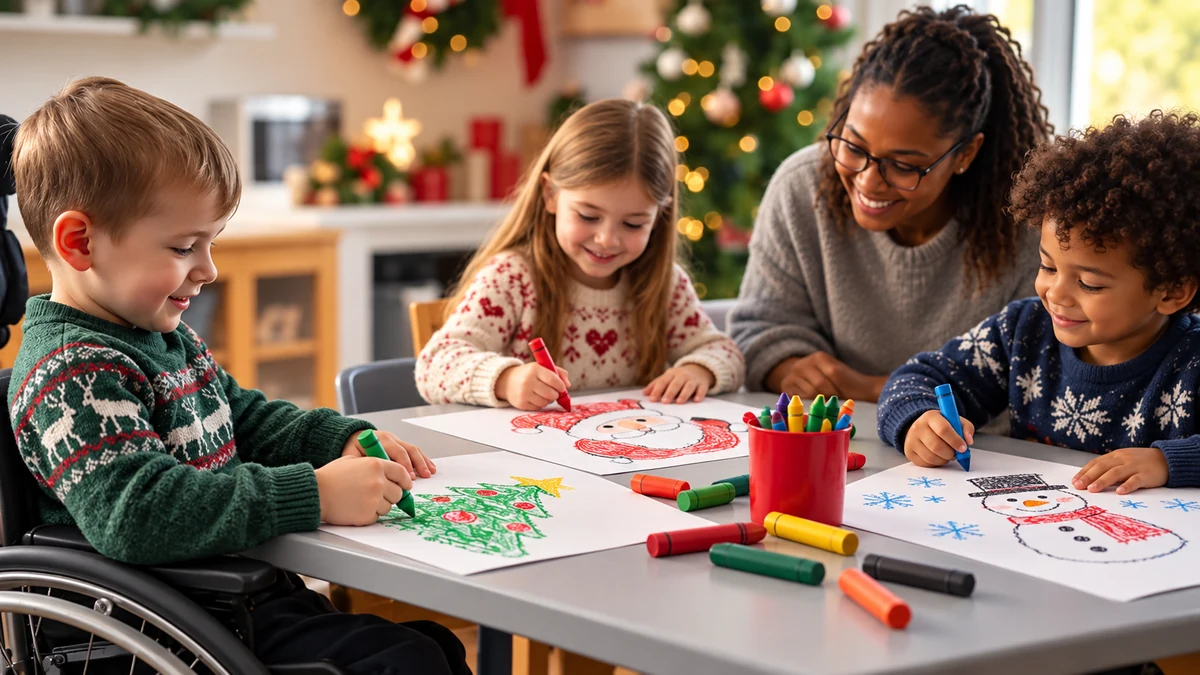
Inclusion means offering meaningful choices and changing the activity where necessary. No adaptation suits every child. Follow any individual advice already provided by the child’s therapist or healthcare team.
Starting Points, Not Age Tests
- Simple activities: large pieces, brief turns and adult demonstrations can help a child who is just beginning.
- More steps: introduce a short sequence only when it feels manageable, without treating a birthday as proof of readiness.
- More independence: allow choices and responsibility while keeping support available.
Adjustments to Consider
- Mobility needs: provide an accessible surface, comfortable seating and materials within reach.
- Visual needs: use clear light–dark contrast, large outlines and uncluttered backgrounds. Do not rely only on red and green to distinguish pieces.
- Attention and processing: offer short instructions, a visible next step and pauses, without assuming the same approach suits everyone.
- Fatigue or weakness: offer lighter materials and rest, and follow professional advice about tools and positioning.
- Sensory preferences: allow dry materials instead of sticky glue or paint, and provide a quieter option.
Examples of Practical Adjustments
- Adapted scissors: some children find spring-assisted or differently shaped handles useful; seek advice on a suitable choice.
- Larger shapes: replace fiddly decorations with easy-to-see paper or felt pieces.
- Stable materials: a suitable non-slip mat can help keep the work in place, without introducing small clamps or clips.
- One-handed options: stabilise the paper and adjust the task, following individual guidance where available.
- A visible plan: a picture showing the next step may be more helpful than a countdown that creates pressure.
Clear Instructions
- Short steps: demonstrate one action at a time.
- An example to explore: show a finished piece, while making clear that the child’s version can look different.
- Visual prompts: simple pictures can show the order of the activity.
Supervision and Materials
- Check individual risks: consider mouthing, tool use, mobility and younger siblings who may reach the table.
- Stay engaged: an attentive adult can notice when help, a break or a different task is needed.
- Read labels: choose materials intended for children and the particular activity, and follow age restrictions and use instructions.
Noticing What Works
- Use small aims: try placing a few shapes or completing one comfortable step, rather than a fixed performance target.
- Keep simple notes: note preferences and difficulties to discuss with a professional if needed; craft results alone do not diagnose a problem.
- Adjust gradually: change the task when the child is comfortable, keeping help available.
Ideas for Parents and Educators
- Personalise the theme: choose colours, stories or characters the child likes.
- Encourage attempts: acknowledge effort without demanding repeated improvement.
- Ask for advice: contact a health visitor, GP or children’s occupational therapy service if you have concerns about everyday hand skills or coordination. Source: Gloucestershire Health and Care NHS — children’s occupational therapy
- Include familiar people: siblings and carers can participate without taking over the child’s choices.
Simple Materials for Home Activities
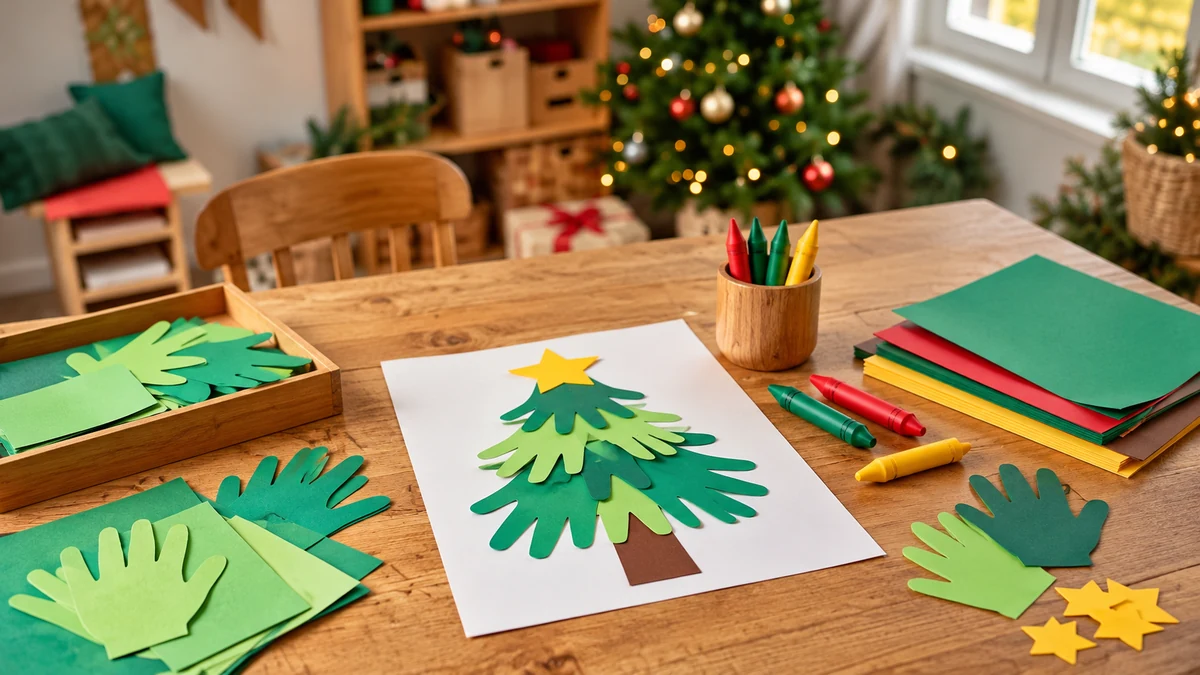
You do not need a large craft collection. A small set of suitable materials can support several different activities, especially when children help choose how to use them.
Basic Materials and Their Uses
- Card and coloured paper: use for folding, tearing and collage; clean packaging can work if staples and sharp edges are removed.
- Felt and fabric: choose large, clean pieces for arranging or a suitable supervised project.
- Paper shapes: use these instead of beads and buttons for younger children.
- Suitable tape: use for attaching paper or making secure flat markers, checking the surface and removing loose edges.
- Child-suitable glue: follow the product instructions rather than diluting it or mixing products.
- Appropriate scissors: use with supervision when the child is ready. Craft knives are for adults, not a children’s alternative.
- Clean cardboard: use for flat craft bases, not unstable climbing obstacles.
- Washable art materials: choose products intended for the age group and the surface being decorated.
- Display materials: let adults handle fastenings and keep cords, wire and elastic away from young children.
- Shallow trays: keep a few materials visible and within reach.
Organising the Session
- One activity at a time: prepare the materials before inviting the child to start.
- Easy access: place trays where the child can reach without stretching awkwardly.
- Clear storage: pictures on boxes can show where things belong, without relying on colour alone.
- Flexible sessions: stop while the activity is still comfortable; shorter does not automatically mean less worthwhile.
Saving and Reusing Materials
- Check reused packaging: use clean, suitable card and avoid small caps, staples or contaminated containers.
- Buy what you need: compare usable quantities rather than buying a large pack simply because the unit price is lower.
- Share suitable supplies: families can exchange clean materials with labels and instructions intact.
- Choose simple substitutes: drawn patterns and large paper shapes can replace loose decorative parts.
Checking Materials Over Time
- Follow age guidance: choose suitable products rather than assuming that any item described as large is safe for a toddler.
- Use products as intended: keep glue and paint out of mouths and wash hands after crafting.
- Store securely: separate adult tools and older children’s supplies from materials accessible to younger children.
- Inspect before use: remove broken pieces, loose parts and damaged tools.
A Simple Preparation List
- Coloured paper and clean card
- Large felt or fabric pieces
- Suitable puzzle pieces or paper shapes
- Child-suitable glue
- Appropriate scissors, if needed
- Adult-managed display materials
- Shallow organising trays
Choose only what your activity needs. Careful selection and supervision matter more than the size of the craft collection, and no homemade setup is risk-free.
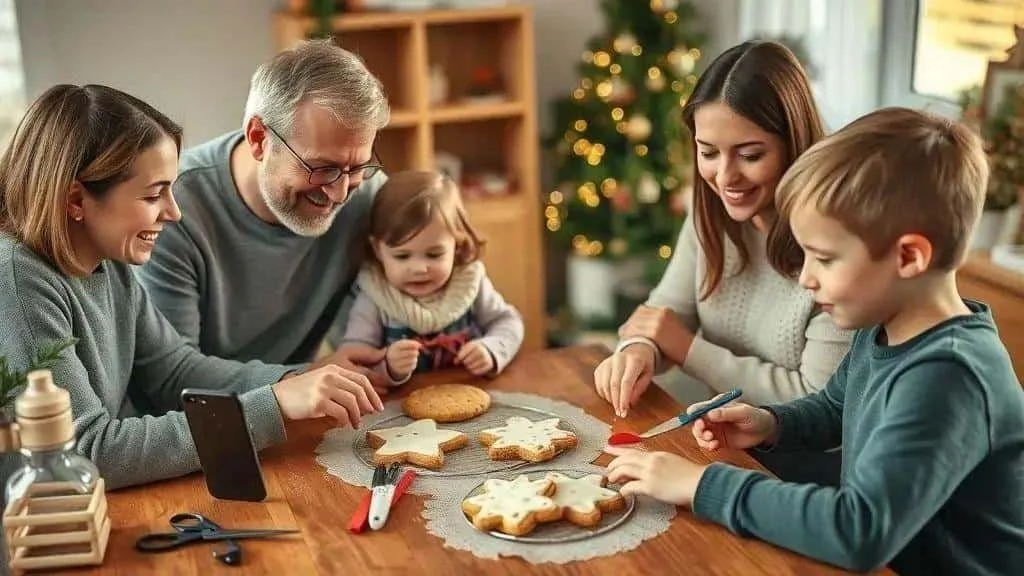
Involving the family can make crafting a welcome part of the season. Keep the emphasis on conversation and enjoyment, rather than turning every activity into an exercise or assessment.
A Manageable Plan
- Choose a convenient moment: a short session when the child is rested may work better than a fixed weekly quota.
- Share simple roles: one adult can prepare materials while another supports the activity, with clear responsibility for supervision.
- Use an optional ritual: begin with a familiar song or finish by admiring the work; hugs and photographs should never be compulsory.
Activities to Share
- Family craft time: work side by side on a collage or decoration, letting the child make choices.
- Baking: use a complete recipe and suitable tasks such as stirring or decorating fully baked, cooled biscuits. Adults manage cooking and food hygiene.
- Picture hunt: place large festive pictures in easy-to-reach locations, keeping the route clear and avoiding small hidden ornaments.
Keeping It Enjoyable
- Leave room in the calendar: make it an invitation, not a demanding commitment.
- Offer a reminder: a picture of the next activity can help children know what to expect.
- Use familiar steps: a predictable beginning and tidy-up can make the session easier to follow.
- Ask and adjust: find out what the child enjoyed and change anything uncomfortable.
Making Space for Connection
- Share memories: tell a short story about an earlier Christmas while working together.
- Notice participation: value choosing, watching or helping as well as finishing a decoration.
- Keep memories respectfully: ask before taking photographs and protect children’s privacy when sharing.
- Keep the setting comfortable: consider sound, smells and temperature, and keep hot drinks away from the work area.
Practical Alternatives
- Limited time: choose one small action, such as arranging a few large shapes, rather than rushing a full project.
- Relatives far away: a short video call can let people show their creations, with an adult supervising each child locally.
- Different support needs: offer roles such as choosing colours, pointing to a shape or directing an adult, according to the child’s preferences.
Gentle Ways to Begin and Finish
- A familiar cue: a quiet song or picture can signal the start, if the child likes it.
- A materials box: show the suitable supplies for that session without overwhelming the table.
- A shared display: let children decide whether to add their work, without making completion a competition.
A flexible routine can make it easier to return to enjoyable play. Children can participate in different ways, and the shared time is valuable even when no finished craft is produced.
Enjoyable Practice, Without Pressure
Christmas crafts and games can offer opportunities to use hand skills and explore movement. Choose suitable tasks, respond to the child’s cues and ask for professional guidance when needed; no activity here guarantees a developmental outcome.
Keep instructions clear, take breaks and offer alternatives. The aim is comfortable participation, not a perfectly made decoration or a timed performance.
Thank you for reading. Explore the I Love Christmas blog and our social channels for more seasonal ideas to adapt for your family.
Frequently Asked Questions About Christmas Play and Coordination
What can children practise through Christmas activities?
Depending on the task, they can practise holding, placing, looking and moving together, following a short sequence or taking turns. Results vary, and these play ideas are not a substitute for individual developmental assessment or therapy.
What inexpensive materials can we use at home?
Clean card, paper, suitable large shapes and age-appropriate art materials are useful starting points. Check labels and individual risks, supervise actively and keep small parts and adult tools away from younger children.
How should I adapt the activities by age?
Use product age guidance alongside the child’s actual abilities and habits. Start with simple tasks, offer help and add steps gradually. Age alone does not establish readiness for scissors, sewing or small parts.
How can I include a child with additional support needs?
Offer accessible seating, stable materials, clear instructions and meaningful choices. Follow individual professional advice and adjust the task rather than expecting every child to complete it in the same way.
How long should a session last?
There is no single effective length for every child. Start briefly, allow pauses and stop for fatigue, discomfort or distress. Enjoyable participation matters more than reaching a set number of minutes.
How can the family make this a welcoming routine?
Choose manageable moments, share supervision and preparation, offer familiar steps and let the child influence the activity. Celebrate participation without requiring a finished product or comparing progress.
Sources and Further Reading
- Gloucestershire Health and Care NHS — children’s occupational therapy
- Bedfordshire and Luton children’s health — scissor skills
- Children and Family Health Devon — preparing for scissors
- Somerset NHS — scissor skills
- Food Standards Agency — flour and raw dough safety
- Child Accident Prevention Trust — parents’ safety pack