
Christmas and New Year cruises need a little advance planning: compare routes and the full holiday cost, check entry and health requirements for every destination, arrange suitable insurance and confirm the festive programme. Booking early can give you more cabin choices, but neither a particular booking window nor a promotional fare guarantees the best price.
Christmas and New Year cruises offer a different setting for the festive season: a sea view at breakfast, several destinations in one trip and celebrations organised on board. This guide helps you work through the practical decisions, from choosing an itinerary to checking what your fare actually covers.
Illustrations in this article are conceptual images, not documentary photographs or evidence of a particular historical event, destination, venue or access route.
Why choose a Christmas or New Year cruise?

A festive cruise combines a holiday with seasonal celebrations. You can visit different places without unpacking at every stop, while the ship provides your accommodation and some of your meals and entertainment. The experience still depends on the vessel, itinerary and package you choose.
Practical advantages
- Varied itineraries: visit several cities or islands on one holiday, with different landscapes and attractions at each stop.
- Included services: having some meals and activities covered can make budgeting easier. Do not assume a cruise is all-inclusive: drinks, speciality dining, excursions and other services may cost extra.
- Festive programmes: some sailings offer special dinners, performances and seasonal events. Check the published programme; fireworks are not a standard feature of every cruise.
- Family facilities: suitable ships may offer activities for children, teenagers and adults. Check age limits, availability and any registration or booking requirements before committing.
- Support on board: ask what assistance and medical facilities the ship provides. Onboard care is not equivalent to a full hospital, treatment may be charged separately and serious illness can require care ashore.
Choosing a sailing that suits you
- Consider the length: a three- to five-night trip can be a manageable introduction, while longer sailings allow more time away. Compare the actual balance of port visits and days at sea.
- Check the celebrations: confirm whether Christmas dinner and a New Year’s Eve event are included, require reservations or carry an additional charge.
- Compare early: start looking while you still have a choice of cabins and travel dates. Compare complete prices and cancellation terms rather than booking solely because an offer has a countdown.
- Choose your cabin carefully: a window or balcony can provide views, while an inside cabin may cost less. A balcony does not guarantee a view of a particular port celebration or fireworks display.
- Plan shore visits: check time ashore, transport and the ship’s all-aboard deadline. Allow for tender transfers and delays rather than treating the advertised arrival and departure times as usable sightseeing hours.
Making the most of life on board
- Read the daily programme: choose the shows, themed dinners and family activities you actually want to attend, leaving room for rest.
- Reserve selected extras: speciality restaurants and spa appointments may have limited availability. Confirm prices and cancellation terms before booking them.
- Pack for the itinerary and dress code: check what the ship expects at festive dinners and what the weather requires ashore. A tropical sailing and a northern European winter cruise need very different clothing.
- Arrange suitable travel insurance: UK government guidance recommends checking that cover meets your needs. Tell the insurer you are taking a cruise and check medical treatment, evacuation, cancellation, activities and any exclusions rather than assuming everything is covered. Source: GOV.UK: foreign travel insurance
These preparations cannot eliminate disruption, but they can help you choose a holiday that fits your expectations and avoid preventable difficulties during a busy travel period.
How to choose your route and trip length
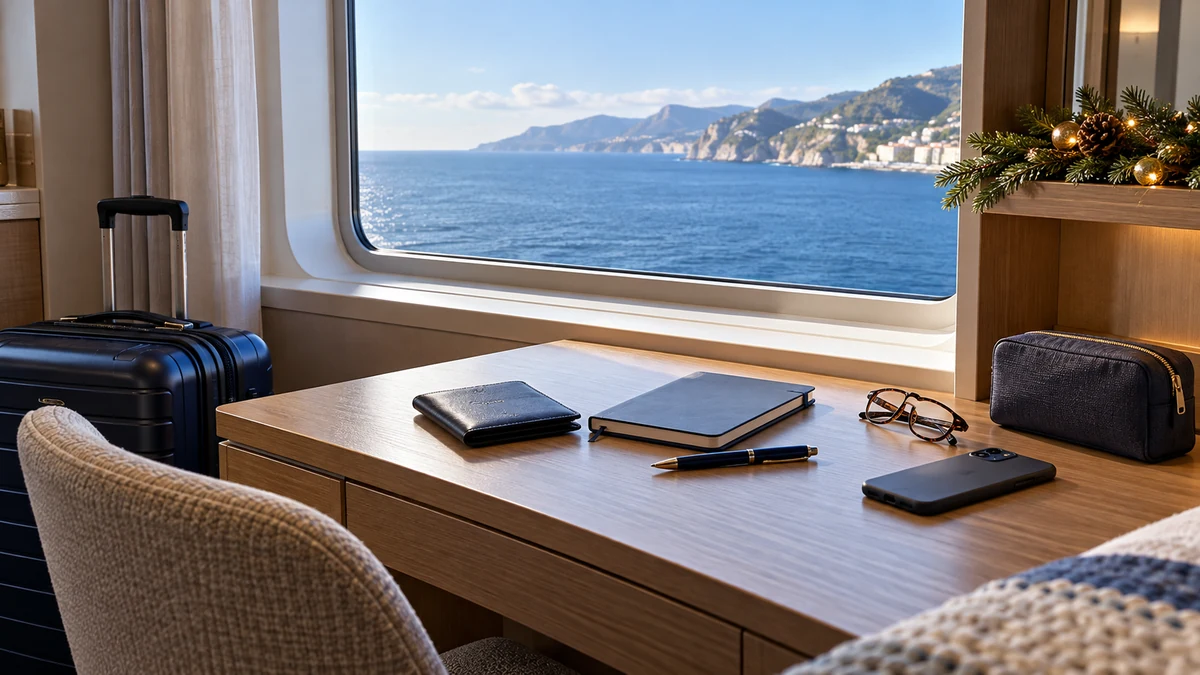
Start with your priorities: relaxation, seasonal celebrations, exploring cities or spending time on particular activities. Then compare the itinerary with those priorities rather than judging a cruise by the number of destinations alone.
Choosing an itinerary
- Climate and season: check conditions for each destination and your travel dates. December is winter in the northern hemisphere and summer in the southern hemisphere; local climate and sea conditions still vary considerably.
- Type of destination: beaches, historic cities and islands offer different experiences. Choose places that interest you and excursions that suit your mobility and preferred pace.
- Time in port: a longer stop may allow more exploration, but transfer times and opening hours matter. Check how far the port is from the sights you want to see.
- Days at sea: use the published schedule to compare sailing time with time ashore. Ports being close together does not, by itself, guarantee longer visits.
Matching the duration to your plans
- Three to five nights: a possible option if you have limited leave or want to try cruising. Check that the sailing includes the particular festive date you hope to celebrate.
- Seven nights: enough time for a week away with a mix of onboard life and port visits. The number of stops varies, so compare individual itineraries rather than assuming a fixed pattern.
- Ten nights or more: useful for a longer holiday or more time at sea. Consider your overall budget, travel arrangements and how comfortable you are with consecutive sea days.
- Repositioning voyages: these move a ship between operating regions and may finish in a different country. Check seasonal availability and the full cost of one-way flights and transfers; a low cruise fare does not necessarily mean a cheap holiday.
Travel logistics and the calendar
- Embarkation and disembarkation: allow a realistic buffer for flights, transfers and delays. Arriving in the departure area the previous day can reduce the risk associated with a tight connection.
- Popular dates: festive sailings can be in demand, particularly for certain cabin types. Monitor availability and compare prices without assuming every departure follows the same pricing pattern.
- Local public holidays: check whether transport, attractions, restaurants and shops operate on the dates you will visit. A holiday can change both opening hours and the atmosphere ashore.
Practical ways to narrow the choice
- Rank your priorities: decide whether beaches, cities or onboard activities matter most, then use that list to filter the options.
- Consider motion and sea days: if seasickness concerns you, ask a pharmacist or clinician about appropriate prevention and discuss cabin location with the operator. More port calls do not guarantee calm conditions.
- Compare cruise lines and ships: look for the atmosphere you prefer, whether lively entertainment, family activities or a quieter setting. Facilities can differ between ships belonging to the same company.
- Read the detailed itinerary: check arrival and departure times, excursion availability and any days spent entirely at sea before reserving.
- Set a complete budget: include travel to the port, accommodation before departure, excursions, insurance and onboard extras alongside the advertised fare.
A useful itinerary is one that matches your interests, pace and spending limit. Allowing enough time for the journey to and from the ship is just as important as choosing the right destinations.
Booking, promotions and when to buy
Booking, promotions and when to buy are worth considering together. Your preferred cabin, the dates you can travel and the terms attached to a fare may matter more than a headline discount.
Booking windows to consider
- Six to twelve months ahead: starting your search this early may give you more cabin choices for popular festive departures. It is a planning window, not a guarantee of the lowest fare.
- Three to six months ahead: continue comparing available packages, but weigh any promotional credit against the total price and the cabin category offered.
- Thirty to sixty days ahead: last-minute availability can suit flexible travellers. Discounts are not assured, and flights, cabins or the exact holiday dates you want may be unavailable or expensive.
Finding and evaluating offers
- Compare the total cost: check taxes, port charges, meals and entertainment, then add drinks, excursions, service charges or gratuities and other extras relevant to you.
- Use price alerts: selected cruise-line newsletters and travel searches can help you monitor fares. Compare equivalent dates, cabins and conditions when an alert arrives.
- Read credit restrictions: onboard credit may only apply to certain purchases and may expire unused. Value it according to what you would otherwise buy, not its headline amount.
- Check agency offers: compare an agent’s package with booking directly and confirm who handles payments, changes and support. Verify the business before sending money.
Payments and cancellation terms
- Deposit and balance: check the amount due when booking, whether the deposit is refundable and the deadline for paying the balance.
- Cancellation and changes: read the timetable of charges and any conditions attached to flexible fares. Refunds, transfers and credits are not interchangeable.
- Insurance conditions: consider arranging appropriate cover when you book. Check when cancellation protection begins and what events, medical conditions and circumstances are excluded.
Practical ways to control the cost
- Compare nearby dates: if your plans allow it, check departures a few days apart. Include any difference in flights and hotel nights before deciding which is cheaper.
- Consider an inside cabin: it may suit you if you spend little time in your room. Compare the actual fare difference and layout rather than assuming it is always the best value.
- Check occupancy offers: a discounted additional guest may reduce the average fare, but check sleeping arrangements, space and any separate taxes or charges.
- Assess less familiar routes: a repositioning or less popular itinerary may look attractive. Price the whole journey, especially flights from different arrival and departure airports.
Final checks before paying
- Read recent reviews: use them to identify questions about the ship or service, then confirm important details with the operator. Last year’s programme does not guarantee this year’s events.
- Confirm festive inclusions: ask whether Christmas dinner and the New Year’s Eve party are included and whether particular venues require a supplement or reservation.
- Check documents and connections: requirements depend on nationality, route and transit points. Allow enough time for applications, health advice and travel to the port before committing to non-refundable arrangements.
Travel documents, vaccinations and boarding requirements
Check official entry advice and the cruise line’s instructions early. A route can involve several countries, each with its own requirements, even when your time ashore will be brief.
Essential documents
- Passport: check the validity and blank-page rules for every country on your route and the operator’s boarding conditions. There is no single six-month validity rule that applies to every cruise.
- Other identification: do not assume a driving licence or national identity card replaces a passport. Acceptable documents depend on your nationality, destinations and the type of voyage.
- Visas and entry authorisations: check every port and transit country. Ask whether any requirement applies even if you intend to remain on the ship, and use official sources when applying.
- Booking and boarding documents: complete any required online check-in and keep confirmations accessible. Carry printed copies if the operator requires them or as a backup to your phone.
Vaccinations and health requirements
- Yellow fever certificates: some itineraries may involve a certificate requirement, including rules linked to previous travel or transit. Check the specific route and seek professional advice in good time.
- Current health policies: consult the operator and official destination advice for any vaccination, testing or other boarding conditions. Do not rely on requirements copied from an earlier year’s sailing.
- Travel-health advice: NHS guidance recommends seeking vaccination advice at least four to six weeks before travel where possible. Recommendations depend on your destinations, activities, health and previous vaccinations. Source: NHS: travel vaccinations
Forms and permissions
- Health declarations or tests: where these are required, confirm the deadline and accepted format. They are not universal requirements for all cruises.
- Children’s travel documents: check the operator’s rules and relevant countries’ requirements, including any parental consent or supporting evidence needed when a child travels with one parent or another adult.
- Cruise-line registration: provide requested contact and emergency details through the official booking system. Check how the onboard spending account works and what payment methods are accepted.
Check-in and embarkation
- Online check-in: complete it within the required window and follow any allocated arrival slot. Digital check-in can simplify preparation but does not remove terminal checks or guarantee no queues.
- Arrival time: follow the operator’s instructions and leave a buffer. A delayed flight or transfer can result in missing the ship.
- Keep documents accessible: carry your passport and boarding documents with you rather than packing them in checked luggage.
Luggage and restricted items
- Baggage allowances: check the ship’s limits and the airline’s rules separately, including restrictions for cabin baggage and transfers.
- Prohibited items: read the cruise line’s official list before packing. Appliances, batteries, drinks and other everyday items may be subject to restrictions as well as clearly hazardous goods.
- Medicines: carry necessary medication in its original packaging with relevant prescriptions or documentation. Check destination rules for controlled medicines and discuss special storage needs with the operator in advance.
Useful preparation
- Keep secure backups: store copies of essential travel documents separately from the originals and protect any digital copies. Do not keep full payment-card details or security codes in an ordinary cloud folder.
- Recheck before departure: review official requirements and the operator’s notices again in the final days. This is a final check, not a substitute for arranging documents well ahead of travel.
- Keep insurance details handy: carry your policy number and emergency assistance contact, and know what to do if you need treatment or help during the voyage.
What to pack and how to organise your cabin
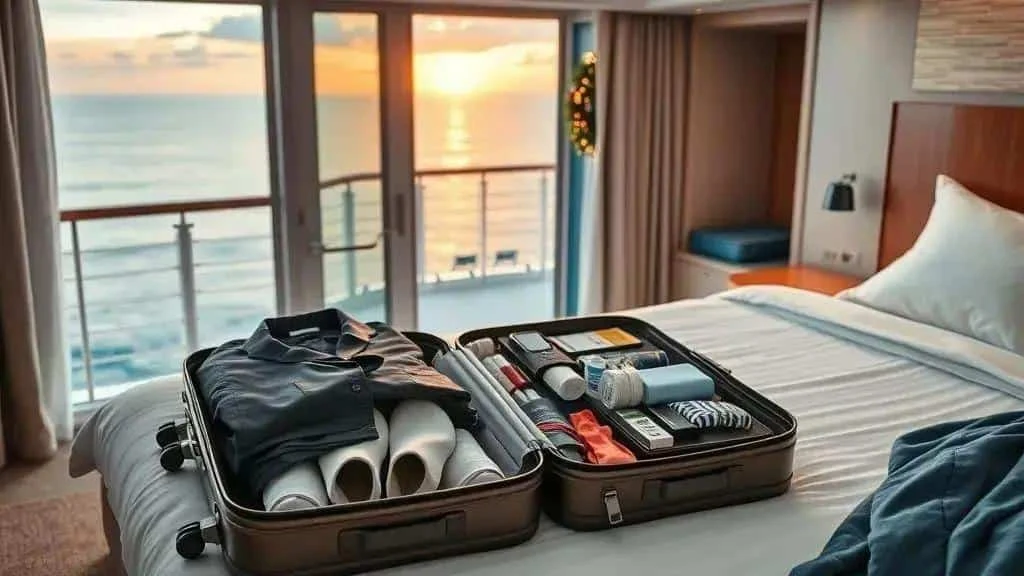
A practical packing list
- Evening clothes: pack for the ship’s actual dress code. An outfit and shoes suitable for festive dinners may be useful; formalwear is not required on every cruise.
- Everyday clothing: choose interchangeable tops and trousers or shorts, with quantities suited to the trip length and available laundry facilities.
- Swimwear: bring it if you plan to use pools or visit beaches, together with suitable footwear and a cover-up for moving between areas.
- Layers and weather protection: pack for the coldest and wettest conditions you might encounter. A light shawl is not adequate protection for every winter itinerary.
- Underwear and nightwear: allow enough for the journey, with a small reserve and a realistic plan for washing clothes on longer trips.
- Medicines and basic supplies: take your prescribed medicines and useful items such as plasters. Ask a pharmacist about any travel remedies you are considering rather than assuming one product suits everyone.
- Toiletries: pack your usual essentials, suitable sun protection and containers that comply with any flight restrictions. Check which toiletries your cabin provides.
- Documents and money: keep your passport, booking details, insurance information and suitable payment methods accessible, with secure backups stored separately.
- Electronics: check permitted chargers, adapters and battery rules before packing. Review mobile roaming and onboard internet charges so that connecting at sea does not produce an unexpected bill.
- Useful extras: consider a bag for wet clothes, luggage labels, a suitable lock and a small day bag for excursions.
Packing efficiently
- Use packing cubes: grouping clothes by type can make them easier to find and keep the cabin organised.
- Roll or fold to suit the fabric: try both methods to use space well, while protecting clothes that crease easily.
- Prepare a small carry-on: include documents, medicines and essentials for embarkation day in case checked luggage reaches the cabin later.
- Use a checklist: review it before leaving, including chargers, prescriptions and documents that are easy to overlook.
- Check airport liquid rules: UK government guidance says the rules depend on the airport. Many still limit containers to 100 ml, while some allow larger ones. Check departure, transit and return airports, including rules for medicines and other exceptions. Source: GOV.UK: hand luggage restrictions for liquids
Cabin considerations
- Location: ask about cabins nearer the centre of the ship and on lower decks if motion concerns you. No location guarantees you will avoid seasickness.
- Balcony or inside cabin: compare views, ventilation arrangements, layout and price. An inside cabin is not automatically quieter; its position relative to other facilities matters.
- Lifts and corridors: nearby lifts can be convenient, but busy corridors may be less appealing if quiet is a priority.
- Public areas: check what is beside, above and below the cabin. Being close to pools or entertainment venues can be convenient but may bring noise.
- Connecting cabins: these can help families stay together. Confirm that rooms genuinely connect rather than merely being adjacent, and ask how privacy and access work.
- Storage: use the available cupboards and safe storage areas without blocking doors or walkways. Ask the steward for advice or extra hangers if needed.
- Sockets and charging: check the socket type and approved adapters. Follow the ship’s electrical-safety rules and avoid leaving devices charging unattended; there is no passenger saving from a supposed overnight cabin electricity tariff.
- Safety arrangements: use the safe for appropriate valuables, attend the required safety briefing and learn your muster station and emergency route.
- Additional requirements: discuss dietary needs, accessibility or a cot before booking and obtain confirmation of what can be provided. Availability should not be assumed.
Small details that help on board
- First-day essentials: keep a change of clothes and anything needed for the first evening in your carry-on if luggage delivery is delayed.
- Recognisable luggage: a distinctive tag can help you identify your suitcase. Follow the operator’s labelling instructions and avoid displaying unnecessary personal information.
- Cabin restrictions: do not bring candles, portable cookers or other heat-producing equipment on the assumption that they are allowed. Check the prohibited-items list and follow crew instructions.
- Ask the cabin team: clarify housekeeping arrangements and where to store luggage so that the space remains comfortable and clear.
Onboard activities and festive programmes

A ship may offer a wide range of activities, but the programme varies by vessel and sailing. Use the following ideas as things to check, not as promises about every Christmas cruise.
Everyday entertainment
- Shows and performances: look for evening productions or seasonal performances in the programme, noting any booking requirements.
- Outdoor activities: deck films, exercise sessions or daytime events may be offered, subject to the ship’s facilities and the weather.
- Workshops and talks: some sailings include dance, photography, drinks demonstrations or destination talks. Check whether there is a fee.
- Wellbeing facilities: gyms, classes and spas can offer time to unwind. Access, age limits and charges vary, so confirm the arrangements before attending.
Activities for children and families
- Children’s clubs: check age groups, supervision, opening times, registration and capacity. Some services may need advance booking or cost extra.
- Teenage activities: ask whether the ship has appropriate spaces and organised events for your teenager’s age group.
- Family sessions: treasure hunts, crafts, games or films can provide shared time together where the programme includes them.
Food and festive dining
- Celebratory meals: check Christmas and New Year’s Eve dining arrangements, including seating times, booking requirements and what is included in your fare.
- Dietary requirements: discuss allergies and other needs before travel and again with the dining team. A menu description alone does not confirm that cross-contact can be prevented.
- Special dining events: tasting menus, chef’s evenings or other celebrations may be offered as paid extras with limited places.
Christmas and New Year events
- Midnight celebrations: a countdown or live music may feature in the New Year’s Eve programme. Only expect fireworks if the operator explicitly confirms them; they are not a routine entitlement or guaranteed view.
- Themed parties: check any clothing theme or dress code, such as formal evening wear or an all-white party, before deciding what to pack.
- Optional extras: professional photographs, special drinks or premium events may have separate prices even when the main celebration is included.
Planning your time on board
- Book what matters most: reserve selected restaurants, treatments or excursions within the operator’s booking window, without filling every hour of the holiday.
- Check daily updates: times and venues can change, so consult the current programme rather than relying solely on advance advertising.
- Evaluate add-on packages: compare drinks, photography or event packages with what you realistically expect to use, including restrictions and unused allowances.
- Coordinate family plans: agree who is responsible for children outside supervised sessions and leave time for activities you can enjoy together.
- Watch the clock ashore: follow the ship’s stated time and all-aboard deadline at every port, particularly when a late celebration is followed by an early excursion.
- Stay comfortable: wear suitable non-slip footwear, drink water and follow crew instructions around pools, decks and busy event areas.
Final preparations for your festive cruise
A well-planned Christmas or New Year cruise starts with realistic expectations. Choose a suitable route, compare the complete cost, arrange the necessary documents and insurance, and pack for the actual climate and programme. Leave flexibility for changes rather than expecting every day to follow a perfect schedule.
Thank you for reading. Explore the I Love Christmas blog for more festive travel ideas, decorations and recipes, and keep your operator’s latest information alongside this planning guide.
Have you taken a festive cruise? Share useful experiences or questions in the comments, and save the checklist for your own preparations. Happy travels!
Frequently asked questions about Christmas and New Year cruises
When should I book a Christmas or New Year cruise?
Starting six to twelve months ahead can give you more choice, especially for specific cabins and dates. There is no booking window that guarantees the lowest price. Compare the full cost, availability and cancellation terms; last-minute discounts are uncertain.
Which travel documents and health requirements should I check?
Check passport rules, visas or entry authorisations for every destination and transit point, as well as the operator’s boarding conditions. Seek travel-health advice early and check any relevant vaccination certificates. Requirements depend on your nationality, itinerary and circumstances.
What should I pack for festive events on board?
Pack clothes that match the ship’s dress code and the weather throughout your itinerary, plus medicines, documents and suitable chargers. Keep essentials in your carry-on. Swimwear or formalwear is useful only if it fits the facilities and activities you plan to use.
Can I take children, and what facilities will they have?
Check the sailing’s minimum ages and family policy before booking. Suitable ships may offer children’s clubs, teenage activities and family events, but supervision, capacity, fees and registration requirements vary. Confirm the facilities on your specific vessel.
What should I compare when looking at promotional fares?
Compare the complete holiday cost, including transport, taxes, drinks, excursions and any service charges. Check the value and restrictions of onboard credit, payment deadlines and cancellation conditions. A large advertised discount does not necessarily produce the cheapest suitable holiday.
Sources and Further Reading
- GOV.UK: foreign travel insurance
- NHS: travel vaccinations
- GOV.UK: hand luggage restrictions for liquids