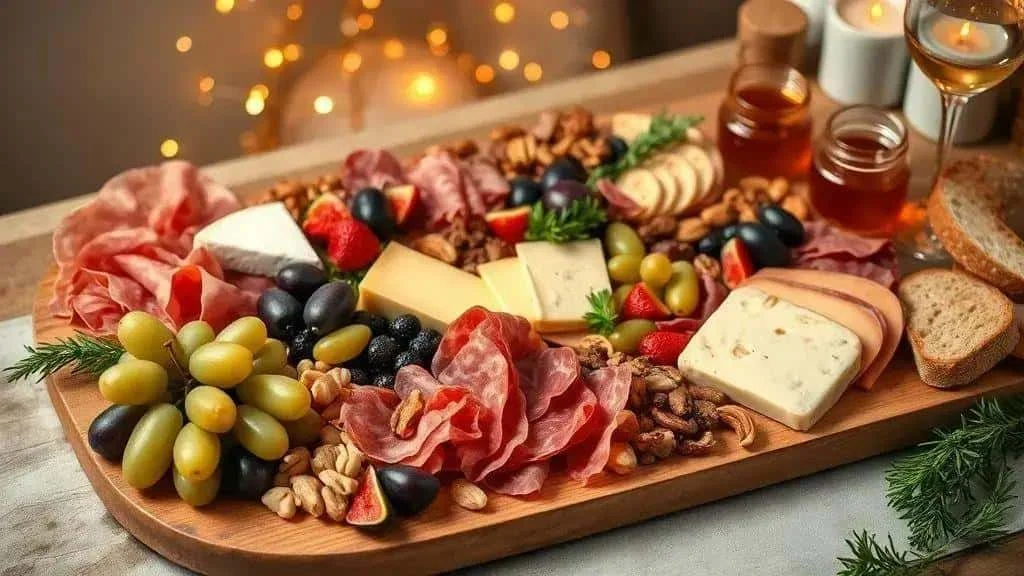
A New Year’s Eve cheese and charcuterie board combines cheeses, ready-to-eat meats, fruit, bread and condiments for contrasting flavours and textures. Choose a selection to suit your guests, use separate platters for dietary needs, and keep perishable foods chilled until serving. The ideas below include vegan, budget and special-occasion variations.
A New Year’s Eve cheese board can be a practical centrepiece for a gathering. Start with a manageable selection rather than buying everything, then use the assembly, storage and serving tips below.
Ingredients for a New Year’s Eve Cheese Board
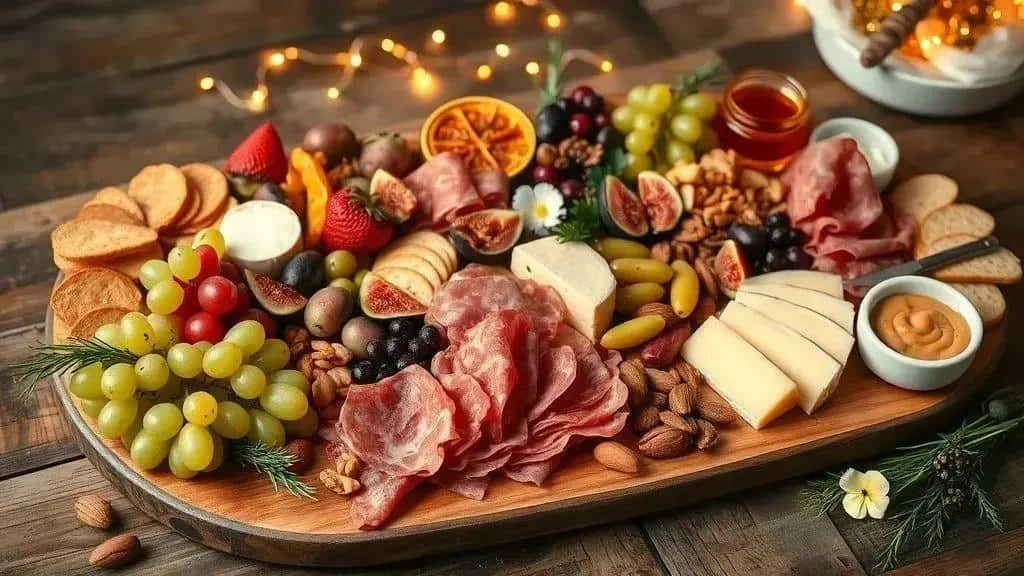
- 200 g Brie — or a suitable soft vegan alternative. Uncooked mould-ripened cheese is not suitable for every guest; see the food-safety notes below.
- 150 g Manchego or Parmesan — sliced or broken into pieces; a firm plant-based alternative gives a different flavour.
- 150 g Gouda or buffalo mozzarella — drain mozzarella well; it is much wetter than Gouda.
- 120 g goat’s cheese — or seasoned ricotta. Check the cheese type and guests’ dietary needs.
- 150–200 g prosciutto — thinly sliced.
- 150 g salami — or ready-to-eat cooked turkey slices or a suitable vegan alternative.
- 100 g coppa or ready-to-eat cured loin — check it is intended to be eaten without further cooking.
- 300 g green and red grapes — washed and dried. For young children, cut lengthways into quarters rather than serving whole grapes.
- 6–8 fresh figs — halved; seasonal fruit or fig preserve can replace them.
- 200 g strawberries — washed and dried; choose another fruit if good strawberries are unavailable.
- 100 g dried apricots or pitted dates — cut appropriately for younger guests.
- 150 g mixed almonds and walnuts — lightly toasted and cooled. Keep separate for allergy management; do not offer whole nuts to under-fives.
- 150 g mixed olives — preferably pitted, with suitable preparation for younger guests.
- 100 g pickles or gherkins — sliced.
- One baguette — sliced; provide suitable gluten-free bread separately if needed.
- 150–200 g assorted crackers — buy by total weight rather than assuming all packets are the same size.
- 100 g honey — in a small bowl; it is not vegan and must not be given to babies under one.
- 120 g fig or apricot jam
- 200 g houmous or another suitable spread — check labels: pâté is not automatically vegan, and houmous commonly contains sesame.
- Rosemary and thyme sprigs — washed food herbs for modest decoration, not garden or florist foliage.
- Edible flowers, optional — only flowers sold for food use, never unidentified or florist flowers.
Substitutions and planning tips
Quantity: 150–200 g of cheese and meat combined per adult is a rough starting point for a substantial snack, with bread, fruit and dips extra. Reduce this for a small starter. The full shopping list is a large selection, not a fixed-serving recipe.
Vegan board: use plant cheeses, vegetable spreads, fruit and roasted chickpeas; replace honey with a suitable jam or syrup. Check every packaged ingredient.
Budget board: compare local prices and use a smaller number of cheeses, such as a familiar Cheddar, with seasonal fruit and bread. Buffalo mozzarella is not necessarily a budget option in the UK.
Gluten-free provision: use a separate clean platter, serving utensils and preparation area. A corner of a shared crumb-covered board is not enough to prevent cross-contact.
How to Assemble a New Year’s Eve Cheese Board
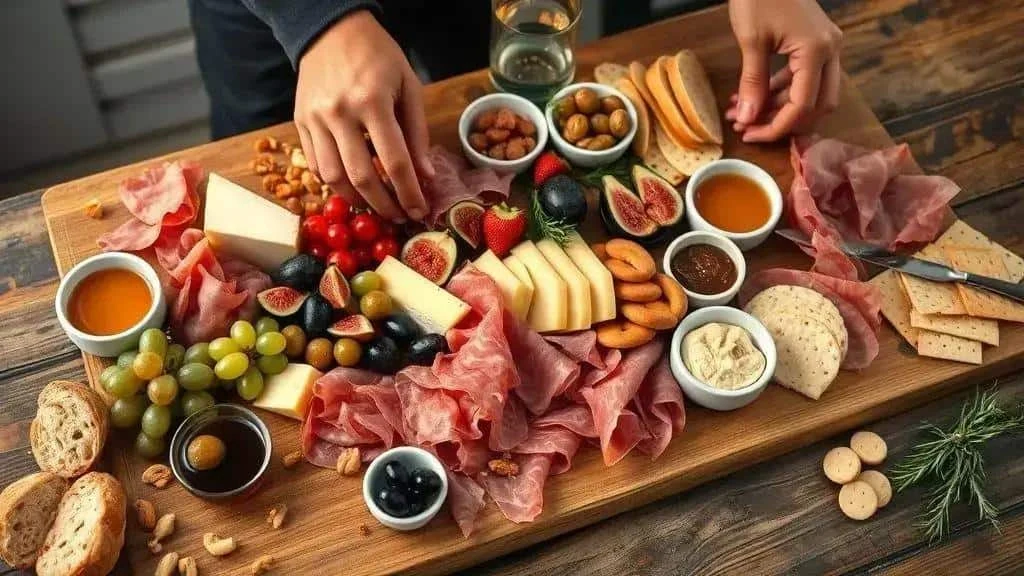
Follow these steps to assemble your New Year’s Eve cheese board without leaving perishable ingredients on the worktop for longer than necessary.
- Organise the ingredients: prepare the board, bowls and dry accompaniments first. Keep cheeses, meats and chilled dips in the fridge until needed.
- Prepare the cheese: cut portions into slices, wedges or manageable pieces. If allowing a short time out of the fridge for flavour, count that time towards the total display period; it is not essential to warm the cheese.
- Arrange ready-to-eat meats: fold thin slices into loose fans or rolls with clean hands or utensils.
- Use small bowls: put honey, jam, olives and dips in separate bowls with individual spoons so they do not soak the bread.
- Create flavour groups: place related ingredients together. Keep allergens and special-diet portions separate rather than scattering nuts across every item.
- Balance colour and texture: use prepared fruit for colour and separate bowls of nuts or pickles for contrast.
- Add bread and crackers: arrange them at the edge or on a separate plate to keep them crisp and easy to reach.
- Vary the height: stable small bowls and gently stacked slices add interest without making the display awkward to serve.
- Leave serving space: provide plates, napkins and room for guests to help themselves.
- Finish simply: add washed herbs and, if desired, a few flowers explicitly sold as edible. Keep decorative objects off the food.
- Provide separate dietary options: prepare vegan or gluten-free portions separately with clean utensils. Ask guests about allergies; vegan and lactose-free are not the same as milk-allergen-free.
- Transport chilled food safely: pack covered perishable ingredients in an insulated cool bag or box with ice packs, then refrigerate on arrival.
- Prepare ahead sensibly: you can assemble a covered platter 60–90 minutes ahead if it fits in the fridge. Keep it refrigerated until service and add crackers and delicate fruit at the last moment.
Quick assembly tips
Portions: use the cheese-and-meat allowance as a starting estimate, then adjust for the rest of the menu and your guests’ appetites.
Presentation: alternating slices, fans and wedges makes a simple selection look inviting without adding unnecessary quantities.
Vegan, Budget and Special-Occasion Board Variations
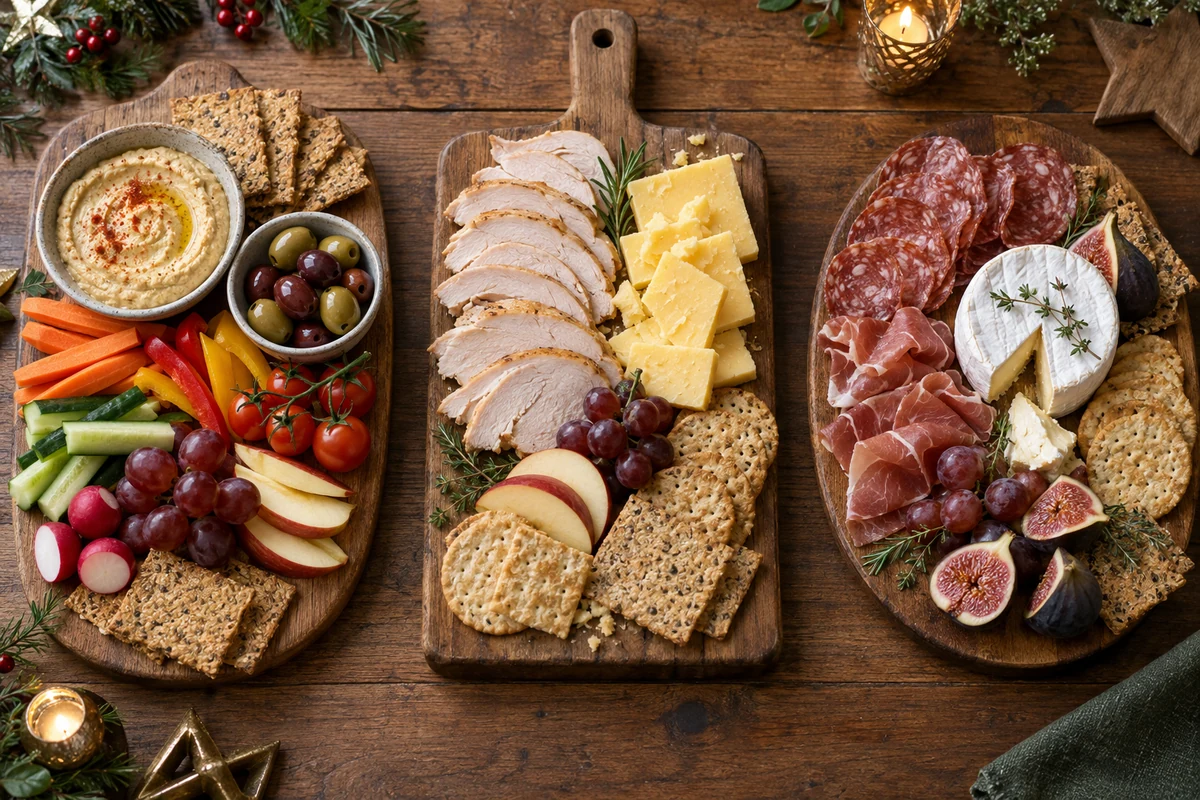
Choose a version of the New Year’s Eve cheese board to suit the gathering. These are alternative shopping lists, not additions to the full list above.
Vegan variation
Use a mixture of plant-based spreads, firm alternatives and fresh produce. Check labels and allergens rather than assuming a vegan board suits every dietary requirement.
- 150 g soft vegan cheese alternative
- 150 g firm vegan cheese alternative
- 200 g plain or herb houmous
- 150 g roasted chickpeas — for example, seasoned with paprika; consider age-appropriate textures.
- 200 g grapes — washed and prepared appropriately for guests.
- Six fresh figs — halved.
- 100 g dried apricots or pitted dates
- 150 g mixed toasted nuts — served separately and clearly identified.
- One vegan baguette — or a suitable gluten-free alternative if required.
- Vegan crackers — check the complete ingredient list, not just the absence of milk.
Assembly: use separate bowls for spreads and a dedicated clean platter and utensils. Add a little washed herb decoration.
Budget variation
Choose ingredients by local price and availability. A smaller selection served neatly can work better than many expensive products.
- 300 g mozzarella — compare cow’s-milk and buffalo versions; choose an affordable suitable cheese if neither fits the budget.
- 200 g mild sliced cheese — such as mild Cheddar, or Brazilian queijo prato if available.
- 200 g ready-to-eat cooked turkey slices
- 200 g salami — or a suitable chilled chicken spread, observing dietary needs and storage instructions.
- 400 g seasonal fruit — such as apples, grapes and oranges, washed and cut for serving.
- One or two loaves — baguette or toasted sliced bread, according to size and guest numbers.
- Plain crackers — enough for the planned servings.
- 100 g jam or fruit preserve — guava or quince gives a Brazilian-inspired option.
Saving money: use seasonal produce, cut larger cheese blocks yourself and serve small bowls of condiments, replenishing only as needed.
Special-occasion variation
Choose a few distinctive cheeses and cured meats, then keep the accompaniments simple so their flavours stand out.
- 200 g Brie — served with optional honey, where suitable for guests.
- 150 g blue cheese — in small portions; suitability depends on cheese type and guests’ needs.
- 150 g Manchego or Pecorino — sliced.
- 150 g prosciutto — thinly sliced and folded.
- 100 g coppa and 100 g artisan salami — ready-to-eat products.
- 50 g honey — plain or a commercially prepared truffle-flavoured version, optional.
- 120 g fig jam or another preserve
- Fresh figs, strawberries and grapes — washed, dried and cut appropriately.
- 150 g toasted walnuts and almonds — cooled, in a separate bowl.
- Food-grade edible flowers, optional
Presentation: use a clean food-safe board or platter, separate cheese knives, small bowls and stable dishes of different heights.
Adapting any variation
Scale the selection: adjust the approximate cheese-and-meat allowance for a light starter or more substantial snack; the vegan board needs its own balance of spreads, bread and alternatives.
Substitutions: plant-based alternatives can replace meats. Smoked fish is a separate dietary choice, not a vegan substitute, and needs extra care for higher-risk guests.
Organisation: keep condiments in bowls, special-diet servings on separate clean platters, and assembled perishable foods in the fridge until needed.
Arranging Flavours and Textures
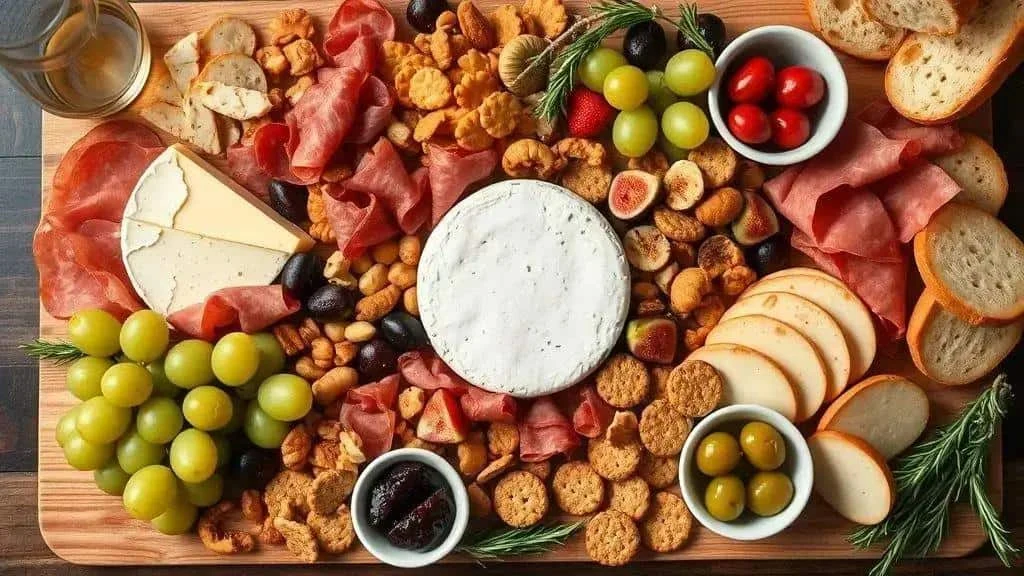
A well-arranged cheese and charcuterie board makes it easy to try different combinations. Think about access as well as appearance: guests should be able to reach each item without touching other food.
- Create groups: arrange cheeses and meats in distinct areas, with wet condiments in bowls.
- Contrast textures: pair creamy cheese with crisp bread and fresh fruit, while keeping nuts contained for allergy management.
- Distribute colour: red fruit, green grapes and small herb sprigs brighten the platter.
- Use small bowls for honey, jam, olives and dips to contain liquids and add height.
- Make serving easy: place bread and crackers at accessible edges or on a separate plate.
- Vary the shapes: combine slices, wedges, folds and small portions rather than leaving everything as a large block.
- Control time out of the fridge: cut and arrange efficiently, chill prepared platters and add delicate fruit close to serving.
- Identify dietary options: labels help, but dedicated utensils and separate preparation are also necessary where cross-contact matters.
Building the arrangement
- Start with cheese: position three to five selected cheeses in different shapes, using only as many as the gathering needs.
- Add the meats: fold slices into accessible groups near suitable cheese pairings.
- Add crunch: place crackers on their own plate and nuts in a separate bowl, rather than spreading allergens over the board.
- Add fruit: group prepared grapes, figs or dried fruit in small spaces without overcrowding.
- Finish with condiments: put jam, honey and pickles within easy reach, each with its own spoon.
Simple pairing ideas
- Brie with honey and walnuts, for guests for whom these are suitable.
- Goat’s cheese with fig jam and toast.
- Manchego with prosciutto and prepared grapes.
- Gouda with salami and dried apricots.
- Houmous with suitably prepared vegetables and vegan wholemeal crackers.
Portions and access: plan quantities around the rest of the meal. Leave utensils beside their foods and avoid making guests reach across uncovered dishes.
Finishing touch: use modest food-safe herb decoration and stable small bowls; leave practical serving space.
Accompaniments and Wine Ideas for New Year’s Eve
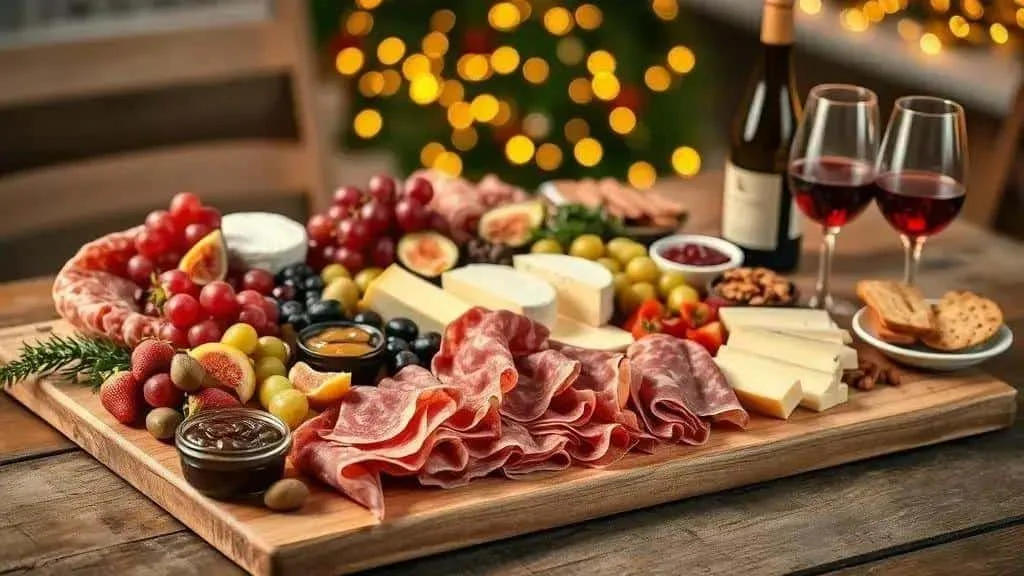
Choose accompaniments for your New Year’s Eve cheese board that offer contrast. The quantities below are reminders for a selection, not extra amounts to add automatically to the main shopping list.
Accompaniment ideas
- Bread and toast: a sliced baguette and crackers, with gluten-free options served separately where needed.
- Jam and honey: small bowls of honey and fig or apricot jam; choose a vegan alternative to honey for the vegan platter.
- Pickled accompaniments: around 100–150 g olives and 80–100 g pickles for the selected board.
- Nuts: up to 150 g toasted almonds and walnuts, separate and labelled.
- Fresh fruit: grapes, figs and strawberries, adjusted to availability and guest numbers.
- Dried fruit: about 100 g apricots or pitted dates.
- Spreads: 150–200 g houmous or another suitable dip. Pregnant guests should avoid pâté, including vegetable pâté, according to NHS guidance.
- Fresh vegetables: cucumber and tomatoes, prepared appropriately; quarter small round tomatoes lengthways for young children.
Wine pairing suggestions
- Brut sparkling wine: serve chilled for a toast with suitable cheese or cured meats. A 750 ml bottle gives six measured 125 ml servings, not only three; no guest needs to drink a fixed allocation.
- Sauvignon Blanc: a fresh option with goat’s cheese and lighter accompaniments; serve chilled according to the bottle’s guidance.
- Chardonnay: an unoaked version can suit mild semi-hard cheeses; a fuller style may suit richer flavours.
- Dry rosé: an adaptable option with cured meats and fruit.
- Pinot Noir: a lighter red option alongside salami, coppa or medium-strength cheeses.
- Malbec or Cabernet: fuller-bodied choices for stronger cured cheeses and meats, according to preference.
- Port or late-harvest wine: sweet wine can complement blue cheese. Serve measured small portions and check the particular wine’s serving guidance.
- Alcohol-free options: offer a suitable alcohol-free sparkling drink, still water or sparkling water with citrus. Check labels where alcohol must be avoided completely.
Pairing tips
- Cheese and condiments: try a little jam with creamy cheese or dried fruit with a stronger aged cheese.
- Meat and wine: rosé or a lighter red may complement salty cured meats, but preference matters more than a rigid pairing rule.
- Contrast: pickles or fresh fruit can provide a sharp counterpoint to rich cheese.
Serving and quantities
- Temperature: keep meats and dips refrigerated until service; count any cheese tempering time as part of the time out of chilled storage.
- Glasses: use appropriate stable glasses, with water glasses available too.
- Planning drinks: use measured serving sizes and guests’ preferences rather than a blanket bottle-per-person allowance. Provide appealing alcohol-free choices and avoid automatic top-ups.
- Dietary requirements: arrange separate clean platters and utensils. Lactose intolerance, milk allergy and a vegan diet require different checks.
Keeping, Transporting and Serving the Board Safely
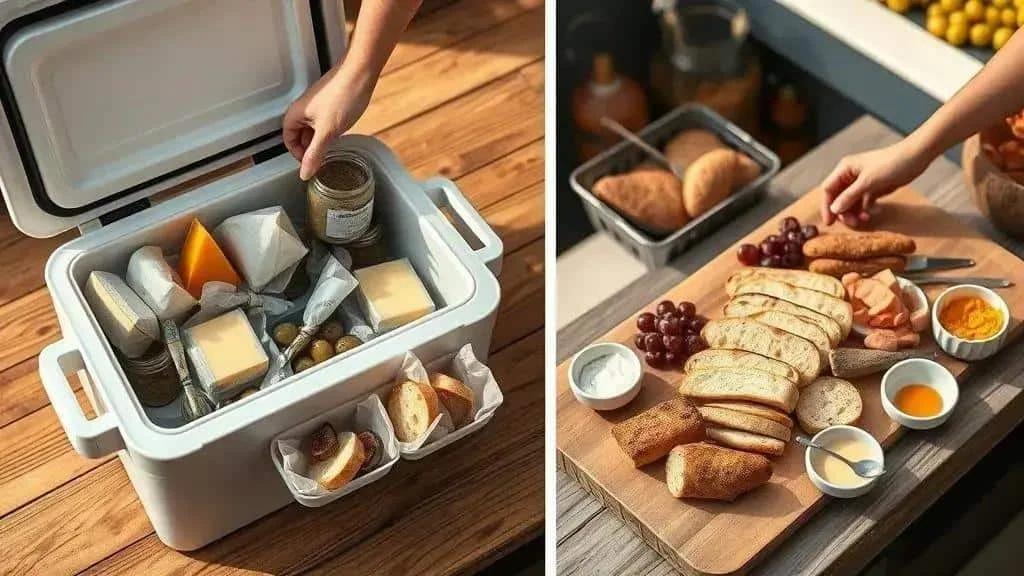
- Store cheese as directed on its packaging, covered and refrigerated. Wrapping style does not replace appropriate temperature control or use-by dates.
- Use lidded containers for olives, dips and opened condiments, following their storage labels.
- Keep the fridge at 5°C or below and retain perishable foods there until needed.
- Limit display time by serving small platters and replenishing from the fridge. The FSA’s buffet exception allows up to four hours out of chilled storage once, not repeated cycles; use a shorter time in hot conditions and discard food if safe handling is uncertain.
Transport
- Chill before leaving: pack meats, cheese and dips directly from the fridge.
- Use an insulated cool bag or box: pack frozen ice packs around sealed food containers, keeping food protected from meltwater.
- Pack separately: seal wet ingredients securely and keep bread and crackers dry.
- Prevent crushing: secure flat containers and avoid balancing heavy jars over delicate food.
- Keep the journey short: secure the cool box in the vehicle so it cannot slide or spill; keep it away from heat.
- On arrival: refrigerate perishable ingredients immediately unless they are being served straight away.
During service
- Use small quantities: bring out only what guests are likely to eat soon. Keep the remainder chilled.
- Separate utensils: provide each cheese, spread and meat with its own clean utensil.
- Separate platters: special-diet food needs its own serving space and utensils, with cross-contact precautions from preparation onwards.
- Replenish with fresh platters: do not keep adding fresh chilled ingredients on top of old food whose display time is unclear.
- Track time: do not keep perishable buffet food out beyond the four-hour maximum. For this home board, discard remaining displayed perishables at that limit rather than saving them as gifts. Chilling again does not reset the clock.
- Keep service clean: replace dirty utensils, provide napkins and discourage handling shared food directly.
Quick checklist
- Insulated cool bag or box and frozen ice packs
- Suitable lidded food containers and cheese wrapping
- Separate clean knives, spoons and tongs
- A clean, food-safe board or platter
- Labels for ingredients and dietary options, kept off the food
Packaging Spare Ingredients as Party Gifts

- Small food-safe jars: use reserved, untouched jam, honey or nuts. Repacking food does not create a new shelf life or make a preserve shelf-stable.
- Food-safe bags: suitable for reserved dry crackers, biscuits or dried fruit. Keep decorative paper outside the food-contact packaging.
- Small gift boxes: combine sealed crackers, a miniature commercial preserve and a separately packed nut portion, with allergen information.
- Lidded food containers: use for freshly reserved houmous only if it stays chilled throughout transport and has clear storage instructions. Do not use leftovers from a long-standing buffet.
- Miniature bottles: commercially prepared oil or vinegar is a simpler gift. Do not improvise shelf-stable fresh-herb or garlic oils, and do not place paper between a food bottle and its lid.
- Reusable packaging: choose clean food-safe containers and minimal outer decoration; suitability for food matters more than appearance.
Preparing spare ingredients as gifts
- Reserve food before service: set aside untouched, safely stored items. Do not turn handled buffet leftovers or food with uncertain time and temperature history into gifts.
- Use clean containers: wash and dry suitable jars thoroughly. A clean jar alone is not a canning or preservation process.
- Portion sensibly: use small amounts, such as 60–120 g preserve or 50–80 g nuts, subject to safe storage and recipient needs.
- Seal securely: use suitable fitted lids and food-safe packaging. Refrigerated ingredients must remain refrigerated after packing.
- Decorate outside the packaging: add a ribbon and a clear label without letting dried foliage touch food.
- Include accurate instructions: retain the original use-by and storage information, ingredient list and allergens. Do not invent a new five-day shelf life after repacking.
Safety and shelf life
- Prefer sealed shelf-stable products if gifts will be carried without refrigeration.
- Cheese and chilled spreads need an uninterrupted cold chain and the original applicable use-by limits. Choose dry gifts instead if this cannot be maintained.
- Label clearly with contents, allergens, storage requirements and applicable dates; the packing date does not replace a use-by date.
- Hygiene: wash hands thoroughly and use clean utensils. Gloves are not a substitute for handwashing or changing contaminated equipment.
Simple gift ideas
- Tasting kit: three separately sealed miniature preserves and a packet of crackers.
- Mini board kit: a small food-safe board, separately packed nuts and a sealed preserve, with outer paper wrapping.
- Crunchy mix: a labelled combination of nuts and dried fruit, prepared from fresh reserved ingredients and suitable for the recipient.
- Vegan option: sealed vegan crackers and a suitable preserve are easy to transport. A houmous-and-vegetable gift needs refrigeration throughout.
Final check: give only food whose handling and storage you can account for, with clear instructions. It is better to offer a small sealed gift than unsafe buffet leftovers.
With a little planning, your New Year’s Eve cheese board can be colourful, practical and easy for guests to enjoy.
Try a few flavour combinations, keep dietary requirements in mind and share a photo of your finished board if you wish.
Visit the I Love Christmas blog for more seasonal recipes and ideas for festive gatherings.
Enjoy preparing your New Year’s Eve table, and have a happy new year.
New Year’s Eve Cheese Board: Frequently Asked Questions
Which cheeses work well on a festive board?
Choose contrasting textures, such as a suitable soft cheese, Gouda or Manchego, and an aged Parmesan or Pecorino. Check guests’ needs: uncooked mould-ripened soft cheeses are unsuitable during pregnancy, and vegan alternatives may contain other allergens.
How far ahead can I assemble the board?
You can assemble a covered platter 60–90 minutes ahead if it remains refrigerated until serving. Add crackers and delicate fruit shortly before service. Count all time out of the fridge, including any cheese tempering, towards the display period.
How can I transport it safely?
Chill perishable ingredients first and pack them in covered containers in an insulated cool box with ice packs. Keep bread dry and separate, secure the containers and refrigerate the chilled foods on arrival.
What can I put on a vegan board?
Use suitable plant cheeses, houmous, fruit, roasted chickpeas and vegan bread or crackers. Replace honey, check allergens and prepare a separate clean platter with dedicated utensils.
Which drinks go well with the board?
Brut sparkling wine, Sauvignon Blanc, dry rosé or a lighter red are possible pairings according to the cheeses and guests’ tastes. Offer measured servings, water and suitable alcohol-free choices as well.
Sources and Further Reading
- NHS — Foods to avoid in pregnancy
- NHS — Food and drinks to avoid when weaning
- Food Standards Agency — Safer food, better business for caterers
- Food Standards Agency — Food allergies, intolerances and coeliac disease
- Food Standards Agency — Chilling, freezing and defrosting food safely