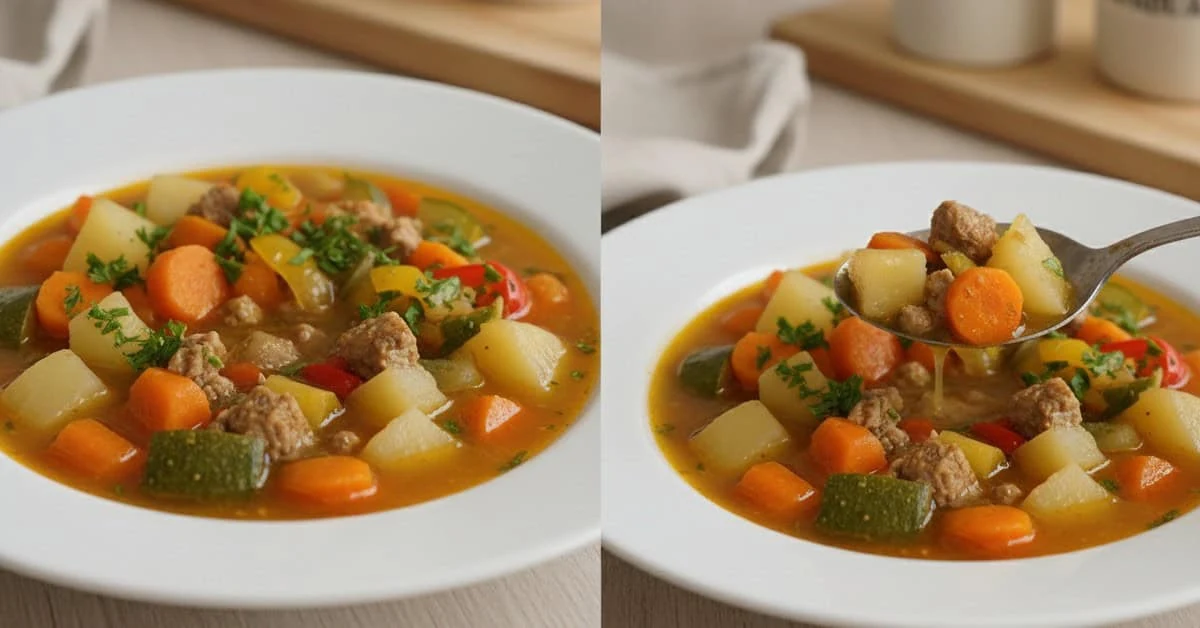
Vegetable stew with soya protein combines textured vegetable protein with vegetables in a savoury broth. Soften onion and garlic, add the vegetables, hydrated soya and stock, then simmer until tender. It is a flexible plant-based meal; gluten-free or soya-free versions require suitable substitutions throughout the recipe.
Vegetable stew with soya protein is a comforting choice for lunch or a festive supper. These straightforward steps and variations help you build flavour and make good use of the vegetables you have.
Ingredients for Vegetable Stew with Soya Protein
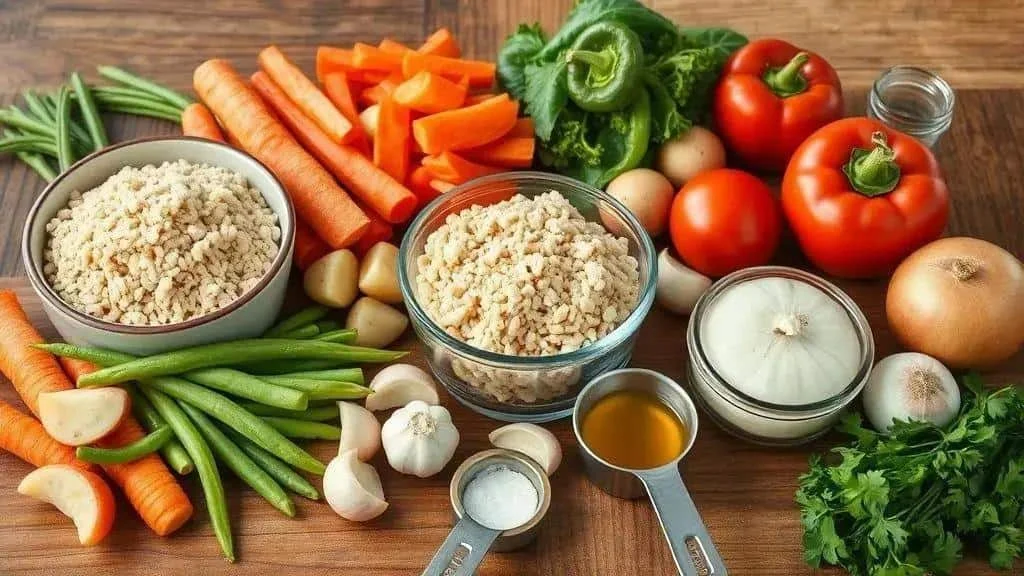
To make vegetable stew with soya protein, gather the following ingredients:
- 150 g dry textured soya protein – hydrate according to the packet; weights and water requirements vary between granules and chunks. For a soya-free alternative, see the substitutions below.
- 2 tablespoons olive oil – or vegetable oil.
- 1 medium onion, chopped – for the base.
- 3 garlic cloves, chopped – or 1 teaspoon garlic powder.
- 2 medium carrots, sliced – pumpkin or sweet potato can also work.
- 2 medium potatoes, cubed – cut into similar-sized pieces for even cooking.
- 1 red pepper, sliced – or a yellow or green pepper.
- 200 g green beans or mangetout – fresh or frozen; follow any cooking instructions on the packet.
- 2 medium tomatoes, chopped, or 200 g tomato sauce – tinned chopped tomatoes are another option.
- 600 ml vegetable stock – homemade or prepared from a stock cube according to its instructions.
- 1 tablespoon tomato purée, optional – for a fuller tomato flavour.
- 1 bay leaf – remove before serving.
- 1 teaspoon sweet paprika – or hot paprika to taste.
- 2 tablespoons soy sauce – for savoury depth; choose certified gluten-free tamari if needed. Tamari still contains soya.
- Salt to taste – use sparingly, as the stock and soy sauce may already be salty.
- Chopped parsley, to finish – or coriander.
- Juice of ½ lemon, optional – add to taste at the end.
Substitutions and Notes
Quick tips:
- Cooked chickpeas or lentils can replace the hydrated soya by volume. For a soya-free dish, replace the soy sauce too and check the remaining ingredients.
- For a creamier stew, mash some of the potatoes once cooked.
- To reduce salt, use unsalted or lower-salt stock and less soy sauce.
How to Make Vegetable Stew with Soya Protein
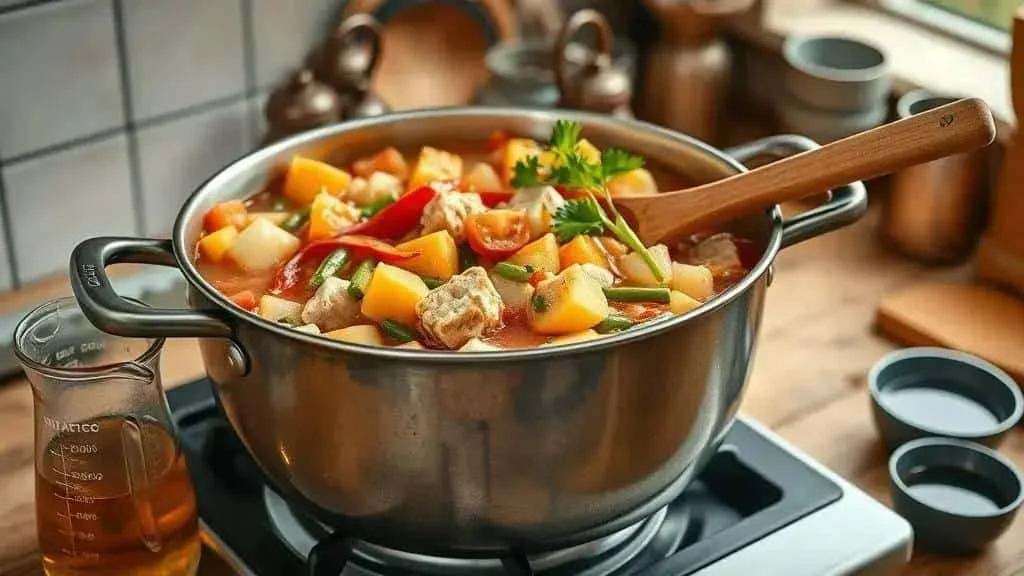
Follow these steps to prepare your vegetable stew with soya protein:
- Hydrate the soya: Prepare 150 g dry textured soya protein using the amount and temperature of water, and the soaking time, stated on its packet. Drain and gently squeeze out excess liquid if directed. Do not assume that every product needs the same amount of water.
- Prepare the vegetables: Wash and prepare the vegetables. Slice 2 carrots, cube 2 potatoes, slice 1 pepper, and chop 1 medium onion and 3 garlic cloves. Trim 200 g green beans and cut them into 2–3 cm pieces, if using.
- Soften the base: Heat 2 tablespoons olive oil over a medium heat. Add the onion and cook until softened and translucent, allowing longer than 2–3 minutes if needed. Add the garlic and cook for another 30 seconds without burning it.
- Add the firmer vegetables: Stir in the carrots and potatoes and cook for 3–4 minutes to coat them in the aromatic oil.
- Add the tomatoes and pepper: Stir in 2 chopped tomatoes or 200 g tomato sauce, followed by the pepper. Cook for 4–5 minutes until the tomatoes begin to soften into a sauce.
- Add the soya and seasonings: Mix in the hydrated soya, 1 bay leaf, the optional tablespoon of tomato purée, 1 teaspoon paprika and up to 2 tablespoons soy sauce. Stir to distribute the seasonings.
- Pour in the stock: Add 600 ml hot vegetable stock and bring to a simmer. Skim any foam if necessary.
- Simmer gently: Partly cover the pan and simmer for about 15–20 minutes, or until the potatoes and carrots are tender. Timing depends on their size and the soya product. This method is intended for a saucepan on the hob.
- Add the remaining vegetables: Add green beans with enough time to cook through; thinner mangetout usually needs less time. Follow frozen vegetables’ packet instructions and check tenderness rather than relying on a fixed final five minutes. Taste before adding salt.
- Finish and serve: Remove the bay leaf and take the pan off the heat. Add chopped parsley and up to the juice of ½ lemon to taste. Let the stew settle briefly, then serve hot.
Practical Tips
Small improvements:
- Mash a few cooked potato pieces against the side of the pan and stir them in for a thicker broth.
- Use lower-salt stock to control seasoning. Simmering uncovered reduces liquid and concentrates salt; it does not remove salt from the stew.
- For a soya-free alternative, replace the hydrated soya with cooked chickpeas or lentils and use a suitable soya-free seasoning instead of soy sauce.
- Freeze promptly cooled portions in suitable airtight containers for up to three months for best quality. Thaw in the fridge, use within 24 hours of defrosting and reheat once until steaming hot throughout, adding water if needed.
Vegetable and Soya Stew Variations
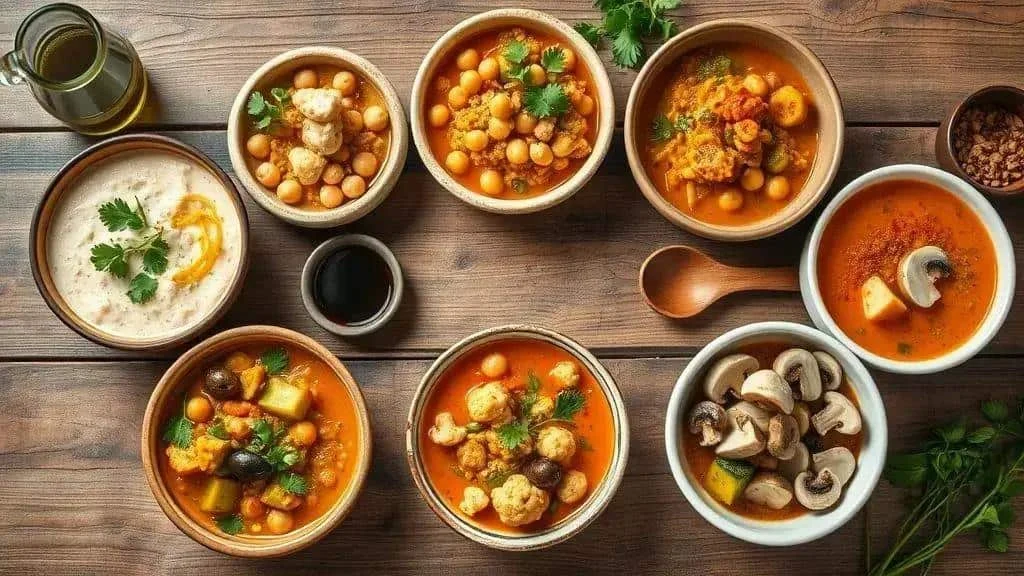
Adapt your vegetable stew with soya protein to suit the ingredients available and the flavours you enjoy.
Creamy Coconut Milk Version
Replace 200 ml of the stock with 200 ml coconut milk for a smoother broth with a gently sweet flavour. It works particularly well with carrots and sweet potatoes.
- Liquid adjustment: use 400 ml stock plus 200 ml coconut milk, rather than adding coconut milk to the full 600 ml stock.
- Seasoning: reduce the soy sauce to taste and finish with fresh coriander.
- Method: add the coconut milk during the final five minutes, stir gently and heat through.
Chickpea and Herb Version
For a different texture, replace some of the hydrated soya with 1 cup cooked chickpeas. Bay, thyme and parsley complement this variation.
- Substitution: replace about 1 cup of the hydrated soya with 1 cup cooked, drained chickpeas. This is a volume swap, not a nutritionally identical substitution for dry soya.
- Herbs: add 1 teaspoon dried thyme and parsley to taste.
- Method: add the cooked chickpeas with the soya and stock, then simmer until the vegetables are tender and everything is hot.
Mediterranean-Inspired Version
Add 100 g sliced olives, 1 teaspoon oregano and lemon zest for Mediterranean-inspired flavours.
- Additions: 100 g black or green olives and 1 teaspoon oregano.
- Finish: add lemon zest and a drizzle of extra virgin olive oil.
- Method: stir in the olives during the final three minutes. Taste before adding more salt.
Spiced Curry Version
Add 1 tablespoon curry powder and chilli to taste for a more pronounced spice flavour. Potatoes and carrots suit this version well.
- Additions: 1 tablespoon curry powder and up to ½ teaspoon chilli powder, depending on its strength and your preference.
- Optional extra: 1 teaspoon ground cumin.
- Method: briefly stir the spices into the softened onion and garlic before adding the vegetables and stock; do not let them burn.
Cauliflower or Courgette Version
Replace the potatoes with cauliflower florets or courgettes for a less starchy variation with plenty of vegetables.
- Substitutions: use 2 cups cauliflower florets or 2 medium courgettes, cubed.
- Cooking time: these vegetables generally need less time than potatoes. Add them later and check for tenderness; floret and cube size will affect the timing.
- Method: simmer until tender without allowing the vegetables to fall apart.
Mushroom and Wine Version
Add 200 g sliced mushrooms and 60 ml white wine for an earthy, savoury variation.
- Additions: 200 g button, shiitake or portobello mushrooms and 60 ml white wine. Choose vegan wine if required, or use stock for an alcohol-free version; cooking does not guarantee removal of all alcohol.
- Method: sauté the mushrooms until browned, deglaze with the wine or stock, then continue with the other ingredients.
- Note: season lightly at first and adjust after tasting.
Scaling and Freezing Tips
Portions: scale the ingredients together. Use a suitably sized pan and adjust the stock gradually to keep the stew from becoming too thin.
- Freezing: freeze promptly cooled portions in airtight containers for up to three months for best quality. This is a freezer guideline, not a fridge storage time. Add a little water or stock when reheating if needed.
- Texture: hydrate the soya fully according to its packet before adding it. If the stew becomes too thick during cooking, add more stock gradually.
Nutritional Notes on Soya and Vegetables
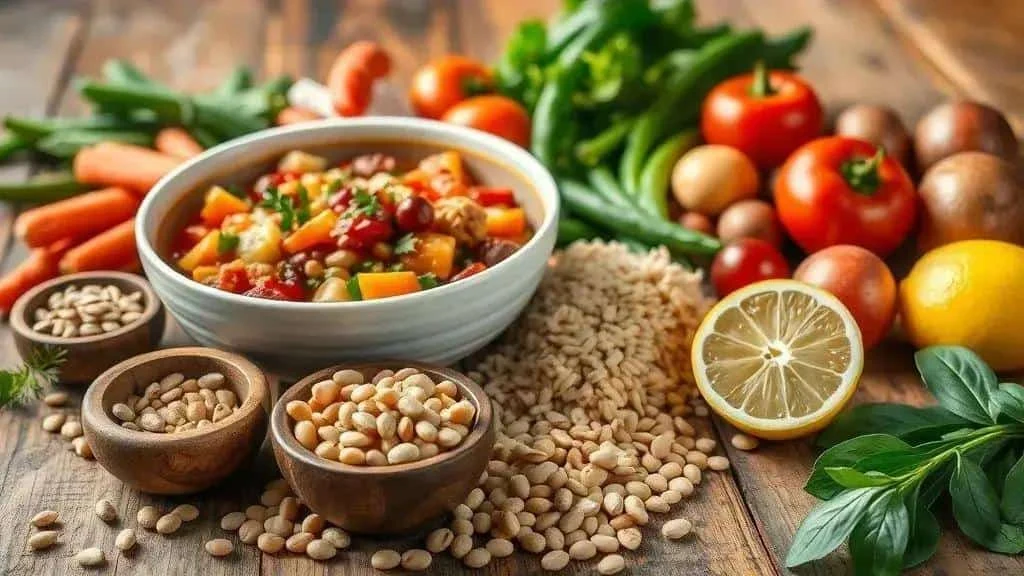
Soya and vegetables contribute protein, fibre and a range of nutrients to a varied diet. The nutritional content of this stew depends on the products, vegetables and portion sizes used; the recipe has not been nutritionally analysed.
What the Ingredients Contribute
- Protein: soya is a plant-based protein source. Check the textured protein’s label for its particular nutritional values.
- Fibre: vegetables and pulses can help contribute to daily fibre intake as part of a balanced diet.
- Vitamins: carrots provide beta-carotene, while peppers and tomatoes contribute vitamin C. Variety matters more than treating one recipe as a complete source of every vitamin.
- Minerals: the ingredients can contribute minerals such as potassium and plant-based iron. Amounts depend on the portions and products; do not assume the stew is a substantial calcium source without checking.
- Plant compounds: soya and vegetables contain a range of naturally occurring compounds. Their presence does not establish a specific health benefit from a serving of this recipe.
Fitting the Stew into a Balanced Diet
- Variety: plant proteins offer another option alongside other foods in a balanced diet. This recipe is not a treatment for high cholesterol.
- Satisfying meals: protein, fibre, portion size and accompaniments all affect how filling a meal feels. No single stew guarantees weight loss.
- Individual needs: potatoes, pulses and other ingredients contribute carbohydrate. Anyone managing blood glucose should follow their own dietary advice rather than assuming the dish prevents a rise in blood sugar.
- Fibre intake: a variety of fibre-containing foods supports a balanced diet. Increase fibre gradually if you are not used to eating much of it.
Making the Most of the Ingredients
- Vitamin C-containing foods, such as lemon, peppers and tomatoes, can help the body absorb iron from plant foods.
- Use lower-salt stock and taste before seasoning, especially when adding soy sauce.
- Vary your vegetables across the week rather than relying on the same combination every day.
- Hydrate and cook textured soya protein according to its packet for the intended texture.
Portions and Practical Suggestions
- Hydrated soya protein: distribute it evenly through the stew. Its hydrated weight and the amount of protein per serving vary by product and yield.
- Cooked vegetables: include a generous mix and adjust the serving to your appetite and the other dishes on the table.
- Oil: the base recipe uses 2 tablespoons olive oil for the whole pan. Any finishing oil is optional and adds to that amount.
- Seasoning: fresh herbs, paprika and lemon add flavour without relying entirely on salt.
Dietary Considerations
- For a soya allergy, replace both the textured soya and soy sauce, and check every other ingredient for soya and relevant cross-contact warnings. Tamari is not a soya-free substitute.
- If you take thyroid medication, ask your pharmacist or clinician about food interactions, including soya, and follow their advice. Do not change medication timing or dosage based on a recipe.
- Use lower-salt stock and adjust the soy sauce if you need to limit salt.
Tips for Better Flavour and Texture
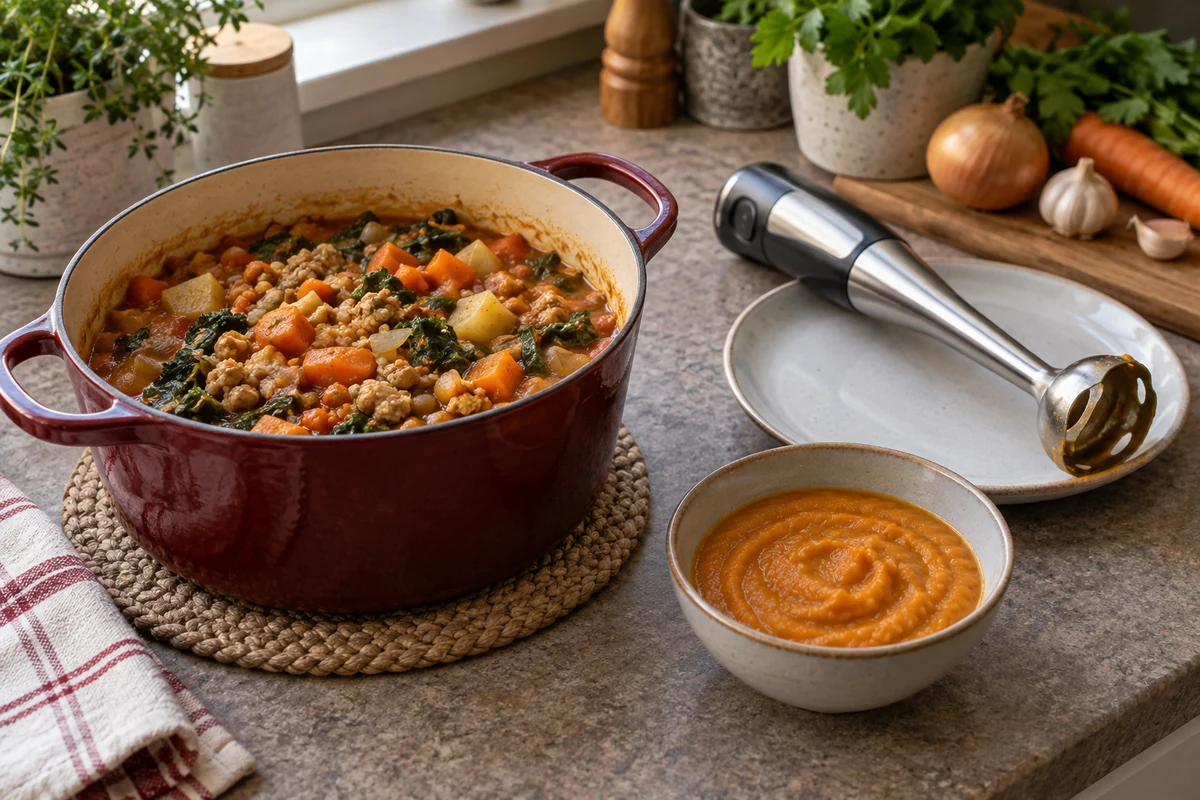
A few simple techniques can improve your vegetable stew with soya protein, building an aromatic broth while keeping the vegetables distinct.
Building Flavour
- Soften the base properly: heat the recipe’s 2 tablespoons olive oil and cook the onion until translucent before adding the garlic briefly.
- Add a little colour: lightly brown the carrots, potatoes or pepper before adding the liquid, taking care not to scorch the onion and garlic.
- Savoury depth: use the soy sauce and optional tomato purée already listed. A teaspoon of dissolved miso is another flavour option, but it adds salt and usually soya; it is not suitable for a soya-free version.
- Deglaze the pan: use a little hot stock to loosen browned bits from the base. White wine is an optional alternative, but stock is preferable when the dish must be alcohol-free.
- Warm the spices briefly: stir paprika or cumin into the oil just before adding liquid to release their aroma without burning them.
Improving Vegetable and Soya Texture
- Cook in stages: start with potatoes and carrots, then add quicker-cooking vegetables later. Cook green beans through and follow frozen vegetables’ packet instructions.
- Season the soya: where the packet permits, use vegetable stock for hydration. Allow for its salt when seasoning the finished stew.
- Check tenderness: avoid overcooking delicate vegetables. Taking off the lid can thicken the broth, but does not by itself keep vegetables crisp.
- Thicken naturally: mash some cooked potatoes or carrots into the broth instead of using flour.
Thickening Options
- Mashed vegetables: remove and mash a cup of the cooked vegetables, then stir them back into the pan.
- Flour and oil roux: in a small separate pan, cook 1 tablespoon plain flour in 1 tablespoon oil. Gradually whisk in some hot broth until smooth, then return it to the stew and simmer until thickened and the flour is cooked. This option contains gluten.
- Cornflour: mix 1 tablespoon with 2 tablespoons cold water. Stir in gradually and simmer, stirring, until the stew thickens.
- Arrowroot or tapioca starch: start with 1 tablespoon mixed with cold water and follow the product’s thickening instructions. Use a product labelled gluten-free when required.
Finishing Touches
- Balance with acidity: add up to the juice of ½ lemon, or a little cider vinegar, tasting as you go.
- Optional finishing oil: a small drizzle of extra virgin olive oil adds aroma. There is no need to add a full tablespoon to every serving.
- Fresh herbs: stir in parsley, coriander or chives just before serving.
- Taste and adjust: check seasoning during cooking and again at the end, when evaporation may have concentrated the salt.
Storage Tips
- Reheating: add a splash of water or stock if necessary and stir while heating until steaming hot throughout. Reheat only once.
- Freezing: leave room for expansion in freezer-safe containers. Thaw in the fridge and adjust seasoning after reheating.
Adapting the Recipe for Vegan and Gluten-Free Diets
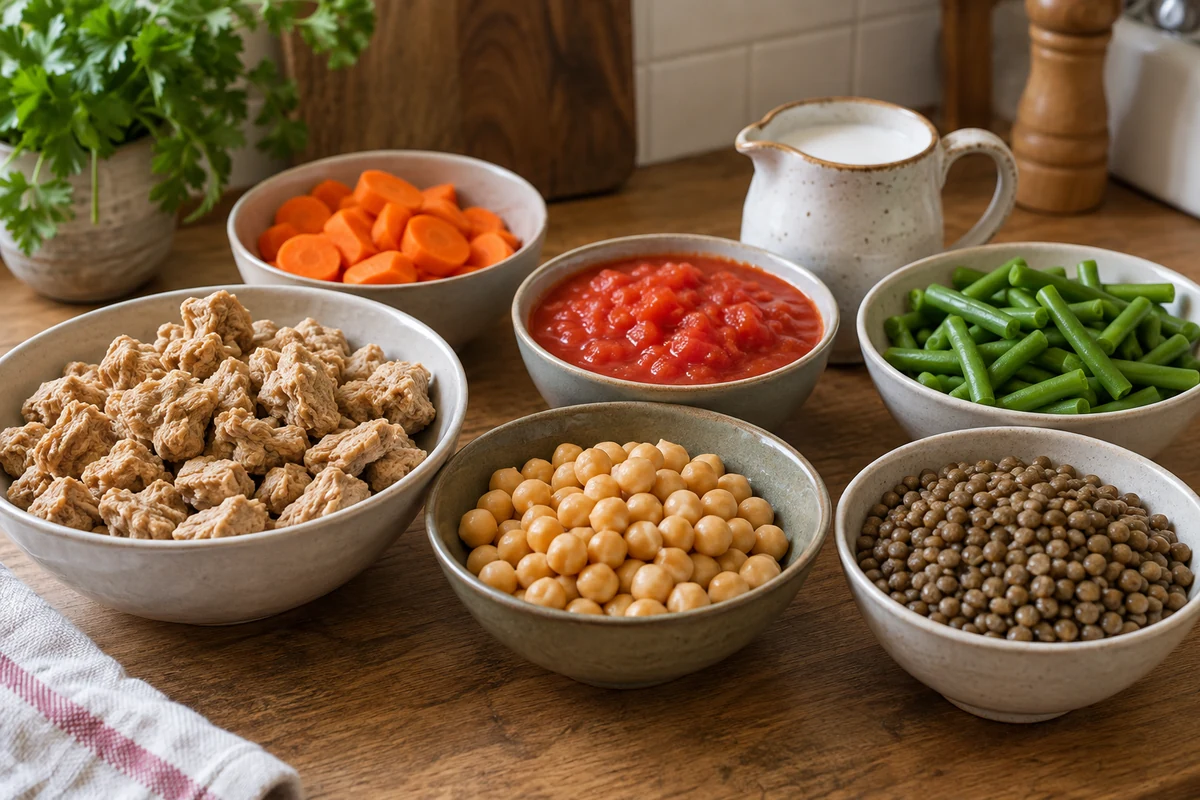
Your vegetable stew with soya protein can suit different diets, provided you check the ingredients throughout the recipe.
Keeping the Recipe Vegan
- Stock: choose 600 ml vegetable stock suitable for vegans, without meat or dairy ingredients.
- Cooking fat: the recipe uses 2 tablespoons olive oil. Use a plant-based fat in any optional thickener as well.
- Creaminess: replace 200 ml stock with 200 ml coconut milk, or blend some cooked vegetables into the broth. About 150 g cooked sweet potato purée is another option.
- Savoury seasoning: use soy sauce suitable for your needs, or try coconut aminos to taste. Check the labels rather than assuming all versions have the same ingredients.
Making a Gluten-Free Version
- Soy sauce: replace the 2 tablespoons regular soy sauce with certified gluten-free tamari, or use gluten-free coconut aminos to taste. Tamari is still unsuitable for a soya allergy.
- Thickeners: choose gluten-free cornflour or arrowroot instead of wheat flour, mixing it with cold water before adding it.
- Other ingredients: check the textured protein, stock, seasonings and sauces for gluten, and avoid cross-contact during preparation.
Alternatives to Soya
- Cooked chickpeas: use a similar volume to the hydrated soya being replaced, draining them first. Do not substitute a cup of cooked chickpeas for the full 150 g dry soya without considering the finished quantity.
- Cooked lentils: use a similar volume to the hydrated soya and stir gently to avoid breaking them up. The nutritional profile will differ.
- Textured pea protein: hydrate and cook according to its own packet, and check it is suitable for any allergies. Replace the finished hydrated volume rather than assuming identical dry weights.
Applying the Adaptations
- Prepare the protein: follow the packet’s hydration and cooking directions for soya or pea protein. Cooked chickpeas and lentils only need draining before use.
- Soften the base: heat 2 tablespoons olive oil, soften 1 medium chopped onion, then briefly cook 3 chopped garlic cloves.
- Add the firmer vegetables: stir in the carrots and potatoes for 3–4 minutes before adding liquid.
- Add the protein and seasoning: mix in the prepared protein and your chosen sauce. For a soya-free version, omit soy sauce, tamari and soya-based miso and choose a verified soya-free alternative.
- Add the stock: use 600 ml hot vegetable stock, or 400 ml if reserving 200 ml of the liquid for coconut milk. Continue the main method until the vegetables are tender.
- Thicken if necessary: stir in a slurry of cornflour or arrowroot gradually, following its cooking instructions and stopping when the desired consistency is reached.
- Finish: if using the coconut variation, add the reserved 200 ml coconut milk once near the end and heat through. Adjust seasoning and finish with lemon juice and parsley.
Practical Advice and Food Safety
- Labels: check all ingredients for the particular allergens you need to avoid, including precautionary warnings. Gluten-free, dairy-free and soya-free are different requirements.
- Salt: tamari and other sauces may be salty; taste before adding salt.
- Texture: add delicate vegetables later, allowing enough time to cook them properly rather than leaving them raw.
- Storage: cool promptly and refrigerate within two hours at 5°C or below. Eat within 48 hours or freeze. Reheat once until steaming hot throughout, adding a little stock if needed.
Storage, Portions and Serving Ideas
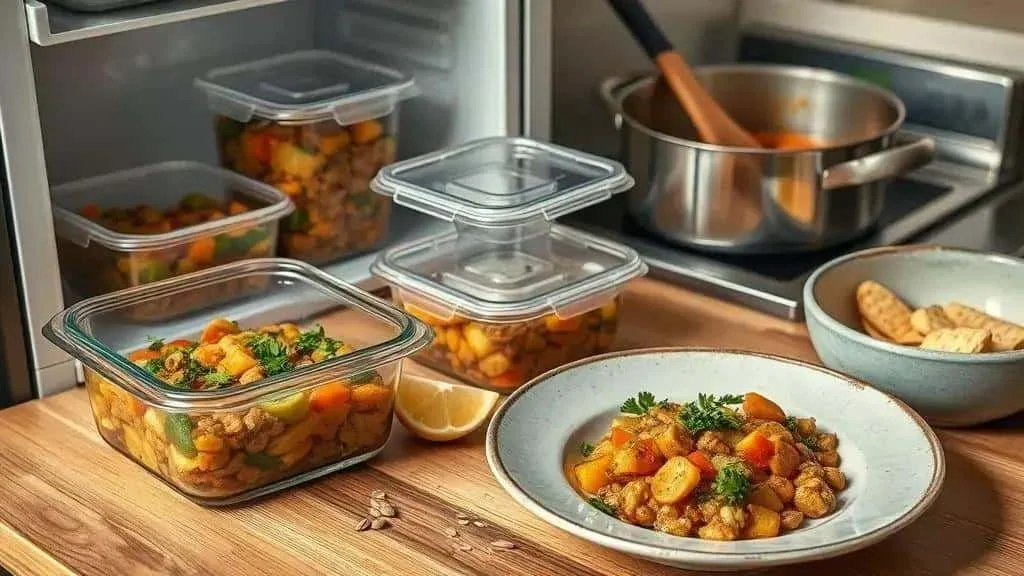
Plan portions and store your vegetable stew with soya protein carefully so that leftovers are as practical as the freshly cooked meal.
Planning Portions
- Adult servings: use a bowlful as a starting point and adjust to appetite, the recipe’s actual yield and any accompaniments. Cup measurements do not translate to one fixed weight for a chunky stew.
- Children: offer an age-appropriate portion, with vegetables cut and cooked suitably, and allow the stew to cool to a comfortable eating temperature.
- Accompaniments: serve with rice, mashed potatoes or slices of crusty bread, choosing gluten-free bread if needed.
- Alongside the stew: a fresh salad adds contrast. Extra chickpeas or tofu are optional; tofu is not suitable for a soya-free meal.
Fridge Storage
- Storage time: keep covered in a fridge at 5°C or below and eat within 48 hours, or freeze sooner.
- Cooling: divide into smaller, shallow portions so the stew cools promptly, and refrigerate within two hours of cooking. Do not leave a large pan out overnight.
- Containers: use clean food-safe containers with well-fitting lids and follow their temperature limits.
Freezing and Defrosting
- Freezing portions: divide into meal-sized quantities in freezer-safe containers or bags, leaving enough headspace for expansion.
- Quality guideline: aim to use within three months for best quality. Texture can change during freezing, particularly in potatoes.
- Defrosting safely: thaw fully in the fridge, allowing longer than overnight for large portions, and use within 24 hours of defrosting. Do not thaw on the worktop.
How to Reheat
- On the hob: put a portion in a saucepan and add 2–4 tablespoons water or stock if needed. Heat, stirring regularly, until steaming hot throughout, not merely warm at the edges.
- In the microwave: use a suitable covered but vented container. Heat in stages, stirring between them and allowing any recommended standing time, until steaming hot throughout.
- In the oven: use a covered ovenproof dish with a splash of liquid at 180°C conventional or 160°C fan. Check the centre is steaming hot; the time varies with portion size and starting temperature, so 15–20 minutes is not a guarantee.
- Temperature and reheating: reheat only once. If checking with a clean food thermometer, the centre should reach 70°C for two minutes or 75°C for 30 seconds.
Keeping Flavour and Texture
- Fresh vegetables: if adding courgettes or green beans to a reheated portion, cook them properly first or allow sufficient cooking time in the stew. Do not add uncooked vegetables after reheating and assume they are ready.
- Avoid overcooking: cook the original vegetables until just tender, then cool promptly. Add fresh herbs after reheating and adjust seasoning at that point.
- Restore the consistency: a little stock or coconut milk can loosen a thickened stew. Stir well and heat everything through.
Serving Suggestions
- Rustic presentation: serve in deep bowls with chopped parsley and an optional drizzle of extra virgin olive oil.
- A crunchy topping: add toasted sunflower or pumpkin seeds, or homemade croutons, checking suitability for your guests’ dietary needs.
- A bright finish: add a small squeeze of lemon juice or a little zest to taste just before serving.
- Packed meals: portion the stew into suitable containers and keep chilled until needed. If including rice, follow its separate cooling and storage guidance; do not automatically apply the stew’s storage window to it.
Labelling and Organisation
- Labels: clearly record the contents and freezing date. The three-month recommendation is for quality, not a reason to omit proper cooling or temperature control.
- Meal planning: freeze individual portions promptly for future meals instead of keeping a week’s supply in the fridge.
Vegetable stew with soya protein brings vegetables, plant protein and a savoury broth together in a flexible meal for everyday cooking or a festive table.
Try It and Share Your Variation
Try the variations that appeal to you, and tell us which vegetables and seasonings you used. We would love to hear how it turned out.
Thank you for reading. Follow us for more recipes and seasonal inspiration, and visit the I Love Christmas blog for more ideas.
Enjoy your meal!
Vegetable and Soya Stew FAQ
How should I hydrate textured soya protein?
Follow your product’s packet for water quantity, temperature and soaking time, then drain if directed. Granules and chunks differ, so 150 g dry soya does not have one universal hydration ratio. Suitable vegetable stock can add flavour.
Can I replace the soya with something else?
Cooked chickpeas or lentils can replace the hydrated soya by volume, or use textured pea protein prepared according to its packet. For a soya-free meal, replace soy sauce and any soya-containing miso too, and check the other ingredients. Tamari still contains soya.
How long will the stew keep in the fridge or freezer?
Cool promptly and refrigerate within two hours at 5°C or below. Eat within 48 hours or freeze; aim to use frozen portions within three months for best quality. Thaw in the fridge, use within 24 hours of defrosting and reheat only once.
How can I keep the vegetables from becoming mushy when reheating?
Cook them until just tender initially, then reheat a portion with a little water or stock, stirring until steaming hot throughout. Any fresh vegetables added later still need to be cooked properly. Avoid repeated reheating.
Can the recipe be vegan and gluten-free?
Yes. Use vegan stock and plant-based additions throughout. For a gluten-free version, check the textured protein, stock and seasonings, use certified gluten-free tamari or another suitable sauce, and avoid wheat-based thickeners and cross-contact. Coconut milk is optional, not necessary to make the base recipe vegan.
Sources and Further Reading
- Food Standards Agency: cooking food safely
- Food Standards Agency: chilling, freezing and defrosting food
- NHS: a balanced diet
- NHS: dietary fibre