Christmas decorations can carry religious, cultural and personal meanings. A star recalls the Star of Bethlehem in Christian tradition; bells suggest celebration, while baubles often hold family memories. Wreaths, angels and ribbons add other associations. These interpretations vary, so choose ornaments that reflect your own household’s stories and values.
Christmas decoration meanings often connect with memories: a familiar bauble can bring back a childhood tree or a much-loved relative. Discover the history and symbolism associated with stars, bells and other ornaments, along with practical ways to use and care for them.
The origins of Christmas decorations: history and symbolism

Christmas decorating draws on several traditions that have changed over time. Winter greenery has a long history, but it is too simple to describe every modern ornament as a direct survival of a single ancient celebration. Christian symbolism, regional crafts and household customs have all contributed.
How decorated Christmas trees developed
Decorated trees are particularly associated with German-speaking Europe. Their precise development has several proposed influences, rather than one universally established origin. English Heritage describes Victorian British trees hung with fruit, sweets, homemade decorations and small gifts. Historical candles belong to that story, but open flames should not be used on a tree today.
From fruit and nuts to glass baubles
Fruit and nuts were familiar tree decorations before glass ornaments became widely available. The glass museum in Lauscha traces locally made glass Christmas ornaments to the nineteenth century, including simple spheres and glass imitations of fruit and nuts. This craft history is firmer evidence than assigning one universal symbolic meaning to every bauble. Source: Lauscha Glass Museum: Christmas tree decorations
Familiar ornaments and their associations
- Star: recalls the Star of Bethlehem in Christian tradition and can also suggest guidance and hope.
- Bell: suggests an announcement or call to celebrate. Protective meanings are beliefs or personal interpretations, not demonstrated effects.
- Bauble: may evoke fruit, abundance or continuity, but its most important meaning can simply be a family memory.
- Angel: recalls divine messengers in Christian tradition; some people associate the figure with spiritual care.
- Wreath: its circular shape can suggest continuity or eternity, while a door wreath offers a welcoming gesture.
Craft traditions: wood, straw, cloth and glass give ornaments different textures and can reflect local skills or family handiwork.
Decorating today often combines meaning and appearance. You might preserve an old ornament for its sentimental value or choose a new one to represent peace, hope or a personal milestone.
Baubles: abundance, reflections and family memories
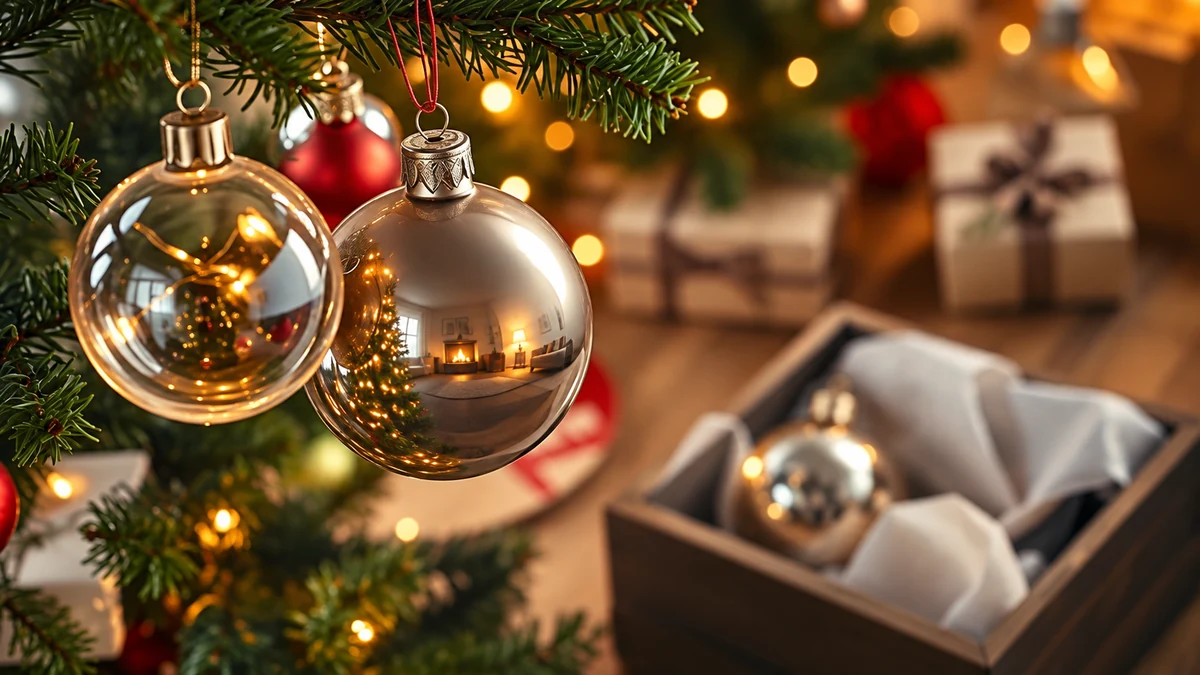
A Christmas bauble can suggest roundness, reflected light or a remembered celebration. There is no single meaning that applies to every bauble or household; the story attached to a particular ornament may matter most.
Abundance and continuity
The rounded shape can be interpreted as a reminder of the cycle of life or continuity. Fruit-shaped ornaments may suggest abundance. These are ways to read the decoration, rather than proof that everyone originally hung baubles to attract prosperity.
Reflections and remembered Christmases
Shiny baubles catch the lights and colours around them. For some people, a familiar reflection or a worn decoration recalls past gatherings. An old bauble may become a keepsake because of who gave it or when it was first used.
Materials and the effects they create
- Blown glass: delicate craftsmanship can make a treasured keepsake, provided the ornament is handled and stored carefully.
- Shatter-resistant materials: less likely to break than glass, though small parts, hooks and strings still need care around children and pets.
- Mirrored finishes: reflect nearby lights and add brightness to the tree.
- Textured handmade ornaments: wool, fabric or straw can give the display a softer, homely feel.
Choosing and looking after baubles
Think about the feeling you want to create, then combine colours and styles to tell that story. Wrap fragile baubles separately in suitable acid-free tissue and store them in divided boxes without pressure on delicate parts. Avoid rubbing flaking or fragile finishes; seek specialist advice for valuable pieces rather than trying household cleaners.
Adding sentimental details
Use a purpose-made, shatter-resistant fillable ornament for a small photograph or ribbon. Add a year to a separate tag, or make a group of ornaments representing family members. Do not force open a sealed glass bauble or permanently alter a valued antique.
Reusing ornaments you already own is a practical starting point for reducing waste. Handmade or natural materials are not automatically recyclable or environmentally harmless; consider durability, coatings and local disposal options too.
Stars: guidance, hope and the biblical story

A star often sits at the top of the Christmas tree. Its position makes it a natural focal point, while its associations can be religious, personal or simply decorative.
A symbol of guidance and hope
For some households, the star represents direction through uncertain times. It can symbolise hope and a wish for renewal, without every family attaching the same interpretation to it.
The biblical account and later interpretations
In Matthew 2, the Star of Bethlehem is part of the account of the Magi coming to worship Jesus. Christians may understand it as a divine sign. Proposed astronomical explanations remain interpretations; the decoration itself does not establish a particular historical phenomenon. Source: Matthew 2
Star styles and their visual effect
- An illuminated star: creates a bright focal point; use a suitable product according to its instructions.
- A gold or silver star: adds shine and works well with a classic festive palette.
- A wooden or straw star: gives a handmade, simple or rustic appearance.
- A geometric star: suits a more pared-back or contemporary display.
- A star with curved rays: creates a softer, decorative burst of light; any spiritual interpretation is a personal choice.
Choosing and positioning a tree-topper
- Check its size and weight against the tree and ceiling space. There is no fixed percentage of tree height that every topper must follow.
- If it lights up, follow the manufacturer’s instructions, check cables and power requirements, and keep battery compartments secure.
- Choose a lightweight, durable design appropriate to your household, keeping fragile parts away from children and pets.
- Coordinate colours if you wish: metallic tones suit many traditional trees, while wood and straw can complement a rustic scheme.
- Use the fitting or holder designed for the topper, and make sure the tree is stable. Avoid improvised sharp fixings or an excessively heavy ornament.
Stars also appear alongside nativity displays and in other Christmas settings. Their meaning varies, so use one in a way that fits the story your household wants to tell.
Bells: announcements, celebration and symbolic beliefs

A bell brings both sound and symbolism to Christmas decorating. It can suggest a gathering or celebration; any association with spiritual protection should be understood as a belief, not a physical effect.
An announcement of celebration
Church bells have long called communities together and marked important occasions. At Christmas, their sound can evoke worship or celebration. Small decorative bells bring a gentler version of that association into a home.
Protective interpretations
Some people interpret bells as protective or lucky symbols. That is a spiritual or personal reading, not evidence that a bell removes harmful forces, and it should not be presented as the single origin of Christmas bell decorations.
Materials and different effects
- Brass or bronze: can offer a traditional appearance; the actual sound depends on the bell’s size, shape and construction.
- Polished metal: creates a reflective finish, but its appearance alone does not tell you how high or loud it will sound.
- Wood or ceramic: can suit a rustic display. Some examples are purely decorative rather than functioning bells.
- Jingle bells: small rattling bells are familiar in festive music and seasonal decorations.
- Handmade bells with ribbons: allow a personal choice of colours and finishing touches.
Decorating with bells
- Vary the sizes if you like, using a larger bell as a focal point on a wreath or table display only where its weight can be supported.
- Consider sound and accessibility around babies or animals. Keep small bells, loose clappers and hanging strings out of reach; quieter does not automatically mean safe.
- Attach bells securely with suitable fittings and avoid leaving sharp hooks or loose pieces exposed.
- Mix metal finishes if that suits your style, keeping the overall display as simple or varied as you prefer.
- Reflective bells can catch nearby electric lights, but keep ornaments clear of heat sources and follow the lighting instructions.
Caring for bells between Christmases
Follow the care instructions for the material and finish. Avoid abrasive cleaners or polishing an antique finish without advice. Store fragile pieces separately in padded compartments, and check hanging loops before reusing them. Preserve original details on valuable keepsakes rather than replacing them casually.
Personal ways to use bells
A bell with a name tag can mark a place at an adult gathering, or a securely hung group can form a decorative mobile where appropriate. Keep these away from young children and pets rather than treating them as toys. A small decoration can become a keepsake when it recalls a shared occasion.
Wreaths, angels and ribbons: other Christmas associations
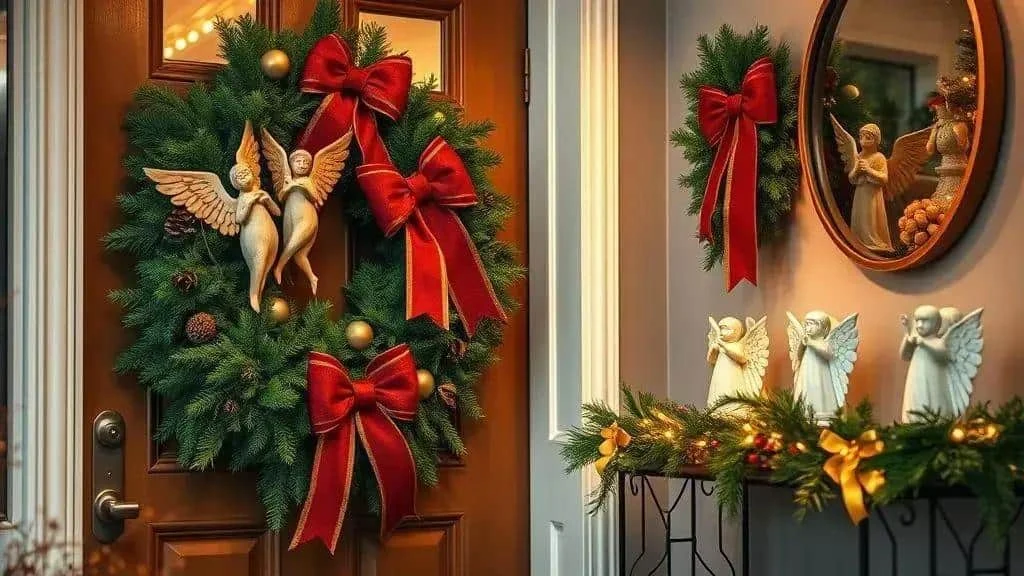
These decorations can add layers of meaning as well as colour and texture. Their significance depends on tradition and personal choice rather than a universal code.
Wreaths
A wreath can suggest continuity or welcome through its circular form and position at the door. Greenery, dried flowers or reused materials offer different styles. For a table arrangement, use an appropriate LED light rather than placing a naked flame among foliage or other combustible decorations.
Angels
Angels recall messengers in the Christian Christmas story. For believers, a figure may express faith or a wish for spiritual care; it does not provide a guarantee of protection. Fabric, ceramic and metal versions create different decorative effects on a tree or shelf.
Bows and ribbons
Ribbons can bring a display together and may suggest gift-giving or affection. Red can feel warm and festive, while gold adds sparkle; these are aesthetic associations, not fixed meanings. Wide ribbon tied in loose bows gives one possible finishing style.
Other decorations and possible meanings
- A nativity scene: represents the Christian story of Jesus’s birth and can be a focus for faith.
- Lights: may suggest hope or celebration, as well as changing the mood of a room.
- Hearts: can express affection, friendship or family ties.
- Toy-shaped ornaments: may evoke childhood and nostalgia, but decorative items should not be assumed safe as children’s toys.
- Pine cones, branches and dried fruit: can connect the display with seasonal materials, where those materials are suitable for the household.
Combining ornaments
- A palette of two or three colours can help create a coordinated appearance, although it is a styling option rather than a rule.
- Combine textures such as metal, cloth and suitable natural materials for variety.
- Distribute focal points thoughtfully: a wreath at an entrance, an angel on a stable shelf and ribbons among other decorations can each have their own space.
Storage and personal touches
Keep fragile decorations in separate compartments and check worn hanging loops. Personalise the display with meaningful pieces, such as a handmade angel or a family ribbon, while avoiding irreversible changes to delicate heirlooms.
Choosing decorations that mean something to your family
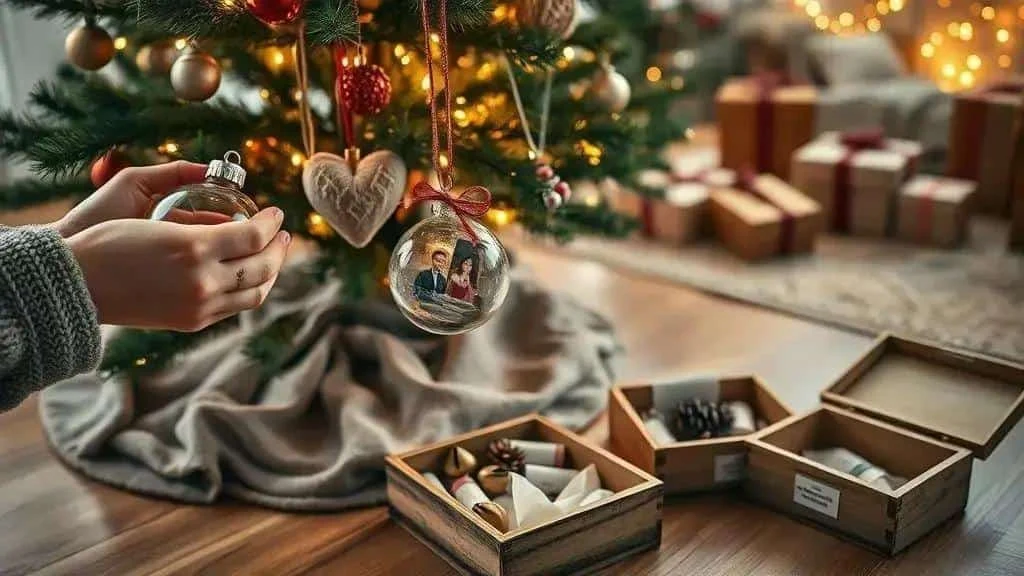
Start with the memories, values and stories you want to celebrate at home.
Decide what matters to you
Ask: which memories do we want to keep? Sentimental value, faith, reuse or a shared visual style can all guide your choices.
Mix older pieces with new ones
Combine inherited ornaments with newer additions to tell a story. A small colour palette and varied textures can help them sit together.
- Give a treasured family decoration a visible, secure position.
- Record a year or giver’s name on a separate tied tag or in an inventory, rather than writing directly on a delicate antique.
- Make simple repairs only where suitable; seek advice before working on fragile or valuable finishes.
Make new memories through crafts
Simple handmade decorations can become family traditions. Supervise children and choose materials and tools appropriate to their age:
- Painted salt-dough shapes can be personalised, but they are decorations, not food. Keep them away from children or pets who might eat them.
- Purpose-made, shatter-resistant fillable ornaments can hold a small photograph or ribbon.
- A clean pine cone with a ribbon offers a simple natural decoration; added paint or glue affects how it can later be disposed of.
Choose materials for your household
Consider shatter-resistant materials or fabric instead of glass where appropriate. Still keep small parts, ribbons, hooks, batteries and cables out of reach, and secure the tree. No material makes an unattended decoration automatically safe for children or pets.
Organisation and care
Careful storage helps ornaments last and makes them easier to find next Christmas.
- Wrap fragile pieces individually in suitable acid-free tissue or other appropriate protective material.
- Use firm dividers to prevent pieces knocking together, without squeezing delicate projections.
- Note the story of special pieces in a simple inventory so their significance is not forgotten.
Budget and reuse
You do not need a completely new collection each year. Second-hand finds and agreed swaps can add character, while reusing your own decorations keeps both memories and materials in use. Check the condition of anything electrical before using it.
Conclusion
Christmas decorations can tell stories as well as brighten a room. Baubles may hold family memories, a star can express Christian faith or hope, and bells can suggest celebration. Wreaths, angels and ribbons add further possibilities, without every ornament needing one fixed meaning.
Mix familiar pieces with thoughtful additions, choose suitable materials and placements, and store valued decorations carefully so their stories can continue.
Thank you for reading! Visit the I Love Christmas blog for more decorating ideas and ways to make the season meaningful.
FAQ: Christmas decoration meanings
What does a Christmas bauble mean?
There is no single universal meaning. Its roundness or fruit-like form may suggest abundance or continuity, while a particular bauble can simply represent a family memory or a gift from someone special.
Why is there a star at the top of the tree?
In Christian tradition it recalls the Star of Bethlehem in Matthew’s account of the Magi. Some people also use it as a broader symbol of guidance or hope.
What do Christmas bells symbolise?
Bells can suggest an announcement, community gathering or celebration. Protective interpretations belong to belief or folklore and should not be confused with a proven effect.
How can I choose decorations for a home with children or pets?
Consider shatter-resistant ornaments, secure the tree and keep fragile items, small parts, hooks, ribbons, batteries and cables out of reach. Decorations are not automatically safe toys, whatever their material.
How should I preserve old or sentimental ornaments?
Store fragile pieces individually in suitable acid-free tissue and divided boxes without crushing them. Avoid rubbing or cleaning unstable finishes, and seek specialist advice for valuable or deteriorating pieces.
What are simple ways to make decorations more personal?
Combine family keepsakes with handmade pieces, put photographs in purpose-made fillable ornaments and record dates or names on separate tags or in an inventory.