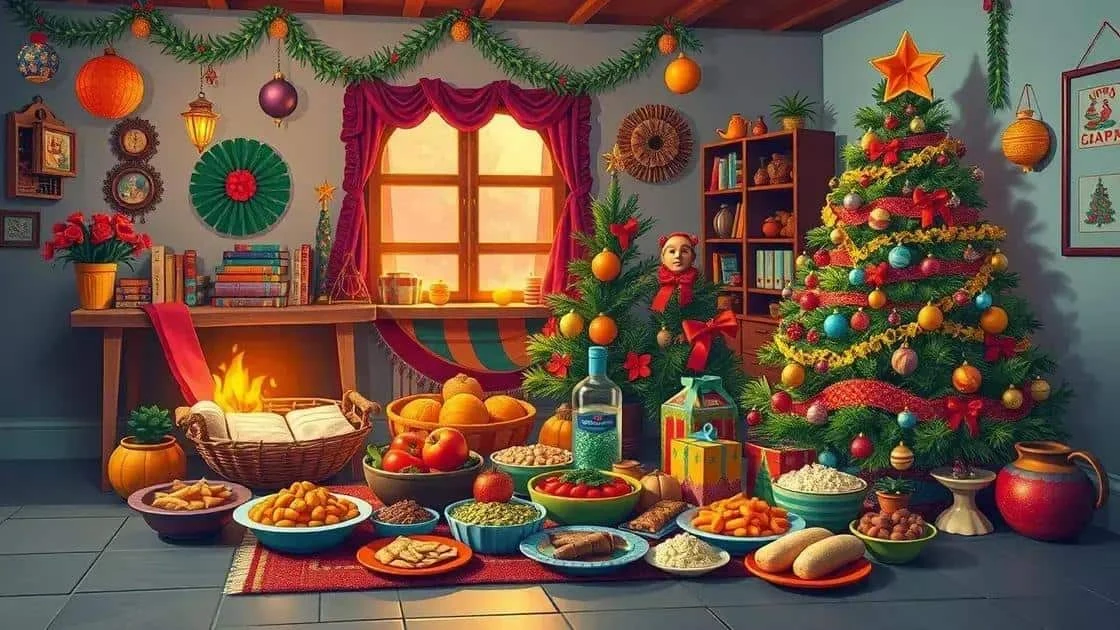
Christmas in Japan combines international influences with modern local customs. Winter illuminations, seasonal cakes and Christmas fried chicken are recognisable features, while celebrations vary between households. For Christians it also has religious significance.
Christmas in Japan offers a different festive picture from a British Christmas at home. Seasonal displays and food promotions are prominent, but there is no single way everyone celebrates. Explore the history, meals and customs behind this distinctive time of year.
The history of Christmas in Japan
The history of Christmas in Japan connects Christian observance with the later development of a wider seasonal celebration. Its religious roots and modern commercial customs are different parts of that history.
Over time, elements associated with Christmas abroad entered Japanese shopping, entertainment and seasonal food culture. Their adoption did not mean that everyone embraced the holiday’s religious meaning.
Modern Christmas celebrations can include an outing for a couple, a party with friends or a small gathering at home. These practices developed over time and do not all have the same history.
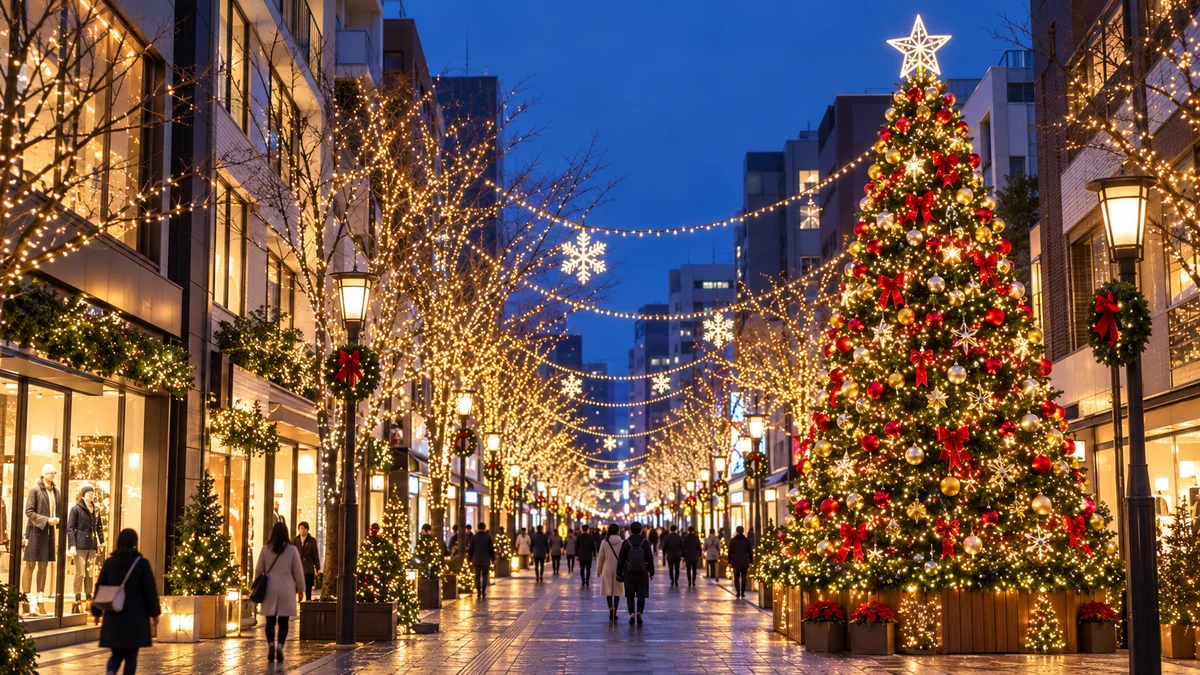
Many urban areas feature Christmas decorations and winter lights. Some displays continue beyond Christmas, so winter illumination and Christmas celebration are related but not identical.
Christmas Day is not a Japanese national public holiday. For many people it remains an ordinary working day alongside seasonal activities, while Christian communities may attend church services.
Japanese Christmas customs
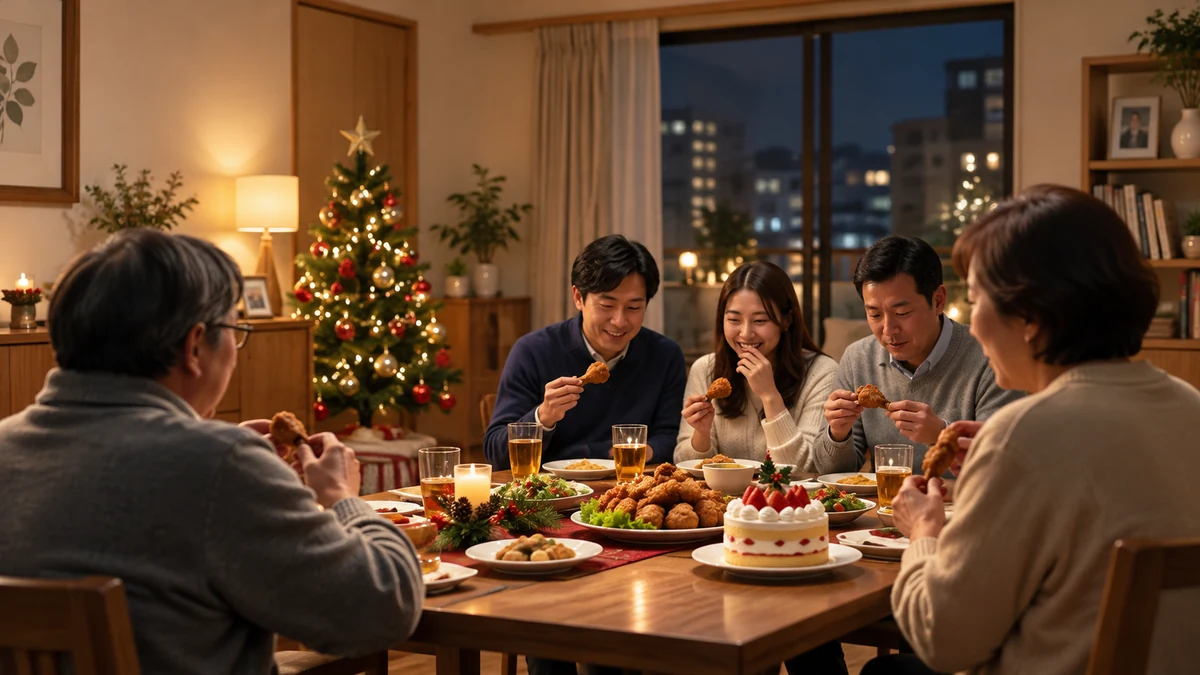
Japanese Christmas customs draw on international symbols and local preferences. Participation is a matter of personal choice, and the season does not have the same role in every household.
Shopping areas may display trees, festive window arrangements and lights. These public decorations make the season visible even to people who do not celebrate at home.
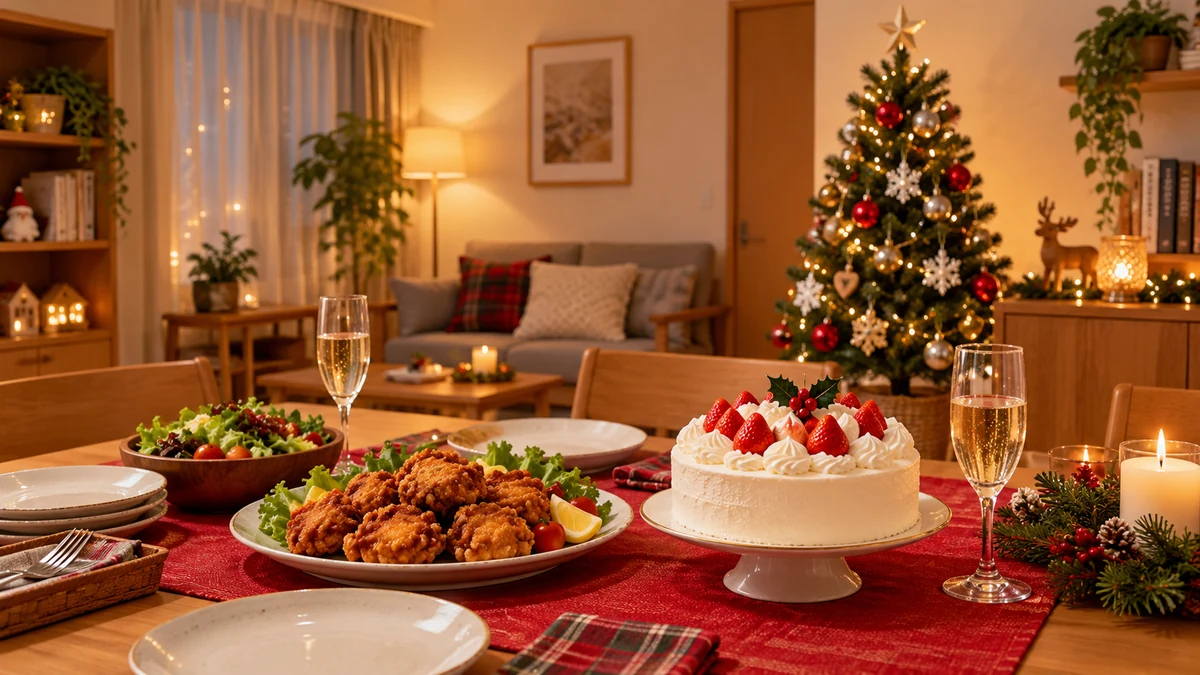
A special meal can be part of a gathering with family or friends. Christmas fried chicken is a recognisable example, helped by KFC’s seasonal marketing, although it is not a universal household tradition.
Japanese Christmas cakes often feature sponge, whipped cream and strawberries. This light cake differs from the fruit cake associated with Christmas in Britain, and shops also offer other styles.
Some people exchange gifts, choosing something suited to the recipient. The scale of gift-giving and the people involved vary; it should not be assumed to mirror a large British family Christmas.
How families mark Christmas
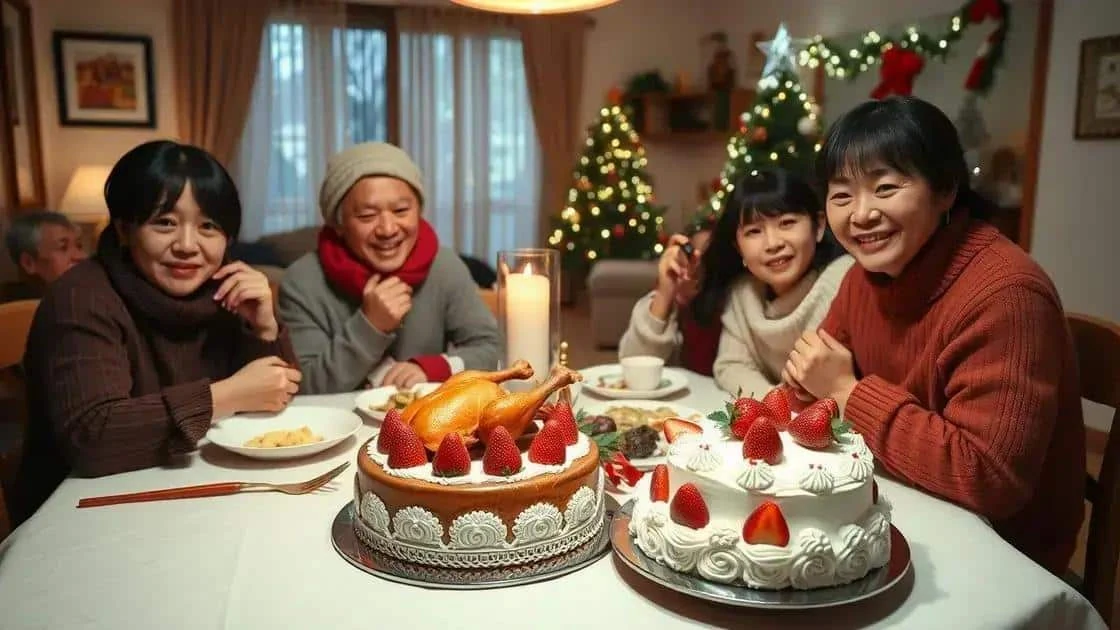
Family Christmas celebrations in Japan range from a modest treat to a meal or party. Many households do not observe Christmas religiously, while others do.
A Christmas meal may include fried chicken. KFC’s Christmas campaign began in 1974, helping make its chicken a well-known seasonal choice. This is a modern commercial tradition rather than a prescribed festive meal.
A Christmas cake can provide a shared dessert. Families may buy one or make their own, choosing a size and style that suit the gathering.
Some households put up Christmas decorations, from a small tree to a few ornaments. Available space and individual enthusiasm influence how much decorating takes place.
Exchanging presents is optional and varies between families. A small gift can be a way to mark the occasion without turning it into an elaborate event.
Food associated with Christmas in Japan
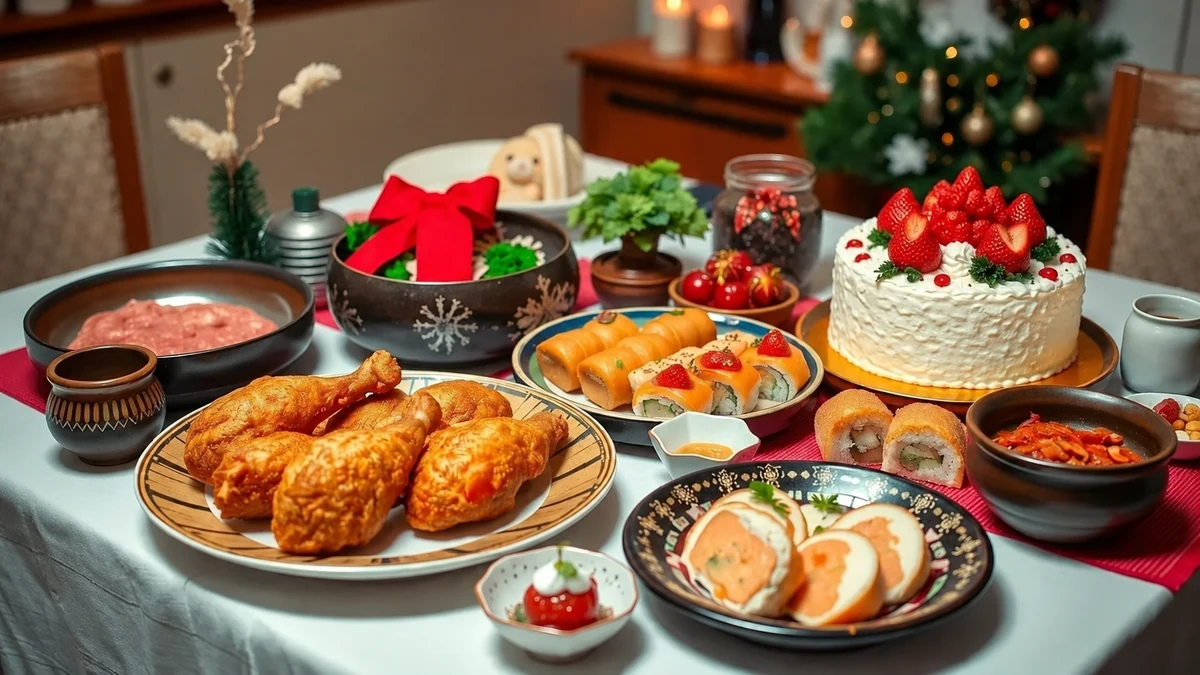
Japanese Christmas food includes dishes promoted specifically for the season as well as whatever people choose for a gathering. The most recognisable examples do not constitute a fixed national menu.
Fried chicken is closely associated with Christmas through KFC’s long-running campaign. Seasonal sets are part of the company’s offering, and advance ordering may be available depending on the year and location.
The Christmas cake is another familiar choice. A strawberry-and-cream sponge is widely recognised, but chocolate cakes and other versions also appear in seasonal ranges.
A household may serve sushi or tempura because its members enjoy them. That does not make these foods specifically established Christmas dishes.
Likewise, mochi or manju may be enjoyed as sweets, but their presence at a gathering should not be confused with a nationwide Christmas custom. Japanese New Year has its own distinct food traditions.
Christmas decorations in Japan
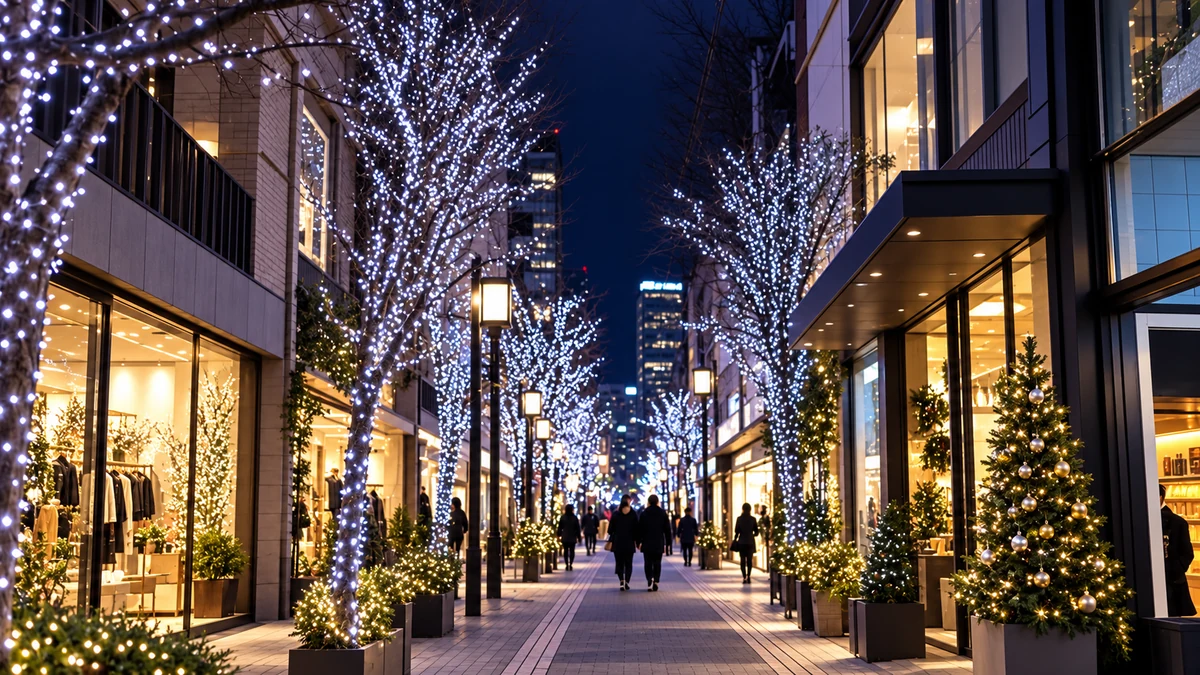
Christmas decorations in Japan appear in shops, public spaces and some homes. The scale ranges from a small seasonal display to an elaborate installation.
City illuminations are an important part of the winter scene. Their designs and dates vary, so visitors should check the organiser’s information rather than assume every display operates throughout December.
Shops may use trees, lights and ornaments in seasonal window displays. Festive products and decorated packaging also contribute to the atmosphere.
At home, people who choose to decorate a Christmas tree can use familiar ornaments or personal details. A tabletop tree may suit a smaller room.
Wreaths may also appear in seasonal displays. Their use does not by itself establish a separate, longstanding Japanese Christmas tradition based on natural materials.
Presents and festive gatherings
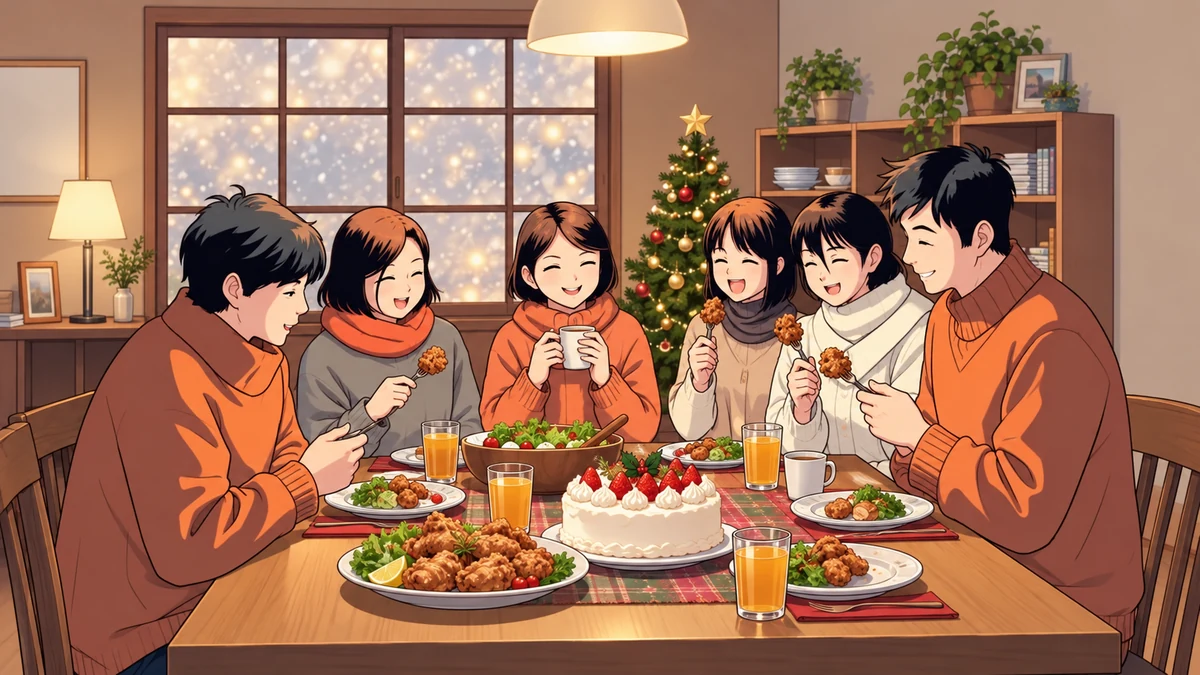
Christmas festivities may involve presents, food or a shared outing. Choices depend on the people involved, rather than on one national set of rules.
Where people exchange gifts, the recipient’s interests and the giver’s budget are useful guides. Thoughtful wrapping can add a personal detail without implying that every household follows the same custom.
Small Christmas gifts might include sweets, an ornament or a handmade item. Their meaning comes from the relationship between the people exchanging them.
A special dinner may bring relatives or friends together. Christmas Eve is also associated with romantic outings for some couples, a contrast with the family-centred image familiar in Britain.
Some schools, workplaces and community groups organise Christmas parties. Activities vary and might include food, music or a small gift exchange; these events are not universal.
International influences on Japanese Christmas
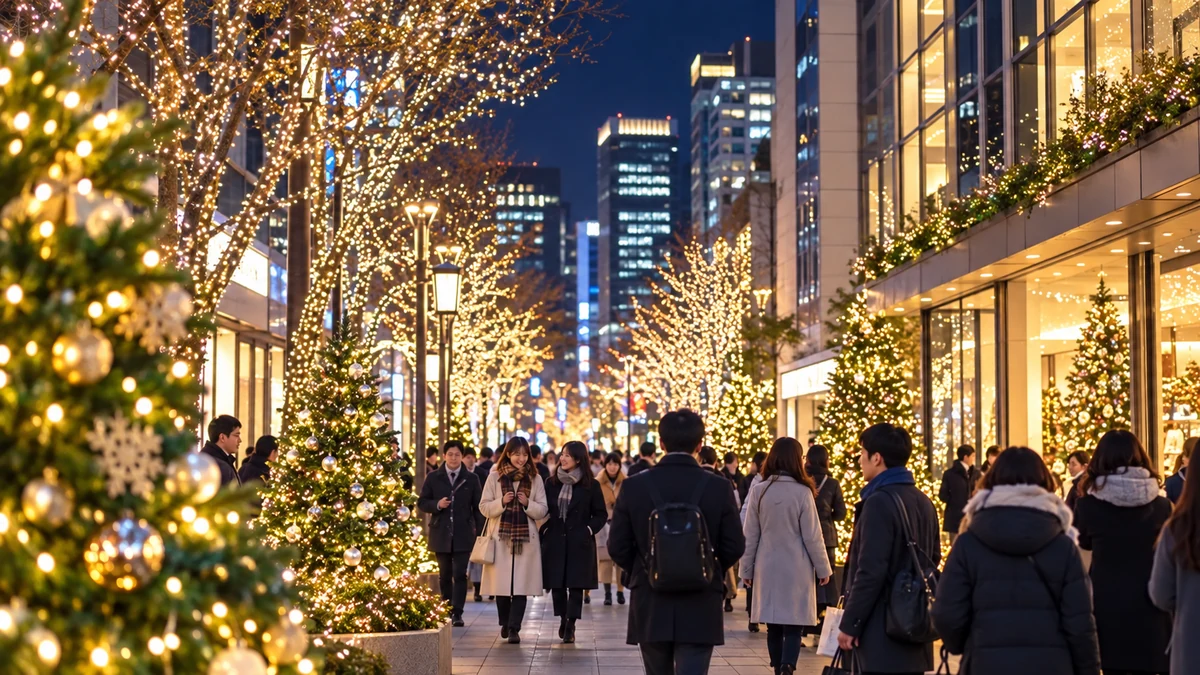
International influences on Japanese Christmas can be seen in its familiar symbols, but the modern season is more than a direct copy of celebrations elsewhere. Local businesses, tastes and social habits have helped shape it.
Christmas trees and lights are recognisable examples of shared seasonal imagery. Their use in a shopping centre or public display does not necessarily imply religious observance.
Giving presents can form part of a modern Christmas celebration, although the scale and setting vary. It should also be distinguished from Japan’s other seasonal gift-giving customs.
The strawberry-and-cream Christmas cake shows how an international festive idea can take a locally recognisable form. It is different from a British Christmas fruit cake.
School celebrations and other organised gatherings may use Christmas songs or decorations. Whether and how they do so depends on the institution and participants.
Understanding Christmas in Japan
Christmas in Japan brings together religious observance for some people and a wider seasonal culture of food, lights and outings. It is best understood through that variety rather than a single account of what every Japanese family does.
A modest cake at home, a dinner with friends or a visit to a winter light display can each mark the season in a different way.
For visitors, checking local information and separating Christmas customs from New Year traditions helps make sense of the festive period.
Frequently asked questions about Christmas in Japan
How is Christmas celebrated in Japan?
Celebrations vary. Seasonal lights, food, outings and gifts are familiar features for some people, while Christian communities also observe Christmas religiously. Christmas Day is not a national public holiday.
Which foods are associated with Christmas in Japan?
Fried chicken and strawberry-and-cream sponge cake are well-known seasonal choices. Other dishes depend on personal preference rather than a fixed Christmas menu.
How do Japanese families decorate their homes at Christmas?
Some use trees, lights or a few ornaments, while others do not decorate. Public and commercial displays are often more visible than decorations in individual homes.
What role do presents play in Japanese Christmas celebrations?
Some friends, couples and families exchange presents, but this varies. A gift can mark the occasion without having the same scale or religious meaning as in another household or country.
Has Western culture influenced Christmas in Japan?
Yes. Familiar symbols such as Christmas trees, lights and cakes have been adopted and adapted through local tastes, commerce and social practices.
Where can visitors find Christmas activities in Japan?
Cities and towns offer different winter displays and seasonal events. Check organisers’ current dates, opening times and booking requirements before making plans.
Sources and Further Reading
- Japan National Tourism Organization: Christmas in Japan
- Japan National Tourism Organization: December
- KFC: how Kentucky for Christmas began in Japan