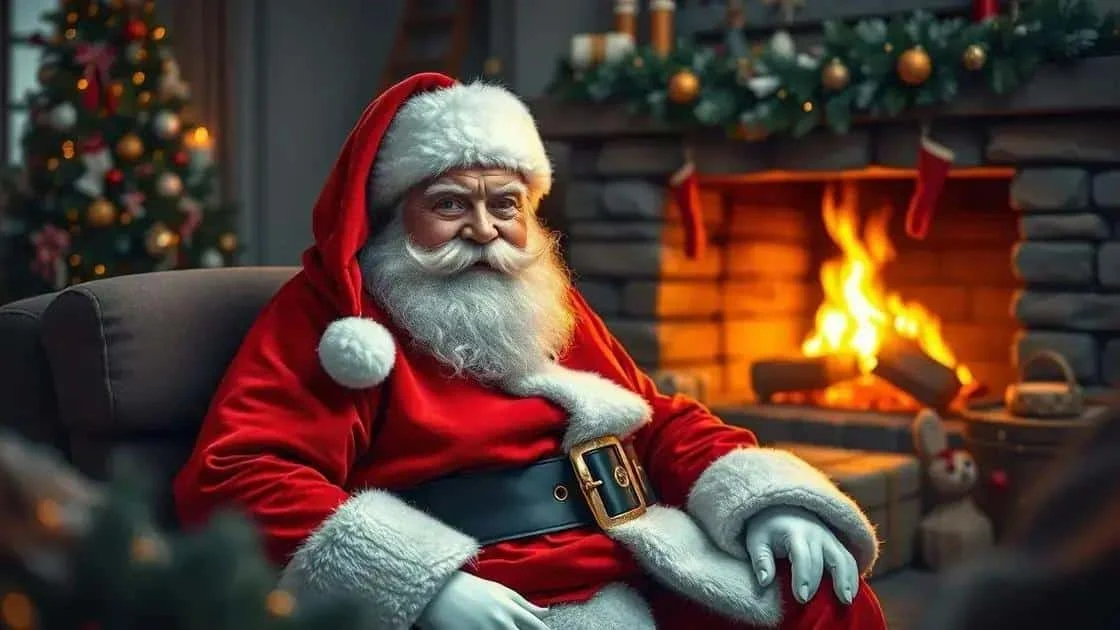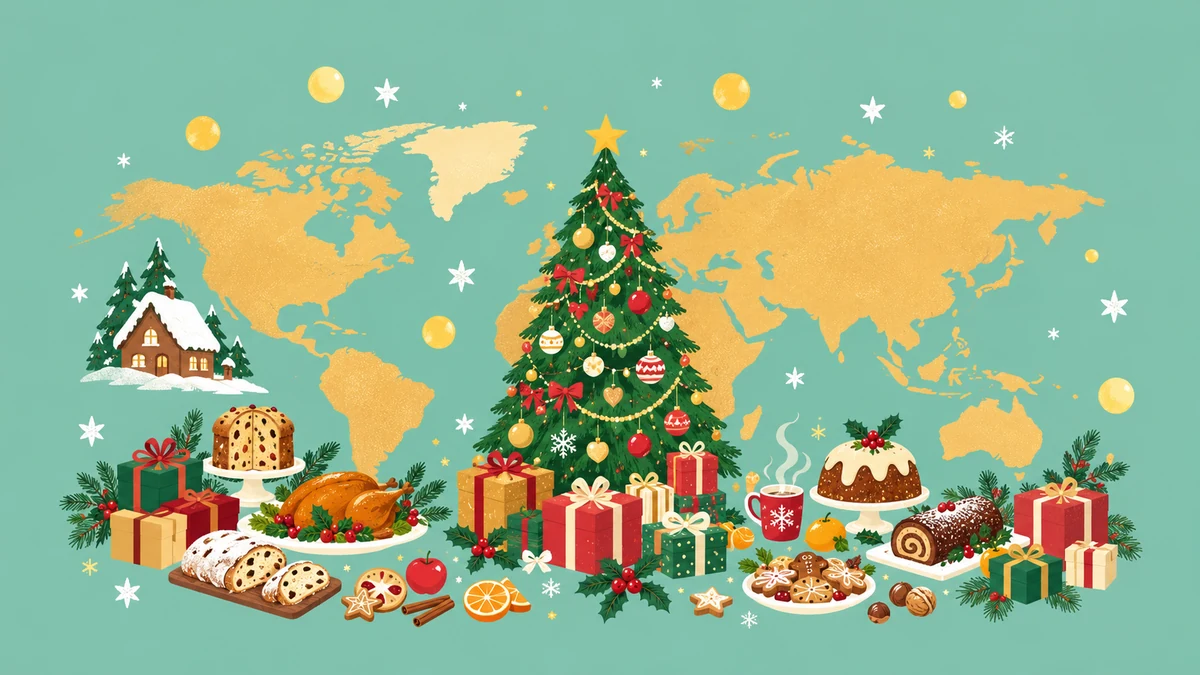
Christmas traditions around the world include Japanese Christmas fried chicken, Portuguese salt cod dishes and Mexican posadas. These examples show how religious observance, local food and family customs shape celebrations that vary within countries as well as between them.
Have you explored Christmas traditions around the world? Familiar ideas such as a festive meal or a gift can take different forms in different places. Discover some of the food, folklore and celebrations that make the season distinctive, remembering that no single custom represents everyone in a country.
How do different countries celebrate Christmas?
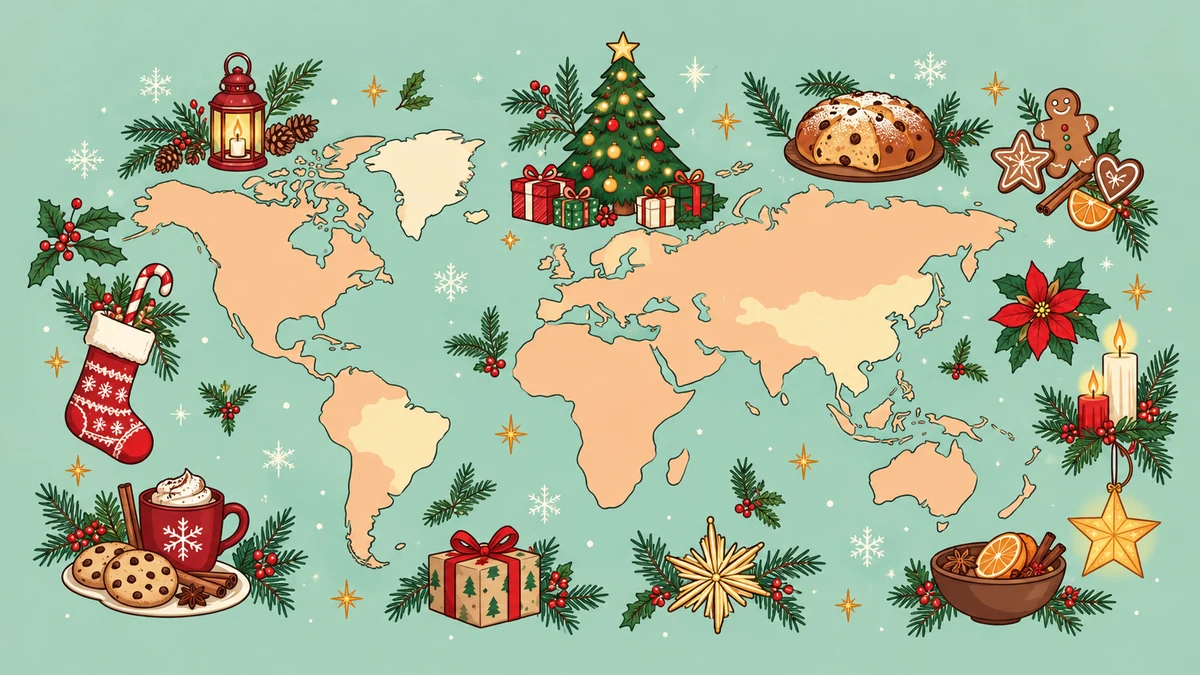
Christmas celebrations reflect local culture, faith and family preferences. For some people the season centres on religious services; for others, shared meals, decorations or time together play a larger role.
Countries and their Christmas customs
In Brazil, Christmas Eve dinner is an important gathering for many families. Dishes may include turkey, farofa, a toasted cassava-flour accompaniment, and rabanada, a sweet fried bread dish. Regional and family menus differ.
In Italy, some families observe La Vigilia, Christmas Eve, with fish or seafood dishes. Pandoro is one of the season’s well-known sweet breads, alongside other regional specialities.
In Sweden, the julbord is a Christmas buffet. It can include smoked salmon, meatballs and sausages, among other dishes. The selection varies between households.
In the Philippines, the festive season is notably long, with Christmas activity often beginning in September. The star-shaped parol lantern evokes the Star of Bethlehem. Many Catholics attend Simbang Gabi, a series of nine Masses before Christmas.
These Christmas customs offer a glimpse of the season’s variety. Their meanings depend on the communities and families who keep them, rather than on one universal way of celebrating.
Distinctive Christmas traditions around the world
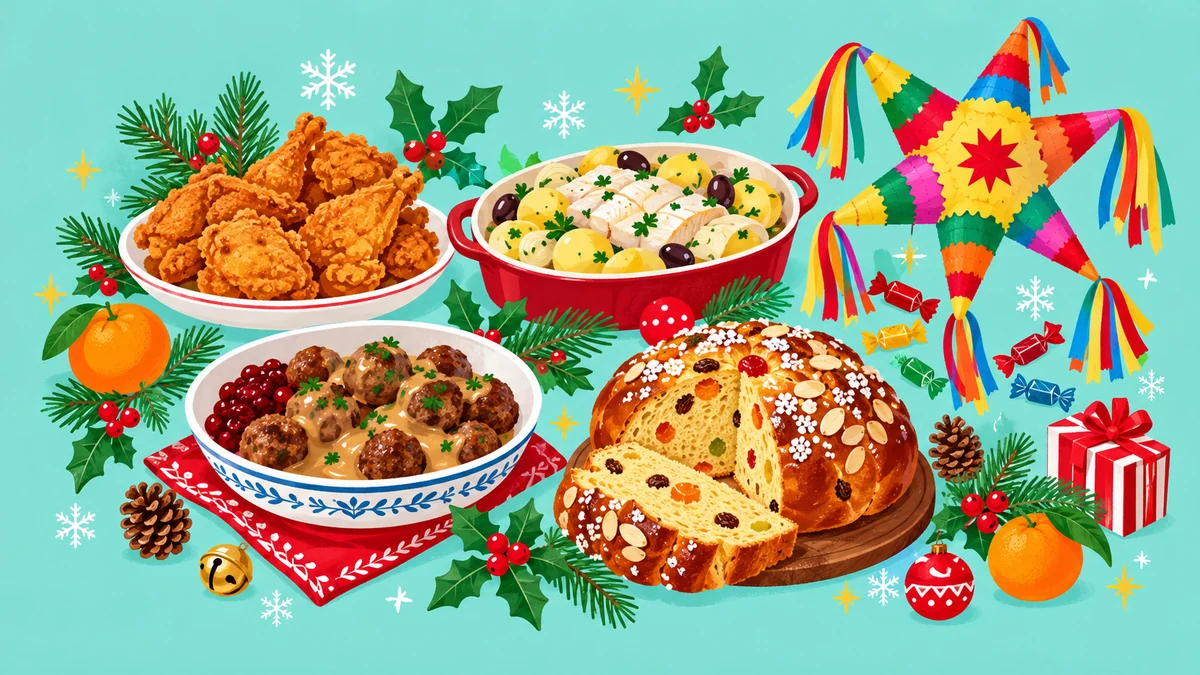
Some Christmas traditions are closely associated with particular dishes, stories or community gatherings. Here are a few examples.
Christmas Eve food
In Poland, the Christmas Eve meal, Wigilia, is traditionally meat-free but may include fish. Many families prepare twelve dishes, a number associated with the twelve Apostles in a common explanation of the custom.
In Portugal, salt cod is a familiar Christmas Eve dish. Festive meals elsewhere in the holiday period may feature turkey or lamb, with choices differing by region and family.
Gifts and folklore
In Norway, many families exchange presents on Christmas Eve. Folklore also features the farm-dwelling nisse, for whom a bowl of rice porridge may be left.
Decorations and festivities
In Mexico, posadas recall Mary and Joseph’s search for shelter. During the nine evenings before Christmas, participants may process, sing and enact a request for lodging before gathering to celebrate.
In Switzerland, local Advent customs include Klausjagen in Küssnacht on 5 December. Its procession features elaborate illuminated headdresses called Iffelen, along with bells and other sounds. Customs elsewhere in Switzerland differ.
The influence of the seasons
In South Africa, Christmas falls in summer. Some families celebrate outdoors with a picnic or braai, while others prefer a meal at home. The Christmas tree may still form part of the decorations, but choices are personal.
These examples show how Christmas celebrations can adapt to local seasons, beliefs and surroundings. Learning about a custom is also a reminder to allow for differences within each place.
What Christmas means in different cultures
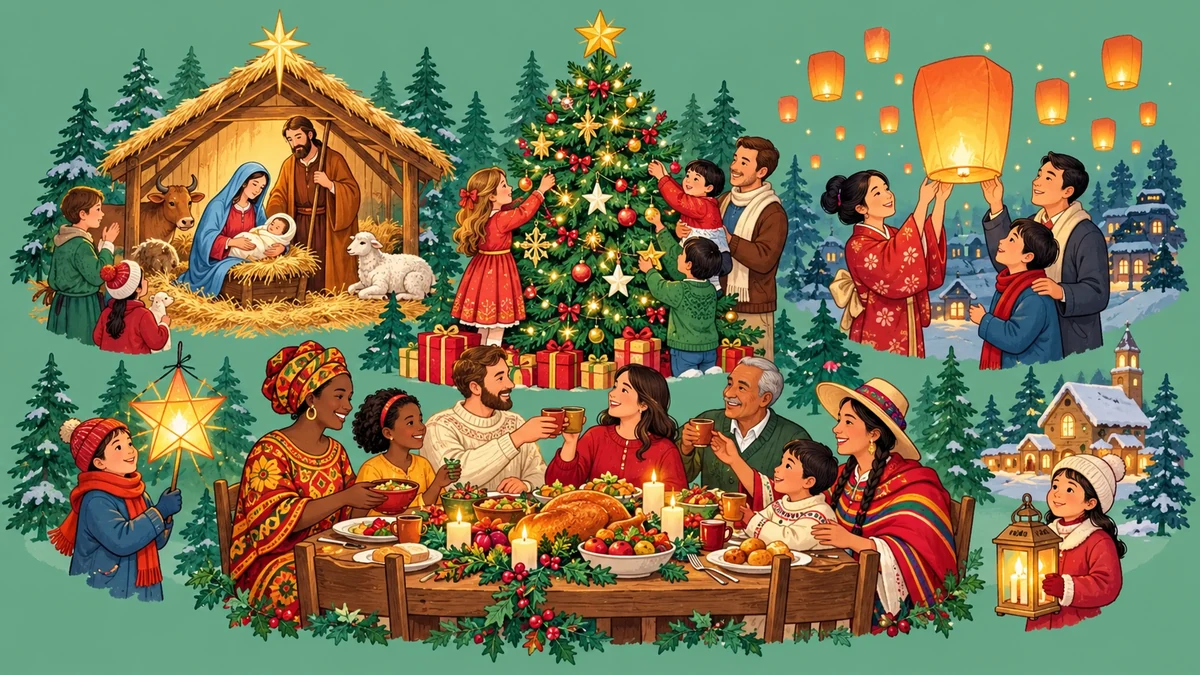
Christmas can carry religious, cultural or personal meaning. The significance of a meal, decoration or gathering is often shaped by a family’s own experience.
Religious meaning
For Christians, Christmas celebrates the birth of Jesus Christ. Worship may include church services, prayer, carols and Nativity scenes or performances, with practices differing across denominations and communities.
Time with family
In many places, Christmas provides an occasion to meet relatives. In Brazil, for example, a shared Christmas Eve meal may bring together several generations for food and conversation.
Culture and folklore
In Italy, the Christmas meal reflects regional food traditions. Different areas have their own dishes and customs, so there is no single menu for the whole country.
In Sweden, the jultomten is associated with bringing Christmas presents. The tomte also has roots in older household folklore, in which leaving porridge is a familiar motif.
Hope and renewal
Some people connect Christmas with hope and renewal. Light during the darker northern winter can offer a meaningful image, although that seasonal setting does not apply to Christmas everywhere.
Indigenous communities in North America are culturally and religiously diverse. Christmas observance, where present, should be described through the practices of a specific community rather than treated as one shared Indigenous tradition.
Distinctive family Christmas customs
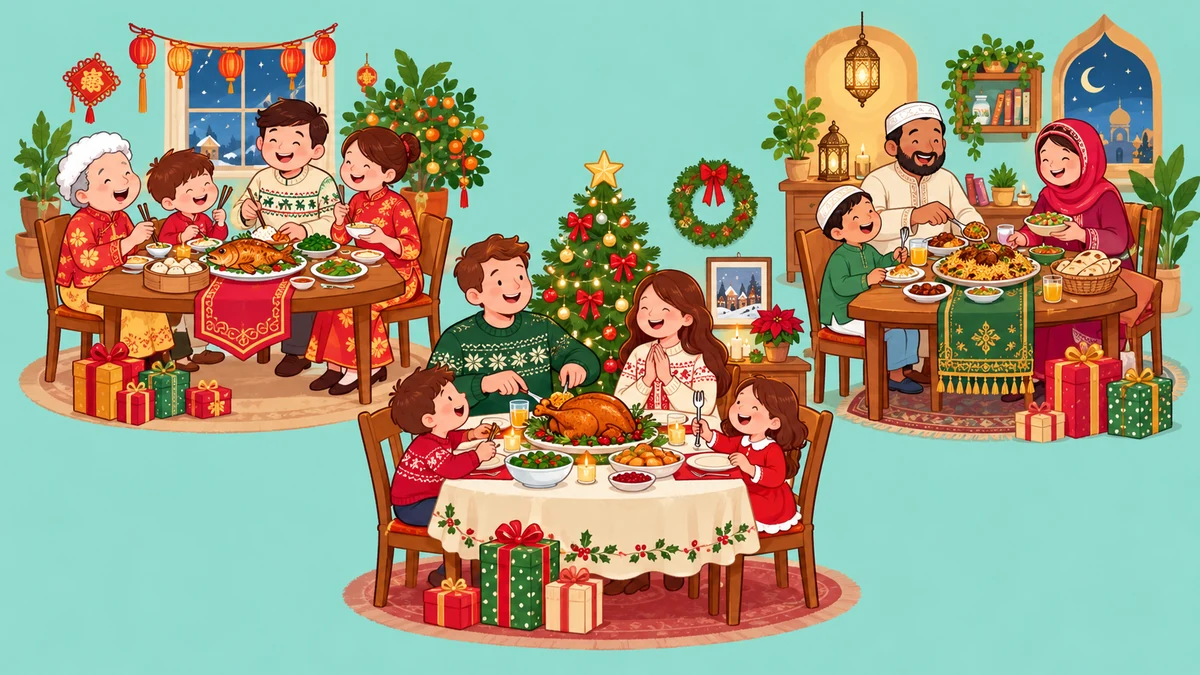
Distinctive family Christmas customs can involve food, games or handmade objects. An unfamiliar tradition need not be strange to the people who have grown up with it.
Festive foods
In Iceland, festive foods include roast meat dishes and hangikjöt, smoked lamb. Menus vary, and particular households may have their own favourite dishes.
In Japan, KFC fried chicken has become a recognisable Christmas food choice. The company’s Christmas campaign began in 1974, helping to establish a modern seasonal custom rather than an ancient religious tradition.
Festive objects and decorations
In Mexico, piñatas may form part of posada celebrations. Filled with sweets or fruit, they are broken during the gathering; the traditional star-shaped form also has religious symbolism.
Games and outdoor celebrations
In Australia, summer weather makes outdoor barbecues and beach activities possible for some families. A playful image of Father Christmas in beachwear reflects that seasonal contrast, rather than a rule for how Australians celebrate.
Symbolic traditions
In the Philippines, the parol is a star-shaped Christmas lantern associated with the Star of Bethlehem. Handmade and professionally produced versions illuminate homes and public spaces.
Food, folklore and craft all offer ways to understand the season through local experience. Customs evolve, and families choose which ones to retain or adapt.
Christmas memories across cultures
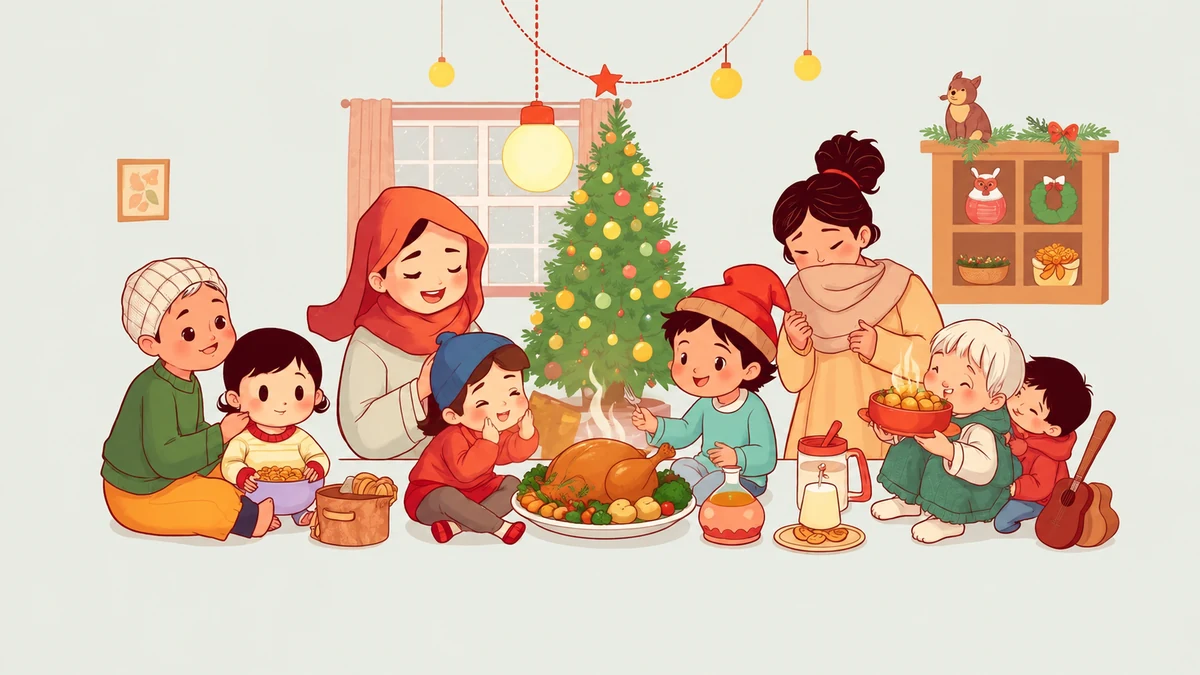
Personal memories help explain why a familiar Christmas custom can matter so much. A taste, song or decoration may connect the present with earlier family celebrations.
Childhood memories
For some people, Christmas recalls opening a present, putting up a tree or helping with a meal. Others have different or mixed memories of the season. Traditions can change as households and circumstances change.
Family recipes
Family recipes may be passed between generations. In a Brazilian household, making rabanada together can be one such custom, though not every family prepares the same food.
Traditions across borders
Migration and shared media help Christmas customs travel. In the United States, tree decorations and festive films are part of many people’s seasonal memories, and these influences also reach audiences elsewhere.
Making room for different experiences
Sharing songs or stories in different languages can help a gathering feel welcoming when people want to take part. The Christmas spirit means different things to different guests, including those who do not celebrate it religiously.
These personal memories show why the same activity can hold different meanings for different families. Listening to those stories is often more useful than assuming a national stereotype.
Learning from Christmas traditions around the world
Christmas traditions offer glimpses of cultural variety, but a short overview cannot represent every community or household. Treat these examples as starting points for further exploration.
Personal memories built around food, music and gatherings can help explain why people keep particular customs. Their value lies in the meaning people give them.
Learning about other celebrations can broaden our understanding while leaving space for regional differences, changing traditions and individual choices.
The most memorable customs are often the ones that people choose to share and adapt in their own homes.
Frequently asked questions about Christmas traditions around the world
What are some distinctive Christmas traditions in different countries?
Examples include Christmas fried chicken in Japan, parol lanterns in the Philippines and piñatas at Mexican posadas. Their popularity and meaning vary between communities and families.
How do personal memories influence Christmas celebrations?
A familiar recipe, song or decoration can connect a celebration with earlier experiences. Families may keep these customs, adapt them or create new ones.
Why does food matter in Christmas celebrations?
Preparing and sharing a meal can bring people together, while familiar flavours may recall family history. Menus differ within countries as well as across borders.
What role do Christmas decorations play?
Trees, lights and other decorations can mark the season and carry personal or religious meanings. Not everyone uses the same symbols or decorates in the same way.
How does climate affect Christmas celebrations?
Christmas falls in summer in countries such as Australia and South Africa, allowing some celebrations outdoors. Northern winter traditions are therefore only one part of the wider picture.
How can Christmas traditions strengthen family connections?
Shared activities can create time for conversation and cooperation. Choosing customs that suit the people involved, without pressure to follow every tradition, can make participation more comfortable.
Sources and Further Reading
- Oslo municipality: Christmas in Oslo
- Switzerland Tourism: Kuessnacht Klausjagen
- Visit Iceland: Christmas food
- Nordiska Museet: Christmas
- Polish Ministry of Agriculture: Christmas traditions