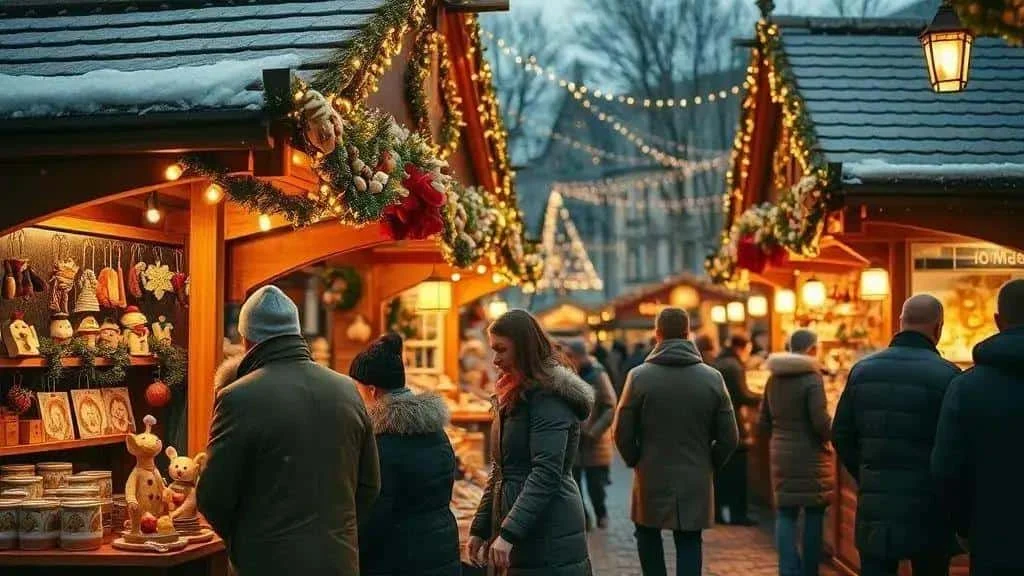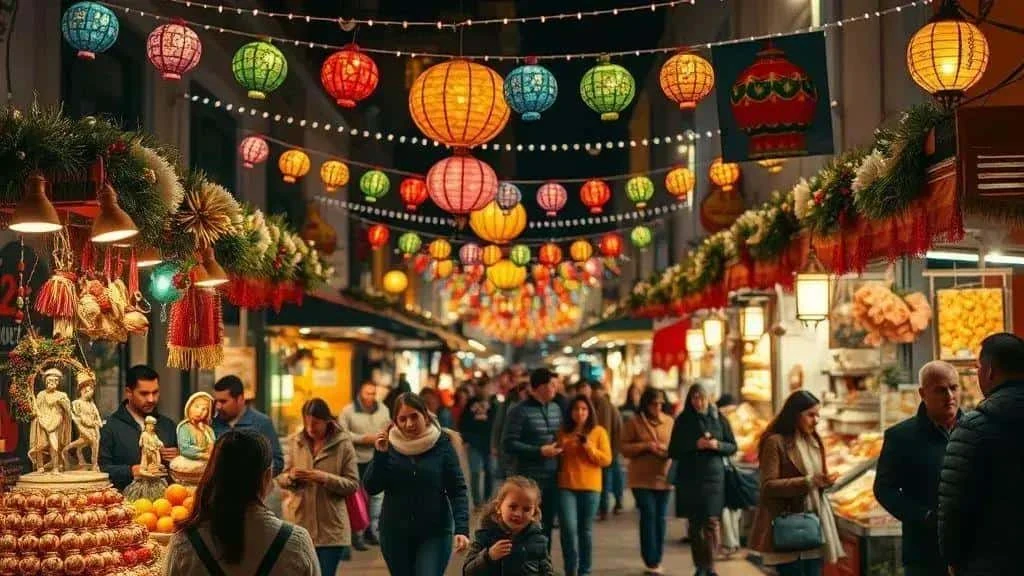
Christmas in Mexico includes posadas, Nativity scenes, regional food and handmade decorations. Mexico City, Oaxaca and Guanajuato offer different cultural settings, but travel conditions and festive programmes vary. Check current regional travel advice, transport and opening arrangements before turning these ideas into an itinerary. Source: GOV.UK: Mexico regional risks
Christmas in Mexico brings together illuminated streets, community traditions and distinctive seasonal flavours. This guide introduces the celebrations and suggests ways to plan a thoughtful visit, without assuming every event is public or every route is suitable.
Illustrations in this article are conceptual images, not documentary photographs or evidence of a particular historical event, destination, venue or access route.
Mexican Christmas traditions: posadas, Nativity scenes and celebrations
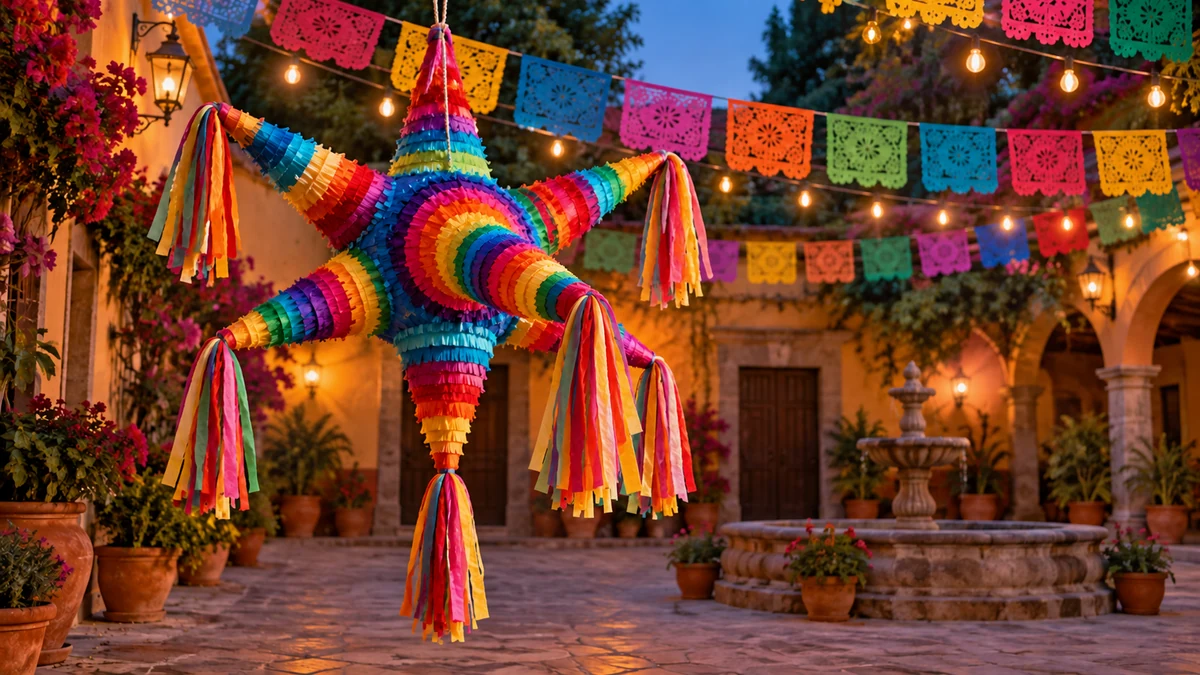
Posadas recall Mary and Joseph’s search for shelter through songs, processions or gatherings. Traditionally held from 16 to 24 December, they may include refreshments and piñatas, with customs varying between communities and households.
Nacimientos are Nativity scenes displayed in homes, churches and other settings. Figures of the Holy Family, animals and shepherds may appear alongside locally inspired details.
What to look for and how to take part
Posadas: look for an event advertised as open to visitors or join by invitation. Follow the hosts’ guidance rather than entering a private gathering, and use a torch instead of bringing an uninvited open flame.
- Pastorelas: these theatrical traditions tell of the shepherds’ journey, often combining religious themes with humour.
- Piñatas: colourful star-shaped designs are associated with many seasonal celebrations, although forms and customs differ.
- Christmas markets: look for crafts, miniature Nativity figures, festive food and poinsettias, known as flores de Nochebuena.
- Food and drink: tamales, fruit punch, buñuelos and atole feature in various festive gatherings and regional traditions.
- Decorations: cut-paper decorations, lights and handmade ornaments add colour to many public and domestic settings.
Religious observance, family gatherings and community celebrations often overlap. Check local listings, respect ceremonies and ask hosts or craftspeople about the traditions they are sharing.
Ask before photographing people, especially during private or religious moments. A colourful public setting does not make everyone present part of a visitor attraction.
Christmas food and where to try it
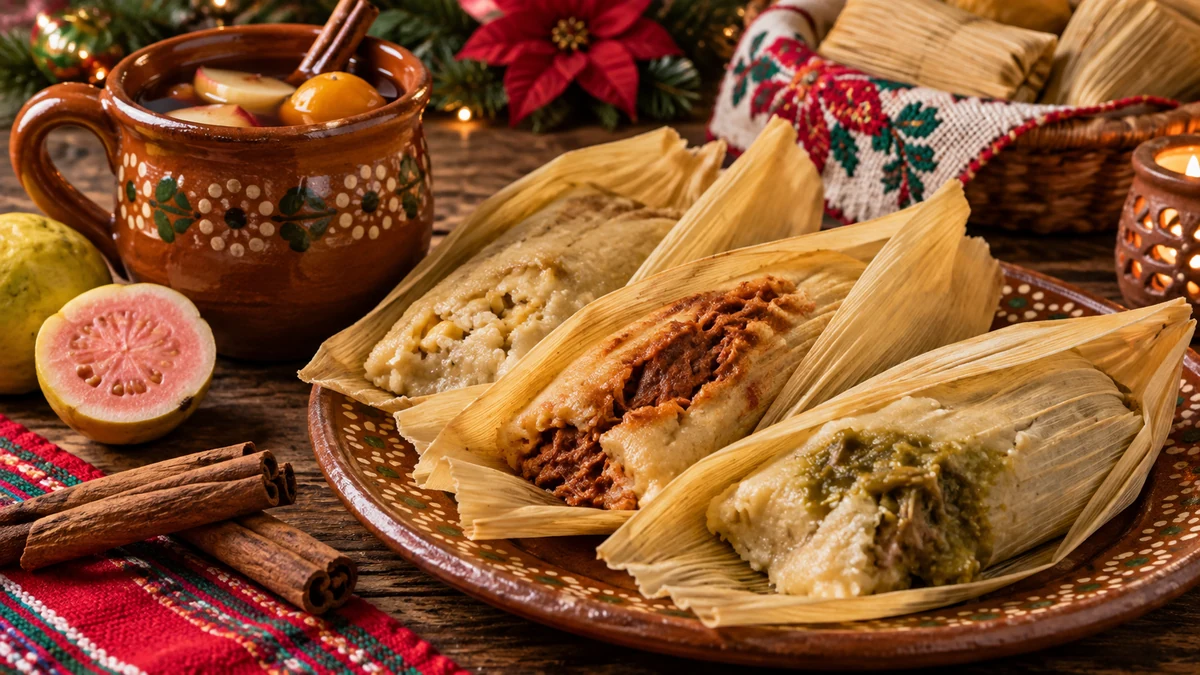
Mexican Christmas meals vary by family and region. Familiar dishes include tamales, bacalao a la vizcaína, romeritos and ponche navideño, with sweets such as buñuelos. Ask about the particular recipe rather than assuming every version has the same ingredients.
Festive dishes
- Tamales: steamed parcels of maize dough with savoury or sweet fillings, wrapped in husks or leaves. Meat-free fillings do not necessarily mean the dough is vegetarian, so check how it is made.
- Bacalao a la vizcaína: a festive salt-cod dish, with Mexican family versions often using ingredients such as tomato and olives. Fresh fish produces a different dish and needs a recipe adapted to it.
- Romeritos: leafy greens commonly served with a mole-style sauce and ingredients such as potatoes, nopales and shrimp. Removing visible seafood does not make a prepared dish safe for someone with a shellfish allergy.
- Ponche navideño: a warm fruit punch whose ingredients may include tejocotes, guava, apples, sugar cane, tamarind and cinnamon. Some servings have alcohol added; ask for an explicitly alcohol-free version where needed.
- Buñuelos: crisp fried sweets, often served with sugar, cinnamon or syrup, depending on the regional preparation.
- Ensalada de Nochebuena: a colourful Christmas Eve salad with ingredients that may include beetroot, fruit and jícama. Check the dressing and any nuts or other allergens.
Places to explore
- Mexico City: Coyoacán and other market areas offer opportunities to explore local food. Check current local advice and choose suitable venues rather than treating every market as equally easy to visit.
- Oaxaca: Mercado 20 de Noviembre is known for food, while the wider city offers regional tamales and many styles of mole. Check individual stalls and holiday opening times.
- Puebla: local restaurants and markets provide another setting for regional festive cooking. Confirm which dishes are available during your stay.
- Veracruz and coastal areas: seafood traditions vary along the coast. Review current regional travel advice before adding a destination, and do not assume proximity to the sea guarantees safe or fresh food.
- San Miguel de Allende and Guanajuato: check official local programmes and current advice for the destination and route before planning a festive visit.
Practical food tips
- Look at hygiene, storage and whether food is properly cooked and served appropriately. A busy stall alone does not guarantee food safety.
- Carry a modest amount of cash for sellers who do not accept cards, keeping it secure.
- Explain allergies clearly and ask about sauces, stocks and cross-contact. If reliable information is unavailable, choose another dish or venue.
- Try a small portion if you are unfamiliar with the flavour or heat level, but do not use tasting as a way to test whether an allergen is present.
- At a public event or invited gathering, ask about the dishes and traditions without assuming refreshments are free or available to every visitor.
Itinerary ideas: Mexico City, Oaxaca and Guanajuato
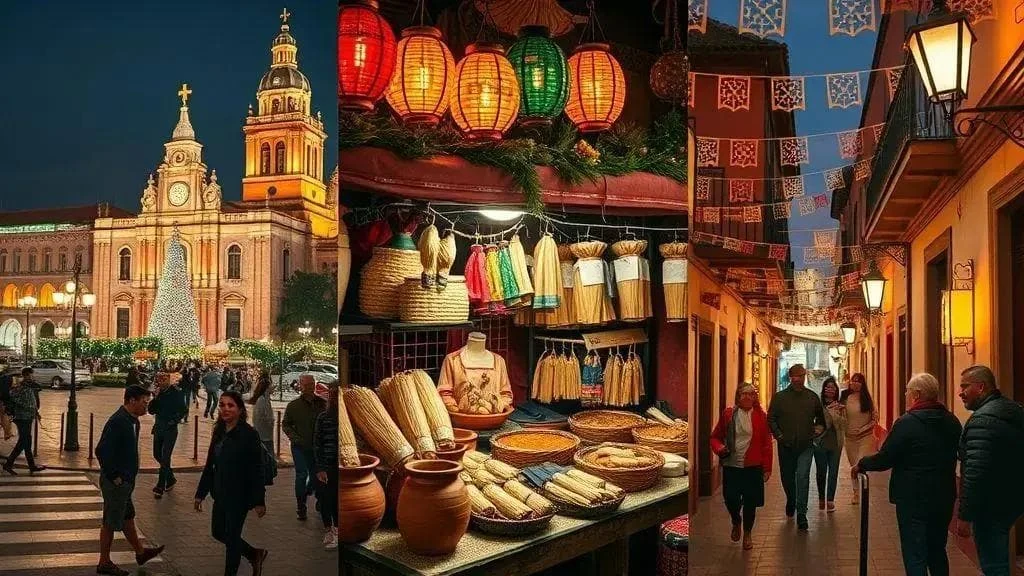
Mexico City, around two or three days: consider the historic centre and Zócalo area, then choose museums and neighbourhoods according to opening times, travel distances and current local advice. Access to individual buildings, including the National Palace, must be checked separately.
- First day: explore a manageable part of the historic centre, including the cathedral area, with time for a meal and rest.
- Second day: choose a museum such as the National Museum of Anthropology or the Frida Kahlo Museum. Check tickets and location before combining it with Coyoacán or another area.
- Transport: plan journeys using current local advice and reputable services. Check the operator and vehicle details rather than assuming any app booking is risk-free.
Oaxaca, around two days: allow time for the central area, regional food and craft visits. Confirm what is happening during your actual dates.
- Possible stops: Mercado 20 de Noviembre, the Santo Domingo area and an arranged visit to a craft workshop.
- Food and drink: explore Oaxacan tamales and mole. Adults interested in mezcal can choose a reputable venue and arrange transport without driving afterwards.
- A craft visit: book with a workshop that welcomes visitors, respecting the makers’ time, photography rules and prices.
Guanajuato, around one or two days: its historic streets can form part of a cultural itinerary, but the surrounding state has serious security concerns. Check the current FCDO regional advice and your precise route before booking, rather than treating the city and state as interchangeable.
- Possible sights: Callejón del Beso, Teatro Juárez and a city viewpoint may interest visitors. Check access, operating arrangements and suitable routes locally.
- Seasonal activities: consult local listings for markets or performances; do not assume a pastorela or night market takes place every evening.
- Getting around: account for steep or narrow streets and individual mobility needs when deciding which walks are practical.
Planning a realistic route
- Time: the suggested stays are starting points, not a complete schedule. Add travel days and rest rather than rushing between all three cities.
- Weather: check local forecasts and pack layers for cooler evenings, especially at higher elevations.
- Bookings: popular accommodation and activities may fill over the holidays. Compare options early and read cancellation terms.
- Security: review official advice for each destination and route, use reputable transport and keep important documents secure.
- Festive programmes: confirm dates, admission and whether events welcome visitors before building your itinerary around them.
- Food: consider hygiene and ingredient information, with particular care for allergies and dietary needs.
- Optional excursions: Teotihuacán from Mexico City, Monte Albán from Oaxaca or a separate stay in San Miguel de Allende may be options after checking current access, routes and travel advice. They are not all quick additions to an already full day.
These ideas introduce different cultural settings for Christmas in Mexico. Use them selectively, with enough time and current information to make the trip practical.
Markets and crafts: choosing a Mexican Christmas souvenir
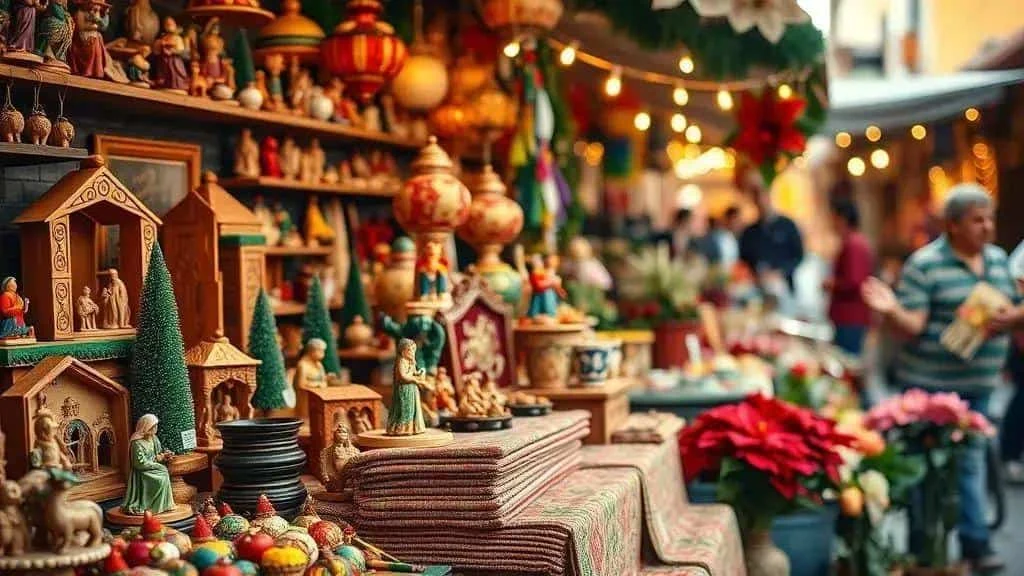
Handmade work can make a meaningful keepsake. Ask about the maker and materials instead of judging authenticity from appearance alone.
Things to consider buying
- Miniature Nativity scenes: look for clearly identified local work in materials such as wood or clay, with packaging suited to fragile figures.
- Alebrijes: colourful fantastical figures include carved and painted wooden versions associated with Oaxacan workshops. They are not exclusively Christmas decorations.
- Glass ornaments: ask about the maker and protect delicate pieces carefully for the journey home.
- Small decorative piñatas: check size, fragility and how they will fit into your luggage.
- Textiles: table linen, embroidered work and woven pieces can reflect regional traditions. Ask about fibres, technique and care.
- Poinsettias: enjoy these festive plants locally. Do not pack plants, cuttings or seeds for the UK without first checking the applicable plant-health and import requirements.
Where to look
- Established markets and shops: explore suitable shopping areas in Mexico City with current local advice and realistic expectations about provenance.
- Craft shops and workshops: in Oaxaca, seek makers or specialist craft outlets; Mercado 20 de Noviembre is primarily a food destination rather than a guarantee of craft authenticity.
- Seasonal fairs: check official listings for events where makers sell directly to visitors.
Checking who made an item
- Examine workmanship and materials, but do not treat small irregularities as proof that something is handmade or locally produced.
- Ask who made the piece and where, allowing the seller to explain the process.
- Keep a receipt and any relevant provenance information, particularly for a costly purchase.
Packing and transport
- Cushion fragile items individually and place them in a suitable protective container.
- Check hand-luggage limits before relying on your cabin bag for valuable or fragile purchases. For shipping, compare insurance, customs and delivery terms.
- Review baggage and import restrictions before buying food, wood, plants or animal-derived goods.
Responsible shopping
- Where possible, buy from identifiable local makers and respect the time and skill involved.
- Do not assume bargaining is appropriate everywhere. Ask politely about prices and accept a maker’s stated terms.
- Consider durability and likely use rather than assuming that natural or locally sourced materials automatically mean a lower environmental impact.
Thoughtful choices and careful packing can help a souvenir remain useful and meaningful long after the trip.
Practical Christmas travel tips
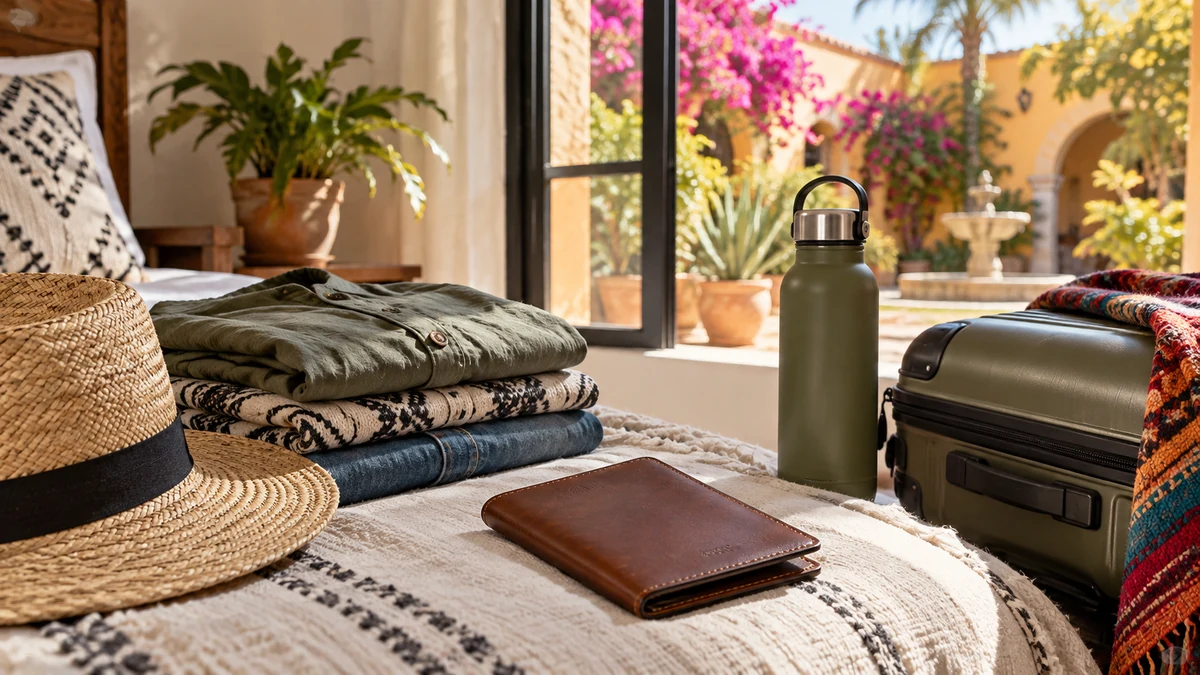
Festive travel needs the same attention to weather, health, documents and regional security as a visit at any other time of year.
Weather and packing
- Bring suitable layers: higher-altitude destinations can have cool evenings, even when daytime conditions feel warm.
- Prepare for the forecast: take appropriate rain and sun protection rather than assuming winter conditions are the same throughout Mexico.
- Choose practical footwear: uneven paving, hills and longer walks may need more support than light holiday sandals.
- Check electrical compatibility: bring a suitable adapter for your equipment and follow airline rules for power banks.
Documents and security
- Travel documents: check current entry requirements and keep required originals and secure copies appropriately separated.
- Transport: use established services recommended by reliable local sources and confirm vehicle and driver details.
- Cash and cards: carry only what you need, check bank charges and keep a backup payment method secure.
- Crowded places: pay attention to belongings and surroundings at markets, transport hubs and public events.
- Insurance: choose cover appropriate to the trip and read exclusions, including any effect of official advice against travel.
- Emergency contacts: keep local emergency and consular details accessible. Mexico uses 911 for emergencies.
Festive dates and respectful behaviour
- Seasonal calendar: posadas traditionally run from 16 to 24 December, followed by Christmas Eve and Christmas Day. Día de Reyes is observed on 6 January; local events and family customs vary.
- Opening times and reservations: check holiday arrangements for restaurants, museums and transport rather than relying on normal weekly hours.
- Religious settings: follow dress and behaviour guidance and ask before photographing ceremonies or individuals.
- Markets and refreshments: check hygiene and ingredients, remembering that popularity alone does not establish safety.
Making the trip more comfortable
- Allow extra time: crowds, traffic and event closures can affect journeys.
- Compare bookings early: this gives you more time to find suitable arrangements, without guaranteeing the lowest price.
- Learn useful Spanish phrases: greetings, directions and clear dietary information can make communication easier.
- Respect local customs: show interest without treating private traditions or people’s work as something visitors are automatically entitled to access.
- Plan for health needs: use safe drinking water, protect yourself appropriately from the sun and follow relevant travel-health and medicine guidance.
Celebrating with less waste and a manageable budget
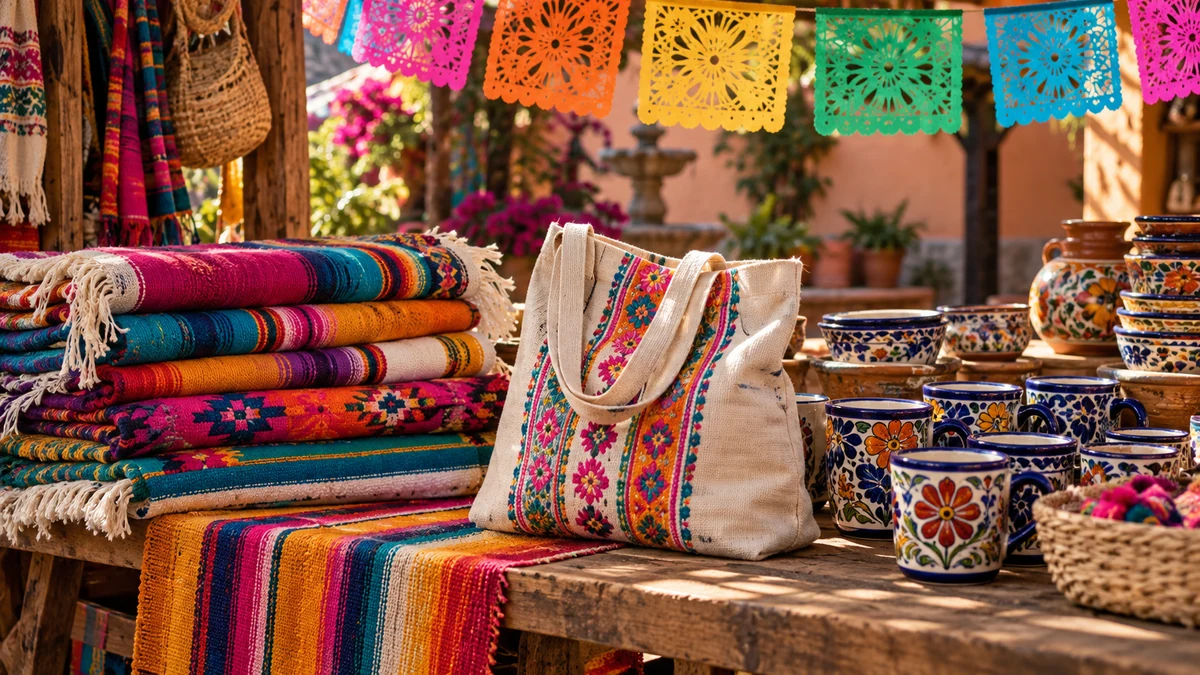
Whether travelling or celebrating at home, thoughtful choices can help avoid unnecessary spending and waste while respecting the traditions that inspire you.
Decorations and reuse
- Reuse suitable materials: keep existing paper decorations, boxes and fabric in use where they remain safe and sound.
- Make simple decorations: a decorative paper piñata can be a craft project, with age-appropriate materials and adult help for cutting or assembly.
- Use lighting sparingly: suitable LEDs and timers can limit electricity use; follow the product’s safety instructions.
- Care for plants you already have: a well-kept plant may be reused for decoration. A newly bought plant is not automatically a lower-impact choice than existing ornaments.
- Choose lasting crafts: a small, useful piece from an identifiable maker can be more worthwhile than many unwanted souvenirs.
Thoughtful presents
- Support makers where practical: buy appropriate local products, checking food and customs rules before taking them abroad.
- Make a personal gift: a craft or safely prepared food gift can be meaningful. Use reliable recipes and suitable storage, especially for preserves.
- Reuse wrapping: use suitable cloth, bags or paper already available rather than buying elaborate disposable packaging.
- Consider an experience: a suitable performance or cooking class may appeal, provided the recipient can use it and understands the terms.
A festive meal with less waste
- Plan quantities: use realistic servings for your guests and the number of dishes being offered.
- Compare seasonal ingredients: choose what is available and affordable without assuming every local product is cheaper or has a smaller footprint.
- Handle leftovers safely: cool and store food promptly, and follow suitable guidance on storage time and reheating rather than leaving festive dishes out for later days.
- Use appropriate composting: compost suitable scraps only where your system or local collection accepts them.
- Offer manageable portions: provide seconds where wanted and use suitable containers and safe transport for food taken home.
Getting around and joining local activities
- Choose practical transport: walk or use suitable shared transport where routes and current security advice allow it.
- Buy thoughtfully: local fairs and workshops can help you connect with makers without buying more than you need.
- Join public or invited gatherings: confirm that a posada welcomes visitors and follow the hosts’ arrangements.
- Support community work respectfully: contact a legitimate organisation before offering time or donations, and check any requirements rather than arriving expecting to volunteer.
Keeping spending manageable
- Set limits: agree on a budget for food, gifts, transport and decorations before shopping.
- Compare ahead of time: early planning creates options, but does not guarantee cheaper flights or accommodation.
- Share practical help: friends or relatives may enjoy exchanging help with wrapping, cooking or decorations.
- Check free programmes: public concerts or exhibitions may offer affordable experiences, subject to admission and access rules.
Enjoying the Mexican Christmas season thoughtfully means balancing curiosity with respect, practical planning and realistic expectations.
Final thoughts
Thank you for exploring Christmas in Mexico with us. Use these traditions and itinerary ideas as a starting point, then check current local information before booking.
Visit the I Love Christmas blog for more seasonal travel features and recipes. Share your experiences if you wish, respecting the privacy of others.
We hope your festive travels bring enjoyable discoveries and meaningful encounters.
Frequently asked questions about Christmas in Mexico
How can I join a local posada?
Look for a publicly advertised event between 16 and 24 December or attend by invitation. Confirm visitor arrangements and follow the hosts’ guidance; not every gathering is open to tourists.
Is Mexico safe to visit at Christmas?
There is no single answer for the whole country. Check current FCDO advice for each destination and route, including areas advised against travel, and consider the implications for transport and insurance.
Which foods should I try, and how can I manage dietary restrictions?
Tamales, bacalao, romeritos, ponche and buñuelos introduce different festive flavours. Ask about all ingredients and preparation; removing a visible ingredient does not make a dish allergy-safe.
Where can I find authentic Christmas crafts?
Look for identifiable makers, established craft shops or workshops that welcome visitors. Ask about provenance rather than assuming every market item is handmade or locally produced.
When should I book Christmas travel?
Begin comparing well ahead of popular dates so you have time to check routes, availability and cancellation terms. Early booking does not guarantee the lowest price.
How can I celebrate with less waste and a modest budget?
Reuse suitable decorations and wrapping, choose wanted gifts, plan food quantities and use practical transport. Respect local customs and current safety advice throughout your plans.
Sources and Further Reading
- Mexican Ministry of Culture: Christmas traditions
- Mexican Ministry of Agriculture: Christmas punch
- Mexican Ministry of Agriculture: romeritos
- GOV.UK: Mexico regional risks
- GOV.UK: Mexico safety and security
- GOV.UK: bringing plants into Great Britain
- Oaxaca Tourism: 20 de Noviembre market