A rewarding German Christmas market trip begins with checking each market’s current dates, choosing realistic travel connections and setting a budget. This guide covers regional markets, foods such as Glühwein and Stollen, craft shopping and practical family considerations without relying on outdated prices or a single nationwide calendar.
German Christmas markets bring together lights, fragrant food and seasonal crafts. Choosing a few markets that suit your interests is often more enjoyable than rushing between cities. Here are practical ways to plan the visit and make the most of it.
Planning your visit: dates, transport and budget
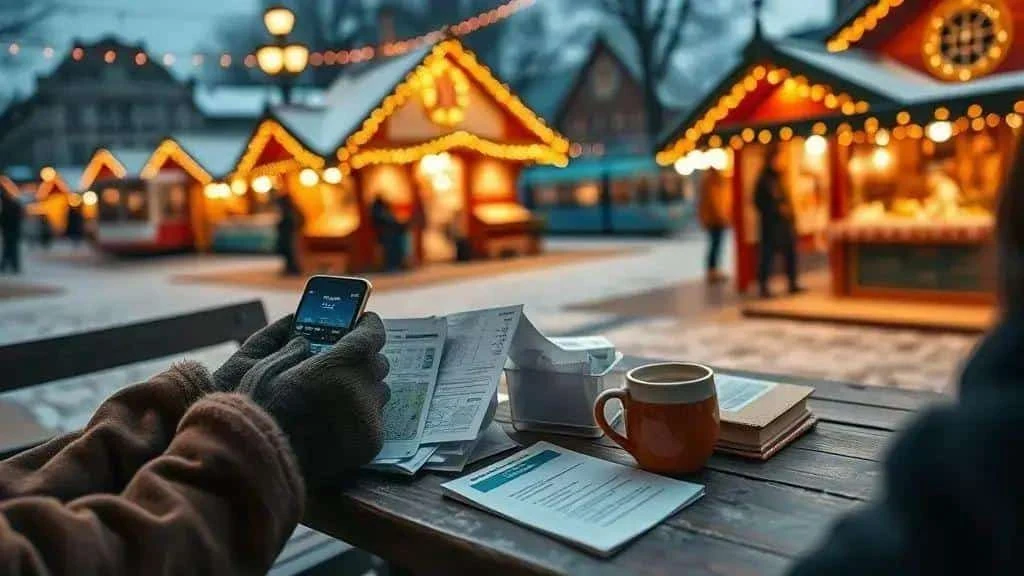
Start with three essentials: dates, transport and spending. Many German markets run during Advent, often from late November until shortly before Christmas, but closing days vary. Some markets continue into the Christmas holidays or early January. Check the organiser’s current calendar before booking, especially for Christmas Eve, public holidays and smaller weekend-only events.
Getting there and travelling between markets
Compare regional and long-distance trains for the journey rather than assuming one is always cheaper. Within cities, ÖPNV means local public transport, including U-Bahn, S-Bahn, trams and buses. A day ticket may suit several journeys. Länder-Tickets and other regional offers have specific validity areas, times, group conditions and permitted services; they generally are not substitutes for ICE or other long-distance tickets. Source: Deutsche Bahn: regional tickets
Building a practical budget
Make a daily budget using prices from the actual operators and venues you intend to use. Include the following categories rather than treating older example prices as current quotations:
- Glühwein: budget for the drink and any refundable mug deposit separately. Both vary by stall and market.
- Street food, such as bratwurst or potato pancakes: compare displayed prices and portion sizes before ordering.
- Souvenirs and crafts: set a personal limit; a small manufactured ornament and a hand-carved piece may cost very different amounts.
- Local transport: check current fares, zones and whether a day or group ticket covers your route.
- Regional travel: price the specific ticket for your party, travel day and services rather than relying on a general euro range.
Add these figures to make a budget based on your itinerary. Accommodation, intercity travel, admission to ticketed markets, activities and extra gifts can change the total considerably; there is no single reliable daily allowance for every visitor.
Ways to control costs
- Compare accommodation early: check cancellation terms and the journey from the hotel to the markets. A cheaper room farther away may involve extra travel cost and time.
- Compare regional tickets: a pass can be useful when its coverage matches the trip, but calculate the total against individual fares and journey times.
- Understand the mug deposit: returning an eligible mug under the stall’s rules normally recovers the deposit. Keeping it as a souvenir makes that deposit part of your spending.
- Browse before buying: compare materials and workmanship as well as price. Do not assume stallholders expect bargaining or will offer a discount for several items.
A checklist before setting off
- Check the chosen markets’ official dates and opening times.
- Arrange suitable train tickets or local passes where needed, checking their conditions.
- Carry a modest amount of cash as well as a payment card; acceptance differs between stalls.
- Pack layers, comfortable weather-appropriate footwear and compact rain protection.
- Download useful maps and keep the train operator’s and local transport information available.
Markets by region and what to look for
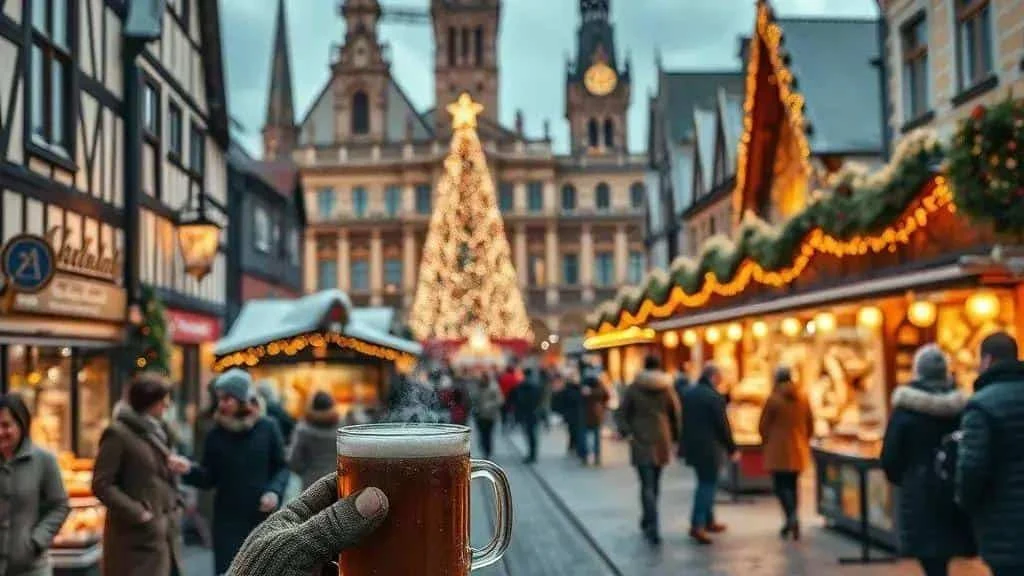
Germany’s markets range from historic town-centre gatherings to large city events. The following examples can help you choose a region, but check current programmes for specific performances, facilities and attractions.
Bavaria
Nuremberg’s Christkindlesmarkt takes place in a historic setting and is associated with Lebkuchen, local sausages and traditional seasonal goods.
- Look for: food and crafts characteristic of the city, allowing extra time when the market is busy.
- Suits: visitors interested in established traditions and a historic city centre.
Munich’s Marienplatz market is centred on the square by the town hall. Munich has other festive attractions too, but do not assume an ice rink is part of this particular market.
- Look for: seasonal food, craft stalls and the current music programme.
- Suits: a city break combining a market visit with other sights and shops.
Saxony and eastern Germany
Dresden’s Striezelmarkt is among Germany’s oldest Christmas markets and is particularly associated with Dresden Stollen and its large Christmas pyramid.
- Look for: regional baking traditions and crafts, including work associated with the Ore Mountains.
- Suits: people interested in traditional sweets and Christmas ornaments.
Leipzig offers a historic city-centre Christmas market with food, crafts and seasonal activities.
- Look for: the published programme for concerts and other events, rather than expecting a particular performance every day.
The Rhineland and western Germany
Cologne’s cathedral Christmas market is one of several markets in the city, with a prominent setting near the cathedral.
- Look for: craft and gift stalls, food and a lively atmosphere; popular periods can be crowded.
- Suits: visitors combining urban sightseeing with several distinct market settings.
Aachen is known for its Christmas market around the cathedral and town hall, and for Aachener Printen, the city’s spiced biscuits.
- Look for: regional sweet gifts and a compact historic setting. Smaller streets do not necessarily mean smaller crowds.
Berlin and surrounding districts
WeihnachtsZauber at Gendarmenmarkt, Berlin combines a distinctive square with craft stalls and a seasonal programme. Confirm its current location, admission arrangements and opening days.
- Look for: the crafts and performances listed by the organiser, comparing prices for the items you want.
- Suits: visitors interested in craft shopping and a planned cultural programme.
Other Berlin markets, including Prenzlauer Berg and Spandau have different identities. Spandau’s large traditional old-town market should not be described simply as a small alternative design fair.
- Look for: each market’s actual theme, food options and scale before deciding which to visit.
Northern Germany and port cities
Hamburg has several Christmas markets with different settings and themes, including central city and waterside locations.
- Look for: a mix of food and gifts, with opening times and suitability for children checked for each event.
Historic towns and smaller destinations
Rothenburg ob der Tauber is known for its Reiterlesmarkt in the historic town centre, offering a different setting from a large modern city.
- Look for: the old-town atmosphere and seasonal crafts, while allowing for busy streets at popular times.
- Suits: visitors who would enjoy exploring the town itself as well as the market.
Baden-Württemberg
Stuttgart has a substantial central Christmas market known for its elaborately decorated stalls and seasonal attractions.
- Look for: the current family programme and places to take indoor breaks. Do not assume the market is covered or that every facility is suitable for a pushchair.
Things to check before visiting
- Confirm the specific dates and opening hours; not every market opens in the morning or runs throughout Advent.
- Check payment options and carry some cash if needed.
- Pack for the forecast, including rain or icy conditions where relevant; snowfall is not guaranteed.
Practical tip: weekday visits soon after opening may be quieter than weekend evenings, but this depends on the market and its programme.
A note about the illustrations
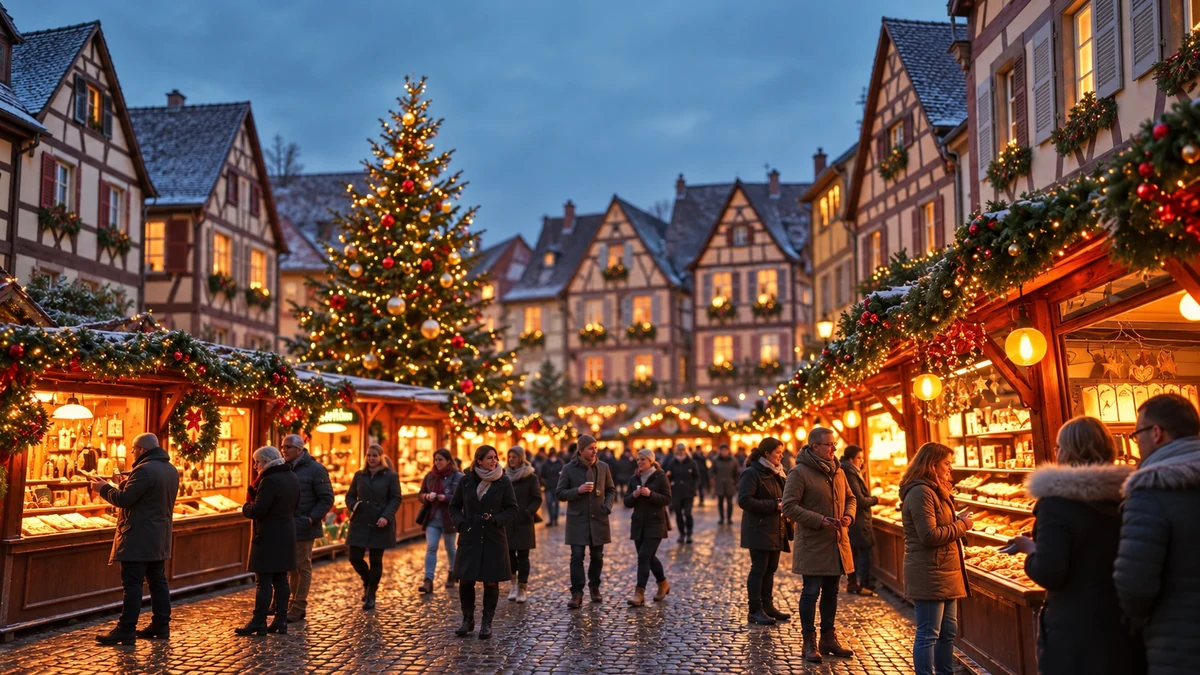
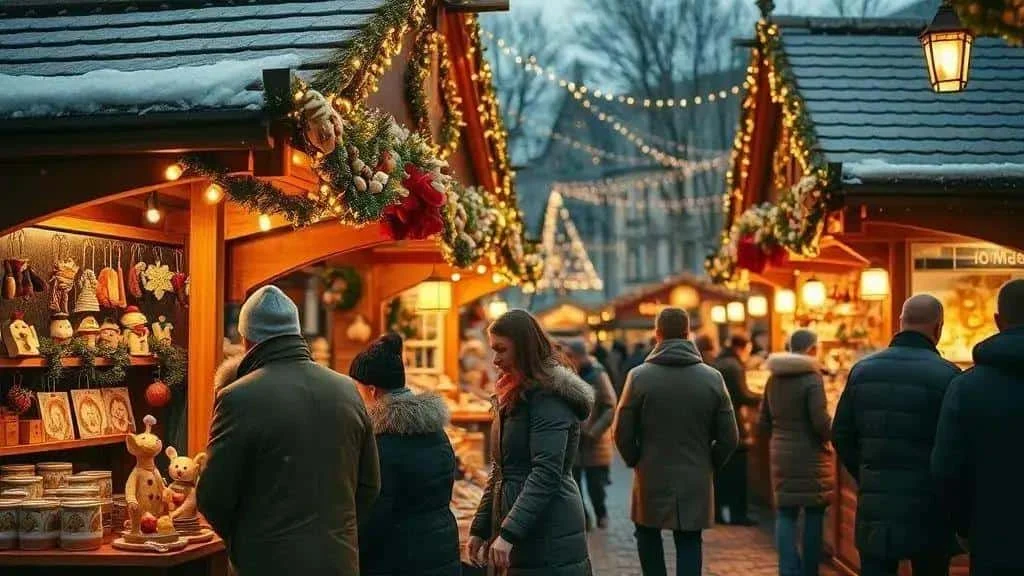
The market illustrations show general festive themes and may combine imagined architectural details. They are not photographs of a particular city, a map of its attractions or evidence that a specific facility is available. Use official venue information to plan the visit.
Traditional food and drinks to explore
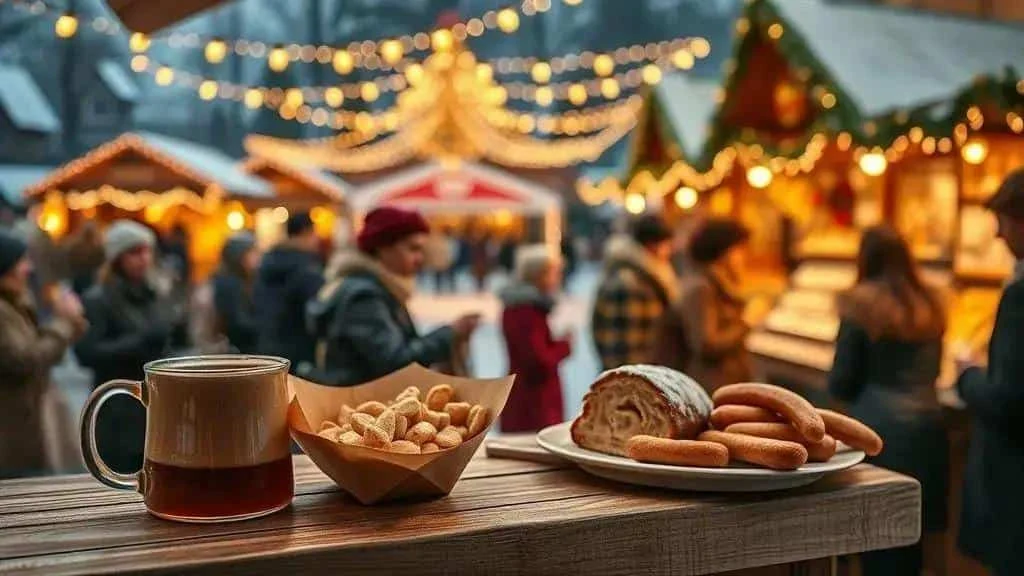
Food is a major part of the market experience. These examples introduce familiar options, with ingredients and dietary considerations to check at the individual stall. Prices and availability vary.
Warming drinks
- Glühwein — spiced mulled wine, generally alcoholic. Check the drink price and the separate mug deposit, called Pfand, before ordering.
- Feuerzangenbowle — a wine-based drink prepared with rum-soaked sugar set alight. It contains alcohol; observe any preparation display from the distance requested by staff.
- Apfelpunsch — apple punch, which may be available without alcohol. Ask explicitly for an alcohol-free version rather than assuming the name guarantees it.
- Hot chocolate — often served with optional cream or other additions. Check milk, allergen and plant-based options if relevant.
Savoury street food
- Bratwurst — grilled sausage, often served in a roll. Varieties differ; mustard is a common accompaniment.
- Currywurst — sliced sausage with a curry-seasoned sauce. Some vendors offer plant-based versions, but check the whole dish and cooking arrangements if needed.
- Kartoffelpuffer or Reibekuchen — fried potato pancakes, often served with apple sauce or other toppings. Recipes may contain egg or flour.
- Gulaschsuppe — goulash soup, usually meat-based. Ask about ingredients rather than assuming a vegetable-looking soup is vegetarian.
Sweet treats and Christmas baking
- Stollen — a rich fruit bread with regional variations. Some versions contain marzipan, but not all; slices and whole loaves may be available.
- Lebkuchen — spiced Christmas biscuits or cakes strongly associated with Nuremberg, often containing nuts. They come in several forms and finishes.
- Gebrannte Mandeln — sugar-coated roasted almonds, often sold in paper cones. They are unsuitable for anyone with an almond allergy.
- Schmalzkuchen — small fried dough pieces usually dusted with sugar. Check ingredients and frying fat for dietary requirements.
Food gifts to take home
- Preserves and chutneys — check ingredients, storage needs and the container’s suitability for travel.
- Regional mustards and sauces — potentially useful gifts for someone who enjoys cooking, with clear labels and storage guidance.
- Packaged chocolate and marzipan — ask who made them and check ingredients. Attractive packaging alone does not establish local production.
Tips for trying the food
- Choose smaller portions where offered if you want to try several dishes without ordering too much.
- Ask about ingredients and cross-contact if you have a food allergy or dietary requirement. Do not rely on appearance or an informal guess.
- Consider quieter times for a more relaxed conversation with staff, while remembering shorter queues do not by themselves prove food quality.
- Have a payment alternative in case a stall cannot take your card.
A note about the illustrations
Food illustrations are intended to suggest the range of dishes, not to identify a particular vendor’s menu, recipe or allergen arrangements. Check the actual product before buying.
Shopping for crafts and souvenirs respectfully
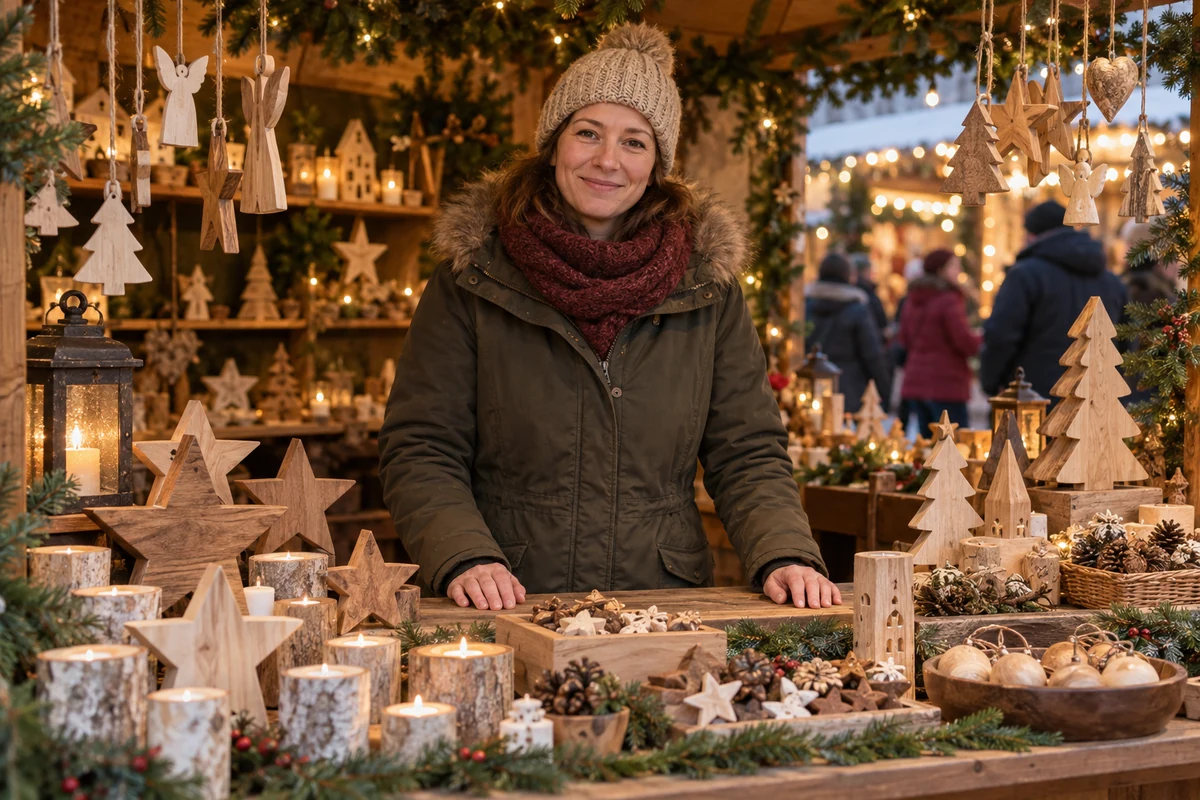
Look for workmanship you appreciate and ask about the maker. Local production and a higher price do not automatically guarantee quality, so compare the item itself with what you need and can afford.
What to look for
- Wooden crafts: carved ornaments, toys and Christmas pyramids. Check finish and construction; decorative objects are not necessarily safe toys for children.
- Blown glass: delicate baubles and ornaments. Ask about the maker and inspect the finish and packaging.
- Textiles: scarves, gloves and hats. Look at fibre information, stitching and care instructions.
- Sweets and preserves: packaged Stollen, jams and mustards. Read the ingredients, dates and storage instructions.
- Metalwork and jewellery: small pieces or brooches. Ask about materials, care and any applicable guarantee.
Comparing prices by type of item
- Small wooden ornaments: compare size, finish and how they were made rather than assuming a fixed price range.
- Handmade glass baubles: technique, size and maker can significantly affect the price.
- Textile items such as hats and gloves: check fibre content and construction when comparing options.
- Jams, mustards and other food gifts: compare pack size and ingredients as well as the displayed price.
- Artist-made pieces and sculptures: allow for the maker’s work and your own spending limit; there is no universal upper price.
Asking about prices politely
- Start with genuine interest: ask about the piece rather than opening with a demand for a discount.
- Ask useful questions: learn about materials and production if the seller has time to explain.
- Respect displayed prices: do not assume bargaining is expected or propose an automatic percentage reduction.
- Ask about an advertised offer: if you want several pieces, it is reasonable to ask whether a set price is available, without expecting one.
- Accept the answer: if the price is fixed or outside your budget, thank the seller and move on politely.
Packing, transport and customs
- Ask for suitable cushioning and a sturdy box for fragile items. Check how you will carry them and any baggage limits before buying.
- For food gifts, check the destination country’s import rules as well as airline baggage rules and storage needs. Great Britain has restrictions on bringing some animal products from the EU, and Northern Ireland has different arrangements; verify current official guidance before purchasing food to take home.
- Keep receipts for valuable items. A tax-free or VAT refund is conditional, not automatic: check eligibility, retailer participation, export proof and applicable charges before relying on a refund.
- For bulky pieces, ask whether the seller offers delivery and what it costs, including possible customs charges. Do not assume the market itself has a postal service.
Useful shopping tips and phrases
- Ask about a handmade label: the word does not necessarily mean the item was made locally. A conversation with the maker can clarify its origin.
- Look beyond the packaging: inspect the finish and ask permission before handling fragile goods.
- Useful German phrases include “Ist das handgemacht?” — Is this handmade? — “Was kostet das?” — How much does it cost? — and “Können Sie das verpacken?” — Could you wrap this?
- A quieter period soon after opening may make conversation easier, but check the timetable and respect a seller who is busy.
A note about the illustrations
Craft illustrations show general examples of ornaments and wrapping, not verified products from a named stall. The actual maker, materials, price and packaging should be checked when shopping.
Practical advice: safety, opening times, weather and family visits
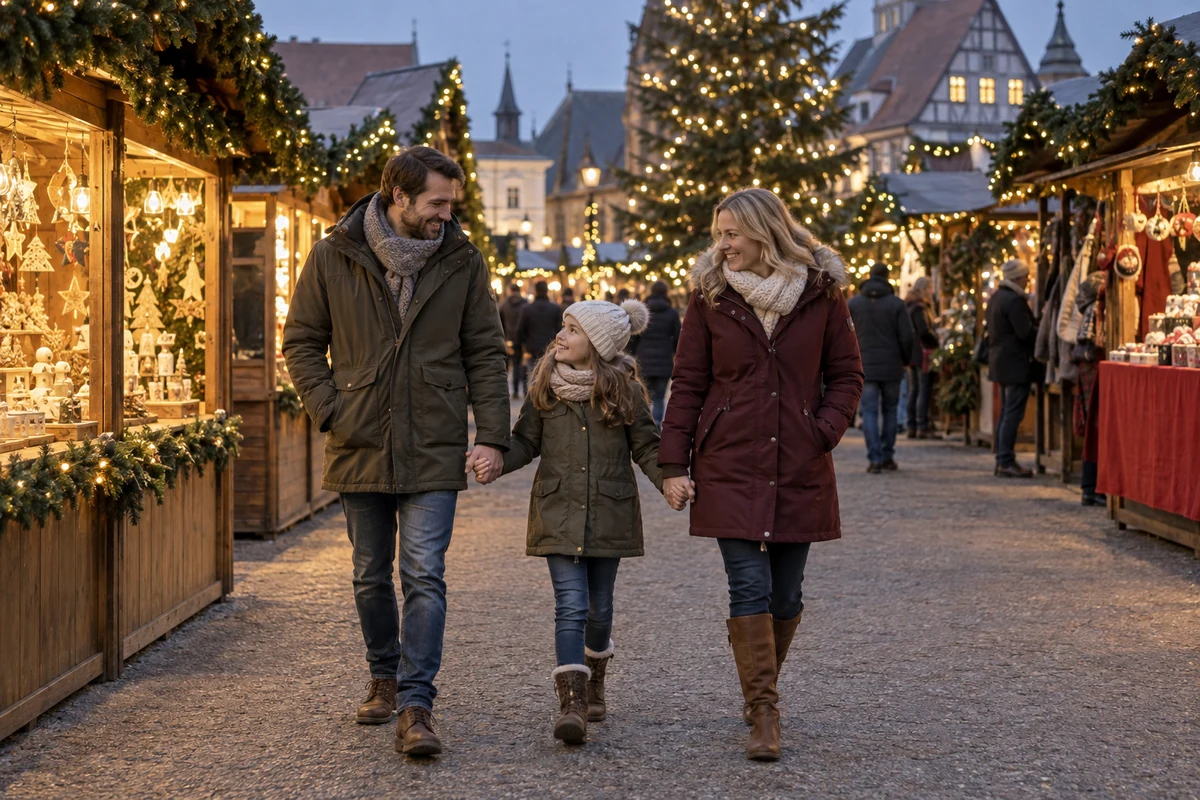
A comfortable visit depends on realistic timing, suitable clothing and attention to the people in your group. Plan breaks rather than trying to see every stall in one outing.
Looking after yourself in busy markets
- Keep valuables secure: close bags and avoid leaving phones or wallets in easily accessible pockets.
- Agree a meeting point: choose a clear, fixed location away from bottlenecks, and make sure everyone knows what to do if separated.
- Documents and cards: keep documents secure and carry the identification required for your circumstances. A digital copy can help if something is lost but does not necessarily replace the original.
- Emergencies: in Germany, call 112 for fire or medical emergencies and 110 for police emergencies. Note where event staff and first-aid facilities are located. Source: German police: emergency numbers
- Children: supervise closely and keep a contact number discreetly inside clothing or on an appropriate wristband. Explain how to seek help from event staff or police if separated.
Opening times and when to visit
- Many markets operate during Advent, with some continuing later. Do not assume a particular venue is open on Christmas Eve or into January.
- Weekdays can be less crowded, but check the actual opening time before planning a morning visit with children or a pushchair.
- Dusk brings the lights into view and may also bring larger crowds. Allow extra time or choose a quieter setting if needed.
- Check the organiser’s timetable for holiday opening, performances and any timed-entry arrangements.
Weather and clothing
- Wear layers: a suitable base layer, jumper and weather-resistant coat let you adapt to outdoor conditions and indoor breaks.
- Keep hands and head warm: bring gloves, a hat and a scarf where the forecast calls for them.
- Choose suitable footwear: water-resistant shoes or boots with good grip can help on wet or icy surfaces, but still walk carefully.
- Carry useful extras: a compact umbrella, light shopping bag and any personal essentials may be helpful. Use hand warmers only as directed and keep them away from young children.
Planning a family visit
- Schedule breaks: identify cafés or other suitable indoor places where the group can rest.
- Check children’s activities: carousels, workshops and performances vary. Confirm ages, booking requirements and availability rather than assuming an early arrival guarantees a place.
- Choose food and drinks thoughtfully: ask for explicitly alcohol-free drinks, let hot drinks cool and select food appropriate to children’s ages and dietary needs.
- Check accessibility: cobbles, steps and crowds can affect pushchairs and wheelchairs. Confirm station access as well as the route from the station to the market.
- Leave at a manageable time: plan the return journey before the group is exhausted, especially with young children.
A note about the illustrations
Family illustrations are not a guarantee that a market has a first-aid booth, ice rink, carousel or step-free route in the position shown. Check the organiser’s current accessibility and facilities information before travelling.
Conclusion
A visit to Germany’s Christmas markets can combine food, crafts and local traditions at a pace that suits you. Confirm current information, choose realistic journeys and leave room for unplanned discoveries.
Follow our social channels for more festive ideas, and visit the I Love Christmas blog for seasonal stories, recipes and gift inspiration.
Share the guide with a travelling companion and tell us which market interests you most. Enjoy the festive season and your trip.
FAQ: visiting German Christmas markets
When is the best time to visit German Christmas markets?
Many operate during Advent, often from late November until shortly before Christmas, while some continue later. Confirm the exact dates and daily opening hours for each chosen market before booking.
Which foods and drinks are worth exploring?
Familiar choices include Glühwein, Stollen, Lebkuchen, bratwurst and roasted sugared almonds. Ask about alcohol-free, vegetarian and allergen requirements at the individual stall; nobody needs to try everything.
How should I travel between and within cities?
Compare regional and long-distance train services for intercity journeys. Within cities, check local trains, underground services, trams and buses. Day or group passes may help, but their zones, validity times and permitted services must match the trip.
Can families visit the markets comfortably?
Many markets offer family activities, but conditions vary. Check facilities and access, avoid unsuitable crowd levels, supervise children closely and plan warm breaks and a clear return journey.
Can I bargain, and how should I transport fragile purchases?
Do not assume bargaining is expected; respect displayed prices and ask politely about any available offer. Request protective packing, check baggage or delivery arrangements and keep receipts. VAT refunds depend on eligibility and the required export process.
Sources and Further Reading
- German National Tourist Board: Christmas markets
- Deutsche Bahn: regional tickets
- Munich Tourism: the Marienplatz Christmas market
- Visit Berlin: Christmas markets
- GOV.UK: bringing animal products into Great Britain
- German police: emergency numbers