Christmas legends bring together folklore, literary characters and stories of generosity. They can enrich family celebrations when shared as stories, with their fictional, religious or historical context explained appropriately.
Christmas legends invite curiosity and imagination. Where do the familiar characters come from, and how have their stories changed? Exploring those questions helps us enjoy the tales without presenting every magical detail as fact.
The origins of Christmas legends
The origins of Christmas legends are varied. Some draw on stories about saints, others on regional winter folklore, and others were created by named authors much more recently. A resemblance to an older myth does not establish a direct origin.
Different cultural influences
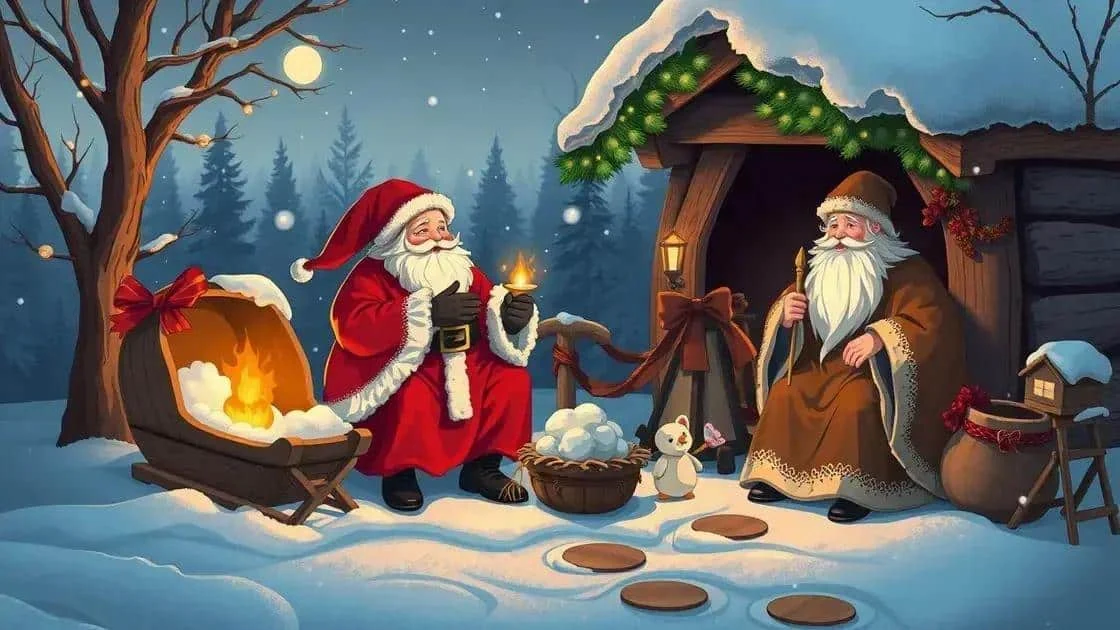
Figures such as Santa Claus and Sinterklaas draw partly on traditions about Saint Nicholas and his generosity. British Father Christmas had a distinct earlier role linked with festive hospitality before becoming closely associated with Santa.
Magic and symbolism
A story can use magic to explore hope, kindness or belonging. Father Christmas is often associated with giving, although families differ in how they explain the character to children.
Changing stories over time
Christmas stories adapt through retelling, illustration and popular entertainment. Rudolph the Red-Nosed Reindeer, for example, was created by Robert L. May in 1939, rather than coming from an ancient unnamed legend.
Religious accounts and later folklore
Christian Christmas centres on the birth of Jesus. Religious accounts should be distinguished from later folklore and literary inventions, even when they appear together in a family’s seasonal storytelling.
Familiar characters in Christmas stories
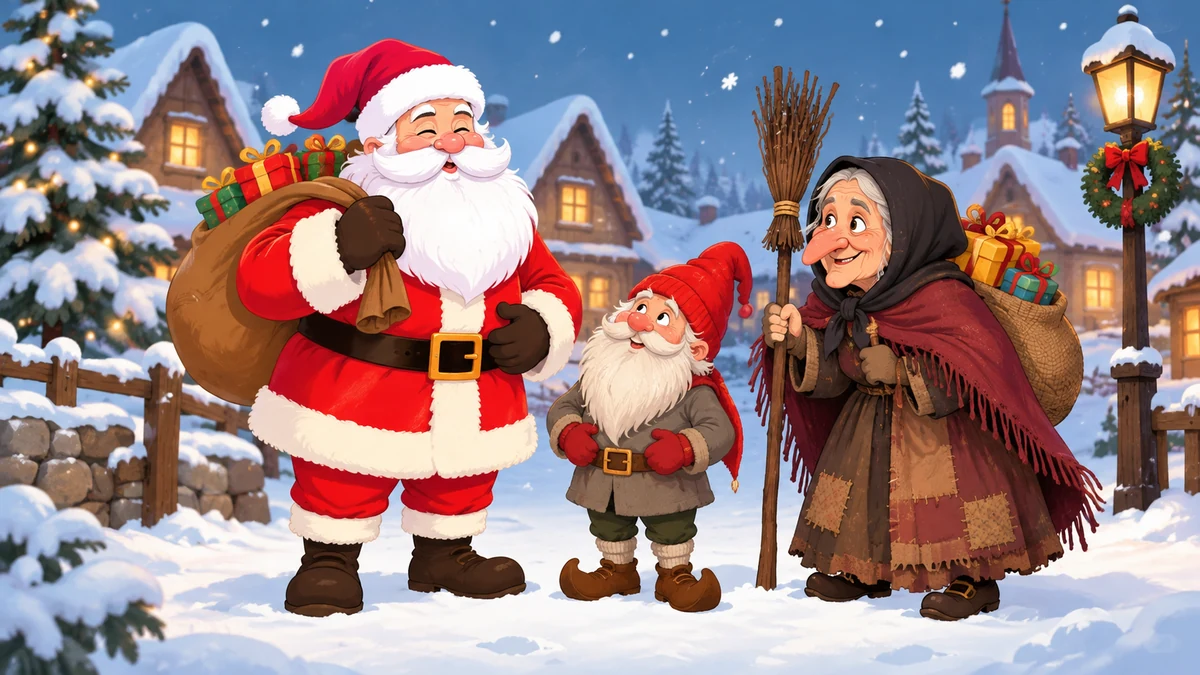
Familiar Christmas characters include figures from several different kinds of story. Father Christmas is commonly pictured with a red coat and white beard, delivering gifts in a fictional Christmas Eve journey.
Saint Nicholas
Saint Nicholas is traditionally identified as a fourth-century bishop of Myra. Many stories about his help for people in need belong to later religious tradition and legend, not a fully documented biography.
Rudolph the Red-Nosed Reindeer
Rudolph is a fictional reindeer whose unusual nose becomes useful in guiding Santa’s sleigh. The story can prompt discussion about difference and exclusion: a person deserves kindness even before others discover what they can contribute.
The Grinch
The Grinch is a literary character created by Dr. Seuss, not traditional anonymous folklore. His change of heart invites reflection on community and the difference between celebration and possessions.
Figures in the Christian Nativity story
Mary, Joseph and the infant Jesus belong to the Christian religious narrative. Christians understand these figures through faith; it is useful to distinguish that context from fictional characters such as Rudolph or the Grinch.
Christmas stories and customs around the world
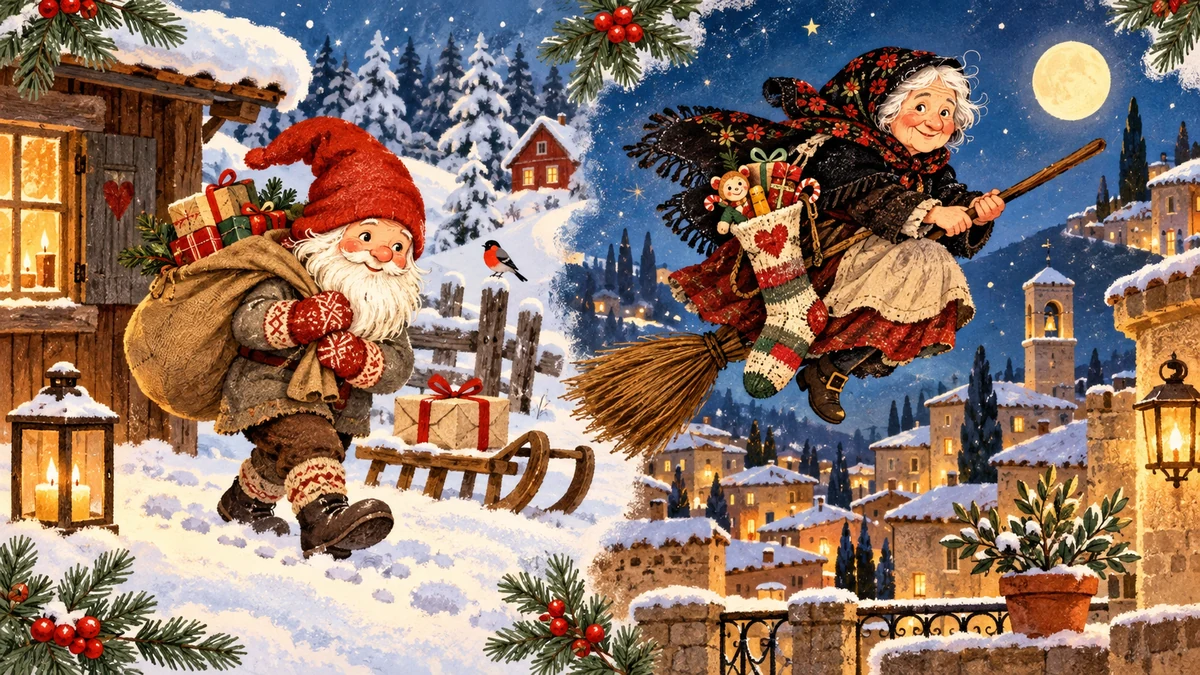
Christmas stories and customs around the world show local variety. In German-speaking settings, the Advent calendar developed as a countdown, although a calendar is a custom rather than itself a legend.
Saint Nicholas celebrations
In the Netherlands, gifts are especially associated with the evening of 5 December. Saint Nicholas’s feast day is 6 December in much of Europe. Customs about shoes and treats vary; these dates should not be treated as one identical practice everywhere dedicated to Saint Nicholas.
Stories in Latin American traditions
In Mexico, Las Posadas recalls Mary and Joseph seeking lodging before Jesus’s birth. Processions and songs form part of many celebrations between 16 and 24 December, with local variations.
Legends about panettone
Panettone is associated with Milan in Italy. Stories about an inventive kitchen helper named Toni or a romance offer entertaining explanations for the bread, but these competing tales are legends rather than an established account of its invention.
Christmas in Japan
In Japan, Christmas is not a national public holiday, although it has popular secular customs and religious significance for Christians. Christmas KFC meals became associated with a marketing campaign launched in 1974; this is a modern commercial custom, not an ancient legend or everyone’s meal.
How legends influence Christmas traditions
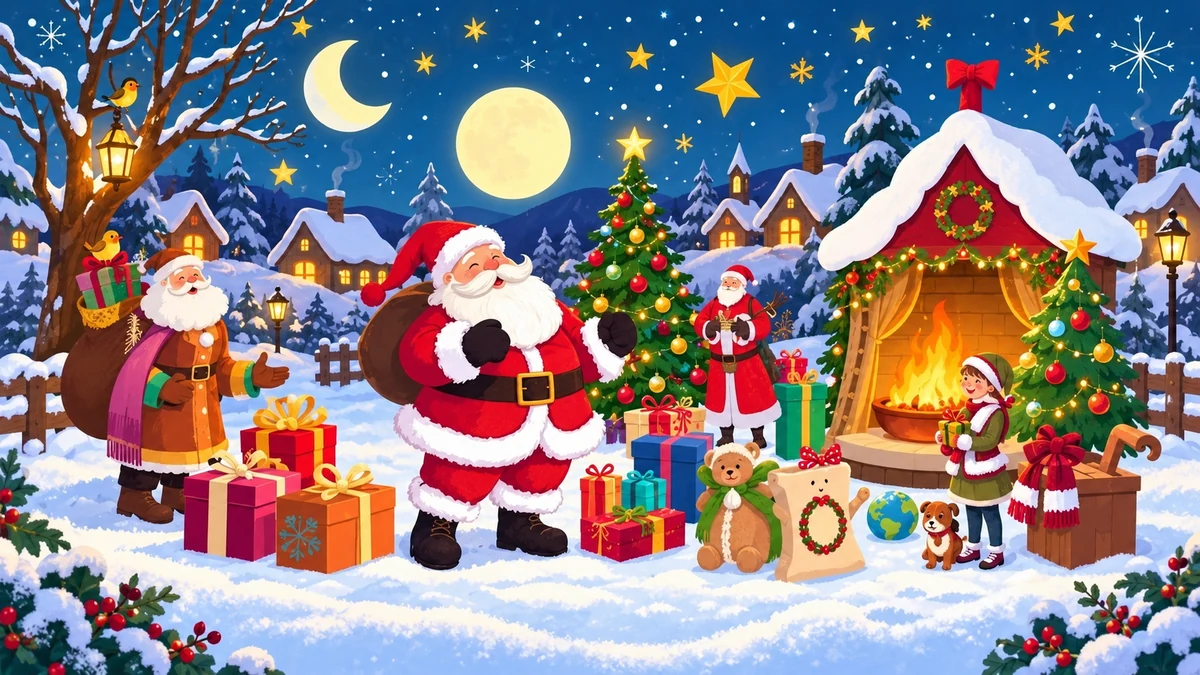
Legends can give Christmas traditions memorable characters and explanations. Their influence changes through books, performances and family retelling.
Emotional connections
A familiar story can connect people with earlier celebrations. Father Christmas may evoke generosity or childhood excitement, but not every family gives the character the same role.
Customs connected with stories
A tale can inspire a card, a shared meal or an act of kindness. Such activities help children explore generosity without requiring them to believe that a fictional event happened.
Cultural variety
Santa Claus is familiar in many countries, while Nordic traditions also include household or farm figures such as the nisse or tomte. Claims that Santa is simply Odin in a new costume go beyond what can confidently be established.
The importance of storytelling
Retelling a story can preserve a cultural memory while also changing it. Explain whose version you are sharing, and leave room for other interpretations rather than presenting one tale as universal.
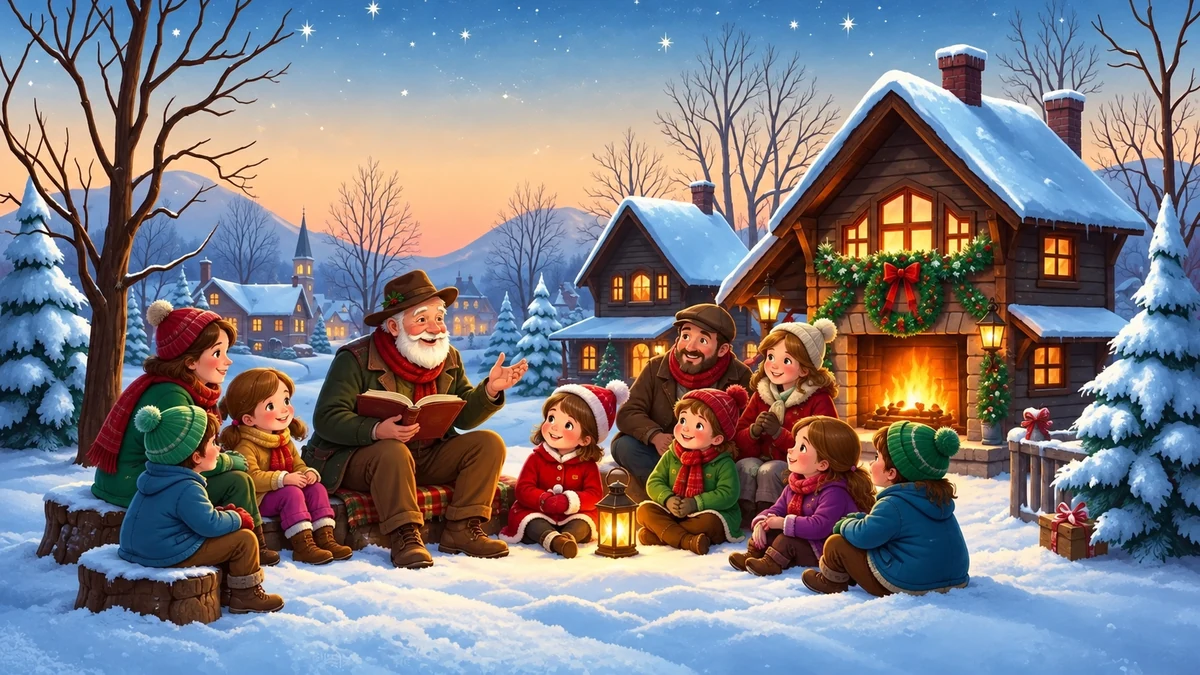
The following short Christmas stories are fictional examples, not verified events or documented traditional legends. They offer starting points for conversations about kindness and belonging.
A boy’s letter to Father Christmas
In this fictional story, a boy writes to Father Christmas asking for warm shoes for his sister rather than a toy for himself. A relative sees the letter and quietly arranges the gift, adding a note about his thoughtfulness. The family shares a happy moment without suggesting that children who receive less have been less kind.
A neighbour’s Christmas welcome
In another imagined tale, an older woman notices that several neighbours will spend Christmas alone. She invites them for a simple meal, and each person brings a story or a small contribution if they wish. Their gathering grows from a practical invitation rather than a miraculous transformation.
The first snowfall
A fictional village waits for snow. When it arrives, children imagine friendly winter spirits joining their play while adults help build a snowman. Afterwards they invite a neighbour who could not go outside to see their drawings. The magic belongs to the story’s imagination, alongside an ordinary act of inclusion.
Sharing Christmas legends thoughtfully
Christmas legends can entertain and open conversations about generosity, fear or belonging. They are most useful when listeners understand whether they are hearing folklore, fiction or a religious account.
From Father Christmas to quieter stories of neighbourly care, different tales can suit different ages. Choose gently for children who find suspense frightening and invite their questions.
A story need not be literally true to invite worthwhile discussion. Share it honestly, respect its cultural setting and let the conversation matter as much as the ending.
FAQ — Christmas legends
Which Christmas legends and characters are well known?
Santa Claus and Saint Nicholas traditions are familiar examples. Rudolph and the Grinch are modern literary characters with identifiable creators, rather than ancient anonymous legends.
How do legends influence Christmas customs?
Stories can inspire decorations, performances, presents and family activities. Their meanings change as communities adapt and retell them.
They can encourage imagination and conversations about kindness or difference. Explain fiction appropriately and avoid using frightening characters to control behaviour.
Do all Christmas traditions come from ancient legends?
No. Some have religious associations, others developed through later decorating customs, literature or commerce. A claimed ancient origin should be checked rather than assumed.
How can I include legends in a celebration?
Read a suitable story, discuss it or make a related drawing or decoration. A themed meal is another option, provided it respects the culture and suits your budget.
Do different places have different Christmas legends?
Yes. Regional and family versions vary, and not everyone in a country shares the same story. Explain the particular tradition rather than generalising about a whole culture.
Sources and Further Reading
- English Heritage: the history of Father Christmas
- Italia: Befana traditions in Urbania
- Library of Congress: Rudolph
- KFC: Christmas in Japan