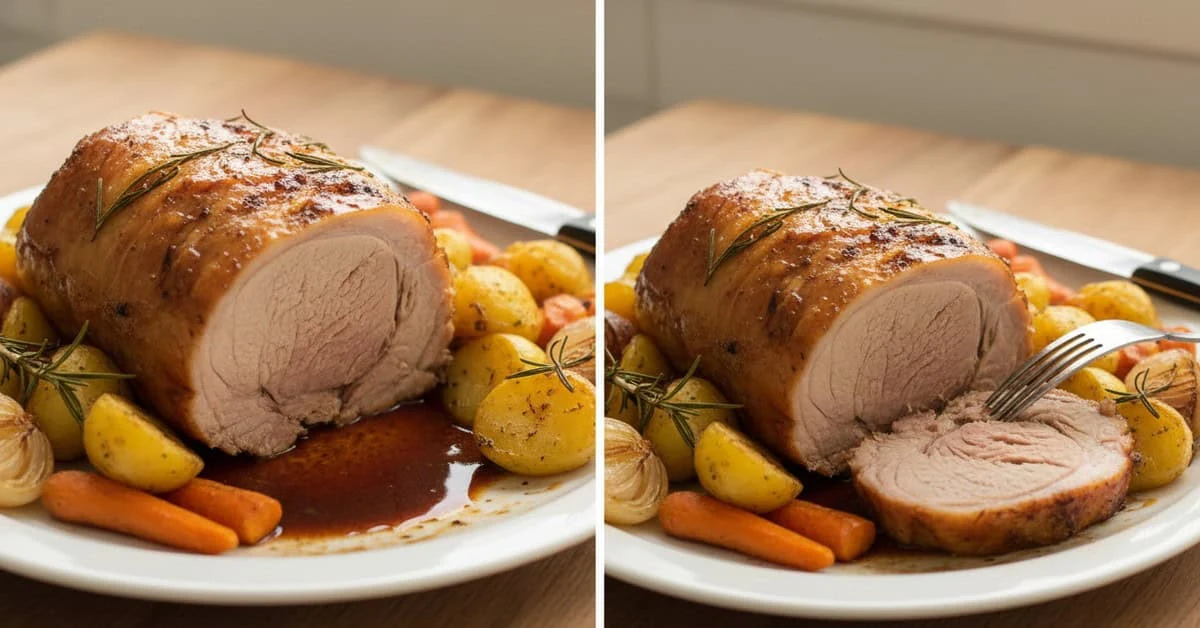
Christmas roast pork leg in dark beer pairs a citrus and herb marinade with a gently roasted joint and a browned finish. Allow 12–24 hours for refrigerated marinating if convenient, then follow the joint’s cooking guidance and use a thermometer to check the centre before resting and carving.
Christmas roast pork leg in dark beer is a richly flavoured festive centrepiece inspired by Brazilian pernil. Here is a practical guide to seasoning, roasting, serving and adapting the recipe for your table.
Ingredients for Christmas Roast Pork Leg in Dark Beer
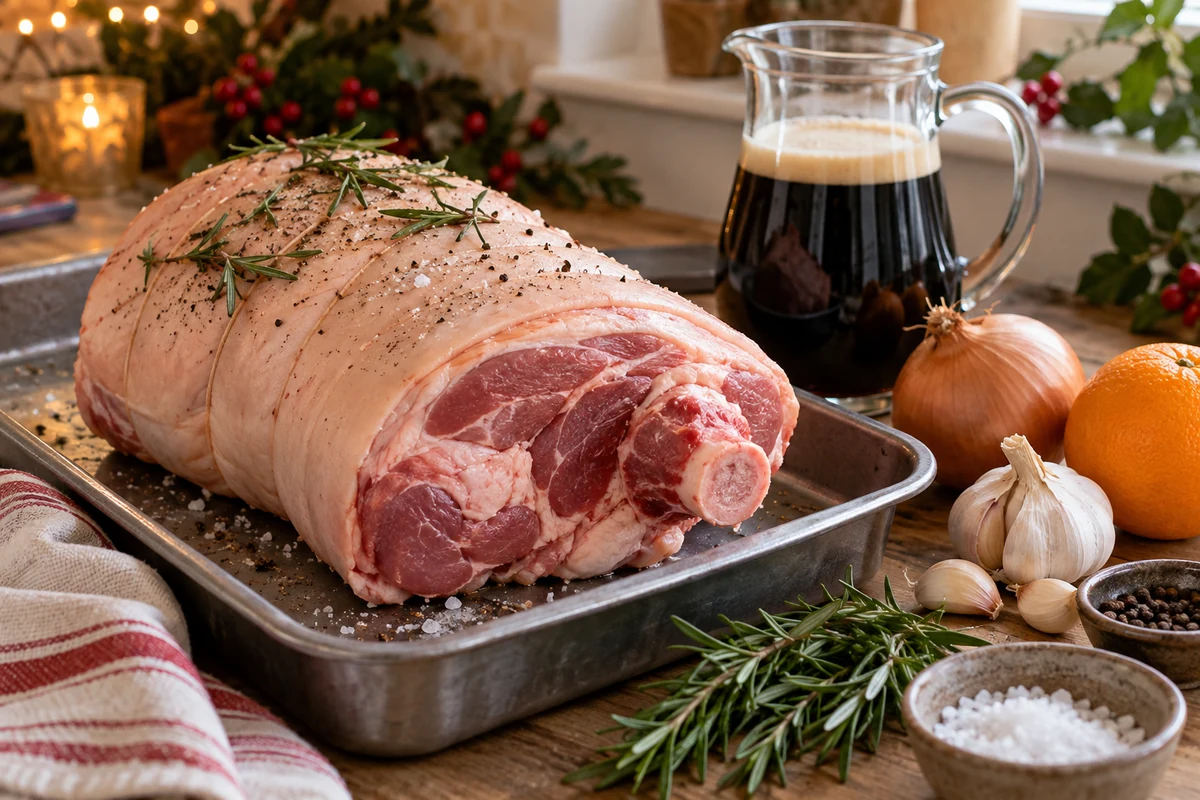
Gather these ingredients for Christmas roast pork leg in dark beer. The amounts cover one joint; the marinade list later in the article repeats the same ingredients rather than adding a second batch.
- 2.5–4 kg fresh pork leg joint, bone-in – not cured ham or gammon. Pork shoulder can be used for a different result, but needs its own cooking guidance and may take longer to become tender.
- 500 ml dark beer – measure it rather than assuming every can or bottle holds this amount. Choose a malty beer that is not excessively bitter, or replace half with water or low-salt stock for a milder sauce.
- 120 ml orange juice – adds citrus flavour. Acidity acts mainly near the surface; it does not tenderise a whole large joint evenly.
- Juice of 1 lemon – or a smaller amount of cider vinegar, adjusted to taste in the clean marinade before it touches raw meat.
- 6–8 garlic cloves, crushed – prepared crushed garlic is an alternative; check its strength and added salt.
- 2 large onions – sliced for the roasting tin. Spring onions do not provide the same substantial base.
- Salt, to taste – account for the joint’s seasoning and the salt in stock or sauces. Do not automatically add three tablespoons or assume every fine salt needs exactly half the volume of coarse salt.
- Up to 1 tablespoon ground black pepper – adjust to taste; white pepper gives a different flavour.
- 1 tablespoon sweet or smoked paprika – Brazilian colorau, an annatto-based seasoning, provides colour but not the same smoky flavour.
- 1 tablespoon soft brown sugar – optional for a sweeter finish; a little honey is an alternative. Both can burn during high-heat browning.
- 60 ml olive or vegetable oil in total – use 30 ml in the marinade and reserve 30 ml for optional browning. If not browning in a pan, the reserved oil need not be used.
- 2 bay leaves – remove before serving.
- 2 rosemary sprigs and 2 thyme sprigs – use a small amount of dried herbs to taste if needed; sprigs cannot be converted reliably by simply halving their number.
- Up to 50 g butter, optional – for brushing or finishing the sauce. A little lard is an alternative for brushing; omit extra fat if preferred.
- 240 ml low-salt beef stock or water – for the roasting tin, with more water available if it becomes dry. Wine changes the flavour and is not suitable for an alcohol-free version.
Quick Notes and Substitutions
Marinade: combine the beer, orange and lemon juices, garlic, paprika, sugar, 30 ml oil and herbs. Refrigerate the pork in it for 12–24 hours if time allows, within the use-by date. Marinating adds surface flavour; thorough cooking remains essential.
Joint size: use the weight and supplier’s instructions to plan cooking. A larger joint does not justify extending raw-meat storage indefinitely or adding salt without checking the other ingredients.
Alcohol: replacing half the beer reduces the amount added but does not make the dish alcohol-free. Use the full stock-based variation below if avoiding alcohol.
How to Make Christmas Roast Pork Leg in Dark Beer
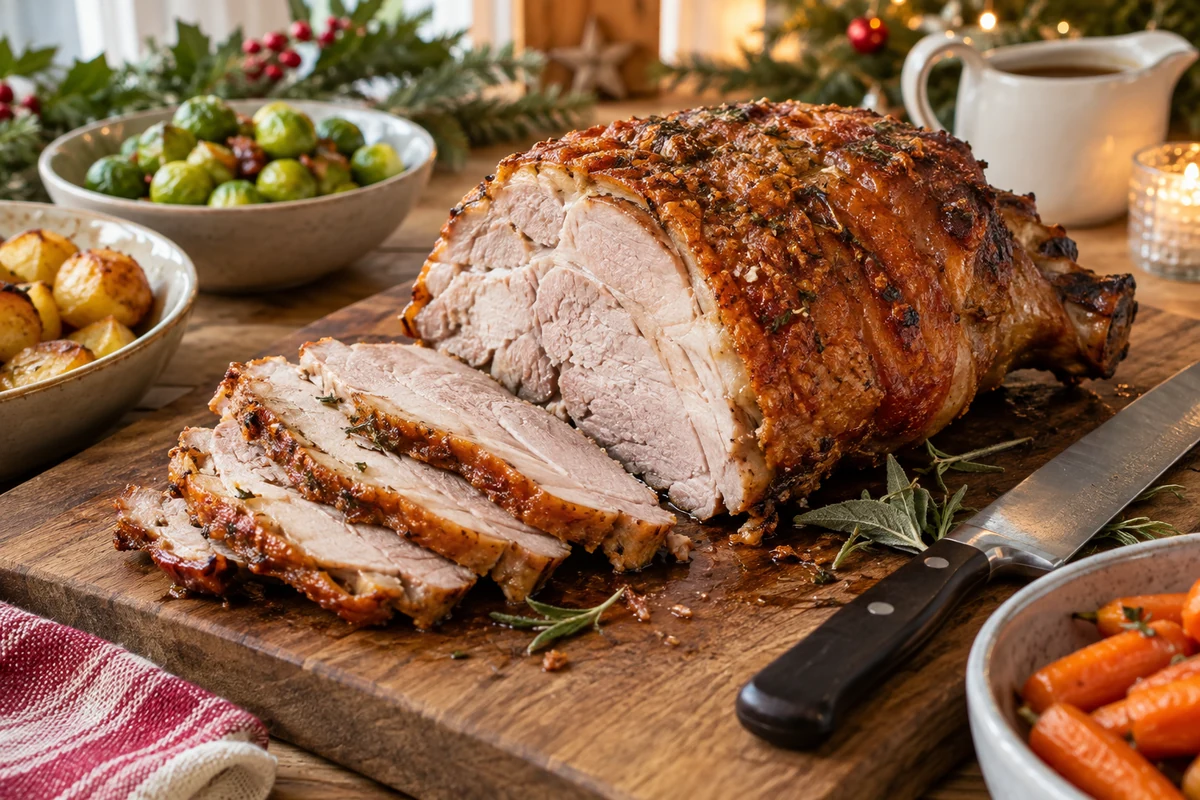
- Prepare the joint: keep refrigerated until preparation. Pat dry with kitchen paper and score the fat shallowly if needed, avoiding deep cuts into the meat. Do not leave a large joint out for an hour in an attempt to bring its centre to room temperature.
- Mix the marinade: combine 500 ml dark beer, 120 ml orange juice, lemon juice, 6–8 crushed garlic cloves, paprika, optional sugar, 30 ml oil, bay leaves, rosemary and thyme. Season cautiously. Reserve 100–150 ml in a separate covered container in the fridge before the remainder touches raw pork.
- Marinate in the fridge: put the pork and remaining marinade in a food-safe container or strong food-storage bag inside a tray. Cover and refrigerate for 12–24 hours within its use-by date, turning occasionally with clean utensils if practical.
- Prepare the oven and tin: preheat to 160°C conventional or 140°C fan for this gentle roasting method, unless the joint’s instructions specify otherwise. Place a stable rack in a deep roasting tin large enough for the joint and liquid.
- Drain and pat dry: remove the pork from the used marinade and discard that marinade. Pat the surface dry. Keep the separately reserved clean marinade for the roasting tin; do not confuse the two.
- Brown if practical: use the reserved 30 ml oil in a suitably large pan and brown accessible surfaces carefully. A heavy bone-in joint can be awkward to turn, so skip this stage if it cannot be handled safely. Browning adds flavour; it does not seal juices inside.
- Arrange in the tin: place the pork fat-side up on the rack, with the sliced onions, 240 ml stock and reserved clean marinade beneath it. Optional orange wedges can add aroma. Keep the liquid below the meat rather than submerging it.
- Roast covered: cover the tin securely with foil and roast gently. Allow several hours and prioritise the joint’s instructions. The original estimate of 40–50 minutes per kilogram is only an initial check point at this oven temperature, not a reliable finishing time for every large bone-in joint. Continue until the thickest parts are safely cooked and suitably tender.
- Check the liquid: inspect occasionally and add hot water or stock if the tin is drying out. Baste carefully with pan juices if desired, avoiding frequent prolonged opening of the oven. Never baste near serving time with unused raw-meat marinade.
- Brown the surface: when the pork is nearly cooked, uncover and raise the oven to about 220°C conventional or 200°C fan briefly if needed. Watch closely, particularly with sugar in the seasoning. Brush lightly with the optional melted butter. Do not leave it under a grill for a fixed 30–40 minutes; scorching can happen much sooner.
- Check doneness: measure several thick parts with a clean thermometer, avoiding bone. Confirm at least 70°C for two minutes or 75°C for 30 seconds. If not reached, continue cooking, covering again if the surface is dark enough. Clear juices and a soft texture alone are not as reliable as the temperature check.
- Rest and carve: once fully cooked, cover loosely and rest for 20–30 minutes. Remove any string and carve across the grain, working carefully around the bone.
- Make the sauce: transfer the roasting juices to a saucepan, discard bay leaves, skim excess fat and bring to a full boil before simmering to your preferred consistency. Taste after cooking and reduction before adding salt. Strain if desired and serve with the pork.
- Store and reheat: refrigerate shallow portions within two hours at 5°C or below and use within 48 hours, or freeze promptly. Reheat once with a little stock until steaming hot throughout; a fixed 15–20 minutes is not sufficient evidence of safe reheating.
Marinade and Seasoning for Roast Pork
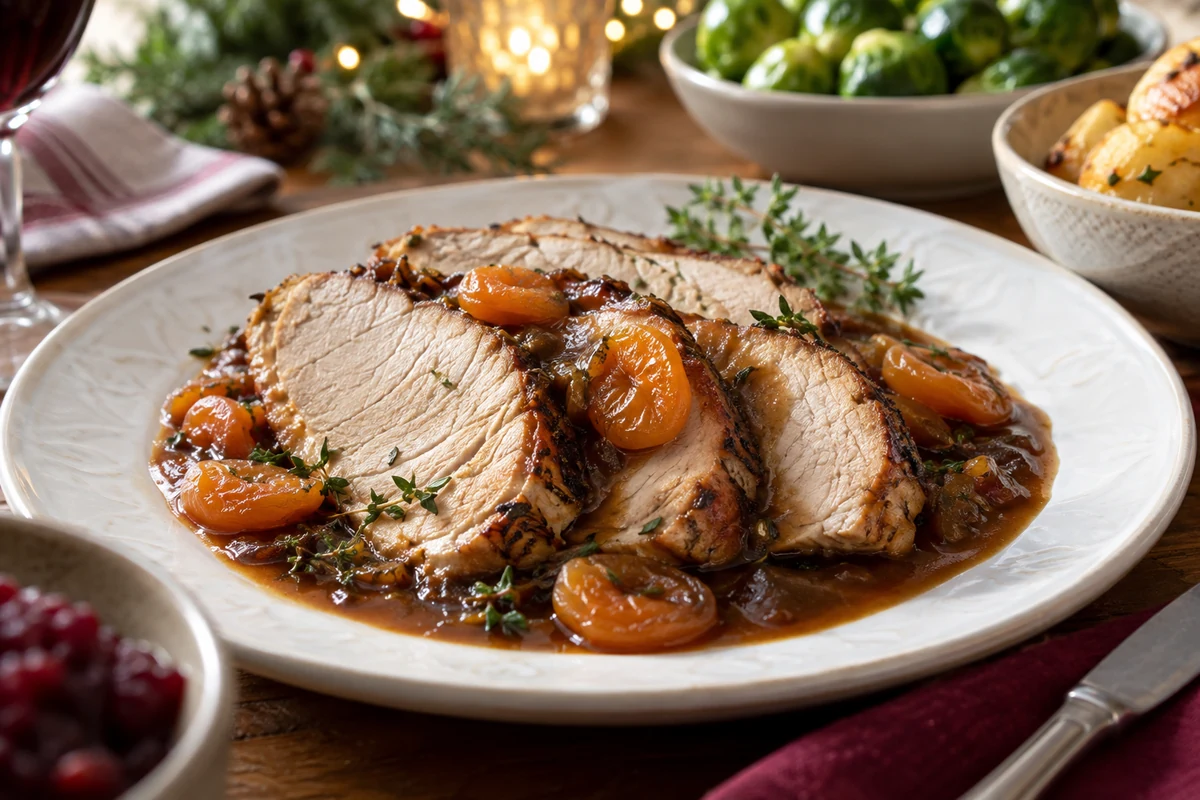
A balanced marinade adds citrus, malt and herb flavours to roast pork. It mainly seasons the surface. Temperature control and avoiding overcooking matter more than expecting acid to tenderise the centre of a large joint.
Marinade for a 2.5–4 kg Pork Leg Joint
- 500 ml dark beer – adds malty flavour and colour; replace half with low-salt stock for less bitterness if wanted.
- 120 ml orange juice – gives citrus flavour. Fresh pineapple juice behaves differently and should not be substituted into the same long marinating schedule without adjustment.
- Juice of 1 lemon – or a smaller amount of cider vinegar for a different acidity.
- 6–8 crushed garlic cloves – prepared garlic may be used, checking the label for strength and salt.
- 30 ml of the oil allowance – the other 30 ml is reserved for optional pan browning, not added again to this marinade.
- 1 tablespoon sweet paprika – or smoked paprika if preferred.
- 1 tablespoon soft brown sugar, optional – a little honey is an alternative; either needs careful watching during browning.
- Salt, to taste – allow for any salt already in the meat, stock or added sauces. There is no universal tablespoon conversion between coarse and fine salts.
- Up to 1 tablespoon ground black pepper – adjust to preference.
- 2 bay leaves, 2 rosemary sprigs and 2 thyme sprigs – use a little dried rosemary and thyme to taste if fresh herbs are unavailable.
Applying the Marinade
- Prepare the surface: score the fat shallowly if appropriate, without making deep holes in the meat.
- Combine the liquids: mix beer, juices, the marinade’s oil allowance, sugar and garlic.
- Add seasoning: stir in pepper, paprika, herbs and a cautious amount of salt. Reserve the clean portion for the tin before adding any raw meat.
- Coat the joint: distribute the remaining marinade over the surface with clean utensils, then wash hands and any equipment that touched raw pork.
- Use a suitable container: choose a food-safe covered dish or robust storage bag inside a leakproof tray on the fridge’s bottom shelf.
- Refrigerate for 12–24 hours: keep within the use-by date and turn occasionally if convenient. Do not automatically extend the period to 36 hours simply because the joint is large.
- Skip injection for this method: the recipe uses a surface marinade. Injecting it changes handling and food-safety requirements and is not needed for this preparation.
Dry Seasoning, Browning and Finishing
Dry seasoning: a little pepper or paprika can refresh the surface after draining. Avoid duplicating the marinade’s salt and sugar quantities. Salt: taste the cooked sauce before adjusting, as reduction concentrates saltiness.
Browning: a brief sear adds colour and flavour if the joint can be turned safely. It is optional and does not trap moisture inside the meat.
Finishing: brush lightly with optional butter near the end. If using a sweet glaze, prepare it separately with clean ingredients and watch it closely; never brush on raw-meat marinade just before serving.
Practical Substitutions
- Reducing alcohol: half stock and half beer adds less alcohol, but cooking does not guarantee its complete removal. For an alcohol-free dish, replace all beer and wine and check any sauces used.
- Dried herbs: use a small amount to taste, since the size of fresh sprigs varies and dried herbs are concentrated.
- Acid balance: excessive acid or prolonged contact can spoil the surface texture. Acid does not safely cook raw pork or replace refrigeration.
- Even flavour: crush the garlic and chop the herbs finely so they distribute through the marinade.
- Check seasoning safely: taste clean marinade before it touches raw meat, or fully cook a small seasoned sample of pork. Never taste used raw-meat marinade.
Roasting Time, Temperature and Doneness
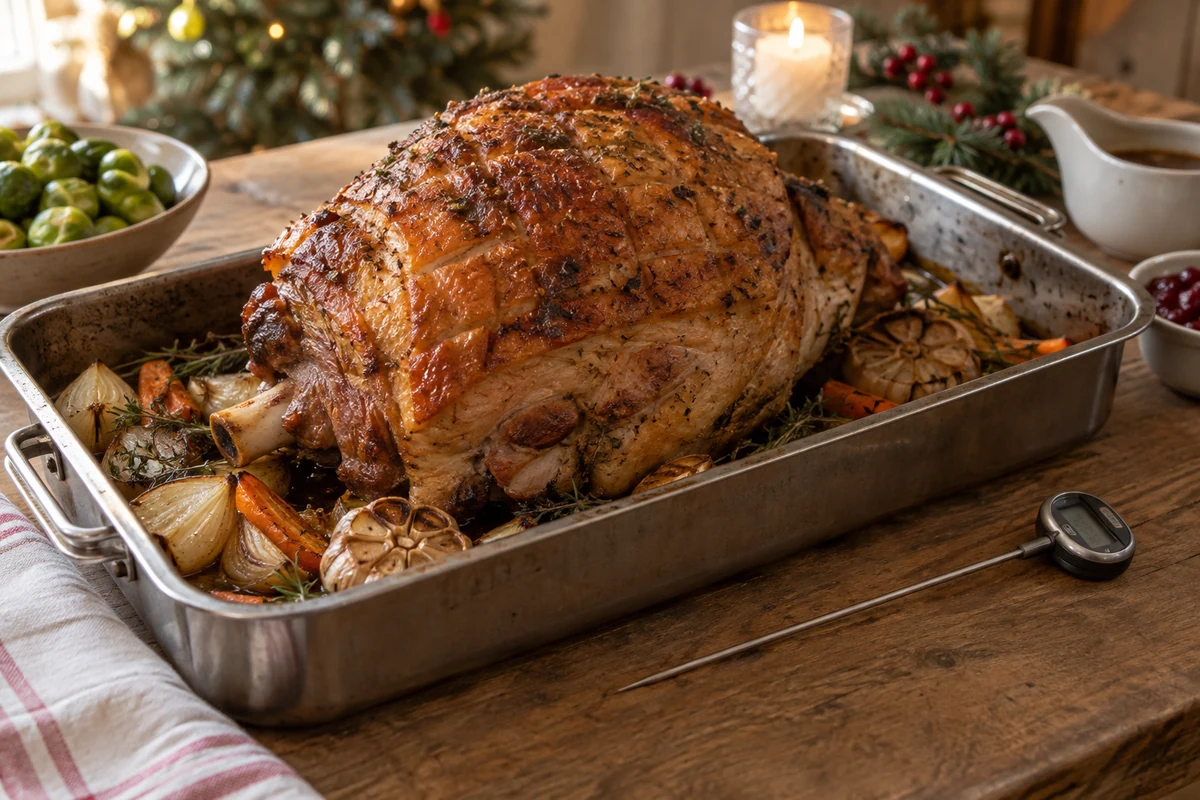
Allow enough time for a large joint and use its packet or butcher’s instructions as your starting point. A thermometer provides a more useful finishing check than a promise of an exact number of minutes.
Roasting Guidance
- Preheat: this gentle method starts at 160°C conventional or 140°C fan, unless the joint’s instructions require a different setting.
- Initial roasting: roast covered and allow several hours. Treat 40–50 minutes per kilogram as an initial check point, not a guaranteed finishing time, especially for a thick bone-in joint at this oven setting.
- Browning: uncover towards the end and increase the oven briefly if needed. Watch closely and reduce the heat or cover again if the surface colours before the centre is cooked.
- Internal temperature: check several thick parts away from bone for 70°C for two minutes or 75°C for 30 seconds before removing the joint to rest.
- Resting: allow 20–30 minutes loosely covered after cooking, then carve. Resting is not a substitute for cooking the centre safely.
- Fan ovens: use the stated fan setting or follow the oven and joint manufacturer’s instructions. Check progress without assuming every appliance behaves identically.
Keeping the Joint Moist
- Use a stable rack inside the roasting tin so the pork sits above the liquid.
- Keep some liquid below the meat using stock, water and the separately reserved clean marinade. Top up if the tin starts to dry out.
- Pat the surface dry after marinating to help it brown. A covered wet marinade method will not necessarily produce crisp crackling.
- Score the fat shallowly if needed, avoiding deep cuts in the flesh.
- Brown in a pan only if manageable using the reserved oil. Skip it if turning a heavy joint risks splashing or dropping it.
- Baste occasionally if desired with roasting juices, using care around hot steam. Keep oven openings brief.
- Watch the glaze: butter, sugar or honey can colour rapidly. Use clean ingredients, apply lightly and supervise the final browning.
Checking Doneness
A clean meat thermometer is the most useful tool for this large joint. Check several thick points, away from bone, for the time-and-temperature combination above. Colour, clear juices and tenderness alone cannot replace that check.
The Oven Sequence at a Glance
- Place the pork on the rack above onions, 240 ml stock and the clean reserved marinade.
- Cover with foil and roast at the chosen setting, following the joint’s guidance where supplied.
- Check progress during roasting, monitoring liquid and temperature rather than declaring the joint ready from weight alone.
- Uncover towards the end and brown briefly, protecting the surface if it colours too quickly.
- Confirm the centre temperature reaches 70°C for two minutes or 75°C for 30 seconds, then rest for 20–30 minutes before carving.
Final Cooking Tips
- Avoid frequent oven opening because heat loss can extend cooking time.
- Do not over-marinate in strong acid; it can affect surface texture without cooking the meat safely.
- Carve across the grain for easier-to-eat slices, taking care around the bone.
Side Dishes for a Christmas Pork Roast
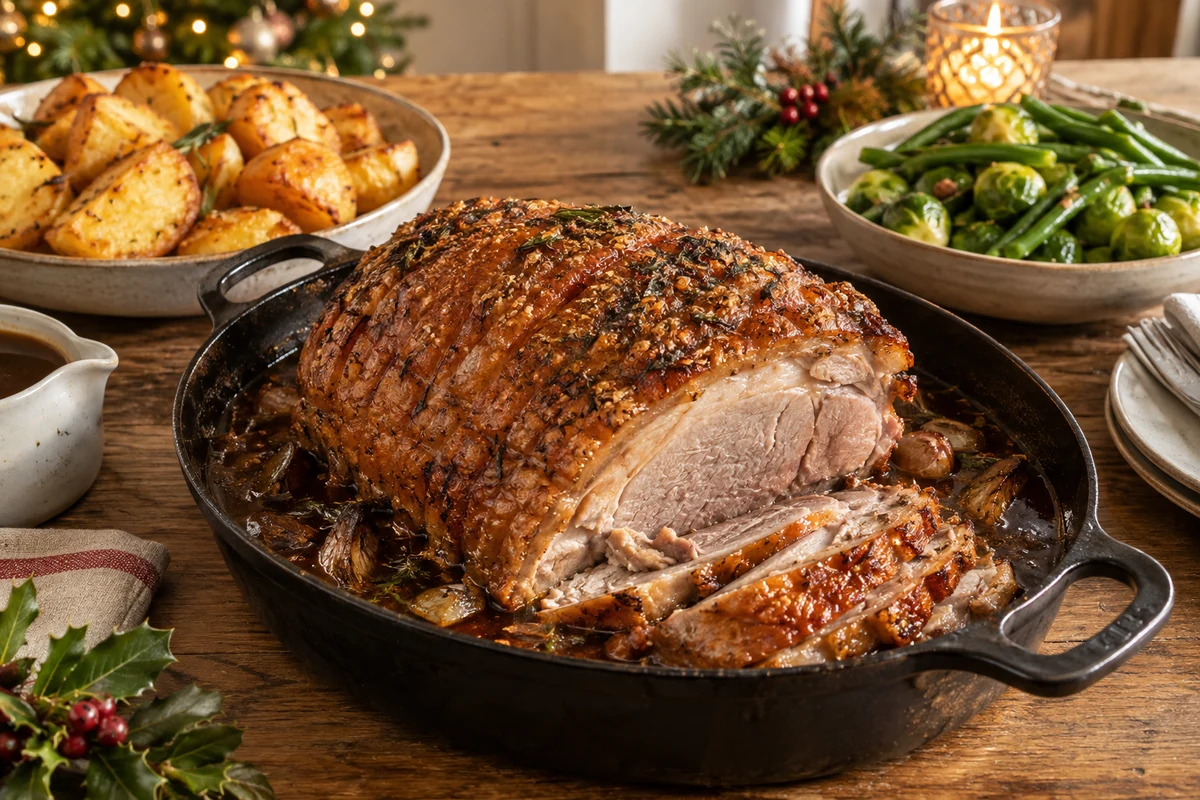
Serve roast pork leg with a choice of creamy, crunchy and fresh sides. You do not need every accompaniment at once to make a generous meal.
Side Dish Ideas
- Brazilian arroz à grega: rice with carrots, peas and raisins adds colour. Chopped dried apricots make an alternative to raisins. Prepare quantities to match your guest list.
- Crisp farofa: toast food-grade cassava flour with butter, onions and cooked bacon. For a vegetarian side, omit bacon and add suitable nuts if wanted, checking allergies.
- Roast potato wedges: season skin-on potatoes with rosemary and garlic and roast until cooked and golden. Sweet potatoes give a sweeter variation.
- Glazed vegetables: cook carrots, courgettes and onions until tender, then finish with a little butter and honey if liked, allowing for their different cooking times.
- Leaf salad with citrus dressing: mixed leaves, rocket and cherry tomatoes add a fresh contrast.
- Apple sauce or baked apples: a sweet-sharp accompaniment for anyone who enjoys fruit with pork.
- Pan sauce: boil the roasting juices, then reduce and adjust seasoning. Finish with a little of the optional butter and serve separately.
Arranging the Table
- Separate contrasting textures: keep sauces and mash near the pork, with farofa and crisp potatoes in their own dishes.
- Use stable serving dishes: varied heights can look attractive, but avoid unstable stands or arrangements that require reaching over hot food.
- Serve sauce separately: guests can choose how much they want without soaking the browned surface of all the meat.
- Provide suitable utensils: use carving tools for the joint, spoons for rice and tongs for salads, with separate utensils for different dietary options.
- Arrange drinks nearby: keep water and other drinks easy to reach without crowding the food table.
Putting Together a Plate
- Carve across the grain and offer a few slices according to appetite.
- Add a modest portion of rice if desired, allowing for any potatoes or farofa served alongside.
- Spoon over sauce or offer it separately.
- Add farofa or potatoes in smaller portions to suit the rest of the meal.
- Finish with fresh salad and an orange slice if liked, keeping raw salad separate from equipment used for uncooked meat.
Serving and Drinks
- Planning portions: 300–400 g raw bone-in joint per adult is a rough shopping guide, depending on bone, trimming, appetite and sides. It does not guarantee a fixed cooked yield; approximately 150–200 g cooked meat may be a generous serving.
- Serve promptly: after resting, carve and serve. If holding the meal hot, keep the food itself at 63°C or above; 55°C is not an appropriate hot-holding target.
- Drinks: dark beer or red wine are optional pairings for adults who drink alcohol. Water with citrus or an alcohol-free alternative also works well.
- Prepare sides safely: cook near serving time where possible. When holding them hot, verify at least 63°C rather than relying on a low oven setting. Rice needs particular care with prompt cooling and reheating if made ahead.
- Keep decoration simple: rosemary, thyme and orange slices give a festive finish without covering the food.
Variations on Pork Leg in Dark Beer
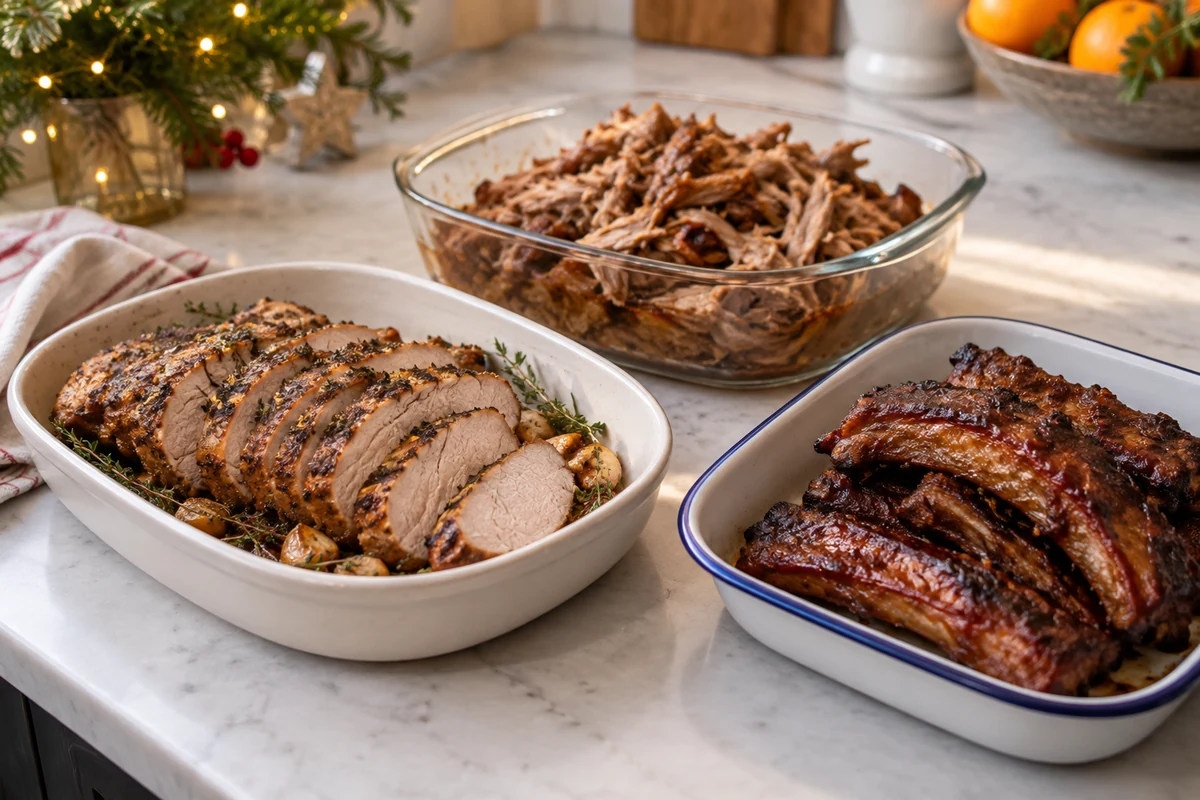
Adapt Christmas roast pork leg in dark beer to your ingredients and guests, while retaining the cooking and storage checks.
Pork with Pineapple
Pineapple adds sweetness and acidity. Fresh pineapple also contains enzymes that can soften the surface excessively, so it is not a simple swap for an overnight orange-juice marinade. For this variation, use pineapple in the roasting tin instead.
- 500 ml dark beer – keep the original beer allowance unless choosing the alcohol-free option.
- Pineapple juice, optional – add a little to the roasting liquid for flavour rather than doubling the citrus liquid or extending a fresh-pineapple marinade overnight.
- 4 pineapple slices – place in the roasting tin during cooking, watching that they do not burn.
- Brown sugar, optional – the fruit already adds sweetness. Start with the main recipe’s allowance or omit it instead of automatically adding a further quarter-cup.
- Marinating: keep the original refrigerated citrus marinade, adding pineapple at cooking time. This avoids relying on an untested eight-to-twelve-hour fresh pineapple treatment.
- Roasting: cook the pineapple in the tin, maintain enough liquid and use the pork’s centre temperature to judge doneness.
Smoky Sweet-and-Savoury Pork
Smoked paprika and a little honey give a different flavour; this is paprika-seasoned roast pork, not a substitute method for smoking raw meat.
- 1 tablespoon smoked paprika – replaces the sweet paprika rather than adding a second full allowance.
- Up to 2 tablespoons honey – optional for a light glaze, reducing or omitting the brown sugar to taste.
- 1 teaspoon ground cumin – optional for a warmer flavour.
- Season: add the paprika and cumin to the main seasoning, avoiding duplicate salt quantities.
- Glaze: brush lightly with honey near the end and watch continuously while it colours. A fixed twenty-to-thirty-minute high-heat glaze can burn.
Alcohol-Free Version
Replace all beer and wine with suitable alcohol-free ingredients. Reducing the beer or cooking it for a long time does not guarantee an alcohol-free dish.
- 500 ml low-salt beef stock – replaces the beer completely; retain the separate stock or water allowance for the roasting tin as needed.
- Up to 2 tablespoons Worcestershire sauce – optional for savoury depth. Check alcohol, fish and gluten ingredients if relevant, and reduce added salt.
- 1 tablespoon malt extract, optional – adds malty sweetness, but barley malt is not suitable for a gluten-free version. Check the product and omit if necessary.
- Marinate: use the stock with citrus and seasonings, refrigerating as in the main method. Reserve a clean portion before it touches raw pork.
- Check salt: stock and sauces may supply enough. Taste the cooked reduced sauce before adding more.
Pork with a Crunchy Nut Topping
Chopped nuts give a different texture. This variation is not automatically low in carbohydrate because the marinade still contains beer, juice and optional sugar.
- A small bowl of finely chopped Brazil nuts or walnuts – use enough for a light topping, and identify the nut allergen clearly.
- 2 tablespoons grated Parmesan, optional – adds savoury flavour and milk; omit if avoiding dairy.
- Dried thyme and rosemary, to taste – add a little rather than overwhelming the topping.
- Add near the end: lightly press the topping onto the nearly cooked pork, using a little of the optional butter if needed to help it adhere. Nuts do not need forty minutes at high heat.
- Watch carefully: cover or reduce the heat if the nuts colour quickly, while still checking that the pork reaches its safe centre temperature.
Citrus and Warm Spices
A small amount of spice gives the citrus marinade a different festive character.
- 120 ml orange juice – this is the original allowance, not an additional quantity.
- Up to 1 teaspoon ground cinnamon – use less for a subtler flavour.
- Up to ½ teaspoon ground nutmeg – optional and adjusted to preference.
- Finely grated orange zest – optional for finishing, avoiding the bitter white pith.
- Season the marinade: mix in the spices before reserving the clean portion and adding the pork.
- Finish: add a little fresh orange zest after resting if desired.
A Shorter Preparation Option
Reducing marinating time saves advance preparation, but a large bone-in joint still needs enough cooking time. Choose a smaller joint with its own instructions if your schedule is tight.
- Marinate for four to six hours in the fridge if that is all the time available, using the original citrus mixture. Expect a different depth of flavour, not instant tenderising from pineapple.
- Follow a suitable roasting schedule for the actual joint. Do not raise the heat and guess a shorter time for a large piece; a browned exterior can conceal an undercooked centre.
- Keep the tin moist with clean stock or water as needed, not raw-meat marinade applied near the end.
Choose the variation in advance: match it to dietary requirements, available time and the cut of meat, retaining the temperature and storage checks.
Storage, Reheating and Selling Prepared Pork
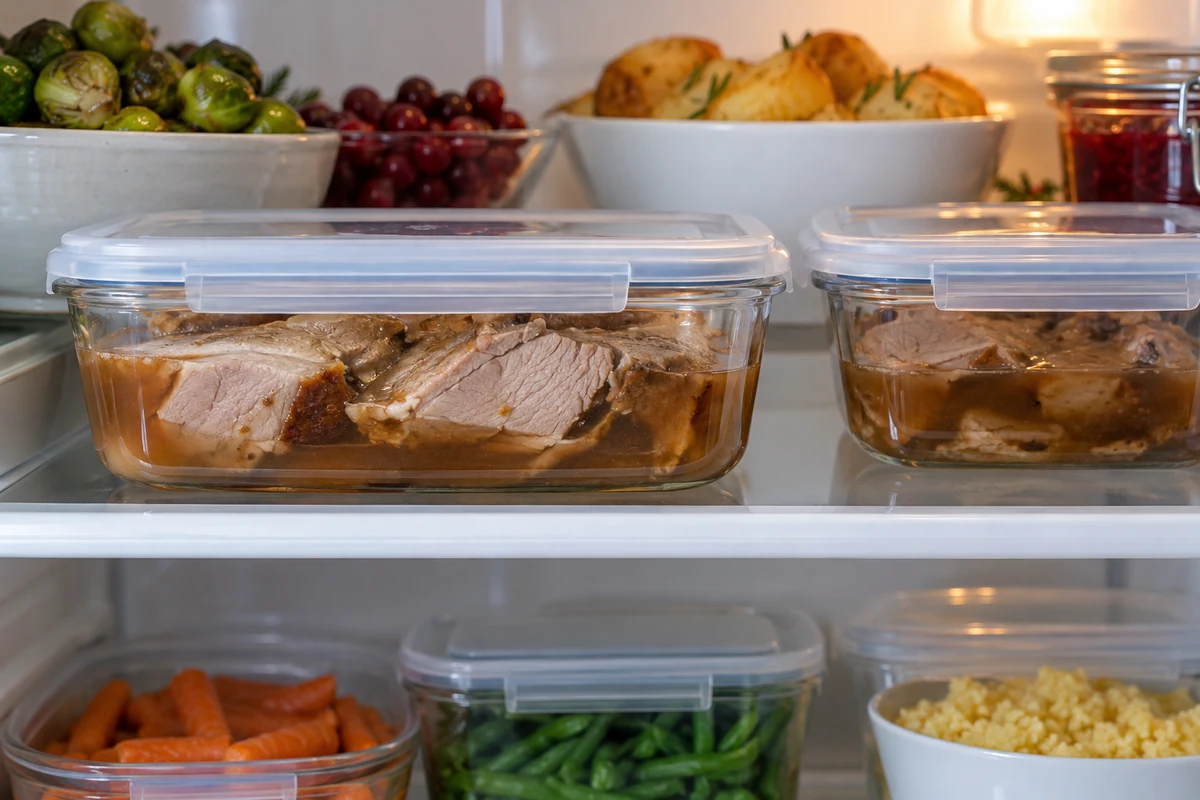
Handle the cooked joint and its sauce carefully so leftovers retain their flavour and are stored safely.
Fridge and Freezer Storage
- Cool promptly: divide leftover meat into smaller, shallow portions and refrigerate within two hours. Do not wait for a whole large joint to cool completely on the worktop.
- Refrigerate for up to 48 hours: keep covered at 5°C or below, or freeze promptly if it will not be eaten in time. Portioning helps cooling and avoids repeatedly handling the whole joint.
- Freeze in portions: use suitable freezer containers or bags, label and date them, and aim to use within three months for quality. Vacuum sealing is not necessary and does not create an extended refrigerated shelf life.
- Useful portions: roughly 150–200 g cooked meat may suit an adult serving with sides; adapt for appetite and label the actual portion weight if selling.
- Keep sauce separately: cool and refrigerate it promptly in a shallow container, using the same leftover deadline as the meat.
Reheating Safely
- Oven: put portions in an ovenproof dish with a little clean stock or cooked sauce, cover and reheat at around 180°C conventional or 160°C fan until steaming hot throughout. Time varies with thickness and starting temperature; never add raw-meat marinade.
- Frying pan: heat slices with a little sauce or stock, covering and turning as needed. Browning for one or two minutes per side does not guarantee the centre is hot enough.
- Microwave: use microwave-safe cookware and a suitable cover, follow appliance guidance, turn slices and allow standing time. Check that no cold patches remain.
- Specialist methods: this recipe does not provide a validated sous-vide reheating schedule. A generic water-bath temperature and one-to-two-hour estimate cannot account for every thickness, starting temperature and storage history; use the ordinary reheating methods above.
- Centre temperature: confirm 70°C for two minutes or 75°C for 30 seconds with a clean thermometer when checking reheated portions.
- Reheat only once: take out only the portions needed, leaving the rest properly chilled or frozen.
Handling Reminders
- Keep raw and cooked separate: wash hands, utensils and preparation surfaces after handling uncooked pork, and use clean equipment for carving and serving.
- Thaw in the fridge: allow enough time for the centre to defrost fully, then use within 24 hours. Do not thaw on the worktop.
- Limit time out of temperature control: refrigerate leftovers within two hours, sooner in a warm room. Serve chilled foods promptly and maintain hot-held food at 63°C or above.
If You Plan to Sell Prepared Pork
- Choose food-safe packaging: use suitable covered trays or containers, with sauce separate if helpful. Do not default to vacuum packing without appropriate food-safety controls. Provide the required ingredient, allergen, storage and reheating information.
- Give clear instructions: specify the portion, storage conditions and a reheating method checked for that package and quantity. Do not promise a shelf life that has not been established.
- Price from actual costs: include ingredients, energy, labour, packaging, delivery and waste. Markup on cost and margin on sales are different calculations; a suggested percentage is not a guarantee of profit.
- Control delivery temperature: use suitable equipment and verify hot food remains at least 63°C, or maintain an appropriate chilled chain. Insulated bags alone do not prove safe temperatures. Avoid casual use of dry ice in food deliveries without specialist handling arrangements.
- Check business requirements: in the UK, register the food business with the local authority at least 28 days before trading and follow applicable hygiene, allergen and labelling requirements. Confirm your process with the relevant local authority; a home recipe alone is not a validated commercial production plan.
Final Practical Ideas
- Photographs and presentation: show the actual portion offered, with sauce and sides clearly identified. Keep food safely stored during any photography.
- Listen to feedback: use comments about flavour, portion size and instructions to improve the offering, without compromising cooking or storage checks.
A carefully seasoned Christmas pork roast can make a generous festive centrepiece. Plan time for the size of joint, check the centre and allow a short rest before carving.
Try the variation that suits your table and share which flavours you enjoyed in the comments.
Follow Along
Follow our social channels for more seasonal ideas, and visit the I Love Christmas blog for recipes and festive inspiration.
Thank you for reading. Wishing you a welcoming Christmas meal and a happy celebration.
FAQ — Christmas Roast Pork Leg in Dark Beer
How long should I marinate the pork?
Allow 12–24 hours in the fridge if convenient, within the joint’s use-by date, turning occasionally. A shorter four-to-six-hour period is possible with a different depth of flavour. Do not extend storage automatically for a larger joint.
Can I replace the beer with an alcohol-free option?
Yes. Replace all 500 ml beer with low-salt stock and omit wine. Worcestershire sauce and malt extract are optional, but check their ingredients for alcohol and relevant allergens; barley malt is not gluten-free. Cooking beer does not guarantee complete alcohol removal.
How do I know the joint is ready?
Use a clean thermometer in several thick areas, avoiding bone, and confirm 70°C for two minutes or 75°C for 30 seconds. Follow the joint’s cooking guidance and continue as needed. Colour and clear juices alone are less reliable.
How should I store and reheat leftovers?
Refrigerate shallow portions within two hours at 5°C or below and eat within 48 hours, or freeze promptly. Thaw in the fridge and reheat once until steaming hot throughout, with a little stock or cooked sauce to limit drying. Do not add raw-meat marinade.
Which sides go well with the roast?
Brazilian vegetable rice, farofa, roast potatoes, cooked vegetables, apple sauce and a fresh citrus-dressed salad provide a range of textures. Choose a few that suit the number of guests and their dietary requirements.
Can I prepare it ahead for sale or delivery?
Only within an appropriate registered food-business process, with safe cooling, storage, packaging, delivery temperatures and clear allergen and reheating information. Establish the shelf life and instructions for the actual product; a home recipe or vacuum bag does not supply that validation.
Sources and Further Reading
- Food Standards Agency: cooking food safely
- Food Standards Agency: chilling, freezing and defrosting food
- UK Government: starting a food business