Christmas symbols have different histories and meanings. A star may recall the Star of Bethlehem for Christians, while trees, wreaths, gifts and lights also carry personal or cultural associations that vary between households.
Christmas symbols often carry stories that are easy to overlook. Some belong to Christian belief, others to changing decorative customs or family memories. Exploring those differences can make familiar decorations more interesting without assuming they all contain a hidden message.
The origins of familiar Christmas symbols
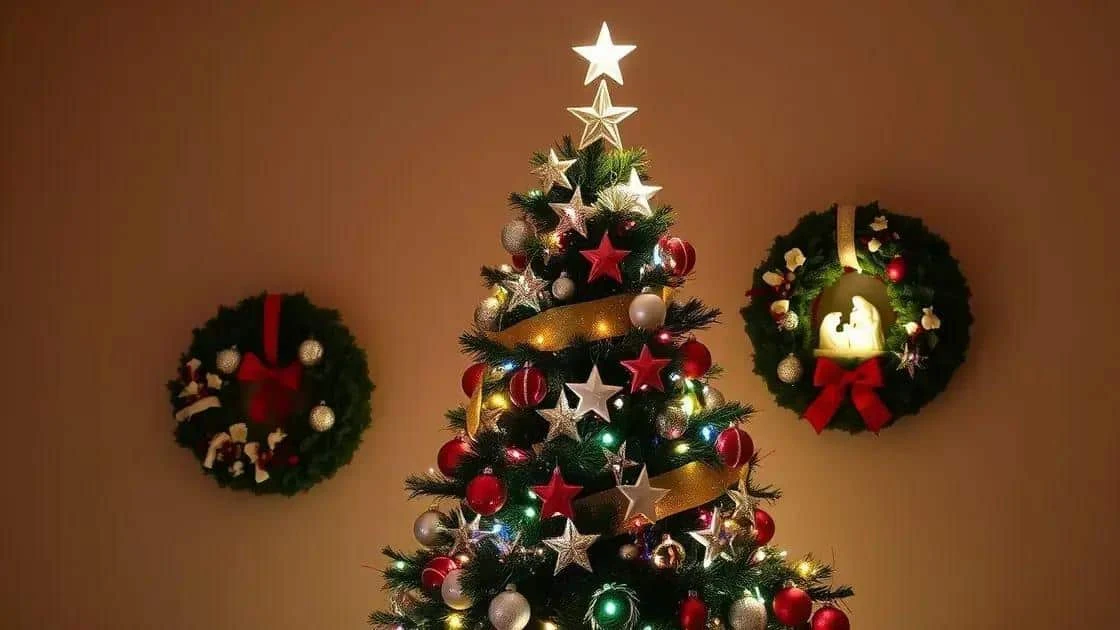
Familiar Christmas symbols developed in different places and periods. Their histories overlap, but they do not all come from one ancient custom or share a universal meaning.
The meaning of the Christmas tree
Decorated Christmas trees developed in German-speaking Europe and later spread elsewhere. Evergreen foliage can suggest continuing life through winter, while ornaments reflect changing tastes. Candles were used historically, but modern tree decorations should use suitable electric lights rather than real flames.
The Christmas star
For Christians, a star on the tree can recall the Star of Bethlehem in Matthew’s account of the Magi visiting Jesus. It can also suggest hope and light, or simply be a favourite decorative shape.
The Nativity scene
Nativity scenes represent the Christian birth story. Francis of Assisi’s celebration at Greccio in 1223 is important in their history, although images of the Nativity existed earlier. Displays often add local artistic details to the religious narrative.
Wreaths
Wreaths have marked honour, remembrance and celebration in different settings. Christmas wreaths can express welcome or eternal life in Christian interpretations; the candle-bearing Advent wreath has a separate, more recent history.
Christmas lights
Lights may represent Christ as light in Christian belief or create a festive atmosphere without a religious meaning. Electric lights largely replaced the hazardous use of candles on trees. Check their condition and suitability for indoor or outdoor use.
The meanings behind Christmas traditions
Christmas traditions can carry beliefs and memories alongside their decorative role. Their meaning depends on the community or individual rather than a fixed code that applies everywhere.
Keeping memories alive
A repeated custom can recall earlier generations and shared occasions. Passing on the story of an ornament or recipe often gives it more significance than its appearance alone.
Colour associations
Red and green are familiar festive colours, sometimes associated with love, evergreen life or renewal. Such interpretations vary; other colour schemes can be equally meaningful, and no colour is compulsory.
Gifts as an expression of care
Giving can express generosity and affection. A modest present, handwritten note or shared activity can carry that message without a large budget or an obligation to exchange gifts.
Food and family customs
Turkey, panettone and many other foods can evoke a particular celebration or family memory. Their meaning comes from local traditions and personal experience, not from a universal symbolism attached to every dish.
The role of music
Carols and secular Christmas songs can evoke memories and bring people together. Some tell religious stories, while others focus on winter, romance or celebration; their themes are not interchangeable.
How Christmas symbols vary around the world
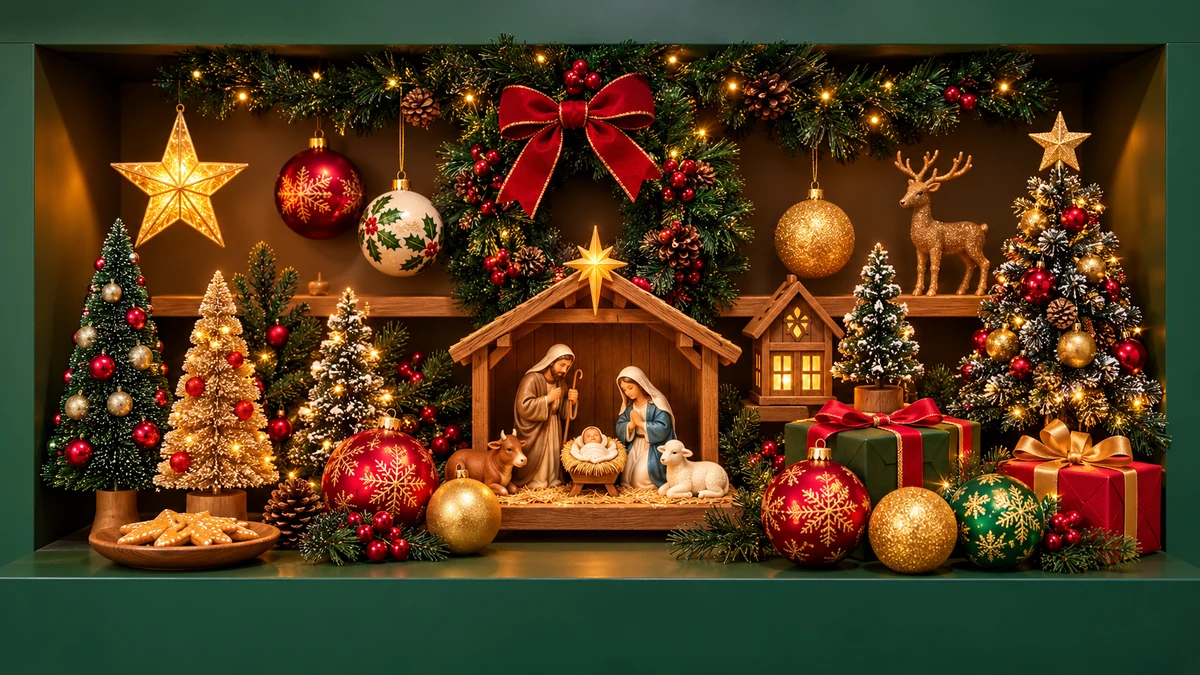
Christmas symbols take different forms across communities and countries. Exploring those variations is useful, provided we avoid treating a whole nation as if every household celebrates alike.
Christmas trees in different settings
Tree decorations differ between families in Germany, the United States and elsewhere. Candles belong to the history of the tradition, not a safe decorating recommendation. Suitable electric lights, homemade ornaments and regional crafts offer many alternatives.
Nativity scenes in different traditions
Italian presepi may include figures and settings inspired by everyday life, while Brazilian displays can incorporate regional materials and styles. These artistic choices should be distinguished from details stated in the Gospels.
Gifts and their stories
The Magi provide one Christian association with giving, alongside Saint Nicholas and later family customs. Japan also has Christmas gifts and romantic celebrations, as well as distinct gift seasons such as oseibo; these should not all be treated as one Christmas tradition.
Decorations and other festivals
Indian Christian communities have their own Christmas customs, sometimes including stars, lights and Nativity scenes. Diwali is a separate festival, not an Indian version of Christmas. In Nordic settings, seasonal foliage and natural textures can also feature in Christmas decorations.
Christmas meals around the world
Some households serve turkey or Brazilian rabanada, while Polish Christmas Eve meals may include fish and beetroot soup. Menus reflect regional, religious and family choices rather than one national rule.
Christmas symbols in their cultural context
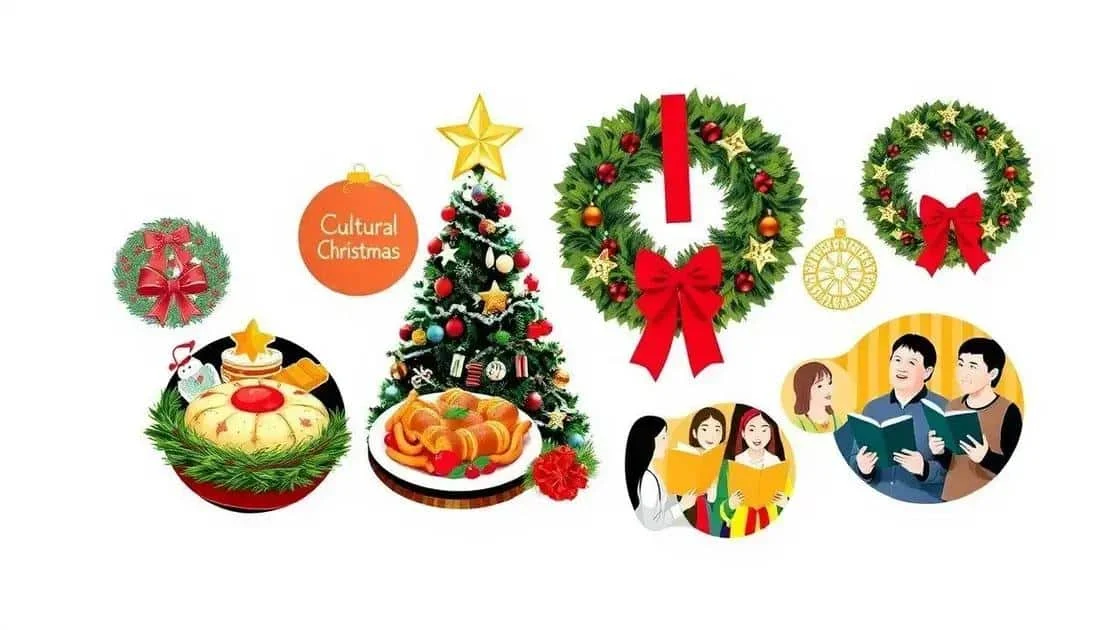
Christmas symbols become more interesting when placed in context. Distinguishing documented history, religious interpretation and modern personal choices avoids giving a decoration a false universal origin.
The symbolism of the Christmas star
A Christmas star can represent the Star of Bethlehem for Christians. Other people may associate it with hope or simply enjoy its shape. Not every tree has a star, and its use is a choice.
Older customs and later interpretations
Evergreen plants and wreaths appeared in celebrations before Christianity. However, that alone does not prove a direct, unchanged origin for the Christmas tree or every modern wreath. Their later development and Christian interpretations deserve separate attention.
Gifts and Christmas generosity
Christians may connect gifts with the Magi’s visit, while other households focus on friendship and family custom. Giving can reflect care, but participation and spending should remain voluntary.
Exploring Christmas food traditions
Christmas food varies widely across Europe and beyond. Turkey is familiar in Britain, while fish, goose, pork and many regional dishes feature elsewhere. A recipe’s strongest meaning may be the memory of the person who prepared it.
Music and celebration
A favourite carol or seasonal song can connect people with past celebrations. Music may support worship, storytelling or simple enjoyment, with different choices suited to different occasions.
Stories and surprising Christmas details
Christmas offers plenty of stories to explore. Some are historical and others belong to folklore, so it helps to ask what kind of story each tradition is telling.
The development of Father Christmas and Santa Claus
Saint Nicholas, traditionally a fourth-century bishop, is one influence on Santa Claus. British Father Christmas has a distinct history connected with festive hospitality; the two figures later became closely associated. Modern imagery also reflects literature, illustration and advertising.
The meaning of an Advent calendar
Most modern Advent calendars count from 1 to 24 December. They may support Christian preparation for Christmas or simply offer pictures and activities. This fixed countdown differs from liturgical Advent, which begins on a Sunday that varies each year.
Different dates and regional customs
Many communities celebrate on 25 December, while Ethiopian Orthodox Christmas currently falls on 7 January in the Gregorian calendar. Regional traditions also differ: Catalonia’s Tió de Nadal is a decorated gift-giving log, not simply a generic Spanish custom of burning a log.
Christmas Eve food traditions
The Feast of the Seven Fishes is especially associated with Italian-American Christmas Eve celebrations, rather than all of Italy. Italian meals vary by region, as do Latin American traditions featuring turkey, pork, tamales and other dishes.
Ornaments and their meanings
Baubles, bells and other ornaments may acquire personal meanings. Bells can suggest worship or celebration, while a bauble may simply be decorative. Claims that every round ornament represents perfection are interpretations rather than a universal rule.
Looking at Christmas symbols with fresh eyes
Christmas decorations, food and music bring together many histories. Learning about them can reveal differences between religious accounts, regional customs and stories that have changed over time.
The most meaningful detail may be a family memory rather than a distant origin. Ask about a favourite ornament, recipe or song and record the story if its owner is happy to share it.
Choose traditions that suit your beliefs and circumstances, and enjoy exploring others respectfully. There is no need to turn every decoration into a claim about ancient history.
FAQ — Christmas symbols and their origins
Where does Santa Claus come from?
Santa Claus developed through several influences, including traditions about Saint Nicholas, literature and illustration. British Father Christmas had a different earlier role before becoming closely associated with Santa.
What does a Christmas tree represent?
Evergreen life, hope and religious symbolism are possible interpretations. For many households it is also a decorative focus for family ornaments and memories.
Why do we exchange Christmas gifts?
Reasons include Christian associations with the Magi and Saint Nicholas, later family customs and a wish to show care. There is no single origin or obligation to take part.
What are some regional Christmas traditions?
Examples include Catalonia’s Tió de Nadal and Epiphany gift traditions in several countries. Customs vary locally and should not be assumed to apply to everyone.
What does an Advent calendar mark?
Most count from 1 to 24 December. Religious versions support preparation for Christmas; others offer a secular countdown. Liturgical Advent begins on a variable Sunday.
Which foods are served at Christmas?
Menus vary, including turkey, rabanada, fish and many local dishes. The Feast of the Seven Fishes is particularly associated with Italian-American Christmas Eve celebrations.
Sources and Further Reading
- English Heritage: Christmas traditions
- Church of England: Advent and Christmas
- Catalunya: Caga Tio Christmas tradition