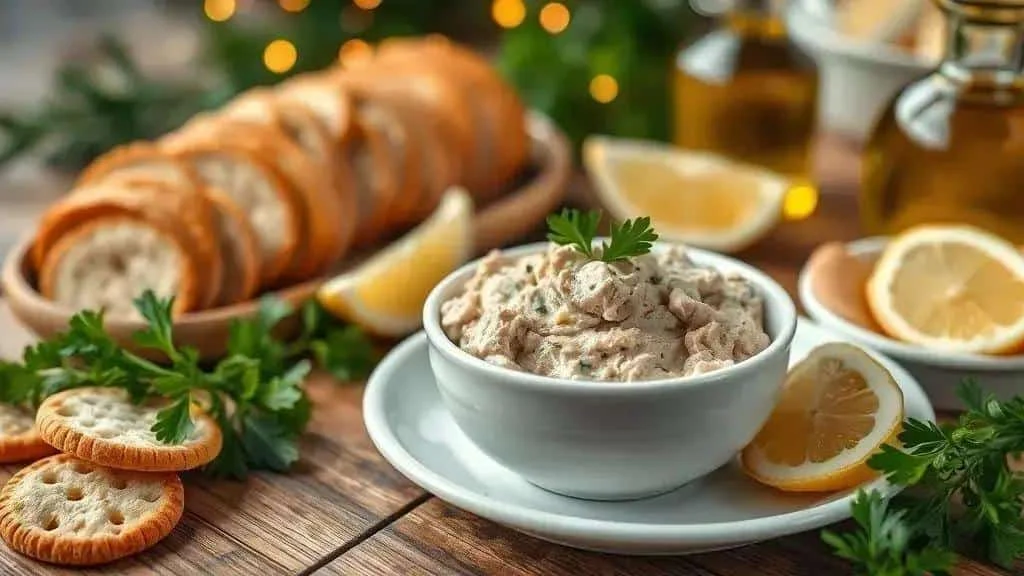
This creamy tuna pâté combines drained tinned tuna, cream cheese and mayonnaise with herbs, lemon and optional capers or pickles. Serve small chilled portions with toast or crackers, or prepare it the day before a gathering. It needs careful refrigeration; the plant-based alternative below is a separate chickpea spread, not tuna pâté.
Creamy tuna pâté is a straightforward addition to a festive snack table. The recipe below covers the basic mixture, different flavours and practical ways to serve it without leaving a large bowl out all evening.
Ingredients for Creamy Tuna Pâté
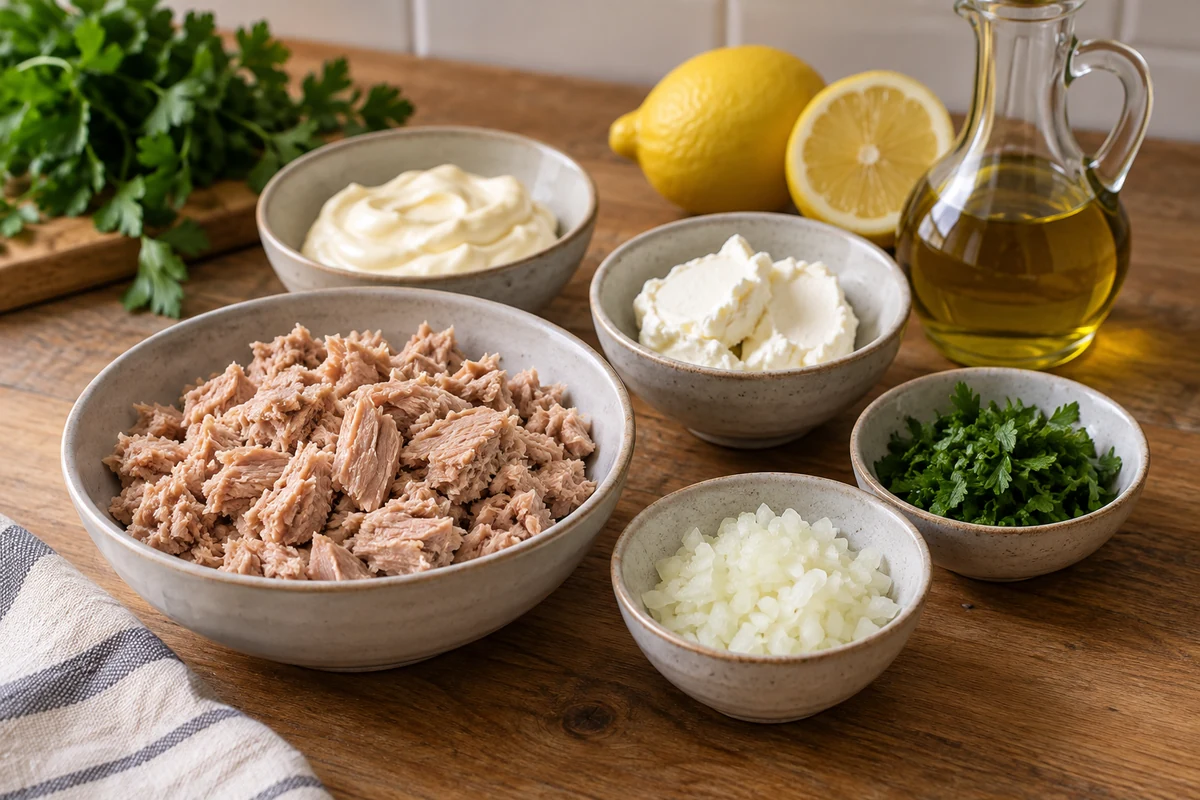
Gather the following ingredients for creamy tuna pâté. Fish, milk and usually egg are present; check the mayonnaise and optional seasonings for other allergens.
- Two tins of tuna, around 170 g net weight each — drained well. The drained weight is lower and varies by brand; this does not mean 340 g drained tuna. Use comparable tins and adjust the creamy ingredients gradually. Tuna in oil is an alternative, also drained.
- 200 g cream cheese — or 200 g Brazilian requeijão cremoso if available, noting that it may give a softer texture.
- 120 g mayonnaise — choose a commercial product made with pasteurised egg. Plain Greek-style yoghurt can replace some or all of it for a tangier result; add gradually.
- About 50 g onion — finely chopped; shallot gives a milder alternative.
- One garlic clove — finely chopped or crushed, or ¼ tsp garlic powder.
- 2 tbsp chopped fresh parsley — chives or a smaller amount of dill are alternatives.
- 1 tbsp fresh lemon juice — or start with 1 tsp cider vinegar and adjust to taste.
- Salt and black pepper — taste before adding salt because the tuna and condiments may already contain plenty.
- 1 tbsp chopped capers, optional — drained.
- 3 tbsp finely chopped pickled gherkins, optional — drained well.
- Up to 1 tsp smoked paprika, optional — start with less and taste.
- 1 tbsp olive oil, optional — for a softer finish if needed.
Before you start
For a creamier texture, add cream cheese or mayonnaise one spoonful at a time. Yoghurt gives a sharper flavour and may loosen the mixture. This is a chilled pâté: NHS guidance advises avoiding all pâtés during pregnancy, including vegetable versions, so offer a different suitable starter to pregnant guests.
How to Make Creamy Tuna Pâté
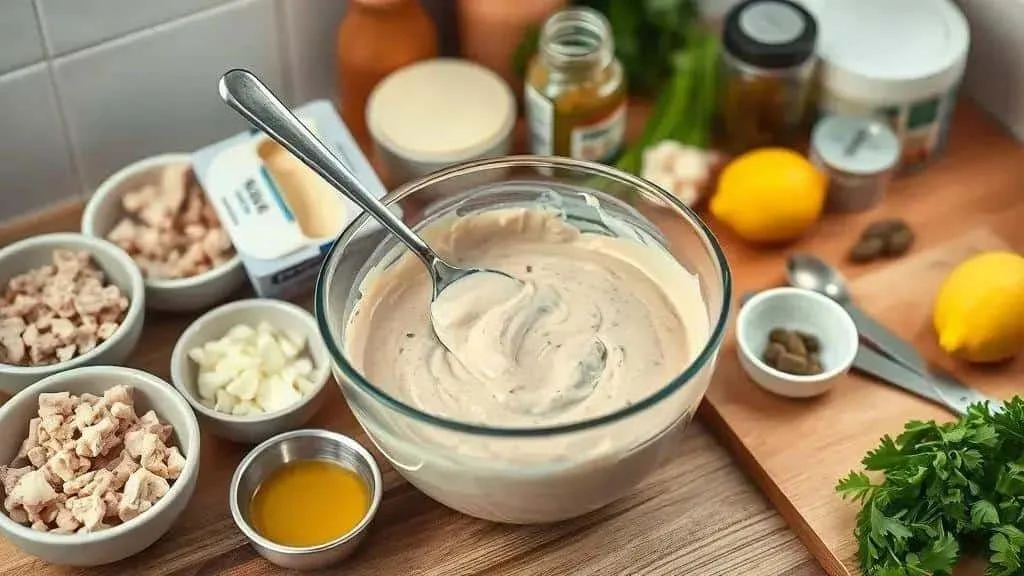
- Prepare the ingredients and equipment: drain the two tins of tuna and measure the cream cheese and mayonnaise. Have a clean bowl, fork, knife and chopping board ready; keep chilled ingredients out only while working.
- Flake the tuna: break it up with a fork in the bowl until no large flakes remain.
- Chop the flavourings: finely chop the onion, garlic and washed herbs, plus the drained pickles if using them.
- Mix the creamy base: stir the cream cheese with the mayonnaise until smooth. Start with part of the mayonnaise if the tuna yield is small or the cheese is particularly soft.
- Fold in the tuna: mix gently until evenly combined, keeping a little texture if preferred.
- Add the flavourings: stir in the onion, garlic, parsley and lemon juice, with the optional capers and pickles. Use only the measured total quantities, not a second helping of each.
- Season: taste with a clean spoon, then add pepper and salt if needed. Add extra lemon in ½ tsp increments rather than pouring freely.
- Adjust the texture: if too firm, stir in a little of the optional oil, mayonnaise or yoghurt. Stop when it spreads easily without becoming runny.
- Chill: cover and refrigerate for at least 30 minutes while preparing the serving plates.
- Finish for serving: stir gently and transfer a small quantity to a clean bowl. Garnish with washed herbs, lemon zest or a little paprika.
- Storage: keep covered at 5°C or below and use within 48 hours of preparation, or sooner according to the earliest ingredient instruction. A normal smell or colour does not prove that food is safe.
Quick preparation tip
Season gradually: small changes to salt, lemon, capers or pickles can alter the flavour considerably. Start modestly so the tuna remains noticeable.
Tuna Pâté Flavour and Ingredient Variations
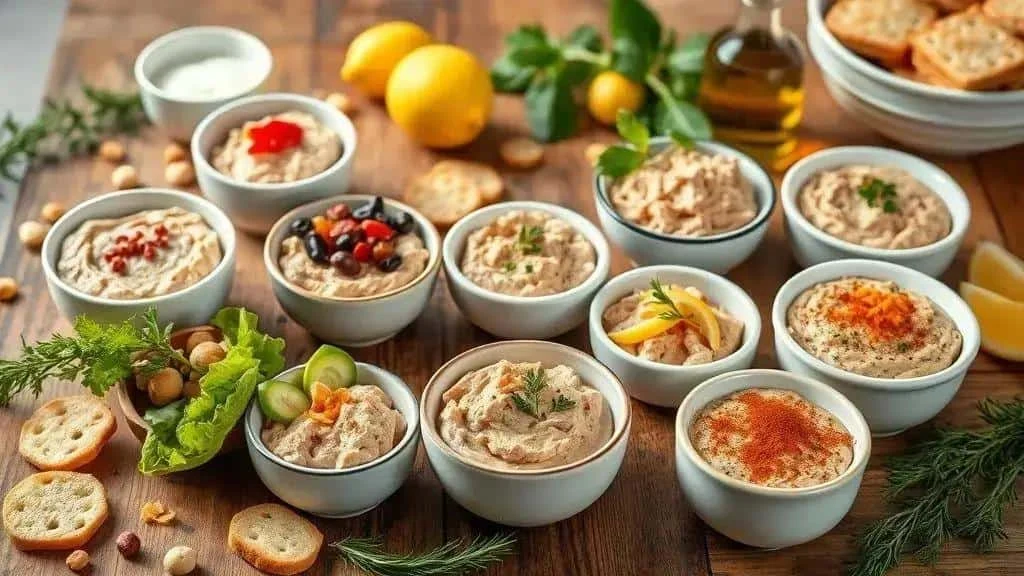
Yoghurt and reduced-fat cream cheese version
- Two comparable tins of tuna — drained as in the main recipe.
- 100 g reduced-fat cream cheese — or a suitable reduced-fat requeijão.
- 80 g plain Greek-style yoghurt — used instead of mayonnaise in this variation.
- ¼ small onion — finely chopped.
- 1 tbsp lemon juice
- Chopped parsley and black pepper — to taste.
Tip: add yoghurt gradually. Fat and energy content depend on the products and portions; this recipe has not been nutritionally analysed.
Chilli version
- Two tins of tuna — drained.
- 200 g cream cheese or 120 g mayonnaise — these give different textures, so add gradually.
- One small red chilli — finely chopped, with seeds removed if preferred, or dried chilli flakes to taste. Heat varies widely; start with a small amount.
- Up to ½ tsp hot paprika or ¼ tsp cayenne — optional; reduce or omit when also using fresh chilli.
- Juice of ½ lemon and salt — add to taste.
Serving idea: taste carefully as you add chilli and pair with plain crackers.
Mediterranean-style version
- Two tins of tuna — drained.
- 150 g cream cheese or about 80 g mayonnaise — choose one, adjusting for texture.
- 3 tbsp chopped pitted black olives
- 2 tbsp chopped sun-dried tomatoes in oil — drained.
- 1 tbsp chopped capers, optional
- Up to 1 tbsp extra virgin olive oil and a little oregano — taste before adding more oil or salt.
Serve with: toasted baguette or appropriately prepared vegetable sticks.
Cream cheese version with vegetable accompaniments
- Two tins of tuna — drained.
- 250 g cream cheese — for a thicker spread. Cream cheese is not carbohydrate-free; check the product label.
- 1 tbsp mayonnaise — use a suitable commercial product.
- Parsley, chives, pepper and salt — to taste.
Serving note: lettuce leaves, cucumber or celery offer alternatives to bread. No specific ketogenic or carbohydrate claim has been calculated for the finished dish.
Vegan chickpea alternative
- 300 g cooked, drained chickpeas — mashed, replacing the tuna entirely; use weight rather than a variable cup measure.
- 120 g vegan mayonnaise — or about 80 ml tahini loosened gradually with water. Tahini contains sesame and produces a different flavour.
- One sheet of nori, optional — finely crumbled; use a suitable food product and check its label.
- 1 tbsp lemon juice and seasoning — to taste.
Note: this is a separate plant-based spread, with no dairy cream cheese or fish. Vegan does not mean allergen-free, and NHS pregnancy guidance also advises avoiding vegetable pâtés.
Lemon and fresh herb version
- Two tins of tuna — drained.
- 200 g cream cheese and 2 tbsp mayonnaise
- Zest of one lemon and 1 tbsp lemon juice — start with less zest if the lemon is large.
- 2 tbsp chopped chives and up to 1 tbsp dill or tarragon — adjust stronger herbs to taste.
- Up to 1 tbsp extra virgin olive oil — optional finishing drizzle.
Presentation: finish with a little zest and chopped herbs rather than a heavy garnish.
Smoked paprika version
- Two tins of tuna — drained; tuna in oil also works.
- 200 g cream cheese and about 60 g mayonnaise
- ½ tsp smoked paprika — optional smoked salt only after tasting.
- 1 tbsp chopped chives and black pepper — to taste.
Finish: a small extra pinch of paprika adds colour. This gives a smoky flavour without smoking the fish.
Presenting Tuna Pâté at Festive Parties

Serve creamy tuna pâté in small portions with several simple accompaniments. Keep the unused mixture refrigerated and identify its ingredients clearly.
Arranging a party board
- Choose small bowls: use a few small dishes rather than one large bowl that stays out for hours.
- Group accompaniments: put crackers, bread and vegetables in separate areas for easy access.
- Vary the height safely: use stable dishes and avoid stacking bowls precariously.
- Keep decoration simple: washed herbs and lemon wedges add colour; keep non-food decorations away from the spread.
- Provide utensils: put clean serving spoons or spreading knives beside the bowl, discouraging shared dipping.
Accompaniment ideas
- Plain crackers: water biscuits, wholegrain or seeded varieties, with allergens checked.
- Baguette slices: lightly toasted for crunch.
- Vegetables: cucumber, carrot or celery, prepared to suit guests’ ages and needs.
- Small toasts or pitta pieces: convenient for individual servings.
- Pickles and capers: offer them separately for guests who want extra sharpness.
- Olives or suitable cheeses: optional additions to the wider snack table.
Garnish ideas
- Fresh herbs: sprinkle a little chopped parsley or chives on top.
- Lemon: use fine zest or a wedge on the side.
- Paprika: a small pinch gives colour without overpowering the fish.
- Individual portions: small serving cups or prepared toasts can make service easier; keep them chilled until needed.
Portion planning
Allow approximately 20–30 g pâté per person when there are several other snacks, or 40–50 g if it is a main feature. These are planning estimates, not fixed dietary servings. For the smaller allowance:
- Ten guests: 200–300 g.
- Twenty guests: 400–600 g.
- Fifty guests: 1–1.5 kg, adjusted for the rest of the menu.
Keeping it chilled during service
- Keep refrigerated until serving: there is no need to leave it out beforehand to soften. Stir while cold instead.
- Use chilled service where possible: an ice bath can help if it keeps the food properly cold, but a few cubes under a bowl are not a guarantee. Track time and replenish small quantities.
- Replace dirty utensils: keep spare clean serving spoons available.
- Storage limit: use the safely refrigerated, undisplayed mixture within 48 hours, or sooner according to ingredient instructions. Do not return handled buffet leftovers to the fresh batch.
Drink pairings
Fresh-tasting drinks suit the spread: water with lemon, a suitable alcohol-free sparkling drink, or a measured white wine or lager for adults who choose alcohol. Kombucha can contain alcohol and caffeine, so do not automatically treat it as an alcohol-free option for everyone.
Storage and Make-Ahead Preparation
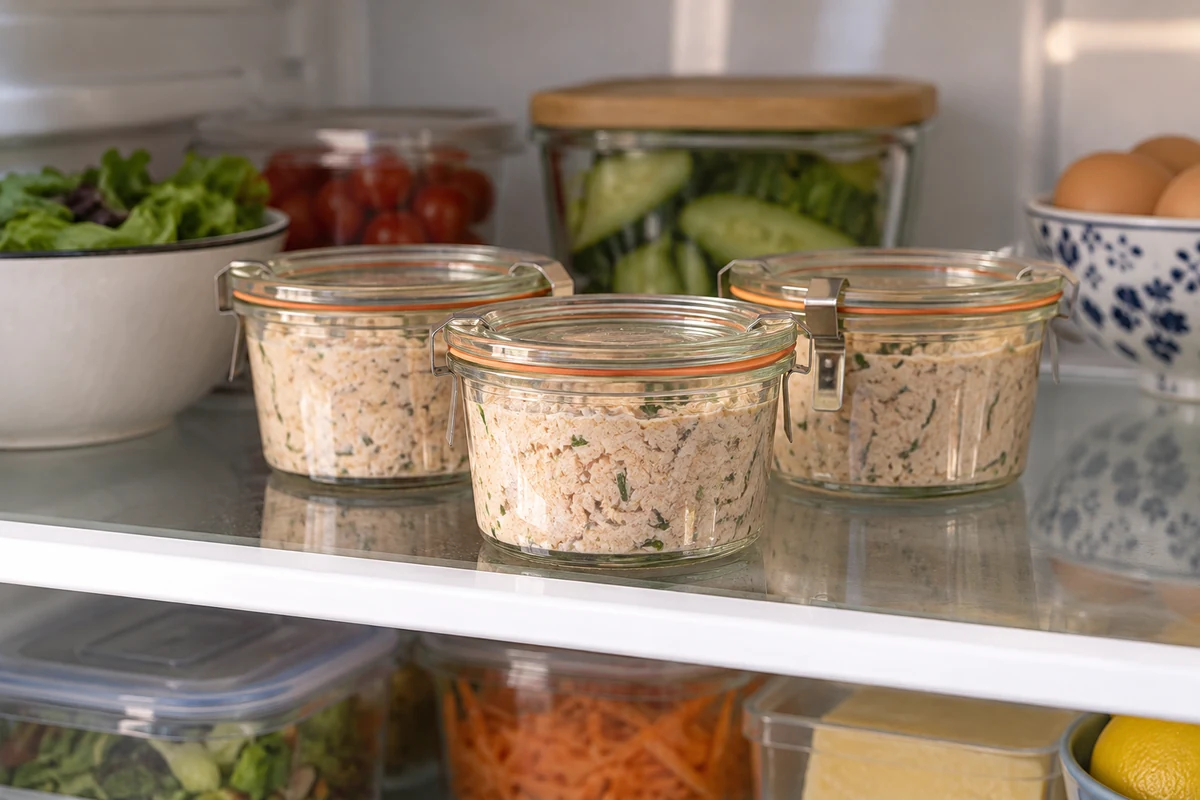
Keep creamy tuna pâté in a clean covered container in the fridge. Lemon juice, mayonnaise or extra seasoning does not make it safe to keep at room temperature.
Refrigeration
- Covered container: use a clean food-safe container with a fitted lid rather than storing the mixture in an opened tuna tin.
- Temperature: keep the fridge at 5°C or below and place the container where it stays consistently cold.
- Use-by plan: use within 48 hours of preparation, or sooner if an ingredient has a shorter limit. This does not apply to food left out or handled on the buffet.
- Label: write the preparation date and time clearly, along with allergens and the applicable use-by limit.
Freezing
Freezing can make the dairy and mayonnaise separate, so fresh preparation is preferable. If freezing a suitable version, do so promptly in a freezer-safe container, following ingredient instructions. Thaw fully in the fridge and use within 24 hours of defrosting; do not rely on a fixed 12-hour thaw for every container size.
Preparing ahead
- The day before: make and refrigerate the mixture, then add a fresh garnish just before serving.
- Avoid a three-day lead time: this recipe uses a 48-hour refrigerated limit, or less if labels require it. Keep optional crunchy additions separate for texture, not as a way to extend safety limits.
- Small serving bowls: fill and cover them in advance, refrigerate, and bring out only what is needed.
Buffet service
- Time at room temperature: for this home recipe, use a cautious two-hour serving limit, shorter in hot conditions. This is a conservative plan, not an invitation to leave every bowl out for two hours.
- Ice bath: keep the bowl protected from meltwater and check that the food remains cold. Ice underneath does not reset time already spent warm.
- Small portions: replace used bowls with fresh chilled ones rather than topping up old food.
- Clean utensils: provide dedicated spoons and prevent double-dipping or contact with other allergens.
Leftovers and safety
- Do not use smell as a safety test: discard visibly spoiled food, but also discard it when time, temperature or use-by limits have been exceeded, even if it looks normal.
- Leftovers: keep only the untouched, safely chilled portion within its original limit. Heating or freezing does not rescue improperly stored pâté.
Texture after chilling
If safely stored pâté is too firm, stir in a little yoghurt or oil with a clean spoon. A small amount of harmless separation can be stirred back in, but adding fresh cream cheese does not renew the storage clock.
Flavour Additions and Ingredient Substitutions
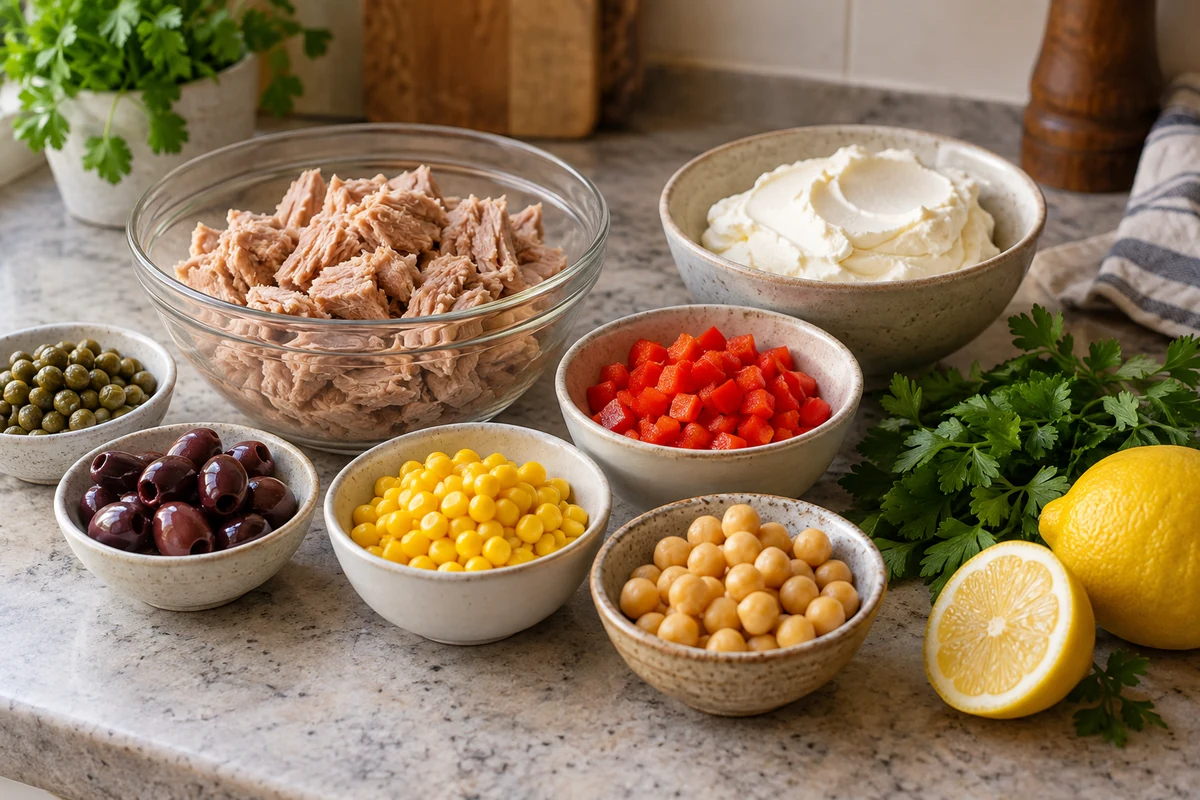
Small additions can change the character of tuna pâté. These are options to choose from, not a list to add in full on top of the main recipe.
Flavour additions
- Up to 1 tbsp chopped capers — for a salty, sharp note.
- 2 tbsp finely chopped pickles — drained, for crunch and acidity.
- Lemon juice — the main recipe already includes 1 tbsp, so taste before adding more; cider vinegar is an alternative in smaller amounts.
- Zest from ½ lemon — adds aroma without much extra juice.
- ½ tsp smoked paprika — or a smaller amount of hot paprika if desired.
- Up to 1 tbsp extra virgin olive oil — optional for a softer finish.
- 2 tbsp chopped pitted olives — reduce added salt accordingly.
- Dijon mustard — start with a little and work up to 1 tbsp if preferred. Mustard is an allergen.
- 2 tbsp chopped fresh herbs — parsley or chives, with smaller quantities of stronger dill or tarragon to taste.
- A pinch of freshly ground black pepper
Practical substitutions
- Tuna in water or oil: both work when drained. Oil-packed tuna may need less added oil; flavour varies by product.
- Mayonnaise: replace part with plain Greek-style yoghurt gradually rather than adding a full extra cup quantity.
- Cream cheese: requeijão gives a softer alternative. Lactose-free dairy still contains milk protein; a suitable plant alternative requires its own allergen check.
- Smoky flavour: use a little smoked paprika or smoked salt, tasting before adding more salt.
- Vegan alternative: follow the separate chickpea recipe, replacing fish and dairy completely.
- Crunch: offer nuts or seeds separately rather than stirring them into the whole bowl; consider allergies and avoid whole nuts for under-fives.
Combining and measuring additions
Taste gradually: start with half an optional seasoning quantity. At a party, separate small bowls of capers, pickles or olives let guests choose without changing the entire batch.
Flavour combinations
Lemon and herbs give freshness, smoked paprika and olive oil add richness, and pickles with capers give a sharper finish. Avoid piling in several acidic ingredients until the fish flavour disappears.
Choosing Tinned Tuna and Reading the Label
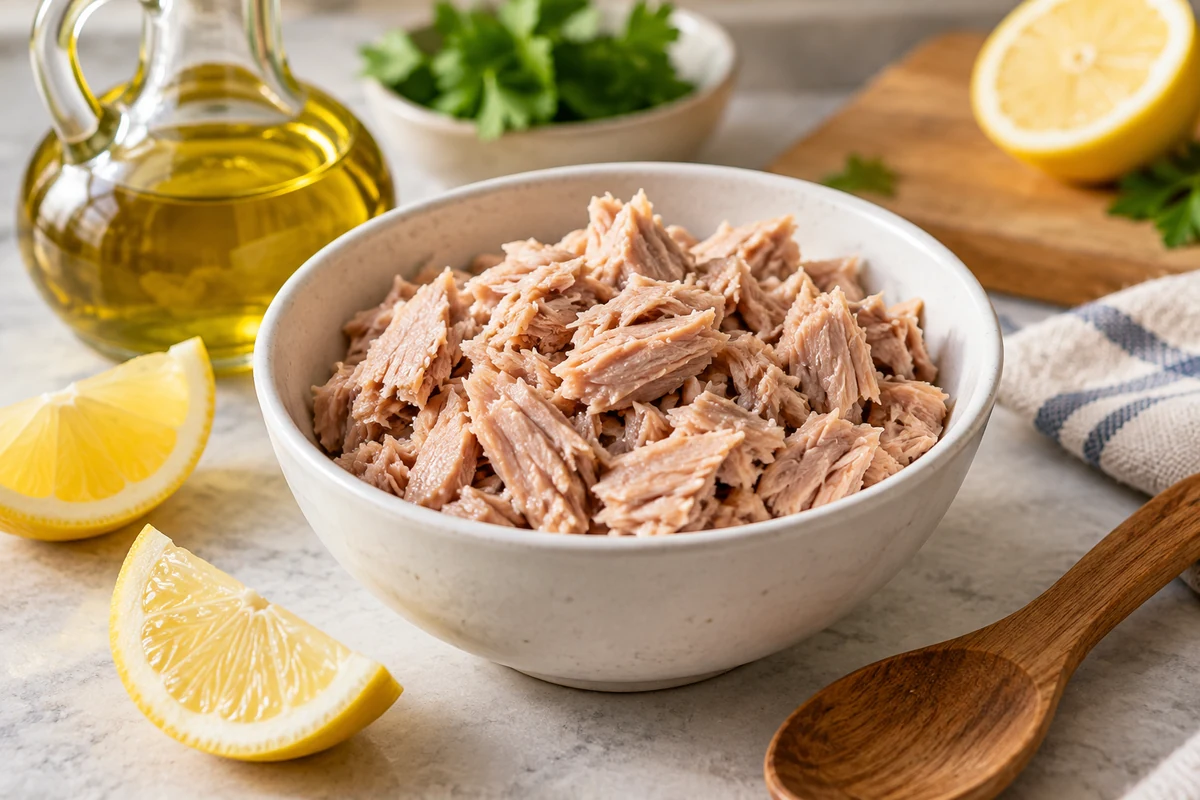
- Tinned tuna provides protein: check the label for the actual amount per drained serving. The finished pâté also contains cream cheese and mayonnaise, so tuna nutrition figures do not describe the whole dish.
- Species vary: tins may contain skipjack, yellowfin or albacore. The word ‘light’ is not always a nutritional claim; look for the species and product information.
- Packing liquid: spring water, brine and oil change the salt and fat content. Compare labels on the same basis, preferably drained weight.
- Oily fish distinction: NHS guidance does not count tuna as oily fish. Do not use this pâté as a substitute for advice to include oily fish in a varied diet.
- Salt: brine, cheese, mayonnaise and pickles can all contribute salt. Compare products and taste before adding more.
Understanding the finished dish
- Protein: tuna contributes protein, with the amount per serving depending on the recipe proportions.
- Fat: oil, mayonnaise and cream cheese affect the total; reduced-fat versions vary by brand.
- Other nutrients: species and processing affect nutritional composition. No complete nutrient analysis has been calculated for this recipe.
Dietary suitability
- Pregnancy: NHS advice is to avoid pâté, including fish and vegetable pâtés. Choose a different suitable starter rather than treating a particular tuna species as a way around that advice.
- Tuna in the wider diet: follow current NHS guidance on fish and pregnancy where relevant. Those limits concern total tuna consumption across meals, not just this recipe.
- After opening: transfer unused tuna to a covered food container, refrigerate and follow the tin’s instructions. A shorter ingredient limit takes priority over this recipe’s 48-hour maximum.
Product quality
- Read the label: check species, packing liquid, drained weight, storage instructions and date marking.
- Tin condition: avoid leaking, bulging or badly damaged tins. An intact tin should be stored and used according to its label, not an assumed indefinite shelf life.
- Oil-packed tuna: drain it well and adjust added oil and seasoning to the particular product.
Sourcing
- Fishing information: look for species, catch area and fishing method. Sustainability depends on the fishery and its management, not the gear name alone.
- Certification: credible certification and traceability can help compare products; verify what the particular label covers rather than assuming every tuna product is equivalent.
Quick shopping and preparation tips
- Choose the packing liquid to suit the flavour and nutrition you want, checking the label.
- Drain thoroughly so excess water or oil does not make the pâté runny.
- Use fresh flavourings such as herbs and lemon, tasting before adding salt.
- Vary meals rather than relying on one fish product, following appropriate official dietary guidance.
A practical festive spread
Creamy tuna pâté is easy to prepare from a few familiar ingredients. Choose the basic recipe or a flavour variation, accounting for guests’ dietary needs.
Adjust seasoning gradually, serve small chilled portions and keep the remainder refrigerated. A simple garnish and a choice of crisp accompaniments are enough for an inviting presentation.
Visit the I Love Christmas blog for more festive recipes and serving ideas. If you try the recipe, share which variation you made.
Creamy Tuna Pâté: Frequently Asked Questions
How long can I keep tuna pâté in the fridge?
Keep it covered at 5°C or below and use within 48 hours of preparation, or sooner according to the earliest ingredient instruction. This limit assumes continuous safe refrigeration; it does not apply to handled buffet leftovers.
Can I freeze tuna pâté?
Fresh preparation is preferable because mayonnaise and dairy may separate. If freezing a suitable mixture, do so promptly, following ingredient guidance. Thaw fully in the fridge and use within 24 hours after defrosting.
What can I serve with it?
Plain crackers, toasted baguette, small toasts, pitta pieces and appropriately prepared vegetables work well. Check allergens and offer separate suitable alternatives where required.
How can I make a less rich version?
Try reduced-fat cream cheese and replace some mayonnaise with plain yoghurt, adding gradually. The result is tangier; nutritional content depends on the products and portions rather than a guaranteed ‘healthy’ label.
Is there a vegan alternative?
Yes. Mash 300 g cooked, drained chickpeas and combine with vegan mayonnaise or diluted tahini, lemon and optional crumbled nori. This is a separate plant-based spread; check allergens and note that pregnancy advice also excludes vegetable pâtés.
Sources and Further Reading
- NHS — Foods to avoid in pregnancy
- NHS — Fish and shellfish nutrition
- Marine Stewardship Council — Tuna questions and answers
- Food Standards Agency — Chilling, freezing and defrosting food safely
- Food Standards Agency — Food allergies, intolerances and coeliac disease