European Christmas markets: explore Strasbourg, Nuremberg, Dresden, Vienna, Prague, Cologne, Budapest, Tallinn, Brussels and Edinburgh. This guide points you towards official calendars rather than treating last year’s dates as current; check opening hours, ticketed attractions and late changes before travelling.
European Christmas markets bring together seasonal food, crafts and illuminated streets. Wondering where to go and how to organise your visit? Start with this city guide, then confirm the current year’s programme with each organiser before booking.
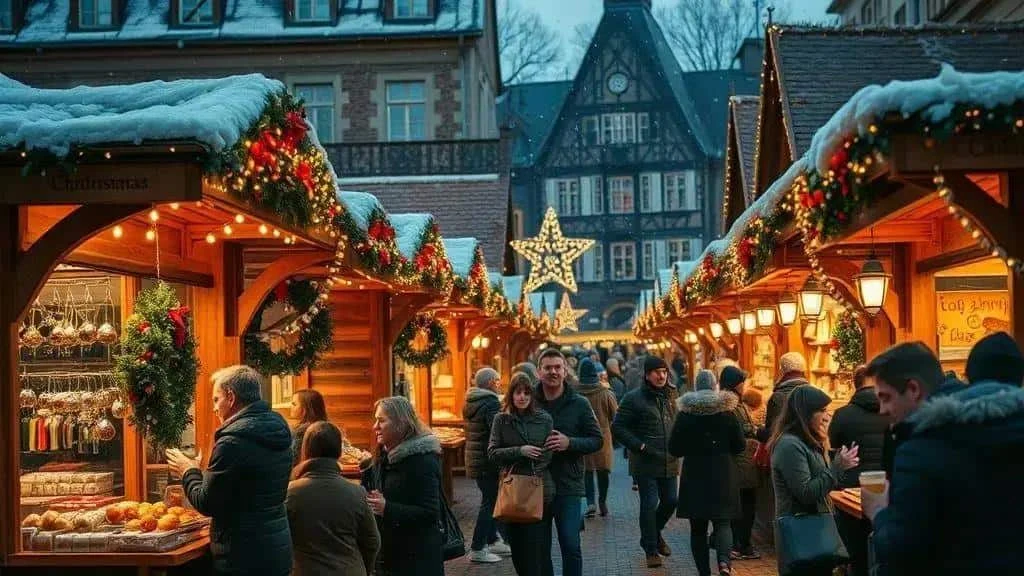
Illustrations in this article are conceptual images, not documentary photographs or evidence of a particular historical event, destination, venue or access route.
How European Christmas markets work
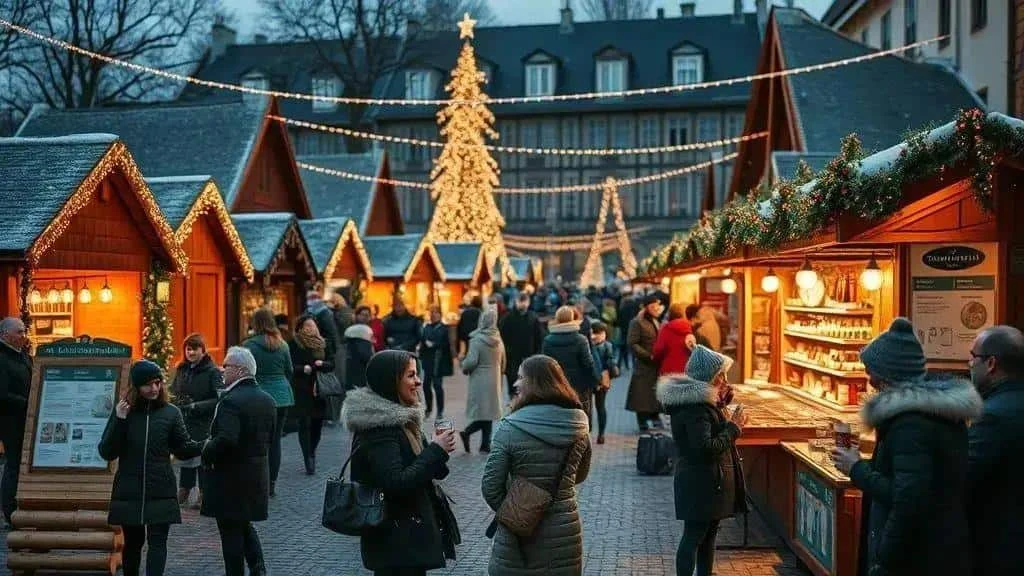
Christmas markets are temporary gatherings of stalls, food vendors and cultural activities, often set in historic squares or pedestrian streets. Their size and facilities vary considerably.
Layout and organisation
A market may fill one square or extend across several streets. Wooden stalls sell crafts, food, drinks, decorations and toys. Some larger events also have live performances, ice rinks or children’s activities; these are not features of every market.
Stalls and payments
Expect a mixture of craft stalls and regional food, with traders selected under the organiser’s arrangements. Contactless payments are available at some stalls, but acceptance varies. Ask where products were made if local craftsmanship matters to you, and check payment options before ordering.
Opening hours and busy periods
Many markets open during the day as well as in the evening. Dates and hours differ even between markets in the same city. Popular attractions may require tickets or reservations, and crowded periods can involve queues or temporary access controls.
Programmes and experiences
Look for the published programme of choirs, craft workshops, light displays and regional food events. Hands-on activities, such as decoration workshops or guided tastings, may have limited places and separate booking arrangements.
Reuse and accessibility
Some markets use returnable cups with a deposit and provide recycling facilities. Check how returns work rather than assuming the cup is included in the drink price. Official accessibility information should help you identify step-free routes and accessible toilets.
Practical visiting tips
- Check official dates and opening hours shortly before leaving, as plans can change.
- A weekday or an earlier session may be quieter, provided the market is open. A quieter visit does not necessarily mean lower stall prices.
- Bring a suitable payment card and a small amount of cash in the local currency.
- Wear comfortable shoes with suitable grip and dress in layers for the forecast weather.
- Keep children with a responsible adult, agree a meeting point and carry the group’s contact details discreetly.
- Book activities in advance where the organiser requires or offers reservations.
A little preparation leaves more time for the lights, food and crafts, without relying on assumptions about opening times or facilities.
City calendars: where to check before booking
Use this directory to find the right event, then consult its current programme. It deliberately does not repeat the original article’s outdated 2025 dates. Always check official calendars before committing to travel.
- Strasbourg, France: consult Strasbourg Capitale de Noël for market dates and locations; lighting displays and individual activities may have different schedules.
- Nuremberg, Germany: check the Christkindlesmarkt calendar, including the shorter Christmas Eve opening hours where applicable.
- Dresden, Germany: use the official Striezelmarkt website for the current season and its daily programme.
- Vienna, Austria: consult Vienna’s official tourism guide for each market. Rathausplatz, Schönbrunn and other venues do not all share one opening period.
- Prague, Czechia: check Prague City Tourism’s listings for Old Town Square, Wenceslas Square and any other market you plan to visit.
- Cologne, Germany: use Cologne Tourist Board’s information and each organiser’s programme. The cathedral market is only one of the city’s locations.
- Budapest, Hungary: check Budapest’s official visitor information and the separate programmes for Vörösmarty Square and the Basilica area.
- Tallinn, Estonia: consult Visit Tallinn for the Town Hall Square market and related seasonal events.
- Brussels, Belgium: check the City of Brussels’ Winter Wonders information, including individual attraction times.
- Edinburgh, United Kingdom: use Edinburgh’s Christmas organiser’s calendar for markets, rides and ticketed events.
Using the city directory
First choose your destinations, then confirm that their markets overlap with your proposed trip. Book accommodation and transport after checking event dates and cancellation terms, especially for popular weekends.
- Recheck official notices for changes, booking requirements and special opening hours.
- Staying near a market or a convenient transport route can make an evening visit easier.
- If a workshop or performance matters to you, check its availability before building the trip around it.
- Combine nearby destinations, such as Strasbourg and Colmar, only when the actual journey times leave enough time to enjoy both.
- Check public holidays and reduced transport or shop hours over Christmas and New Year.
Quick checks
- Confirm the opening hours for your particular day, rather than assuming every market opens in the morning.
- Read cancellation and refund terms for booked activities.
- Check accepted payment methods and the currency used at your destination.
- Look up accessibility information, toilets and family facilities.
Prioritise the markets you most want to see and leave room for travel delays, meals and rest rather than filling every hour.
Market highlights by destination
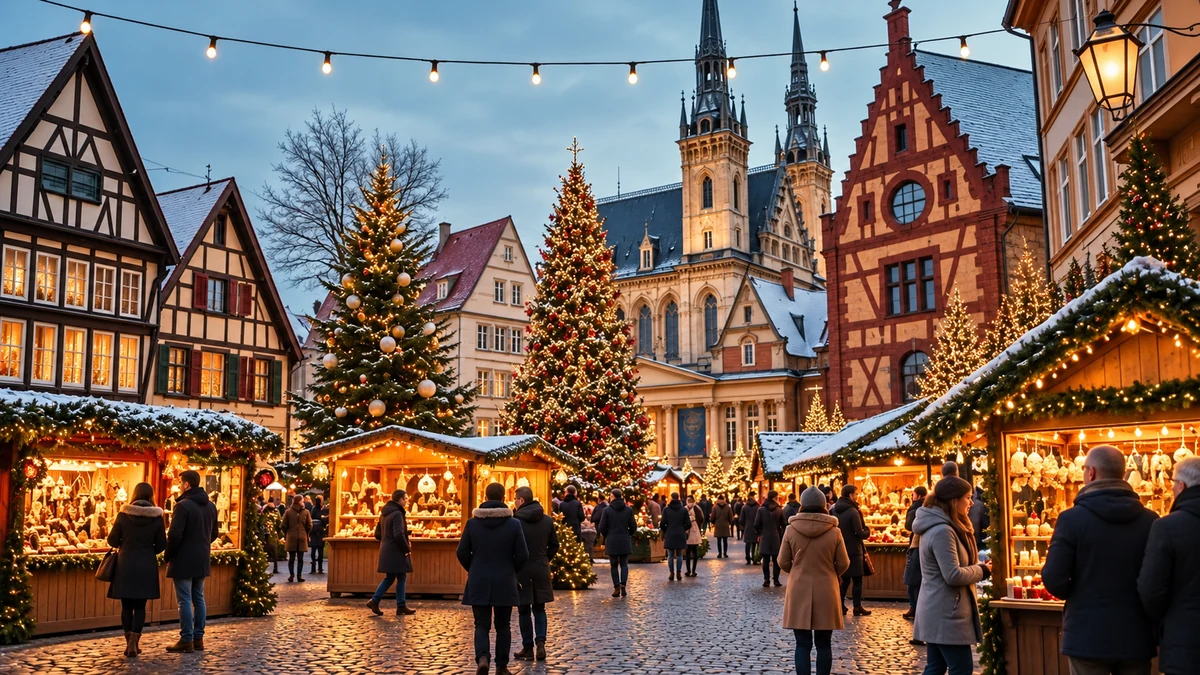
These cities offer different settings and regional specialities. Availability changes with the season, so treat the following as ideas to explore alongside the official programme.
Strasbourg, France
Promoted as the Capital of Christmas, Strasbourg combines Alsatian architecture, seasonal lights and markets spread across the city centre.
- Tree and lights: look for the large tree in Place Kléber and follow the city’s current illuminated routes.
- Crafts: browse decorations in wood, glass and textiles, checking individual makers and origins.
- Food: look out for tarte flambée and vin chaud, the local name for mulled wine.
Nuremberg, Germany
The Christkindlesmarkt centres on Nuremberg’s Hauptmarkt, with seasonal stalls and a long-established market tradition.
- Gingerbread and sausages: Lebkuchen and Nuremberg bratwurst are local specialities to look for.
- Seasonal programme: check official listings for musical performances and special events during your visit.
- Craft shopping: browse wooden toys and Christmas decorations, asking about how and where they were made.
Vienna, Austria
Vienna has several markets with distinct settings, including the well-known market in front of the Rathaus, or city hall.
- Music: check for concerts and choral performances alongside your market visit.
- Sweet treats: explore strudel, seasonal biscuits and the city’s pastry shops.
- Family activities: look up ice-skating and children’s workshops, including their separate dates and booking rules.
Prague, Czechia
Prague’s historic squares provide an atmospheric setting for seasonal stalls, photographs and craft shopping.
- Tree and displays: check the Old Town Square programme for the Christmas tree and other seasonal features.
- Glass and jewellery: browse glass decorations and jewellery, checking provenance if you want locally made pieces.
- Street food: trdelník, a rolled sweet pastry sold in the city, and warm dishes may feature at stalls. Its popularity there should not be confused with an exclusively Prague origin.
Dresden, Germany
Dresden’s Striezelmarkt is among Europe’s oldest Christmas markets and has a strong association with regional baking and crafts.
- Stollen: look for Dresden’s well-known Christmas fruit bread.
- Miniatures and Christmas pyramids: explore decorative traditions associated with Saxony and the Ore Mountains.
- Craft stalls: ask about the makers of wooden and ceramic pieces that catch your eye.
Colmar, France
Colmar’s markets are spread through its historic centre, among decorated streets and colourful buildings.
- Seasonal scenery: enjoy the decorated façades without blocking narrow streets or residential entrances for photographs.
- Regional products: look for Alsatian wines and craft decorations.
- Walking routes: several market locations can be combined on foot, allowing time for crowds, breaks and accessibility needs.
Budapest, Hungary
Budapest’s seasonal fairs combine Hungarian crafts and food with some of the city’s best-known public spaces.
- Food to explore: lángos, a fried flatbread, and kürtőskalács, or chimney cake, are popular options.
- Other food shopping: the Central Market Hall may suit a separate visit for food gifts and spices; it is not itself the same event as the Christmas fairs.
- Evening lights: check the current programmes around Vörösmarty Square and the Basilica rather than assuming every display runs nightly.
Tallinn, Estonia
Tallinn’s historic centre offers a compact setting for a winter visit, with the Christmas market in Town Hall Square.
- Town Hall Square: enjoy a seasonal market framed by historic buildings; the modern event is not a recreation of medieval daily life.
- Wool and wood: browse knitted items and wooden decorations, checking materials and makers.
- Warm breaks: nearby cafés can provide a welcome pause between outdoor activities.
What to prioritise
Try regional specialities that suit your dietary needs, book limited-capacity activities when necessary and keep your route manageable. There is no need to visit every stall to enjoy a market.
Transport, accommodation, budgets and safety
Planning the practical details helps prevent a festive outing becoming an exhausting series of queues and transfers.
Transport
Compare and book ahead where appropriate: fares and availability can change during busy periods. For nearby cities, compare daytime trains and regional buses using the actual journey times.
- Use official operators to check timetables, fares and whether a regional pass genuinely suits your route.
- Drivers should confirm parking arrangements and restrictions around historic centres and event areas.
- For local journeys, use public transport information, licensed taxis or established booking services.
Accommodation
Choose somewhere near your main market or a useful transport stop. Compare the total price, facilities and cancellation terms rather than location alone.
- Hotels: check heating, bathroom arrangements and recent reviews. Central rooms can be in demand during popular weekends.
- Apartments: check current reviews, access arrangements and house rules, particularly when travelling with children.
- Hostels and guesthouses: compare actual prices and facilities; they are not automatically the cheapest or most suitable option for every group.
Prices and budgeting
Make a budget for your destination rather than relying on one price range for all European markets:
- Food and drinks: check displayed prices and allow for any returnable-cup deposit. Prices vary by city, stall and portion.
- Souvenirs: set your own spending limit and compare the workmanship, materials and origin of items you like.
- Add accommodation, travel, local transport, meals, attractions and shopping separately. Use the relevant currency: not every destination in this guide uses euros.
To control spending, compare menus, plan some meals away from the busiest stalls and avoid buying simply because you feel rushed. Quieter hours do not guarantee discounts, and fixed-price stalls may not welcome bargaining.
Keeping belongings secure
Crowds can make it easier to lose belongings. Keep documents and money secure and, if you retain digital document copies, protect access to them rather than sharing them in an open folder.
- Keep bags closed and valuables out of easy reach.
- Use suitable secure storage at your accommodation where available and avoid keeping every card and all your cash together.
- Save relevant local emergency contacts and your country’s consular information before travelling.
Travel checklist
- Check official market dates and special opening hours.
- Confirm transport and accommodation bookings.
- Bring a suitable card and some local currency.
- Check bag restrictions and luggage storage if travelling directly to the market.
- Confirm accessibility arrangements and age or height limits for activities.
- Agree a meeting point and keep contact details available.
- Review travel insurance against your own trip and circumstances, including the actual terms for medical assistance and baggage.
These checks cannot prevent every disruption, but they can make decisions easier once you arrive.
Visiting with children and making memories
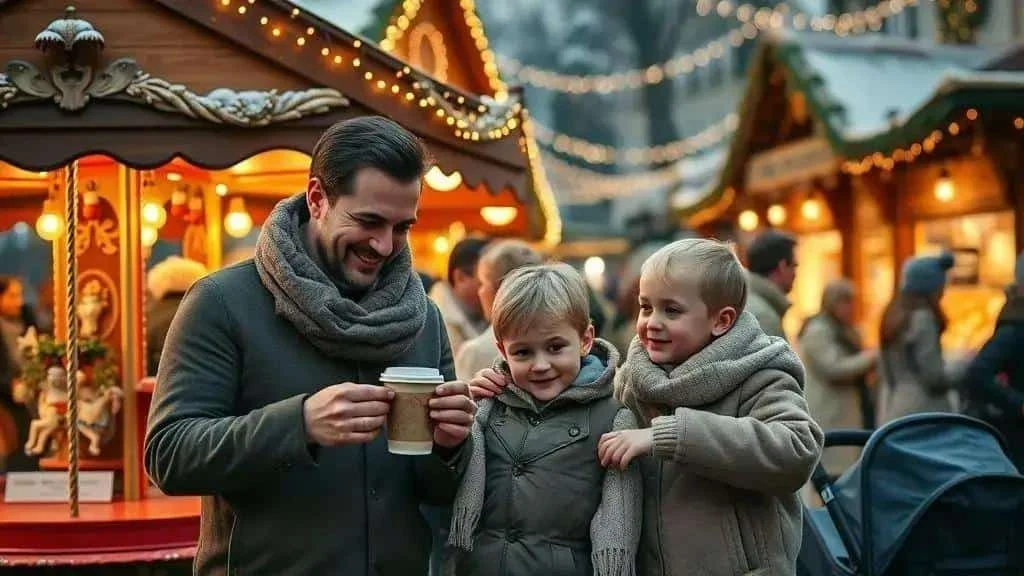
Keep a family visit flexible, with short activities and regular warm breaks. A few enjoyable stops can work better than a packed itinerary.
Children’s activities
- Craft workshops: check ages, supervision requirements and booking arrangements.
- Carousels and observation wheels: check suitability, height limits and ticket prices before joining the queue.
- Father Christmas visits: confirm times and whether a separate ticket is needed.
- Stories and choirs: check the programme and language so that the session suits your family.
Staying together
- Agree a clear meeting point, while keeping young children with a responsible adult throughout the visit. Explain how to seek help from event staff if separated.
- Carry a parent’s or carer’s phone number discreetly, without displaying unnecessary personal information.
- Keep money and documents secure and avoid leaving bags unattended while helping children.
- Plan the journey home before everyone becomes cold or tired.
Transport and accessibility
- Check the accessibility of the entire public transport journey, including lifts and station entrances.
- Choose a suitable pushchair or carrier for your child. Cobbles, steps and crowds can make some routes difficult even when the market advertises accessible areas.
- Locate toilets and baby-changing facilities before you need them.
Food, allergies and breaks
- Small portions can let the family try different foods, provided each dish is suitable for those sharing it.
- If someone has a food allergy, communicate it clearly in the local language and ask about ingredients and cross-contact. A translated card can help communication but cannot guarantee a stall can provide safe food.
- Bring suitable snacks and water where permitted, and allow time for seated breaks.
- An adult should handle hot drinks and check that anything offered to a child has cooled sufficiently. A reusable cup does not remove the scalding risk.
Practical planning
- Reserve places for workshops or performances where required.
- Consider a less busy weekday session, checking that the market and desired activities are actually open.
- Nearby accommodation can make it easier to return for a rest if needed.
What to pack
- Weather-appropriate layers, including hats, gloves and spare socks.
- A small blanket if useful for your child.
- Suitable snacks and water.
- Wipes and hand sanitiser for convenience, with proper handwashing before eating where available.
- Essential documents and contacts stored securely, with a practical backup.
- A phone power bank carried in accordance with your transport provider’s rules.
Making memories
Let children help choose a simple keepsake or an activity. Short, meaningful moments can be more enjoyable than a long checklist: a family photograph with everyone’s agreement, a postcard or a quiet look at the tree may be enough.
Bringing your plans together
European Christmas markets offer many ways to enjoy seasonal food, crafts and lights. Use this guide to choose destinations, then rely on their current official calendars for dates and practical arrangements.
Keep bookings, belongings and family needs in mind, and leave room for weather changes and rest. A manageable itinerary is often easier to enjoy.
Thank you for reading! Explore the I Love Christmas blog for more seasonal ideas and traditions.
Keep a few photographs or notes of your favourite moments, sharing images of other people only with their agreement.
Frequently Asked Questions About European Christmas Markets
Are dates from a previous year’s guide reliable for my trip?
No. Check the current year’s official calendar for each market, then recheck before travelling. Dates, daily hours and attraction schedules can change.
Do I need an admission ticket?
Many markets have free general admission, but this is not universal. Rides, workshops, performances and some venues require separate tickets or bookings.
How can I pay at stalls?
Payment methods vary by vendor. Check before ordering and carry a suitable card plus a small amount of local currency rather than assuming every stall accepts contactless payments.
Are markets accessible for wheelchairs and pushchairs?
Some provide step-free routes and accessible facilities, but historic streets may have cobbles, slopes or steps. Check the specific venue and transport route with the organiser.
How can I help children stay safe during the visit?
Keep young children with a responsible adult, agree a meeting point and explain how to approach event staff if separated. Carry contact details discreetly and make time for warm breaks.
When should I visit to avoid crowds and manage costs?
A weekday or earlier session may be quieter if the market is open. Compare actual travel and accommodation prices and set a spending budget; quieter visiting times do not guarantee cheaper stall prices.
Sources and Further Reading
- Strasbourg Christmas markets
- Nuremberg Christmas market
- Dresden Striezelmarkt
- Vienna Christmas markets
- Prague Christmas market
- Cologne at Christmas
- Budapest at Christmas
- Tallinn at Christmas
- Brussels Winter Wonders
- Edinburgh Christmas markets
- Colmar Christmas markets