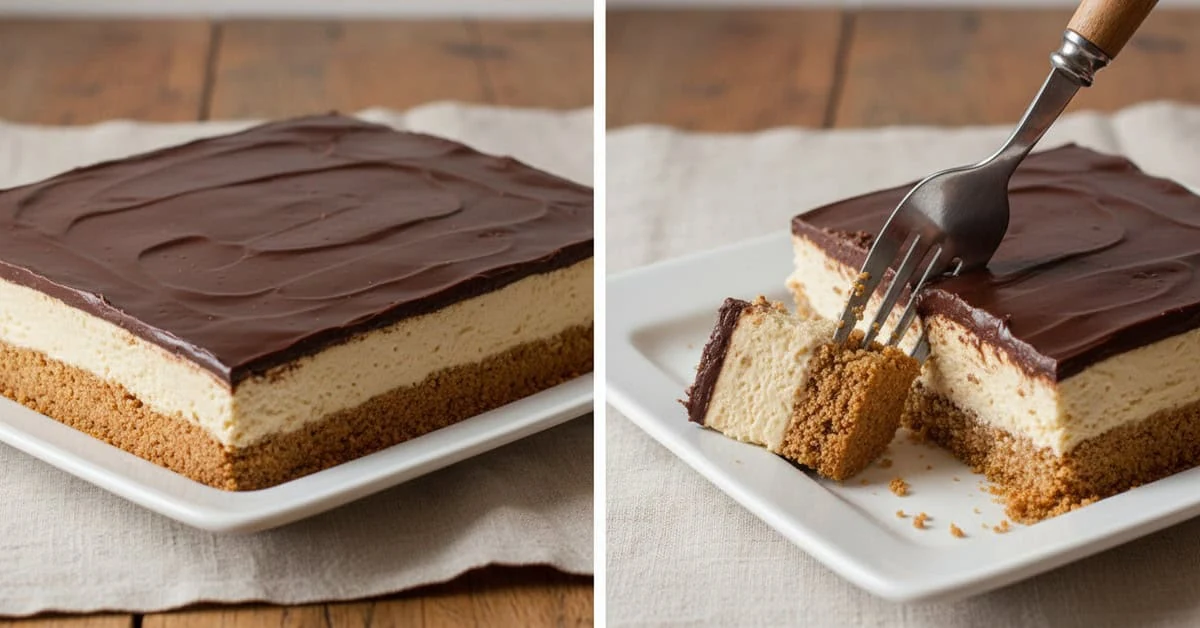
This Brazilian torta holandesa-style dessert has a crushed-biscuit base, a rich condensed milk and butter filling, and chocolate ganache. Assemble the layers without baking, then refrigerate for at least 4 hours. Try modest flavour variations without changing the balance of the filling.
Brazilian torta holandesa is a chilled chocolate-topped dessert. This simplified home version is quick to assemble, although it needs several hours in the fridge. The filling is a rich buttercream, rather than whipped cream or a baked cheesecake.
Ingredients for Brazilian torta holandesa
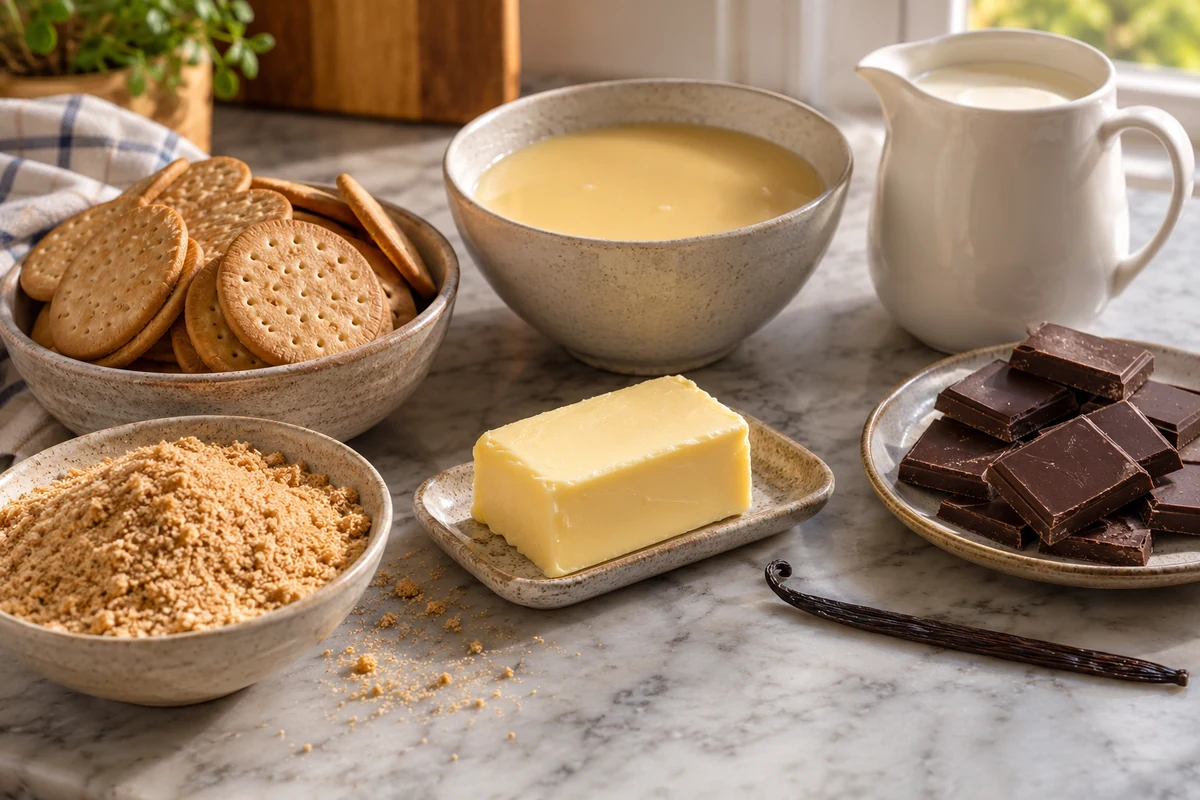
Gather the ingredients for this Brazilian torta holandesa before starting. Keep the two butter quantities separate: one binds the crumbs and the other makes the filling.
Ingredients for Brazilian torta holandesa
- 300 g plain sweet biscuits — finely crushed for the base. Brazilian Maizena-style or similar firm tea biscuits work; despite their name, Maizena biscuits commonly contain wheat.
- 150 g unsalted butter, melted — for the base. Biscuit absorbency varies, so add it gradually until the crumbs hold together when pressed.
- 1 tin sweetened condensed milk, about 397 g — a 395 g tin also works. Use at a similar temperature to the softened filling butter.
- 200 g unsalted butter, softened — for the filling. It should be pliable rather than melted; a soft spread will not necessarily set as firmly.
- 1 teaspoon vanilla extract, optional — to flavour the filling.
- 200 g dark chocolate — chopped for the topping. Milk chocolate makes a sweeter, softer ganache and is not an identical substitution.
- 200 ml double cream — for the ganache; use this measured quantity rather than confusing the weight of a carton with its volume.
- A pinch of salt — to balance the sweet filling.
- Cocoa powder or chocolate shavings, optional — for decoration.
Dietary substitutions: a dairy-free or vegan version requires suitable biscuits, chocolate, plant-based condensed milk, plant cream and a firm baking block in place of both butter quantities. Results vary by product; do not simply add dry gelatine or uncooked cornflour to this cold buttercream.
How to assemble the no-bake tart
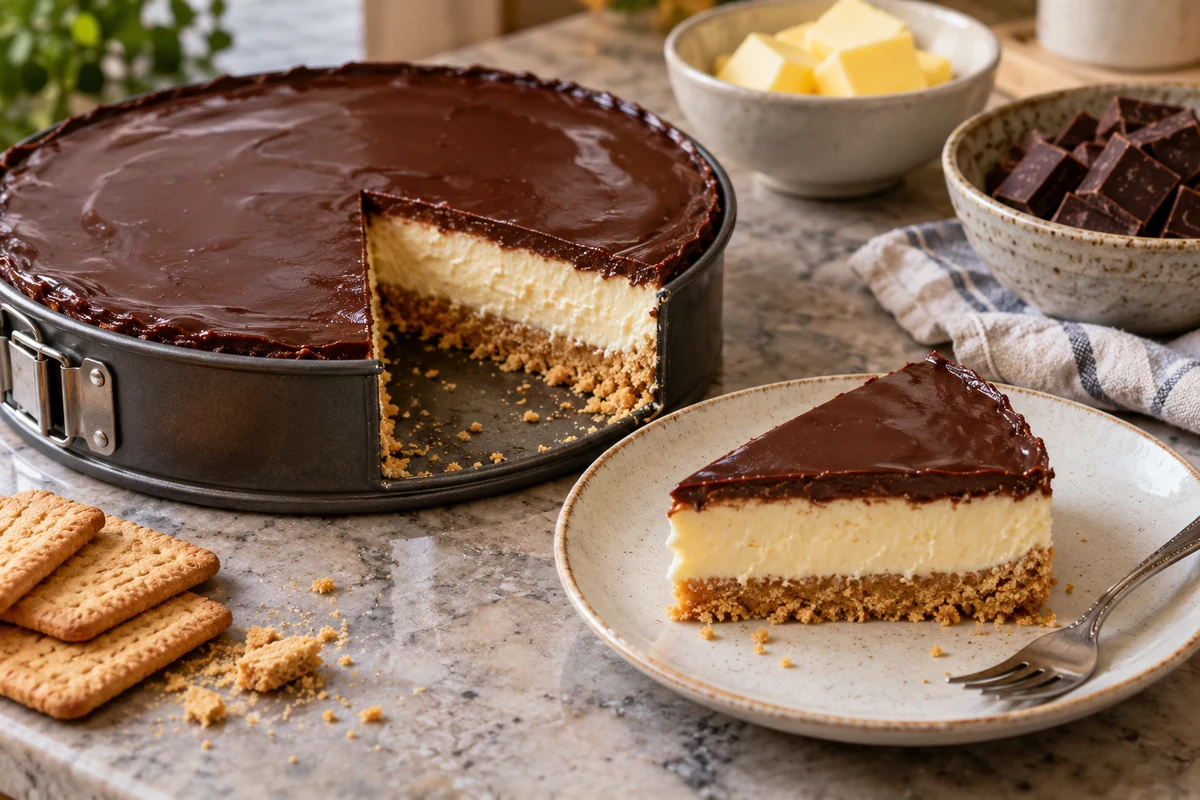
- Prepare the base: combine 300 g finely crushed biscuits with up to 150 g melted butter until the crumbs clump when pressed. Firmly press into the base of a lined 22 cm springform tin and chill for at least 15 minutes while preparing the filling.
- Make the filling: beat 200 g softened butter until creamy. Add the condensed milk gradually, beating between additions until smooth. Similar ingredient temperatures help prevent splitting.
- Finish the buttercream: beat in the vanilla and salt. If it becomes too soft, chill briefly for about 10 minutes, then mix gently until smooth rather than continuing to warm it by beating.
- Add the filling: spread evenly over the cold biscuit base, smooth the top and return the tin to the fridge while making the ganache.
- Make the ganache: put 200 g chopped dark chocolate in a heatproof bowl. Heat 200 ml double cream until steaming, pour over the chocolate, leave for a minute, then stir gently from the centre until smooth.
- Cool the topping: let the ganache cool until barely warm but still pourable, stirring occasionally. This may take longer than 5–10 minutes; judge its temperature so it will not melt the chilled buttercream.
- Top the tart: pour the ganache gently over the filling and spread into a thin, even layer.
- Chill thoroughly: refrigerate for at least 4 hours, preferably overnight, until the filling and topping are firm enough to slice.
- Release and slice: carefully loosen the edge and release the springform ring. Warm a thin knife in water and wipe it dry between slices for a cleaner cut.
- Store correctly: keep covered at 5°C or below and eat within 48 hours, or sooner if an ingredient requires it. Freeze well-wrapped portions promptly for up to a month as a quality guide; thaw in the fridge and use within 24 hours of complete defrosting.
Useful preparation tips
- For a firmer filling: use butter rather than a soft spread, avoid extra liquid and allow a full overnight chill. Gelatine is not a simple fix for a split or warm buttercream; this recipe does not require it.
- Biscuit and chocolate swaps: similar plain sweet biscuits are useful alternatives. Milk chocolate changes the sweetness and firmness of the ganache, so test a small quantity before replacing all the dark chocolate.
- Use the right butter texture: melted butter binds the base, while softened butter is beaten into the filling. These stages need different temperatures.
- Handle chocolate carefully: use clean, dry tools when melting chocolate, then add the measured cream deliberately rather than splashing in small amounts of water.
Torta holandesa flavour variations
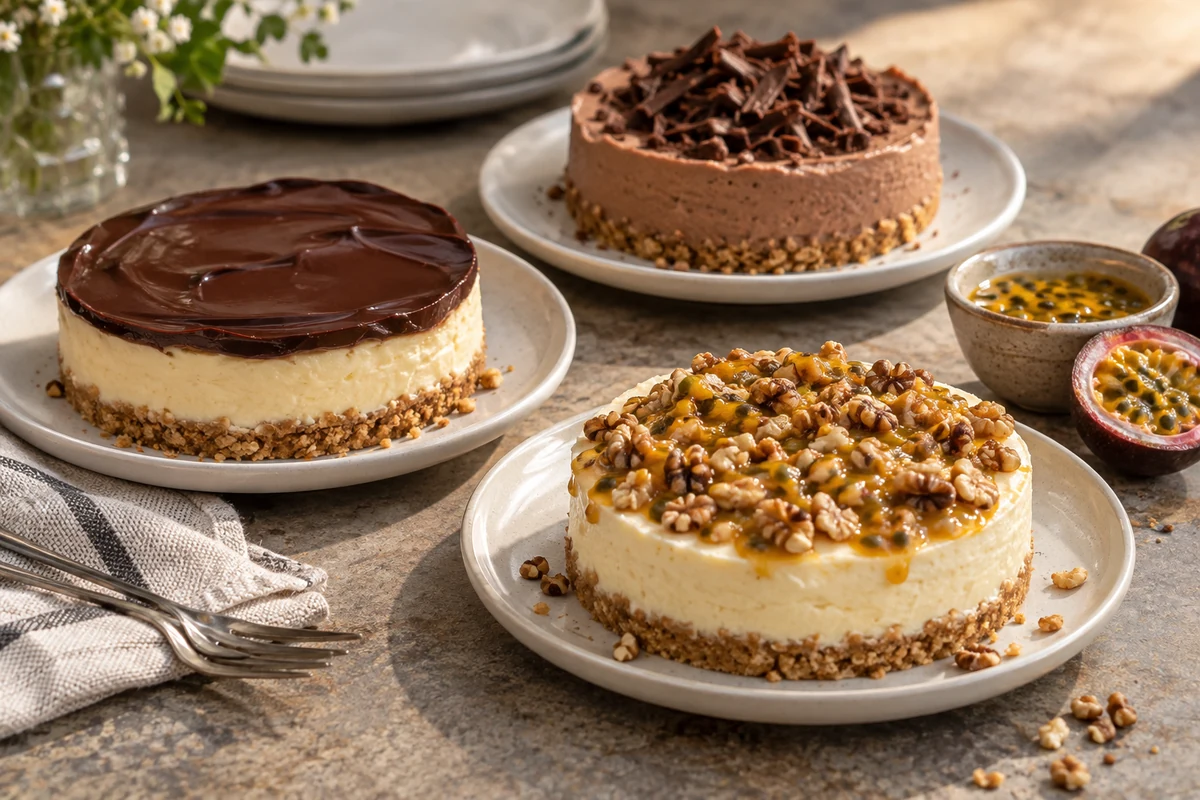
- Passion fruit — for a tangy variation, keep the main filling unchanged and serve a little strained passion fruit pulp alongside each slice. A large quantity of juice can loosen or split this butter-based filling.
- Quantity: start with about 1 teaspoon pulp per serving and add more to taste; do not replace 100 g filling with 200 g liquid.
- Alternative: use a small spoonful of prepared passion fruit curd as an accompaniment, following its storage instructions.
- Tip: the tart is already sweet, so try the fruit and tart together before adding further sugar or condensed milk.
- Double chocolate — keep the original 200 g dark chocolate for the ganache and fold an additional 100 g melted, cooled chocolate into the filling for a denser chocolate version.
- Cocoa alternative: use about 20–30 g sifted cocoa in the filling instead of the additional melted chocolate. Add gradually; using both can make the filling overly dense.
- Chocolate choice: a higher-cocoa chocolate gives a less sweet flavour; different cocoa percentages can also alter the set.
- Tip: chill the filling before applying the cooled, pourable ganache.
- Dairy-free or vegan — replace both butter quantities with a firm plant-based baking block, use plant-based condensed milk and suitable plant cream, and check the biscuits and chocolate as well.
- Starting quantities: use 150 g plant block for the base and 200 g for the filling. Similar quantities are a starting point, not a guarantee, because plant products vary in water and fat content.
- Setting advice: do not stir uncooked cornflour into cold cream; it needs a cooked method to thicken properly. If your alternative filling is soft, serve it in dessert glasses rather than expecting a clean slice.
- Tip: allow an overnight chill and test the chosen products in a small portion first.
- Walnut or mixed-nut crunch — add toasted chopped nuts as a topping, or replace a modest portion of the biscuit crumbs with finely chopped nuts.
- Quantity: start with 250 g biscuit crumbs plus 50 g finely chopped nuts. Add melted butter gradually until the mixture binds; nuts contribute their own fat.
- Alternatives: almonds or Brazil nuts give a different flavour. Check guests’ allergies and avoid cross-contact when preparing a nut-free portion.
- Tip: toast nuts briefly in a dry pan or moderate oven until fragrant, watching closely so they do not burn, then cool before chopping.
- Individual mini tarts — use small moulds or dessert glasses for easier serving. Chill until fully firm; smaller portions may set sooner, but do not rely on a fixed 2-hour shortcut.
- Portioning: divide the base, filling and topping between the moulds, keeping the biscuit layer thinner than the filling. The number of portions depends on mould size.
- Serving alternative: use reusable dessert glasses if you would rather avoid unmoulding.
- Tip: finish with washed fresh fruit or chocolate shavings just before serving.
Practical tips for adapting the recipe
- Sweetness: use less sweet chocolate or serve smaller portions with tart fruit. Changing the condensed milk quantity substantially also changes the buttercream balance.
- Filling firmness: choose a firm fat, keep extra liquids out and chill thoroughly. A different setting agent needs a properly developed method, not an arbitrary spoonful added to cold buttercream.
- Ganache temperature: apply it barely warm and pourable, never hot, so the filling keeps its shape.
- Decoration: contrast the smooth topping with chocolate curls, fresh fruit or a little chopped nut crunch.
Try a small version first: use individual glasses to test a new flavour or plant-based product before changing an entire tart.
Assembly, storage and texture
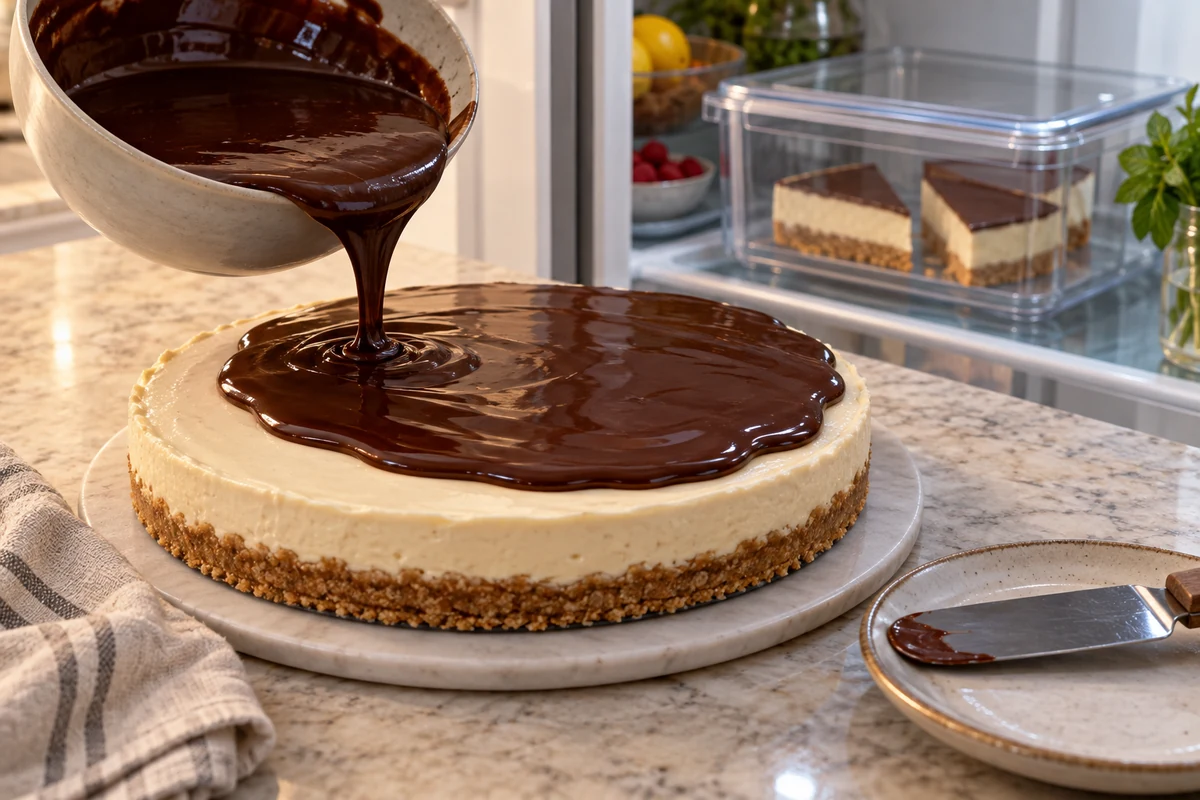
- Check the base: it should feel compact after chilling. Press any loose patches firmly with the back of a spoon before adding the filling.
- Spread the filling: use a spatula to move the cream from the centre towards the edges, leaving an even top without gaps.
- Add the ganache: pour the cooled but still fluid topping over the chilled filling and spread gently from the centre.
- Smooth the surface: use light spatula strokes. A gentle tap can release visible bubbles, but repeated banging will not create extra shine.
- Refrigerate: allow at least 4 hours, preferably overnight, for the layers to firm up.
- Slice neatly: warm a knife in hot water, dry it and make a steady cut, wiping the blade between portions.
Storage
- In the fridge: keep the torta holandesa covered at 5°C or below and eat within 48 hours, respecting any shorter ingredient use-by date.
- In the freezer: freeze individually wrapped slices promptly for up to a month as a quality guide. Defrost in the fridge and use within 24 hours of complete thawing; texture may change slightly.
- Protect the flavour: a closed container helps prevent the dessert from absorbing strong fridge odours.
- At the table: take out only what you need and return the rest promptly. Do not leave the tart unrefrigerated for more than 2 hours, and keep it cool during transport.
Getting the best texture
- Butter temperature: the filling needs softened, not melted, butter. The base uses melted butter to coat and bind the crumbs.
- Avoid overworking: stop once the filling is smooth; prolonged beating can warm the fat and make it too soft.
- Cool the ganache: keep it pourable but no longer hot enough to melt the filling underneath.
- Set by chilling: this buttercream firms as the butter cools. If it remains soft, check the ingredients and fridge temperature rather than adding dry gelatine.
- Balance crunchy additions: finely chopped nuts or biscuits can add texture, but too many loose pieces make the base crumble.
What is torta holandesa?
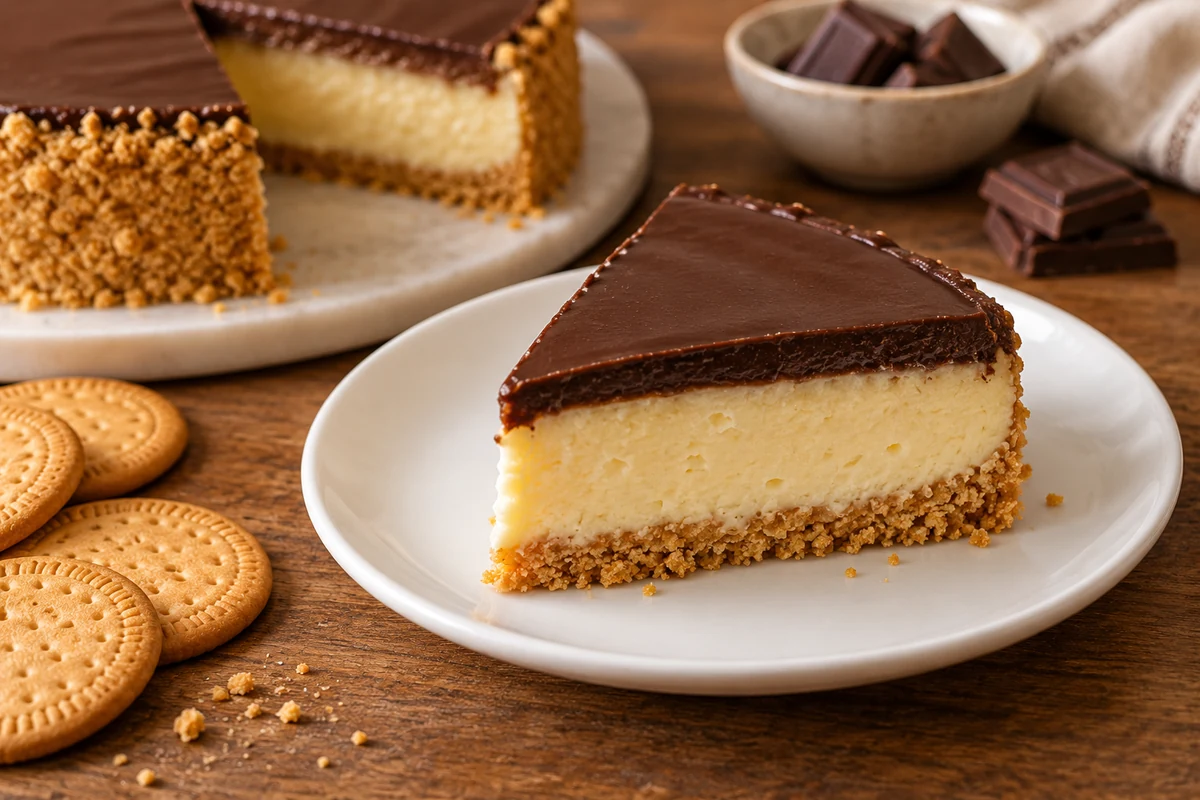
Torta holandesa means ‘Dutch tart’ in Portuguese, but the well-known dessert is Brazilian. It generally combines a biscuit base, a pale creamy filling and a chocolate topping, with many home and bakery variations.
Its Brazilian background
The dessert is associated with Campinas, in São Paulo state, and its creator Silvia Leite. It should not be presented as a traditional Dutch recipe. This condensed milk buttercream version is a home adaptation, not a claim to reproduce her original recipe.
A few useful distinctions
- The name: ‘holandesa’ refers to the dessert’s name, not proof that it originated in the Netherlands.
- Condensed milk: it is familiar in Brazilian home desserts and appears in many adaptations, including this one.
- Chocolate topping: ganache combines chocolate and cream. It does not need the same tempering process used for solid chocolate decorations.
- Home versions: no-bake assembly makes the dessert convenient, and toppings can be varied without changing the basic filling.
- For gatherings: a chilled tart can be prepared ahead and sliced into small portions for a family meal or celebration.
A familiar Brazilian dessert
You may encounter torta holandesa in Brazilian bakeries and dessert menus. Recipes differ, but the contrast between a pale filling, biscuit base and chocolate top makes the style recognisable.
Ideas for your own version
- Start small: try an individual portion before adapting the whole recipe.
- Use available ingredients: firm plain sweet biscuits and familiar UK dairy products make this home adaptation accessible.
- Keep the character: preserve the contrasting layers and add fruit or nuts as a finishing touch, explaining any substantial changes when sharing your version.
A make-ahead chocolate dessert
Torta holandesa makes a rich treat for a celebration or weekend dessert. Careful temperatures during assembly and enough time in the fridge help the layers slice neatly.
Thank you for reading! Try the recipe, experiment with small variations and share a photograph of your finished dessert.
Find more festive recipes and ideas on the I Love Christmas blog.
FAQ: Brazilian torta holandesa
How should I keep the tart in the fridge?
Keep it covered at 5°C or below and eat within 48 hours, or sooner if an ingredient requires it. A closed container also protects the flavour from strong fridge odours.
Can I freeze the tart?
Yes. Freeze well-wrapped individual portions promptly for up to a month as a quality guide. Thaw in the fridge and use within 24 hours of complete defrosting; the texture may change slightly.
How can I make the filling firmer?
Use softened butter rather than a soft spread, avoid adding extra liquid and chill overnight. Do not add an arbitrary spoonful of gelatine or uncooked cornflour to cold buttercream; different setting methods need their own recipe.
Which ingredient substitutions can I make?
Similar plain sweet biscuits can replace Maizena-style biscuits. Milk chocolate makes a sweeter, softer topping. For a dairy-free or vegan version, check every ingredient, including biscuits, chocolate, cream, both butter quantities and condensed milk.
How do I stop the ganache melting the filling?
Chill the filling first and let the ganache cool until barely warm but still pourable. Spread gently, then return the tart to the fridge.
Can I make it ahead for a celebration?
Yes. Assemble it the day before and chill for at least 4 hours, preferably overnight. Keep within the 48-hour refrigerated storage guide and serve it cold.
Sources and Further Reading
- Food Standards Agency: chilling, freezing and defrosting food safely
- Silvia Leite: the creation of torta holandesa