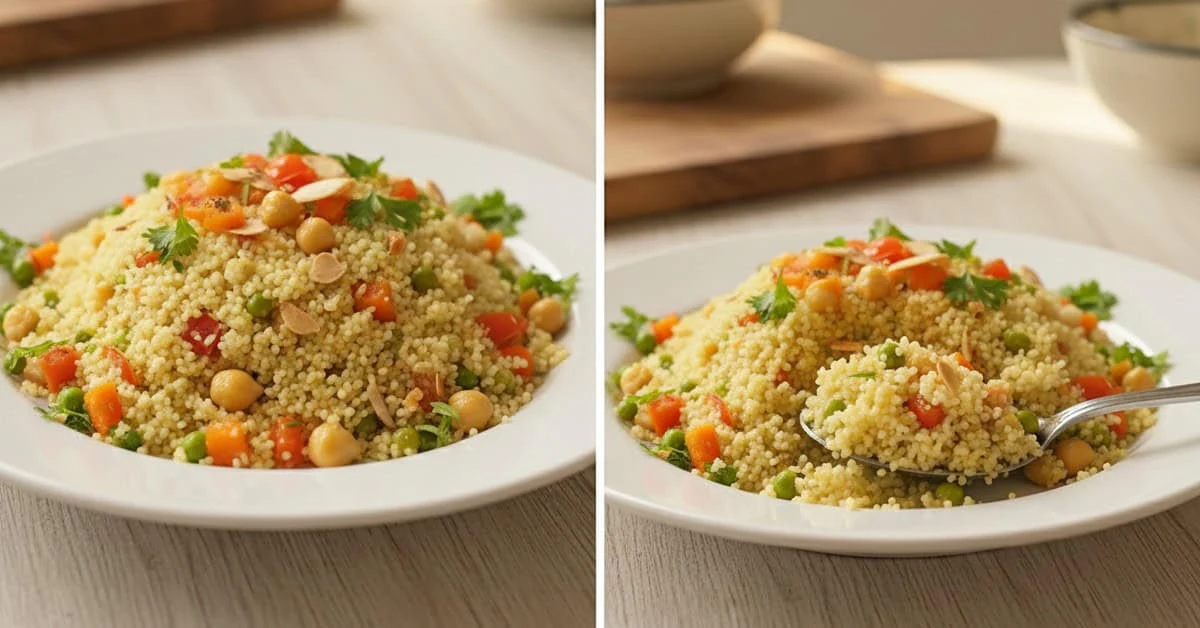
This festive couscous combines quick-cooking wheat semolina with orange, spices and dried fruit. Serve it freshly made and warm, or chilled as a salad, with pomegranate and toasted almonds. Use the substitutions below for a vegan version or a gluten-free grain alternative.
Festive couscous with dried fruit makes a fragrant addition to Christmas dinner. Sweet apricots, warm spices and fresh citrus work well alongside roast vegetables or meat. This is a Christmas adaptation inspired by North African flavours, rather than a claim to a traditional Moroccan Christmas dish.
Ingredients for festive couscous
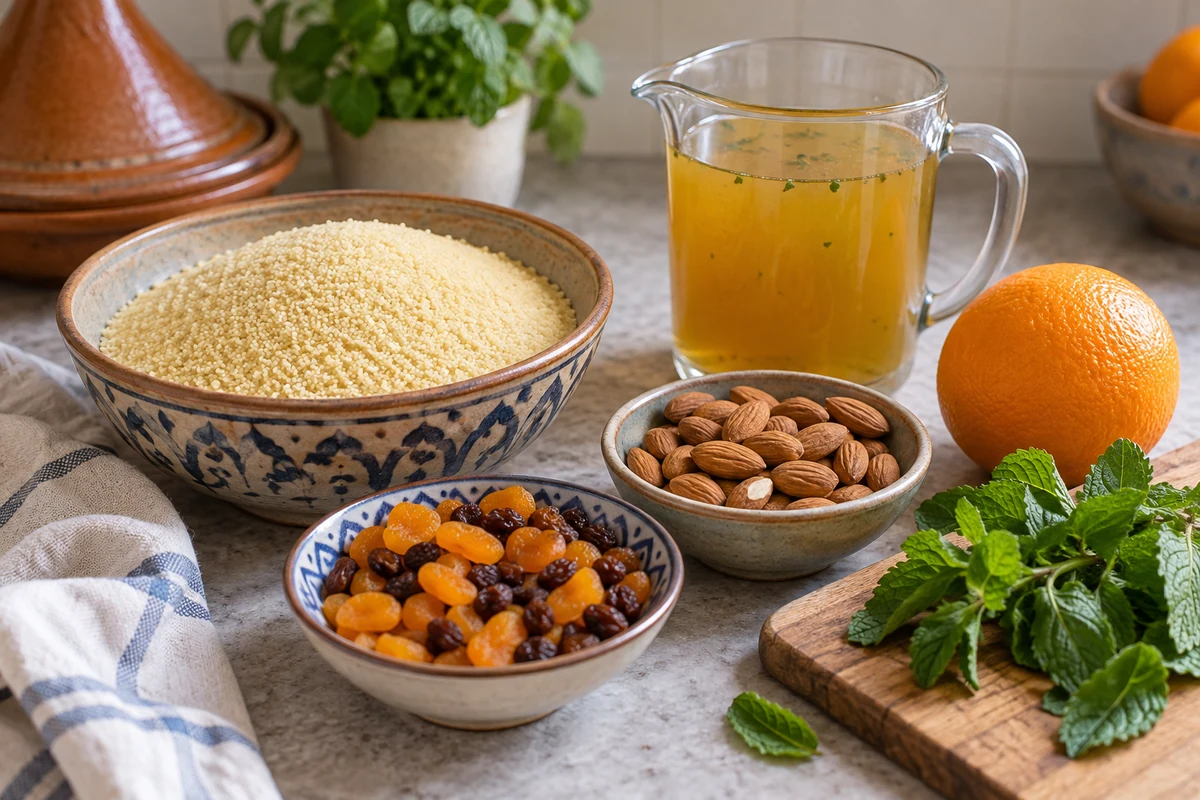
For this festive couscous, gather the ingredients below. The recipe makes approximately 6–8 generous side portions. Use the weights as your guide and check your couscous packet for the correct amount of liquid.
- 400 g quick-cooking couscous made from wheat semolina – use the small grains, not pearl or giant couscous.
- Hot vegetable stock, in the quantity specified on the couscous packet – measure the orange juice below as part of that total liquid. Make stock cubes up according to their instructions.
- 3 tbsp olive oil or 30 g butter; choose olive oil for a vegan version.
- 120 g dried apricots, chopped – pitted dates are an alternative.
- 80 g raisins or sultanas – or use dried cranberries.
- 100 g flaked almonds, toasted – chopped pistachios or walnuts also work.
- Seeds from 1 pomegranate – thawed pomegranate seeds are another option.
- Finely grated zest of 1 orange and juice of ½ orange – measure the juice before adding it to the stock allowance.
- 1 tsp ground cinnamon for gentle warmth.
- ½ tsp ras el hanout – or ¼ tsp each of ground cumin and turmeric for a simpler seasoning.
- Up to 1 tbsp honey, to taste – use agave syrup for a vegan version, or omit it if the fruit is sweet enough.
- Salt, to taste, and freshly ground black pepper; taste before salting if using a stock cube.
- 3 tbsp chopped fresh mint or parsley, to finish.
Quick substitutions and useful tips
For a gluten-free alternative, use separately cooked quinoa or a certified gluten-free maize couscous, prepared according to its packet. For a vegan version, use olive oil, vegan stock and agave syrup instead of butter and honey. For crunch, toast the almonds gently and add most of them just before serving.
How to make festive couscous
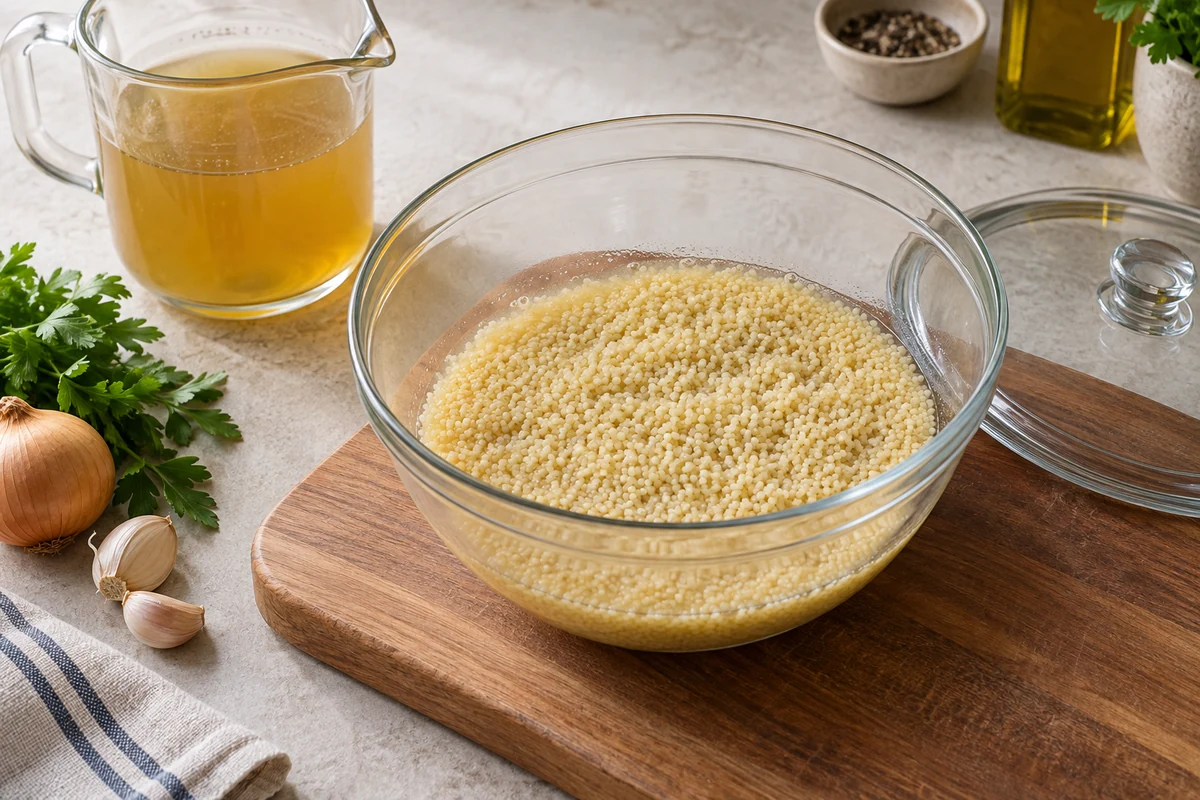
- Prepare the couscous: put 400 g quick-cooking couscous in a large heatproof bowl. Add a little salt, if needed, and 3 tbsp olive oil or 30 g butter, stirring lightly.
- Measure and heat the liquid: measure the orange juice, then add enough vegetable stock to reach the total liquid quantity on the couscous packet. Heat this mixture as directed on the packet.
- Soak the couscous: pour over the hot liquid, which already includes the juice of ½ orange, and add the zest. Cover with a plate or suitable lid and leave for the packet’s recommended time, commonly 5–10 minutes, until absorbed.
- Fluff with a fork, gently breaking up clumps rather than pressing the grains together.
- Add the seasoning: stir in 1 tsp cinnamon, ½ tsp ras el hanout or the cumin and turmeric mixture, and up to 1 tbsp honey or agave, to taste. Fold gently to distribute the flavours.
- Add the fruit and some almonds: fold in 120 g chopped apricots, 80 g raisins or sultanas and 75 g toasted flaked almonds. Reserve the remaining 25 g almonds for the top.
Adjusting the texture
- If the couscous seems dry, add warm water or stock a tablespoon at a time, fluffing and checking between additions.
- If it is too wet, spread it briefly on a clean tray to release steam before folding in the other ingredients. Too much liquid can make the grains soft, so measure carefully at the start.
- To toast the almonds, use a dry frying pan over a low heat for a few minutes, stirring frequently. Remove when lightly golden and fragrant, then leave to cool.
- Add freshness and crunch: fold in most of the pomegranate seeds and chopped mint immediately before serving.
- Check the final flavour: adjust salt, pepper and sweetness. A small squeeze of orange juice can freshen the dish without making it soggy.
- Finish and serve: transfer to a platter and scatter over the reserved almonds, remaining pomegranate seeds and a few mint leaves. Serve freshly made and warm, or chill promptly for a cold salad.
Festive couscous variations
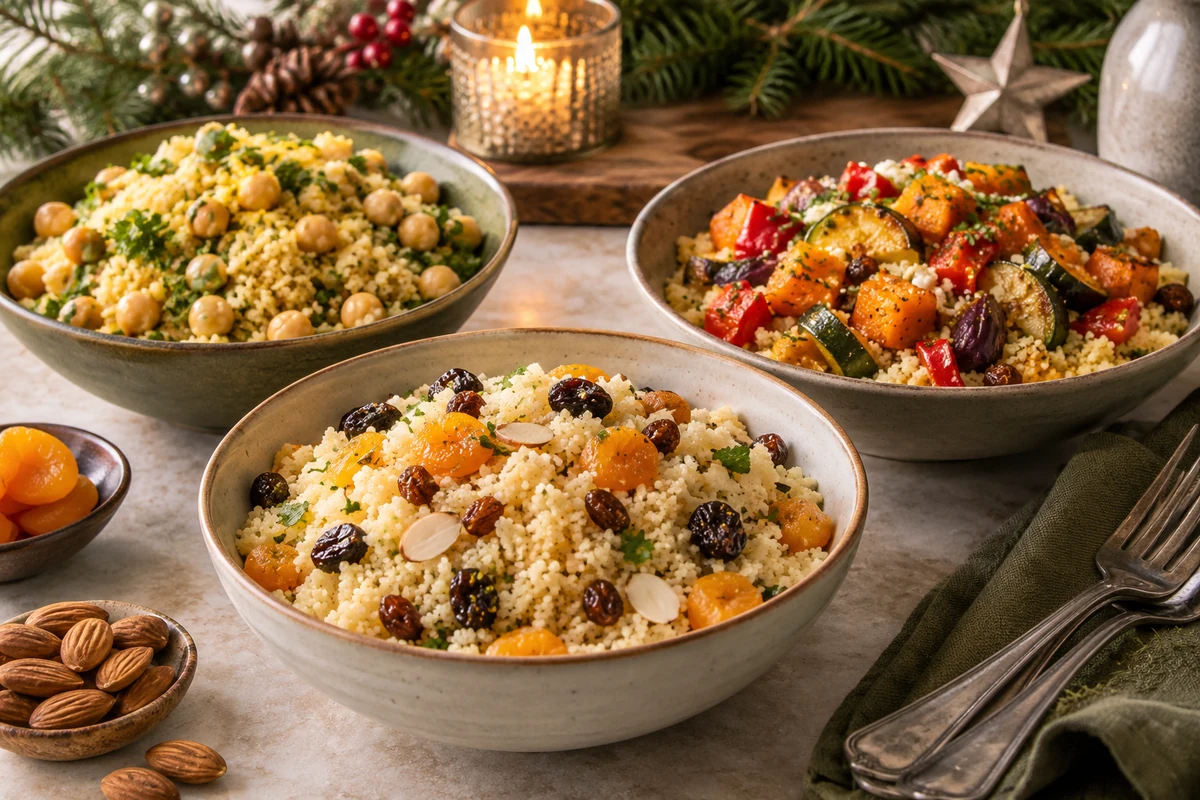
Adapt this festive couscous to your guests’ preferences with the combinations below. Treat them as alternatives to the base recipe rather than adding every suggested ingredient at once.
- Vegan: use 3 tbsp olive oil instead of butter and up to 1 tbsp agave syrup instead of honey. Choose vegan vegetable stock and add roasted cooked chickpeas for a more substantial dish.
- Gluten-free: replace the wheat couscous with a separately cooked batch of quinoa or certified gluten-free maize couscous. Follow that product’s cooking method and quantities, then add the fruit, spices and almonds to taste; do not pour couscous soaking liquid over already cooked quinoa.
- With chicken or lamb: add 300–400 g fully cooked shredded chicken or 300 g cooked diced lamb. For a warm dish, heat the meat thoroughly before combining and serve straight away. If marinating raw meat in orange and spices, keep it refrigerated and cook it separately before adding.
- Extra citrus and herbs: use the zest and juice of 1 whole orange, including its juice in the liquid allowance. Add extra mint and a little lemon zest, then serve with green leaves.
- A sweeter variation: increase the combined dried fruit to 250 g and adjust the cinnamon and honey to taste. For a separate dessert-style experiment, use unsalted water instead of stock, omit the savoury spices and offer yoghurt alongside; this changes the character of the base recipe.
- Spiced with harissa: start with 1 tsp harissa or a small pinch of chilli flakes, then adjust to taste. A little ground cumin or coriander and lemon wedges work well with it.
- Less sweet: reduce the combined dried fruit to about 75–100 g and omit the honey. Unsweetened dried fruit still contains natural sugars; this adjustment is not a nutritional claim that the dish is low in sugar.
- Extra colour and crunch: replace some almonds with pistachios and finish with plenty of pomegranate. Toast the nuts lightly to bring out their flavour.
Practical tips for adapting the recipe
- Cooking liquid: when replacing couscous with quinoa or millet, follow that grain’s packet instructions. Cook it separately before adding the fruit and garnishes.
- Spices: ras el hanout blends vary. Cumin and turmeric provide a simple alternative, though not an identical flavour. Add cinnamon sparingly if you prefer a more savoury dish.
- Texture: reserve some nuts and pomegranate for the top. Roasted cooked chickpeas add another texture and make the dish more substantial.
- Different preferences: serve clearly labelled variations in separate bowls with their own utensils.
Serving couscous at Christmas
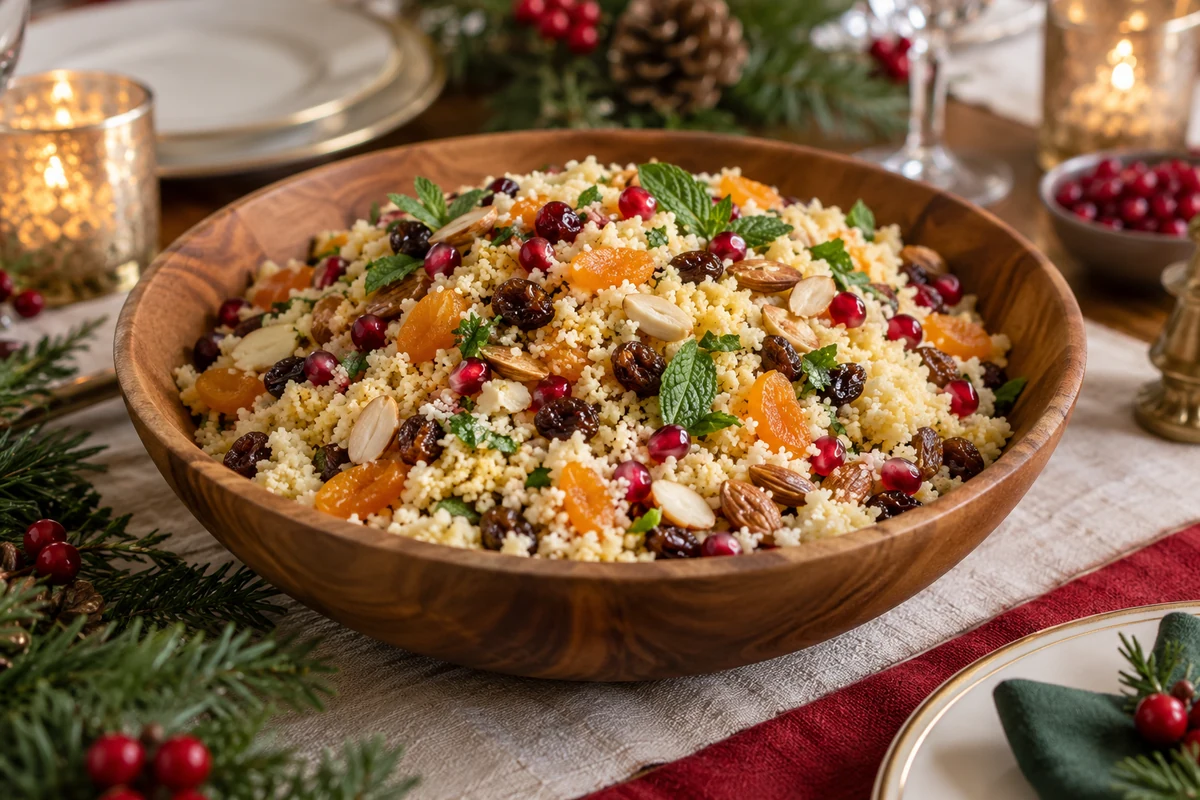
Festive couscous brings colour to a Christmas spread. Consider portion sizes, serving temperature and garnishes before you set out the platter.
Portions and temperature
- Portions: allow roughly 150–200 g of the finished dish per person as a generous side, or less alongside several other dishes.
- Serving temperature: enjoy it freshly made and warm, or promptly chilled as a salad. Do not leave it sitting at room temperature for a long buffet.
Presentation and garnishes
- A sharing platter: mound the couscous loosely on a broad dish, or use individual bowls.
- Colourful toppings: scatter over pomegranate, toasted flaked almonds and fresh mint just before serving.
- A citrus finish: finely grated orange zest adds aroma without extra liquid.
What to serve alongside
- Main dishes: roast lamb, spiced roast chicken or roasted chickpeas all complement the fruit and spices.
- Vegetables: offer spiced roast vegetables and a green salad with a citrus dressing.
- Drinks: mint tea, sparkling water with orange, or a wine or cider of your choice can accompany the meal.
Making ahead and reheating
- Advance preparation: prepare the couscous with its fruit and spices up to a day ahead. Cool promptly in a shallow container and refrigerate within 1–2 hours. Keep nuts, mint and pomegranate separate until serving.
- Reheating: add a splash of stock and use a covered saucepan or microwave-safe container with a suitable vented lid. Heat until steaming throughout, stir to eliminate cold spots and reheat only once.
- Serving warm: put out a freshly heated portion when guests are ready to eat. A lightly warmed platter is not a substitute for safe temperature-controlled holding.
Buffets and individual portions
- A help-yourself spread: offer pomegranate, almonds, mint and a little honey in separate bowls. Keep reserve couscous refrigerated and bring out small portions as needed.
- Individual servings: use small bowls or food-safe glasses to make portions easy to handle.
Labelling dishes for guests
- Allergens: the base recipe contains wheat and almonds; butter adds milk. Check stock, dried fruit and spice labels for other allergens, and label alternatives accurately.
- Dietary preferences: keep vegan and meat versions separate, with dedicated serving utensils. Take particular care when preparing food for someone with an allergy.
Vegan, gluten-free and other substitutions
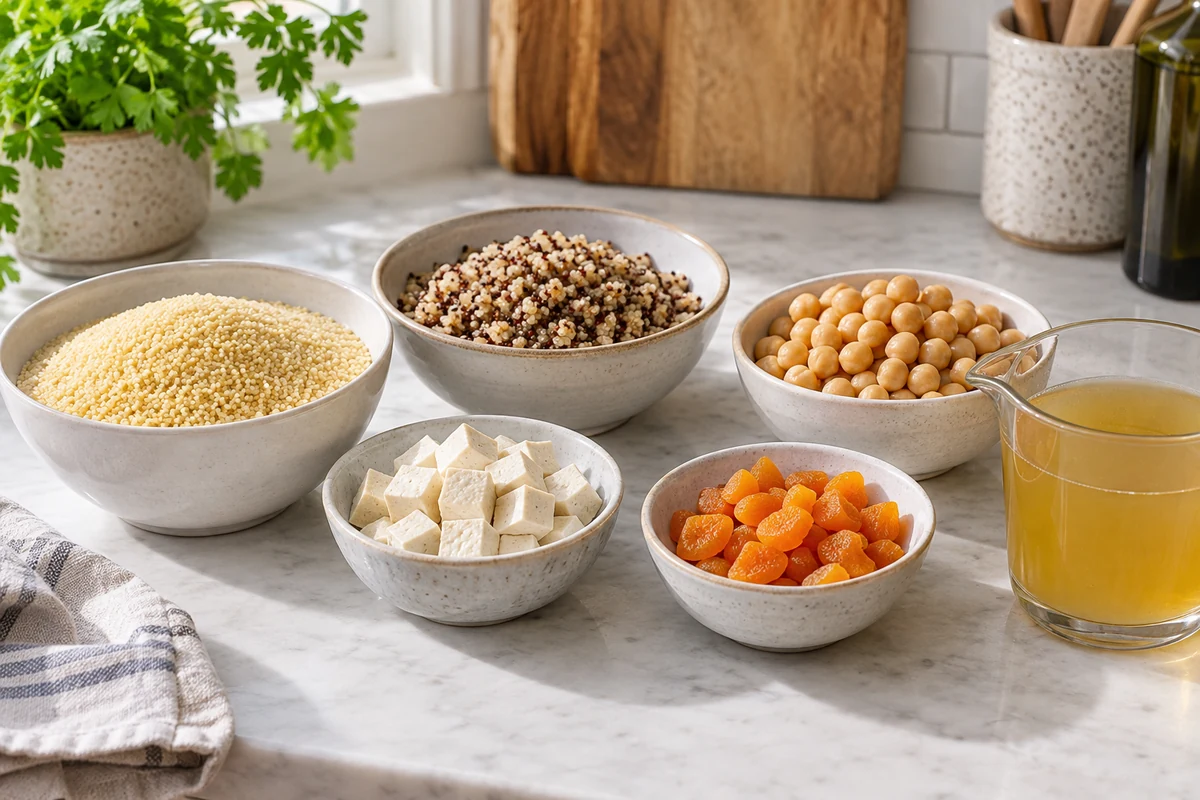
These practical substitutions help you adapt the dish while keeping its contrasting flavours and textures.
Vegan version
- Fat: choose the 3 tbsp olive oil option instead of 30 g butter.
- Sweetener: replace honey with the same amount of agave or maple syrup, or omit it.
- Stock: use vegan vegetable stock, measuring the total liquid according to the couscous packet and allowing for the orange juice.
- Extra substance: add about 150 g roasted cooked chickpeas or 200 g cooked diced tofu, following product cooking instructions.
Gluten-free version
- Base: use quinoa or certified gluten-free maize couscous. Prepare enough for 6–8 side portions according to the product instructions, rather than treating cooked and uncooked volumes as interchangeable.
- Liquid: use the amount specified for the alternative grain and cook it separately. Add orange juice sparingly once cooked if you need to adjust the flavour.
- Checks: confirm that stock, spice blends and other packaged ingredients are suitable for a gluten-free diet.
Without tree nuts
- Crunch: use toasted pumpkin or sunflower seeds instead of almonds, if suitable for your guest, or simply add more pomegranate.
- Precautions: discuss the person’s needs, check labels and prepare with clean, separate equipment. Seeds are not automatically suitable for every allergy.
A less sweet version
- Dried fruit: reduce the total from 200 g to 75–100 g if you prefer a more savoury balance.
- Sweetener: omit the honey or add just 1 tsp. Use zest and a little orange juice for freshness.
Adding meat or pulses
- Chicken: add 300–400 g fully cooked shredded chicken seasoned with ras el hanout or cumin and orange.
- Lamb: use 300 g cooked chopped lamb for a more substantial meal.
- Plant-based additions: stir in about 150–200 g cooked lentils or roasted cooked chickpeas.
Practical food preparation tips
- Avoid cross-contact: use separate clean boards, spoons and containers for allergy-friendly versions.
- Adjust gradually: taste before adding more salt, spices or orange juice.
- Keep the texture light: fluff the cooked base gently. Add stock only if needed, a spoonful at a time.
Couscous, dried fruit and a festive table
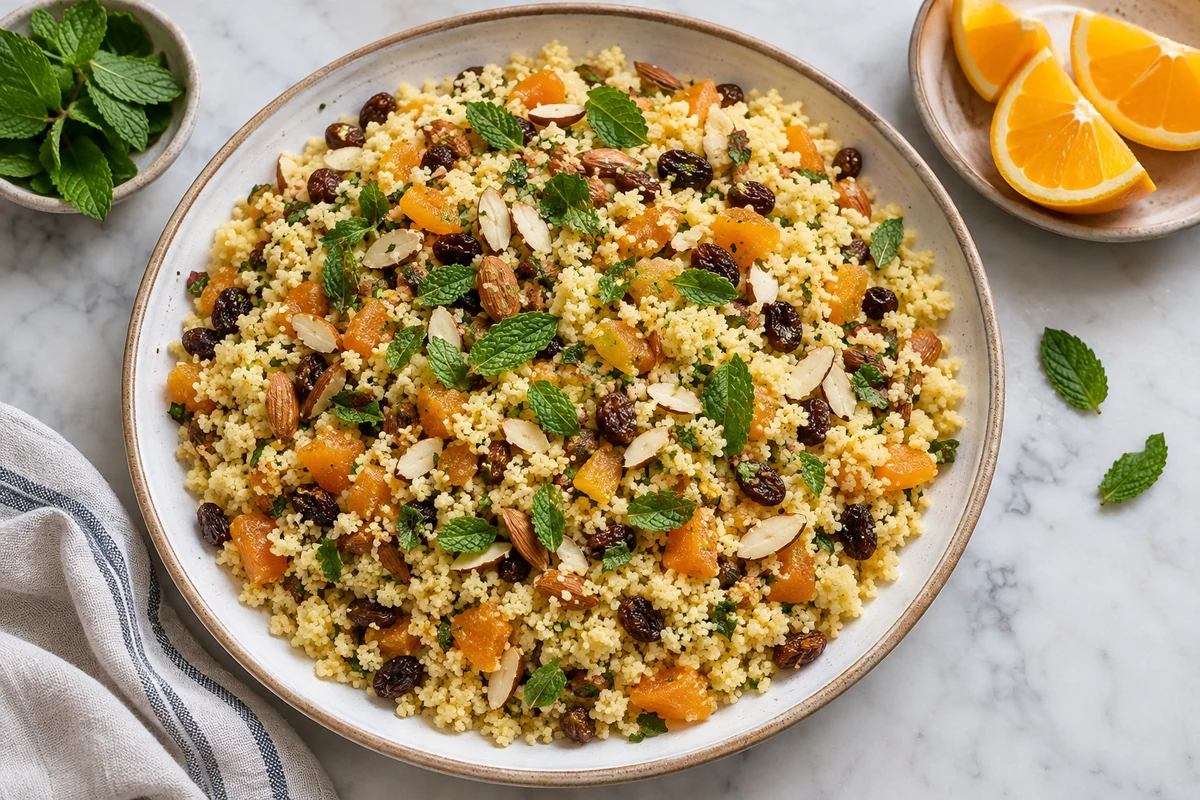
Festive couscous with dried fruit brings a North African staple into a contemporary Christmas menu. Its fruit, nuts and citrus suit a winter celebration without making it a traditional Christmas recipe from Morocco.
A little culinary context
- Couscous has a long place in North African food cultures. The small wheat semolina grains in this recipe differ from both large pearl couscous and Brazilian steamed maize couscous.
- Dried apricots, dates and raisins give different levels of sweetness and texture. Choose the combination you enjoy rather than assuming they must all be included.
- Ras el hanout is a spice blend, and its composition varies. Read the ingredients before choosing one for this dish, particularly if allergies or chilli heat are a concern.
Colour and flavour for Christmas
- Dried fruit gives sweetness and a chewy contrast to the soft couscous. It is a useful ingredient for a festive pantry.
- Pomegranate adds bright colour and a juicy contrast; it is an optional garnish rather than an essential part of the recipe.
- The contrast between sweet fruit and savoury stock makes this dish work particularly well with roasted vegetables or meat.
A dish for sharing
- A large platter makes it easy to share the couscous at the table, while individual bowls suit smaller gatherings.
- This version uses fruit, spices and orange to create a Christmas side dish. It should not be presented as evidence of a specific religious or national Christmas custom.
- If you know couscous through Brazilian cooking, note that this recipe uses quick-cooking wheat semolina, not the maize flakes used for many Brazilian versions.
Tips for flavour and texture
- Dried fruit: choose plump pieces and chop larger fruit evenly. If very dry, soften briefly in a little orange juice and drain before adding.
- Nuts and seeds: toast lightly and add near serving time to retain their texture.
- Flavour balance: taste before adding extra honey. Fresh citrus should lift the spices without overwhelming them.
- Storage: cool promptly, refrigerate in a covered container within 1–2 hours and use within 48 hours, or freeze. Keep the fridge at 5°C or below. Reheat only once, until steaming throughout.
Small finishing touches
- A little fresh orange zest or a few prepared orange segments make a bright finishing touch.
- A separate bowl of garnishes lets guests choose their preferred combination, but keep allergens clearly labelled and utensils separate.
- A very light dusting of cinnamon adds aroma; too much can dominate the savoury flavours.
Bring it to the Christmas table
This festive couscous offers fruit, crunch and warm spices in one generous side dish. Choose the substitutions that suit your guests and prepare each alternative with care.
Adjust the citrus, sweetness and spices gradually so the final dish suits the rest of your meal.
For more Christmas recipes and serving ideas, follow our social channels. If you make your own variation, share a photo and tell us which flavours you chose.
Visit I Love Christmas for more seasonal recipes and ideas.
Festive couscous: frequently asked questions
How far ahead can I make the couscous?
Make it up to 24 hours ahead, cool promptly and refrigerate within 1–2 hours. Keep the garnishes separate. Serve chilled or reheat once until steaming throughout with a splash of stock. Use refrigerated leftovers within 48 hours of preparation.
How can I make it vegan and gluten-free?
Use olive oil, vegan stock and agave instead of butter and honey. Replace wheat couscous with separately cooked quinoa or certified gluten-free maize couscous, following its packet instructions. Check all the remaining ingredient labels too.
Can I serve it cold at a buffet?
Yes. Cool promptly after preparation and refrigerate, then serve small chilled portions, keeping the remainder in the fridge. As a simple home-serving plan, limit time out of refrigeration to two hours in total and less in warm conditions; do not leave it out for the whole evening.
How can I avoid allergen cross-contact?
Check ingredient labels and guests’ needs, use clean separate equipment and containers, and label each version. Provide dedicated utensils for garnishes as well as for the couscous.
How do I reheat it without drying it out?
Add a small splash of stock and heat in a covered saucepan or suitable microwave container. Stir so it becomes steaming hot throughout, then fluff with a fork. Reheat only once.
What goes well with festive couscous?
Roast lamb or chicken, roasted chickpeas, spiced vegetables and a green salad with citrus dressing balance the sweet fruit and warm spices.
Sources and Further Reading
- Food Standards Agency: cooking food safely
- Food Standards Agency: chilling, freezing and defrosting food safely