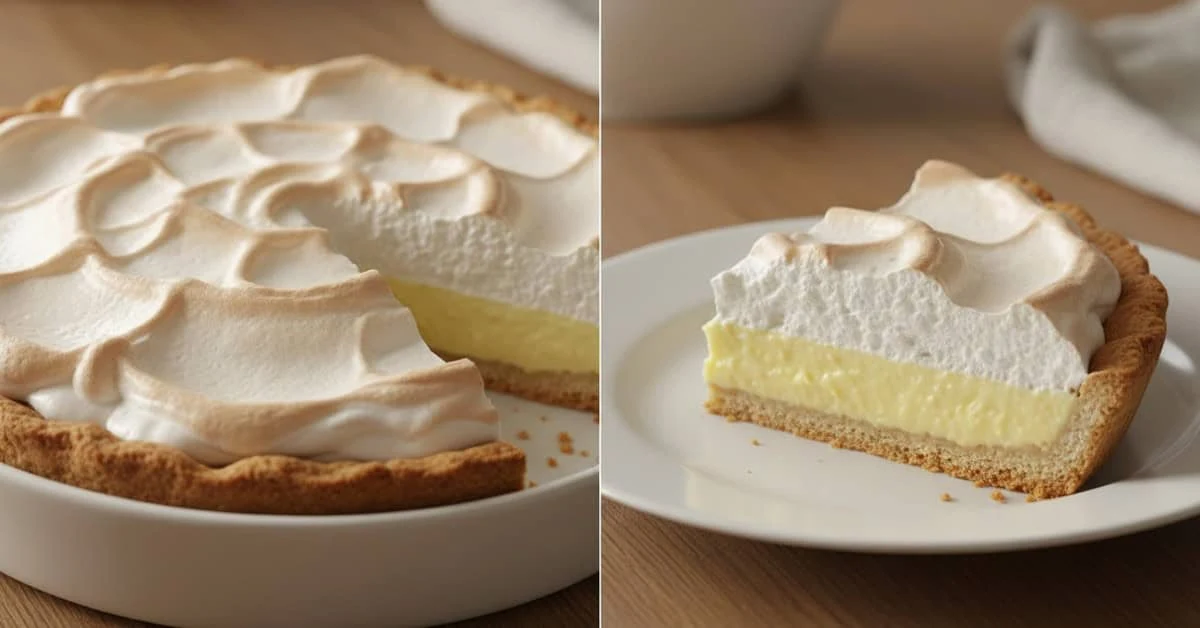
This Christmas lime tart combines a crisp biscuit base, a cooked condensed-milk and lime filling, and glossy Swiss meringue. Use a kitchen thermometer for the egg mixtures, allow proper chilling time and decorate shortly before serving. The green limes reflect the Brazilian limão tahiti used in the original recipe.
A slice of Christmas lime tart makes a bright, citrusy finish to the festive meal. Lightly toasted meringue contrasts with the tangy filling, while a biscuit base keeps the preparation manageable.
Ingredients for lime tart with Swiss meringue
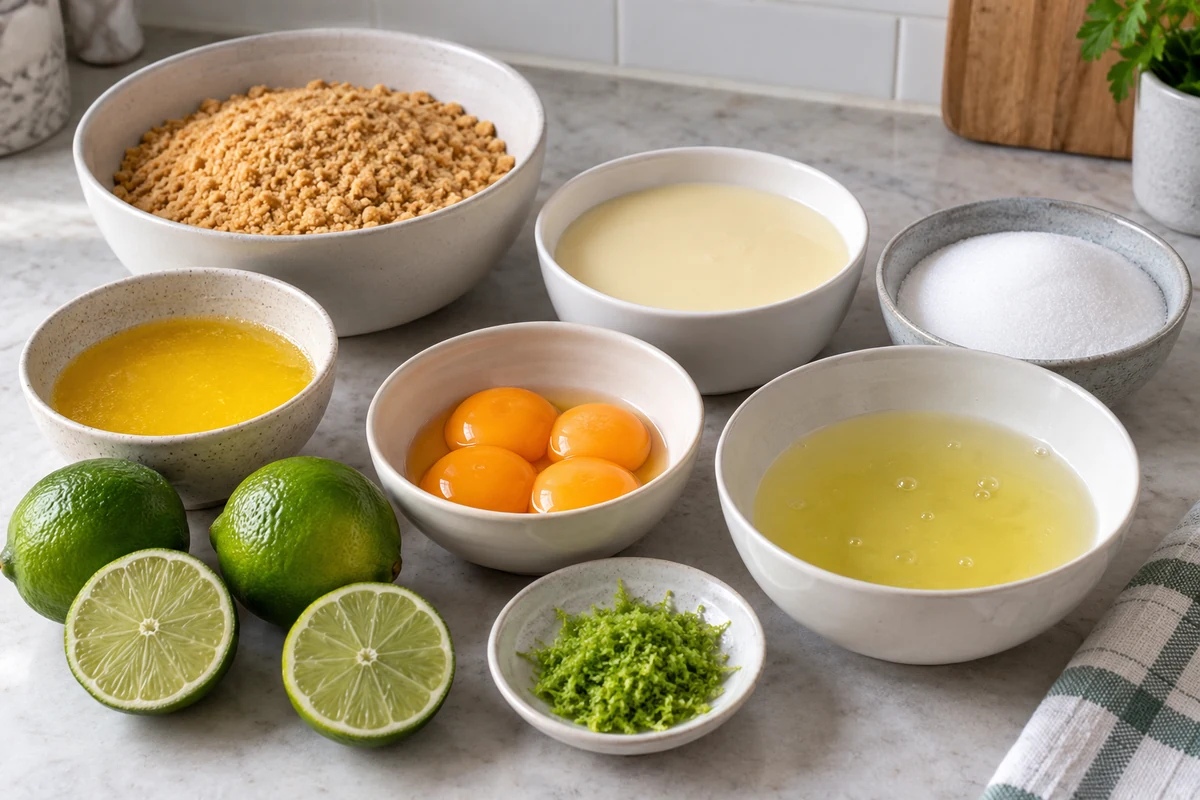
For this lime tart with Swiss meringue, weigh the ingredients and prepare a 22 cm tart tin or dish. Allow several hours for cooling and chilling as well as the hands-on preparation.
Ingredients for lime tart with Swiss meringue
- 200 g digestive biscuits – crushed finely; suitable gluten-free biscuits are an alternative.
- 100 g unsalted butter – melted, for binding the biscuit crumbs.
- 1 tin sweetened condensed milk, 395–397 g – for the filling; evaporated milk is not equivalent.
- 4 large egg yolks – keep separate from the whites and cook thoroughly in the filling.
- 120 ml fresh lime juice – measure the juice; the number of limes needed varies.
- Finely grated zest of 1 washed lime – use only the coloured outer skin.
- 120 g egg whites – approximately 4 whites, but weigh them; pasteurised whites specifically suitable for whipping are a useful choice.
- 200 g caster sugar – for the Swiss meringue. Do not substitute icing sugar without adjusting the recipe.
- A small pinch of salt – for the biscuit crumbs if wanted.
- 1 teaspoon vanilla extract, optional – for the meringue.
- No cornflour is needed in the main recipe – the measured filling thickens through cooking and chilling; avoid adding uncooked starch as a last-minute fix.
Notes and substitutions
Biscuit base: press the crumbs firmly over the bottom and sides of a 22 cm tin, keeping the thickness even. Bake briefly, then cool before filling.
Gluten-free version: use suitable gluten-free biscuits and check all ingredients and cross-contact risks. Ground almonds are not a direct replacement for finished biscuit crumbs.
Vegan version: this recipe contains butter, condensed milk, yolks and whites. Replacing only the topping with aquafaba does not make it vegan; use a separately developed plant-based tart recipe.
Storage: refrigerate at 5°C or below and use within 48 hours. The meringue looks best when made and added on the day of serving.
How to make lime tart with Swiss meringue
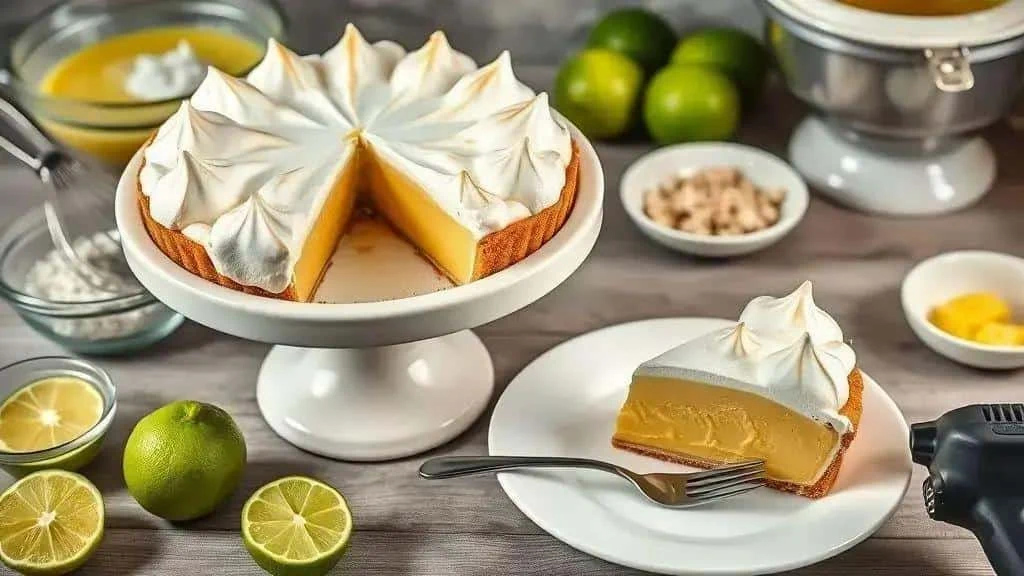
Make this lime tart with Swiss meringue in stages: base, cooked filling, chilling, then topping. A digital food thermometer is part of the method, not an optional substitute for a finger test.
- Heat the oven: set it to 180°C conventional or 160°C fan. Lightly grease a 22 cm tart tin or suitable dish.
- Prepare the base: mix 200 g fine biscuit crumbs with 100 g melted butter. Press evenly into the base and sides, then bake for 8–10 minutes until lightly coloured and fragrant. Allow to cool.
- Cook the filling: combine the condensed milk, 4 yolks, 120 ml lime juice and zest in a heatproof bowl. Set over gently simmering water, with the bowl above rather than touching the water. Stir continuously, scraping the sides, until thickened and the mixture reaches 75°C throughout for at least 30 seconds. Check in the mixture, not against the bowl. This may take longer than 5–8 minutes; do not rely on time alone.
- Fill and chill: remove from the heat, stir briefly to release steam and spread into the cooled base. Let the initial heat subside, then refrigerate promptly, within 1–2 hours of cooking. Chill for at least 3 hours, or until firmly set, before adding the topping.
- Make Swiss meringue: whisk the 120 g whites and 200 g caster sugar together in a clean heatproof bowl. Set over barely simmering water without touching it and whisk continuously until the sugar dissolves and the mixture reaches 75°C for at least 30 seconds. Remove and whisk electrically until glossy, cool and holding stiff peaks, usually 7–10 minutes or longer. Add optional vanilla at the end.
- Top the tart: spread or pipe the meringue over the cold filling. Toast lightly with a culinary blowtorch if wanted, keeping the flame moving and following its instructions. The torch colours the surface; it does not replace the earlier cooking of the egg mixture.
- Serve chilled: keep the finished tart refrigerated until needed. Cut with a sharp knife, dipping it in hot water and drying between slices for a neater finish.
Practical tips
Keep whites free of grease: use clean bowls and whisks, avoiding yolk contamination. Dry the equipment and prevent pan water splashing into the mixture.
Filling texture: it should thicken as it cooks and become firmer when cold. If still thin before assembly, continue stirring over gentle heat and check the measurements rather than adding random quantities of starch.
Dietary changes: a gluten-free biscuit substitution is relatively straightforward; an entirely vegan filling and topping require a different formulation.
Presentation: finish with a little lime zest, optional candied citrus or a few pomegranate arils. Keep garnishes modest so the topping remains visible.
Swiss meringue technique
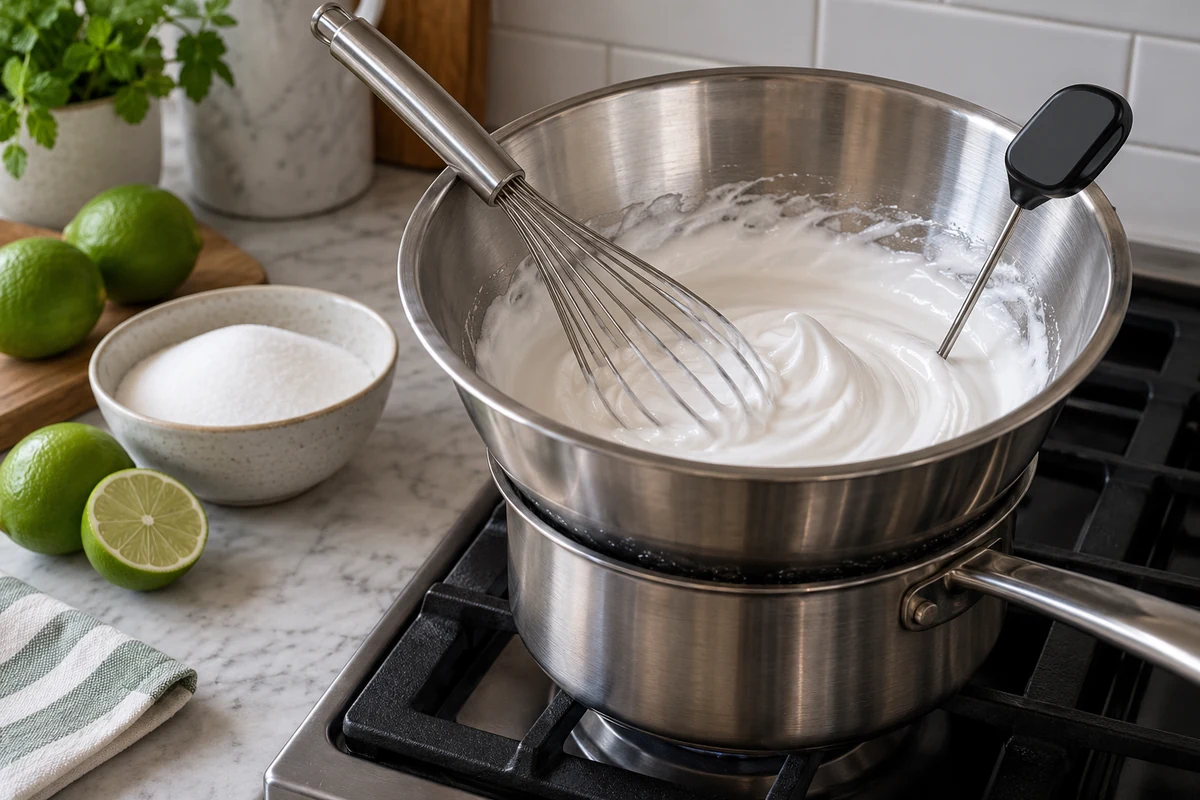
Good Swiss meringue depends on clean equipment, dissolved sugar, measured heating and enough whisking. These controls are more reliable than guessing from appearance alone.
Useful equipment
- A heatproof bowl – stainless steel or suitable glass, thoroughly cleaned.
- A saucepan for the water bath – with gently simmering water below the bowl.
- A digital food thermometer – for checking the egg mixtures accurately.
- An electric whisk or stand mixer – considerably more practical than hand-whisking this quantity to stiff peaks.
- A clean spatula – for transferring and spreading the finished topping.
- A culinary blowtorch, optional – for controlled surface colouring after the meringue is cooked.
Swiss meringue method
- Combine: weigh 120 g egg whites and 200 g caster sugar into the bowl and whisk together.
- Heat gently: whisk over the water bath until smooth and the mixture reaches 75°C for at least 30 seconds. Stir continuously and check different points; dissolved sugar alone does not confirm the required heating.
- Remove and whisk: beat electrically until the mixture becomes glossy and holds stiff peaks, with the bowl cool or barely warm.
- Flavour and check: add the optional vanilla near the end. A lifted whisk should leave a peak that keeps its shape.
- Use promptly: spread over the chilled tart and toast lightly if desired. A pale, untoasted finish is also acceptable because the meringue has already been heated.
Common meringue problems
- Graininess: usually means undissolved sugar. Before whipping, continue whisking the heated mixture until smooth while monitoring its temperature.
- Weeping: moisture can appear during storage or when the mixture was not properly prepared. Chilling protects the food but does not reverse every texture problem; make the topping near serving time.
- Soft peaks: continue whisking if the mixture is still warm and gradually building volume. If it remains liquid, check for grease contamination and incorrect weights.
- Collapsed mixture: if yolk or grease prevented foaming, start the topping again with a clean bowl and fresh whites. Reserve uncontaminated failed ingredients only for an appropriate fully cooked use.
Practical reminders
Clean equipment: wash, rinse and dry bowls and whisks thoroughly; even a little grease can reduce volume.
Controlled heating: stir constantly over gentle steam rather than direct fierce heat, and use the specified temperature and holding time.
Stability: keep the measured sugar-to-white ratio and whisk until cool. Do not stir raw cornflour slurry into finished meringue as a supposed quick stabiliser.
Toasting: move the torch continuously across the peaks and stop when lightly golden, keeping packaging, cloths and paper away from the flame.
Storage quality: the topping may soften or weep before the 48-hour refrigerated limit. It is best enjoyed on the day it is made; freezing the assembled tart is not recommended.
Making the tart look festive

- Fresh zest: add a small amount of finely grated lime zest just before serving.
- Candied citrus: simmer a few very thin lime or lemon slices in equal volumes of water and sugar until the peel softens and becomes translucent. This takes substantially longer than a quick dip; drain and cool before decorating.
- Colour contrast: a small scattering of pomegranate arils gives a red accent without covering the meringue.
- Herb decoration: a small washed rosemary sprig can sit beside the tart as a removable garnish; do not use unidentified garden greenery.
- Crunch: a little toasted coconut or chopped pistachio can add contrast. Tell guests if nuts are included.
- Festive sparkle: use only decorations explicitly labelled edible, not merely non-toxic or intended for crafts.
- Chilling: let the filled tart set fully before decorating. A warm, soft filling will not give a clean slice.
A simple candied-citrus garnish
- Make a small syrup: dissolve 100 g sugar in 100 ml water in a small saucepan.
- Simmer the slices: add a few very thin washed citrus slices, pips removed. Cook gently until the peel softens, often 20–40 minutes depending on thickness, adding a little water if needed to prevent scorching.
- Drain and cool: lift onto a rack over a tray. Let them cool completely before handling; an extra sugar coating is optional.
- Decorate sparingly: add one or two cooled slices and a few pomegranate arils near serving time.
- Final touch: use a small amount of fresh lime zest rather than pouring sticky syrup over the meringue.
Timing: wet fruit and syrup can soften the topping, so add them shortly before serving.
Dietary variations: what can and cannot be swapped
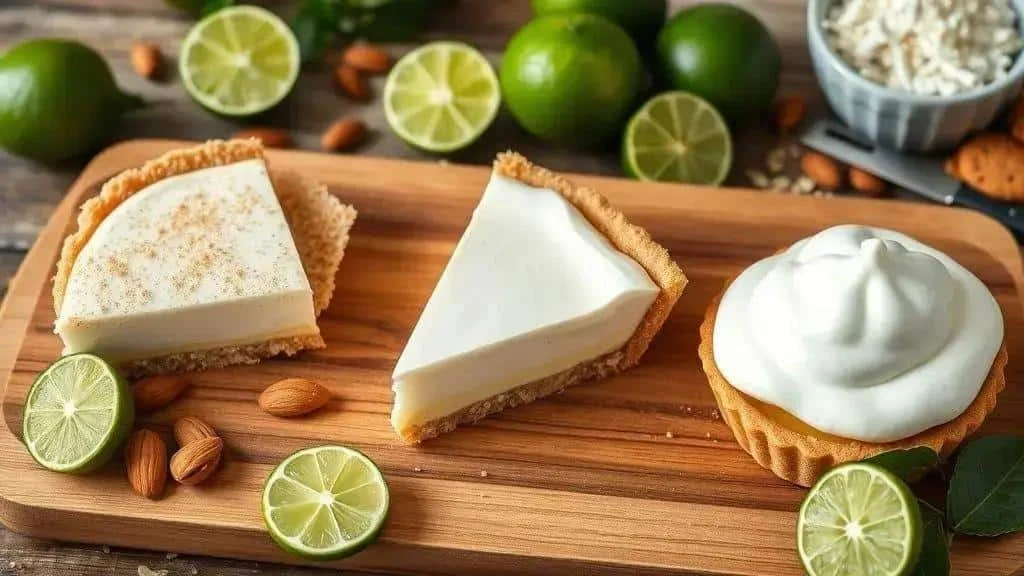
Adapt this Christmas lime tart thoughtfully. A biscuit change is different from replacing the eggs, dairy and sugar that provide most of its structure.
Gluten-free base
Use gluten-free biscuits of a similar style and check all other ingredients. Separate clean equipment is important when baking for someone with coeliac disease.
- 200 g gluten-free biscuit crumbs – choose a product suitable for the recipient.
- 100 g melted unsalted butter – add gradually if the biscuits are unusually rich, stopping when the crumbs press together.
- 395–397 g sweetened condensed milk – as in the main filling.
- 4 large egg yolks – cooked by the same method.
- 120 ml lime juice and zest of 1 lime.
- 120 g egg whites and 200 g caster sugar – for the Swiss meringue.
- Base: press the crumb mixture firmly into the tin and bake briefly as above. Let it cool before filling.
- Filling: follow the same measured heating and chilling method; replacing the biscuits does not change the filling recipe.
- Topping: use the same Swiss meringue method and keep toppings free of gluten cross-contact.
Planning a vegan tart
A reliable vegan version needs a separately formulated filling and topping. The following notes explain the choices, rather than claiming the dairy-and-egg recipe works with direct swaps.
- Vegan biscuit base: use suitable biscuit crumbs; raw ground almonds behave differently and need their own recipe.
- Plant-based fat: use the type and quantity specified by the vegan recipe. Coconut oil sets differently from butter.
- Plant-based filling: vegan condensed milks vary, and omitting the four yolks removes a thickener. Choose a recipe with explicit starch or other setting quantities and a complete cooking method.
- Aquafaba topping: use a recipe designed for the chickpea liquid you have. As a measure, 120 ml is eight standard 15 ml tablespoons, not four.
- Sugar: follow the plant-based meringue formula; its quantity affects stability as well as sweetness.
- Base preparation: trial the vegan crumb-and-fat mixture before preparing a special-occasion tart.
- Filling preparation: follow the specified cooking method and allow a small portion to cool to check the set before assembly.
- Aquafaba preparation: whipping time and concentration vary. Do not assume it can replace egg whites in this heating method without further adjustments.
A less sweet approach
This is a sweet dessert, and neither condensed milk nor meringue can be made low-sugar simply by removing a large part of the sugar. Smaller portions are the simplest adjustment.
- Biscuit choice: compare labels if choosing a less sweet biscuit, while checking how well it binds.
- Base fat: changing butter to coconut oil does not itself reduce the sugar in the tart.
- Filling: yoghurt and sweetener are not a direct substitute for condensed milk. Use a separately developed lower-sugar filling rather than guessing at ratios.
- Meringue: do not replace caster sugar directly with erythritol or drastically reduce it and expect the same stability.
- Base portion: make a neat, even layer rather than an unnecessarily thick crust.
- Filling balance: keep the measured lime juice for tang; adding more acid does not remove sugar.
- Topping amount: use a thinner layer if preferred, keeping the meringue ratio intact rather than altering its chemistry.
Tips for any variation
- Taste safely: taste egg-containing filling only after it has been cooked, using a clean spoon and a cooled sample.
- Check the set: judge a chilled sample before adding an improvised thickener. Starch needs a measured amount and proper cooking.
- Meringue stability: weigh the ingredients, dissolve the sugar and finish whisking before use; raw cornflour slurry is not a universal repair.
- Assembly: spread the topping over a fully chilled, set filling and return the tart to the fridge.
Lime tart problems and how to avoid them
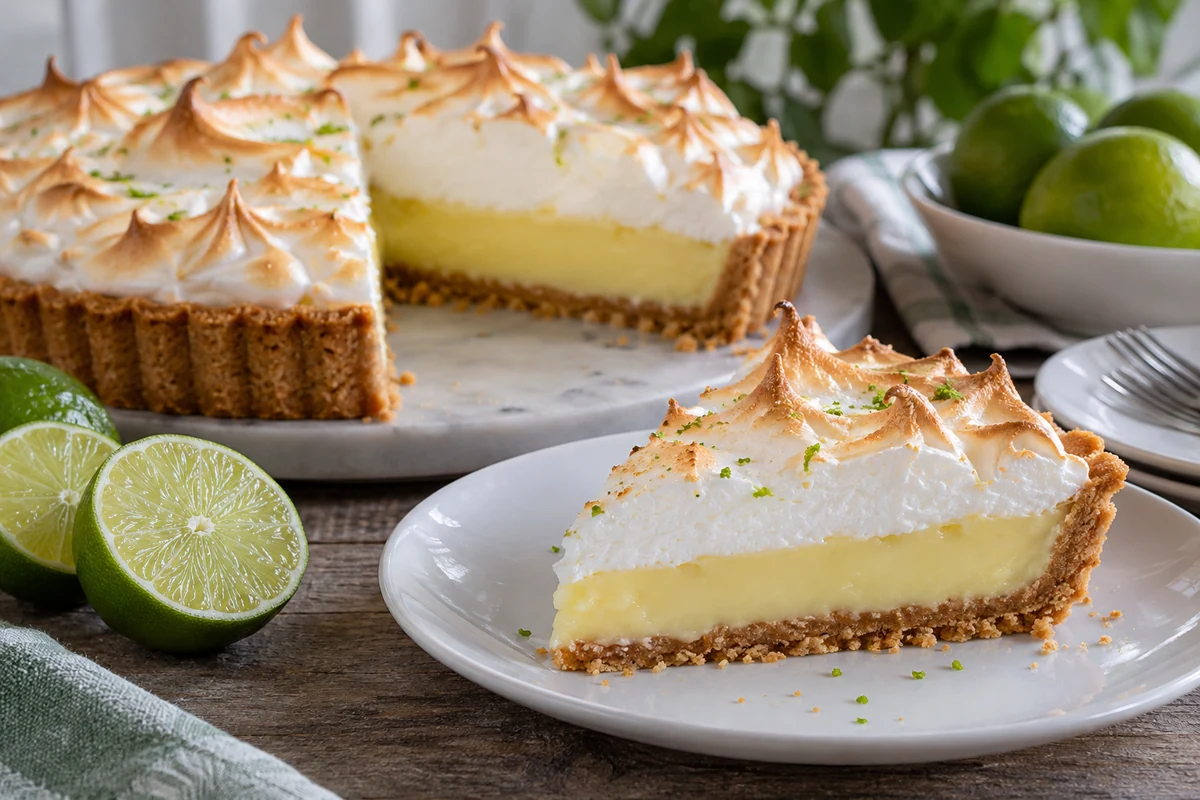
Some lime tart problems can be corrected before assembly. Once a tart is fully assembled, repeatedly warming and cooling it is less helpful than identifying what needs changing next time.
Common problems
- Runny filling: check the quantities and whether the filling was cooked properly. Before assembly, continue gently heating and stirring if needed; do not mix cornflour with hot water and expect a lump-free instant fix.
- Soggy base: bake the biscuit base briefly and let it cool. Keep the filling properly thickened; adding raw egg to an already finished crumb base is not a shortcut.
- Weeping meringue: use dissolved sugar, correctly heated whites and a topping whisked until cool. Add wet garnishes only near serving, and expect some loss of texture with storage.
- Grainy meringue: dissolve the sugar completely during the heating stage before whisking to peaks. Do not use the feel between fingers as the safety check.
- Little volume: check for grease or yolk contamination and incorrect weights. If more whisking does not help, start again in thoroughly cleaned equipment.
- Burnt topping: use a moving torch for controlled browning, or leave the cooked meringue pale. A cold glass or ceramic tart dish should not be placed suddenly under a fierce grill.
- Grainy filling: excessive heat can scramble the yolks. A fine sieve may remove small lumps while the filling is freshly cooked, but badly separated custard is better remade. Do not blend hot filling in a sealed blender.
Preparation mistakes
- Greasy utensils: clean bowls and whisks with hot soapy water, rinse well and dry before starting the meringue.
- Uncontrolled water-bath heat: keep the bowl above gently simmering water and stir continuously while checking the actual mixture temperature.
- Topping a warm filling: chill the filling fully first so the topping is not warmed and softened from below.
- Untidy slicing: warm the blade in water, dry it, and wipe between cuts rather than dragging meringue through each slice.
Practical rescue notes
- Filling that will not set: check a chilled sample before assembling. If the formulation was changed substantially, remake it using the specified quantities rather than repeatedly adding starch.
- Separated meringue: brief extra whisking may help an otherwise sound warm mixture, but grease-contaminated whites generally need replacing.
- A fragile base: crush the biscuits finely and compact them evenly with the back of a spoon. Do not introduce an extra raw yolk to a finished base.
- Storage moisture: use a covered container without letting the lid touch the meringue, and add fruit decorations only before serving.
Preparation checklist
- Clean, grease-free bowls and whisks.
- Measured whites, sugar and filling ingredients.
- A thermometer for both egg-containing mixtures.
- An evenly pressed, briefly baked biscuit base.
- Fully chilled filling before topping.
Serving ideas for the Christmas table
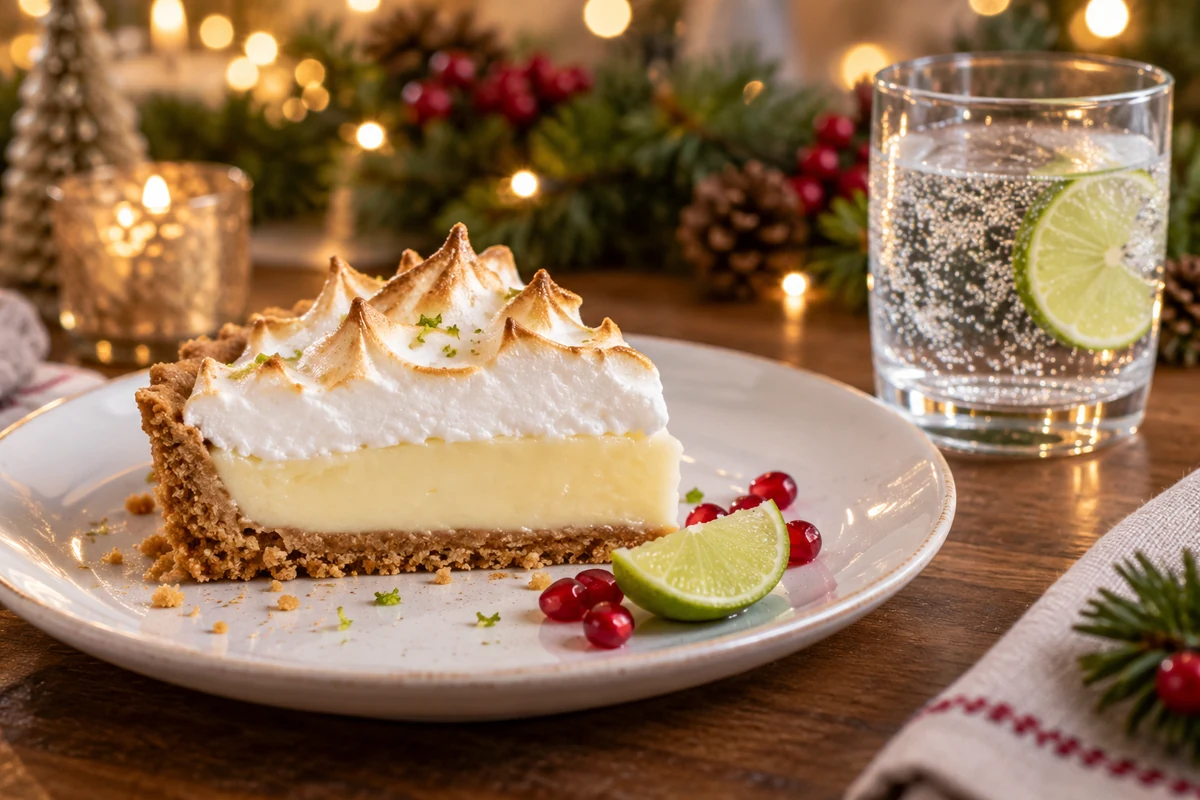
Serve lime tart with Swiss meringue chilled, with small edible details that highlight the citrus rather than hiding the tart.
Presentation tips
- Contrasting plates: white or deep green plates show off the lightly toasted peaks and lime zest.
- Portions: cut a 22 cm tart into about 10–12 slices, adjusting to guests’ appetites and the rest of the meal.
- Edible garnish: use lime zest, a thin candied citrus slice or a few pomegranate arils.
- Herbs: a small washed mint leaf beside the slice gives a simple green accent.
- Optional crunch: a little toasted coconut or pistachio changes the texture; identify nuts for guests with allergies.
Plating a slice
- Start clean: centre the slice and brush away loose crumbs from the rim.
- Add colour: place a few pomegranate arils alongside rather than adding a large pool of sweet sauce.
- Finish: add a little zest and one small candied slice if using it.
Drinks to serve alongside
- Sparkling wine: an optional small adult serving may suit some guests; a very dry wine can taste sharper beside a sweet dessert.
- Aromatic wine: choose to taste rather than assuming every Riesling or Moscato has the same sweetness.
- Tea or coffee: a small cup offers a straightforward alternative to another rich or alcoholic drink.
- Alcohol-free options: sparkling water with lime or a mild mint infusion works well without adding much sweetness.
Other items on the table
- Cheese course: if serving cheese, keep it separate so guests can choose rather than crowding the dessert plate.
- A lighter preceding course: a fresh salad or vegetable side earlier in the meal can balance a richer dessert menu.
- Sorbet: a small optional scoop of berry sorbet offers a contrasting flavour, though the tart needs no accompaniment.
Timing the dessert
- Keep chilled: take out only when ready to portion and serve.
- Final assembly: make and add the meringue on the day of serving where practical, then keep refrigerated.
- Check the filling: allow enough chilling time for a firm set and add fresh zest near serving.
Transport and making ahead
- Chilled transport: use a rigid covered container in an insulated cool bag with ice packs, then refrigerate on arrival. Dry ice is unnecessary for this household task.
- Assembly at the venue: only plan this if clean equipment, refrigeration and adequate time are available. Otherwise transport the finished tart carefully, already chilled.
- Storage: keep at 5°C or below and use within 48 hours; the assembled topping is at its best sooner.
To finish
This lime tart with Swiss meringue combines a tangy filling with a sweet, airy topping. Careful measuring, controlled heating and proper chilling make the method more dependable than rushed shortcuts.
Thank you for reading. Visit I Love Christmas and follow our social channels for more seasonal recipes and serving ideas.
Enjoy your Christmas baking, and share how you chose to decorate your tart.
Frequently asked questions about Christmas lime tart
Can I use gluten-free biscuits for the base?
Yes: choose suitable gluten-free biscuits, crush finely and bind with the butter as described. Different brands absorb fat differently, so add it gradually if necessary. Ground almonds are not a direct substitute for biscuit crumbs, and all ingredients and equipment need appropriate cross-contact checks.
How do I avoid grainy or weeping Swiss meringue?
Use clean equipment and the measured sugar-to-white ratio. Dissolve the sugar during controlled heating, reach 75°C for at least 30 seconds, then whisk until cool and firm. Top the chilled filling and decorate close to serving. Do not add raw starch slurry as a quick repair.
How long can I keep the tart in the fridge?
Keep it covered at 5°C or below and use within 48 hours. The meringue looks best on the day it is made and may soften during storage.
Can I make the filling and topping vegan?
Yes, with a separately developed vegan tart recipe. This one relies on dairy, four yolks and egg whites; plant condensed milk and aquafaba are not enough on their own to guarantee the same set. Use explicit plant-based quantities and cooking instructions.
What if I do not have a blowtorch?
Leave the properly heated Swiss meringue pale. Toasting is decorative, not its cooking step. Avoid putting a cold glass or ceramic dish under a hot grill; any grill option must use suitable cookware and close supervision.