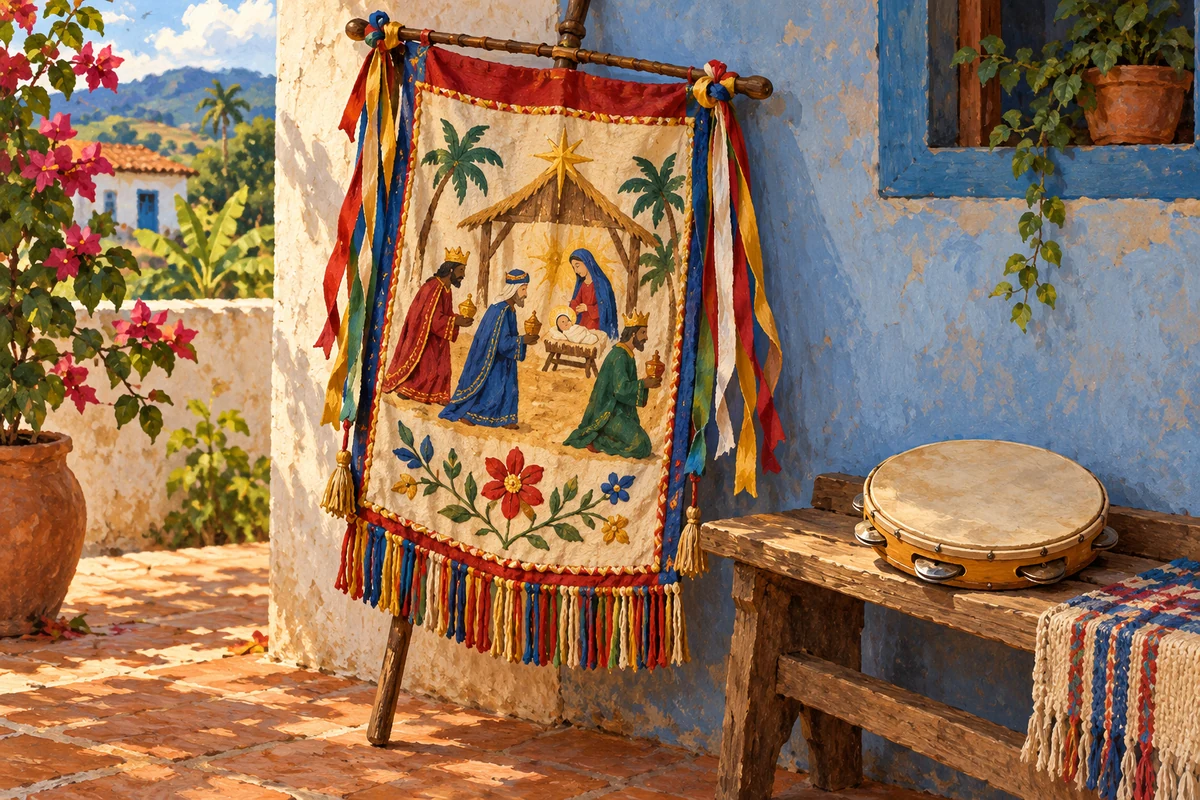
Folia de Reis is a Brazilian popular tradition associated with the Three Kings and the Christmas season. Singing, instruments, devotional banners and visits to homes bring together faith, shared memory and community life. Customs and calendars vary, and the tradition continues through local groups, teaching and cultural support.
Folia de Reis brings to mind songs, gatherings and visits around the end of the Christmas season. Its importance lies as much in relationships between generations as in a performance. Here is an introduction to its roots, rituals and ways to participate or help preserve it in Brazil.
Illustrations in this article are conceptual images, not documentary photographs or evidence of a particular historical event, destination, venue or access route.
Origins and history of Folia de Reis in Brazil
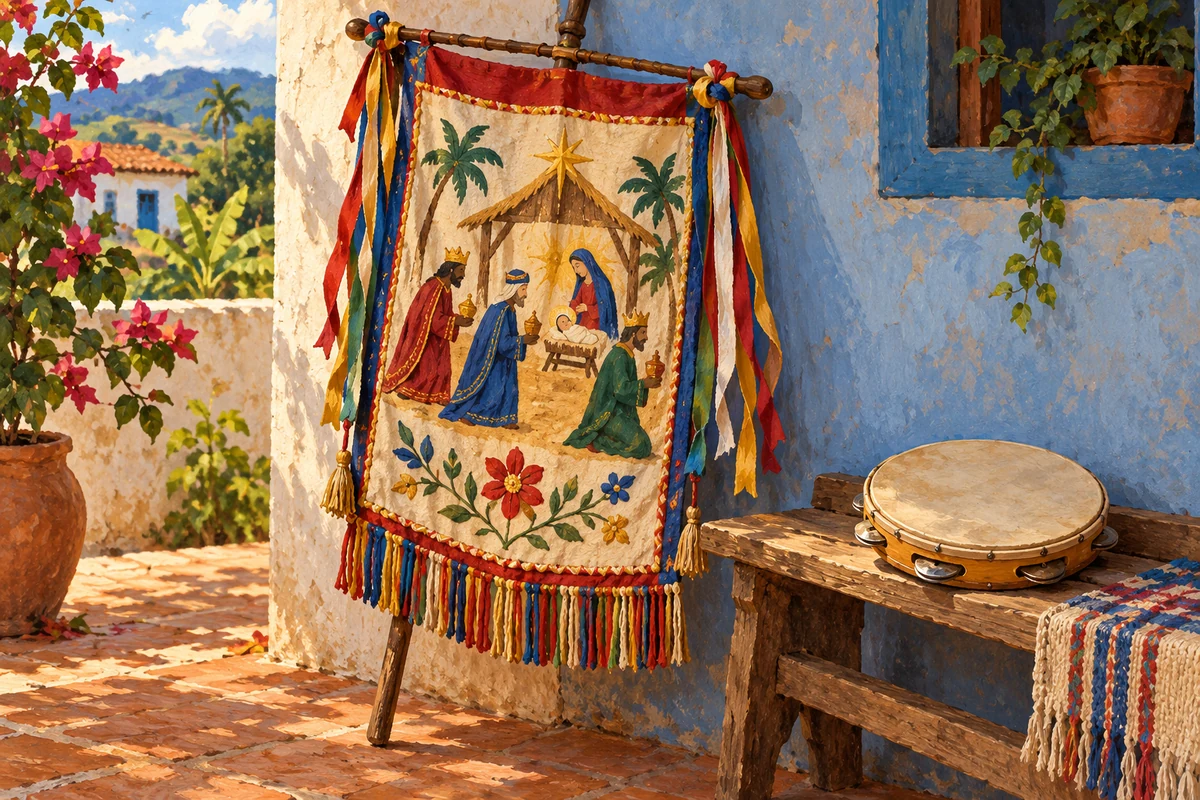
Folia de Reis developed from celebrations of the Magi brought to Brazil during Portuguese colonisation. Brazilian communities shaped these practices over time, creating diverse musical and devotional traditions rather than a single, unchanged European custom.
In rural communities, travelling groups of singers and musicians visit homes, linking religious devotion with hospitality, celebration and local memory. IPHAN describes these traditions as part of Brazil’s diverse popular cultural expressions. Source: IPHAN: research and documentation of Reisados and Folias de Reis
- Colonial roots: Catholic celebrations of the Three Kings provided a religious framework that communities adapted in Brazil.
- Regional development: local groups established their own repertoires, visiting routes and ceremonial practices, including in Minas Gerais, São Paulo and Goiás.
- Continuing transmission: families, neighbourhoods and devotional groups have passed on songs and responsibilities while adapting to changing circumstances. A precise founding date needs evidence for the particular group.
Cultural and religious elements
Songs and narrative verses are central, recalling the Magi’s journey through melodies, responses and sometimes improvised lines. Instruments may include the viola caipira, guitar, pandeiro and accordion; the combination depends on the group. Source: Goiânia education department: Folia de Reis cultural heritage
Clothing and symbols also vary. A devotional banner is especially important in many groups. Some traditions include distinctive masked figures, known locally by names such as palhaços or bastiões, whose roles should be understood through the group’s own explanation.
Regions and variations
Folia de Reis is found in different parts of Brazil, with well-established traditions in the South-East and Centre-West. Rhythm, repertoire, dress and the way households are visited vary, while collective participation remains central.
- Minas Gerais: groups with strong links to towns, rural communities and family traditions.
- Inland São Paulo: devotional visits and community gatherings shaped by local organisers.
- Goiás and the Centre-West: repertoires and ceremonies passed between generations, with considerable local diversity.
The tradition has also entered public festivals and cultural programmes. A stage presentation and a devotional visit serve different purposes; neither should be taken as a complete picture of every group’s practice.
The calendar: when the Christmas season draws to a close
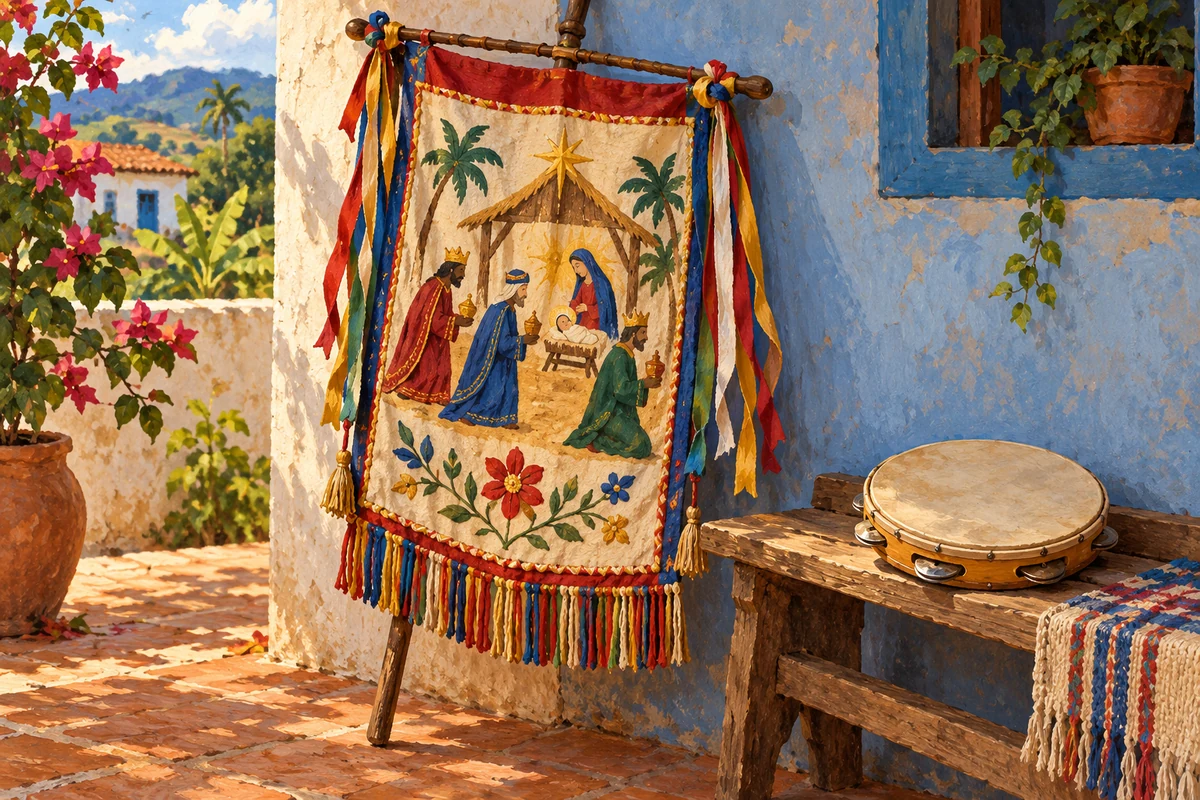
Dates help shape the celebration, but local practice is not uniform. Christmas and Three Kings’ Day are key reference points. Some groups follow other visiting schedules or attend gatherings later in the year, so ask the organisers rather than assuming a national finishing date.
Key dates
- 25 December — Christmas: a central celebration in the Christian calendar and a reference point for many visiting cycles.
- 6 January — Epiphany or Three Kings’ Day: commemorates the Magi’s visit and often marks the symbolic close of a group’s Christmas visits.
- The Baptism of the Lord: closes the Christmas season in the Roman Catholic liturgical calendar. Its date depends on that year’s calendar and local observance of Epiphany; it is not invariably the Sunday after Epiphany. Source: Vatican: the Baptism of the Lord and the end of the Christmas season Source: Catholic Bishops of England and Wales: calendar rules for Epiphany and the Baptism
- 2 February — the Presentation of the Lord or Candlemas: another Christian calendar reference, but not a universal finishing date for Folia de Reis. Check any claimed connection with the particular community.
Regional variations
Some groups travel between households over several days or weeks; others concentrate their visits around specific dates. Public meetings of different folias can follow a separate municipal or community calendar. Published local programmes are more useful than a general timetable. Source: Aparecida de Goiânia: an example of a local Folia calendar
What happens during visits?
A group may sing, play instruments and offer devotional verses or blessings at a home. Hosts may provide refreshments or a voluntary contribution. Agree the visit beforehand, including timing, access and any needs of the household.
- Timing: choose a time agreed with the hosts and group, taking account of children, older people, neighbours and the route. There is no single correct visiting hour.
- Length of visit: ask the organiser how long the local ritual takes. Allow time for the repertoire and hospitality without imposing a fixed duration on every household.
- Hospitality: food, drinks or a voluntary contribution may be welcomed. Ask what is useful and accommodate dietary requirements; participation should not depend on an expensive offering.
Practical organisation
Planning helps avoid clashes and makes participation easier. Map the route, confirm addresses and times, and agree who brings instruments and ceremonial objects. Contacting households in advance supports a respectful welcome.
- Give members a route with agreed dates, times and meeting points.
- Discuss which songs and verses belong at each stage of a visit, balancing the group’s customs with available time.
- Arrange breaks or rotation for musicians and singers where the tradition allows.
Rituals and continuity
A group’s final visit, closing celebration and appearance at a public festival may happen on different dates. A later gathering does not mean that all local households receive visits until Candlemas. Confirm the calendar with those who maintain the tradition.
Respecting local religious practice and community arrangements helps Folia de Reis remain meaningful. Clear communication, manageable routes and accessible meeting places make it easier for people to take part.
Instruments, songs and verses
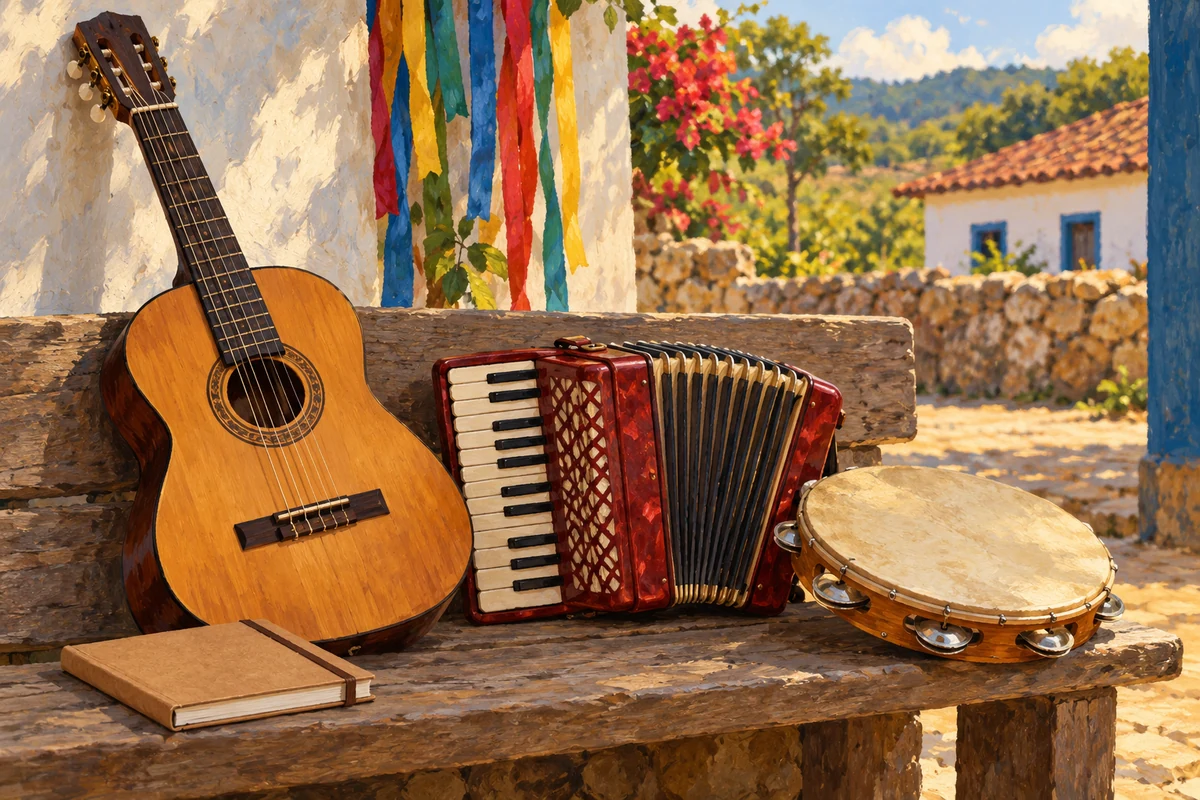
Three interwoven elements shape a performance: instruments support the rhythm, songs carry the narrative, and verses may combine inherited words with improvisation.
Instruments you may encounter
- Viola caipira and guitar: provide melodic and harmonic accompaniment. The Brazilian viola is a distinct instrument, not simply another name for a standard guitar.
- Accordion: adds melody and sustained accompaniment in groups that use it.
- Pandeiro and small drums: support the pulse and rhythmic patterns, with technique and instrumentation varying locally.
- Caixa and other drums: give a clear rhythmic foundation in some ensembles; do not assume every group uses the same drum or playing style.
- Shakers and scraped percussion: instruments such as ganzá or reco-reco can add rhythmic texture where they form part of the local repertoire.
- Other melodic instruments: a flute or bowed instrument may feature in particular traditions. Ask musicians about their ensemble rather than treating this list as a required line-up.
Songs and their structure
Songs may include devotional melodies, repeated responses and improvised verses. Often a lead singer sings a line and a chorus answers. Refrains and narrative verses give different members ways to participate.
A visit may include:
- an opening greeting, sometimes in call-and-response form
- verses about the journey of the Three Kings
- a shared refrain or choral response
- a request for welcome, a blessing or words of thanks to the household
Verses and improvisation
Established verses can sit alongside improvised lines. Improvisation lets a singer acknowledge a household, thank a host or respond to local circumstances, within the group’s conventions and with respect for those present.
Repetition and rhyme help people remember the words and recognise the musical form. Learning by listening to experienced members remains important.
Music during a visit
The leader and chorus coordinate with the instruments, following the group’s customary sequence. Some visits include instrumental passages or pauses for conversation; others have a more formal ritual order.
- Planning the duration: agree an estimate with the group and hosts rather than relying on a supposed national average.
- Possible sequence: greeting, principal songs, devotional verses, thanks and farewell, adjusted to local practice.
Learning and preserving the music
Listen to local recordings and learn the responses before joining a performance. Basic guitar chords or pandeiro patterns can be a starting point, but respect regional differences and ask experienced members to teach the style used by their group.
Writing down lyrics, making agreed recordings and teaching younger participants can help preserve the repertoire. Obtain permission before recording or sharing material.
Joining or organising Folia de Reis in a community

To join or help organise a Folia de Reis group, start by speaking with local practitioners. Practical planning supports the tradition; it should not replace the knowledge of the people who maintain it.
A step-by-step approach
- Bring people together: invite singers, musicians and practical helpers, working with an experienced leader where possible. Agree responsibilities for the group and its participants.
- Set dates and a route: follow the local calendar and confirm visits with households, including addresses, access and timing.
- Prepare an itinerary: list homes, estimated timings and a meeting point, with breaks for rest and refreshments.
- Agree the repertoire: learn the appropriate opening songs, responses and devotional verses with experienced members.
- Check instruments and ceremonial objects: make sure they are in suitable condition and that everyone knows who is responsible for them.
- Keep the community informed: contact relevant local organisers, religious communities and neighbours, agreeing arrangements that avoid unnecessary disturbance.
Roles and responsibilities
- Leader or lead singer: guides verses and responses and coordinates the group’s arrival and welcome.
- Musicians: provide accompaniment and help new members learn the local repertoire.
- Route and transport organiser: coordinates travel, meeting points and useful supplies such as water, maps and torches.
- Hospitality coordinator: liaises with households and helps manage refreshments or contributions according to the group’s arrangements.
- Recorder or archivist: documents agreed material with permission from participants and hosts, including consent for any public sharing.
Repertoire, clothing and ceremonial objects
Learn songs and refrains that belong to the local tradition. Appropriate clothing and objects should be chosen with the group, rather than assembled as a generic fancy-dress version of the Three Kings.
- Agree a manageable set of songs for rehearsal, including the responses newcomers need to learn.
- Look after the devotional banner and any other objects the group actually uses. Use battery-powered lighting when needed, without open flames on a walking route.
- Adapt practical clothing to weather and mobility needs, while respecting ceremonial dress and avoiding anything that obstructs walking.
Practical care and permissions
- Check local requirements for public gatherings, noise and use of public space. Ask the relevant authority when a permission is needed.
- Choose accessible, well-lit routes and consider traffic, distance and transport home.
- Bring water, charged torches and basic instrument supplies. Participants should manage their own prescribed medicines and tell the organiser about any relevant access or support needs.
- Respect household customs and personal boundaries. Ask before taking photographs or recordings, particularly where children are involved.
Involving younger people and the wider community
Schools, youth groups and cultural centres can host workshops led by local practitioners. Open rehearsals can let children learn responses and try suitable instruments with supervision.
- Plan an introductory workshop of a manageable length, with breaks and activities suited to participants’ ages.
- Encourage exchange between generations: experienced members share repertoire, while younger people can contribute practical and communication skills.
- Share dates through community networks and relevant local organisations, with a clear contact for new participants.
Recording and continuity
Document lyrics, arrangements and routes in ways the group agrees are appropriate. Maintain a contact list securely and plan future meetings so knowledge does not rest with one person alone.
- Save permitted recordings in an organised archive, with access agreed by the group.
- Keep lyrics, simple notation where useful, and notes on tempo, responses and ceremonial context.
- Arrange meetings outside the Christmas season if members wish, helping people rehearse and pass on knowledge.
Meanings and symbols
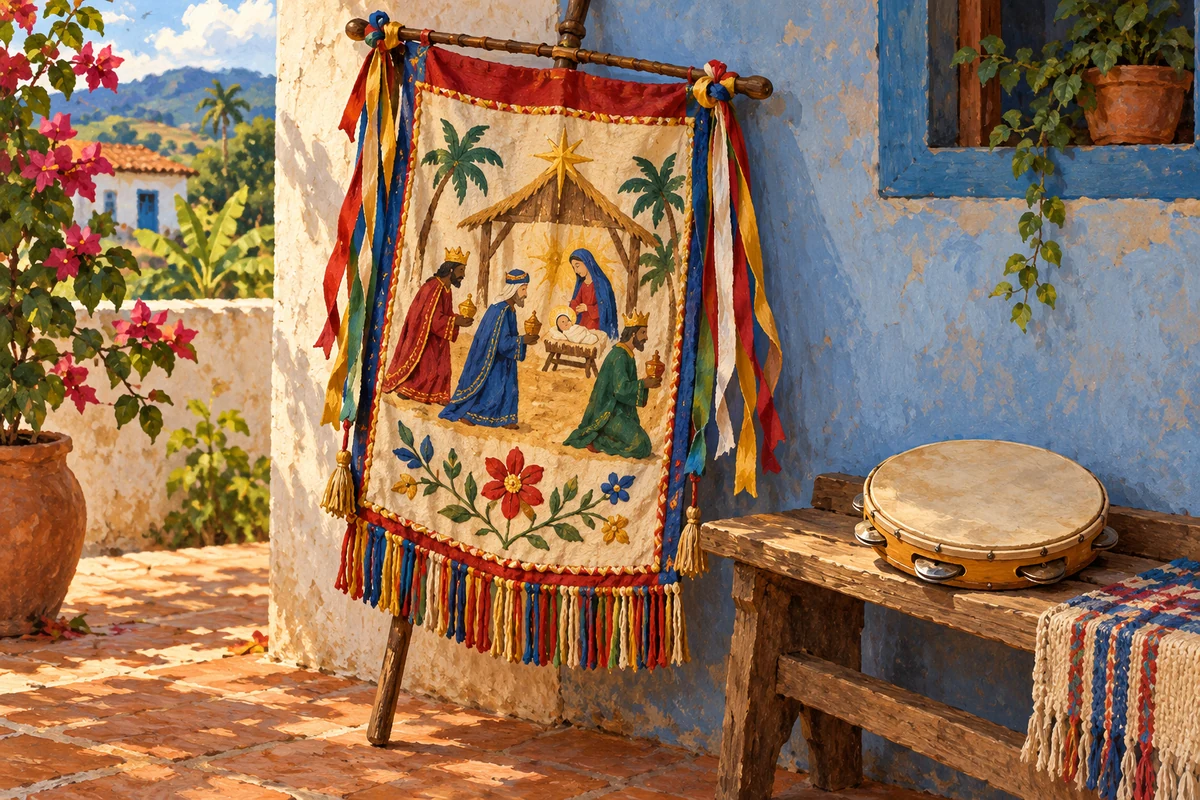
Folia de Reis brings together faith, memory and community relationships. Objects and gestures can have both practical and devotional meanings, but their interpretation belongs to the particular group and its history.
Objects and roles to ask about
- References to the Magi: paintings, verses or particular costume details may recall their journey and gifts. Crowns are not a universal requirement for participants.
- Banners and standards: often carry devotional imagery and identify the group. Their handling and place in the ritual may be subject to specific local customs.
- Nativity imagery: connects songs and visits with the Christian account. Some households or celebrations include a crib; a portable crib is not essential to every group.
- Light: can have devotional associations as well as a practical role during evening visits. For travelling groups, safe battery-powered lighting avoids the hazards of open flames.
- Musical instruments: support the songs and embody skills taught through listening, practice and shared performance.
- Food and drink: express hospitality and help sustain visits, according to what households wish and are able to offer.
- Distinctive dress and masked figures: may identify roles with particular ritual responsibilities. Municipal cultural accounts describe palhaços as more than entertainers; ask about their meaning before interpreting or imitating them. Source: Hortolândia cultural map: the palhaço in Folia de Reis
Social and spiritual meanings
The tradition can mark a seasonal transition and affirm community ties. Visiting a household expresses neighbourliness and solidarity. Blessings are devotional requests for wellbeing or protection, not guarantees of a particular outcome.
Alongside religious devotion, the tradition reflects the histories of the communities that practise it. Local cultural influences can be heard in music and seen in dress or ceremonial arrangements; specific claims about their origins need local evidence.
Ways participants may understand the tradition
- Protection and blessing: a visit may carry spiritual significance for a family within its beliefs, without implying proven protection from harm.
- Memory: verses and stories can preserve names, relationships and events important to the group.
- Identity: shared symbols strengthen a sense of belonging to a place and its community.
- The passing of the year: recurring visits and gatherings establish a shared seasonal rhythm.
Understanding symbols respectfully
Observe, listen and ask about the local meaning. Customs do not mean the same thing everywhere, and allowing practitioners to explain their tradition avoids imposing outside assumptions.
- Ask before photographing devotional objects or ritual moments.
- Listen to experienced members’ explanations of local history and symbolism.
- Avoid treating sacred or ceremonial objects as tourist props detached from their context.
- Record lyrics and arrangements only with permission, including agreement about how the material will be used.
Thoughtful participation can deepen understanding while supporting the people who carry the tradition between generations.
Preserving Folia de Reis in the twenty-first century
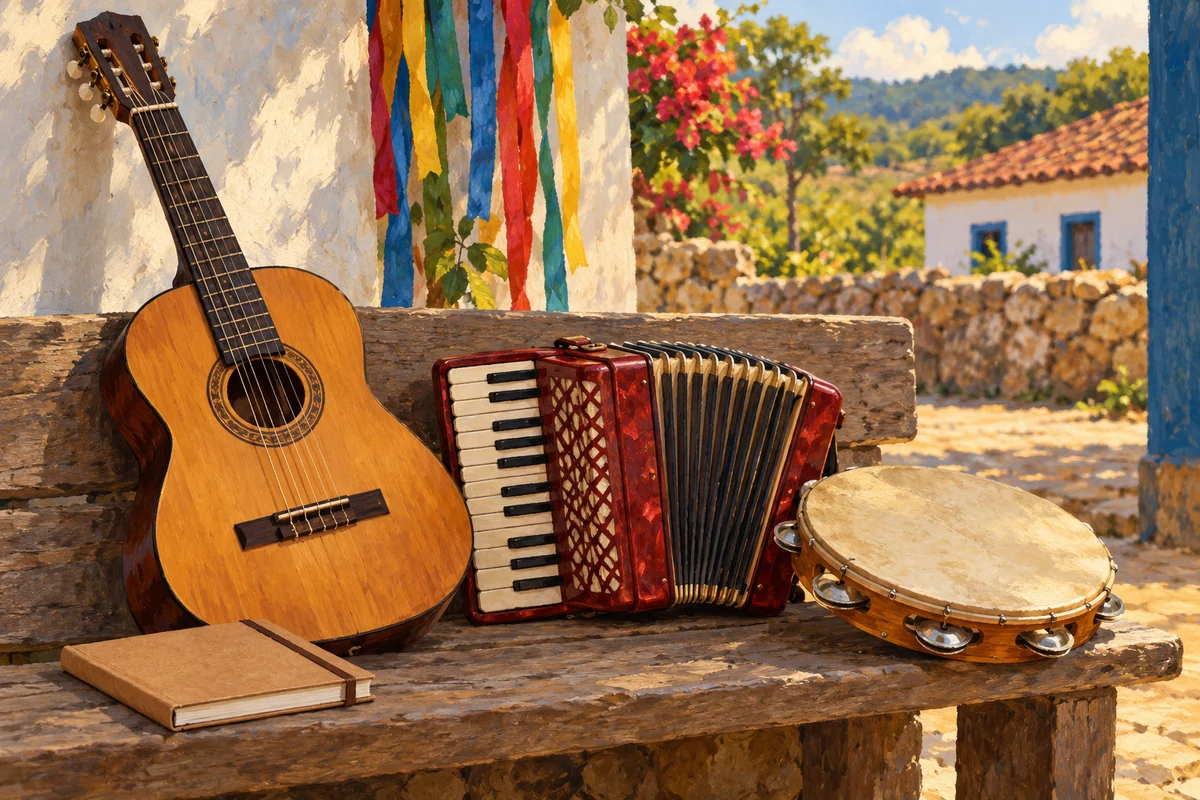
Supporting Folia de Reis today means respecting its community roots while finding practical ways to sustain teaching, rehearsal and documentation. New communication tools can help without dictating how the tradition should change.
Cultural support and funding
Cultural grants, local partnerships and work with universities or cultural centres may support workshops, recordings and events. Funding arrangements should be clear and recognise the time and expertise of participating artists.
- Seek suitable local funding opportunities with the group’s agreement.
- Explore relevant cultural heritage programmes without claiming a recognition or registration that has not been confirmed.
- Work with researchers or cultural organisations on documentation that benefits the community and respects its wishes.
Documentation and archives
Recording lyrics, melodies and performance context can support continuity. Audio and video recordings, written notes and digital archives are useful when practitioners help decide what is recorded and who may access it.
- Obtain participants’ permission before recording a performance.
- Note lyrics, musical responses and relevant context, crediting the people who share them.
- Keep organised local and backed-up copies, with agreed access and protection for personal information.
Education across generations
Workshops and shared rehearsals bring younger and more experienced members together. Community and school activities can teach musical skills alongside the history and responsibilities of participation.
- Offer practical sessions led by singers and instrumentalists from the tradition.
- Arrange suitable activities with schools and cultural centres.
- Support mentoring between experienced musicians and beginners.
Using digital tools
Social media, recordings and live broadcasts can introduce the tradition to new audiences. They need context and consent, so that a communal practice is not reduced to an isolated spectacle.
- Share performances only with permission, adding appropriate context and credits.
- Create study playlists from recordings the group is authorised to use.
- Make short documentaries with participants’ explanations rather than speaking on their behalf.
Events, tourism and the local economy
Festivals and cultural visits can support local groups and provide income. Organisers should agree the format with practitioners and avoid changing rituals merely to fit visitors’ expectations.
- Plan public performances around the group’s commitments and ceremonial boundaries.
- Agree fair fees, transport and suitable working conditions.
- Give visitors clear information about the meaning of the practice and appropriate behaviour.
Responsible adaptation
Respect, consent and fair treatment make cultural support more useful. The community should have a meaningful say in how its tradition is presented and passed on.
- Local knowledge: consult leaders and experienced practitioners before changing repertoire or rituals.
- Payment: agree fair terms for musicians and helpers where an event is paid or commercially organised.
- Consent: obtain permission for recording and sharing images, explaining the intended use.
- Care for the surroundings: reuse suitable materials, manage waste and leave visiting places tidy.
- Continuity: document regional differences and support the group’s choices rather than imposing a supposedly standard version.
A living Christmas tradition
Folia de Reis brings faith, music and community memory together around the Christmas season and Three Kings’ Day. Its richness comes from the people, places and different customs that keep it alive.
Joining respectfully, documenting with consent and helping others learn are practical forms of support. Welcoming younger participants while listening to experienced members helps that knowledge continue.
Thank you for reading. Follow us on social media and explore the I Love Christmas blog for more seasonal traditions, stories and ideas. Share this introduction with anyone interested in Brazil’s Christmas celebrations.
Frequently asked questions about Folia de Reis
What is Folia de Reis?
It is a Brazilian popular tradition celebrating the Three Kings through music, devotional verses, visits and community rituals. The details vary between groups and regions.
When does Folia de Reis take place?
Christmas and 6 January, Three Kings’ Day, are central reference points. Visiting cycles and public gatherings vary locally, and some events happen later in the year. Check with the particular group rather than assuming every celebration ends on the same date.
How can I join or help organise a group?
Contact local practitioners first. Agree roles, repertoire, routes and dates with them, confirm visits with households and make suitable arrangements for access, transport and participants’ needs.
What should a household offer during a visit?
Ask the group what is customary and useful. Simple refreshments or a voluntary contribution may be welcomed, but an expensive offering is unnecessary. Agree timing and access; the group will organise its own instruments and ceremonial objects.
Is Folia de Reis only religious?
It has Christian devotional roots and remains a religious practice for many participants. It also has social and cultural importance, bringing together local history, musical knowledge and community relationships.
How can I help preserve the tradition?
Support teaching and rehearsals, document material with consent, respect regional differences and advocate fair treatment of practitioners. Cultural partnerships should benefit the community and follow its wishes.
Sources and Further Reading
- IPHAN: research and documentation of Reisados and Folias de Reis
- Goiânia education department: Folia de Reis cultural heritage
- Hortolândia cultural map: the palhaço in Folia de Reis
- Vatican: the Baptism of the Lord and the end of the Christmas season
- Catholic Bishops of England and Wales: calendar rules for Epiphany and the Baptism
- Aparecida de Goiânia: an example of a local Folia calendar