Christmas in the United States takes many forms, including decorated trees, neighbourhood lights, parades, shared meals and family traditions. Customs vary between households, regions and communities. Other celebrations, such as Hanukkah and Kwanzaa, may fall within the wider festive season but are distinct observances, not versions of Christmas.
Christmas in the United States brings together familiar festive customs and traditions with a distinctly local character. For British readers, some will feel close to home; others offer a different way to enjoy the season. Here we explore the history, food and celebrations, with a separate section on adapting ideas for Brazil’s summer Christmas. The images are illustrative rather than records of named families or places.
Illustrations in this article are conceptual images, not documentary photographs or evidence of a particular historical event, destination, venue or access route.
Historical traditions and regional differences

American Christmas customs reflect many communities and periods of history. Traditions brought by immigrants have developed alongside literature, entertainment, religious practice and family preferences. Climate and local culture influence celebrations, but no region follows a single formula, and not every household celebrates Christmas at all.
Origins and influences
German-speaking communities helped spread the Christmas tree tradition in nineteenth-century America. The modern gift-bringing figure also draws on traditions associated with Sinterklaas and later American writing and illustration about Santa Claus. The Library of Congress describes these overlapping influences. Victorian ideas about family and generosity, alongside the customs of African American, Caribbean and Hispanic communities, also form part of a much broader and continuing story. Source: Library of Congress: German influences on American Christmas customs
Examples from different regions
- The Northeast and New England: winter markets, decorated town centres and prominent public trees are familiar sights. New York’s Rockefeller Center is a well-known example, although snow at Christmas is never guaranteed.
- The Midwest: family meals, biscuit exchanges and community parades are among the ways people celebrate. These customs occur elsewhere too; they are examples rather than rules for every household.
- The South: outdoor celebrations suit some locations, though weather varies considerably. New Orleans tourism traces Réveillon dinners to Creole family meals after midnight Mass at Christmas; today, restaurants offer versions throughout December, not simply after Christmas. Source: New Orleans tourism: the history of Reveillon dinners
- The Southwest and some Hispanic communities: traditions may include Las Posadas and Nochebuena, with family gatherings and foods such as tamales. Practices differ between communities and individual families.
- The West Coast: celebrations reflect a wide range of cultural influences. Some coastal towns hold illuminated boat parades, while parks and gardens may host seasonal light displays.
- Large cities: public trees, theatre, markets and shopping districts can create a busy festive calendar, with events appealing to residents as well as visitors.
Shared symbols, different meanings
Wreaths and fairy lights appear in many Christmas displays, while Nativity scenes have a particular place in Christian observance. Hanukkah is a separate Jewish festival, and Kwanzaa is a distinct celebration of African heritage and culture. Sharing a season does not make them Christmas customs. Families may celebrate one, several or none of these occasions, and their choices deserve to be understood on their own terms.
Community celebrations and changing customs
Macy’s Thanksgiving Day Parade takes place at Thanksgiving in November and helps mark the beginning of the festive season; it is not a Christmas Day parade. Tree-lighting ceremonies, school performances, church events and local markets follow their own calendars. Christmas jumper gatherings and digital Advent activities sit alongside older customs, showing how traditions continue to change. Source: Macy’s: Thanksgiving Day Parade and the festive season
The cultural variety matters as much as the shared symbols. A large-city light display and a quiet family meal can both be part of Christmas in America. History, faith, migration and personal preference help explain the differences without reducing a whole region to one way of celebrating.
Decorations and lights, from homes to town centres

Christmas decoration ranges from a wreath and a few fairy lights to elaborate displays across a whole house or street. Some neighbourhoods organise shared events, while other homes keep things simple. Public trees and decorated squares provide inspiration without making a large private display a requirement for enjoying the season.
Common lighting styles
- LED lights: generally use less electricity than comparable filament lights. Choose a product suitable for its intended location; an LED label alone does not mean it is safe outdoors.
- C7 and C9 bulbs: larger bulb styles associated with many American house displays. Their appearance is a decorative choice, not a reason to import equipment unsuitable for your electrical supply.
- Icicle and net lights: create hanging lines or an even spread across a suitable surface. Follow the product’s installation instructions rather than improvising fixings.
- Decorative projectors: can create patterns on a wall. Choose suitable equipment and keep the effect within your property, away from road users and neighbours’ windows.
- Rope and strip lights: can outline a feature where the product is designed for that use. Check mounting, ventilation and power requirements before installation.
Themes and colour palettes
A consistent palette can make a small display feel considered without requiring many decorations. These are possible starting points rather than rules about how a region or household should look:
- Classic: warm white lights with red and green details.
- Contemporary: cool white, blue and silver used in a restrained combination.
- Rustic: warm tones, wooden ornaments and natural textures kept separate from electrical fittings.
- Coastal or Southwestern inspiration: colours and handmade details that reflect a particular place, without assuming that everyone there decorates alike.
Installation, timing and controls
Plan the layout before buying equipment. Compatible LED controls or timers can help limit operating hours, while larger synchronised displays need suitable equipment and competent installation. Choose modest timings that respect neighbours and do not let automation replace switching off a display when it should not be left running.
Electrical safety and maintenance
- Electrical Safety First advises checking that lights are explicitly suitable for outdoor use; an indoor set should stay indoors. Source: Electrical Safety First: Christmas lights
- Follow the instructions for plugs, transformers and weather protection. In the UK, outdoor lighting needs appropriate RCD protection; ask a qualified electrician if unsure.
- Check for damage and avoid overloading sockets or linking incompatible sets. A surge protector does not make an overloaded arrangement safe.
- Disconnect lights before handling them. Avoid working at height without appropriate equipment and competence, and switch displays off when going out or to bed.
Keeping costs and waste down
Use a smaller display, controlled operating hours and efficient LEDs where appropriate. Reusing sound decorations can reduce spending, but damaged electrical items should not be kept in service. Compare actual power ratings rather than assuming that any projector or large display will be inexpensive to run.
Simple homemade decoration ideas
- Place unlit, shatter-resistant decorations beside a path without narrowing the walking space or creating a trip hazard.
- Make a wreath from suitable craft materials and display it separately from lights, heaters and flames.
- Wrap empty boxes as decorative presents, leaving electrical equipment outside them and keeping exits clear.
Community displays and seasonal events
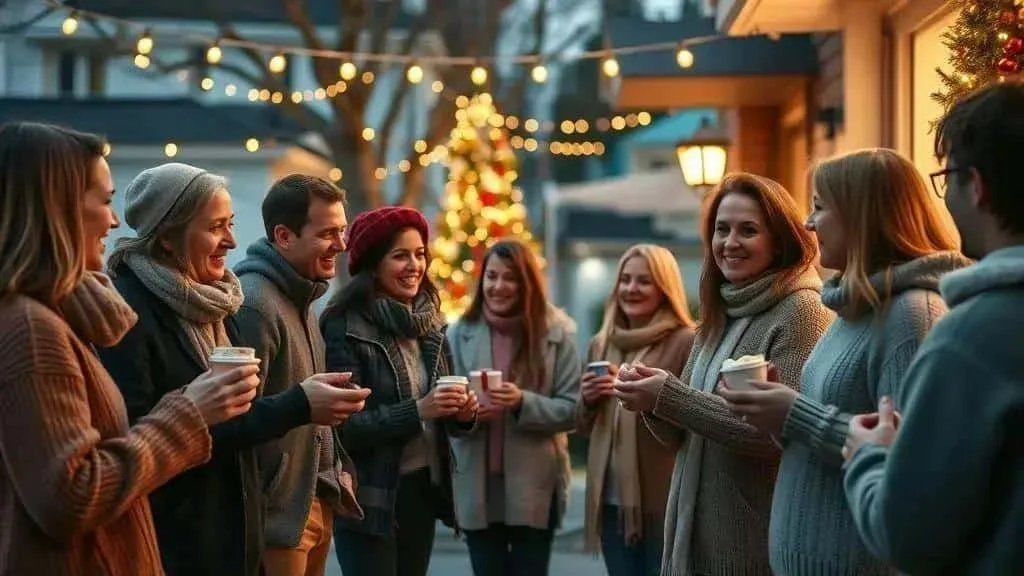
Some neighbourhoods hold lighting competitions or shared festive evenings, and town centres may combine public trees with music and craft stalls. Taking part can be as simple as visiting on foot or admiring a local display. You do not need to reproduce a large installation at home to enjoy the idea.
Plan around the available space, weather and needs of anyone using the path or doorway. A thoughtful display leaves room for wheelchairs, pushchairs and everyday access. Keeping entrances and sightlines clear helps the decoration remain a pleasure rather than an obstacle.
Christmas meals and familiar American dishes
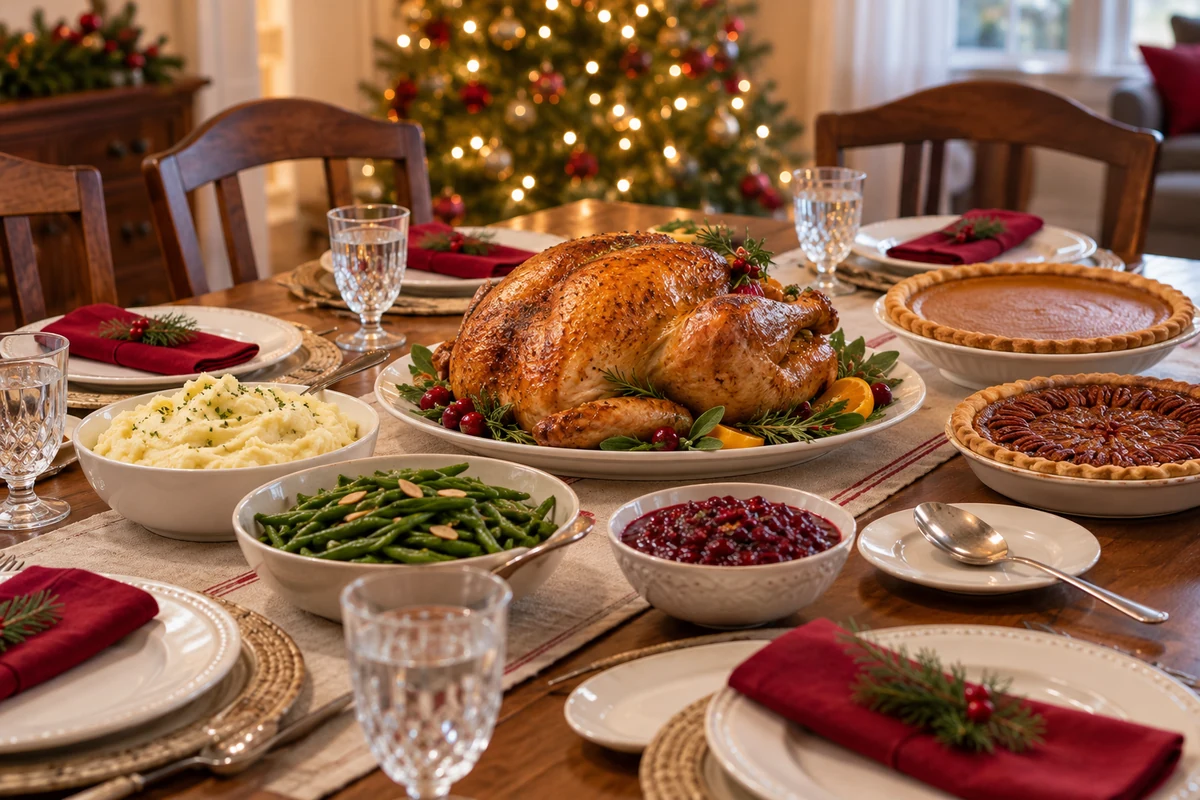
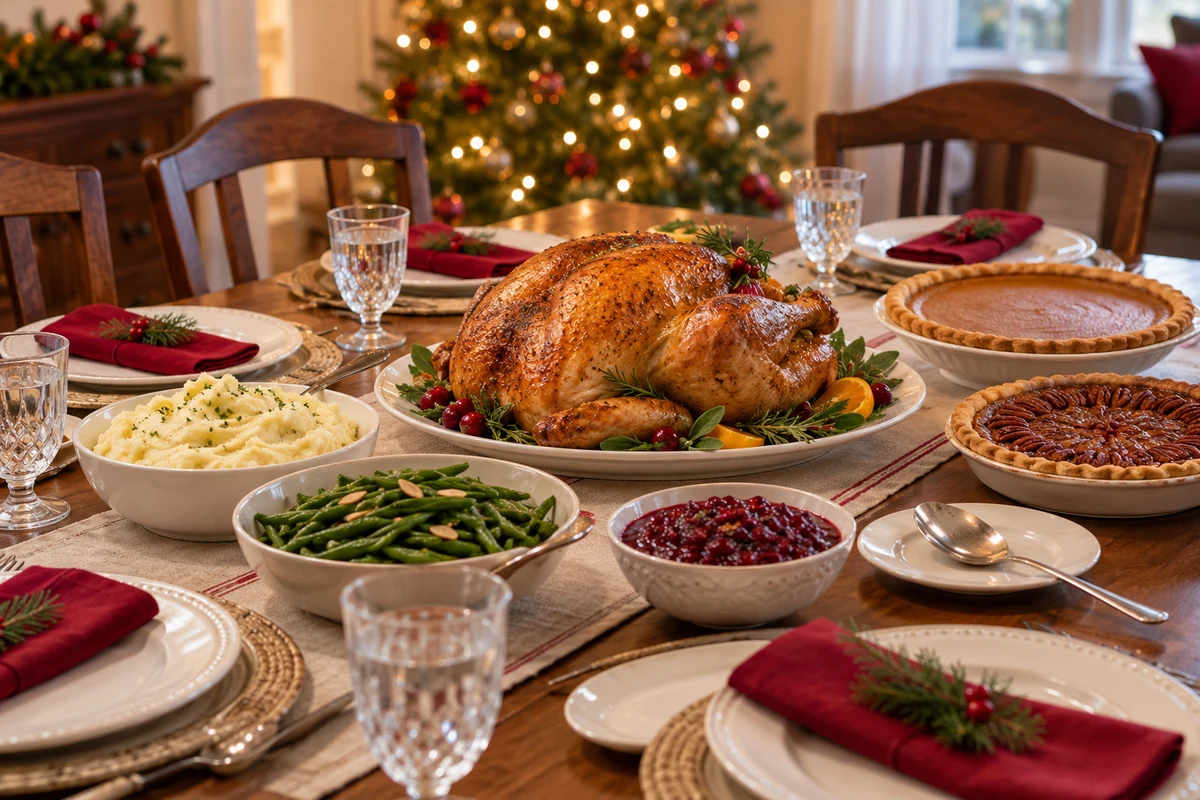
Christmas menus vary substantially between American families. Some include turkey or ham, others centre on seafood, vegetarian food or recipes passed down through a particular community. The following dishes are familiar examples, not a description of one meal eaten by every household across the country.
Main courses
- Roast turkey: one festive option, often served with herbs and gravy. It is strongly associated with Thanksgiving too, so its place at Christmas depends on the family.
- Glazed ham: another familiar choice, sometimes finished with honey, mustard or brown sugar. Check the product’s preparation instructions and the needs of your guests.
- Roast beef or ribs: alternatives for households that prefer a different centrepiece, alongside many other meat-free and regional possibilities.
Well-known side dishes
- Mashed potatoes — a creamy accompaniment, often made with butter and milk or cream, with alternatives possible for particular dietary needs.
- Stuffing — commonly based on bread, herbs, onion and celery, sometimes with sausage, nuts or dried fruit. Check allergens and use a reliable cooking method.
- Cranberry sauce — a sweet-sharp fruit accompaniment that contrasts with richer savoury dishes.
- Green bean casserole — green beans in a creamy sauce, often finished with crisp fried onions.
- Sweet potatoes — roasted, mashed or baked in a casserole; some versions include a sweet topping such as marshmallows.
Desserts you may encounter
- Pumpkin pie — a spiced pumpkin-filled pastry associated especially with Thanksgiving, but also served at other autumn and winter gatherings.
- Pecan pie — a sweet, rich pie with pecans and a caramel-like filling; clearly identify the nuts when serving guests.
- Apple pie — a familiar fruit dessert, sometimes served warm with ice cream or another accompaniment.
Drinks and food before the main meal
Eggnog is a milk-and-egg drink that may be made with or without alcohol. For homemade versions, USDA guidance supports using a properly cooked egg mixture or pasteurised eggs rather than untreated raw eggs. In American usage, apple cider often means a non-alcoholic apple drink, unlike the usual British meaning of cider, so check labels. Small dishes such as devilled eggs and cheese platters may be served before dinner, with chilled items kept at a safe temperature. Source: USDA: egg safety and homemade eggnog
Regional and family influences
Southern food traditions include many African American contributions, but they cannot be reduced to spicy dishes or seafood. In some Hispanic households, tamales are important to the celebration; other families keep recipes connected with European, Caribbean, Asian or other backgrounds. Individual preferences and dietary needs shape the meal just as much as geography.
Trying an American-inspired Christmas meal
- Work out oven space and cooking times in advance, and use a reliable recipe and food thermometer rather than judging poultry by colour alone.
- Set the table early, but keep perishable food safely chilled until needed and coordinate hot dishes close to serving time.
- If an ingredient is difficult to find, choose a suitable alternative: a red-fruit preserve changes the flavour of cranberry sauce, and another nut changes a pecan pie. Tell guests about substitutions and allergens.
- Prepare suitable dishes ahead where a trusted recipe allows, cool and refrigerate them promptly, and follow safe reheating instructions rather than leaving cooked food out overnight.
Public celebrations: parades, markets and performances

Many American towns and cities offer seasonal events from late November into the New Year, although dates vary. A local calendar might include a parade, craft market, concert or ticketed light trail. Check the current organiser’s programme rather than assuming that a previous year’s event or opening time still applies.
Common types of event
- Christmas parades: may feature decorated floats, bands and festive characters, sometimes including Santa Claus.
- Tree-lighting ceremonies: bring people together around a public tree, often with music or performances. Fireworks are not a standard feature of every event.
- Holiday markets: offer crafts, food, warm drinks and gift ideas, with indoor and outdoor formats depending on the location.
- Concerts and performances: range from local choirs and orchestras to theatre productions in churches, halls and public spaces.
- Light trails and drive-through displays: provide different ways to see seasonal installations. Check whether the event is designed for walking, driving or both before travelling.
Large attractions and smaller celebrations
Major city displays can attract visitors from far away, but smaller community events may be equally enjoyable. A local parade or craft fair can provide a closer connection with the people who organise it. Choose according to your interests, available time and comfort with crowds rather than size alone.
Planning a visit
- Check ahead: verify dates, tickets, opening times and any timed-entry requirements through the organiser.
- Allow time: account for queues and the journey to the entrance; early arrival does not guarantee a particular viewing position.
- Plan transport: check parking restrictions and public transport, including the return journey after an evening event.
- Dress for the forecast: comfortable footwear and appropriate layers matter more than assumptions about how cold an entire region will be.
- Book through trusted channels: buy tickets in advance where required, checking the date and refund policy before payment.
- Keep the group together: agree a meeting point and a plan for separation, while keeping belongings secure.
Organisation and visitor safety
- Check the event’s information about assistance, accessible routes, toilets and first aid rather than assuming every location offers the same facilities.
- Ticketed or crowded events may have capacity limits, bag checks or specific arrival instructions.
- Read rules about animals, prohibited items, smoking and photography before bringing equipment or planning a visit with a pet.
- Follow official updates if bad weather may affect travel, opening hours or cancellation.
What these events contribute locally
Seasonal gatherings can support local businesses, craftspeople and opportunities for neighbours to meet. Markets and parades sometimes include voluntary collections for community organisations. Check what a group actually needs before donating, and recognise that enjoying an event does not require spending heavily or taking part in every activity.
Including children and building family traditions
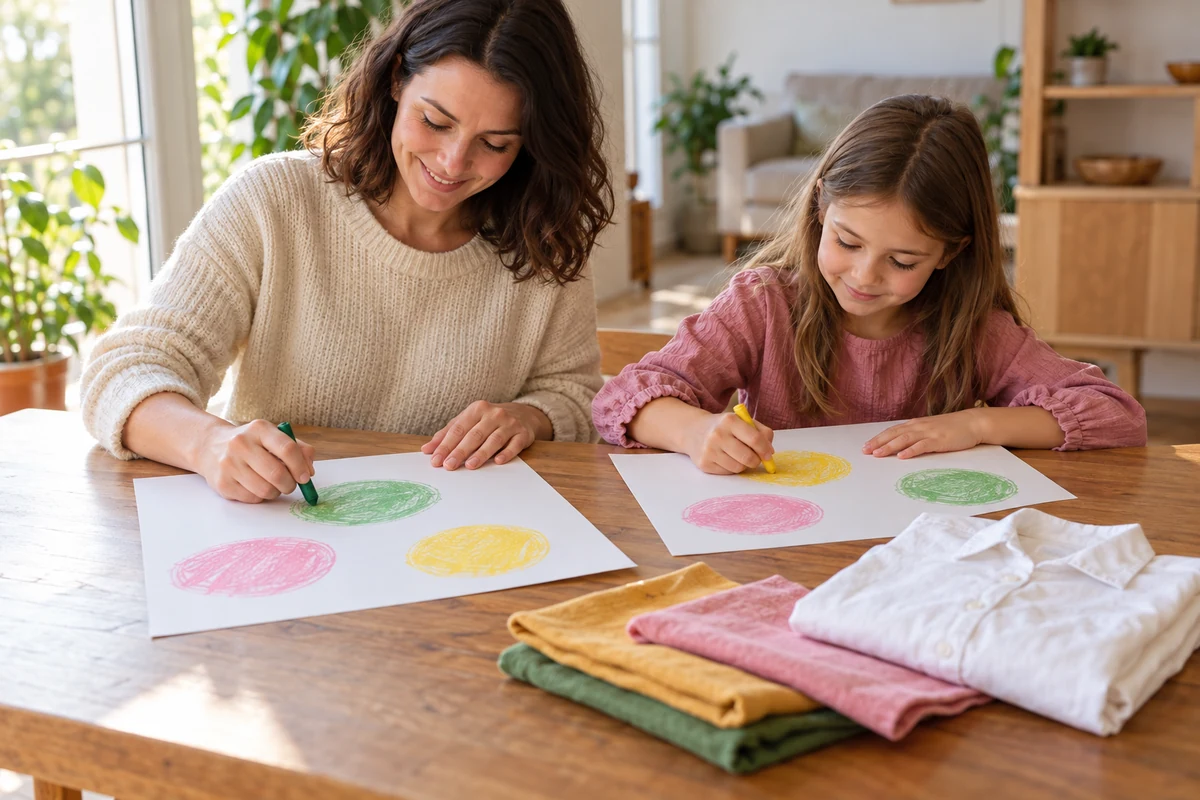
A family tradition can be a small, repeatable activity that everyone enjoys. There is no need to fill December with elaborate events. Choose activities suited to the child’s age, interests and energy, and leave room to change the plan when someone is tired or simply wants a quieter evening.
Activities for different ages
- Babies and toddlers: share a short song or an age-appropriate festive book. Decorations are not toys; keep small parts, hooks, batteries and breakable ornaments out of reach.
- Children aged roughly four to seven: try decorating baked biscuits, making simple paper ornaments or reading together, with adult supervision and suitable materials.
- Children aged roughly eight to twelve: may enjoy a countdown calendar, helping with a simple kitchen task or writing a festive message. Follow their interests rather than making belief in Santa a requirement.
Rituals that are easy to repeat
A tree-decorating evening, stockings on Christmas Eve or a favourite film can become part of a family’s December. Familiarity can be comforting, but it is not a rule that must be kept at any cost. Let children help choose, and adapt the timing when school, work or family circumstances change.
Creative activities with a purpose
- Make an Advent calendar with small optional activities, such as drawing a card, helping someone or preparing a simple snack together.
- Use clean, age-appropriate craft materials to make decorations, avoiding sharp edges, tiny detachable pieces and unsuitable containers.
- Write thank-you notes to relatives or neighbours, allowing children to express their own thoughts without pressure to perform gratitude.
Helping with the meal
Offer manageable jobs such as washing suitable vegetables, mixing cool ingredients or laying out napkins. Show each step and keep knives, heat and raw meat handling with an appropriate adult. A small contribution can help a child feel included, but it should remain an invitation rather than an obligation to manage the meal.
Quiet moments together
Read a seasonal book, share something appreciated about the year or look through a family photo album. An unlit decoration can mark the moment just as well as a flame. Children do not need to handle a real candle to take part in a meaningful ritual, and everyone should be free to listen rather than speak.
Safety and pacing
- Keep breakable ornaments, loose hooks and other small items away from young children and pets.
- Adults should manage electrical decorations. Keep button batteries secured and inaccessible, and keep real flames away from children and combustible materials.
- Allow rest breaks and an early finish where needed; a shorter enjoyable activity is better than a long, exhausting one.
Combining familiar and new ideas
Older family customs can sit alongside new ways of staying in touch, such as a voice message for a relative or a private digital album. Flexibility allows traditions to grow with the family. Ask before sharing photographs or recordings, particularly those involving children, and avoid making public posting part of the activity by default.
Recording memories without pressure
A few photographs or a note about something funny can be enough. Ask whether people want to be photographed and enjoy some moments without a camera. Repeating a favourite activity may create a sense of continuity, but missing a year does not diminish the value of the time already spent together.
Adapting American Christmas ideas for Brazil
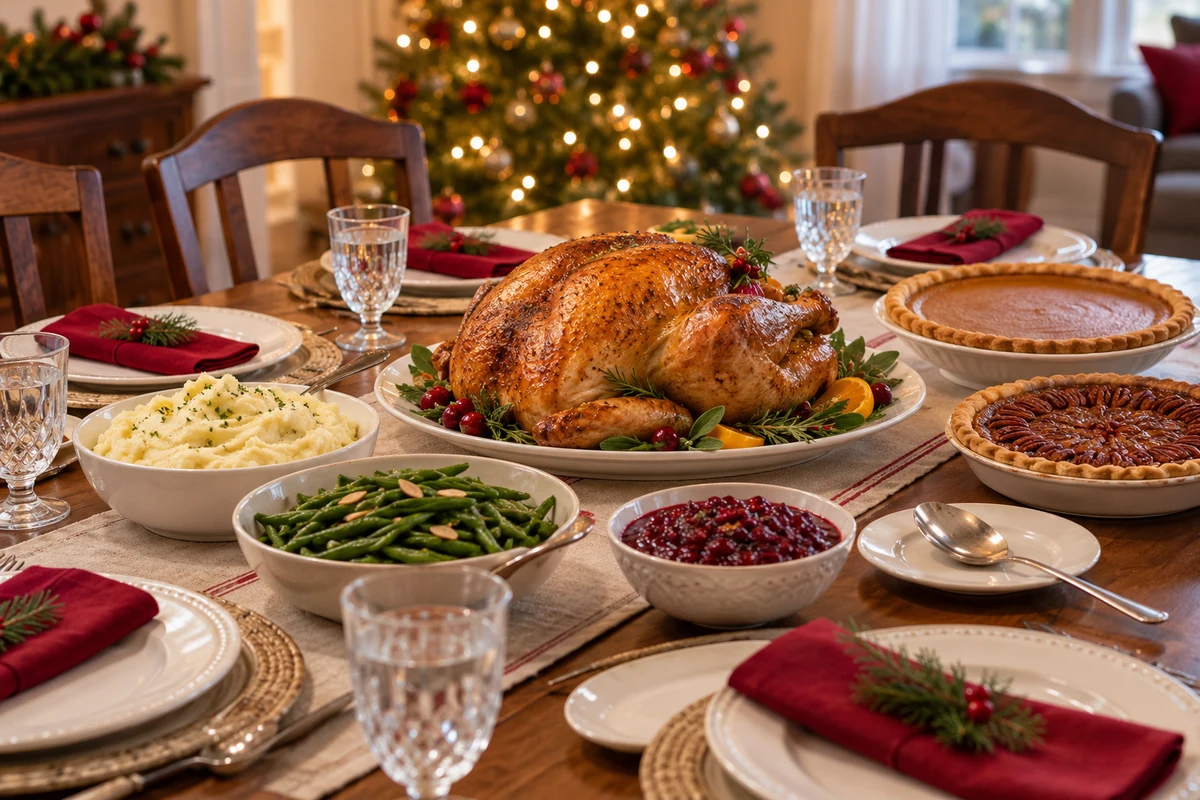
This section is specifically for readers celebrating in Brazil, where Christmas falls in summer. The aim is to combine appealing American-inspired ideas with Brazilian food, craft and family customs. British readers can borrow the same principle of adapting to their own setting without treating tropical weather as a feature of a UK December.
Decorations and atmosphere
- Choose a suitable real or artificial tree and decorate it with handmade ornaments and appropriate lights. The size and position should leave enough space for everyday movement.
- If you prefer a summer theme, use warm colours and local craft textures rather than copying a snowy scene. Winter imagery is also a personal choice, not something that must be removed.
- Make an unlit wreath using suitable local materials, keeping dry foliage and other combustible decorations away from lights and heat sources.
A menu with Brazilian touches
Select a few dishes that work together rather than attempting two complete national menus. Ingredients, guests’ preferences and available kitchen space should guide the meal. Explain unfamiliar foods and check dietary requirements before finalising the shopping list.
- Roast turkey with herbs and orange can be paired with farofa, the Brazilian toasted cassava-flour accompaniment, or sweet potato mash, using reliable recipes and safe cooking methods.
- Where cranberries are unavailable, a red-fruit preserve or jabuticaba compote can provide a different fruity accompaniment. Treat it as an adaptation, not an identical substitute.
- Serve Brazilian desserts such as pavê, rabanada or brigadeiro alongside a pumpkin pie if that suits the gathering, keeping portions and preparation manageable.
Community celebrations and getting together
- A short evening walk to see local decorations can be a simple alternative to organising a parade. Choose a suitable route, supervise children and avoid blocking roads or pavements.
- Visit a local Christmas craft market or, if helping organise one, check permissions, access and food arrangements with the responsible organisers.
- Choose a comfortable time for an outdoor gathering based on the actual weather, with shade, water and a sheltered alternative where appropriate.
Family activities and rituals
- Create an Advent calendar with small acts of kindness, a drawing or an easy recipe. Donations should be voluntary and matched to what the recipient organisation needs.
- Hold a decorating evening in which each person can contribute a simple handmade ornament or choose another way to join in.
- Share stories and songs, combining English-language carols with Brazilian music if the family enjoys both.
Practical ways to keep costs down
- Limit the size and running time of lighting displays, and choose suitable efficient products where lights are used.
- Reuse sound decorations and clean craft materials, replacing damaged electrical items rather than attempting unsafe repairs.
- Compare prices and seasonal produce at local shops and markets. Buying locally can support producers, but it is still worth checking the total cost.
Sustainability and safety
Choose durable decorations that can be reused and disposed of responsibly when they wear out. Keep access routes clear, secure fittings appropriately and avoid real candles near children or combustible materials. In hot weather, comfortable ventilation and safe chilled-food storage matter more than reproducing a winter scene.
Inspiration without losing your own identity
American-inspired decorations or dishes can become part of a Brazilian Christmas without replacing familiar customs. Adapt the scale, ingredients and timing to the people who will actually be there. The point is to enjoy celebrating together, not to create an exact copy of another household’s holiday.
Christmas in the United States offers many examples of how traditions develop through family life, community and cultural exchange. The variety is the most useful inspiration: take an idea that appeals to you, understand where it comes from and adapt it thoughtfully to your own celebration.
Thank you for reading. Visit the I Love Christmas blog for more seasonal traditions, practical ideas and ways to enjoy the festive period with the people around you.
You are welcome to share a family tradition in the comments. Different experiences add to the picture, whether Christmas means a busy gathering, a quiet meal, a religious observance or a day spent in another way entirely.
FAQ: Christmas in the United States
What are some common American Christmas traditions?
Decorated trees, festive lights, gifts, community events and shared meals are familiar examples. Practices differ between families, regions and faith communities, and not every American celebrates Christmas.
What are neighbourhood Christmas light displays like?
They range from a few lights and a wreath to elaborate installations, sometimes coordinated with music. Some communities organise events or competitions, while others keep displays small. Check visitor arrangements before travelling to a particular attraction.
Which foods might be served at an American Christmas meal?
Possibilities include turkey, glazed ham, mashed potatoes, stuffing and cranberry sauce, with desserts such as apple or pecan pie. Pumpkin pie may also appear, although it is particularly associated with Thanksgiving. There is no single national Christmas menu.
How can children take part without an elaborate programme?
Choose short activities suited to their age and interests, such as reading, decorating baked biscuits or making simple ornaments. Supervise appropriately, keep small parts and electrical decorations out of reach, and allow plenty of time to rest.
Can these ideas be adapted for Christmas in Brazil?
Yes. Combine selected decorations or dishes with local traditions, ingredients and the summer climate. Keep food safely stored, plan comfortable outdoor timings and choose manageable activities rather than trying to copy every detail of an American celebration.
Sources and Further Reading
- Library of Congress: German influences on American Christmas customs
- New Orleans tourism: the history of Reveillon dinners
- Macy’s: Thanksgiving Day Parade and the festive season
- Electrical Safety First: Christmas lights
- USDA: egg safety and homemade eggnog