
Sharing Christmas traditions with neighbours can start with a friendly invitation, a small activity or an inexpensive gift exchange. Keep participation optional, respect cultural and religious differences, and consider access, food requirements and noise. Simple arrangements can make a gathering more welcoming for different ages and circumstances.
Christmas traditions with neighbours can help turn a street into a community. A shared meal, a few songs or a small craft session may be enough to begin. Here are practical ways to include friends and neighbours without making the occasion expensive or demanding.
Inviting neighbours with kindness and respect

Start with a short message, a friendly note or a brief conversation at a convenient time. Explain the invitation clearly and make it easy to decline without pressure.
Practical invitation tips
- Choose a considerate time: avoid interrupting work or calling late at night. Take account of the person’s routine rather than assuming a weekend suits everyone.
- Use welcoming language: phrases such as “We’d love to invite you” or “If you’d like to join us” leave room for choice.
- Explain the details: give the date, time, place and activity, and say whether guests are invited to bring anything.
- Offer alternatives gently: if someone cannot attend, a later chat or card may be welcome, but ask rather than assuming.
- Respect silence or a refusal: do not keep messaging someone who has not replied or has declined.
Considerate hosting
- Ask before entering someone’s home or inviting extra people to a gathering.
- Invite guests to mention any dietary, cultural, religious or access needs they want you to consider, without requiring private explanations.
- Give an approximate finishing time so people can plan around other commitments.
- Keep music and conversation at a considerate level, including for neighbours who are not attending.
- Mention relevant arrangements for children and pets beforehand so guests can decide what suits them.
Be clear about costs: if contributions are proposed, explain the amount in advance and make affordable or non-financial options available. Helping to set up can be just as welcome as bringing food.
Afterwards, a personal thank-you or short note can acknowledge the time and effort people contributed.
Practical festive activities for neighbours

Choose short, manageable activities that fit around people’s routines. A modest first gathering is often easier than a large programme.
Ideas and simple ways to organise them
- A bring-and-share meal: coordinate who brings what, keep ingredient information available and plan safe transport, chilling and serving. Discuss allergies privately; a label alone does not prevent cross-contact.
- A biscuit or sweet exchange: agree a date and small portions, and provide ingredient, allergen and storage information. Do not describe homemade food as allergen-free unless you can support that claim. Source: Food Standards Agency: food at community and charity events
- A decoration-making session: prepare paper, ribbon and other inexpensive materials for 15–30-minute projects. Use age-appropriate scissors and glue, with adult supervision and any hot tools handled safely by adults.
- Shared outdoor decorations: agree a theme and permissions, divide tasks and plan a short session, keeping paths, entrances and emergency access clear.
- A short carol or song gathering: choose three to five songs, agree a considerate time and finish promptly. Check relevant local or venue rules rather than assuming one universal evening cut-off.
- A household Secret Santa: set an affordable limit, make joining optional and agree delivery times to avoid unexpected visits.
- A film gathering: choose suitable content, accessible seating and a weather backup. Before organising a public or community screening, check film copyright permissions and any venue or local licensing requirements; a personal streaming subscription does not automatically cover it. Source: GOV.UK: showing films in public
Coordination and consideration
- Use an optional messaging group or noticeboard to share practical details. Ask before adding people to a group that exposes their contact information.
- Agree times and sound levels with consideration for shift workers, sleeping children and anyone who needs quiet.
- Make it clear that neighbours can decline or join only the part that suits them.
- Arrange the clean-up and identify who will return borrowed equipment and deal with waste.
- Tell participants about relevant child and pet arrangements, without promising that every setting will suit everyone.
Encouraging participation
Start with one small event and see whether people want another. Thank those who join in, and obtain permission before sharing photographs or personal details in a group or online.
Simple, affordable gifts for neighbours

A small gift exchange can be thoughtful without being expensive. Handmade items, carefully prepared food or practical keepsakes work best when they suit the recipient and carry no expectation of a gift in return.
Low-cost ideas
- Biscuits or a hot-chocolate mix: use a suitable clean food container, with ingredients, allergen information, preparation date and storage instructions. Choose packaging appropriate to the recipient’s age.
- A small potted plant: check that it suits the recipient’s space, interest and household, including any pets, rather than assuming every succulent is suitable.
- A handmade ornament: use spare paper, felt or other appropriate materials to make something personal and easy to store.
- A small personal-care gift: if you know the recipient would like one, choose a clearly labelled product they can assess for suitability. “Natural” or homemade does not automatically mean gentle or allergy-safe.
- A personal card or recipe: a kind message can suit someone who does not want more objects; use photographs only with permission.
Putting together a small gift
- Choose suitable contents: consider the recipient’s needs. Labelling helps someone make a choice, but does not make an unsuitable ingredient or material safe.
- Keep the quantity modest: one to three portions can be a useful starting point for a small food gift, adjusted to the recipient.
- Identify the contents: include what the gift contains, relevant ingredients and storage details, and the preparation date where applicable.
- Use simple packaging: reusable wrapping or a small paper bag can work for non-food items; food needs suitable food-safe packaging.
- Agree the handover: choose a convenient time and place. Do not leave perishable food unattended on a doorstep.
Being considerate about gifts
- Agree a modest spending limit or theme if the exchange involves several households.
- Invite preferences: ask about suitable food or gifts without expecting neighbours to disclose personal beliefs or health details.
- Accept a refusal without insisting. A simple greeting may be enough; do not replace one unwanted gift with another.
- Avoid presents that require substantial space, ongoing expense or unwanted maintenance.
- A brief thank-you helps keep the exchange friendly, without creating an obligation to reciprocate.
Keeping costs down
Share materials, make gifts together and reuse clean packaging where it is suitable. Small touches such as a neat label, a reused ribbon or a handwritten message can make a modest gift feel thoughtful.
Decorating together with reuse in mind
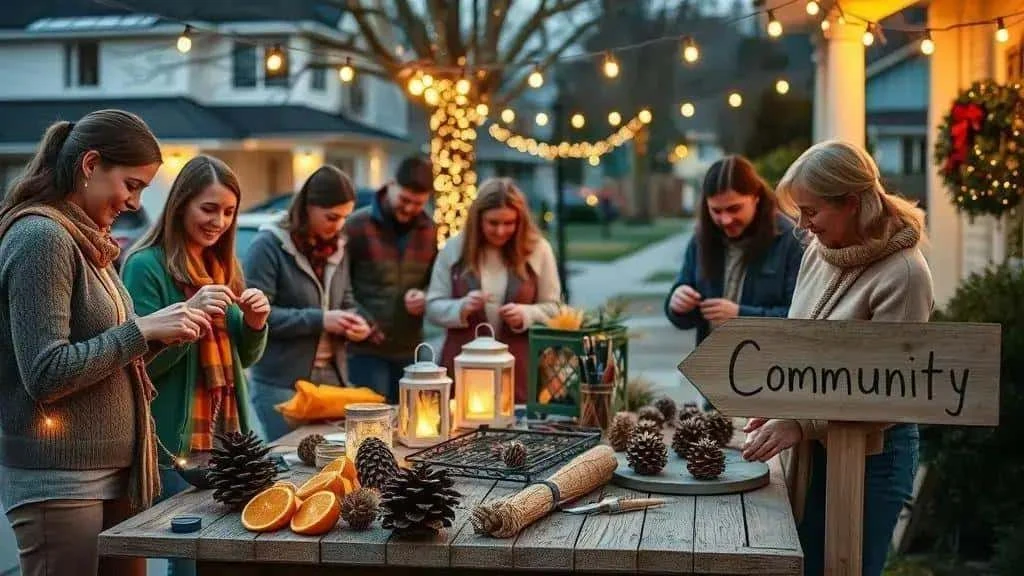
Shared decorating can spread the work and make good use of materials already available. Prioritise sound, durable items that can be stored and used again.
Materials to consider and where to find them
- Clean reused materials: paper, card, corks and suitable containers can become ornaments. Check for sharp edges and remember that glue or paint can affect later recycling.
- Suitable timber offcuts: use clean, sound pieces without exposed nails, splinters or unknown treatments for small signs or supports.
- Natural materials: pine cones, dry branches or dried fruit can add texture when suitable. Obtain permission to collect them and avoid damaging plants or habitats.
- Appropriate lighting: choose efficient LED products rated for their intended location; solar lights also depend on available daylight and their specifications.
- Reusable textiles: fabric scraps and ribbons can become wreaths or bows, kept clear of flames and heat.
- Possible sources: community swaps, second-hand shops, local sharing groups and craft offcuts can help, provided the materials are suitable and in good condition.
Simple shared projects
- A paper-and-fabric wreath: tie strips to a suitable craft hoop with no exposed sharp edges, adding ribbons if desired. Keep paper versions indoors and dry.
- Decorated pine cones: use clean, dry cones and a small ribbon or hanging cord. Avoid loose glitter outdoors; even a “biodegradable” label is not a reason to scatter it.
- LED lantern jars: place a suitable flameless light in a sound jar, following its instructions and keeping batteries secure. Do not substitute a naked flame among decorative materials.
- Dried orange decorations: use fully dried slices, with string and optional cinnamon sticks. Keep them dry, away from pets and heat sources, and discard any that become mouldy.
- A community sign: decorate a sound wooden board and display it only where permission has been obtained, without obstructing routes or sightlines.
Organising the decorating session
- A small group of three to five volunteers can coordinate the theme, budget and timetable, while inviting wider suggestions.
- Share responsibilities: include making decorations, checking lighting, obtaining permissions, setting up and clearing away.
- Arrange manageable sessions of one or two hours at an agreed, accessible meeting point that does not obstruct a pavement or road.
- Keep a shared materials list and note who owns borrowed tools and reusable items.
- Agree the hours, sound levels and permitted decorating areas before starting.
Safety, durability and shared spaces
- Use appropriate fixings only with the owner’s permission. Do not attach decorations to public trees, street furniture or buildings without the required agreement.
- Use outdoor-rated lighting outdoors, inspect it for damage, avoid overloaded sockets and use appropriate RCD protection. Follow the manufacturer’s instructions and get qualified help where needed.
- Choose weather-suitable decorations and secure them against wind. A coat of varnish does not make indoor electrical equipment safe outdoors. Source: Electrical Safety First: Christmas safety
- Discuss plans for shared areas with residents and consider access, cultural preferences and religious differences without making assumptions.
- Plan removal and cleaning as carefully as installation, separating reusable items and checking local recycling guidance.
Making the project repeatable
Record the materials and arrangement, taking photographs only with permission where people or private property are identifiable. Store suitable decorations in labelled boxes and agree who will look after the shared kit. Small, planned steps can make a future gathering easier without committing anyone indefinitely.
Respecting boundaries, cultures and beliefs

A welcoming celebration leaves room for different choices. Explain what you are planning and make both joining and declining comfortable.
Considerate communication
- Ask what would help: invite guests to mention timing, food or access needs they wish to share, rather than asking them to explain their beliefs.
- Keep the invitation open: “Would you like to join us?” and “It’s absolutely fine if not” communicate genuine choice.
- Where welcome, offer a social gathering without a religious activity for neighbours who do not celebrate Christmas.
- Do not infer someone’s traditions from their name or appearance. Let them decide what they want to share.
Practices to avoid
- Do not impose religious displays in shared spaces. Agree any decorations with the people who use the area.
- Keep ingredient information available and discuss dietary requirements. Do not call food gluten-free or suitable for an allergy unless its ingredients and preparation support that claim.
- Do not pressure anyone to join a prayer, ritual or song. Quiet participation or opting out should be equally acceptable.
- Avoid jokes about beliefs or customs; they can make a friendly invitation feel unwelcoming.
Examples of thoughtful invitations
- “We’re arranging a small neighbourhood gathering in an agreed shared space, with vegetarian options. Would you like to join us?”
- “It’s fine if you’d rather not come. Would a card be welcome, or would you prefer just a greeting?”
- “Is there anything you’d like us to consider to make attending easier for you?”
Responding to differences or a refusal
- Accept a no: thank the person for letting you know and leave the invitation there.
- If a disagreement arises, talk calmly and privately to understand the concern.
- Use feedback to improve future plans, without treating participation as an obligation.
Small considerate actions — asking, listening and offering genuine choices — can help Christmas gatherings feel welcoming while respecting differences.
Sharing traditions with neighbours can create memories and connections that continue beyond the festive season.
A friendly invitation, a short activity, affordable gifts and agreed decorations are enough to begin. Let the community’s preferences shape what happens next.
Thank you for reading! Visit the I Love Christmas blog for more seasonal ideas and inspiration.
FAQ: Including neighbours in Christmas traditions
How can I invite neighbours without disturbing them?
Use a brief note, message or conversation at a convenient time. Give the date, time and activity, make declining easy and do not repeatedly contact someone who has not replied.
What if a neighbour has dietary requirements?
Invite them to explain what they need privately. Keep ingredient information available and consider preparation and cross-contact as well as labels; do not promise allergy-safe food you cannot reliably provide.
How can we take part without spending much?
Choose a simple craft activity, an optional bring-and-share meal or modest gift exchange. Share materials and offer non-financial ways to help, without making contributions compulsory.
What should I do if someone declines?
Respect the decision without insisting. Keep the relationship friendly, and only offer a different gesture if it is welcome.
How can we respect different cultures and religions?
Explain the activity honestly, offer genuine choices and agree displays in shared areas. Do not assume beliefs or require anyone to join religious activities.
Choose a small coordinating group, agree permissions and tasks, keep routes clear and check that lighting and materials suit their location. Include removal, storage and clean-up in the plan.
Sources and Further Reading
- GOV.UK: showing films in public
- Food Standards Agency: food at community and charity events
- Electrical Safety First: Christmas safety