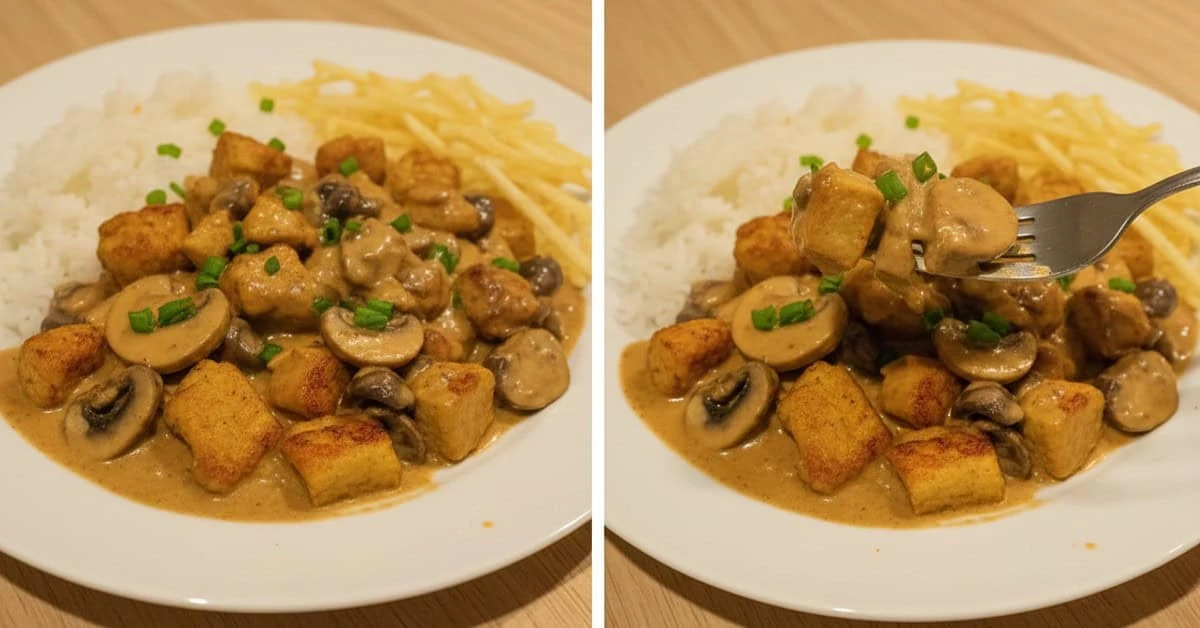
Vegan stroganoff combines a plant protein such as seitan, hydrated soya, tofu or chickpeas with mushrooms, tomato purée and a creamy plant-based sauce. With the protein prepared beforehand, it takes roughly 30–40 minutes. Texture and cooking requirements vary by product, and gluten-free adaptations need suitable ingredients throughout.
Vegan stroganoff is a creamy, savoury choice for a family meal or festive supper. This Brazilian-inspired version includes tomato and mustard, with several ways to adapt the protein and sauce.
Ingredients for Vegan Stroganoff
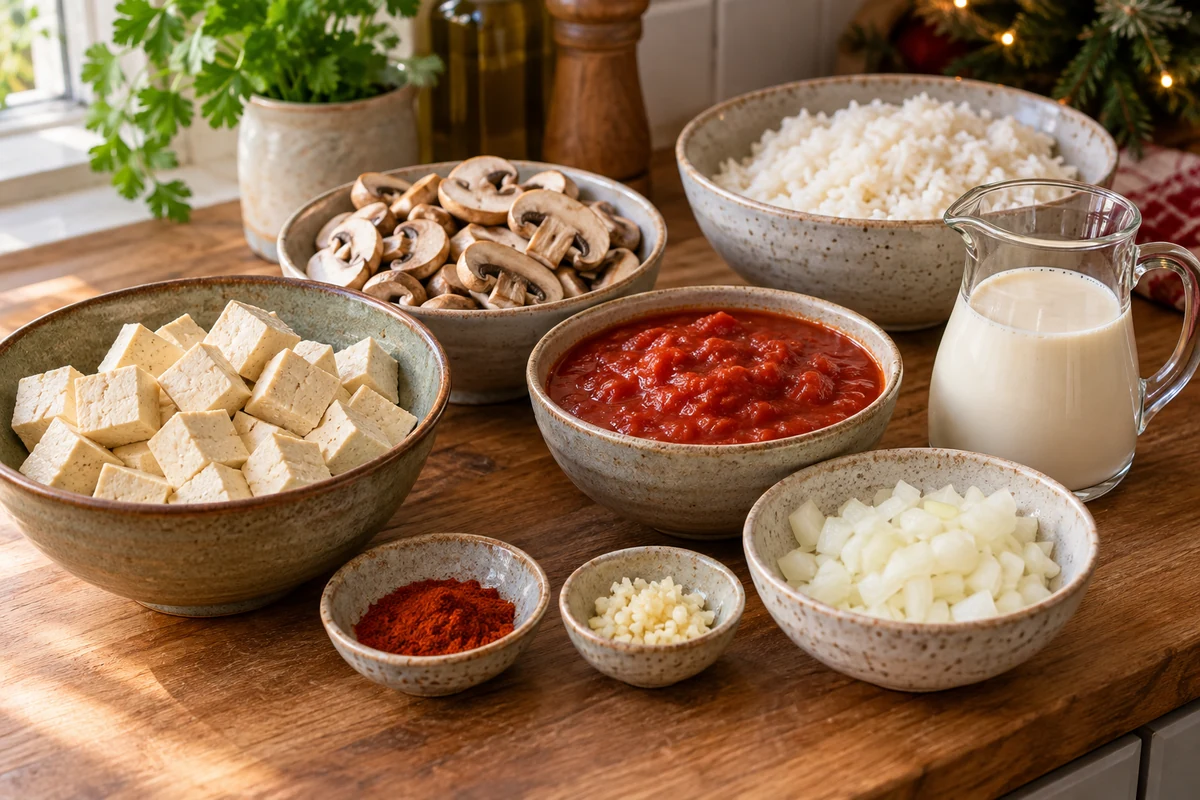
Choose the plant protein you prefer and gather these ingredients for your vegan stroganoff:
- 300 g ready-to-cook seitan or hydrated, drained textured soya protein – this is the prepared weight, not 300 g dry soya. Alternatively, use 250 g firm tofu or 200 g cooked, drained chickpeas; the yield and texture will differ.
- 200 g sliced mushrooms – button, chestnut or shiitake. Well-drained tinned mushrooms are another option.
- 1 medium onion, chopped – or 2 spring onions for a milder, smaller onion addition.
- 2 garlic cloves, chopped – or 1 teaspoon garlic powder.
- 2 tablespoons tomato purée – alternatively, use 200 g chopped tinned tomatoes for a looser sauce and reduce the stock as needed.
- 200 ml plant-based cream – such as cashew or soya cream. Coconut cream also works but gives a more noticeable coconut flavour.
- 150 ml vegetable stock – preferably lower-salt and suitable for vegans. Water can be used, with seasoning adjusted to taste.
- 1 tablespoon Dijon mustard – for tang. Ketchup gives a sweeter alternative but is not an equivalent mustard flavour; check its ingredients for dietary requirements.
- 1 teaspoon smoked paprika – or sweet paprika if preferred.
- 2 tablespoons olive or vegetable oil – for cooking.
- Salt and black pepper to taste – taste before adding salt, especially with stock or seasoned seitan.
- About 2 tablespoons chopped fresh parsley – or chives, to finish.
- Rice to serve – prepare enough for your guests, following the packet’s portion guidance. Plant-based mashed potato is another option.
Practical Notes
Choosing the protein: hydrated textured soya absorbs seasoning well, while seitan has a firmer bite. Adjust stock and cream gradually for the consistency you enjoy. These alternatives are not nutritionally identical.
How to Make Vegan Stroganoff

Follow these steps for a pan of creamy vegan stroganoff:
- Prepare the protein: for textured soya, follow the packet’s hydration instructions, drain as directed, then weigh out 300 g of the hydrated protein. Do not use 300 g dry soya. Cut ready-to-cook seitan into roughly 2 cm pieces, or drain and press 250 g firm tofu if its texture requires it, then cube it.
- Prepare the vegetables: slice 200 g mushrooms and chop 1 medium onion and 2 garlic cloves.
- Heat the pan: warm 2 tablespoons oil in a large frying pan over a medium heat, leaving enough space to stir comfortably.
- Soften the onion and garlic: cook the onion until translucent, allowing longer than 2–3 minutes if necessary. Add the garlic and cook for another 30–45 seconds without burning it.
- Brown the mushrooms: add them to the pan and cook until their liquid evaporates and they begin to colour, roughly 4–5 minutes or longer in a crowded pan.
- Add the protein: stir in your prepared protein and cook until heated through and lightly browned where appropriate, usually around 5–7 minutes. Follow any additional cooking requirements on its packet.
- Add the flavourings: stir in 2 tablespoons tomato purée, 1 teaspoon smoked paprika and 1 tablespoon Dijon mustard. Cook for 1–2 minutes, taking care not to scorch them.
- Add stock and simmer: pour in up to 150 ml vegetable stock, loosening any browned bits from the pan. Simmer gently for 3–5 minutes to reduce slightly. Use less stock if using chopped tomatoes instead of purée.
- Stir in the cream: add 200 ml plant-based cream and stir until smooth. Heat gently for another 2–3 minutes, or until everything is hot and the sauce has the right consistency. Loosen with a little water if too thick, or simmer gently to reduce if too thin.
- Taste and adjust: season with black pepper and salt only as needed. For more acidity, add a small squeeze of lemon or up to 1 teaspoon cider vinegar, tasting as you go.
- Finish: take off the heat, stir in about 2 tablespoons chopped parsley and let it settle briefly before serving.
- Serve: spoon over rice or alongside plant-based mashed potato. Finish with extra parsley or a few sautéed mushroom slices if you like.
Practical Tips
- Protein texture: drain hydrated soya well and gently squeeze if its packet directs. Browning seitan separately before adding it to the sauce can give a firmer exterior.
- Plant-based cream: cashew and soya creams generally have a milder flavour than coconut cream. Choose an unsweetened product suitable for cooking.
- Avoid a watery sauce: let mushroom liquid evaporate and reduce the stock before adding cream if necessary.
- Quick alternative: 200 g cooked chickpeas gives a different, more rustic texture. It will not provide exactly the same yield or nutrients as the other protein options.
- Storage: cool promptly and refrigerate within two hours at 5°C or below. Eat within 48 hours or freeze. Reheat only once until steaming hot throughout, adding water if needed.
Vegan Stroganoff Variations

- Seitan stroganoff: use 300 g ready-to-cook seitan, cut into cubes and browned before adding the sauce. Start with 150 ml stock and 200 ml plant cream. Seitan contains wheat gluten.
- Textured soya stroganoff: use 300 g hydrated, drained textured soya, prepared according to its packet. Sauté to remove excess moisture before adding the sauce; hydration water is separate from the recipe’s 150 ml sauce stock.
- Firm tofu stroganoff: use 250 g firm tofu, drained and pressed if necessary. An optional brief marinade of soy sauce and a little of the recipe’s oil adds flavour; reduce extra salt accordingly, then brown before adding the sauce.
- Chickpea stroganoff: use 200 g cooked, drained chickpeas. Start with the base sauce quantities and add more cream only if desired. For a gluten-free dish, check the cream, stock, mustard and all other seasonings too.
- Homemade cashew cream: soak 200 g raw cashews in the fridge for about four hours, drain and blend with 150 ml fresh water, adding more if needed for a pouring consistency. Measure 200 ml of the finished cream for this recipe; the batch makes more than that. Chill unused cream promptly and use within 48 hours or freeze.
- Extra smoky flavour: add a little more smoked paprika to taste and an optional teaspoon of vegan Worcestershire-style sauce. Ordinary Worcestershire sauce may contain anchovies, so check the label.
- Yoghurt variation: use 150 ml unsweetened plant yoghurt instead of cream and reduce the oil if preferred. Stir in gently near the end to reduce splitting; flavour and nutritional values depend on the product, so this is not automatically a low-calorie version.
Adjustments and Quick Tips
- Starting proportions: the base uses 300 g prepared protein, 200 ml cream and 150 ml stock. Adjust for the moisture in your chosen ingredients rather than following a rigid ratio.
- Cooking requirements: browning improves texture but does not replace a product’s required cooking. Check the instructions for seitan, tofu, textured protein or tempeh.
- Salt and acidity: taste at the end, particularly when using stock or soy sauce. Add lemon juice or cider vinegar a little at a time.
- Thickening: simmer a thin sauce uncovered. Alternatively, mix 1 tablespoon cornflour with cold water, add gradually and simmer until thickened; you may not need all of it.
- Accompaniments: serve with rice, plant-based mash or suitable pasta. Cooked peas or sautéed carrots add colour and another texture.
- Freezing: freeze promptly cooled portions for up to two months for best quality. Thaw in the fridge, use within 24 hours of defrosting and reheat once until steaming hot throughout. Some plant creams may separate slightly.
Choosing and Preparing Plant Proteins
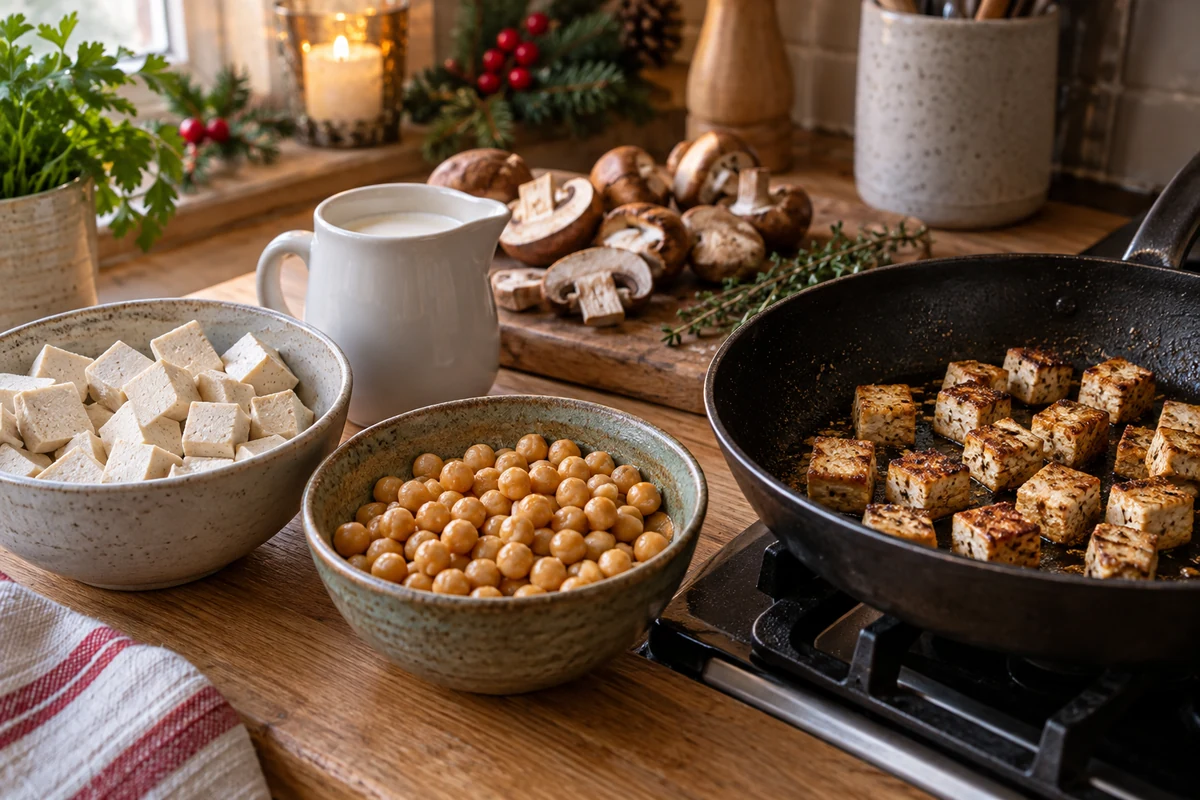
Your choice of plant protein depends on the texture you enjoy, dietary requirements and preparation time. Consider the flavour and cooking instructions as well as allergens.
- Seitan: firm and chewy, with a texture suited to browning. It is made from wheat gluten and is unsuitable for a gluten-free diet or wheat allergy.
- Textured soya protein: absorbs seasoning and works well in sauces. Hydration requirements vary between products.
- Firm tofu: mild and versatile. Drain well and press if needed; some extra-firm products require little or no pressing.
- Chickpeas and lentils: use cooked pulses for a softer, more rustic version. Check packaged products and the accompanying sauce if avoiding gluten.
- Tempeh: has a firmer texture and more pronounced flavour; most varieties contain soya, and cooking directions vary.
Preparing the Different Proteins
- Textured soya: hydrate according to the packet, drain as directed and weigh 300 g prepared protein. Use stock for hydration only if suitable for that product. Season lightly, allowing for the sauce; do not assume a fixed 250 ml water quantity will hydrate every dry product.
- Seitan: cut 300 g ready-to-cook seitan into about 2 cm cubes. Brown in some of the recipe’s oil, turning as needed, and finish in the sauce according to its packet instructions.
- Firm tofu: drain and press 250 g tofu if needed, then cube. Marinate briefly in the fridge with an optional tablespoon of suitable soy sauce, a little oil and a teaspoon of mustard. Brown the pieces on several sides before adding to the sauce.
- Chickpeas: weigh 200 g cooked, drained chickpeas; a tin’s drained weight may differ. Heat in the pan, lightly mashing some if you want a thicker sauce. Add extra cream only to the consistency you prefer.
- Tempeh: cut about 200 g into pieces and prepare according to its packet. Marinate in the fridge if desired, then cook thoroughly and brown before finishing in the sauce. Brief steaming or browning alone is not a universal cooking method for every product.
Seasoning, Texture and Storage
- Protein and sauce: start with the base amounts, adjusting liquid gradually for the chosen protein’s texture.
- Core flavourings: 1 teaspoon smoked paprika, 1 tablespoon Dijon mustard and 2 tablespoons tomato purée form the base seasoning.
- Browning: brown seitan or tofu before adding the sauce, avoiding overcrowding and burnt seasoning.
- Moisture control: drain hydrated soya and tofu well. Let mushroom liquid evaporate before incorporating cream.
- Allergies: seitan is not gluten-free. Choose suitable tofu, pulses or certified gluten-free textured soya if appropriate, and check every sauce ingredient. For a soya allergy, tofu, most tempeh and soya-based sauces are unsuitable too.
- Storage: refrigerate promptly cooled leftovers at 5°C or below for up to 48 hours, or freeze. Use frozen portions within about two months for best quality and thaw in the fridge before reheating once.
- Final tasting: adjust salt, pepper and a little lemon juice gradually after the sauce has reduced.
Plant Proteins at the Christmas Table

Plant proteins offer different flavours and textures for a festive meal. The nutritional profile depends on the specific protein, sauce and portion size; a plant-based dish is not automatically lower in fat or calories.
Nutritional Considerations
- Fat content: compare product labels rather than assuming every plant-based option has little saturated fat. Coconut cream, in particular, changes the fat content of the sauce.
- Fibre: chickpeas and lentils contribute fibre as well as protein to a varied diet.
- Other nutrients: pulses, tofu and tempeh can contribute minerals and other nutrients, but amounts vary. This recipe has not been nutritionally analysed.
- Variety over the day: include a range of plant proteins and other foods as part of a balanced diet, rather than relying on a single recipe to meet every need.
Useful Differences Between Ingredients
- Fermented tempeh: fermentation gives it a distinctive flavour and texture. Individual tolerance varies; it should not be presented as easier for everyone to digest.
- Seitan and gluten: wheat gluten is its defining ingredient, not merely a possible trace allergen.
- Textured soya: a practical option for absorbing the flavours of a creamy sauce.
- Cashew cream: provides a smooth, dairy-free sauce, but contains nuts and still contributes fat and energy.
- Reducing waste: plan portions, use ingredients you will finish and freeze suitable leftovers promptly. Environmental impact varies across ingredients and production methods, so this recipe does not have a calculated footprint.
Serving at a Festive Meal
- Planning portions: the 300 g prepared protein option provides about 75 g of that ingredient per person when divided between four, alongside mushrooms, sauce and sides. This is not 75 g of the nutrient protein.
- Accompaniments: rice and a leaf salad provide contrasting textures alongside the creamy sauce.
- Making ahead: prepare in advance only if you can cool and refrigerate promptly, then reheat once until steaming hot throughout. Do not leave the pan out for several hours before serving.
- Guest information: clearly identify ingredients such as wheat, soya, nuts and mustard. Describe a dish as gluten-free only after checking the whole recipe and preparation process.
- Balanced flavour: smoked paprika, mustard and a little lemon can lift the creamy sauce without requiring excessive salt.
Getting the Texture and Flavour Right
- Hydration and draining: prepare textured soya according to its packet and drain tofu well so neither waters down the sauce.
- Browning: cook seitan or tofu until lightly coloured before adding it to the sauce.
- Salt: taste at the end, particularly with ready-made stock, seasoned proteins or soy sauce.
- Contrasting textures: a firmer protein with a smooth cream sauce gives variety in each mouthful. Choose the combination that suits your guests.
Vegan stroganoff is easy to adapt with different proteins, seasonings and accompaniments. Start with the base recipe and adjust the sauce gradually to suit your chosen ingredients.
Follow us for more recipes and seasonal inspiration, and visit the I Love Christmas blog for more ideas for your festive table.
Thank you for reading. Share your photos and tell us which variation you tried.
Vegan Stroganoff FAQ
Which plant protein gives the firmest, most meat-like texture?
Seitan gives a firm, chewy bite, but contains wheat gluten. For a gluten-free option, choose suitably labelled textured soya or firm tofu and check every sauce ingredient too.
Can I freeze vegan stroganoff?
Yes. Cool promptly and freeze in suitable sealed portions, aiming to use within two months for best quality. Thaw in the fridge, use within 24 hours of defrosting and reheat only once until steaming hot throughout. A little stock can help restore the sauce texture.
How can I make the sauce creamy without ready-made plant cream?
Blend 200 g soaked, drained cashews with 150 ml fresh water, adding more to reach a pouring consistency, then measure 200 ml of that finished cream for the recipe. The batch makes extra. A little cooked potato or sweet potato purée is another thickening option, with a different flavour.
How do I make the recipe gluten-free?
Do not use seitan. Choose suitable tofu, cooked pulses or certified gluten-free textured soya, and check stock, mustard, cream, sauces, thickeners and accompaniments for gluten and cross-contact.
How long does it take to prepare?
Allow roughly 30–40 minutes once the protein is hydrated or otherwise prepared and the cream is ready. Cashew soaking, tofu pressing or product-specific preparation can add time, so check those steps before starting.
How can I adjust the saltiness or acidity?
Choose lower-salt stock and taste before adding salt, especially with seasoned seitan or soy sauce. Add lemon juice or cider vinegar a little at a time near the end for more acidity.
Sources and Further Reading
- Food Standards Agency: cooking food safely
- Food Standards Agency: chilling, freezing and defrosting food