
New Year in Bali can mean two different occasions. Beach parties on 31 December mark the Gregorian New Year, while Nyepi marks the Balinese Saka New Year on a separate date, usually in March. Plan for the right festival, follow local rules and respect the island’s religious life. Source: Indonesia Tourism: understanding Nyepi
New Year in Bali offers lively coastal celebrations, but these must not be confused with Nyepi or with temple ceremonies. This guide explains the distinction and gives practical ideas for visiting respectfully.
Illustrations in this article are conceptual images, not documentary photographs or evidence of a particular historical event, destination, venue or access route.
Understanding Bali’s Different New Year Celebrations
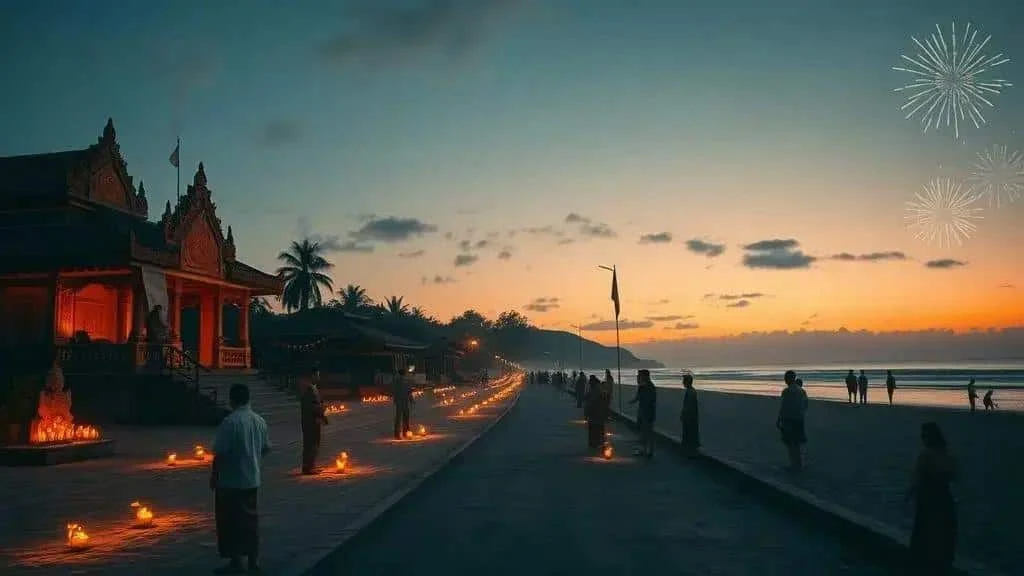
Nyepi, the Day of Silence, marks the New Year in the Balinese Saka calendar. It is a separate religious observance from the celebrations of 31 December and 1 January, normally falling around March.
Religious Background and Calendars
The Saka New Year belongs to Balinese Hindu religious life. The Gregorian calendar determines the international New Year’s Eve parties familiar to many visitors. Their different dates and meanings matter when planning a trip.
Important Rituals Around Nyepi
Before Nyepi, communities observe ceremonies including Melasti, associated with purification, and Tawur Kesanga, involving offerings and ritual balance. Ogoh-ogoh effigies may appear in processions on the preceding evening. Practices differ locally; these are not the standard programme for 31 December.
What the Day of Silence Means
Nyepi is a period of religious reflection and restraint. Restrictions affect movement, work, entertainment and lighting across Bali, with arrangements for emergencies. Visitors must follow the rules and their accommodation’s instructions; it is not merely a request to keep party noise down.
The Role of Temples
Pura, or temples, are places of worship with their own ceremonial roles and access rules. Community rituals are religious observances, not performances automatically open to tourists.
Alongside Modern New Year’s Eve Parties
Bali also hosts beach-club and hotel celebrations for the Gregorian New Year. These coexist with Balinese religious life throughout the year, but do not occur on the same date as Nyepi simply because both are described as New Year.
Temple Rituals and Ceremonies
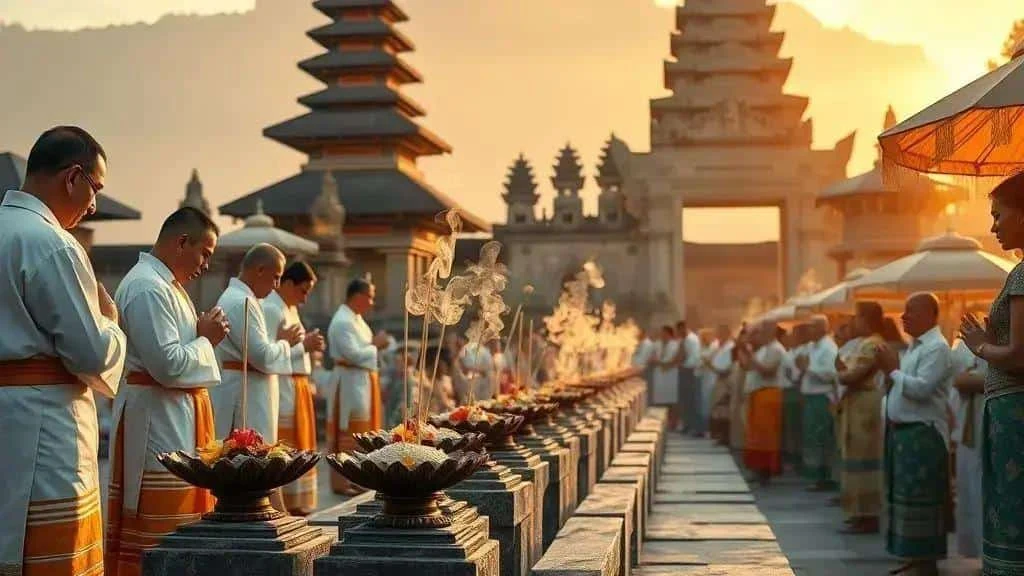
Ceremonies at Balinese temples have particular religious meanings and community arrangements. Treat descriptions as an introduction, and follow the guidance of the people responsible for each site.
Examples of Ceremonies
Melasti: purification ceremonies associated particularly with preparations for Nyepi, often involving journeys to water.
Tawur Kesanga: offerings and rituals on the day before Nyepi; arrangements vary by community.
Odalan: a temple’s anniversary celebration, following its own calendar rather than necessarily coinciding with New Year’s Eve.
Offerings and Their Materials
- Canang sari — small offerings commonly made with woven leaves and flowers; avoid stepping on or disturbing them.
- Flowers and rice — materials used in offerings whose significance depends on the ritual.
- Incense — used in worship and offerings; observe respectfully without handling it.
- Coconut and leaves — among the materials used in larger ceremonial arrangements.
Priests and Music
Pemangku serve as temple priests, with responsibilities within the community. Music, including gamelan in appropriate settings, may form part of a ceremony; not every ritual has the same format.
Observing or Participating
Ask whether visitors may enter or observe. Dress modestly, wear a sarong and sash where required, and follow instructions about access and photography. Do not touch offerings, enter restricted areas or obstruct a procession.
Why Respect Matters
A temple visit is an opportunity to learn about a living faith. The community’s worship and privacy take priority over a visitor’s photograph or itinerary.
New Year’s Eve on the Coast

On 31 December, some coastal venues host music, meals and countdown parties. The atmosphere depends on the particular beach, hotel or club; not every stretch of coast becomes a public party.
Events and Timetables
Around Kuta, Seminyak and Jimbaran, check individual venues for confirmed music, menus and admission. There is no universal 10 pm start or guaranteed programme for all beaches.
Fireworks and Organisation
A display may be part of an event, subject to local rules and conditions. Do not assume every firework nearby is professionally managed. Keep away from launches, obey cordons and never bring improvised fireworks.
- Follow designated areas: comply with venue staff and local safety instructions.
- Consider noise: choose a quieter setting if loud music or fireworks would be unsuitable.
- Stay clear of the water: respect warnings about tides, surf and currents, and avoid night swimming or entering the sea after drinking.
Cultural Respect During Celebrations
A party booking does not provide access to a nearby temple or ceremony. Follow local dress and behaviour requirements whenever you enter a religious setting.
Reducing Environmental Harm
Beach gatherings can leave litter and disturb wildlife. Reduce unnecessary packaging and dispose of everything properly; a biodegradable label does not make it acceptable to leave an item on the sand or in the sea.
- Use a reusable bottle where safe drinking-water refills are available and take rubbish to suitable bins.
- Do not release sky lanterns or bring unauthorised fireworks.
- Prefer organisers who explain their waste and environmental arrangements clearly.
Planning a Safer Evening
Arrange accommodation and dependable transport, agree meeting points and read the venue’s conditions. A ticket or private security team does not by itself guarantee safety.
- Check availability early: popular accommodation and events can book up.
- Use dependable transport: arrange a licensed taxi or established booking service and verify the vehicle and driver.
- Protect valuables: carry only what you need and keep important documents secure.
- Agree a meeting point: have a plan that does not depend entirely on mobile reception.
Etiquette for Visitors
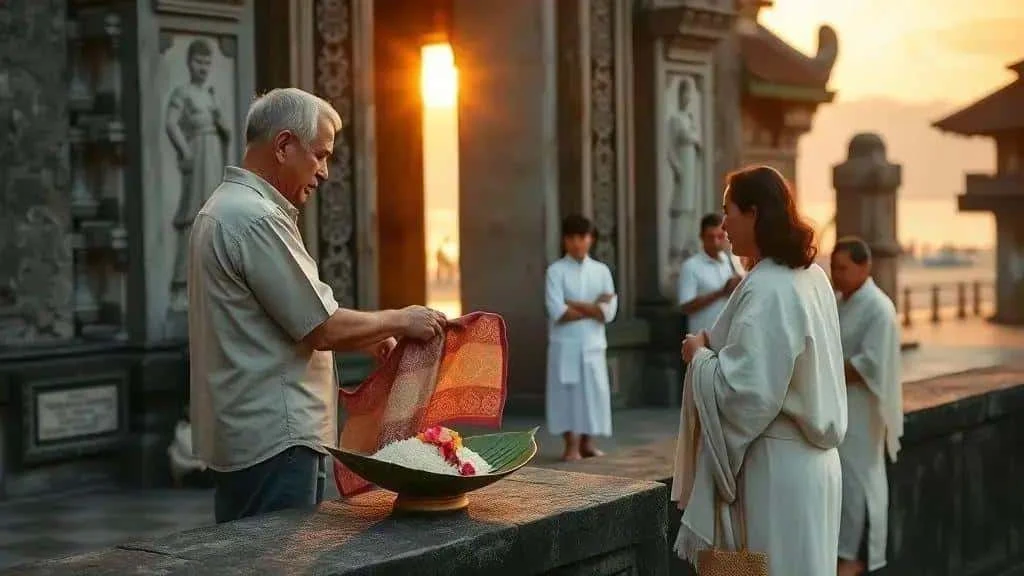
Customs vary between communities and sites. Ask respectfully, accept restrictions and avoid treating sacred places as unrestricted backdrops.
Dress and Conduct at Temples
When visiting a pura, follow its modest-dress requirements. A sarong and sash may be required. Follow local instructions about footwear rather than assuming it must be removed everywhere.
- Clothing: cover the areas required by the site and avoid beachwear.
- Footwear: remove shoes only where instructed or indicated.
- Conduct: speak quietly, keep clear of worshippers and follow access restrictions.
Photography and Permission
Ask before photographing people or ceremonies, obey no-photography signs and accept a refusal without argument. Avoid flash where it would disturb worship.
Participating Respectfully
- Ask first: seek guidance from the responsible temple staff or an appropriate local guide.
- Follow instructions: use required clothing and remain in the areas open to visitors.
- Leave sacred objects alone: do not handle offerings or touch people during worship without permission.
Nyepi and Other Sacred Days
During Nyepi, visitors must remain within their accommodation and follow the applicable restrictions. Ordinary airport and transport operations are affected. Check the date and arrangements for your travel year; these restrictions are separate from 31 December celebrations.
Supporting the Community
Buy thoughtfully from local businesses, reduce single-use packaging and dispose of rubbish correctly. Respectful behaviour matters as much as where you spend money.
Accommodation, Booking and Safety

Choose a base according to your plans and practical needs. An address described as near a beach or temple may still involve a difficult journey, so check access and travel times.
Choosing an Area
Seminyak and Canggu offer nightlife options, while travellers also consider Jimbaran and Nusa Dua for coastal stays. Uluwatu has dramatic coastal scenery, but access, cliffs and swimming conditions need care. Judge the individual property rather than assuming an entire area is quiet or child-friendly.
Booking Practicalities
- Accommodation: compare availability, access and total prices early.
- Event tickets: confirm the organiser, inclusions, age conditions and refund terms.
- Transfers: arrange airport and late-night journeys through reliable providers.
- Changes and cancellations: read the actual terms rather than relying on a flexible-booking label.
Health and Personal Safety
- Travel insurance: check medical and repatriation cover, declared conditions and planned activities.
- Sun and heat: use suitable sun protection, take breaks and drink safe water.
- Food and water: choose safely prepared food and sealed bottled or otherwise reliably treated drinking water.
- Medicines: bring necessary supplies with appropriate documentation, checking Indonesian import rules and professional travel-health advice.
Parties and Crowds
- Meeting arrangements: agree a clear place to regroup if separated.
- Belongings: keep bags secure and avoid carrying unnecessary valuables.
- Alcohol: be aware of drink-spiking and methanol-poisoning risks highlighted in FCDO advice. Avoid drinks of uncertain origin and seek urgent medical help if poisoning is suspected.
- Venue guidance: respect crowd controls, safety cordons and staff instructions.
Documents, Money and Communication
- Documents: protect originals, keep secure copies and check current entry and identification requirements before travelling.
- Money: use Indonesian rupiah, legitimate exchange services and secure payment facilities.
- Communication: arrange suitable roaming or a legitimate local connection and save essential contacts offline.
Getting Around
An established taxi or driver may be more suitable than hiring a scooter. Services such as Blue Bird are among the options to check locally. Riding requires the correct licence, applicable permit, insurance and safety equipment, not just experience. FCDO advice highlights serious motorbike accidents in Bali; allow extra time for traffic and never ride after drinking.
Food and Cultural Experiences
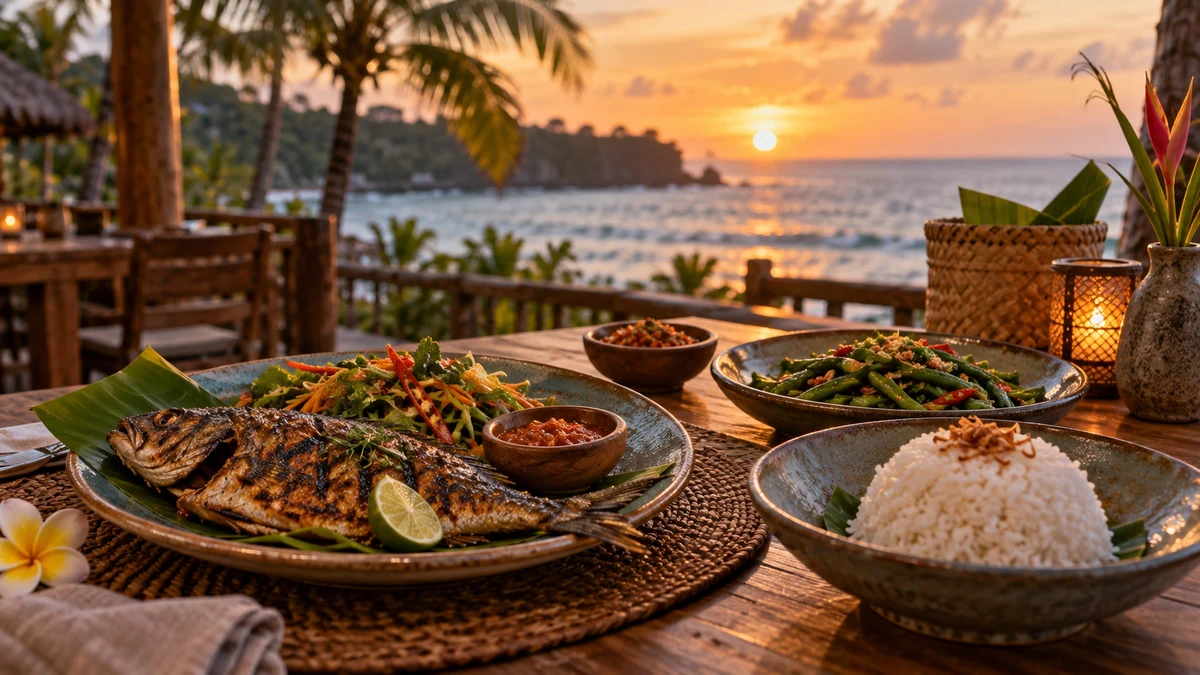
Local food can enrich a visit, but a restaurant meal and a sacred offering are different things. Learn about ingredients and customs without treating every dish as part of a New Year’s Eve ritual.
Dishes to Explore
- Bebek betutu — duck prepared with a rich spice mixture; cooking styles vary.
- Babi guling — Balinese-style roast pork, associated with celebrations as well as food stalls.
- Sate lilit — seasoned minced fish or meat wrapped around a skewer; check the actual ingredients.
- Nasi campur — rice served with a selection of accompanying dishes.
- Lawar — a mixture that can include vegetables, coconut, spices and meat. Recipes differ; ask about ingredients and choose safely cooked options.
Finding Places to Eat
Explore established local warungs, markets or coastal restaurants according to your preferences. A crowd is not proof of food safety: consider cleanliness, storage and thorough cooking as well as recommendations.
Cultural Activities and Meals
A scheduled kecak performance or gamelan event can be combined with a restaurant visit where appropriate. Check whether an activity is a public performance or a private religious ceremony, and never take food from offerings.
Practical Food Tips
- Ask locally: accommodation staff or a suitable guide may suggest places to investigate.
- Food hygiene: choose properly cooked food served safely and reliable drinking water.
- Respect: leave offerings undisturbed and keep clear of worship.
- Try small portions: ask about spice levels, allergens and ingredients before ordering.
Learning More
A reputable cookery class or guided market visit can introduce local ingredients and techniques. Check the activity’s practical arrangements and avoid assuming access to religious rituals is included.
Planning the Right New Year Experience
New Year in Bali requires one essential distinction: 31 December beach celebrations and Nyepi are different occasions. Choose the experience you intend, confirm its arrangements and respect local religious life throughout the trip.
Thank you for reading. Explore the I Love Christmas blog and our social channels for more seasonal travel ideas and traditions.
Share useful experiences in the comments to help other readers plan considerate visits.
FAQ — New Year in Bali
Is Nyepi the same as 31 December?
No. Nyepi marks the Balinese Saka New Year on a separate date, usually around March. Visitors must follow its restrictions, remain within their accommodation and plan around affected transport operations.
Can visitors attend beach parties on New Year’s Eve?
Yes, where an event is open to visitors and its conditions are met. Confirm tickets, age rules, transport and safety arrangements with the organiser.
How should I behave at temples?
Ask about access, dress as required, follow instructions, keep clear of worshippers and seek permission before photography. Some areas and ceremonies are not open to visitors.
What safety issues should I consider?
Check current FCDO and travel-health guidance, appropriate insurance, food and water safety, transport and coastal warnings. Pay attention to motorbike, drink-spiking and methanol risks.
Where can I explore local food and culture?
Consider suitable warungs, markets, cookery classes and public performances. Check ingredients, hygiene and admission arrangements, and keep religious offerings separate from dining experiences.
Sources and Further Reading
- Indonesia Tourism: understanding Nyepi
- GOV.UK: Indonesia safety and security
- Indonesia Tourism: Balinese food
- Indonesia Tourism: Bali