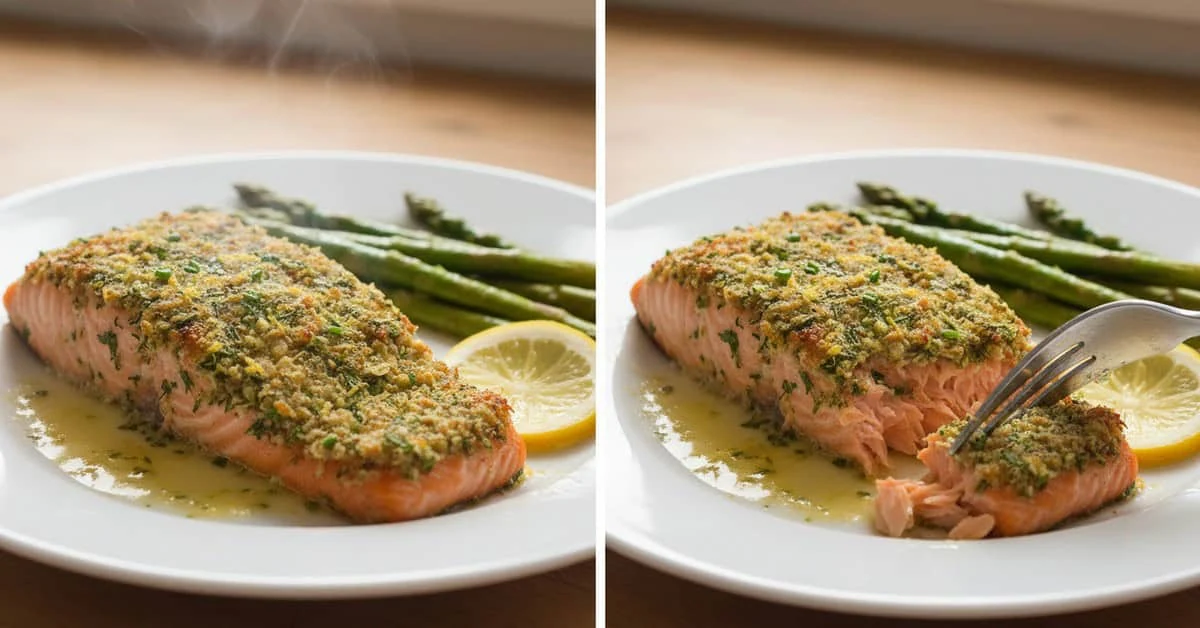
Herb-crusted salmon combines pan-fried fillets with fresh herbs, lemon zest and crisp panko breadcrumbs. This recipe includes a gluten-free alternative, an oven method and simple serving ideas for a special dinner.
Herb-crusted salmon makes a colourful centrepiece for a festive meal or a relaxed dinner. Follow the steps below, then choose the herbs and accompaniments you enjoy most.
Ingredients for herb-crusted salmon
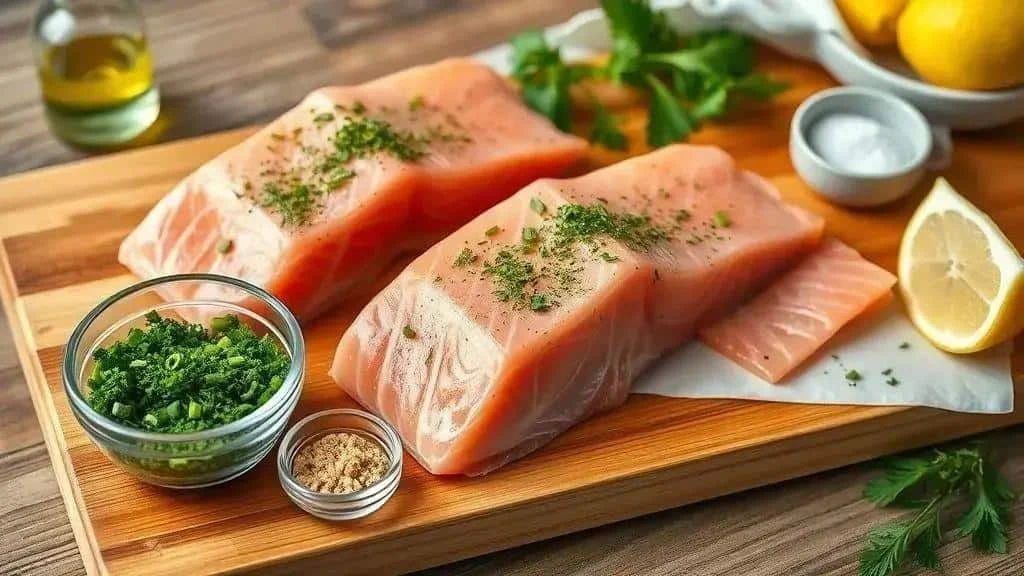
To make pan-fried salmon with a lemon and herb crust, gather the following ingredients. A half-cup measure here is 120 ml by volume, not 120 g.
- 4 salmon fillets, 150–200 g each – preferably skin-on. Trout fillets are an alternative; cooking time will depend on their thickness.
- 2 tbsp olive oil, divided – 1 tbsp for the crumbs and 1 tbsp for the pan. Rapeseed or avocado oil can also be used.
- 15 g chopped fresh parsley, about ½ cup – basil or coriander will give a different flavour.
- 10 g chopped fresh dill, about ¼ cup – replace with chives if unavailable, or use a smaller amount of stronger-tasting tarragon.
- 2 tbsp chopped chives – or a little extra parsley.
- Finely grated zest of 1 lemon – use the coloured outer peel; reserve juice for serving so the crumbs do not become wet.
- 2 garlic cloves, finely chopped – or ½ tsp garlic granules.
- ½ cup panko breadcrumbs – or roughly ⅓ cup finely chopped almonds for a different, gluten-free crust; check all other ingredient labels too.
- 1 tbsp Dijon mustard in total – divided between the four fillets to hold the crust in place. Mayonnaise or wholegrain mustard are alternatives.
- Salt and freshly ground black pepper – season lightly to taste, taking the mustard and any added cheese into account.
- 1 tbsp butter in total – optional, for finishing the four fillets.
- Lemon wedges, to serve – for squeezing over the cooked fish.
A few ingredient notes
Fresh herbs give the brightest flavour. If using dried herbs, start with one-third of the fresh volume and adjust the blend, especially for strong herbs such as thyme. Panko makes a light crust; a little grated Parmesan adds richness, but also adds salt and milk as an allergen.
How to cook herb-crusted salmon
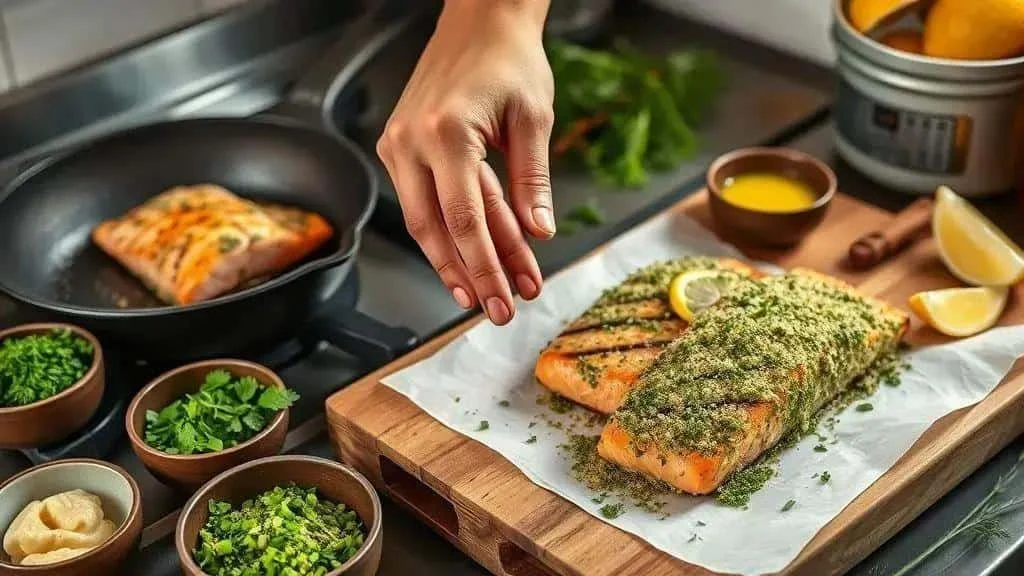
Prepare the crust before heating the pan. Cooking times are guides: check the thickest part of each fillet before serving.
- Prepare the fish: Pat the four salmon fillets dry with kitchen paper and season lightly with salt and pepper. Set aside for about 5 minutes while you mix the topping.
- Mix the crust: Combine the ½ cup panko, all the parsley, dill and chives listed above, the lemon zest and both chopped garlic cloves. Stir in 1 tbsp of the oil to moisten the crumbs.
- Add the mustard: Spread the single tablespoon of Dijon mustard thinly over the tops of all four fillets, dividing it evenly. This helps the crumbs adhere.
- Press on the crust: Divide the herb mixture between the fillets and gently press it into an even layer.
- Heat the pan: Heat the remaining 1 tbsp oil in a large heavy-based or non-stick frying pan over a medium-high heat. The oil should shimmer, not smoke.
- Start skin-side down: Place the fillets in the pan, skin-side down, and press gently with a spatula for 10–15 seconds to limit curling. Cook for about 4–5 minutes, until the skin begins to crisp.
- Turn carefully: Use a wide spatula to turn each fillet without dislodging the topping. Cook for a further 2–3 minutes to brown the crust, reducing the heat if necessary. Thick fillets may need another 4–6 minutes in an oven preheated to 180°C, or 160°C fan; use an oven-safe pan and check doneness rather than relying on time alone.
- Check the centre: The fish should be opaque and flake easily. If using a clean food thermometer, a safe cooking combination is 70°C for 2 minutes or 75°C for 30 seconds in the thickest part. Do not rely on a brief rest to finish an undercooked centre.
- Finish with butter and lemon: If using butter, add the 1 tbsp to the pan at the end and spoon a little over each fillet. Serve with lemon wedges.
- Rest briefly and serve: Allow the cooked fillets to stand for about 2 minutes, then serve with your chosen accompaniments.
Practical tips
Choosing fillets: Buy from a reliable supplier, keep chilled and follow the use-by date. For a gluten-free version, choose suitable gluten-free breadcrumbs or almonds and check the mustard and other ingredients. If using dried herbs, start with one-third of the fresh volume.
Getting a crisp crust: Let the surface brown without repeatedly moving the fish. Watch closely: a higher heat can burn the herbs and crumbs before the salmon cooks through.
Herb-crusted salmon variations
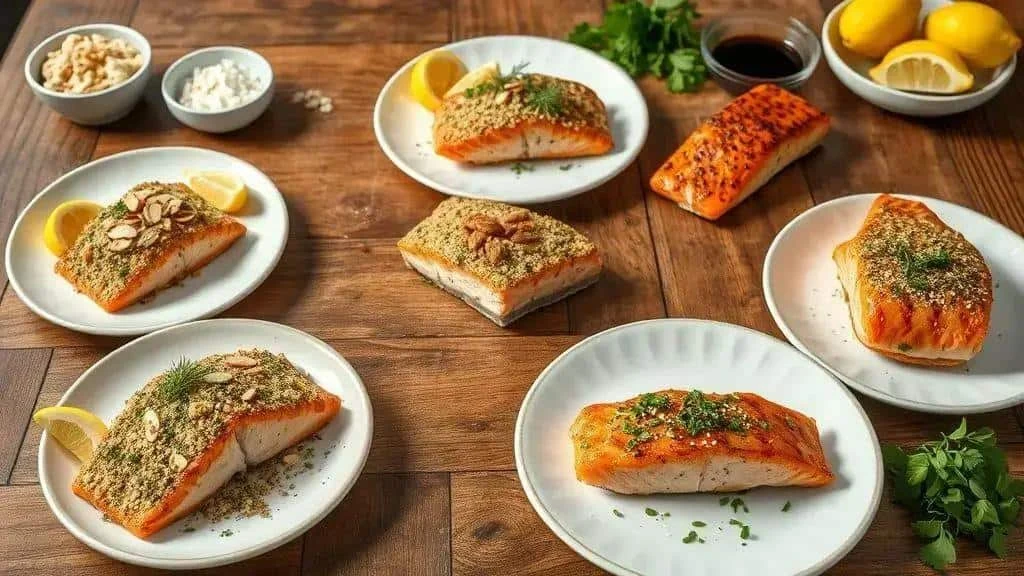
Adapt herb-crusted salmon to your taste or dietary needs with these optional changes. They are alternatives to the main recipe, not extra ingredients to add all at once.
Alternative herb combinations
Change the herb blend for a different aroma, using fresh herbs where possible and less of strongly flavoured varieties.
- Parsley and dill – a fresh, classic pairing with fish.
- Basil with a little thyme – fragrant and gently sweet.
- Coriander and chives – a bolder alternative with fresh onion notes.
Gluten-free crust options
Replace the panko with a suitable alternative. Texture will change, and almonds are not suitable for anyone with a nut allergy.
- Ground almonds – start with about ⅓ cup, adding a little more if needed for an even coating; the crust will be softer than panko.
- Finely chopped almonds – start with about ⅓ cup for a more textured coating. Watch closely as nuts brown quickly.
- Fine cornmeal or polenta – an alternative coating, up to ½ cup as needed. This means ground maize, not the white thickening powder sold as cornflour in the UK; check gluten-free labelling where required.
Lemon and honey variation
A little sweetness gives the herb coating a different balance. Keep the heat moderate because honey can burn.
- Mix 1 tbsp honey with 1 tsp finely grated lemon zest and brush a thin layer over the four fillets before adding the crumbs.
- Serve with the juice of ½ lemon for a sharper finish, if liked.
Smoky and spicy variation
For a warming crust, mix a little spice into the panko.
- Add 1 tsp smoked paprika and up to ¼ tsp cayenne pepper, adjusting the heat to taste.
- An optional ½ tsp ground cumin adds a warm, earthy note.
Sesame, soy and ginger variation
Use these ingredients for a different seasoning profile, reducing the added salt to allow for the soy sauce.
- Mix 1 tbsp toasted sesame seeds into the panko.
- Brush the fillets lightly with 1 tbsp soy sauce in total before applying the crust. For a gluten-free version, use a specifically labelled gluten-free alternative, as well as suitable crumbs.
- Add 1 tsp finely grated fresh ginger for a gently warming flavour.
Oven method for a larger meal
For a batch of fillets, arrange the prepared salmon on a lined baking tray with the crust uppermost. Bake at 180°C, or 160°C fan, for about 10–15 minutes, allowing longer for thick pieces and checking the centre is fully cooked. If needed, briefly brown the topping under a hot grill, watching constantly.
Serving tip: Choose straightforward sides such as herbed rice, roasted vegetables or a citrus salad so the crust remains the main flavour.
Seasoning, cooking and presentation tips
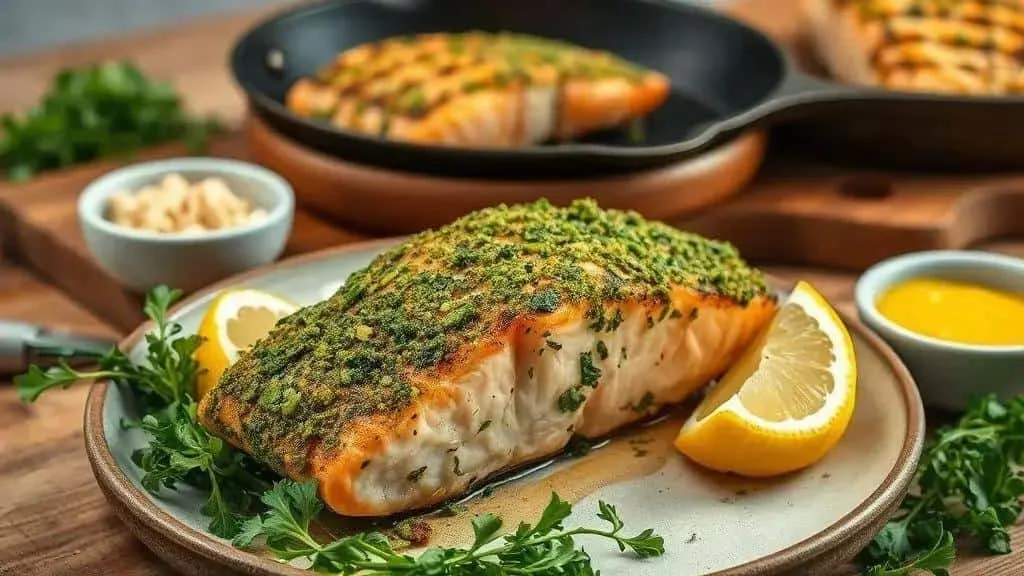
A few details make a difference to herb-crusted salmon: balanced seasoning, careful cooking and simple presentation.
Seasoning
- Salt and pepper: Season lightly rather than adding a fixed spoonful of salt to each fillet. Mustard, soy sauce and Parmesan also contribute salt.
- Herbs: Use the parsley, dill and chives quantities in the ingredient list for four fillets. For dried herbs, start with one-third of the fresh volume.
- Lemon zest: The zest of one lemon adds fragrance without making the crumb mixture wet.
- A thin mustard layer: Divide 1 tbsp Dijon mustard between all four fillets; a heavy coating can make the crumbs slide off.
Cooking
- Heat the pan: Use the tablespoon of oil reserved for frying; the other tablespoon goes into the crumbs.
- Begin skin-side down: Press gently for 10–15 seconds and cook for roughly 4–5 minutes before turning.
- Turn and finish: Brown the crust for around 2–3 minutes. Thick fillets may need 4–6 minutes in an oven at 180°C, or 160°C fan, followed by a doneness check.
- Check doneness: Look for opaque flesh that flakes easily. With a thermometer, check the centre reaches 70°C for 2 minutes or 75°C for 30 seconds.
- Finishing touch: The optional tablespoon of butter is for the whole pan, divided between the four portions.
Presentation
- Warm the plates: Warm plates help prevent the meal from cooling too quickly.
- Add colour: Lemon wedges, fresh herb sprigs and colourful vegetables make a simple garnish.
- Leave the crust visible: Place the side dish beside or just beneath the salmon rather than covering the topping.
- Serve sauces sparingly: A little olive oil or a citrus sauce works well alongside the fish; avoid soaking the crisp crumbs.
Common problems and how to avoid them
- Soggy crust: Pat the fillets dry and use only a thin layer of mustard before adding the topping.
- Burnt crumbs: Do not let the pan smoke. Lower the heat if the coating browns before the centre is cooked.
- Loose topping: Press the crumbs on gently and turn the fillets only as needed, using a wide spatula.
Choosing salmon and herbs
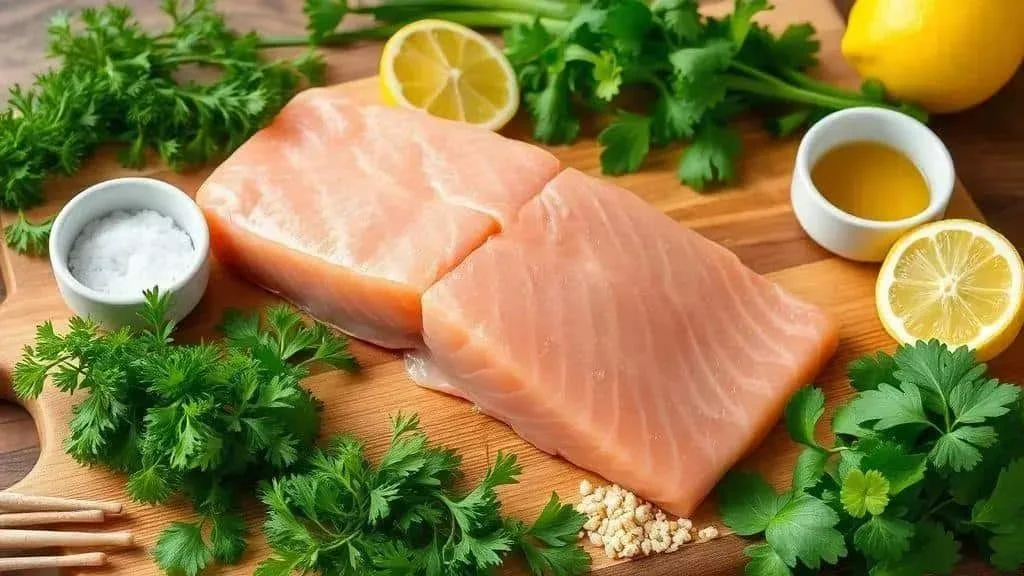
Salmon is an oily fish that provides protein and long-chain omega-3 fats. Its flavour works well with fresh herbs, but this recipe should not be treated as a promise of a particular health benefit.
A note on nutrition
Nutrition varies by portion and ingredients:
- Protein: Salmon provides protein; use the product information for quantities rather than assuming a fixed value for every fillet.
- Omega-3 fats: Salmon is among the oily fish that provide long-chain omega-3 fats.
- Vitamin D: Oily fish can contribute vitamin D. The finished dish also includes oil, breadcrumbs and any optional butter, which affect its overall nutrition.
Wild and farmed salmon
Flavour, colour and fat content vary with the species and product; colour alone is not a reliable guide to quality. Buy from a reputable supplier and check the origin and any independently certified sourcing information on the pack.
Buying and storing the fish
- Appearance: Look for fish in good condition, but do not use its colour alone to judge freshness or safety.
- Smell: An unpleasant or ammonia-like smell is a reason not to use it; a normal smell does not override the use-by date.
- Texture: Avoid fillets with an unusual slimy surface, and follow the supplier’s storage instructions.
- Storage: Keep raw fish covered at 5°C or below, separate from ready-to-eat food, and use by the date on the pack. Freeze before that date if needed and follow the packet guidance. Defrost in the fridge and use within 24 hours of fully thawing.
Herb flavours
Choose a blend that suits the rest of the meal:
- Parsley: Mild and fresh, useful as the main herb in the mixture.
- Dill: Gently aniseed-like and a familiar partner for fish.
- Chives: A delicate onion flavour that also works as a garnish.
- Basil: Sweet and fragrant, for a different herb blend.
- Thyme: Earthy and quite strong; use a little alongside milder herbs.
- Coriander: Distinctive and fresh; choose it if everyone enjoys its flavour.
Practical herb tips
- Freshness: Choose firm leaves and discard any that are spoiled.
- Substitutions: If dill is unavailable, chives and lemon zest make a different but useful combination.
- Storage: Keep fresh herbs chilled as appropriate for the variety. Chopped herbs mixed with oil can be portioned into ice-cube trays and frozen promptly; do not leave homemade herb oil at room temperature.
Flavour pairings
- Citrus: Lemon or orange adds a fresh contrast to the fish.
- Butter or olive oil: A small amount rounds out the herbs and crumbs.
- Gentle spice: Sweet paprika works well when you want warmth without much heat.
Ready to serve
Herb-crusted salmon is a versatile choice for a special dinner. Keep the topping dry, watch it as it browns and check the centre is cooked before serving with simple sides.
Explore more recipes and variations on the blog, and follow our social channels for new cooking ideas.
Visit I Love Christmas for more festive food inspiration.
Herb-crusted salmon: frequently asked questions
How do I know when the salmon is cooked?
The flesh should be opaque and flake easily. A clean food thermometer can confirm a safe cooking combination in the thickest part: 70°C for 2 minutes or 75°C for 30 seconds. Do not use the resting time to compensate for an undercooked centre.
How do I make the herb crust crisp and keep it in place?
Pat the fillets dry, spread on a thin layer of mustard or mayonnaise, and gently press the herb and panko mixture into place. Brown it in a hot but non-smoking pan, turning carefully with a wide spatula.
Can I use frozen salmon?
Yes. Defrost it fully in the fridge following the packet instructions, then use within 24 hours of thawing. Pat it dry before adding the crust. This method is intended for thawed fillets, not fish cooked straight from frozen.
How can I make the recipe gluten-free?
Use labelled gluten-free breadcrumbs, ground or finely chopped almonds, or suitable fine cornmeal. Each gives a different texture. Check all ingredient labels, including mustard and seasonings, and remember that almonds introduce a nut allergen.
What can I serve with herb-crusted salmon?
Herbed rice, mashed potatoes, roasted vegetables, quinoa or a citrus salad all work well. Serve any lemon or herb yoghurt sauce alongside the salmon so the crust stays crisp.
How should I store and use leftovers?
Cool and refrigerate the cooked fish within 2 hours, keeping it covered at 5°C or below, and eat within 48 hours or freeze promptly. It can be eaten cold when safely stored. If reheating, do so only once until steaming hot throughout; a fixed short warming time is not a safety check. Defrost frozen leftovers in the fridge and use within 24 hours.
Sources and Further Reading
- Food Standards Agency: cooking and reheating safely
- Food Standards Agency: chilling, freezing and defrosting safely
- NHS: fish and shellfish nutrition and preparation