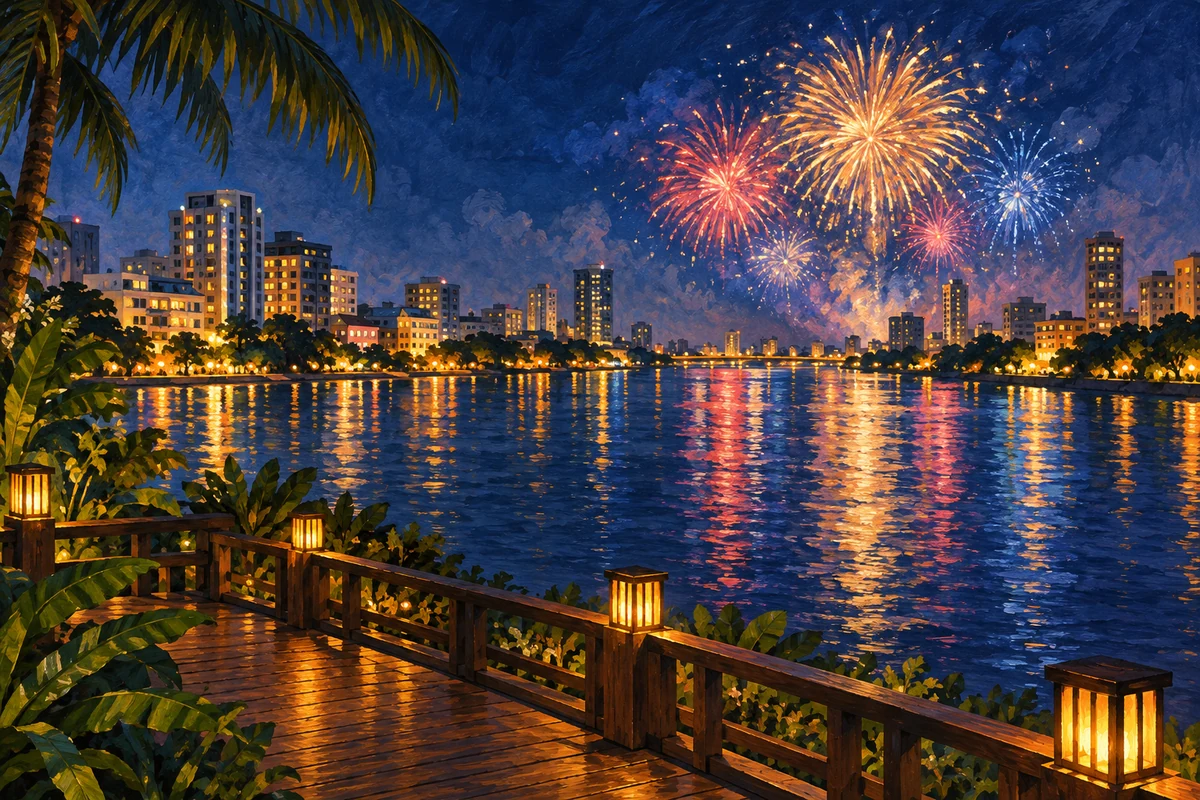
New Year in Thailand can mean beach parties, city countdowns and temple visits. The December celebrations are separate from Yi Peng and Loi Krathong, usually held around November, and from Songkran in April. Check dates, local rules and transport before choosing your trip.
New Year in Thailand offers everything from a lively countdown by the sea to a quieter evening with a meal and a temple visit. But the famous photographs of floating lanterns do not describe every December celebration. Here is how to choose a destination, understand the traditions and plan a more considerate visit.
Illustrations in this article are conceptual images, not documentary photographs or evidence of a particular historical event, destination, venue or access route.
Traditions and ceremonies: lanterns and temple visits
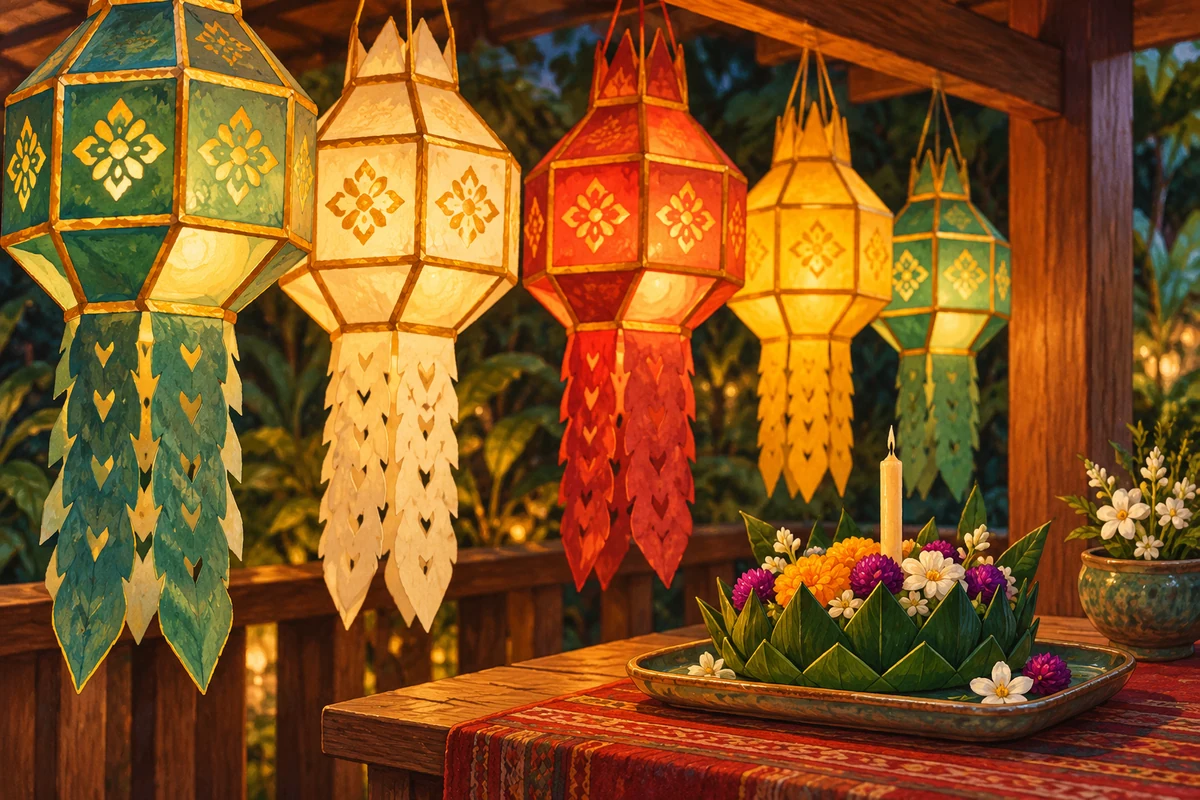
Lantern festivals and religious ceremonies are important parts of Thailand’s cultural calendar, but they should not all be grouped under New Year in Thailand. Distinguishing the events makes it easier to arrive on the right date and take part respectfully.
Lanterns and festivals
Two well-known festivals are Yi Peng and Loi Krathong. Yi Peng belongs to northern Thailand’s Lanna tradition and is closely associated with Chiang Mai and lantern decorations. Loi Krathong involves small decorated floats placed on water, with meanings including gratitude and respect for water. They are related seasonal celebrations, not identical events.
TAT places Loi Krathong on the full moon of the twelfth Thai lunar month, usually in November; Yi Peng takes place around the same period. Dates vary by year and local programme. They are not the 31 December countdown. Likewise, Songkran, Thailand’s traditional New Year, takes place in April. Source: TAT: Loi Krathong and its lunar-calendar timing Source: TAT: Songkran, the traditional Thai New Year
Temple ceremonies and how to join respectfully
Some temples hold chanting, prayers or other activities around the December new year. Ask locally rather than assuming every temple welcomes visitors to every ceremony. Making merit may involve giving suitable offerings or supporting a temple; follow its guidance and do not treat a religious practice as a tourist performance.
- Dress: choose modest clothing covering shoulders and knees; individual sacred sites may require longer trousers or skirts and have stricter rules.
- Behaviour: speak quietly, avoid pointing your feet towards sacred images and respect personal space. TAT notes that women should not touch monks or their robes; ask how to pass an offering appropriately. Source: TAT: temple and sacred-site etiquette
- Footwear: remove shoes where required before entering temple buildings, following the signs and the practice of worshippers.
- Photography: ask before photographing people, monks or ceremonies, and respect any restriction even if other visitors ignore it.
Ask the temple or a knowledgeable local guide about visiting times and participation. If candles or incense are permitted, use only the designated place and follow the instructions. Watching quietly is also a valid way to appreciate a ceremony.
Safety and environmental impact
A lantern labelled biodegradable can still cause a fire, endanger aviation or leave litter. A natural-material krathong also adds material to a waterway. Choose displays that remain attached and are collected afterwards, or an organised light show, rather than assuming a release is harmless.
Practical tip: ask organisers about permits, crowd management and clean-up arrangements. Being community-run or advertised as sustainable does not, on its own, establish that an event is safe or authorised.
City countdowns and fireworks
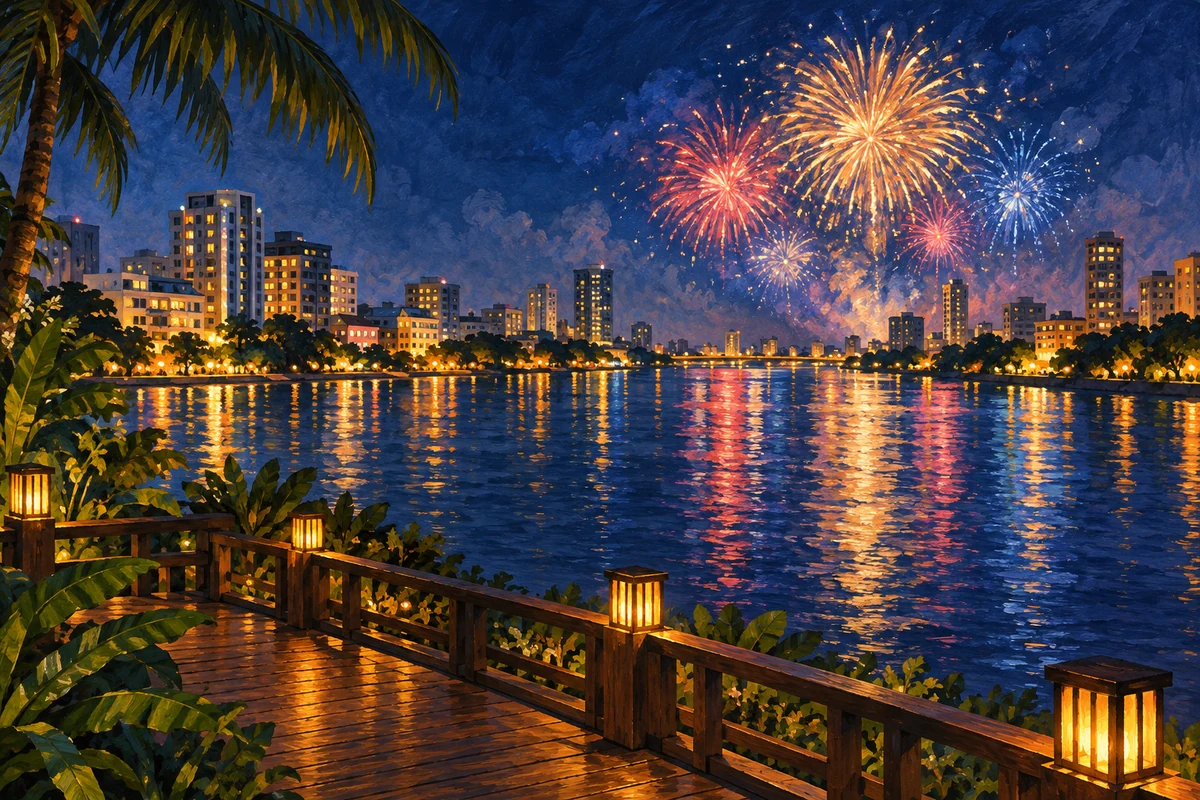
In major destinations, New Year’s Eve programmes may include concerts, DJs, meals and midnight displays. Parties and fireworks have different start times and entry arrangements, so check the organiser’s current announcement rather than relying on a standard 10pm start.
Cities and areas to consider
- Bangkok: check the programmes around the Chao Phraya River, including ICONSIAM and Asiatique, or consider a booked rooftop venue. Sightlines and access vary considerably.
- Phuket: Patong is a well-known nightlife area. Check which beach or restaurant events are actually operating on your dates, and reserve a meal if that is central to your evening.
- Pattaya: look for the current official waterfront countdown programme, including road closures and the location of any public viewing areas.
- Chiang Mai: consider local countdowns, a meal or an appropriate temple visit. Do not book December travel on the assumption that it includes the Yi Peng festival or an authorised lantern release.
Tickets, reservations and practical arrangements
Some outdoor celebrations may be free, while restaurants, cruises and rooftop venues often require bookings. Book ahead if a particular hotel or event matters to you, and read the cancellation and access conditions.
- Check whether the event needs a ticket, registration or a minimum food-and-drink spend.
- For a cruise or reserved viewing area, check the actual location and what the ticket includes; payment does not guarantee an unobstructed fireworks view.
- Allow extra time for queues, road closures and crowded transport. Ask the organiser when entry opens and whether there is a last admission time.
Staying aware in crowds
Keep valuables secure, identify an exit and avoid pushing into a tightly packed space. Check where event staff and first-aid facilities are located; do not assume every advertised party has the same level of support.
- Theft: keep your phone and money in secure pockets or a zipped bag worn close to you.
- Private fireworks: stay away from improvised launches and choose a viewing area separated from an organised display.
- Comfort and health: carry drinking water, protect yourself from the daytime sun and take breaks from dense crowds when you need them.
Tips for a smoother evening
- Transport: check the BTS and other relevant services in Bangkok, or pre-arrange a licensed taxi. App availability and waiting times can change sharply around midnight.
- Meeting point: agree somewhere recognisable outside the busiest area in case your group becomes separated.
- Clothing: wear light clothes for the beach, but bring suitable coverage if a temple visit is part of the day.
- Accommodation: staying near your chosen celebration can reduce late-night travel, but check the walking route and likely noise before booking.
These preparations cannot remove every risk, but they leave you with fewer decisions to make in the busiest part of the evening.
New Year at the beach: parties, music and water safety

A beach celebration is one way to spend New Year in Thailand, with music and meals close to the sea. Keep the party separate from swimming, especially after dark or after drinking.
Where beach celebrations take place
Popular resort areas include Patong, Kata and Karon in Phuket and Chaweng on Koh Samui. Their programmes, atmosphere and crowd levels differ, and an event on one beach says nothing about another. Smaller communities may offer quieter local gatherings, but confirm what welcomes visitors.
Water and beach safety
Do not swim after drinking or at night. Conditions can change even when the surface looks calm. UK travel advice warns about strong currents in Thailand and advises following local warning signs and beach flags. Source: FCDO: Thailand safety and security
- Do not swim alone: choose a designated area with lifeguards on duty during the day and follow their advice; having friends nearby is not a substitute for safe conditions.
- Follow the local flag system: do not enter when a red flag prohibits swimming. Read the beach’s signs rather than assuming every flag has the same meaning everywhere.
- Alcohol and the sea: keep them separate. Drinking can affect judgement and coordination long before someone appears obviously drunk.
- Belongings: take only what you need, secure valuables and protect electronics from splashes. A dry bag is not a flotation aid.
Behaviour and etiquette
A holiday destination is also someone’s home. Respect residents, dress appropriately away from the beach and keep noise down near homes and places of worship.
- Cultural respect: avoid rowdy behaviour in residential areas and treat religious symbols with care.
- Drinks and substances: follow local law, keep your drink with you and avoid unregulated alcohol or unknown substances. Arrange your journey home before the party.
- Rubbish: use bins or take waste away. Do not release decorations into the sea or a river simply because they are sold as natural or biodegradable.
Planning transport and accommodation
Book important journeys and accommodation ahead of the holiday period. Check local app coverage, the exact pick-up point and a backup route; remote areas and islands may have limited late-night services.
- Reservations: confirm your hotel and any special meal, including the correct date, party size and cancellation terms.
- Getting back: agree a pick-up point away from closures, confirm the fare arrangement and carry a modest amount of local cash.
- Medical planning: check your travel insurance, identify appropriate nearby medical care and save your insurer’s assistance details before leaving.
What to take
- Water and sunscreen — useful for daytime outings, alongside shade and suitable clothing.
- A towel and dry clothes — for a daytime beach visit or unexpected rain.
- A dry bag — to protect belongings from splashes, with important documents kept secure.
- A small torch — for a poorly lit path; choose a safe route rather than relying on a light alone.
- Some Thai baht — small vendors may not accept a card.
- A secure bag — a zipped cross-body bag or belt bag can keep essentials close.
Lantern festivals: dates and alternatives for New Year’s Eve
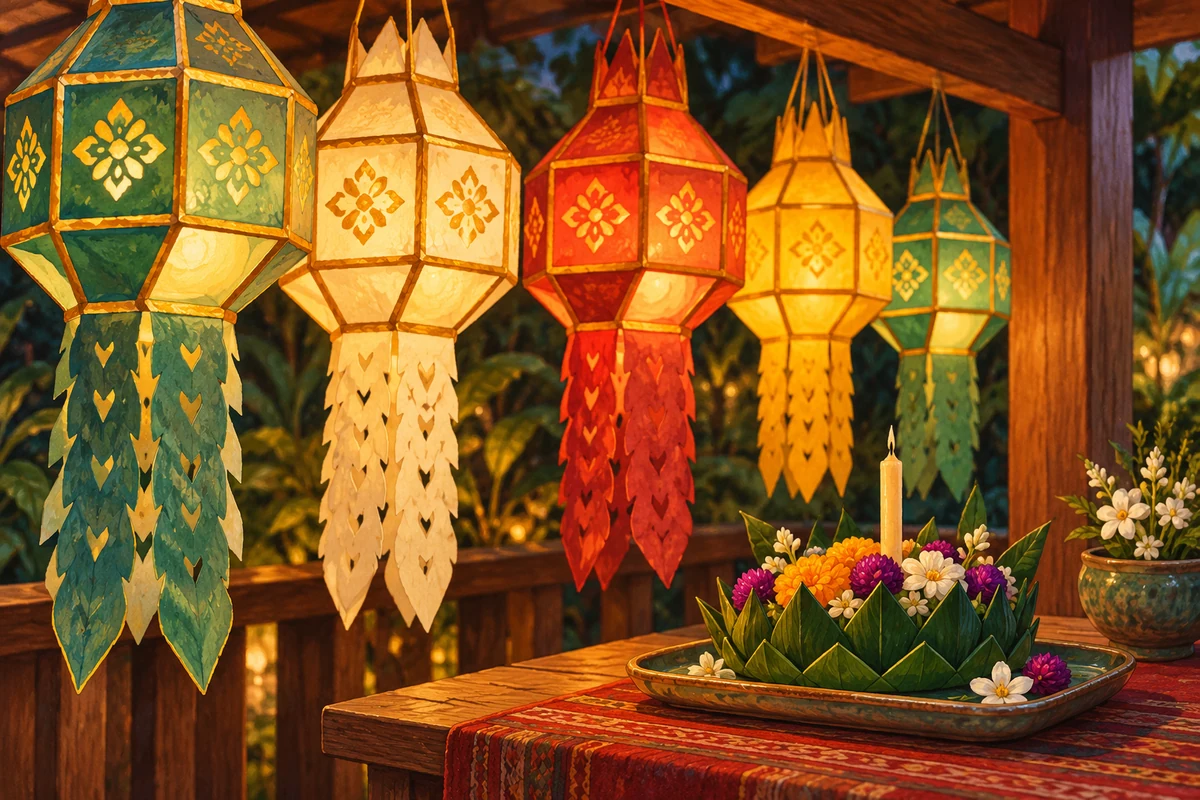
Lanterns and illuminated floral floats feature in distinct Thai traditions. Understanding the calendar and the difference between a display and a release helps you avoid both a disappointing booking and an inappropriate activity.
Festivals and their timing
Yi Peng is associated with northern Thailand’s Lanna calendar, while Loi Krathong falls on the full moon of the twelfth Thai lunar month. They usually coincide around November. Lantern decorations and water-based floats have different roles; neither festival should be presented as a standard December countdown attraction.
A venue may advertise a separate New Year’s Eve event with lantern-style decorations, but that does not make it Yi Peng or establish permission to release anything. Confirm the exact activity, date and authorisation with the organiser and relevant local authority.
Lower-impact ways to enjoy the atmosphere
- A floral display on land: appreciate a krathong’s craft on a tray or in an organised contained display, with permission, rather than adding another float to open water.
- Fixed LED lanterns: choose decorations that remain secured and can be collected, not electric lanterns released into the air or water.
- Organised light displays: check whether a venue offers a professional projection or drone show. These are alternatives to consider, not a promise of zero environmental impact.
- Flameless table lights: use a stable battery light where the venue permits it, instead of an open candle on a moving boat or near paper decorations.
Taking part responsibly
- Check the organiser: look for clear permissions, entry arrangements and safety information before paying for a festival experience.
- Check current rules: permission depends on the place, date and activity. An old festival announcement is not permission for a new release.
- Follow the site’s materials policy: do not bring your own lantern or float where it is not permitted, and do not assume a seller has checked the rules for you.
- Protect airspace and surrounding property: never improvise a sky-lantern release. Thailand’s aviation authority publishes event-specific warnings; an open field does not remove the aviation or fire risk. Source: CAAT: example of an event-specific aviation warning, November 2025
- Know the emergency arrangements: follow the event team’s instructions and stay out of restricted areas. A bucket of water cannot control a lantern once it has flown away.
- Respect cancellations and bans: weather, fire conditions and flight operations can change what is allowed. Choose another activity if a release is not authorised.
Practical advice and cultural respect
If a local ceremony permits visitors to make an offering, ask what is appropriate and follow the host’s instructions. There is no need to invent a ritual or add objects of your own. Ask before taking photographs and avoid interrupting worship for a picture.
Environmental considerations
Plastic, metal frames and abandoned decorations can harm wildlife and waterways. Natural materials also need collection. A display that stays in place, with a credible clean-up plan, is a more cautious choice than an uncontrolled release advertised as eco-friendly.
Choosing between Bangkok, Chiang Mai and the islands

Decide whether you want a city evening, time exploring northern culture or a beach break. Your preferred pace, budget and transport needs matter more than a single spectacular photograph.
Bangkok
Bangkok offers options such as riverside dining, rooftop venues and city countdowns. Check the current programmes around ICONSIAM, Asiatique and other Chao Phraya venues rather than assuming a previous year’s arrangements still apply.
Book a room and dinner if needed, compare public transport with a licensed transfer and check the last service home. A cruise can be enjoyable, but verify its route, boarding arrangements and viewing conditions. Dress for any temple visit planned earlier in the day.
Chiang Mai
Chiang Mai can suit travellers interested in northern food, architecture and temple visits alongside the year-end celebrations. If the main purpose is to see Yi Peng, plan around its own festival dates rather than 31 December.
Confirm any event’s rules and transport arrangements before travelling. Evenings can feel cooler than the coast, so pack a suitable layer. Do not interpret a lantern being sold or released by someone else as evidence that it is legal.
Islands and beaches: Phuket, Koh Samui, Phi Phi and Krabi
Resort areas can offer lively seaside evenings, but they differ in crowding, accessibility and weather. Compare the specific beach, accommodation and transport connections. In particular, do not assume every Thai coast has identical dry-season conditions during December.
For an evening by the sea, stay out of the water after dark and arrange the return journey beforehand. Check toilets, lighting and staffed areas, and avoid a boat journey if weather or loading conditions make it unsafe.
A quick comparison
Atmosphere: Bangkok offers city venues; Chiang Mai offers a northern cultural base; coastal resorts offer seaside stays. None guarantees peace or a party. Cost: compare the whole holiday, including transfers and special-event charges. Families: check noise, access and age restrictions before choosing an event.
Match the destination to your plans
For a reserved city evening, compare a Bangkok restaurant, rooftop or cruise. For northern traditions, choose Chiang Mai and check the calendar carefully. For a seaside break, consider Phuket or Koh Samui, allowing for local weather, transport and the type of beach you prefer.
Essential practical tips
- Book key arrangements early: hotels, special dinners and cruises may sell out, but read the terms before committing.
- Plan transport: check operating hours and agree a meeting point with your group.
- Carry money securely: keep a small amount of local cash and a suitable card, with a separate backup where possible.
- Look after yourself: avoid overcrowded spaces, secure belongings and keep clear of private fireworks.
- Respect local practice: dress appropriately at temples and check rules for any lantern or krathong activity.
- Plan for health needs: take regular medicines in suitable packaging, check entry restrictions and know how to contact your travel insurer.
Travel essentials: clothing, etiquette and getting around
A little preparation makes New Year in Thailand easier to enjoy. Choose clothing for the activities you will actually do, leave time between journeys and check official advice close to departure.
Clothing and footwear
Pack light, breathable clothes for warm days and appropriate coverage for sacred sites. Bring a rain layer if the forecast suggests it, and check any restaurant dress code separately.
- Daytime: light tops and comfortable footwear work for many casual outings; choose sun protection and clothing that suit the location.
- Temples: carry clothing that properly covers shoulders and knees. Do not rely on a scarf being accepted as a substitute at every site.
- Evenings: a light jacket may help in cooler northern areas or air-conditioned venues; wear shoes suitable for your route and event.
Etiquette and everyday behaviour
Show respect for religious symbols and local customs. The wai, with palms together, is a Thai greeting whose use depends on the situation; observe your hosts rather than turning it into a performance.
- Greetings: a courteous response and attentive manner are a good starting point; follow local guidance about when and how to return a wai.
- Temples: do not climb on statues, handle sacred objects or interrupt worshippers.
- Interactions: ask before taking photographs and avoid gestures or jokes that could offend your hosts.
Transport and timing
Holiday traffic, road closures and limited island connections can affect a simple-looking journey. Confirm both the outward and return route; an app is useful only where vehicles and a signal are available.
- Reserve important journeys: confirm hotel transfers and event transport, including the correct pick-up location.
- Apps and taxis: use a reputable booking service or licensed taxi and agree how the fare will be charged. Avoid unlicensed lifts from strangers.
- Boats and transfers: check operator schedules, weather and safety arrangements. Do not assume a boat will run after the celebration ends.
Personal safety
Stay aware of your surroundings, keep a realistic plan for getting home and make space for rest. These precautions support a trip; they cannot guarantee that nothing will go wrong.
- Documents and valuables: secure originals and keep protected backup copies, without leaving sensitive information on an unlocked phone.
- Health: use sun protection, drink water and take any necessary prescribed medicines. Ask a pharmacist or travel-health professional about individual needs rather than packing random remedies.
- Alcohol and water: do not swim after drinking, and leave night-time swimming out of the party plan.
- Emergency planning: save your accommodation and insurer’s assistance details, and check official local emergency information before departure.
Final practical reminders
Agree meeting points, charge your phone and check the latest FCDO Thailand advice alongside the organiser’s information. That advice covers regional risks and changing conditions; a festive itinerary should not replace it. Source: FCDO: Thailand safety and security
A celebration that suits your trip
Thailand offers many ways to mark the December new year, from a coastal meal to a city countdown. Treat lantern festivals as separate calendar events, respect local customs and choose arrangements with clear transport, access and safety information.
Thank you for reading. Follow our social channels and the I Love Christmas blog for more ideas about seasonal travel and traditions.
Have a thoughtful, enjoyable trip, and share the moments you would recommend to another traveller.
FAQ: New Year in Thailand
When do Yi Peng and Loi Krathong take place?
Usually around November, according to their lunar calendars and local programmes. They are separate from 31 December celebrations. Check the official dates for the year and place you intend to visit.
Can I release a sky lantern myself on New Year’s Eve?
Do not assume you can. Releases can be restricted or prohibited for aviation, fire and environmental reasons. Check current local authorisation, and choose a fixed display instead if permission is unclear.
Where can I look for countdowns and fireworks?
Check current programmes in Bangkok and major coastal destinations such as Phuket and Koh Samui. Chiang Mai also has year-end activities, but Yi Peng is not a December countdown event and displays are never guaranteed by location alone.
How can I reduce risks at a beach party?
Stay out of the sea at night and after drinking, follow beach warnings, keep valuables secure and arrange a reliable way back. Choose an event with clear access and staffed facilities.
Are there lower-impact ways to enjoy lantern traditions?
Consider fixed lantern decorations, a floral display kept on land or an organised light show. Materials labelled biodegradable are not impact-free, and decorations should not be released without permission and a collection plan.
Should I book ahead for New Year’s Eve?
Yes, if you have specific accommodation, dining or transport needs. Check what is included and the cancellation conditions, then reconfirm important arrangements before the holiday.
Sources and Further Reading
- TAT: Loi Krathong and its lunar-calendar timing
- TAT: Songkran, the traditional Thai New Year
- TAT: temple and sacred-site etiquette
- FCDO: Thailand safety and security
- CAAT: example of an event-specific aviation warning, November 2025