Planning New Year’s Eve in Copacabana means arranging accommodation, transport and a realistic way to manage crowds. Choose between the public beach and a separately booked private event, confirm current access rules, carry essentials and agree a meeting point. This guide covers planning principles, not a confirmed timetable for a particular edition.
New Year’s Eve in Copacabana brings together the beach, music and the prospect of a spectacular midnight celebration. The original article referred to 2025; this revised guide avoids presenting that edition’s arrangements as current. Check Rio City Hall, Riotur and MetrôRio for the year you intend to attend.
Illustrations in this article are conceptual images, not photographs of the named destinations or evidence of a particular venue, event layout or access route.
Security arrangements and beach-area road closures
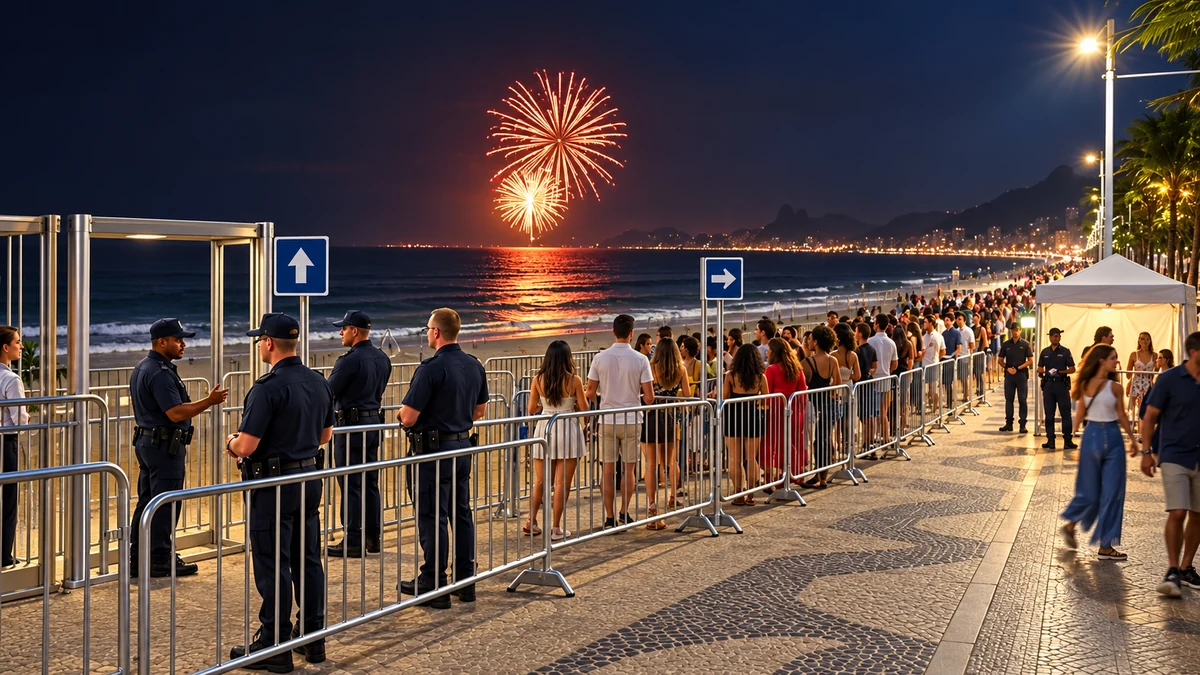
Security operations for New Year’s Eve aim to manage large crowds and keep emergency access open. The positions of checkpoints, road closures and assistance services can change between editions, so plan around the current official map rather than a previous year’s description.
Main elements of the security operation
Controlled access: barriers and managed routes may direct pedestrian movement. Do not block emergency corridors or assume every beach entrance remains open.
Security checks: bags may be inspected at designated access points. Read the published prohibited-items list before packing; screening methods and locations are not identical every year.
Public and event teams: police, municipal services, firefighters and other teams have different roles. Private venues may also employ their own security staff.
Prohibited items and restrictions
- Sharp or dangerous objects – leave knives and similar items behind, and follow the event’s current security rules.
- Personal fireworks and flares – do not bring these into the crowd; follow the official restrictions and organised display arrangements.
- Glass containers – avoid glass on the beach. Check which alternative containers are permitted rather than assuming every plastic or metal bottle is acceptable.
- Bulky furniture – large chairs, tables and structures can obstruct access. Check the current rules before bringing any equipment.
Closure times: traffic restrictions can begin well before midnight and be lifted in stages. The previous year’s times are not a reliable plan for your visit.
Public access and private venues
Follow the signed public routes. Separately ticketed hotel parties or other private venues may have their own check-in arrangements, but a booking does not guarantee a special corridor through public roadblocks. Ask the venue how guests should reach it on foot during restrictions.
Moving around more safely
- Allow extra time for queues and checks. Arriving early can help, but cannot guarantee space or a particular view.
- Carry only essentials: suitable identification, a payment card, a small amount of cash and water in a permitted container.
- Agree a recognisable meeting point and what to do if the group separates.
- Wear comfortable clothes and footwear, and keep your phone charged; a charged power bank can be useful.
Emergency assistance: consult the current event map for medical and information points. Brazil’s emergency numbers include 190 for police, 192 for ambulance assistance and 193 for firefighters.
If an emergency develops: follow official instructions and move towards the indicated safe route without pushing against barriers or the crowd.
Children and older relatives: plan for the group’s mobility and comfort, carry discreet emergency contact details and avoid entering areas where movement is already difficult.
Choosing a viewing area and accommodation
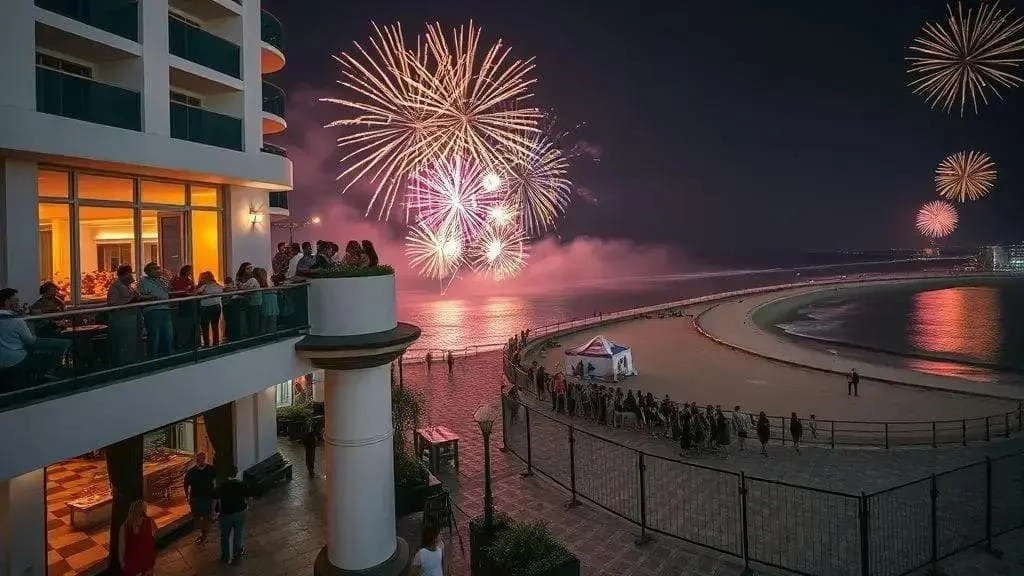
Your preferred experience matters: being on the public beach is different from watching through a hotel window or attending a booked rooftop party. Consider access, toilets, seating, weather and your ability to leave as well as the view.
Beachfront viewing considerations
- The central stretch of Copacabana: it is a familiar setting for the celebration, but crowd density and the view depend on the event layout and your position.
- The Leme end: it may suit some accommodation plans, but should not be advertised as reliably quiet or easy to leave on New Year’s Eve.
- Arpoador and other viewpoints: Arpoador faces the Ipanema side and is not a dependable viewpoint for Copacabana’s display. Check actual sightlines and access rather than assuming any nearby headland will work.
Sea-facing hotels and apartments
Sea-facing rooms and balconies can offer comfort and private facilities, but a sea view does not necessarily mean a clear view of the display. Ask for written confirmation of the room’s outlook, balcony access and guest rules.
Rooftop and hotel parties: these may include food or drinks and usually require a separate booking. Confirm the view, seating, accessibility, weather arrangements and what the ticket actually includes.
Private viewing areas and parties
A private event may offer toilets, seating and refreshments, but do not assume that a venue calling itself a camarote is an official beach enclosure. Verify the organiser, address, access arrangements and refund terms, and keep booking confirmations.
Holiday rentals, hostels and lower-cost options
An apartment can suit a group if its location, outlook and building rules meet your needs. Check recent reviews and whether visitors or parties are allowed. A hostel rooftop is not automatically open for a New Year’s event or cheaper than other options.
Boat trips and other alternatives
- Boat trips: check the operator’s credentials, safety equipment, departure arrangements and weather cancellation terms. Vessels must respect the exclusion zone around any fireworks barges; closer is not necessarily safer or better.
- Elevated viewpoints: access, opening hours and sightlines vary. Do not plan a night walk onto unfamiliar hills or assume attractions such as Morro da Urca remain open for the display.
Choosing and booking
- Start early: popular rooms and events can sell out. Two or three months may be insufficient for some choices, so begin researching as soon as your dates are known.
- Confirm the room’s outlook: ask exactly what can be seen from the room you are booking, not just from the hotel’s promotional rooftop photographs.
- Read cancellation terms: compare refundable and non-refundable rates before paying.
- Compare inclusions: check meals, event admission, transport and any extra service charges separately.
Practical comfort and safety
- If using the beach, identify permitted exits and assistance points without occupying emergency routes.
- Consider accommodation with dependable reception arrangements and secure storage for valuables.
- Check actual accessibility features for anyone who needs them; a general claim of being accessible may not answer your requirements.
- Plan the return journey as carefully as the outward trip, including station access and permitted taxi or ride-hailing pick-up areas.
Getting there and travelling after midnight
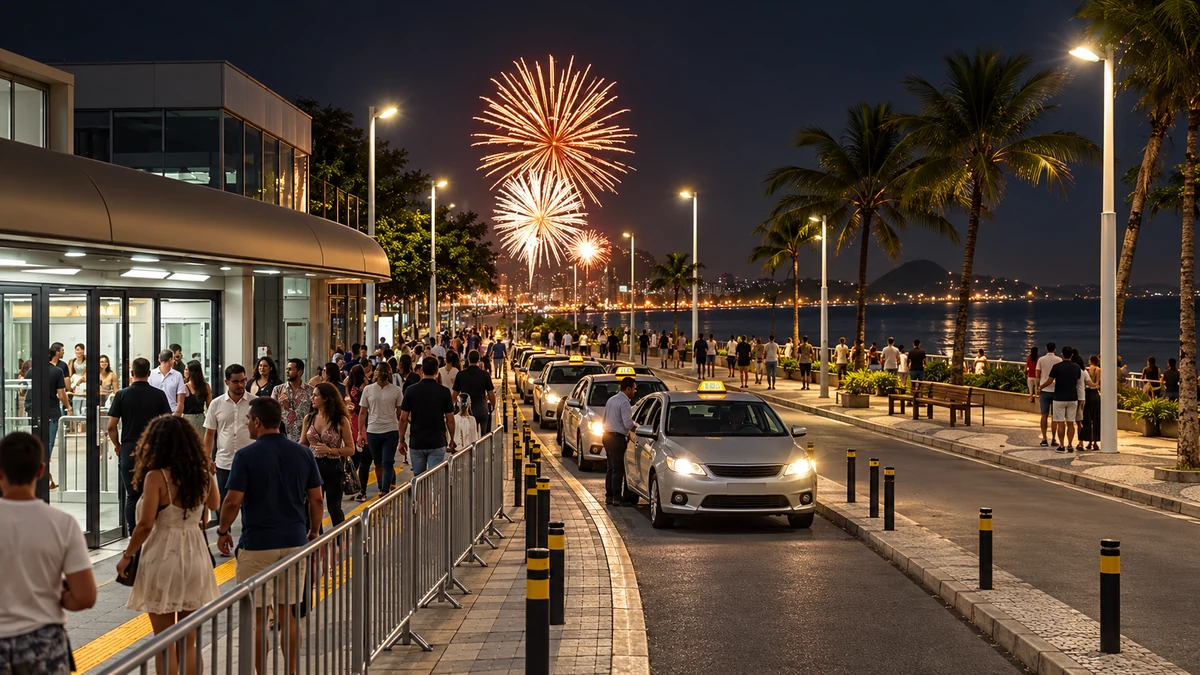
Choose your route before leaving and keep an alternative plan. Traffic restrictions can make a short distance take much longer than usual.
Taking the metro
The metro can be a practical way to avoid road traffic, but stations and walking routes become busy. Do not assume normal tickets, operating hours or station entrances apply during the special operation.
- Check the current New Year’s operation: MetrôRio has used special timed passes and separate return arrangements in previous editions. Consult the operator’s announcement for your travel year. Source: MetrôRio: New Year transport information
- Allow time for crowds: follow the booked boarding window and station instructions rather than simply arriving at your usual time.
- Arrange the correct ticket: buy through the official channel and check both outward and return requirements. A normal travel card may not be valid during the special period.
Buses and connections
Bus routes and stops may change during closures. Check official transport notices as well as journey-planning apps, which may not immediately reflect every event restriction.
- Expect diversions: follow signs and instructions from transport staff.
- Confirm the return stop: it may differ from the place where you were dropped off.
Taxis, ride-hailing and pick-up points
Road closures, demand and queues can limit vehicle access. Ride-hailing prices may rise; taxi fares follow their own rules. Agree a permitted, recognisable pick-up point rather than expecting collection at the beachfront.
- Use authorised services: verify your vehicle and driver, and follow the current rules on where they can stop.
- Coordinate with your group: share your meeting point privately and plan for weak mobile reception.
Driving and parking
Driving close to the celebration is often impractical because of closures and parking restrictions. If you need a car for part of the journey, arrange a legitimate parking location and a suitable onward route in advance.
- Avoid relying on beachfront parking during the event.
- Check the car park’s arrangements, including overnight access, collection time and whether surrounding road closures affect your exit.
Boats, bicycles and private transfers
Boat outings are separate experiences, not a general substitute for land transport. Transfers are also affected by roadblocks. Cycling may suit quieter portions of a journey, but riding through a dense crowd is unsafe and local restrictions may apply.
- Book carefully: obtain the exact boarding or meeting location and cancellation conditions for a boat or transfer.
- Bicycle security: use permitted parking and a suitable lock, and check whether a safe route remains available.
Organising arrival and departure
- Choose a realistic arrival time: allow for transport restrictions, checks and walking, without assuming early arrival guarantees a spot.
- Set meeting points: choose clear landmarks that will remain accessible under the event plan.
- Keep an alternative: identify a second feasible route or a safe place to wait if your first return plan fails.
- Carry identification and battery power: prepare the documents and tickets required for your actual journey.
- Check updates: review official notices shortly before departure and again on the day.
Saving on tickets, meals and accommodation
Public celebrations and paid events
Distinguish public access from private tickets – the public Copacabana celebration is separate from paid hotel or venue parties. Buy private-event tickets only through verified organisers or their authorised sellers.
- Compare offers: check the organiser’s own announcements and read the conditions behind discounts.
- Compare ticket categories: some venues offer different areas or packages; do not assume a cheaper ticket provides the same view or services.
- Check inclusions: meals, drinks, seating and toilet access should be clear before purchase.
- Check payment costs: points, card offers or instalments may help some buyers, but eligibility, interest and foreign-exchange fees can change the total.
Keeping meal costs manageable
Plan food around your day and the heat. A modest budget still needs to allow for safe storage, drinking water and access restrictions.
- Pack suitable snacks: choose food that can be carried safely in warm weather, and keep anything perishable chilled. Check container rules before bringing drinks or a cool bag.
- Compare nearby shops and meals: supermarkets or simple restaurants may offer lower-cost choices, but confirm opening hours and avoid relying on deliveries through road closures.
- Share suitable portions: group meals can reduce costs when the venue permits sharing and the portion size is appropriate.
- Plan meal times so you are not forced into the first available option during the busiest period.
Finding accommodation that suits your budget
Compare dates and locations beyond the beachfront, but include the cost and practicality of the late-night journey. A cheaper room is less useful if its return route is unsuitable.
- Research ahead: prices and availability fluctuate, and booking several months early does not automatically guarantee the lowest rate.
- Consider a kitchen: preparing some meals can help a group control costs.
- Read recent reviews: look for dependable information about cleanliness, access, noise and the host or reception service.
- Compare total prices: include cleaning fees, taxes, deposits and minimum-stay requirements.
Practical budgeting tips
- Set a per-person budget covering accommodation, transport, food, activities and an emergency reserve.
- Agree shared costs: decide how accommodation, transfers and group purchases will be divided.
- Treat offers cautiously: discounts and cashback should not outweigh reliable booking terms or a legitimate seller.
- Include transport in the comparison: avoiding expensive or inaccessible parking may make public transport more practical, subject to the special operation.
- Arrange appropriate travel insurance: check that it covers your itinerary, activities, medical needs and emergency costs. The cheapest policy may not suit your trip.
Confirming bookings and purchases
Keep written confirmations and receipts. For a holiday rental, ask how check-in will work during closures and whether late arrival is possible. Confirm times, extra charges and building rules before paying.
What to carry and how to look after yourself
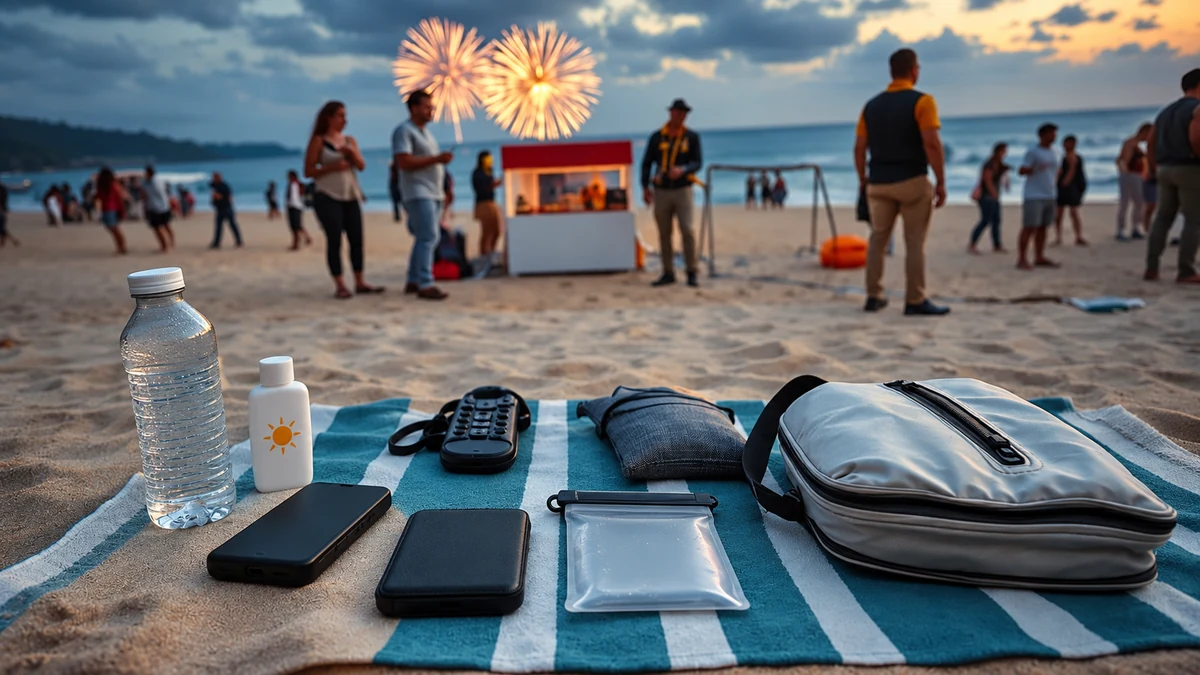
Pack lightly but realistically for New Year’s Eve in Copacabana. Your needs depend on the weather, how long you will be out and the current event rules.
Useful essentials
- Drinking water – use a permitted container and plan how to obtain more. A fixed half-litre or one-litre allowance is not enough to cover everyone’s needs for a long, hot day.
- Sun protection – for daytime exposure, use suitable clothing, shade and sunscreen of at least SPF 30 with good UVA protection. Reapply according to the label, including after sweating or swimming.
- A charged power bank – choose one suitable for your phone and keep tickets and contact details available offline.
- Identification and payment – British visitors should consult current travel advice on carrying a passport copy and photo identification. Check any requirement for an original document for travel, admission or concessions; a copy is not universally accepted. Source: FCDO: safety and security in Brazil
- A small zipped cross-body bag – keep it closed and where you can monitor it.
- Personal medication – keep it in its labelled packaging with relevant prescription information, and follow storage requirements rather than leaving it in the heat.
- Comfortable clothing – dress for the forecast and consider a light extra layer or rain protection, with footwear suitable for prolonged walking.
- A protective phone pouch – it can reduce exposure to sand and splashes, but check the product’s limits.
Looking after belongings
- Keep your bag closed and in view, using internal pockets for essential valuables.
- Avoid displaying valuables such as jewellery or expensive equipment unnecessarily.
- Use secure storage at your accommodation for items you do not need to carry.
- Keep secure copies of key documents and booking details, with access limited to you and a trusted contact where appropriate.
- Enable device security and recovery features in advance. Do not confront someone or enter an unsafe area to recover a tracked device.
Comfort and wellbeing
- Drink water regularly and respond to heat or fatigue by seeking a cooler, less crowded place. Water alone is not a guarantee against heat illness.
- Eat appropriately and choose food handled and stored safely, especially in warm conditions.
- Plan for the sun if arriving during daylight; shade, a hat and suitable sunglasses can help alongside sunscreen.
- Avoid excessive alcohol so you can remain aware of your surroundings and manage your journey home.
- Carry basic hygiene supplies and follow any current public-health advice relevant to your needs.
In an emergency
- Seek a medical team or alert official staff promptly when someone is unwell or injured.
- Call the appropriate emergency service when urgent help is needed, giving the clearest location you can.
- Follow the responders’ instructions and keep access routes clear.
- If someone goes missing, alert police or event staff immediately, particularly for a child or vulnerable adult; do not treat it only as a lost-property enquiry.
Quick checklist
- Water, daytime sun protection and a charged power bank
- A zipped bag, required identification and valid travel tickets
- Personal medication, prescription information and clothing for the forecast
- Secure document copies and accessible emergency contacts
Music, private parties and religious observances
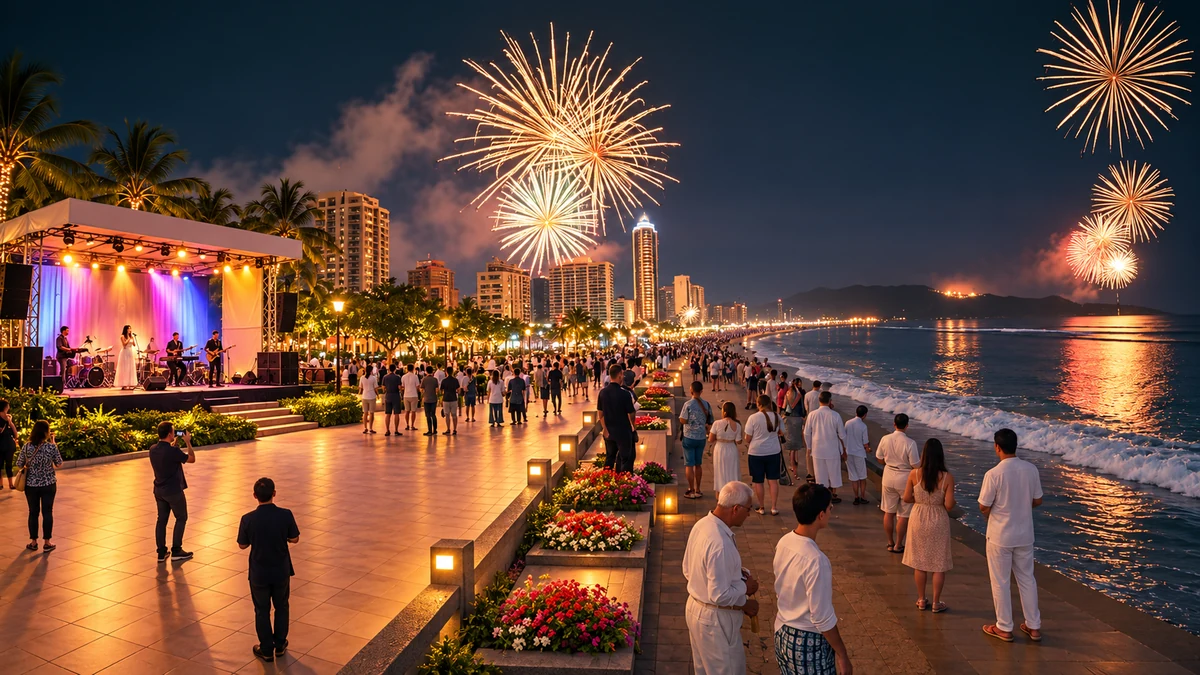
Choose the programme that suits you: public beachfront performances, a separately booked private party or respectful observation of community traditions. Check the actual schedule rather than assuming a particular artist or ceremony returns every year.
Finding events and booking tickets
Use official organiser pages and authorised ticket sellers. Read refund terms, confirm the venue’s address and keep a copy of the booking that does not depend on a mobile signal.
- Public performances: consult Riotur’s programme for stages, timings and access; early arrival does not guarantee a position near a stage.
- Private parties: verify seating, toilets, food, drinks and any age restrictions before buying.
- Hotel and rooftop events: confirm the dress code, whether non-residents are admitted and how check-in works during closures.
Religious observances by the sea
Residents and visitors may take part in different religious and cultural traditions. Observe respectfully, ask before photographing people or ceremonies and do not assume every gathering welcomes active participation.
- Traditions associated with Iemanjá: some participants offer flowers or greetings within Afro-Brazilian religious practice. Respect their guidance and environmental rules; never leave plastic or other litter in the sea.
- Church services and blessings: check with the relevant religious community for confirmed times and locations.
Considerate behaviour
- Respect ceremonial space: give praying groups and altars room.
- Ask before taking photographs: some people or ceremonies require privacy.
- Do not handle offerings without permission, and do not light candles where they could create a fire hazard.
Comfort during events
Choose a position from which you can leave safely, while keeping emergency routes clear. If crowds are becoming uncomfortable for your group, use an alternative rather than pushing further in.
- Plan both journeys: agree your arrival, return and meeting arrangements before separating.
- Confirm accessibility: ask the organiser about facilities, entry requirements and availability; reserved areas should not be assumed.
Alternatives to a crowded beach
A television broadcast, official stream or suitable private accommodation may be more comfortable. A smaller rooftop can still be busy, and neither a hotel room nor a balcony guarantees a view without confirmation.
Final reminders
- Recheck the programme and transport notices shortly before attending.
- Choose footwear and clothing for the weather and walking involved.
- Take your rubbish with you and keep plastic, glass and other litter out of the sand and sea.
Travelling with children or older relatives
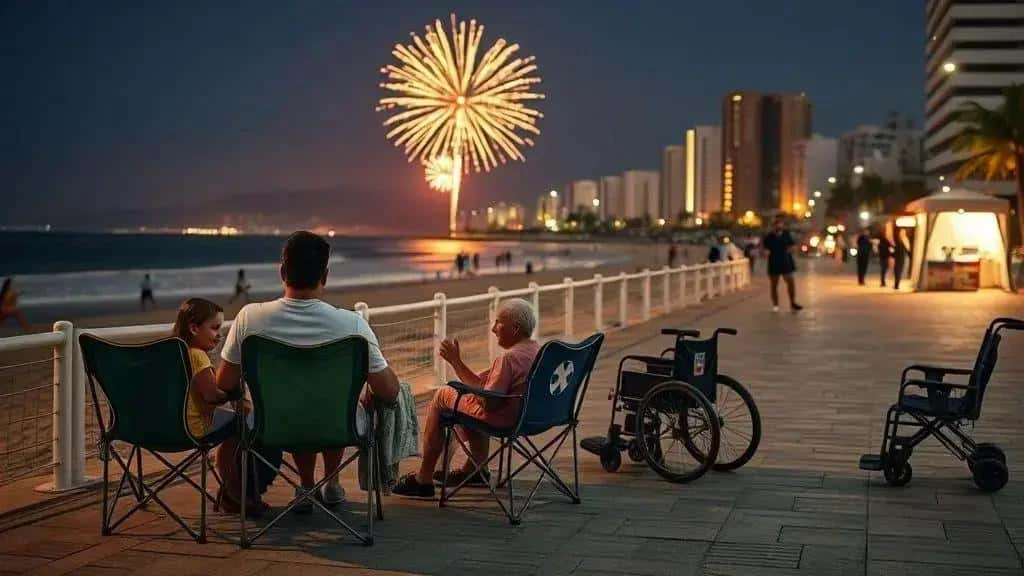
Planning with children or older relatives means considering individual needs rather than age alone. Crowds may make quick departures impossible, so choose an experience your group can comfortably manage.
Choosing accommodation
- Check access features such as lifts, step-free routes and adapted bathrooms, as well as reception hours.
- A suitable sea-facing room may reduce the need to enter the crowd. Confirm the view and keep children safely away from balcony edges and climbable furniture.
- Kitchen facilities can help with familiar meals and individual dietary needs.
Arrival and choosing a position
- Allow time to find a suitable area, but reassess if crowds or access conditions make the beach impractical.
- Locate toilets and assistance points without standing in their access routes.
- A verified private event may suit the group if it genuinely offers appropriate seating, toilets, accessibility and admission for children.
Documents and identification
- Check the documents actually required for children, transport, accommodation and any concessions. Requirements differ for Brazilian and foreign visitors; keep originals secure when they must be carried.
- Give children discreet contact information, such as a telephone number inside a wristband, without displaying unnecessary personal details publicly.
Medication and health needs
- Keep essential medication accessible in its original labelled packaging, with the prescription information you need.
- Locate assistance services and discuss practical access or storage needs with your accommodation in advance.
Comfort and protection
- Plan drinking water and suitable snacks, with safe storage and opportunities to rest.
- Use appropriate sun protection for daylight hours and bring clothing suited to the forecast and each person’s needs.
- Choose comfortable, secure footwear suitable for walking on the planned route.
Mobility equipment
- If bringing a pushchair, check the route and crowd conditions first; use its harness and brakes correctly, and avoid taking it into dense crowds.
- For anyone with reduced mobility, confirm step-free access and any reserved facilities directly with the organiser.
- If needed, arrange suitable wheelchair hire or an accessible transfer in advance, including the return journey and roadblock limitations.
A plan for separation or emergencies
- Agree a clear meeting point before entering the busy area and make sure it will remain accessible.
- If someone is missing: notify police or event staff promptly, especially when a child or vulnerable person is involved.
- Seek medical help when needed and keep essential allergy or health information available for responders.
- Save a trusted local contact and carry a paper copy of key details in case a phone fails.
Conclusion
Careful planning can make New Year’s Eve in Copacabana more manageable. Confirm your bookings, check the current event operation and choose transport and viewing arrangements that suit the whole group, while remaining ready to change plans if conditions demand it.
Thank you for reading. Follow our social channels and the I Love Christmas blog for more seasonal travel and celebration ideas.
We hope your trip brings good memories and a comfortable start to the new year.
FAQ: New Year’s Eve in Copacabana
Which items are prohibited at the celebration?
Check the current official list before packing. Avoid dangerous objects, personal fireworks and glass, and confirm rules for containers, bags and bulky equipment rather than relying on a previous edition’s arrangements.
How can I find a suitable place to watch the fireworks?
Research the actual event layout and sightlines, allow time for access and consider your group’s comfort. No public position is guaranteed; for a private venue or hotel room, obtain specific confirmation of the view and admission arrangements.
What is the best way to get to and from Copacabana?
The metro can be practical, but check the special New Year’s pass, boarding times and return requirements. Taxis, transfers and ride-hailing vehicles are affected by roadblocks and demand, so arrange a feasible alternative.
What should I take to the beach?
Carry essentials such as permitted drinking water, required identification, valid tickets, a charged phone, personal medication and suitable sun protection if arriving in daylight. Check the event’s container and bag rules and avoid unnecessary valuables.
What should I consider when travelling with children or older relatives?
Plan around individual mobility and comfort, verify accommodation access and toilets, carry discreet contact information and necessary medication, and choose an alternative if the crowds are unsuitable.
How can I keep the trip within budget?
Compare total accommodation and transport costs, research ahead, distinguish the free public celebration from paid private parties and consider shared accommodation with cooking facilities. Read booking terms carefully rather than relying on advertised discounts alone.
Sources and Further Reading
- Rio City Hall: operational plan for the 2025–2026 celebration
- MetrôRio: New Year transport information
- FCDO: safety and security in Brazil
- NHS: sun safety
- Brazilian Ministry of Health: SAMU 192