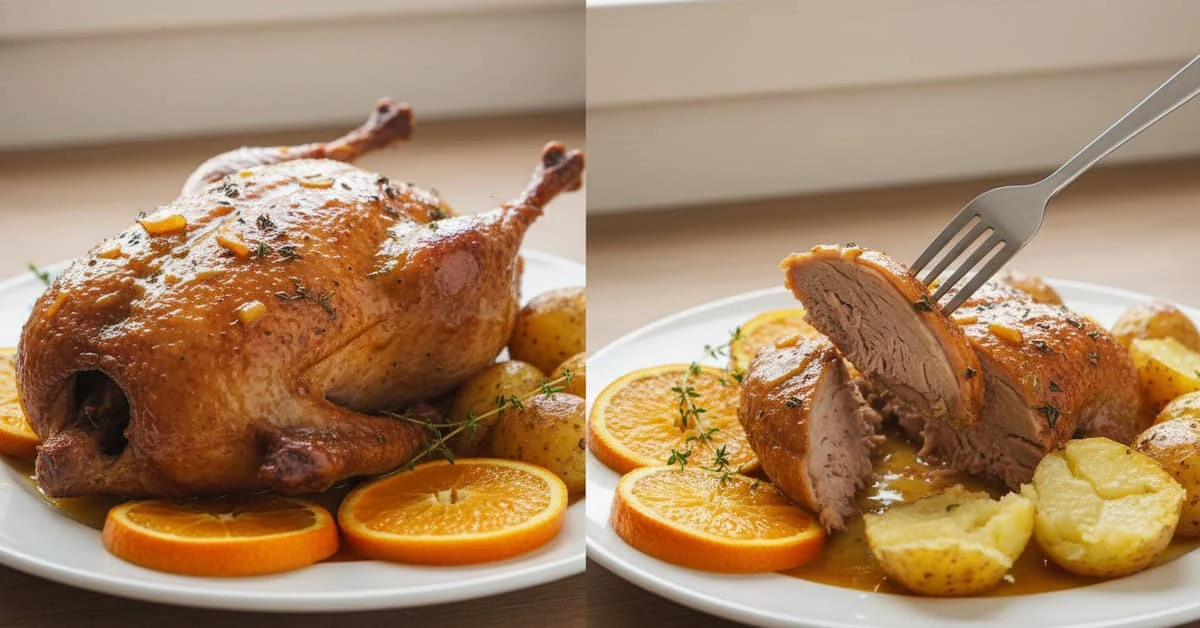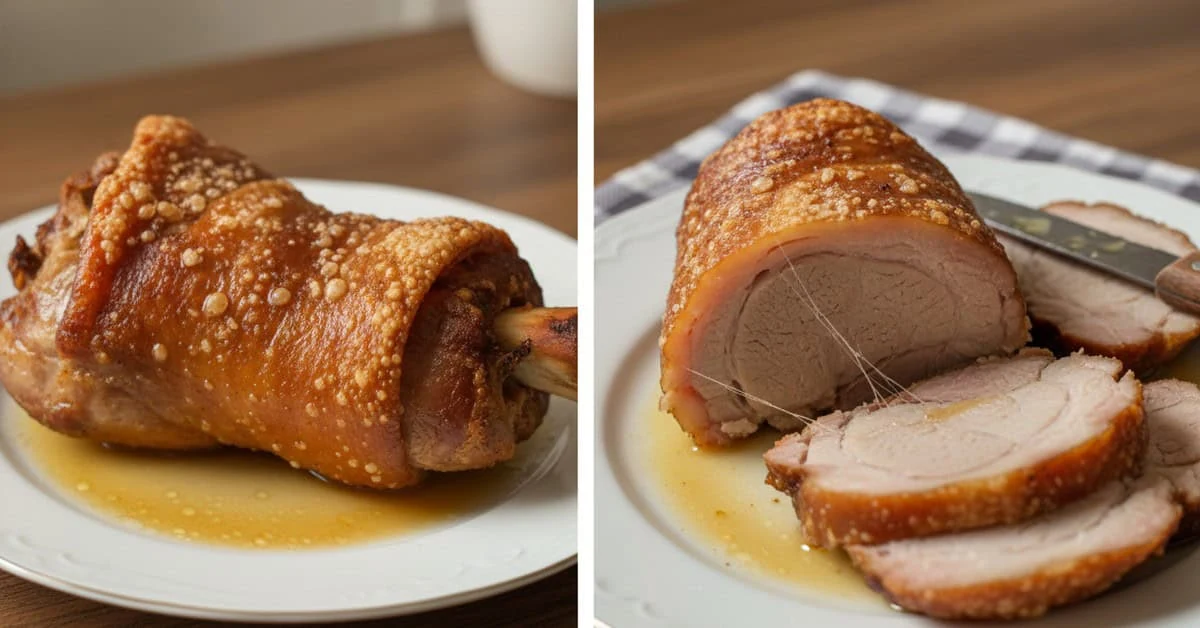
Roast pork leg with honey and mustard combines a savoury joint with a sweet, tangy glaze. The recipe covers refrigerated marinating, roasting, temperature checks, variations and leftover storage for a Brazilian-inspired Christmas meal.
Roast pork leg with honey and mustard makes a generous festive centrepiece. Honey adds a glossy finish while mustard, garlic and citrus balance the sweetness. Here is how to prepare the joint and manage the glaze without scorching it.
Ingredients for honey and mustard roast pork leg
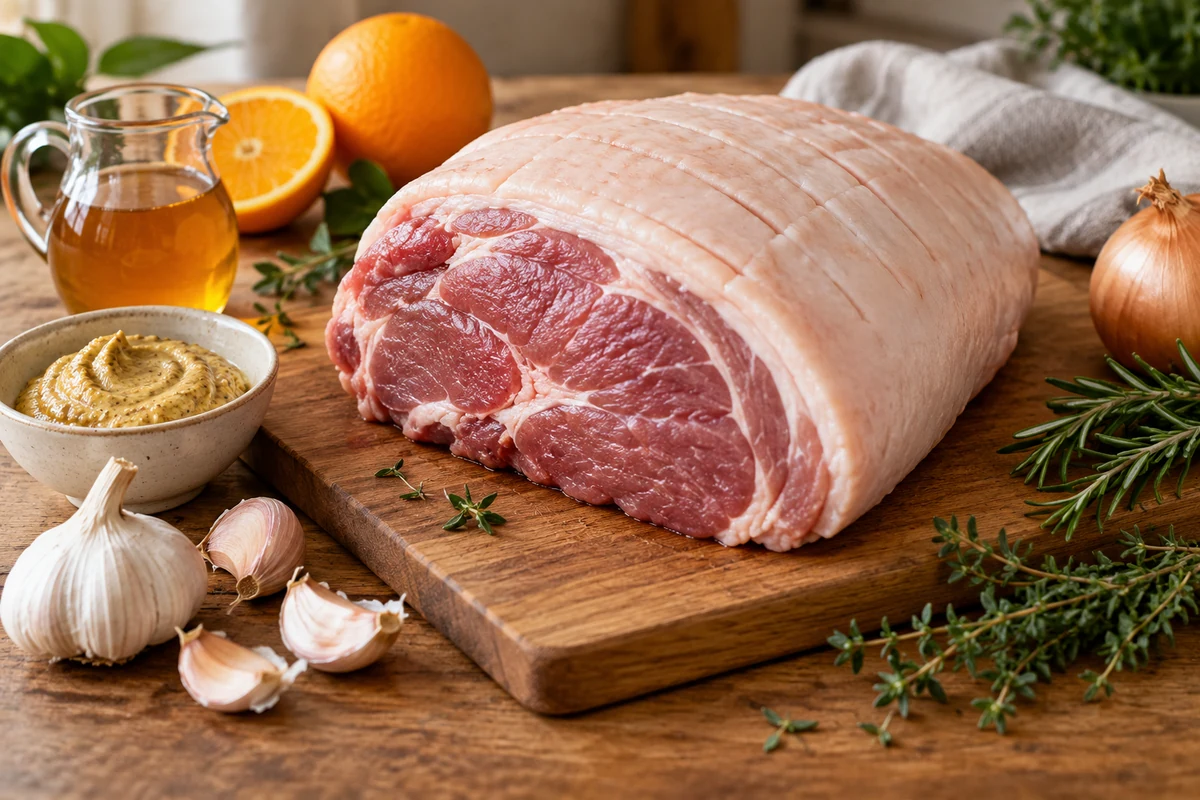
For roast pork leg with honey and mustard, gather the following ingredients. This uses fresh, uncured pork leg, not a ready-cooked ham or cured gammon joint.
- 3–4 kg pork leg roasting joint — with skin and a layer of fat if desired. For a smaller meal, use a 2–2.5 kg joint, scale the seasoning down and follow the joint’s cooking guidance.
- 120 ml honey — or maple syrup for a different flavour.
- 120 g Dijon mustard — or mild yellow mustard.
- 4 garlic cloves — finely chopped; alternatively, use 1 teaspoon garlic powder.
- 2 tablespoons olive or vegetable oil — for the marinade.
- 60 ml cider vinegar — or orange juice.
- 2 tablespoons soft brown sugar — optional; reduce or omit for a less sweet glaze.
- Up to 1 tablespoon coarse salt — adjust for the joint and the mustard’s saltiness. Do not substitute the same spoonful of fine salt automatically. Kosher salt is not inherently lower in sodium by weight.
- 1 teaspoon ground black pepper — or white pepper if preferred.
- 3–4 rosemary sprigs and 3 thyme sprigs — or smaller quantities of dried herbs.
- 1 large onion — sliced, for the roasting tin.
- Zest and juice of 1 orange — lemon gives a sharper alternative.
- 120 ml dry white wine — or beef or chicken stock, for the tin; have a little water available if it dries out.
- 2 bay leaves — optional; remove before serving.
- Kitchen foil — for loosely covering the joint during cooking and resting.
Substitutions and practical tips
Sweet and savoury balance: reduce the honey to about 80 ml and omit some or all of the sugar for a less sweet result. Keep enough mustard to provide contrast.
Mustard: Dijon is sharper than many mild yellow mustards. Use a blend of the two if preferred; adding more honey makes the glaze sweeter rather than simply milder.
Marinating: allow 8–24 hours in the fridge, within the meat’s use-by date. Two hours gives less time for flavour development but does not require deep cuts into the meat.
Choosing the joint: ask the butcher about the cut, bone and cooking guidance. A wet honey glaze gives a glossy finish rather than dry crackling; keep the skin dry and serve the glaze separately if crisp crackling is the priority.
Measures: a tablespoon is 15 ml and a teaspoon 5 ml. The original recipe uses a 240 ml cup, but weights such as mustard should be measured separately rather than treated as equivalent volumes.
How to make roast pork leg with honey and mustard
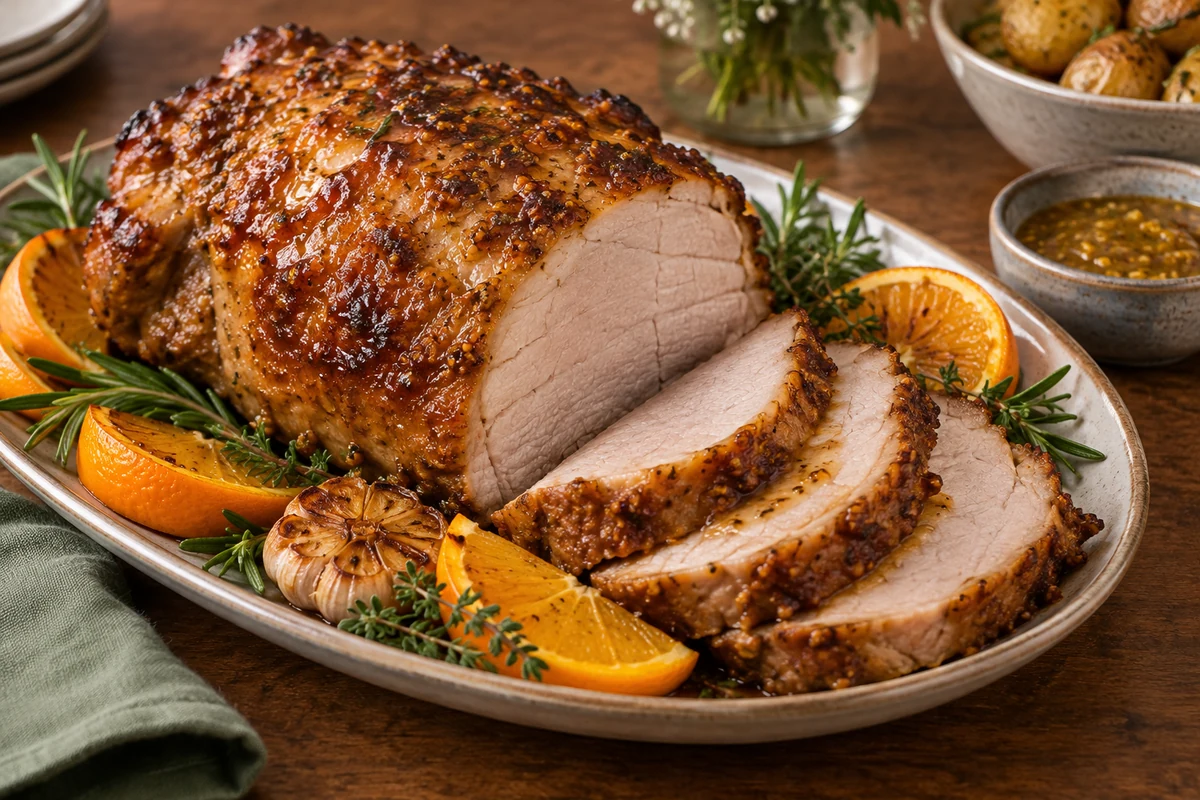
- Prepare the pork: keep refrigerated until ready to prepare. Pat dry with kitchen paper and score only the skin and fat shallowly, or ask your butcher to score it. Do not leave a large joint out trying to bring its centre to room temperature.
- Mix the marinade: combine the honey, mustard, garlic, oil, cider vinegar, optional sugar, orange zest and juice, salt and pepper. Before it touches raw meat, set aside about one third in a clean covered container for the final glaze and refrigerate it.
- Marinate: rub the remaining mixture over the meat surfaces. Keep the skin as dry as possible if you want it to crisp. Cover and refrigerate for 8–24 hours, or at least 2 hours if time is short, within the use-by date. Do not taste marinade that has touched raw pork.
- Preheat the oven: heat to 160°C, or 140°C fan, for the gentle roasting method below, unless the joint’s packaging specifies otherwise. Skip a very hot initial sear on honey-coated surfaces, as the sugar can burn before the meat cooks.
- Arrange the tin: place the joint over the sliced onion with rosemary, thyme and bay leaves. Add the 120 ml wine or stock underneath it. Cover loosely with foil; check occasionally and add a little water if the tin is drying out.
- Cook thoroughly: allow several hours and follow the butcher’s or pack’s guidance for the actual joint. A 3–4 kg leg cannot be guaranteed ready in 2½–3½ hours. Check the centre away from bone with a clean probe: 75°C for 30 seconds or 70°C for 2 minutes is a suitable safety check. For shredding, continue until the meat also pulls apart easily; leg is leaner than shoulder and can dry out.
- Baste and glaze: baste occasionally during roasting. Near the end, uncover and brush on some of the clean reserved glaze. Continue at the existing heat until glossy, watching carefully. If it browns too quickly, cover it again or lower the heat; raising 160°C to 180°C would not be a reduction.
- Rest: once fully cooked, cover loosely and rest for 20–30 minutes before carving. Resting helps retain juices but does not replace cooking the centre properly.
- Carve and present: remove any string, slice across the grain and serve with properly heated pan gravy. Garnish with rosemary and orange if desired.
- Make a quick gravy: transfer the roasting juices to a saucepan, skim excess fat and bring to a thorough boil. Loosen with a little additional stock or wine if needed, then reduce. An optional tablespoon of butter gives a richer finish; this is an extra gravy ingredient, not part of the marinade.
- For beginners: use a thermometer rather than judging by time alone. Honey-glazed skin is unlikely to become dry crackling, and a grill can burn it rapidly. If using the grill briefly for colour, watch continuously and use only suitable cookware.
- Storage and reheating: cool leftovers in shallow portions and refrigerate within 1–2 hours at 5°C or below. Use within 48 hours or freeze promptly. Reheat once until steaming hot throughout, covered with a little stock to limit drying. Frozen portions are best used within about 3 months for quality.
Quick adjustments
- Less sweet: reduce the honey to about 80 ml and adjust the vinegar or lemon juice gradually in the clean sauce before it contacts raw meat.
- Milder mustard: use yellow mustard, or a half-and-half blend with Dijon.
- Alcohol-free: replace wine with stock or water and a little apple juice. Cooking wine does not guarantee that every trace of alcohol evaporates.
- Dried herbs: try 1 teaspoon dried rosemary and ½ teaspoon dried thyme in place of the fresh sprigs.
- Temperature checks: keep the probe away from bone, the tin and large pockets of fat. Clean it before and after use.
Marinades and seasoning for pork leg
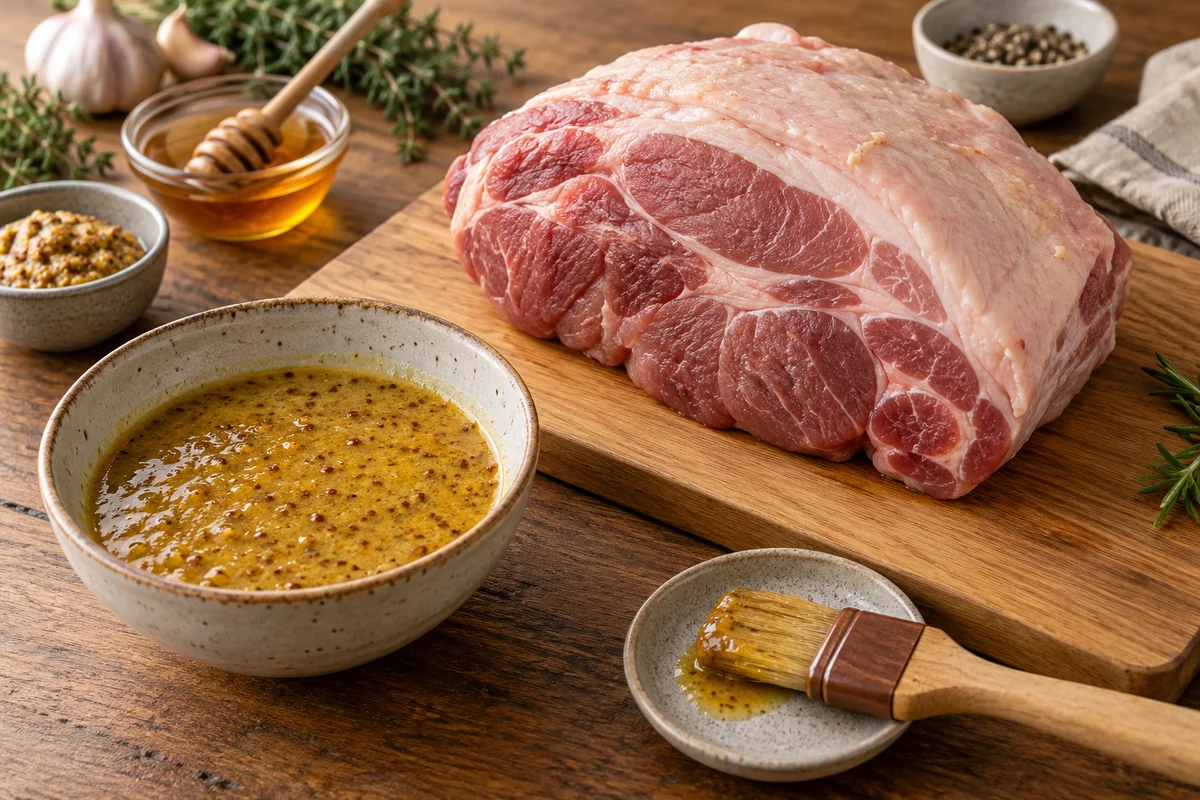
A balanced marinade flavours the surface and the final glaze adds shine. Refrigeration, careful handling and checking the centre temperature remain essential.
Marinating techniques
- Shallow scoring: score a diamond pattern through the skin and fat without making deep cuts into the flesh.
- Season the meat surfaces: spread marinade on exposed meat while keeping skin dry if aiming for crackling. Avoid cutting pockets solely to force marinade inside.
- Injection: it is unnecessary for this recipe. Injecting or deeply piercing meat changes how contamination can reach the interior; do not use a surface-searing method as the safety check for an injected joint.
- Salt ahead: count all salt as part of one seasoning allowance. If the joint is already brined, omit additional salt rather than layering a dry brine over a salted marinade.
- Time: marinate for 8–24 hours in the fridge, or 2 hours for a shorter preparation, always within the use-by date. Deep cuts are not a substitute for time.
Basic marinade recap
- 120 ml honey — reduce to about 80 ml for less sweetness.
- 120 g Dijon mustard — or mild yellow mustard.
- 4 garlic cloves — chopped, or 1 teaspoon garlic powder.
- 60 ml cider vinegar — or orange juice.
- 2 tablespoons soft brown sugar — optional.
- 2 tablespoons olive oil — to bring the seasoning mixture together.
- Zest and juice of 1 orange — plus the salt and pepper allowance listed above. This recap describes the same marinade, not a second batch.
Dry seasoning and finishing
- Optional dry rub: smoked paprika, garlic powder, onion powder and a little cumin make a different seasoning. The original suggestion is 1 tablespoon each of paprika, garlic and onion powder plus 1 teaspoon cumin; scale to taste and avoid adding another full salt allowance.
- Herbs: rosemary and thyme suit pork. Dried herbs are more concentrated, so start with smaller amounts.
- Glaze late: brush on the reserved clean honey and mustard mixture towards the end, giving it time to become glossy without scorching.
- Prevent burning: keep watching the glaze. Cover or lower the heat if it darkens rapidly. A grill is optional and requires continuous attention.
Practical safety checks
- Use a thermometer: check the thickest centre for 75°C for 30 seconds or 70°C for 2 minutes. Tenderness for shredding is a separate check; no single temperature guarantees that every leg joint will pull apart.
- Rest: allow 20–30 minutes under loose foil once fully cooked, then carve.
- Store: refrigerate promptly and eat within 48 hours, or freeze. Around 3 months is a freezer quality guide rather than a guarantee for food handled poorly before freezing.
- Quick substitute: mild yellow mustard can replace Dijon. Taste the clean mixture before adding extra vinegar or honey, as brands differ considerably.
Honey and mustard pork variations

- Citrus: retain the orange zest and juice in the base recipe, or use lemon for a sharper flavour. Reduce honey if preferred.
- Balsamic and fig: replace some cider vinegar with balsamic and add a little fig preserve. Reduce the other sweeteners as needed and watch the darker glaze carefully.
- Chipotle: add a small amount of chipotle paste or hot paprika for smoky heat. Start cautiously; a separate yoghurt sauce can cool the flavour at the table and introduces a dairy allergen.
- Herb and spice crust: season with paprika, garlic, onion powder, rosemary and thyme, then apply a small amount of honey-mustard glaze near the end. Keep the total salt in check.
- Slow cooker pulled pork: choose a joint size and cut suited to your appliance; shoulder is often more suitable for shredding than lean leg. Follow the manufacturer’s liquid and cooking guidance, cook thoroughly and check tenderness. A fixed 6–8 hours cannot be assumed for every 3–4 kg joint. Reserve clean sauce before contact with raw meat and use stock instead of wine if avoiding alcohol.
Adapting the flavour and serving
- Sweetness: reduce honey or sugar and adjust acidity gradually in the clean sauce.
- Heat: add chilli in small amounts. Taste before the marinade touches raw meat, never afterwards.
- Surface texture: choose between dry crackling and a glossy glaze. For crackling, keep the skin dry and follow a dedicated skin-on roasting method, serving the sauce separately. Do not keep increasing the heat over a sugary coating.
- Presentation: serve thin slices as a main course, or shred sufficiently tender meat for rolls at an informal meal.
- Pairings: citrus suits fresh salads; fig and balsamic go with sweet potato mash; a spicy version pairs with coriander rice.
Accompaniments for a Christmas meal

Balance the pork and sweet glaze with a mixture of starchy sides, vegetables and fresh salad. The Brazilian suggestions below keep the character of a pernil Christmas meal while allowing familiar alternatives.
Side dish ideas
- Brazilian arroz à grega: colourful rice with carrot, peas and optional raisins. About 60–80 g dry rice per adult is a starting point if rice is the main starchy side; reduce it when serving several others.
- Roast potatoes or gratin: allow roughly 200–250 g raw potatoes per adult as a substantial side, adjusting for the rest of the menu.
- Christmas farofa: toasted coarse cassava meal with onion, optional bacon and dried fruit. Serve a modest spoonful; it is an accompaniment, and is not made with fine tapioca starch.
- Green salad with citrus: mixed leaves, orange segments and a light vinaigrette provide a fresh contrast.
- Pan gravy: boil and reduce the roasting juices, then serve in a gravy boat. The yield varies; do not assume that the small quantity of liquid in this recipe supplies 120 ml per guest.
- Bread rolls: small rolls suit sliced or pulled pork for an informal buffet.
Planning quantities
- Pork: about 300–400 g raw bone-in joint per adult is a rough planning allowance when pork is the main meat. Bone, trimming, cooking losses, appetites and other dishes affect the final servings; ask the butcher for guidance on your joint.
- Starchy sides: choose sensible portions across rice, potatoes and farofa rather than adding every full allowance together.
- Salads and starters: small portions, around 80–100 g as a starting point, can balance a rich main course. Adjust to the guests and menu.
Arranging the serving table
- Main dish: put the pork on a stable serving platter with gravy alongside.
- Hot sides: serve rice, potatoes and farofa promptly. Warm dishes and foil do not by themselves provide reliable hot holding; use suitable equipment if food must remain hot for an extended service.
- Cold dishes: keep salads and chilled foods refrigerated until close to serving, then put out smaller amounts and replenish as needed.
- Serving flow: arrange plates, cutlery and utensils so guests can move along the table without crowding the carving area.
- Carving station: use a stable board and a separate spoon for sauce. Keep cooked-food equipment apart from anything used for raw pork.
Timing and advance preparation
- The day before: prepare and refrigerate the marinade, bake bread and prepare suitable salad components. Cooked farofa can be chilled promptly and reheated once the next day.
- On the day: preheat the oven and take the joint from the fridge when ready to cook. Build in enough time for temperature checks, glazing, resting and carving.
- Serving hot: heat the sauce just before serving and keep dishes covered briefly while arranging the meal. Do not assume foil keeps food safe indefinitely; chill leftovers promptly.
Finishing touches
- Garnish: rosemary, thin orange slices and freshly ground pepper suit the glaze.
- Texture: serve crisp farofa or toasted seeds alongside the tender meat.
- Dietary requirements: identify mustard, dairy and any other allergens in sauces and sides. Less sugar or no alcohol does not make a dish suitable for every dietary restriction, so check ingredients with guests.
Tips for first-time hosts
- Write a timetable: include oven time, the temperature check, resting and carving, with room for the joint to take longer than expected.
- Share tasks: ask someone to assemble salads or serve drinks while you finish the main dish.
- Keep the menu manageable: a few carefully prepared sides are easier to serve well than a crowded menu.
Final thoughts
Roast pork leg with honey and mustard combines a generous joint with citrus, herbs and a glossy glaze. Plan for the size of the meat, keep raw marinade separate from serving sauce and let the centre temperature guide the cooking.
Thank you for following the recipe. Adapt the seasoning and accompaniments to your meal, and share your results with family and friends.
Follow us on social media for more seasonal ideas, and visit I Love Christmas for more festive recipes. Enjoy your meal!
FAQ — Roast Pork Leg with Honey and Mustard
How long should I marinate the pork?
Allow 8–24 hours in the fridge, within the joint’s use-by date, or about 2 hours if time is short. Keep the meat covered and reserve a clean portion of marinade for glazing before the rest touches raw pork.
What internal temperature should the pork reach?
Check the thickest centre away from bone for 75°C for 30 seconds or 70°C for 2 minutes. For pulled meat, tenderness is an additional requirement; a fixed 85°C does not guarantee every leg joint will shred easily.
How can I make the skin crisp without burning the honey?
A wet honey glaze gives a glossy surface rather than dry crackling. If crackling is the priority, keep the skin dry, follow a suitable skin-on roasting method and serve the honey-mustard sauce separately. For glazed pork, add the clean glaze late and watch for scorching.
Can I use a boneless or smaller joint?
Yes. Scale the seasoning and follow cooking guidance for the actual cut and shape. Boneless does not automatically mean a tightly rolled joint cooks faster; check the centre temperature.
What can replace honey and Dijon mustard?
Maple syrup can replace honey, and mild yellow mustard can replace Dijon. Adjust sweetness and acidity in the clean mixture before it touches raw meat, checking labels for allergens.
How should I store and reheat leftovers?
Cool in shallow portions, refrigerate within 1–2 hours at 5°C or below and eat within 48 hours, or freeze promptly. Thaw in the fridge, use within 24 hours of full defrosting and reheat only once until steaming hot throughout. A little stock and a cover help limit drying.
Sources and Further Reading
- Food Standards Agency: cooking and reheating food safely
- Food Standards Agency: chilling, freezing and defrosting food safely
- Food Standards Agency: cooking and reheating safely, including rice