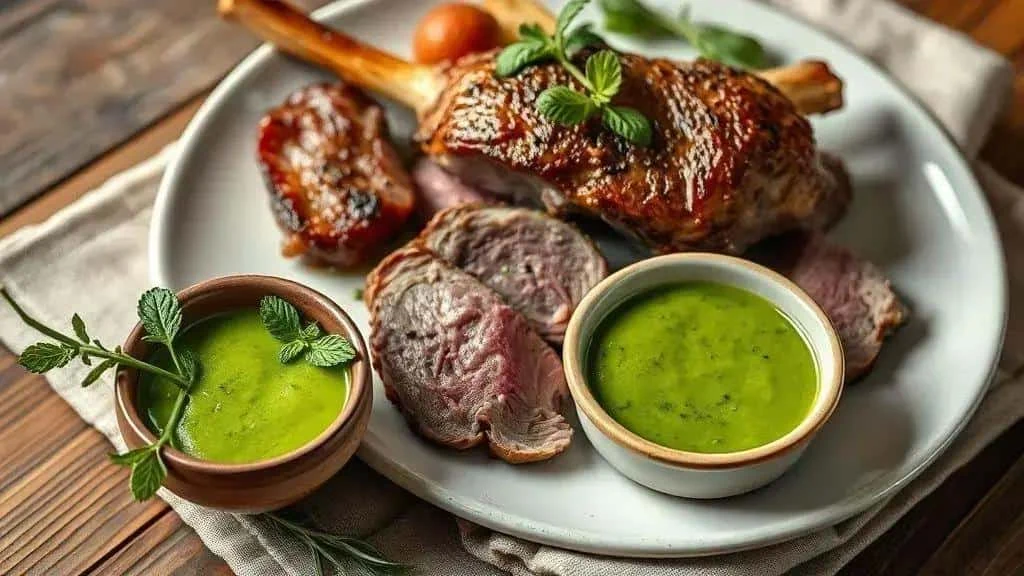
Roast lamb with mint sauce pairs garlic, lemon and rosemary-seasoned meat with a fresh, sweet-sharp mint dressing. Choose a roasting method suited to the cut: a leg for carving and a shoulder for a longer, tender roast are not interchangeable on one fixed timing. Rest before slicing and serve the sauce separately.
Roast lamb with mint sauce is a familiar combination for a British festive table. This version adds lemon and garlic to the meat and a little oil to the mint sauce. The steps below explain preparation, seasoning and serving, with the cut and cooking method kept distinct.
Ingredients for roast lamb with mint sauce
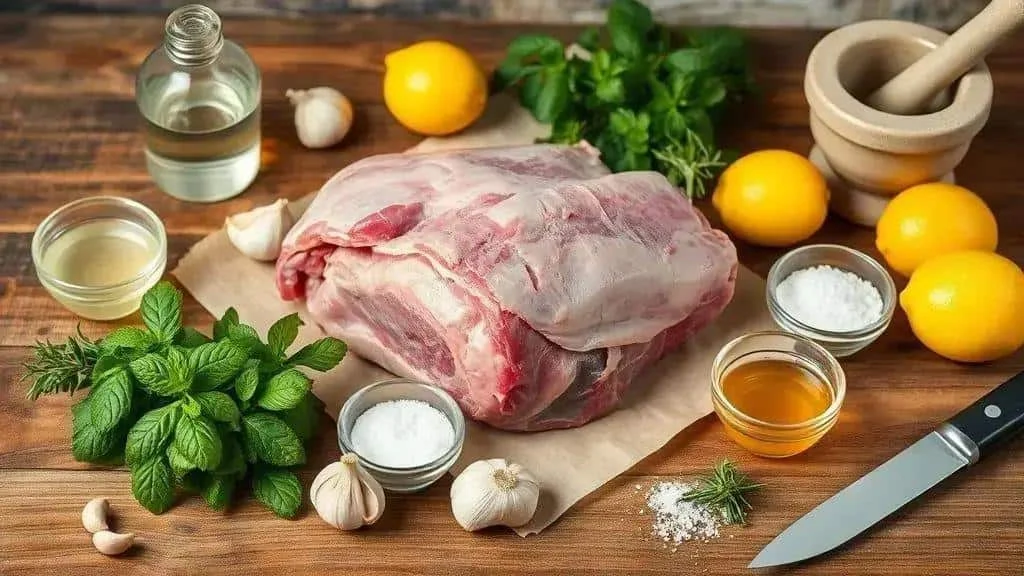
- 1.5–2 kg bone-in leg of lamb – for the carved roast described below. Shoulder, rack and chops are alternatives, but need their own cooking timings and methods rather than a direct swap.
- 2 tablespoons olive oil for the lamb – or a suitable neutral cooking oil; separate from the oil in the sauce.
- 4 garlic cloves, finely chopped – or a suitable garlic paste, following its strength and ingredient information.
- Coarse salt, to taste – the original specifies 1 tablespoon for the whole joint, but crystal size affects the amount. Season moderately; do not add another tablespoon per kilogram later.
- 1 teaspoon ground black pepper – or less to taste.
- 1 sprig fresh rosemary – leaves removed and chopped; fresh thyme is an alternative.
- Zest and juice of 1 lemon – for the marinade.
- 1 loosely filled cup fresh mint leaves – washed and drained; ordinary culinary mint suits the sauce. A little parsley can be mixed in for a different flavour.
- 3 tablespoons white wine vinegar – cider vinegar also works.
- Up to 2 tablespoons sugar – add gradually to balance the vinegar. Honey changes the flavour but is still a source of sugar, not a healthier default; do not use it for babies under one year.
- 2 tablespoons olive oil for the sauce – this makes an oil-enriched mint dressing; rapeseed oil gives a milder alternative.
- Salt and pepper for the sauce – add sparingly and taste.
- Up to 2 tablespoons hot water, optional – to dissolve the sugar and adjust the sauce’s consistency.
Notes and substitutions
Choosing a cut: leg is useful for a roast to carve into slices; shoulder is often chosen for a longer cook until tender enough to pull apart. Rack and chops cook more quickly and should follow a cut-specific method.
Sweetness: start with less than the full amount of sugar and adjust to your vinegar and mint. A tablespoon may be enough if you prefer a sharper sauce.
Texture: finely chop the leaves for a textured sauce, or briefly blend for a smoother dressing. There is no need to strain out the mint unless that is your preference.
Storage: keep the prepared sauce covered in the fridge at 5°C or below and use within 48 hours for this homemade version. Its vinegar content does not establish that it is shelf-stable.
How to make roast lamb with mint sauce
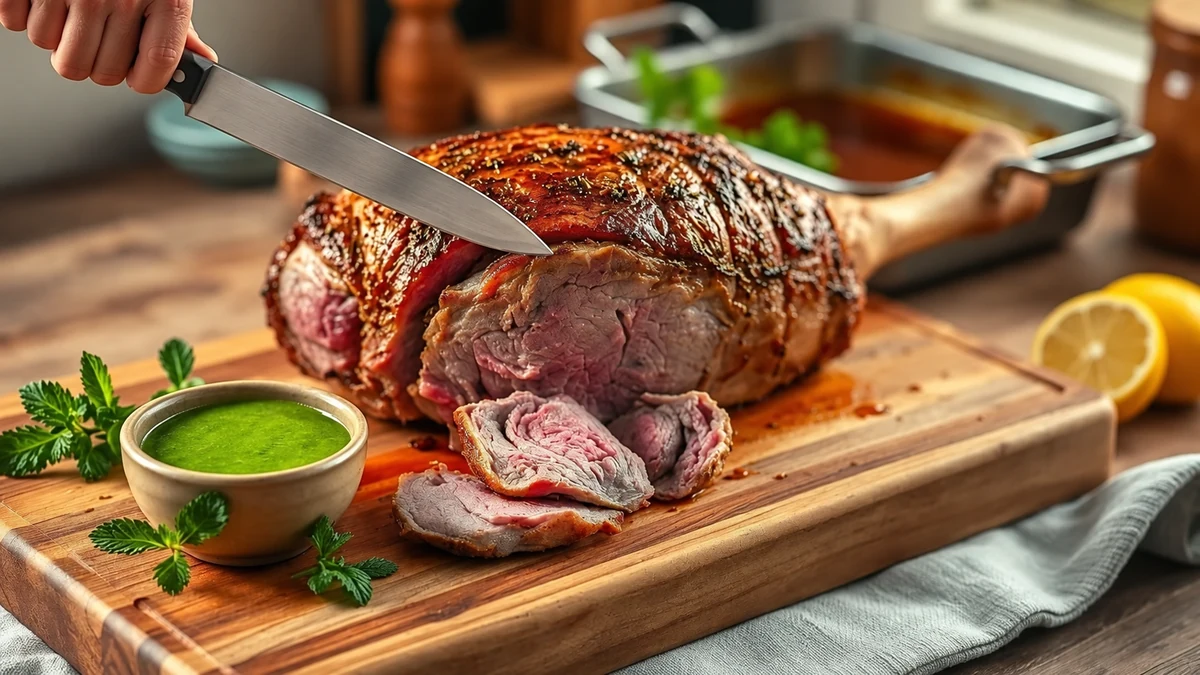
Prepare roast lamb with mint sauce using the method below for an intact bone-in leg. Check the joint’s weight, packaging and cooking guidance before setting the roasting time.
- Prepare the joint: pat the lamb dry with kitchen paper; do not wash raw meat. Trim excessive fat while leaving a thin covering. If scoring, cut only the surface fat rather than making deep slits into the meat. Clean hands, tools and surfaces after handling raw lamb.
- Marinate: combine the 2 tablespoons oil for the lamb with the garlic, lemon zest and juice, rosemary, pepper and a moderate amount of salt. Rub over the surface and refrigerate in a covered dish for 2–12 hours, within the meat’s use-by date. Do not reuse marinade that has contacted raw lamb as an uncooked sauce.
- Heat the oven: preheat to 220°C conventional / 200°C fan for the initial browning stage, where suitable for the joint. This method uses the oven to colour the surface, so an additional frying-pan sear and extra oil are not required. Follow a different complete method if the packaging specifies one.
- Roast: place the leg on a rack in a roasting tin, fat-side up. After about 15 minutes, reduce to 170°C conventional / 150°C fan. Start checking the centre after roughly an hour at the lower setting, but allow longer as needed for the joint and chosen doneness. The original’s 1–1½-hour estimate is not a guarantee for every 1.5–2 kg joint, and it does not describe a pull-apart shoulder roast.
- Check doneness and safety: insert a clean thermometer into the thickest meat, avoiding the bone. An intact whole lamb joint can be pink inside if every outside surface is thoroughly cooked. Rolled, stuffed, minced, mechanically tenderised or deeply pierced meat needs cooking through; for a fully cooked result, use 70°C for 2 minutes or an equivalent safe time-temperature combination. Follow any stricter advice relevant to the people eating it, and do not rely on an assumed temperature rise during resting.
- Rest: loosely cover the cooked joint with foil and leave for about 15 minutes before carving. The temperature change during rest varies with the joint; it is not a substitute for the required cooking checks.
- Make the mint sauce: finely chop the washed mint. Dissolve the chosen amount of sugar in the vinegar with a little hot water if needed, then let it cool slightly. Stir in the mint, the 2 tablespoons sauce oil and a little seasoning. Adjust sharpness, sweetness and consistency to taste, or briefly blend if preferred.
- Carve and serve: cut across the grain into even slices and serve the mint sauce separately. Keep the sauce chilled until shortly before serving rather than leaving it beside the hot oven.
- Alternative ingredients: cider vinegar can replace white wine vinegar. Honey can replace some sugar if suitable for your guests. Rack or chops need a separate, shorter cooking method matched to thickness and weight.
Practical tips
- Oven control: the initial hotter stage adds colour; lower heat then cooks the centre more gently. Follow one complete method rather than mixing unrelated timings.
- Use a thermometer: check the thickest part without touching bone, and interpret the reading for the actual cut and preparation.
- Marinating: keep within the suggested 2–12 hours in the fridge and the use-by date. More time in an acidic marinade is not automatically better.
Variations on lamb with mint sauce
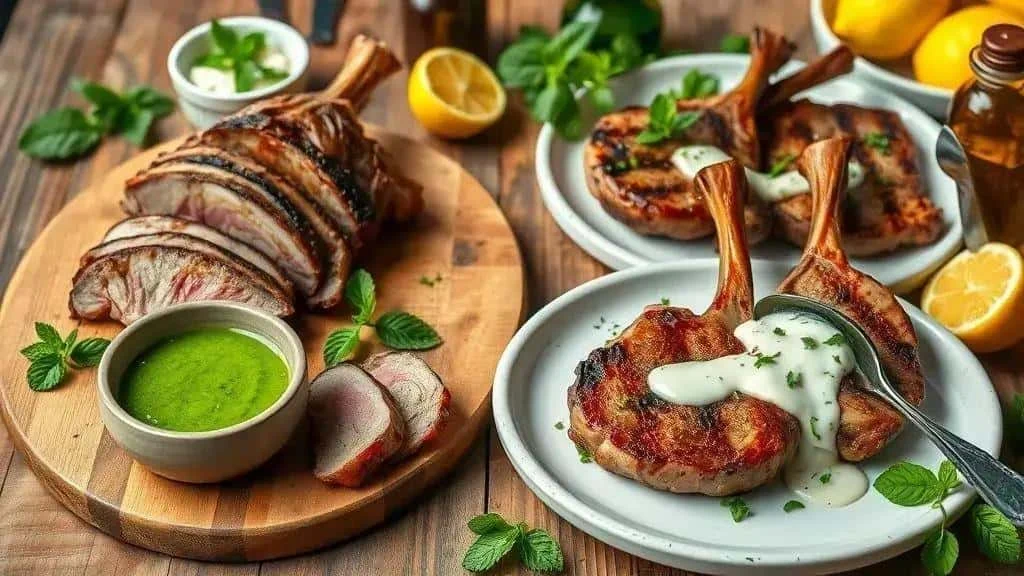
Adapt lamb with mint sauce by choosing a cut-specific cooking method or changing the sauce, keeping the basic balance of savoury meat and fresh mint.
Quicker grilled chops
Lamb chops offer smaller portions and a shorter cook than a whole leg. Grill according to their thickness and the appropriate cooking guidance, turning to cook every outside surface. A fixed 3–4 minutes per side is not a reliable instruction for every chop, and a rack is not cooked in exactly the same way.
- 600–800 g lamb chops – for a smaller meal; portion count depends on size and bone content.
- A little oil and seasoning – applied before grilling.
- A sharper mint sauce – use less sugar and adjust vinegar or lemon juice to taste.
Creamy yoghurt and mint sauce
Plain yoghurt, mint and lemon make a cooler, creamy alternative. This is a separate sauce variation, not an instruction to add yoghurt to all the ingredients in the main sauce.
- 1 cup plain yoghurt – the base of the alternative sauce; it contains milk.
- ½ cup chopped mint – or less to taste.
- 1 tablespoon lemon juice – stir in gradually, season lightly and keep the sauce refrigerated until serving.
Slow-roasted shoulder with herbs
For a tender, pull-apart texture, choose a suitable slow-roast shoulder recipe with garlic, rosemary and thyme. This needs a different timetable and often a covered roasting dish, rather than the quicker carved-leg method above.
- 1.5–2 kg lamb shoulder – bone-in or prepared as specified by the chosen recipe; rolled joints must be cooked through.
- Fresh herbs – rosemary and thyme provide the aromatic base.
- Cooking time – allow several hours and follow a tested method for the exact joint. The original’s 3–4 hours at 140–150°C is an estimate, not a guarantee of tenderness for every shoulder; continue until safely cooked and yielding as intended.
Grilled lamb with spicy mint sauce
Add a little chilli to the mint sauce for heat, with parsley or coriander if desired. Keep the sauce separate so guests can choose how much to use.
- Chilli flakes – start with a small pinch, up to about ¼ teaspoon, and adjust cautiously.
- Coriander or parsley – add a little alongside the mint for a different herbal flavour.
A fresher citrus variation
Trim excess surface fat, retain the lemon in the marinade and reduce the sauce’s sugar if preferred. Serve with salad and vegetables; this is a flavour variation rather than a calculated low-calorie recipe.
- Juice of 1 lemon – use the amount already listed for the marinade rather than automatically adding another lemon.
- A lighter hand with oil – use only enough to coat the meat and adjust the sauce to your preference.
Quick reminders
- Match the cooking check to the cut: pink whole lamb with thoroughly cooked outside surfaces is different from rolled or pierced meat that must be cooked through. Do not use one 60–65°C target for every preparation.
- Serve the sauce separately, chilled until shortly before service, so its flavour stays fresh.
- Taste the sauce and adjust herbs, vinegar and sweetness in small steps before serving.
Techniques for a good roast
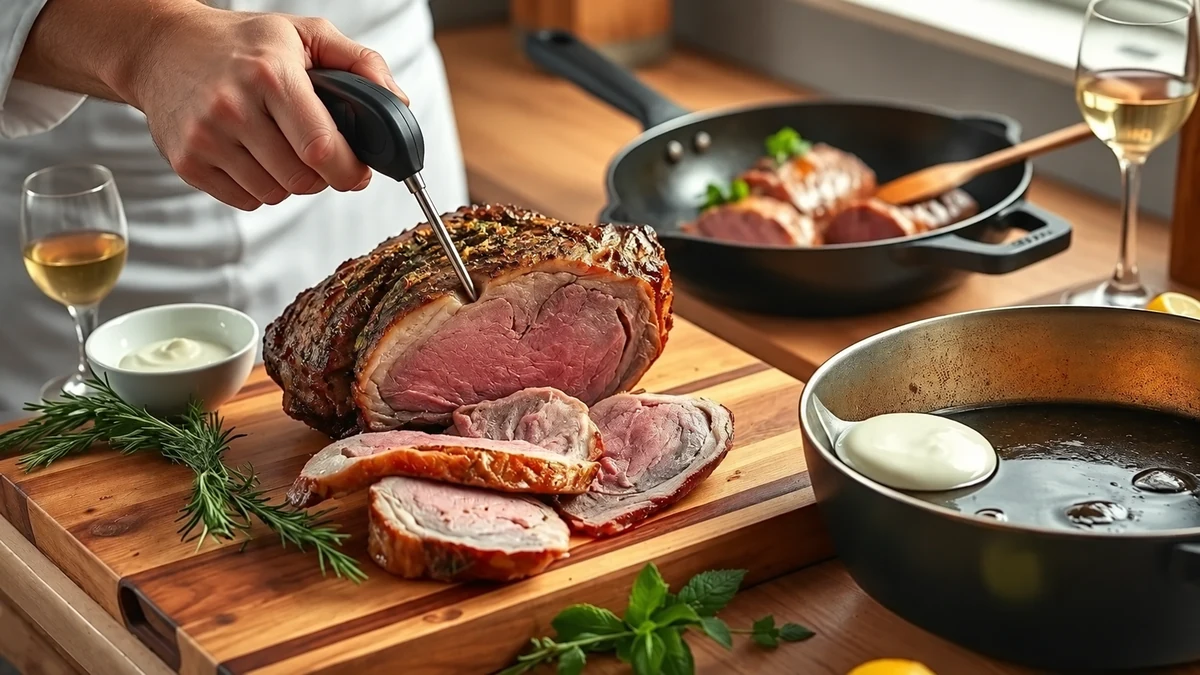
For succulent roast lamb, choose the method to suit the cut, check doneness accurately and allow a short rest before carving.
Salt and marinade
Season once: apply the seasoning as part of the marinade. The original repeats a tablespoon-per-kilogram salt instruction later, but this should not be added on top of the ingredient-list amount. Crystal size and personal preference affect the quantity needed.
Basic marinade: combine oil, garlic, lemon and herbs, then refrigerate the meat for 2–12 hours within its use-by date.
Browning and heat control
Browning: a suitable hot-pan sear is an alternative step in some recipes, especially for smaller cuts. It adds colour and flavour, but does not seal juices inside. The main method here uses an initial hotter oven stage instead.
Two-stage roasting: start at 220°C conventional / 200°C fan, then reduce to 170°C conventional / 150°C fan as described, checking the joint rather than relying on a fixed finishing time.
Using a thermometer
Position: measure in the thickest part of the meat without touching bone, and clean the probe between checks.
Interpretation: a number associated with pink lamb is not a universal safety endpoint. Intact whole cuts require thoroughly cooked outside surfaces; rolled, stuffed, minced or pierced meat requires a cooked-through centre. Use a safe time-temperature combination such as 70°C for 2 minutes where thorough cooking is needed, and follow relevant dietary advice.
Resting and carving
Rest for around 15 minutes: cover loosely with foil before carving. Do not assume every joint gains the same 3–5°C during this time.
Cut across the grain: use a sharp carving knife to make even slices that are easier to chew.
Pan juices and moisture
Basting: an occasional spoonful of roasting juices can coat the surface. Avoid repeatedly opening the oven, and do not serve juices that have contacted raw meat without cooking them properly.
Liquid in the tin: a little stock or water can prevent pan juices scorching where the chosen method calls for it. Wine changes the flavour and does not become reliably alcohol-free through cooking.
Other cooking methods
- Slow roasting: use a shoulder-specific method when you want pull-apart meat, allowing several hours and checking both safe cooking and tenderness.
- Grilling: choose a method suited to chops or the particular rack, ensuring all outside surfaces cook properly and any cook-through requirements are met.
- Sous vide: this requires a validated time-temperature method for the cut, thickness and equipment. Do not replace the roasting instructions with an unspecified low-temperature bath followed by a brief sear.
Practical reminders
- Fat-side up: place the joint as directed by the chosen roasting method, retaining only a modest surface fat layer.
- Handle carefully: use suitable tongs or tools rather than making unnecessary deep cuts during cooking. Thermometer checks remain important.
- Fresh herbs: keep some clean mint separate for the sauce and garnish, away from anything that touched raw meat.
- Sauce on the side: guests can choose the amount of sharpness and sweetness on their plate.
Pairings and accompaniments
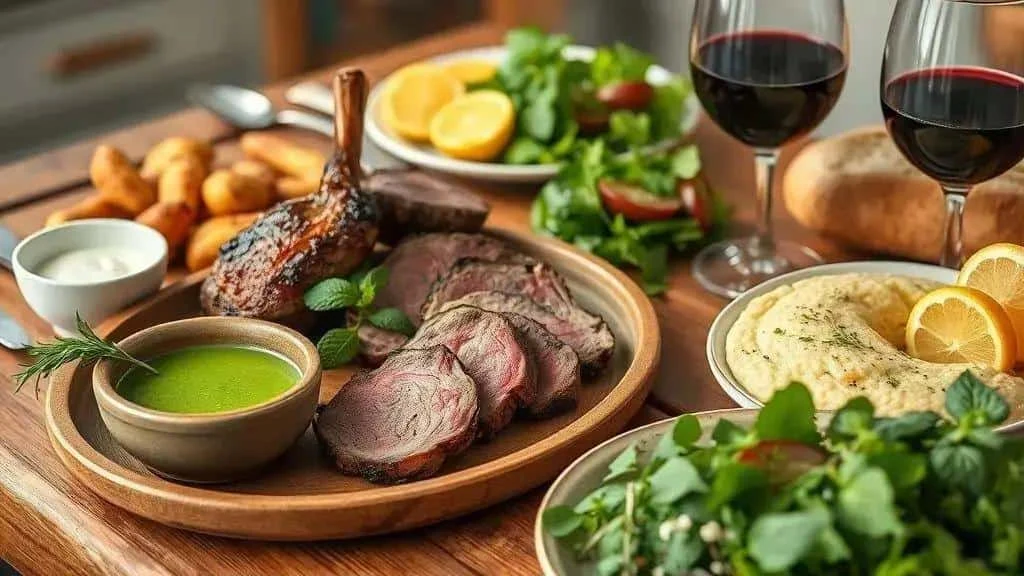
Serve lamb with mint sauce with a mixture of crisp, soft and fresh sides, choosing portions around the richness of the main dish.
Wine options
Fuller red wines: Malbec, Syrah or Cabernet Sauvignon are possible pairings for adults who choose alcohol. Offer water and alcohol-free alternatives equally prominently.
- Malbec: a fruity style can accompany the roast meat.
- Syrah or Shiraz: a peppery style offers another pairing with the herbs.
- Dry rosé: an alternative for those who prefer a lighter wine.
Starchy accompaniments
Choose one or two sides that work with the roasting juices and mint sauce.
- Roast potato wedges: season with rosemary and a little oil.
- Creamy polenta: a soft base for slices of lamb.
- Couscous or rice pilaf: an alternative accompaniment; ordinary couscous contains wheat and is not gluten-free.
- Rustic bread: optional slices for the sauce and cooking juices.
Vegetables and salads
Roasted vegetables and a freshly dressed salad add contrasting textures alongside the meat.
- Roasted vegetables: carrots, courgettes and onions with thyme.
- Peas with mint: a simple side that echoes the sauce.
- Green salad: rocket and spinach with a light citrus dressing.
- Roasted beetroot: provides an earthy sweetness and a different colour on the plate.
Sauces and extras
Offer sauces separately so guests can choose the balance they prefer.
- Mint sauce: serve the prepared sauce in a clean jug or bowl.
- Mint yoghurt: a creamy alternative, kept refrigerated until serving and clearly identified as containing milk.
- Red wine sauce: a richer alternative for those who want it; identify the alcohol and use a suitable stock-based sauce for guests avoiding it.
- Quick-pickled onion: a small portion adds sharpness; keep homemade quick pickles refrigerated rather than assuming they are shelf-stable.
Serving suggestions
- Temperature: serve the meat after its brief rest, with the sauce brought out from the fridge shortly beforehand. Cool leftovers promptly, refrigerate within 2 hours and use within 48 hours; reheat only once until steaming hot throughout.
- Portions: allow for bone and cooking loss when estimating servings from a 1.5–2 kg joint. A raw bone-in weight is not the same as the amount of carved meat on each plate, so adjust to appetite and accompaniments.
- Plating: arrange slices beside roast potatoes or over polenta, with vegetables and sauce separately.
- Balance: keep the mint sauce adjustable in sweetness and acidity so it complements rather than overwhelms the lamb.
Final thoughts
Roast lamb with mint sauce makes a welcoming centrepiece for a festive meal. Choose the right method for the cut, check it carefully and give it a short rest before carving.
Thank you for reading. Follow us on social media and visit I Love Christmas for more seasonal recipes and ideas for your festive table.
We would love to see your own serving ideas and photographs on our social channels.
FAQ: roast lamb with mint sauce
Which cut of lamb should I use?
Use a bone-in leg for the carved roast described here. Shoulder suits a longer cook for a more yielding texture, while rack and chops need shorter, cut-specific methods. They are not interchangeable on one fixed cooking time.
How long does a 1.5–2 kg joint take?
The exact time depends on the cut, shape, oven and chosen doneness. For the intact leg method here, begin with about 15 minutes at 220°C conventional / 200°C fan, then reduce to 170°C conventional / 150°C fan and start checking after roughly an hour. Continue as needed, following product guidance and thermometer checks rather than treating that estimate as a guarantee.
How do I know the lamb is properly cooked?
Measure in the thickest meat without touching bone. Intact whole lamb can be pink inside if every outside surface is thoroughly cooked. Rolled, stuffed, minced, mechanically tenderised or deeply pierced meat needs cooking through; use 70°C for 2 minutes or an equivalent safe combination where thorough cooking is needed. Follow any stricter advice for your guests and do not rely on assumed carry-over heating.
Can I make the mint sauce ahead?
Yes. Keep it covered at 5°C or below and use within 48 hours for this homemade version. Prepare it with clean utensils and keep it separate from raw meat and marinade. Adjust the seasoning before serving.
Which accompaniments work well?
Roast potatoes, polenta, couscous or rice pilaf, vegetables and a green salad all offer different textures alongside the lamb. Choose suitable ingredients for guests’ dietary needs.
How can I make the sauce less sweet?
Start with less sugar, perhaps 1 tablespoon, and adjust the vinegar or lemon juice gradually. Honey is another sweetener, not a sugar-free replacement; use only enough to balance the sauce.
Sources and Further Reading
- Food Standards Agency: cooking your food
- Food Standards Agency: chilling, freezing and defrosting food safely
- Food Standards Agency: food allergies and intolerances
- Simply Beef & Lamb: roasting lamb