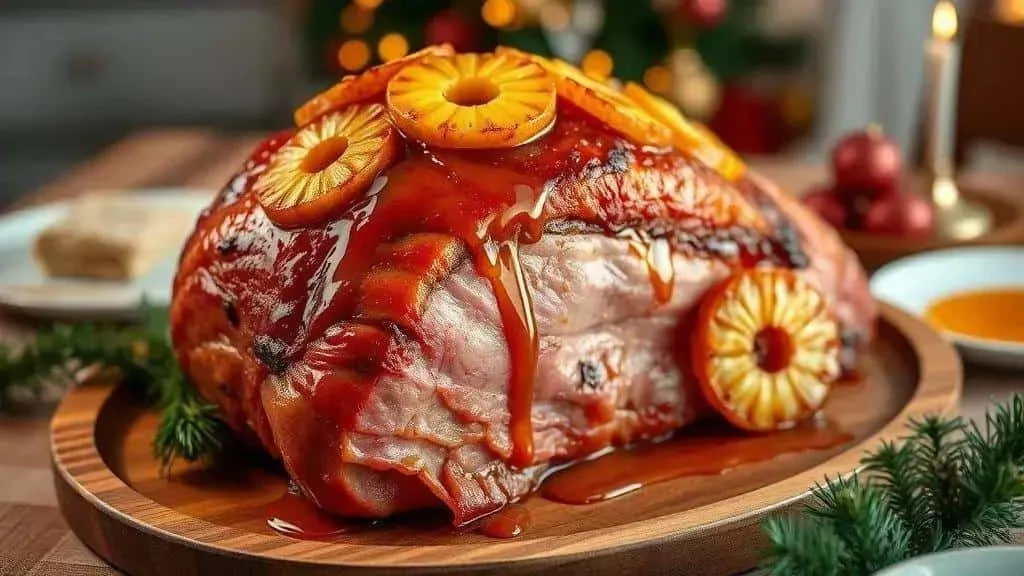
Glazed ham with caramelised pineapple combines a cooked festive ham with golden pineapple rings and a honey, brown sugar and citrus glaze. Pat the fruit dry, apply the glaze in thin layers near the end of heating and rest the ham before slicing. This recipe uses cooked ham, not raw gammon.
Glazed ham with caramelised pineapple brings a sweet and savoury centrepiece to the Christmas table. The Brazilian original uses tender, a cooked ham popular at festive meals. Here is a practical way to prepare the glaze and fruit while following the heating instructions for your particular joint.
Ingredients for glazed ham with caramelised pineapple
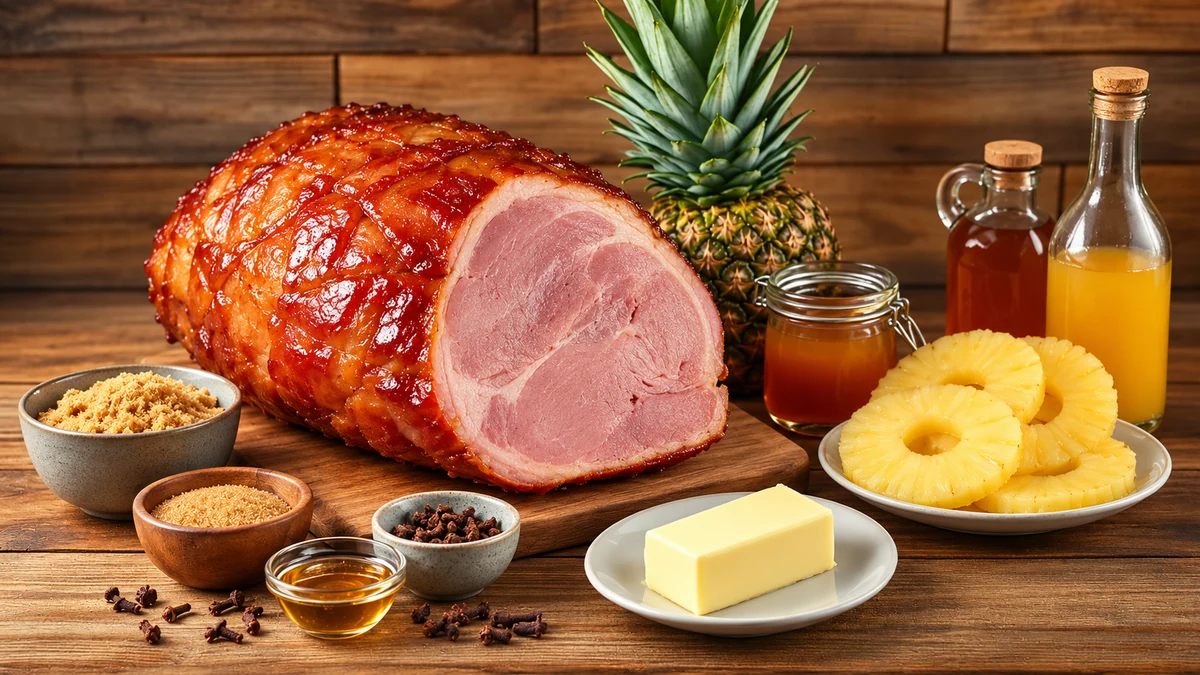
- 1 fully cooked, ready-to-eat ham, about 1.8–2 kg – choose a smaller joint for fewer guests and reduce the glaze. Check the label carefully: uncooked gammon needs a separate full cooking method before this glazing stage.
- 1 large pineapple – peeled, cored and sliced into rings. Tinned rings also work; choose enough for the platter rather than assuming one unspecified tin equals a large pineapple, and drain well.
- 200 g soft brown sugar – for the glaze and fruit; reserve a little from this total for caramelising the rings. Demerara has a coarser texture.
- 170 g honey – for a sweet glaze; maple syrup or molasses changes the flavour and consistency. Honey is not suitable for babies under one year.
- 60 ml orange juice – to loosen the glaze; pineapple juice or water is an alternative.
- 2 tablespoons Dijon mustard – for sharpness; mild yellow mustard gives a different flavour.
- 2 tablespoons butter – divide between the glaze and caramelising the pineapple. A suitable plant-based fat can replace it when avoiding dairy.
- Up to 6 whole cloves, optional – for aroma; remove before serving. A small pinch of ground clove can be used instead, but a full teaspoon is not equivalent to six whole cloves and can dominate the dish.
- ½ teaspoon ground cinnamon, optional – for the glaze.
- Up to 60 ml rum or cachaça, optional – only if an alcoholic variation is wanted. Omit for an alcohol-free dish; this method does not require flambéing and cooking does not guarantee all alcohol disappears.
- 120 ml pineapple juice or water – for the roasting tin, replenished only as needed to prevent scorching.
- Whole cloves for decoration, if using – included in the optional amount above, not needed to hold the pineapple in place.
- Black pepper, to taste – additional salt is usually unnecessary for cured ham.
- Wooden cocktail sticks, only if needed – for securing fruit during presentation; count and remove every stick before carving and serving. Arranging the rings around the ham avoids the need for them.
Tips and substitutions
- Fresh or tinned pineapple: fresh fruit gives a firmer texture; tinned rings are convenient. Drain and pat either type dry before browning.
- Sweetness: this is a deliberately sweet glaze. Apply thinly and serve any clean reserved portion separately rather than using it all on the ham. Honey and molasses are still sugars, not sugar-free substitutes.
- Mustard: choose Dijon or a milder mustard according to preference, checking the mustard allergen in either case.
- Alcohol: rum is optional. The fruit and glaze work without it, and there is no need to ignite alcohol for this recipe.
- Joint size: reduce the glaze for a smaller ham and follow the joint’s own heating directions rather than scaling cooking time by guesswork.
How to make glazed ham with caramelised pineapple
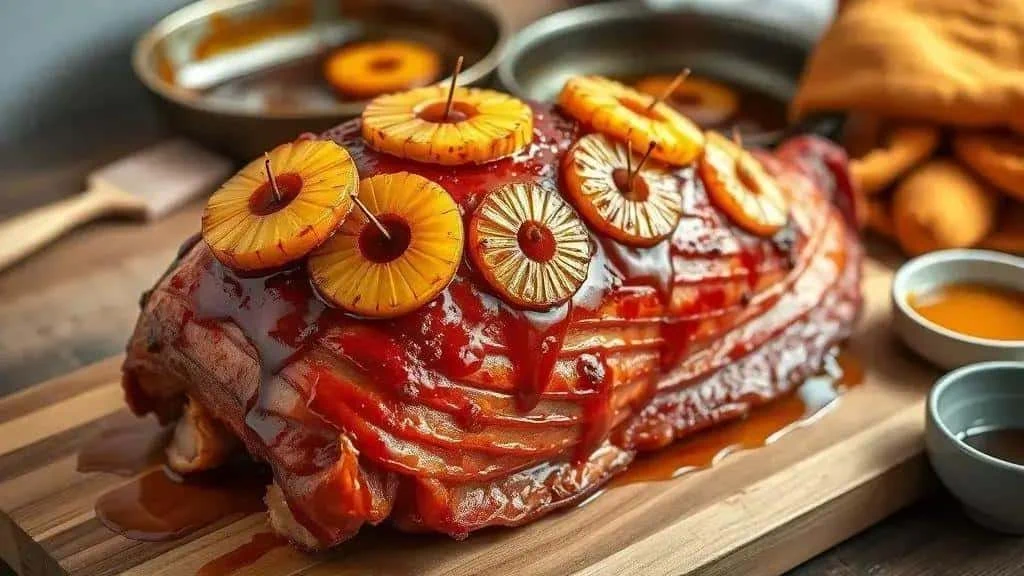
To prepare glazed ham with caramelised pineapple, first confirm that the ham is already fully cooked and suitable for reheating. The glaze is a finishing step, not a method for cooking raw gammon.
- Prepare the oven and ham: follow the ham’s reheating instructions; 180°C conventional / 160°C fan is the starting oven setting used here where compatible with the product. Keep the ham chilled until preparation, remove packaging and check whether any rind needs removing according to the label.
- Score lightly: if there is a fat layer, make shallow diamond cuts without cutting deeply into the meat. Add the optional whole cloves sparingly and remember to remove them before serving.
- Make the glaze: reserve about 2 tablespoons of the measured brown sugar for the pineapple. Put the remaining sugar in a small pan with the honey, 60 ml orange juice, mustard, optional cinnamon and 1 tablespoon of the butter. Warm gently until smooth. Reserve a clean portion separately if you want sauce for the table, so a brush used on the ham does not go into it.
- Set up the roasting tin: place the ham on a rack in a suitable tin and add the 120 ml water or pineapple juice underneath, unless its packaging specifies another method. Keep the liquid below the ham.
- Cover for heating: loosely cover with foil as directed for the joint. Save most of the sugary glaze for the finishing stage so it does not burn during the time needed to heat the centre.
- Heat according to the label: a 1.8–2 kg joint may need longer than the original recipe’s 35–45 minutes. Follow the manufacturer and check the centre rather than assuming the outside being warm means the ham is ready. Add a little water to the tin if it begins to dry out.
- Caramelise the pineapple: pat the rings dry. Heat the remaining tablespoon of butter in a frying pan and brown the fruit in batches, using the reserved sugar sparingly and turning when golden. Avoid crowding the pan. Arrange the rings around the ham, or on top if they sit securely.
- Optional alcoholic flavour: if wanted, measure the rum or cachaça separately and add it to the glaze pan away from the heat, then return to gentle heat. Do not ignite it or pour from a bottle near a flame. For an alcohol-free version, leave it out or use a little extra juice; heating is not a guarantee of complete alcohol removal.
- Glaze near the end: when the ham is almost fully heated, remove the foil and brush on a thin layer of glaze. If appropriate for the product, raise the oven to 200°C conventional / 180°C fan for a short finishing stage, checking frequently. Reapply thinly if needed and stop before the sugar scorches; colour is not the centre-temperature check.
- Check thoroughly: follow the ham manufacturer’s safe reheating instructions and ensure it is steaming hot throughout. A general UK temperature check is 70°C at the centre for 2 minutes or an equivalent safe combination. Do not use warm-to-the-touch or pink juices as a safety test: cured ham can remain pink after heating.
- Rest briefly: leave for about 10–15 minutes before carving, then serve promptly.
- Carve and serve: remove all sticks and whole cloves, slice with a sharp knife and serve with the caramelised pineapple. Offer the separately reserved glaze in a small jug if desired.
Practical tips
- Tinned fruit: drain and pat the rings dry before browning to reduce spluttering and excess liquid.
- A golden finish: use a little sugar from the measured total on the pineapple rather than adding an unmeasured heavy layer.
- Watch the final stage: sugar darkens quickly, so keep checking once the ham is uncovered and glazed.
- Alternative flavours: maple syrup or molasses changes the glaze’s character; mild mustard can replace Dijon. None of these swaps removes all sugar or allergens automatically.
Glaze and filling variations
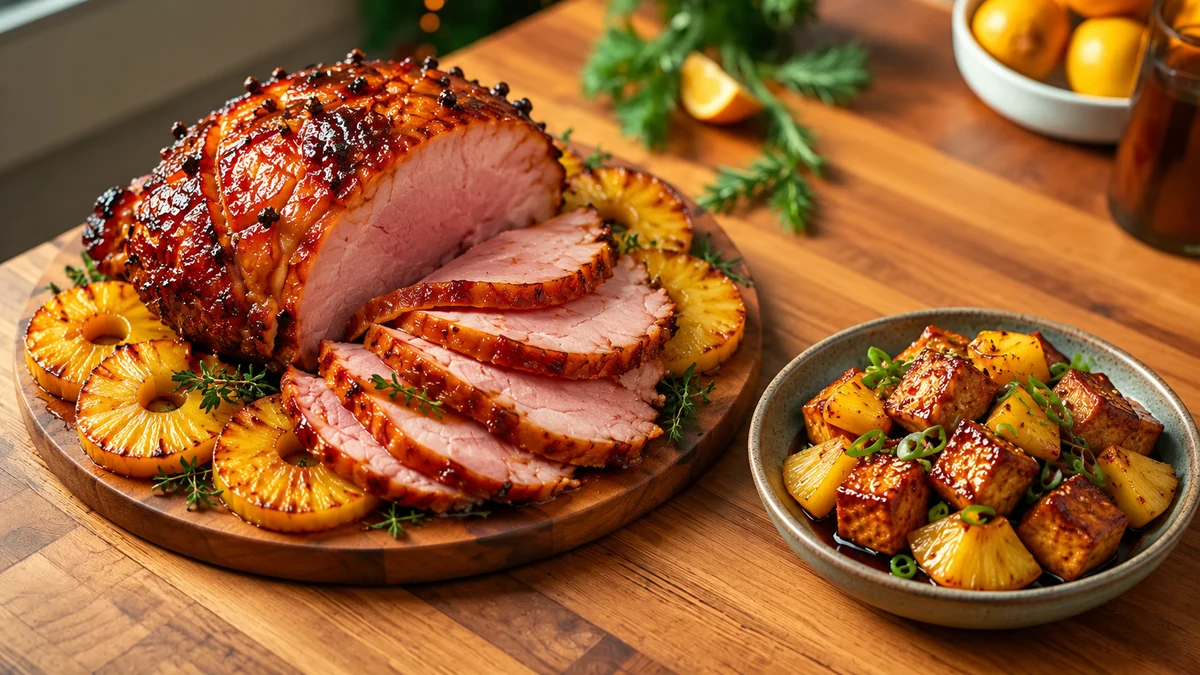
Adapt glazed ham with caramelised pineapple by choosing one glaze variation, rather than adding every suggested mixture to the main recipe.
Honey and mustard
This is the sweet-sharp combination used in the main method, with pineapple alongside.
- Glaze ingredients: use the measured 200 g brown sugar, 170 g honey, 2 tablespoons mustard and 60 ml orange juice, reserving a little of the sugar for the fruit as described above.
- Application: brush on thin layers near the end of heating, allowing them to colour without burning.
- Milder mustard: use a mustard you enjoy, checking its ingredients and adjusting the amount to taste.
Citrus and ginger
Ginger and citrus give a sharper alternative to the richer brown-sugar glaze.
- Alternative glaze: combine 120 ml orange juice, up to 60 ml lemon juice, 3 tablespoons honey and 1 tablespoon grated ginger. Add the lemon gradually to taste and simmer gently to a brushable consistency; it will differ from the thick main glaze.
- Finish: a little finely grated orange zest adds aroma before serving.
- Sweeter option: replace some lemon juice with pineapple juice if you prefer less sharpness.
Wine reduction variation
Red wine or port produces a different, richer sauce. This is an alcoholic variation, even though some alcohol evaporates during cooking.
- Reduction: simmer 120 ml red wine or port with 2 tablespoons brown sugar until reduced to roughly half its volume, watching so it does not scorch.
- Aromatics: add a bay leaf and a small sprig of rosemary during reduction, then remove both before serving.
- Alcohol-free alternative: use suitable grape juice with a small amount of balsamic vinegar to taste, checking the ingredients if strict alcohol avoidance is required.
Smoky and spicy
Smoked paprika and chilli add another contrast to the sweet pineapple.
- Seasoning variation: start with 1 teaspoon smoked paprika, a small pinch of chilli flakes and 2 tablespoons honey. Increase the chilli only if wanted, and loosen with a little juice if needed for brushing.
- Pineapple: brown the rings separately before adding them to the platter, aiming for golden edges rather than burnt sugar.
- Keep it mild: reduce the chilli at the start rather than trying to cancel it with more honey. A separate yoghurt accompaniment is optional and introduces milk.
Vegetarian pineapple and tofu variation
A smaller, meat-free dish can use smoked tofu or prepared jackfruit with caramelised pineapple. It has a different texture and yield from the large ham centrepiece.
- 400 g firm smoked tofu or prepared jackfruit – choose a product suitable for the intended preparation and follow its cooking instructions.
- Alternative glaze: the original suggests 100 g brown sugar, 60 ml soy sauce and 2 tablespoons honey or maple syrup. This is a concentrated sweet-salty mixture: apply only a thin coating, adjust with water as needed and reserve excess. Check soya and wheat allergens; use maple syrup and dairy-free fat for a vegan version.
- Bake to suit the product: coat lightly and heat according to the tofu or jackfruit instructions, finishing until the glaze colours. Do not treat 8–12 minutes as a universal cooking time, and watch closely for scorching.
Choosing a variation
- For a mild family meal: use the classic or citrus version without alcohol or chilli. Adjust portions for children and remember that cured ham is salty.
- For guests who want wine flavour: clearly identify the wine-based sauce and provide a suitable alternative for anyone avoiding alcohol.
- For meat-free guests: prepare the tofu variation separately, with clean utensils and suitable sauce ingredients.
Serving the ham at Christmas
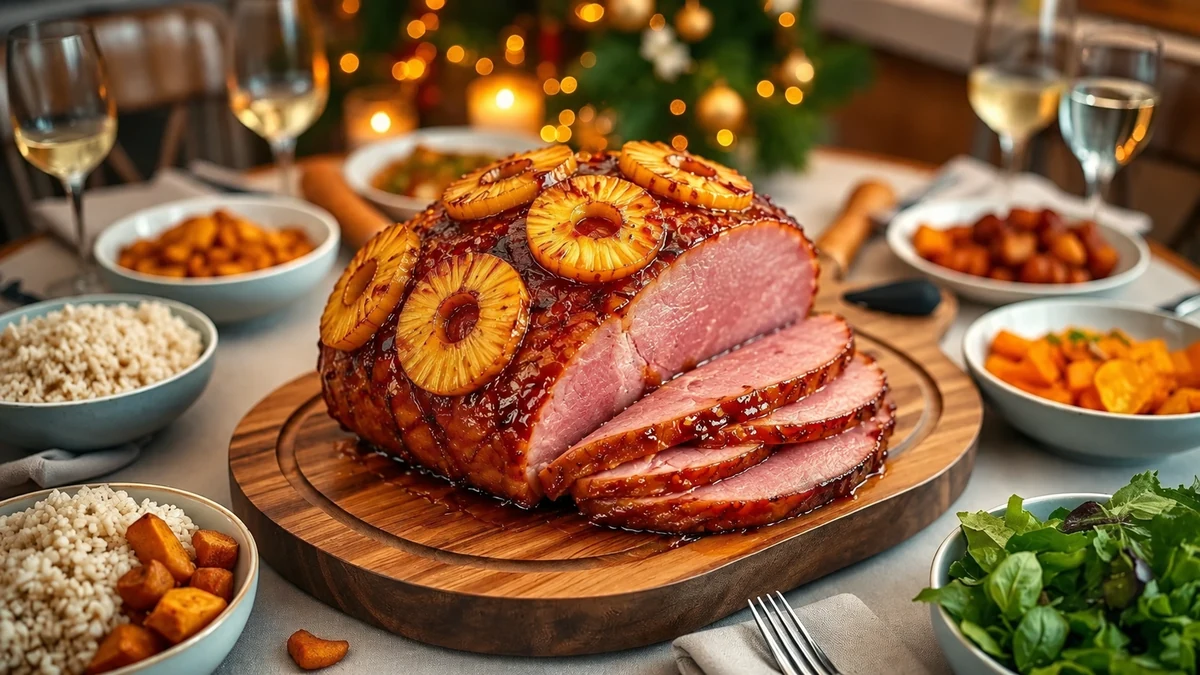
A clear serving arrangement makes glazed ham with caramelised pineapple easy to carve and share without leaving it waiting on the table for too long.
Presentation
- The centrepiece: use a suitable carving board or platter, with pineapple rings around the ham and a few edible rosemary sprigs if desired.
- Accompaniments: serve rice, farofa, vegetables and salads in separate dishes so guests can choose.
- A practical layout: use stable stands or low dishes where helpful, keeping decorations away from hot surfaces and making space for carving.
Carving and serving
- Rest before carving: give the fully heated ham a short 10–15-minute rest, then remove decorative sticks and whole cloves.
- Slice evenly: use a long, sharp knife and cut across the visible grain where applicable.
- Arrange the slices: fan them on a platter with pineapple and a little clean reserved glaze, serving promptly.
Portions and timing
- Portion estimate: around 150–200 g cooked ham per adult is a planning guide when it is the main meat, with smaller amounts when other mains are served. Bone, rind and trimming affect the usable yield.
- Holding hot: if not serving promptly, use suitable equipment to keep the food itself at 63°C or above. A low oven setting or a bowl of warm water does not by itself confirm safe holding.
Accompaniments
- Vegetable rice: colourful Brazilian-style arroz à grega is one possible side.
- Crisp farofa: toasted cassava flour with suitable additions gives a contrasting texture; identify nuts or bacon where included.
- Roasted vegetables: carrots, sweet potato and red onion with thyme work well alongside the ham.
- Fresh salad: mixed leaves with orange segments and a light dressing offers a fresher contrast.
- Sauce: serve a small amount of glaze reserved before basting in a clean jug. Do not use sauce repeatedly contacted by the basting brush as an unheated table sauce.
Finishing touches
- Edible garnish: orange slices, zest or a few dried cranberries can add colour without obscuring the food.
- Serving tools: provide a carving knife and fork and separate utensils for the accompaniments. Ordinary place settings are sufficient for guests.
- Drinks: sparkling or light white wine is an option for adults who choose alcohol. Offer water and alcohol-free alternatives too; water is a straightforward choice for children.
- Leftovers: cool promptly, refrigerate within 2 hours and use within 48 hours or any earlier product deadline. As this recipe reheats a cooked ham, avoid a further reheating cycle; safely handled leftovers can be served cold.
Last-minute tips
- Save preparation time: use drained tinned pineapple rings and prepare the glaze while the ham heats according to its instructions.
- Fresh finish: a little chopped parsley or finely grated citrus zest can be added before serving.
- Keep the method simple: no flambé step is required. Watch hot sugar carefully and handle the roasting tin with proper oven gloves.
Preparing pineapple for caramelisation
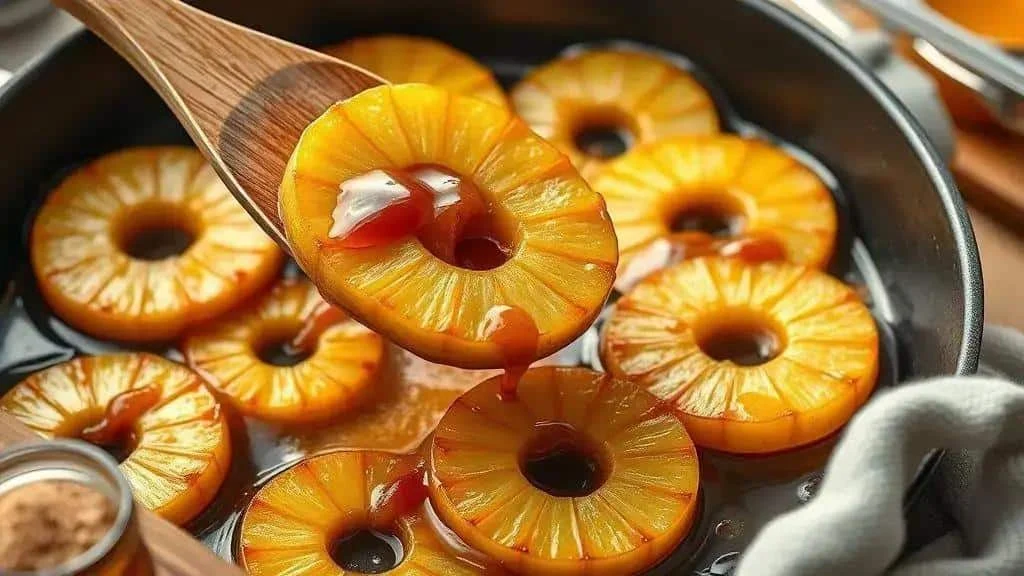
Dry surfaces, evenly cut rings and enough space in the pan help pineapple brown instead of sitting in a pool of juice.
Before browning
- Pat dry: remove surface juice with kitchen paper so the fruit can brown more readily.
- Choose firm, ripe fruit: very soft pineapple can break apart and release more liquid during handling.
- Cut evenly: rings around 1–1.5 cm thick are a useful starting point; remove the tough central core.
- Tinned rings: drain and dry them well. Pineapple packed in juice is different from pineapple in syrup, so check the label rather than assuming all tinned fruit has added sugar.
Ways to brown the fruit
- Frying pan: heat the reserved butter over a medium to medium-high heat, add the dry rings in batches and use a little of the reserved sugar. Turn once the first side is golden, reducing the heat if the sugar darkens too quickly.
- Griddle: lightly oil the fruit and cook until marked and golden, checking after a couple of minutes per side. Thickness and heat determine the time.
- Oven: place dry rings on a suitable tray with a little sugar and bake around 200°C conventional / 180°C fan, checking from about 8–12 minutes and continuing only as needed. Watch for scorching.
- Finishing glaze: brush lightly with some of the prepared glaze or reduced orange juice. Alcohol is optional and does not need to be ignited.
Managing excess juice
- Avoid crowding: a hot pan and space between slices allow moisture to evaporate. Browning does not seal juice inside the fruit.
- Use sugar sparingly: add it shortly before browning rather than leaving fruit sitting in a heavy sugar coating. Sugar does not prevent juice being drawn out.
- Cook off surface moisture: if juice pools in the pan, reduce the batch size and let excess moisture evaporate before adding more glaze, while watching that the sugar does not burn.
A few useful facts
- Bromelain: fresh pineapple contains protein-breaking enzymes that can affect gelatine setting and the texture of meat in a marinade. This is a texture effect, not a way to make unsafe meat safe.
- Heat changes enzyme activity: sufficient heating reduces that activity; tinned pineapple is commonly used in gelatine dishes. Briefly browning the outside of a thick raw ring is not a guarantee that the whole slice has been treated equivalently.
- Colour and aroma: brown sugar gives a darker, richer glaze, while honey contributes sweetness and its own aroma.
Substitution reminders
- Butter or plant-based fat: coconut oil changes the flavour, while a suitable neutral alternative keeps it milder. Check all ingredients when avoiding milk.
- Brown sugar or demerara: their crystal sizes and moisture differ, so dissolve the chosen sugar gently rather than assuming identical timing.
- Without alcohol: omit rum, cachaça and wine. Use juice with a little suitable vinegar for sharpness if wanted, checking ingredients for strict avoidance requirements.
Final thoughts
Glazed ham with caramelised pineapple makes a colourful festive centrepiece. Choose the correct cooked ham, follow its heating instructions and add the sugary finish towards the end.
Pat the fruit dry, brush the glaze lightly and allow a short rest before carving. These practical steps help give a golden finish without burning the sugar or overlooking the centre of the joint.
Thank you for reading. Follow us on social media and visit I Love Christmas for more festive recipes and seasonal ideas.
FAQ: glazed ham with caramelised pineapple
What temperature and time should I use for the ham?
Follow the instructions for your fully cooked joint. This version starts around 180°C conventional / 160°C fan where suitable, with a brief hotter glazing stage near the end. A large chilled ham may need longer than 35–45 minutes. Check that it is steaming hot throughout; 70°C for 2 minutes or an equivalent safe combination is a general UK check. Raw gammon requires a separate cooking method.
Can I use tinned pineapple?
Yes. Use enough rings for the platter, drain and pat them dry before browning. Check whether they are packed in juice or syrup and adjust the sweetness accordingly. They may soften more quickly than fresh fruit, so watch the pan.
How do I stop the pineapple releasing too much liquid?
Pat the rings dry, cut evenly and cook in uncrowded batches so moisture can evaporate. Add sugar sparingly just before browning. A hot pan does not seal the fruit, and sugar does not prevent juice release.
Do I need alcohol or a flambé step?
No. This recipe works without either. If you choose an alcoholic flavouring, add a measured amount to the glaze away from the heat without igniting it. For an alcohol-free dish, omit it: cooking does not guarantee all alcohol has disappeared.
How should I store the leftovers?
Cool promptly, refrigerate within 2 hours at 5°C or below and use within 48 hours or any earlier product deadline. The recipe already reheats a cooked ham, so do not routinely heat the leftovers again; serve safely handled leftovers cold. Freeze suitable portions promptly if the product allows, thaw in the fridge and use within 24 hours of full defrosting.
Can I make a vegetarian version?
Use suitable smoked tofu or prepared jackfruit with pineapple and a thin coating of a suitable glaze. Follow the product’s cooking instructions rather than applying the ham’s timing. For a vegan version, replace honey with maple syrup and butter with suitable plant-based fat, checking the sauce ingredients too.
Sources and Further Reading
- Food Standards Agency: cooking your food
- Food Standards Agency: chilling, freezing and defrosting food safely
- Food Standards Agency: food allergies and intolerances
- Science Learning Hub: enzyme action