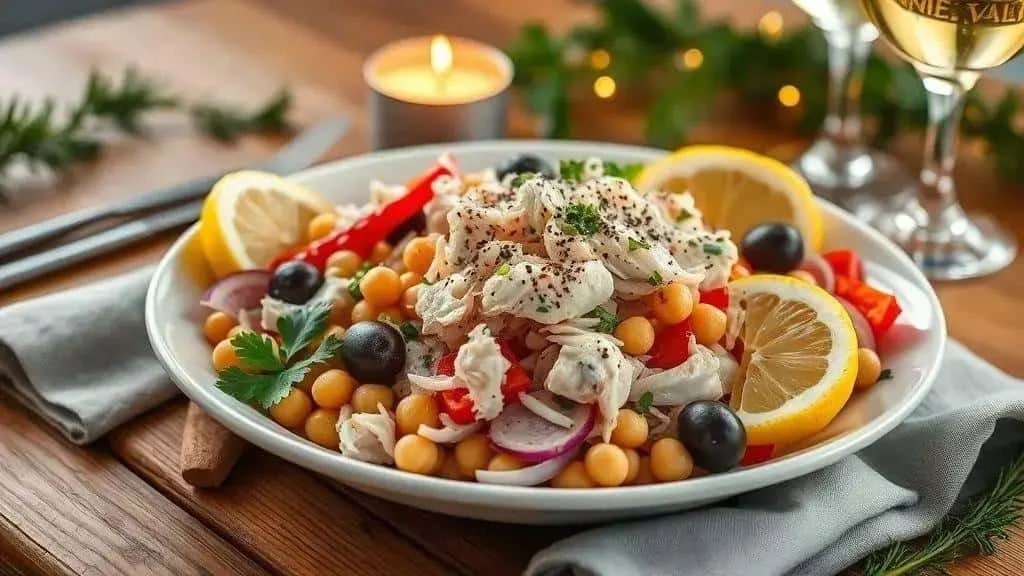
Salt cod salad with chickpeas combines cooked, desalted cod flakes with tender chickpeas, roasted peppers, olive oil, lemon and parsley. It is a colourful make-ahead dish for a festive meal, with variations using potatoes, eggs or quinoa. Keep the prepared fish salad refrigerated until serving.
A salt cod salad with chickpeas brings the familiar flavours of bacalhau to a colourful New Year’s Eve table. This version uses roasted peppers and a simple dressing, with practical steps for preparing the fish.
Salt cod, chickpea and roasted pepper salad ingredients
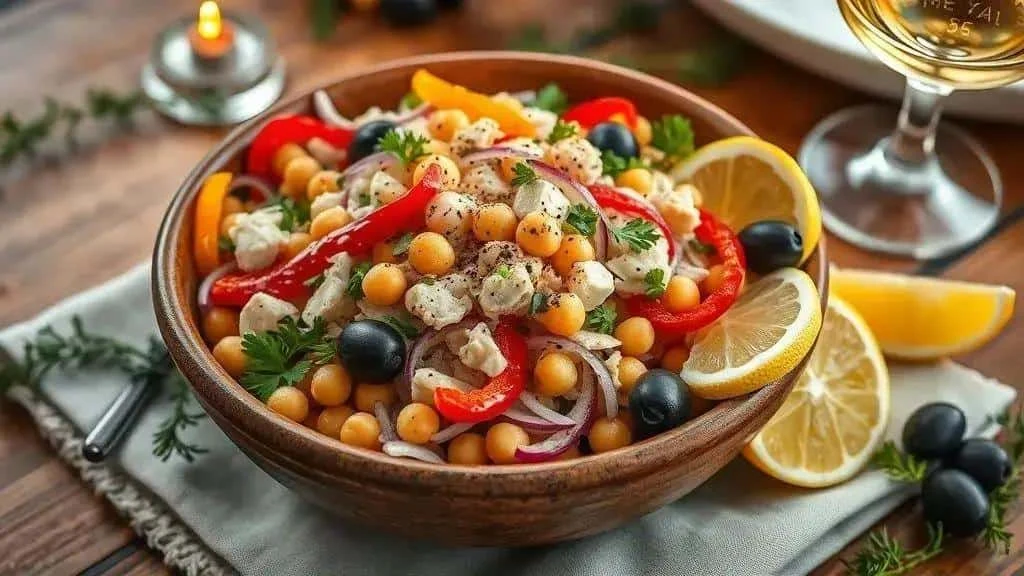
For this salt cod, chickpea and roasted pepper salad, you will need:
- 500 g desalted cod, ready to cook — use the prepared weight. The amount of dried salted fish needed varies with the cut, skin and bones; ask the supplier rather than relying on a fixed weight conversion.
- 400 g cooked, drained chickpeas — if using tins, check the drained weight; two 400 g tins do not necessarily equal 400 g drained
- 1 red pepper, roasted, peeled and sliced; drained jarred roasted pepper is an alternative
- 1 yellow pepper, roasted, peeled and sliced
- 1 small red onion, very thinly sliced
- 2 garlic cloves, finely chopped, or a little garlic powder to taste
- 15 g chopped parsley — coriander gives a different flavour if preferred
- 100 g pitted olives, green or black, whole or sliced
- 4 tablespoons extra virgin olive oil
- Juice of 1 large lemon, approximately 3 tablespoons — or start with 2 tablespoons white wine vinegar instead
- 1 tablespoon white wine vinegar, optional — only if more acidity is needed; do not automatically add it when vinegar already replaces the lemon
- Salt and black pepper, to taste — add salt cautiously
- 1 bay leaf, optional — for poaching the cod
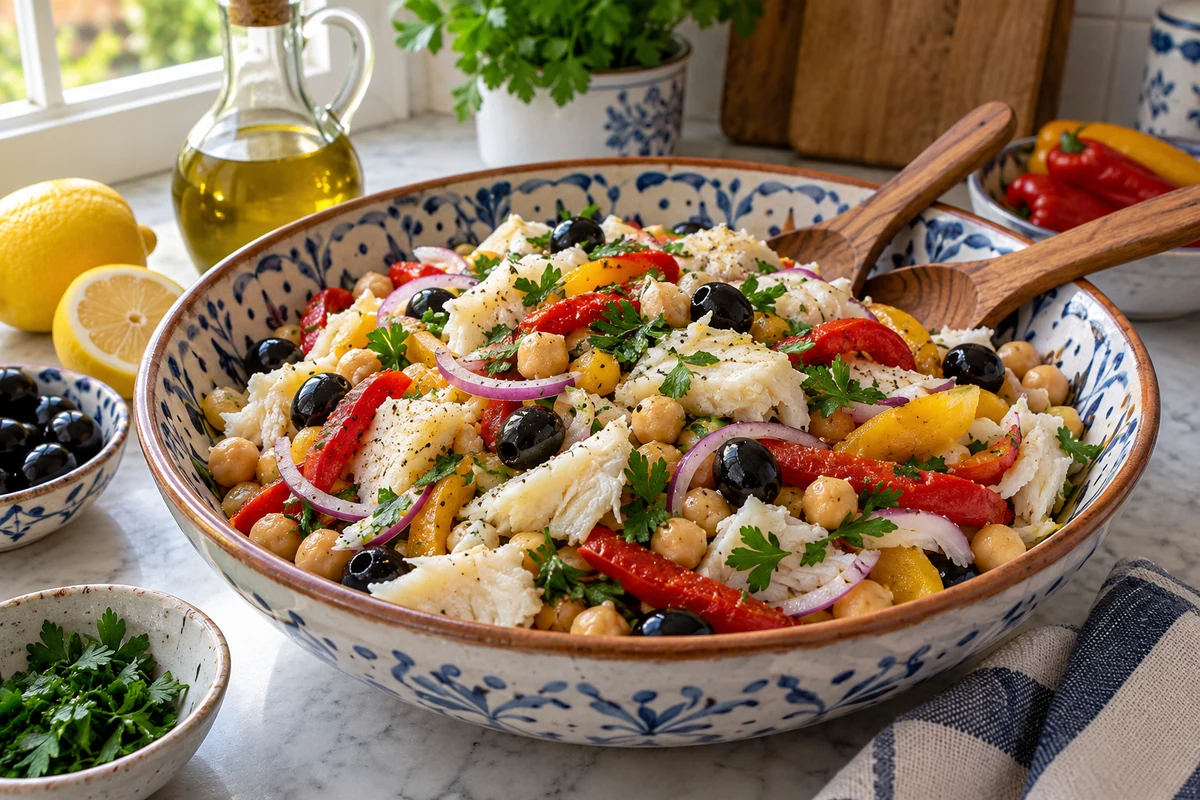
How to make salt cod, chickpea and roasted pepper salad
- Desalt if necessary: follow the supplier’s instructions, soaking the fish in plenty of cold water in the fridge and changing the water regularly. Depending on thickness and curing, this may take around 24–48 hours or longer; ready-desalted fish may not need this step.
- Cook the cod: place the desalted fish in fresh water with the optional bay leaf, bring gently to a simmer and poach until cooked through. Small pieces may take around 8–10 minutes once simmering, but thickness matters. The flesh should be opaque, hot throughout and flake readily; a food thermometer can confirm 70°C for two minutes or an equivalent safe combination.
- Flake carefully: drain, let the fish cool enough to handle, then remove skin and check thoroughly for bones. Break into large flakes and cool promptly rather than leaving it warm for a long period.
- Prepare the chickpeas: drain and rinse tinned chickpeas. If using dried ones, soak and cook according to the packet until tender, then measure 400 g cooked and drained; timing varies with the product.
- Roast the peppers: roast whole peppers at 220°C conventional or 200°C fan, turning until the skins blister. Put in a heatproof bowl, cover for about ten minutes, then peel, remove stalks and seeds and slice. Avoid putting hot peppers in an ordinary plastic bag. Jarred roasted peppers can simply be drained and sliced.
- Slice the onion: cut into thin half-moons. For a milder taste, soak briefly in cold water and drain well.
- Mix the dressing: combine the olive oil, lemon juice, garlic and pepper. Taste before adding salt or the optional extra vinegar, remembering that cod and olives may already be salty.
- Assemble: gently combine the cooked cod flakes, drained chickpeas, pepper strips, onion, olives and parsley with the dressing. Avoid breaking the fish into very small shreds.
- Chill: refrigerate for at least 30 minutes to let the flavours settle. Cool and refrigerate cooked components within two hours and keep the salad at 5°C or below.
- Finish and serve: check the seasoning, add parsley and lemon wedges if desired, and serve chilled. Use leftovers within 48 hours of cooking the fish, or sooner if an ingredient’s instructions require it.
Practical tips
Ready-desalted cod saves preparation time, but check its salt level after cooking. Chickpeas should be tender while holding their shape. Cherry tomatoes or a little extra pepper add colour. Lemon changes the flavour balance but does not remove salt from the fish.
Salt cod salad variations
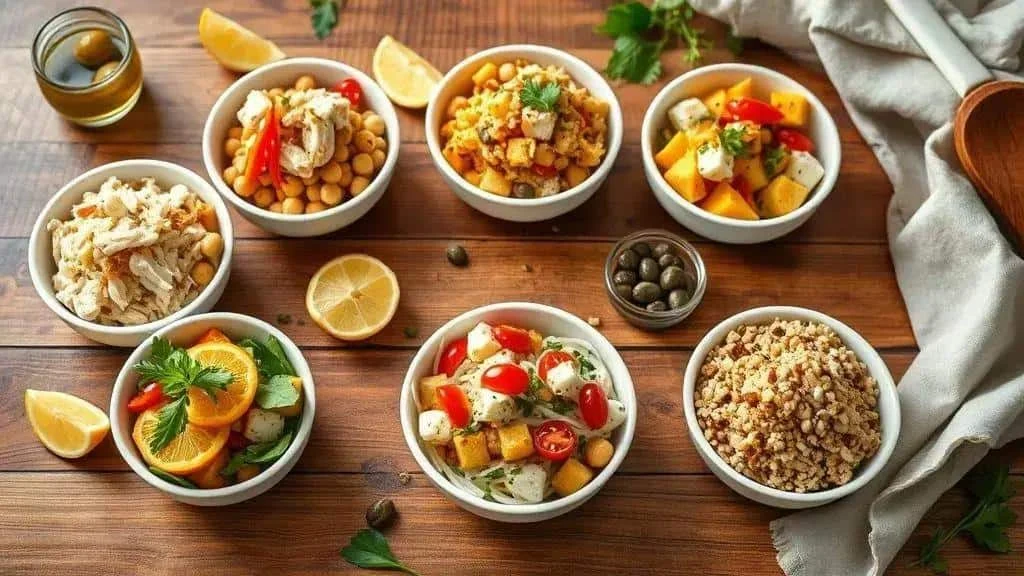
Adapt the salt cod, chickpea and roasted pepper salad to your menu with these additions. Quantities refer to the whole main batch.
With potatoes and eggs
A more substantial version for sharing as part of a meal.
- Add: 500 g cooked diced potatoes and six hard-boiled eggs, halved or quartered.
- Preparation: cook the potatoes until tender but still holding their shape, cool promptly and add once chilled.
- Alternative: cooked sweet potato gives a sweeter variation.
With chilli
Add gentle heat if your guests enjoy it.
- Add: a small chopped red chilli, seeds removed if preferred, or up to half a teaspoon chilli flakes, to taste.
- Tip: start with a little because chillies vary in strength.
- Finish: coriander can replace some parsley for a different flavour.
With cherry tomatoes and capers
A colourful variation with extra acidity and savoury flavour.
- Add: 200 g halved cherry tomatoes and up to 2 tablespoons drained capers.
- Alternative: chopped gherkins give a different pickled flavour, but are not necessarily less salty. Check the products and adjust seasoning.
- Finish: add a little lemon zest and olive oil if needed.
With orange and rocket
Orange adds sweetness alongside the savoury cod.
- Add: the segments of one orange and two loose handfuls of washed rocket.
- Dressing: replace some lemon juice with orange juice if you prefer a sweeter dressing, then taste for acidity.
- Texture: a few toasted walnuts add crunch; identify the nut ingredient for guests.
With quinoa
Quinoa gives a different texture without changing the dish into a fundamentally different salad.
- Add: around 200 g cooked, cooled quinoa in place of some chickpeas.
- Proportion: try 200 g drained chickpeas and 200 g cooked quinoa.
- Alternative: cooked couscous also works, but ordinary couscous contains wheat and is not gluten-free. Check all ingredients and cross-contact risks if catering for coeliac disease.
With quail’s eggs and herbs
Small eggs and fresh herbs make a festive presentation.
- Add: 12 hard-boiled, peeled quail’s eggs, sliced olives and a little parsley, chives and thyme.
- Arrange: divide between serving dishes and garnish with lemon wedges.
- Optional finish: use a few drops of truffle-flavoured oil only if you enjoy its strong flavour.
Adapting any variation
Salt: taste before adding more. Texture: contrast soft fish, chickpeas and roasted peppers with crisp onion or nuts. Timing: prepare the main salad ahead and refrigerate, adding leaves and crunchy toppings just before serving.
Choosing and desalting salt cod
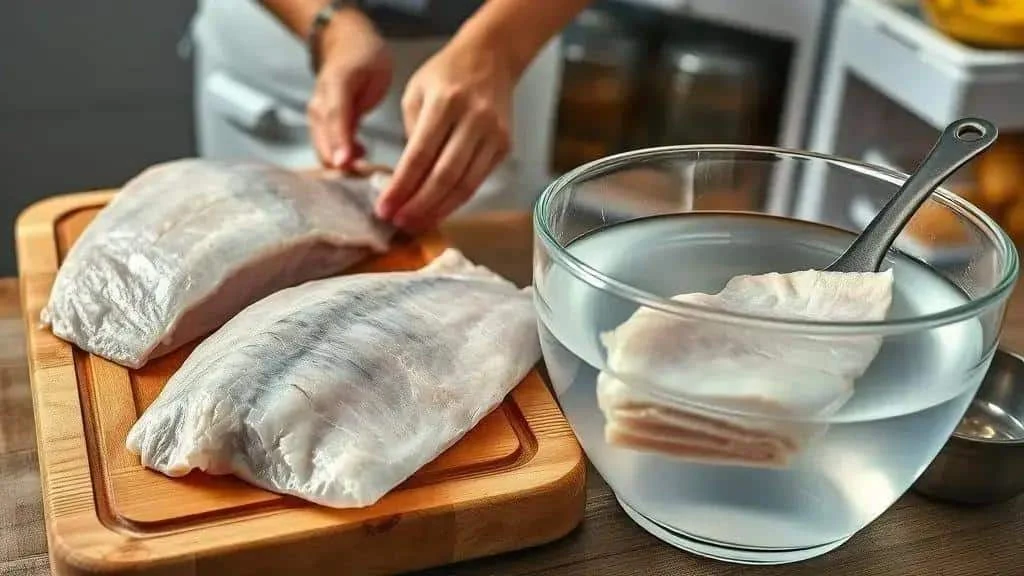
The right preparation removes excess salt while keeping the fish flakes intact. Desalting is a refrigerated soaking process, not a substitute for cooking.
Choosing the fish
- Product: choose clearly labelled salt cod, such as Atlantic cod, Gadus morhua, from a reputable supplier. Other salted fish have different textures and preparation requirements.
- Thickness: thicker pieces usually need longer soaking than thin flakes.
- Condition: check that the appearance and aroma are normal for the product and reject visible mould or spoilage. Smell alone cannot establish food safety.
- Packaging: check storage instructions, dates and whether the fish is salted, desalted, raw or already cooked.
- Ask the supplier: a boneless cut suitable for flaking can make salad preparation easier, though it should still be checked for bones.
Desalting step by step
- Remove surface salt: rinse as directed by the supplier, keeping splashes away from ready-to-eat food and cleaning the area afterwards.
- Cover with cold water: place in a clean, sufficiently large container with plenty of water.
- Change the water: follow the supplier’s schedule; several changes over roughly 24–48 hours are common, but thick or heavily cured cuts may need longer.
- Keep refrigerated: the container must stay in the fridge during soaking, not on the worktop.
- Check salt safely: cook a small piece before tasting. If still too salty, continue soaking with fresh water as appropriate to the supplier’s guidance; never taste raw fish to check.
- Drain and cook: once desalted, cook in fresh water, drain well and flake after removing skin and bones. Avoid excessive water in the finished salad.
Further preparation tips
- Use cold water: do not attempt to speed up soaking with warm water or room-temperature storage.
- Milk is unnecessary: cold water is sufficient for desalting. Adding milk creates another allergen and perishable ingredient without replacing the required water changes.
- Save time: ready-desalted fish is convenient, but follow its cooking and storage instructions.
- Check for bones: inspect each cooked flake carefully before adding it to the salad.
- Season last: taste the fully cooked fish and assembled salad before adding salt.
Presenting the salad for New Year’s Eve
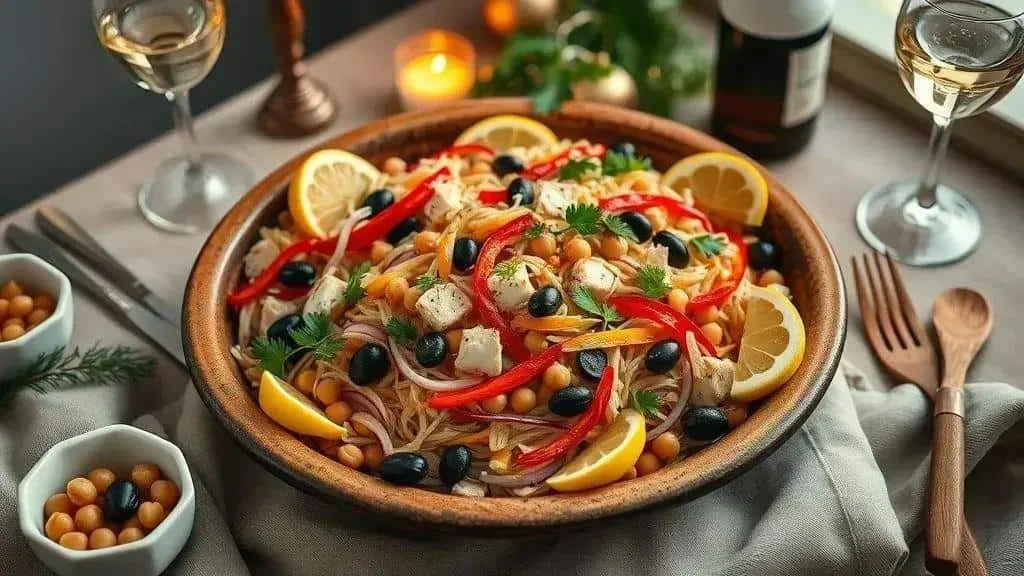
For a festive salt cod, chickpea and roasted pepper salad, keep the colours visible and make it easy for guests to serve themselves.
Serving formats
- A shared platter: arrange the chickpeas and peppers with large cod flakes visible on top.
- Individual bowls: portions of around 150–200 g can suit a starter or part of a mixed meal, depending on the other dishes.
- Tasting portions: small bowls or cups can hold around 50–70 g; an ordinary tasting spoon holds much less.
Arrangement and garnish
Distribute the red and yellow peppers through the salad, add pitted olives for contrast and place lemon wedges around the edge. A little parsley and lemon zest make a simple finish.
- Garnishes: parsley, halved cooked quail’s eggs or toasted nuts are options; list any additional allergens.
- Temperature: keep chilled until serving. Do not sacrifice safe cold storage to make the flavours seem stronger.
- Serving dishes: neutral-coloured dishes let the peppers and herbs stand out.
Preparing ahead and transporting
Prepare components in advance if useful, cool them promptly and keep covered in the fridge. Store leaves and crunchy toppings separately.
- Assembly: the main salad can be mixed up to 12 hours ahead and refrigerated. Keep track of when the fish was cooked; assembly does not restart its storage time.
- Texture: drain peppers well and add leaves and nuts shortly before serving.
- Transport: use sealed containers in an insulated carrier with ice packs, keeping the salad cold throughout the journey.
A buffet presentation
Use clean serving utensils and identify fish and any added egg, nuts or other allergens. Put out small quantities and replenish from the fridge rather than leaving the entire batch unrefrigerated.
- Position: place with other chilled starters, away from warming equipment.
- Decoration: keep candles, foliage and non-food ornaments away from the salad and serving area.
Quick reminders
- Taste before salting: cod, olives and capers may already provide plenty.
- Contrast textures: crisp onion or nuts contrast with the soft fish, chickpeas and roasted peppers.
- Portions: allow roughly 70–120 g for a small starter or more for a substantial serving, adjusting to the full menu rather than treating these as fixed nutritional portions.
- Finish: add a little olive oil only if the salad needs it after chilling.
Flavour balance and accompaniments
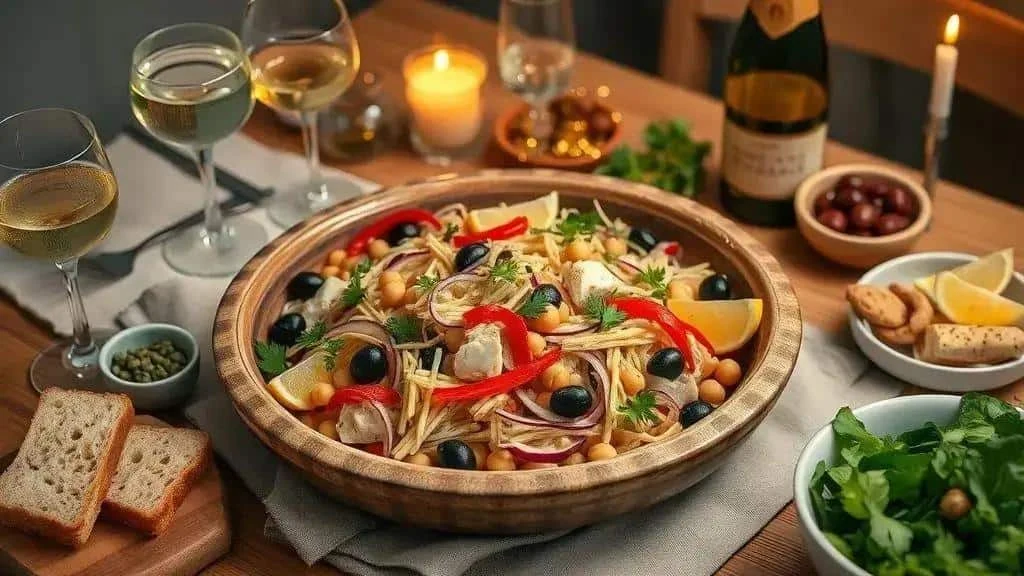
Flavour balance comes from savoury cod, sweet roasted peppers, mild chickpeas and a fresh dressing. Use the following ideas to build a meal around the salad.
Drink suggestions
- Dry sparkling wine is one festive option for those who drink alcohol.
- Dry white wine, such as Alvarinho or Sauvignon Blanc, offers a crisp pairing.
- A light rosé gives another fruit-led option.
- A pale lager can accompany the savoury flavours.
- Alcohol-free choices include sparkling water with lemon or a lightly sweetened lemonade.
Side dishes
- Rustic bread is useful for the dressing; offer a suitable alternative if gluten needs to be avoided.
- Roast or crushed potatoes make the meal more substantial.
- A simple green salad adds fresh leaves and a little bitterness.
- Grilled courgettes and aubergines echo the roasted peppers.
- Other chilled starters can include a small dip or mild cheese, with portions chosen to suit the whole menu.
Adjusting the flavour
- Acidity: add lemon gradually. It can balance the taste of salt but cannot remove excess sodium; proper desalting must happen beforehand.
- Oil: use enough to coat the ingredients without leaving them swimming in dressing.
- Crunch: add toasted nuts or crisp onion shortly before serving.
- Salt: always taste the assembled salad first.
New Year’s Eve menu ideas
- Starter: serve small bowls with toast and a drink of the guest’s choice.
- A larger meal: accompany the salad with roast vegetables, potatoes or a modest portion of herb risotto, depending on how substantial you want the menu to be.
- Dessert: lemon sorbet or passion fruit mousse makes a fruit-led finish.
Finishing touches
- Presentation: lemon wedges and parsley add colour without elaborate decoration.
- Seasoning: freshly ground pepper and a little lemon zest can be added at the table.
- Assembly: keep extra dressing separate and add crunchy ingredients last.
This salt cod, chickpea and roasted pepper salad is a colourful option for New Year’s Eve or another shared meal. Prepare the fish carefully, keep the salad chilled and adjust the dressing to your taste.
Visit the I Love Christmas blog for more festive recipes and seasonal ideas, and share the combinations you enjoy.
Thank you for reading, and enjoy your celebration.
Salt cod salad: frequently asked questions
How do I desalt cod safely?
Follow the supplier’s instructions, using cold water in the fridge and changing it regularly. Around 24–48 hours is common, but thickness and curing affect the time. Cook a small piece before tasting to check the salt level.
Can I buy ready-desalted cod?
Yes. Check whether it is raw or cooked, follow its preparation and storage instructions, and taste only after cooking before adding salt.
Should I use dried or tinned chickpeas?
Either works. Cook dried chickpeas until tender according to the packet, or drain and rinse tinned ones. Measure 400 g after cooking and draining; use the tin’s drained weight when calculating quantities.
How far ahead can I assemble the salad?
Up to 12 hours ahead is convenient, provided cooked components are cooled promptly and the salad stays refrigerated at 5°C or below. Use within 48 hours of cooking the fish, and add leaves or nuts just before serving.
Which substitutions work well?
Try drained jarred roasted peppers, coriander instead of parsley, or cooked quinoa in place of some chickpeas. Ordinary couscous is another texture option but contains wheat, so it is not suitable for a gluten-free version.
Sources and Further Reading
- Norwegian Seafood Council: salted fish guide
- Food Standards Agency: cooking fish and seafood safely
- UK guidance: chilling, freezing and defrosting food