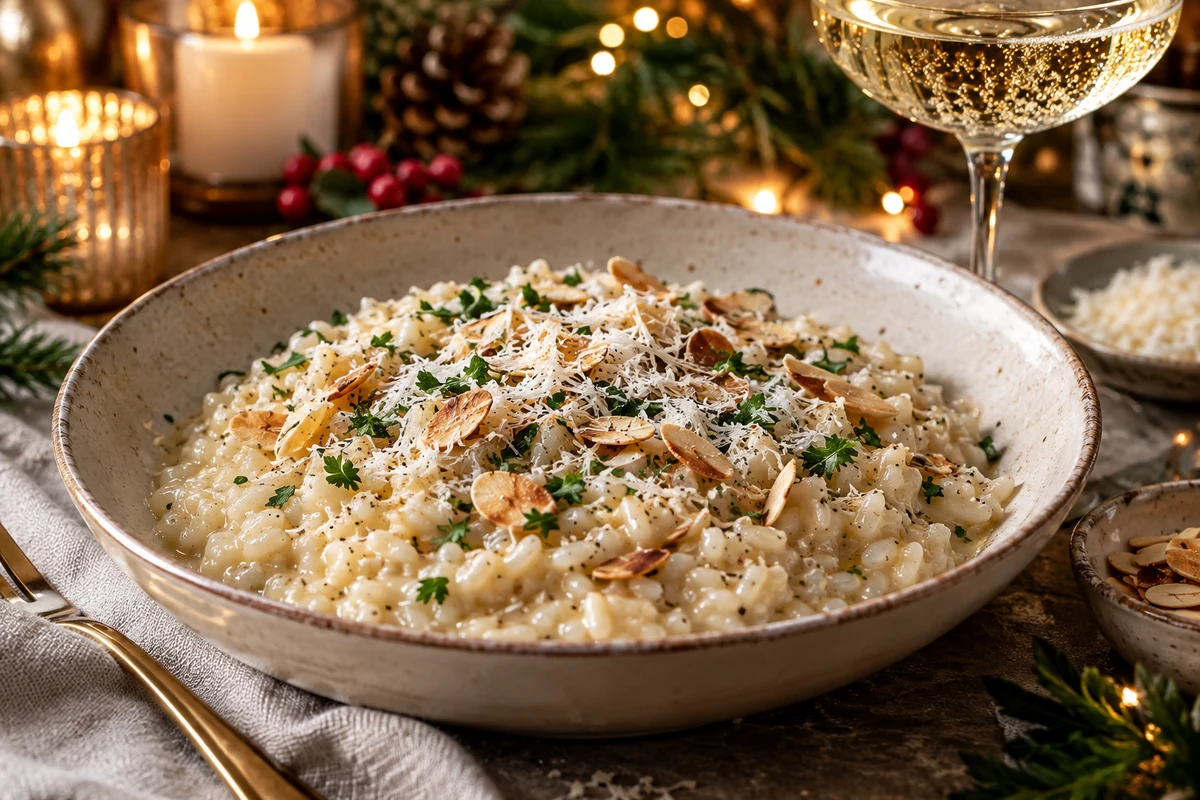
Champagne risotto is made with arborio rice, dry Champagne or sparkling wine and hot stock, then finished with butter, cheese and toasted almonds. The rice should be tender with a little bite, suspended in a loose, creamy sauce. It makes a festive main course or a smaller accompaniment.
Champagne risotto brings a creamy texture and toasted almond crunch to a festive dinner. Here is how to make it, with practical alternatives for different tastes and dietary requirements.
Champagne risotto ingredients
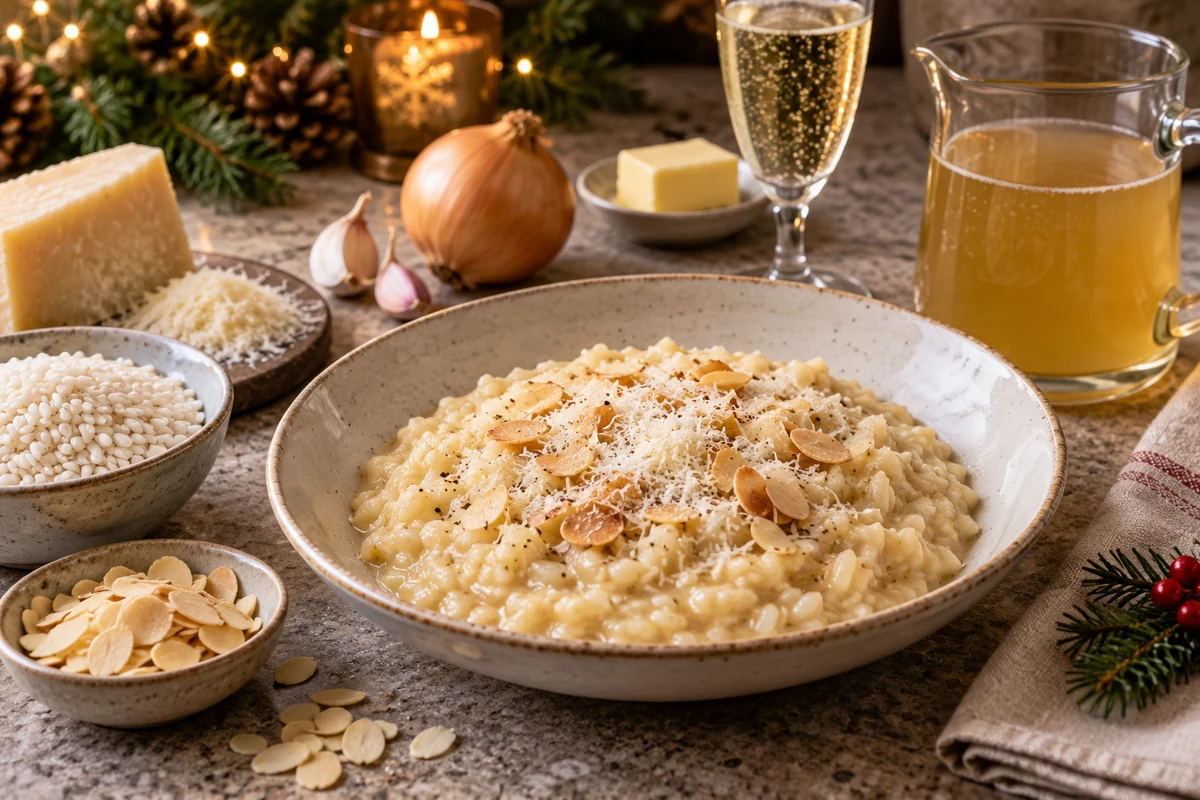
Serves 4 as a main course, or more in smaller portions. The recipe uses 200–250 ml of wine, not a whole 750 ml bottle.
- 300 g arborio risotto rice – a short-grain rice that releases starch as it cooks.
- 200–250 ml brut Champagne or dry sparkling wine
- About 900 ml hot chicken or vegetable stock, with a little extra hot stock or water available if needed
- 50 g unsalted butter, divided into two 25 g portions
- 2 tablespoons olive oil
- 1 medium onion, finely chopped
- 2 garlic cloves, finely chopped
- 100 g Parmesan, finely grated, or pecorino
- 80 g flaked almonds, toasted
- 100 ml double cream or 100 g mascarpone, optional
- Finely grated zest of ½ lemon, optional
- Salt, to taste
- Freshly ground black pepper, to taste
- Chopped parsley, to finish
Substitutions and notes
- Champagne: dry sparkling wine or brut Prosecco works well. Dry still white wine is another option: the bubbles disappear during cooking anyway. Cooking does not reliably remove all the alcohol; use the stock-based alternative below when alcohol must be avoided.
- Rice: carnaroli can replace arborio. Ordinary long-grain rice will give a different, less creamy result.
- Almonds: try toasted pistachios or walnuts for a different flavour. These are still nuts, so they are not suitable substitutes for a nut allergy.
- Stock: homemade or prepared stock is suitable. Check the salt level, ingredients and allergens before adding extra seasoning.
- Cheese and cream: cream or mascarpone is optional; properly cooked risotto is creamy without it. Parmesan and many pecorino cheeses use animal rennet, so choose a labelled vegetarian hard cheese if required.
How to make Champagne risotto
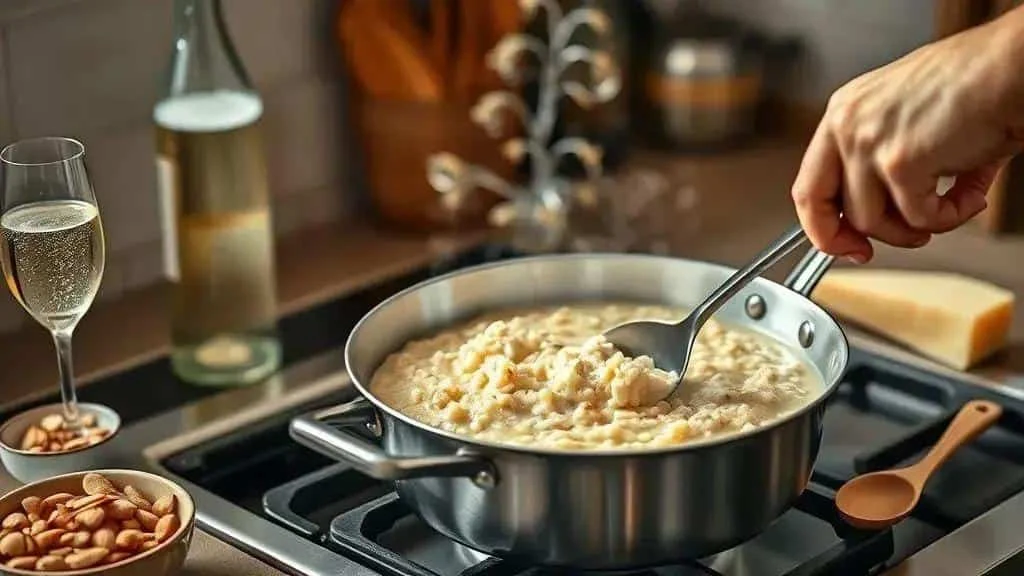
- Keep the stock hot: warm about 900 ml chicken or vegetable stock over a low heat, with extra hot liquid available. You may not need it all.
- Toast the almonds: place 80 g flaked almonds in a dry frying pan over a medium heat for about 2–3 minutes, stirring and watching closely. Transfer to a plate as soon as golden.
- Soften the onion: heat the olive oil and 25 g butter in a wide pan. Add the onion and cook gently until soft and translucent, about 5 minutes. Add the garlic and stir for a further 30 seconds without letting it burn.
- Toast the rice: stir in the arborio rice for 1–2 minutes, coating the grains in the fat until their edges look slightly translucent.
- Add the Champagne: pour in 200–250 ml and simmer, stirring, until most of the free liquid has been absorbed or reduced. This takes a few minutes; it is a flavour-building step, not a guarantee that the alcohol has gone.
- Add stock gradually: keep the rice at a gentle simmer. Add a ladleful of hot stock and stir regularly until mostly absorbed, without letting the pan dry out. Continue adding stock, beginning to check the rice after about 16–18 minutes; follow the rice packet as a guide.
- Check the texture: the grains should be tender with a little resistance, not chalky or hard. Add more hot stock and cook longer if needed. Leave enough liquid for a loose, flowing sauce.
- Finish off the heat: remove the pan from the hob and stir in the remaining 25 g cold butter and 100 g grated cheese. Add the optional 100 ml cream or 100 g mascarpone if using. Stir firmly but do not crush the grains; loosen with a little hot stock if necessary.
- Season: add the optional lemon zest, black pepper and only as much salt as needed after tasting the cheese and stock in the dish.
- Serve: spoon into warm bowls or a serving dish. Scatter over the toasted almonds and parsley, and serve immediately.
Quick tips
- Stir regularly: this helps release starch and prevents the rice catching on the base of the pan.
- Use a dry sparkling wine: brut sparkling wine or Prosecco is a practical alternative to Champagne; an expensive bottle is not necessary.
- Watch the simmer: adjust the heat so the rice cooks steadily without the liquid disappearing too quickly.
Champagne risotto variations
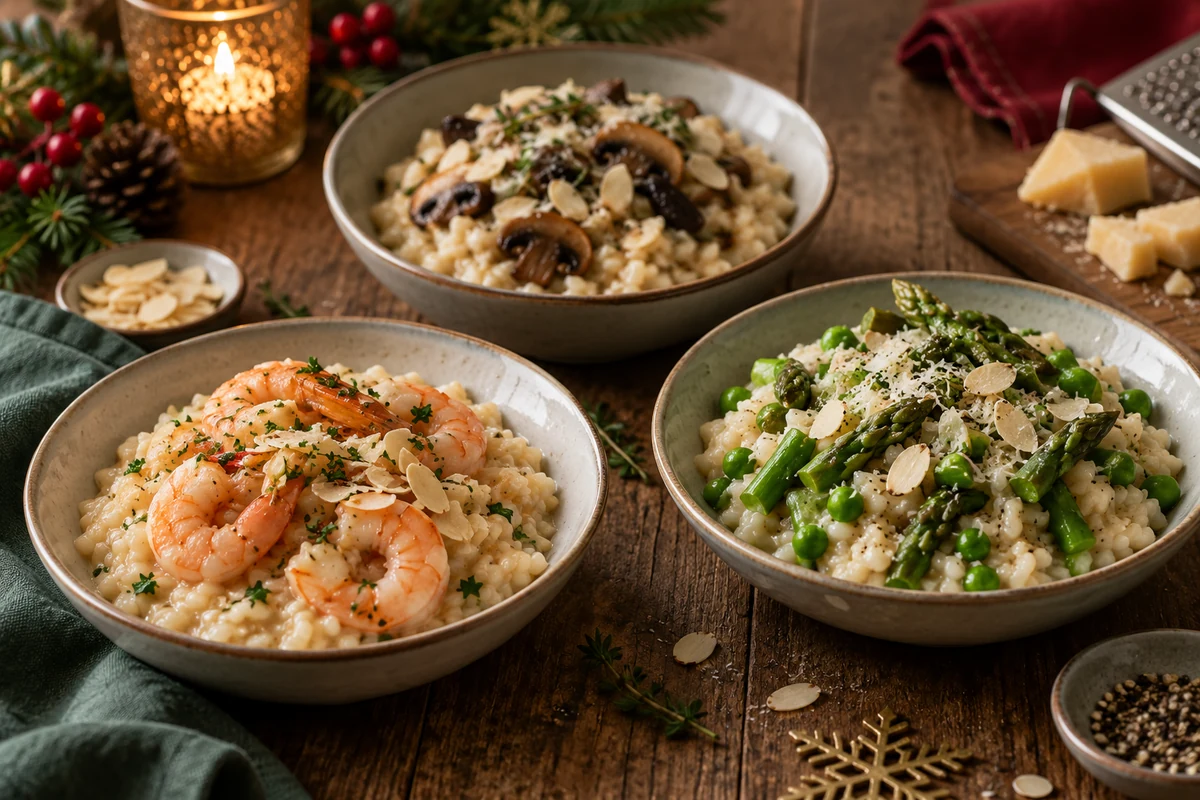
- Prawn risotto: use 300–400 g peeled raw prawns and fish or shellfish stock. Cook the prawns separately until opaque and cooked through, then fold them into the finished rice and serve promptly. If using ready-cooked prawns, follow their packet instructions instead.
- Mushrooms and truffle: sauté 200 g mixed mushrooms, such as chestnut, shiitake and portobello, in a little extra butter or oil. Stir into the finished rice and add 2–3 drops of truffle oil, or less if it is strongly flavoured.
- Asparagus and peas: add 150 g asparagus, cut into short pieces, during the final few minutes and 100 g frozen peas for the cooking time on their packet. For a vegetarian version, use vegetable stock and vegetarian hard cheese, or omit the hard cheese and use the optional mascarpone.
- Saffron: steep a small pinch of saffron in 2 tablespoons hot stock, then add it during cooking. If you prefer a gentler wine flavour, use 150–200 ml Champagne and make up the cooking liquid with stock as needed.
- Goat’s cheese and walnuts: replace the Parmesan with 80 g soft goat’s cheese and the almonds with 60 g toasted walnuts. Check the cheese’s suitability if cooking for vegetarians.
- Caramelised almonds: for a sweet contrast, heat 2 tablespoons sugar with 1 tablespoon water until a pale caramel forms, then carefully stir in 80 g flaked almonds. Spread on baking parchment, allow to cool completely and break up. Hot caramel can burn, so do not touch or taste it until cold.
Adjusting the liquid and cooking time
Arborio rice: start checking after approximately 16–18 minutes of simmering, allowing longer where necessary. Pan size, heat and rice brand affect how much stock you need. Add liquid according to texture rather than automatically using every millilitre; cream added at the end does not replace the liquid needed to cook the grains.
Wine-free alternative: replace the wine with 200–250 ml extra vegetable stock. If you like a fruity note, replace a small part of that extra stock with unsweetened apple juice and add a little lemon juice to taste at the end. Check every ingredient if the dish must contain no alcohol.
Finishing tips
- Use cold butter at the end: stir it into the hot rice off the heat for a glossy sauce.
- Taste before adding acidity: lemon zest adds fragrance without much acidity. Add lemon juice or a few drops of vinegar only if the finished dish needs it.
- Keep the topping crisp: scatter toasted nuts over the creamy rice just before serving.
- Serve straight away: risotto thickens as it stands and is at its best immediately after finishing.
Tips for creamy risotto with distinct grains
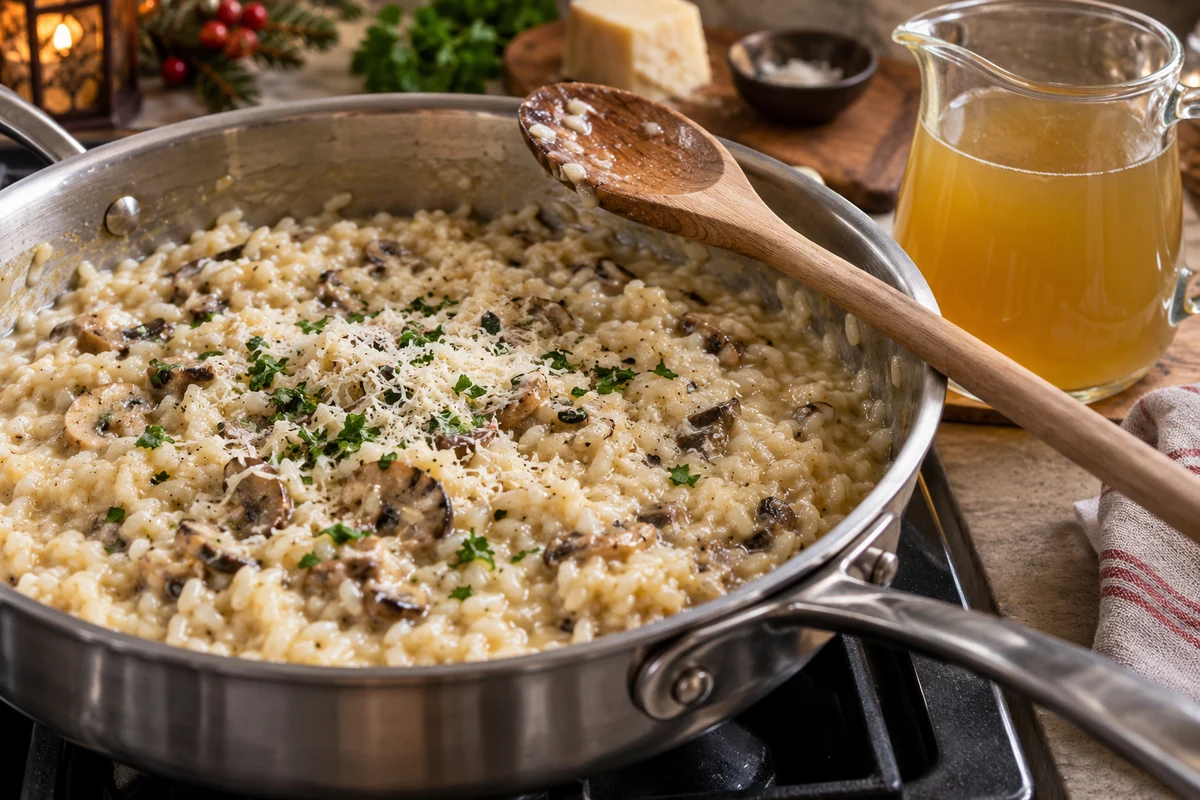
For creamy risotto with distinct grains, aim for a flowing sauce around rice that still has a little bite. These techniques help you control the texture.
Essential techniques
- Choose risotto rice: arborio or carnaroli releases starch while retaining some structure.
- Keep the stock warm: adding hot liquid helps maintain a steady simmer.
- Toast briefly: stir the rice in the fat for 1–2 minutes before adding liquid. This coats and warms the grains; it does not form a waterproof seal.
- Add liquid gradually: add another ladleful when the previous one is mostly absorbed, before the rice catches.
- Stir regularly: move the rice gently around the pan without beating it into a paste.
- Control the heat: maintain a gentle simmer; vigorous boiling can evaporate the stock before the rice is tender.
- Finish off the hob: stir in cold butter and grated cheese to bring the sauce together.
- Have the table ready: serve as soon as the risotto is finished, while it is still loose and creamy.
The method at a glance
- Warm the stock: heat about 900 ml and keep a little extra hot liquid available.
- Toast the almonds: stir 80 g flaked almonds in a dry frying pan until golden, then transfer to a plate.
- Soften the aromatics: heat the olive oil and 25 g butter, soften the onion, then briefly cook the garlic.
- Toast the rice: add 300 g arborio rice and stir for 1–2 minutes.
- Add the wine: pour in 200–250 ml Champagne and simmer until mostly absorbed or reduced. Some alcohol can remain after cooking.
- Add the stock: cook at a gentle simmer, adding hot stock a ladleful at a time. Start checking after 16–18 minutes and continue until tender with a little bite.
- Taste a grain: it should not have a hard, chalky centre. Keep the surrounding sauce loose.
- Finish: off the heat, stir in the remaining 25 g butter, 100 g grated cheese and, if using, 100 ml cream or 100 g mascarpone. Loosen with hot stock if needed.
- Season and serve: adjust the seasoning, add optional lemon zest and finish with almonds and parsley.
Common problems and how to avoid them
- Mushy rice: overcooking can break down the grains. Check regularly near the end; adding less stock afterwards cannot restore rice that has already become mushy.
- A hard centre: add more hot stock and continue simmering gently. Check that the liquid is not boiling away too quickly.
- A dull or stiff finish: stir in the finishing butter and cheese off the heat, with enough hot stock to loosen the sauce.
- An overpowering wine flavour: measure the wine and allow it to reduce before adding stock. Do not pour in the whole bottle. A milder flavour does not prove that all the alcohol has evaporated.
- Risotto thickens while serving: stir in a little hot stock immediately before plating. This is a short finishing adjustment, not a reason to leave cooked rice standing warm for a long time.
Drinks and accompaniments for a festive dinner

When serving Champagne risotto, lighter accompaniments can balance its richness. Choose drinks to suit your guests, including an option without alcohol.
Drinks to serve alongside
- Brut Champagne or sparkling wine: its acidity contrasts with the butter and cheese, particularly in the prawn or mushroom variations.
- Dry white wine: Sauvignon Blanc or Pinot Grigio can work with lemon zest and green vegetables.
- Dry rosé: try it with the prawn version or a chicken accompaniment.
- Aromatic white wine: Verdejo or Albariño offers another option alongside creamy cheese flavours.
- Light beer: a pilsner or wheat beer can complement toasted almonds. Check ingredients for guests avoiding gluten.
- Without alcohol: offer sparkling water with lemon, or a light apple-and-herb cooler made with juice and soda water.
Accompaniments
- Simple green salad: rocket and lettuce with a light vinaigrette provide a fresh contrast.
- Vegetables: try grilled asparagus, glazed carrots or roasted courgettes.
- Fish: a small portion of grilled or baked sea bass, sole or salmon can accompany a smaller serving of risotto.
- Chicken or roast meat: serve a modest portion of grilled chicken or shredded herb-roasted pork if you want a more substantial meal.
- A cheese board: mild brie or goat’s cheese and dried fruit can follow the meal. Choose cheeses suitable for your guests’ dietary needs.
- Bread: small slices of ciabatta or Italian-style bread are optional alongside this already filling rice dish.
Practical pairing tips
- Match the intensity: a strongly flavoured variation needs a drink that will not be overwhelmed; a simpler risotto suits gentler flavours.
- Serving temperature: Champagne is generally served at about 8–10°C; follow the producer’s advice for other wines. Serve the risotto hot and freshly made.
- Balance richness: a fresh, lightly acidic drink can contrast with strong cheese without adding more heaviness to the meal.
- Portion size: divide the recipe into four main-course servings, or make smaller portions for a multi-course dinner. Finished weight varies with the liquid absorbed and optional additions.
- Pair by variation: sparkling wine or rosé suits prawns; an aromatic white can complement mushrooms and truffle.
- Taste together: try a small mouthful with your chosen drink before serving. Pairings are a matter of preference, and alcohol is entirely optional.
Cooking with Champagne
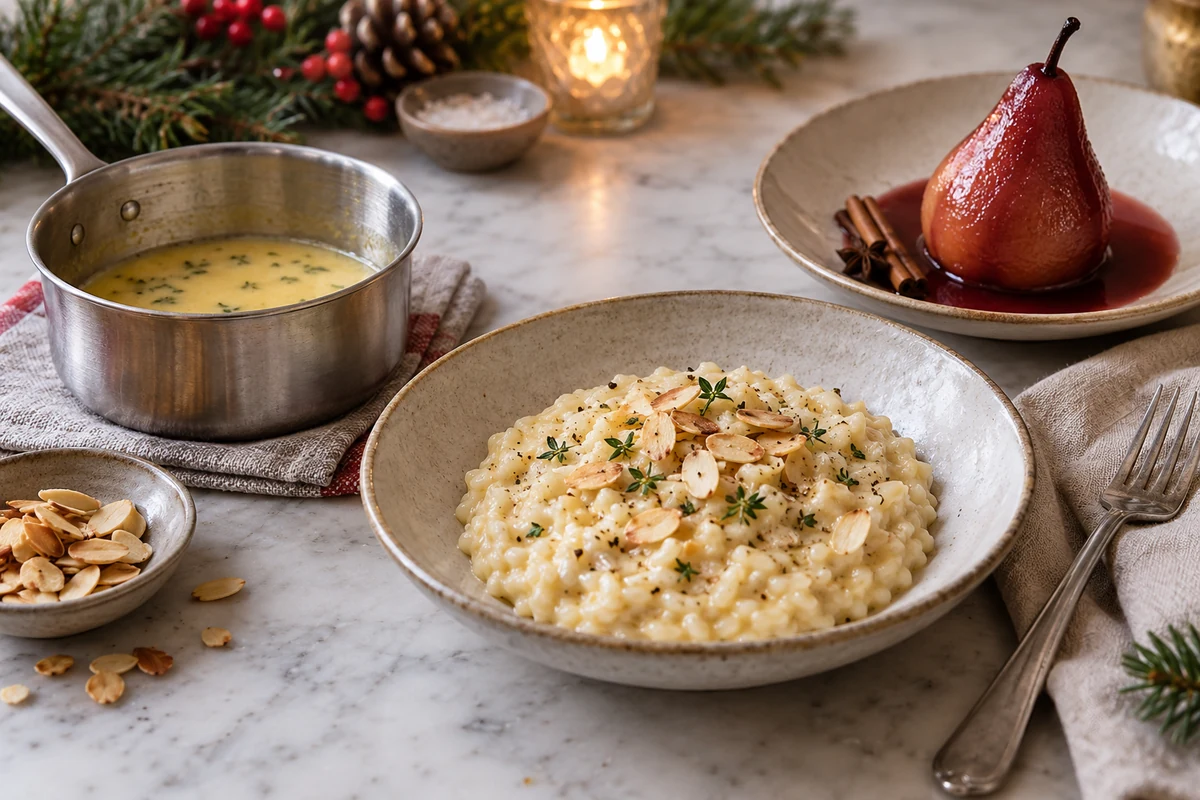
In cooking, Champagne contributes acidity and wine aromas. Its bubbles do not survive simmering, so dry still or sparkling wine can also be useful depending on the dish.
- The bubbles disappear: carbon dioxide escapes as the wine warms and cooks; the finished risotto will not be fizzy.
- Reduction concentrates flavour: simmering reduces the liquid volume and can intensify acidity as well as sweetness. Taste before adding more.
- Choose the style: brut or dry wine generally suits savoury cooking. Sweeter styles may suit desserts, but their sugar still needs to be considered in the recipe.
- Use acidity thoughtfully: wine can flavour marinades and sauces, but it is not a direct substitute for the acidity of vinegar or lemon in every recipe. A marinade does not make raw food safe to eat.
- Poach fruit: pears, apples or peaches can be gently cooked in a separate recipe using wine, sugar and spices.
Useful reminders
- Alcohol may remain: a few minutes of cooking does not remove it all. Use a recipe made without alcoholic ingredients when serving someone who needs to avoid alcohol, rather than relying on extra simmering.
- Measure the wine: use the amount specified for the dish. More wine can make a risotto overly acidic and change its cooking time.
- Balance with butter or cream: these ingredients soften the perception of acidity and give sauces body, but they do not remove alcohol.
- Store the remaining wine properly: refrigerate it with a suitable sparkling-wine stopper and follow the producer’s advice. Do not assume that a bottle left open has become safe homemade vinegar.
Other dishes made with Champagne
- Risotto: add a measured amount of wine before the stock for a fragrant base.
- Sabayon or zabaglione: this separate dessert uses egg yolks whisked with wine and sugar over gentle heat. Follow a reliable method for safely cooking the eggs; it can still contain alcohol.
- Poached pears: wine, sugar and spices form a fragrant poaching liquid.
- Seafood sauces: wine reductions finished with butter and herbs can accompany cooked prawns or white fish.
- Granita and sorbet: use a balanced recipe, because both sugar and alcohol affect freezing. Simply reducing or freezing the wine does not make it alcohol-free.
A festive risotto to serve freshly made
This Champagne risotto combines creamy rice with crisp toasted almonds. Careful control of the stock and cooking time matters more than an expensive bottle of wine.
Use the variations to suit your guests, finish the rice just before serving and taste before adding salt or lemon. For a meal without alcohol, choose the stock-based alternative from the outset.
Thank you for reading. Follow our social channels for more festive recipes, or visit the I Love Christmas blog for ideas for your Christmas and New Year’s table.
Champagne risotto: frequently asked questions
Does any alcohol remain after cooking?
Yes, some can remain. Simmering for a few minutes does not remove all the alcohol, and longer cooking does not provide a reliable alcohol-free guarantee. If alcohol must be avoided, use the extra-stock alternative and check any alcohol-free-labelled drink before using it.
Can I replace the Champagne?
Yes. Dry sparkling wine, brut Prosecco or dry white wine can replace it; the bubbles disappear during cooking. For a version without alcoholic ingredients, use extra stock, optionally with a little unsweetened apple juice and lemon juice to taste.
How should I store and reheat leftover risotto?
Cool leftovers quickly in shallow portions, ideally within one hour, and refrigerate at 5°C or below. Eat within 24 hours. Reheat only once until steaming hot throughout, adding a little stock to loosen the rice, and eat immediately. Rice left standing too long cannot be made safe simply by reheating.
Can I make it vegetarian or vegan?
For a vegetarian version, use vegetable stock and a hard cheese labelled suitable for vegetarians, as standard Parmesan uses animal rennet. For a vegan version, also replace the butter, cheese and optional cream or mascarpone with suitable plant-based alternatives. Check the wine if vegan suitability matters.
How do I avoid mushy rice or a hard centre?
Use arborio or carnaroli, keep the stock hot and add it gradually over a gentle simmer. Stir regularly and taste near the end. Add more stock and cook a little longer if the centre is chalky; stop once the rice is tender with a little bite, before the grains break down.
Sources and Further Reading
- Food Standards Agency: handling leftover rice
- Alcohol retention in food preparation, indexed by PubMed
- Comité Champagne: frequently asked questions