The 12 Wishes Game is a simple New Year’s activity: participants write twelve hopes or intentions on cards, choose how to reveal them and share only what they feel comfortable discussing. Cards can be drawn at the celebration or assigned to months, with optional small actions and reminders to follow up during the year.
The 12 Wishes Game gives family and friends a gentle way to look ahead together. With a few cards and flexible rules, you can make it playful, reflective or a mixture of both, without turning the evening into a test of anyone’s ambitions.
Illustrations in this article are conceptual images, not documentary photographs or evidence of a particular historical event, destination, venue or access route.
What is the 12 Wishes Game?
In the 12 Wishes Game, each person writes twelve wishes on separate cards, or the group creates one shared set of twelve. The idea is to make room for conversation and memories with very little equipment. It is an optional party activity, not a promise that wishes will come true.
How it works
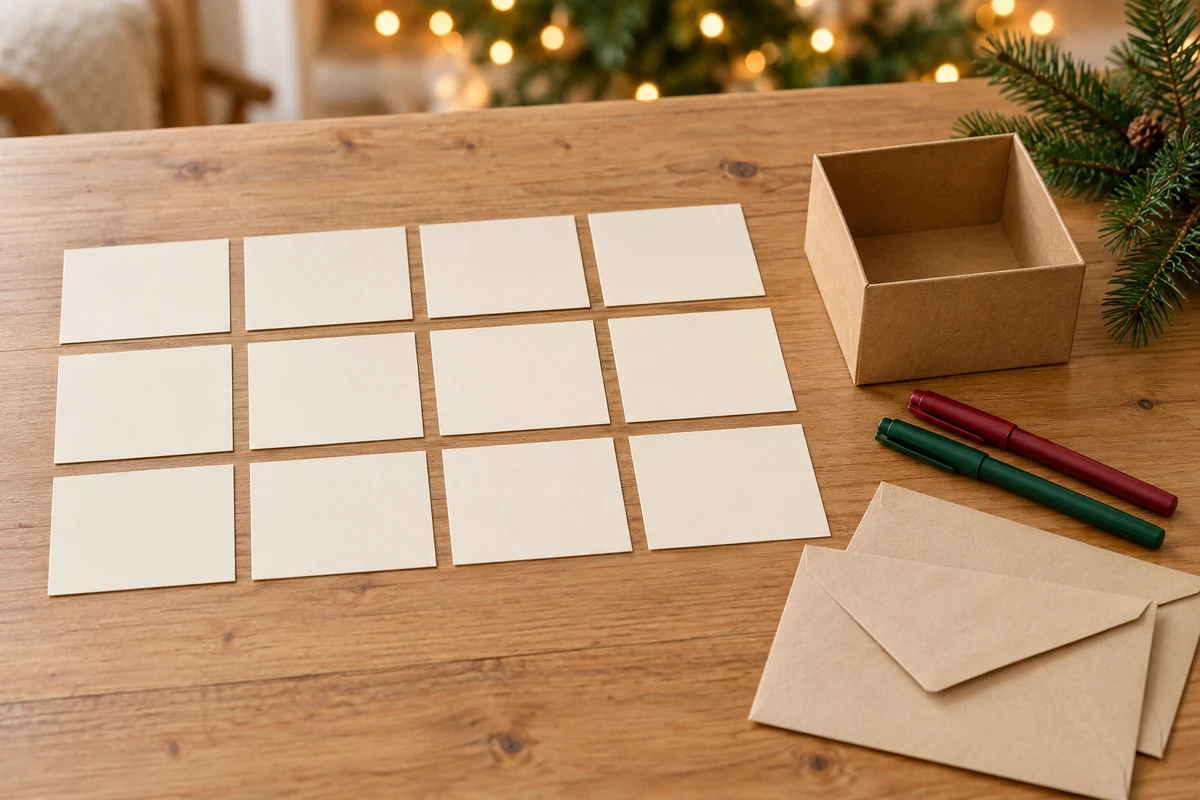
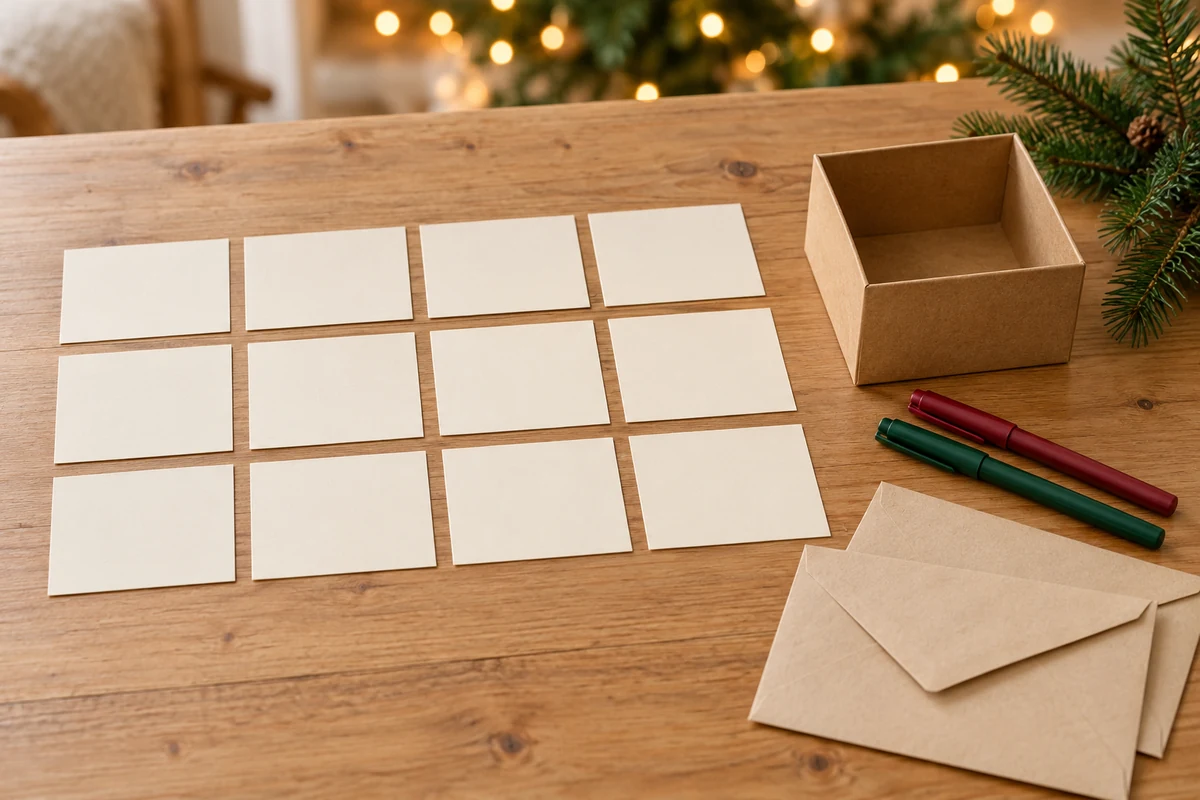
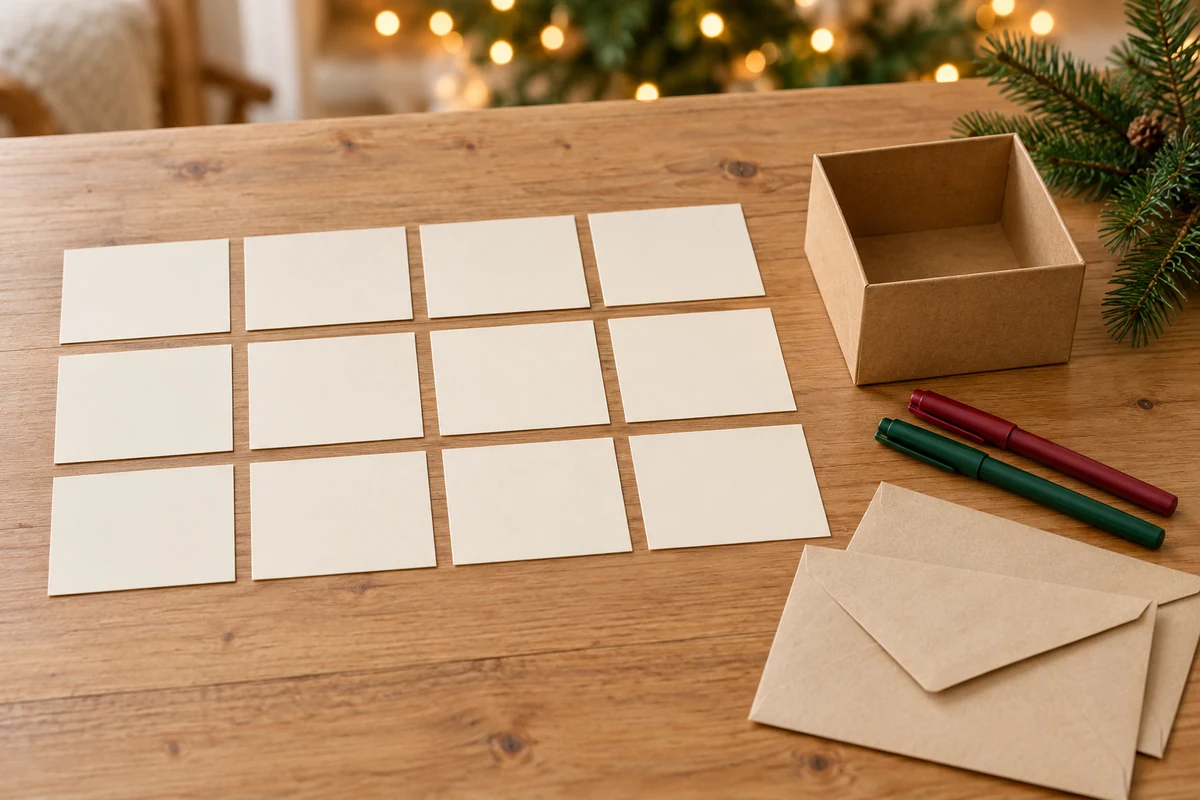
- Prepare: set out twelve cards per person, or twelve for the whole group, plus pens and a box for collecting them.
- Write your wishes: use short phrases such as “more time with family”, “looking after myself” or “learning something new”.
- Choose how to reveal them: draw cards at random, assign one to each month, or make twelve unhurried reveals after midnight. Do not try to fit reading and discussion between individual clock chimes.
- Share, if you wish: the writer can explain what their card means, or simply pass. No one needs to disclose a private wish.
What the activity can offer
- A shared moment for conversation and reflection.
- A way to turn a broad hope into a clearer intention, if the writer wants to.
- An inexpensive activity that can be adapted to different ages and abilities.
Easy variations
- For families: include wishes about time together and traditions you would like to try.
- For couples: choose shared experiences or commitments you both welcome, without using the game to demand changes from a partner.
- For parties: mix light-hearted ideas with more thoughtful ones, keeping participation optional.
Materials and quick preparation
You can set up a basic version in around fifteen minutes once you have the materials. Leave longer if people want to decorate their cards or need help writing.
What you need
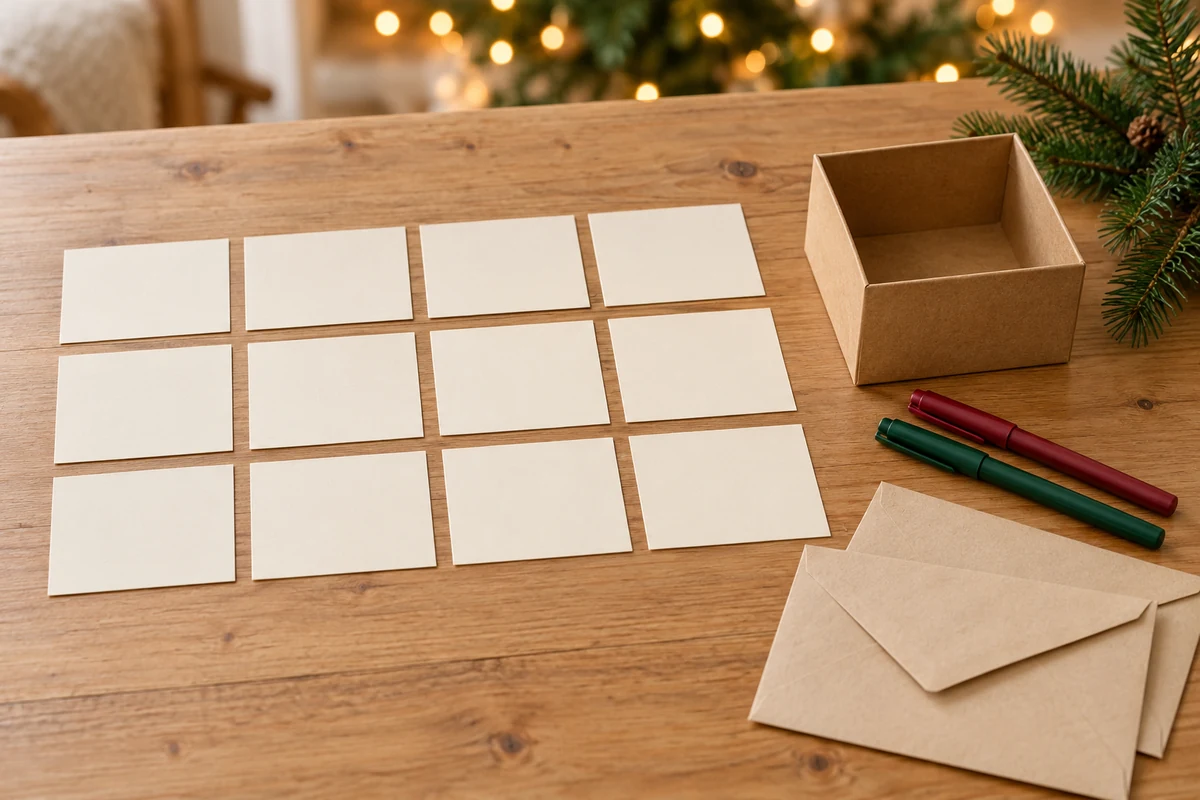
- Twelve numbered cards — plain paper cut into rectangles is fine. Use one set per participant or one shared set, as agreed.
- Pens or felt-tip pens — a dark colour for readable writing, with another colour for decoration if wanted.
- A box or suitable container — choose a non-breakable one when young children are joining in.
- Coloured or kraft paper — optional decoration for the cards.
- Scissors and adhesive tape — adults can prepare pieces in advance for younger children.
- Self-adhesive labels or a suitable marker — for clear numbering.
- Simple decorations — ribbons or age-appropriate stickers are enough. Keep small pieces, long cords and battery compartments away from young children.
Setting up
- Gather the materials: put the agreed number of cards and pens on a clear table.
- Number the cards: use the numbers 1–12 once each in every set, written clearly.
- Cut and decorate: add coloured borders if you like, leaving enough room for a wish or drawing.
- Prepare the container: put the collection box where everyone can reach it, or let a volunteer collect the cards.
- Provide pens: offer one per person where possible, with a spare and a few extra cards.
- Explain the format: say whether cards will be drawn during the evening, revealed after midnight or saved for particular months.
- Make the space comfortable: provide good enough lighting to read and write, with seating and a quieter spot if needed.
Useful alternatives
- Keep costs down: reuse clean scrap paper or plain card from packaging.
- Go digital: use a shared document only for wishes people agree to share; keep private entries separate.
- Include children: let them draw, dictate to a trusted adult or choose fewer cards.
- Choose a theme: gratitude, enjoyable experiences or small new habits can provide a starting point.
How to play: simple steps

A step-by-step guide to the game
- Set out the equipment: have twelve cards per person or one shared set, pens and a collection box.
- Agree how to take part: choose between individual sets and contributions towards a shared set of twelve. With a large group, the shared version is quicker.
- Write the wishes: encourage short, personal phrases such as “more family time”, “a day out” or “looking after my health”.
- Mark the cards: number each set 1–12, or use colours and clear labels to keep sets separate.
- Choose the reveal: draw cards at random, link them to months or open them at a relaxed pace after the countdown. Midnight chimes can mark the start, rather than dictate the pace.
- Read with permission: the writer may read a card, ask someone else to read it or keep it private. An explanation is optional.
- Leave room for everyone: in a large group, suggest roughly 20–30 seconds for a brief comment, while allowing extra time for anyone who needs it.
- Add an optional action: someone might turn a wish into a small task or a calendar note. Keep this voluntary, rather than assigning work to others.
- Adapt for children: use drawings, spoken ideas or gestures, with a trusted adult helping if invited.
- Keep the cards: return personal cards to their writers or agree where shared cards will be stored.
- Vary the mood: alternate playful wishes with quieter reflections, without pressuring anyone to be serious.
- Close gently: after the agreed set of reveals, invite a word of thanks or hope from anyone who wants to contribute.
Flexible ground rules
- No judgement: listen kindly and avoid mocking, ranking or challenging someone’s wish.
- Privacy is allowed: anyone can keep a card unread or pass altogether.
- Keep an eye on time: a gentle time guide can help a large group, but should not rush someone who needs communication support.
- Keep rewards optional: a suitable sticker or a round of applause is enough. Physical affection should never be a compulsory prize.
Quick tips
- If you want an action plan, choose something manageable, such as a regular walk suited to your circumstances.
- Use colours or written labels to distinguish personal, family and leisure wishes.
- Online, show or share only cards whose writers have agreed; do not record the session without everyone’s consent.
Variations for children, teenagers and adults

Match the format to the people taking part. Change the number of cards, writing method and length of the activity to keep it welcoming.
Children
- Easy-to-use materials: offer large cards, washable pens and space for drawings. Choose decorations appropriate to the child’s age.
- Simple rules: a child can contribute a few wishes to the shared twelve rather than having to produce a full set.
- Short sessions: aim for a brief activity, perhaps 5–10 minutes initially, and stop or take a break when interest fades.
- Wish ideas: playing in the park, choosing a favourite story or having a family picnic.
- Comfort and inclusion: avoid prompting sensitive disclosures or making promises adults cannot keep. Let the child decide what to share.
Teenagers
- A mixture of themes: combine interests such as study or travel with lighter ideas and enjoyable experiences.
- Creative participation: invite an optional kind action or creative idea rather than a dare, punishment or public test.
- Optional anonymity: allow unsigned cards, while explaining that handwriting or details may still reveal the writer. Sensitive wishes can stay entirely private.
- Respectful boundaries: no embarrassing challenges, pressure to disclose or unwanted physical contact.
- Examples: trying an instrument, planning an affordable outing with friends or learning a new skill.
Adults
- Reflection: a prompt such as “Why does this matter to me?” can help, but need not be answered aloud.
- Practical steps: turn a chosen intention into something manageable and specific, such as a regular activity that suits your routine.
- Couples or families: combine personal wishes with shared plans, checking that everyone involved agrees.
- A future check-in: keep your cards in an envelope to revisit in six months if you would find that helpful.
- Examples: making time for rest, arranging family days or saving towards a trip within your means.
Mixed-age groups
- Organise the sets: use colours and written labels to distinguish cards or themes without singling anyone out by ability.
- Share the space: alternate light-hearted readings with brief reflections, and make passing a normal option.
- Offer different methods: drawing, speaking, typing or asking someone to write can all work. No age group needs a compulsory type of wish.
Playing online
- Tools: a video call and numbered cards are enough. A shared document is optional; avoid uploading private wishes to an unfamiliar random-draw app.
- Participation: people can show a card to the camera or privately ask the host to read an agreed message.
- Pacing: use short turns and allow for connection delays, captions or other accessibility needs.
Tips for any group
- Listen kindly: let people finish and avoid unsolicited criticism or advice.
- Vary the pace: move between playful and reflective moments, with breaks when needed.
- Follow up by agreement: suggest revisiting selected wishes later in the year, without monitoring someone else’s progress uninvited.
- Make it accessible: ask what helps: larger print, clear contrast, a reader, captions, easy-to-hold pens or an alternative to writing.
Wish ideas to get you started
Examples you can adapt to your own life
Personal wishes
- More free time: set aside an afternoon each week for a hobby, if your routine allows.
- Time to rest: make room for a calmer bedtime routine and a short daily break that suits you.
- A savings habit: choose an affordable amount to set aside regularly after essential costs, rather than copying someone else’s target.
Wishes for the family
- Regular time together: arrange a family meal once a month.
- A new tradition: try a games afternoon on the first Sunday of the month.
- Shared memories: make an album of photographs and messages from the year.
Health and wellbeing
- Enjoyable movement: plan regular walks or another activity appropriate to your health, ability and circumstances.
- Varied meals: try adding a vegetable dish you enjoy to your usual meals.
- A quiet moment: leave a few minutes for a calming activity you find helpful, without treating the game as mental-health care.
Experiences and leisure
- Short trips: plan an occasional weekend away if affordable, or a local day out instead.
- Culture: watch a new film or see a play when time and budget allow.
- Local discoveries: explore an unfamiliar park or café on a future outing.
Learning and work
- A new skill: choose a short course on a subject that interests you.
- A personal project: set aside an hour a week to develop an idea, adjusting the pace when necessary.
- Professional connections: attend an occasional relevant event or reconnect with a colleague.
Kindness and community
- A small kind act: offer practical help to a neighbour, checking what would be welcome.
- Volunteering: explore a suitable local opportunity that fits the time you can realistically give.
- Sharing time: organise a voluntary group effort around a goal friends have agreed on.
Turning a wish into an action
For example: “travel more” might become “research destinations in January, choose a realistic date in February and save an affordable amount each month towards the trip”.
- Specific: say what you hope to do, where, when and with whom.
- Measurable: choose a useful number, frequency or milestone where appropriate.
- Achievable: check that the plan fits your time, resources and circumstances.
- Relevant: choose something that matters to you, not a target imposed by the group.
- Time-based: add a review date or a flexible deadline if that helps.
Writing useful wishes
- Keep the wording short and understandable.
- Where you want a plan, choose a concrete action rather than a vague demand on yourself.
- Leave room for emotional hopes as well as practical goals.
- Keep private wishes separate and share only what you choose.
- Include a few enjoyable, light-hearted ideas so the activity does not become a list of duties.
Giving your wishes more meaning

Small practical steps can make a chosen intention easier to revisit. Clear wording, a realistic timescale and a helpful reminder are options, not requirements for every wish.
Write clearly
- Be specific: “plan two weekend outings next year” is clearer than “get out more”, provided it suits your circumstances.
- Choose an action: “make time for a walk” is something you can plan; “perfect health” is not something anyone can promise.
- Use helpful measures: add a frequency, amount or milestone only where it makes sense.
Make a small plan
- Break it down: list two to four manageable steps to begin.
- Choose a check-in: a monthly review may be useful, but adjust it to the goal.
- Pick a first step: choose something small you could do within the next couple of days, if practical.
Reminders and routines
- A visible prompt: put a non-private card on a noticeboard or another place you will see it.
- A simple reminder: set a short phone reminder if you find notifications helpful.
- A brief review: take five minutes occasionally to note progress or change the plan.
Share thoughtfully
- A trusted supporter: tell someone about a goal if you would welcome their encouragement.
- Respect privacy: keep intimate wishes private if preferred; an unsigned card is not guaranteed to be anonymous.
- Ask for useful input: invite practical suggestions only when you want them.
Fit the plan to your circumstances
- Take manageable steps: choose a pace you can sustain rather than an all-or-nothing change.
- Stay flexible: revise dates or the goal itself when life changes. Choosing to let go of a wish is allowed too.
- Notice progress: record a small achievement if that feels encouraging, without comparing yourself with others.
Two examples
- Wish: “read more” → Plan: read for fifteen minutes when possible, choose a manageable reading list and discuss a book with a friend occasionally.
- Wish: “save regularly” → Plan: review essential spending, choose an amount you can afford and check the plan monthly. No particular financial product is needed for the game.
Homemade cards and party favours
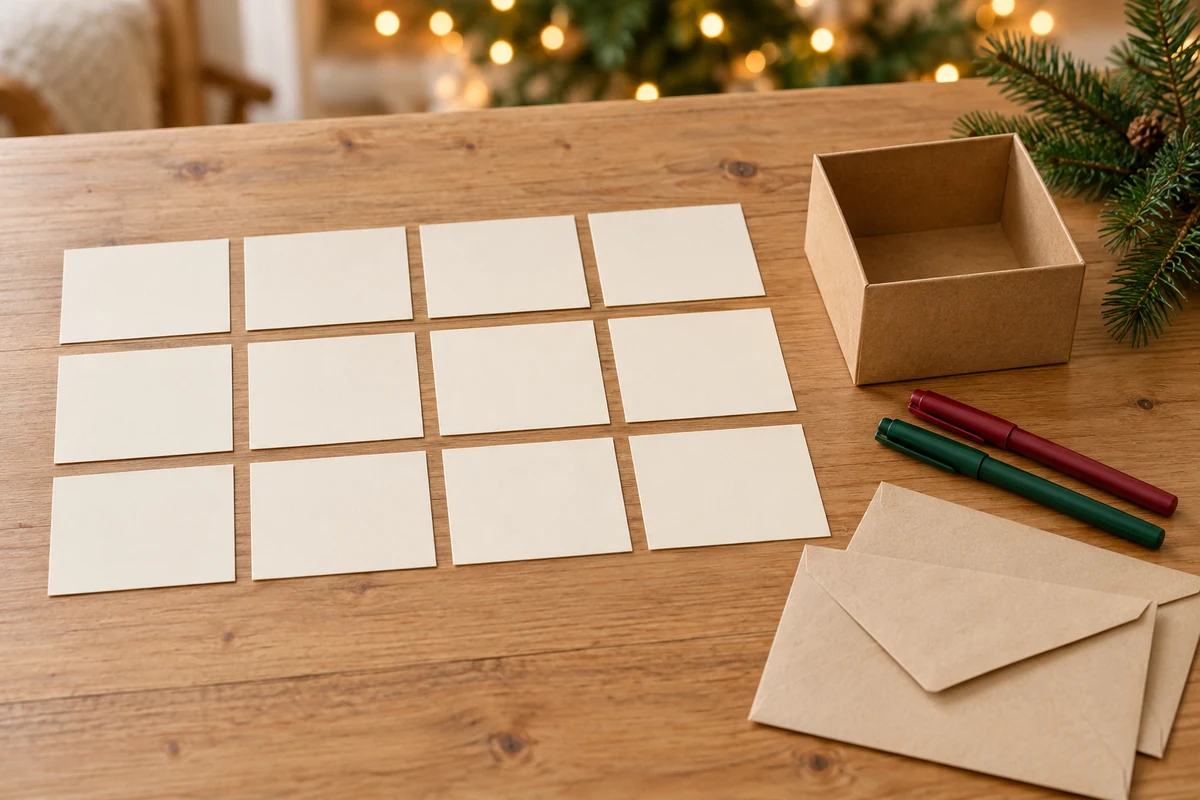
Paper, ribbons and small boxes can turn the activity into a simple keepsake. The dimensions below are design suggestions to make yourself, not a supplied printable download. Test one before preparing a full set.
Card ideas you can design and print
- Wish cards, 7 × 10 cm: use portrait cards with space for one wish each. Card around 180–240 gsm may work if your printer supports it.
- Container labels, 6 × 4 cm: make rectangular labels and arrange them on A4 paper with sufficient cutting space and printer margins.
- Numbered tags, 5 × 7 cm: sturdy card or kraft paper works well; an adult can punch a hole for a short ribbon where appropriate.
- Commitment cards, 6 × 8 cm: write one agreed action on each, such as “choose a family outing”.
- Bookmarks, 5 × 15 cm: add a small drawing and room for a name or reading wish.
- Small envelopes: choose an internal size larger than your cards. An 11 × 7 cm envelope will not comfortably hold a 7 × 10 cm card once seams and clearance are allowed for; test the fit or use a larger envelope.
Paper and printing
- Paper: use suitable card for durability, checking your printer’s supported weight. Reused paper is fine for a simple version.
- Print quality: make a draft first, then use a clearer setting if needed for the final copy.
- Margins: keep writing away from the cutting edge and respect the printer’s non-printable area. Use bleed only if your design and printing process support it.
- Lettering: choose clear type and generous spacing. Start around 12–14 pt and enlarge it for anyone who needs larger print.
- Colours: two or three coordinated colours can look attractive, but make sure the writing has strong contrast against the background.
Assembling the keepsakes
- Print a test: check readability, card size and envelope fit before printing more.
- Cut neatly: adults can use a suitable cutting tool and mat; give children prepared pieces or supervised age-appropriate scissors.
- Decorate: add simple borders or stickers without covering the writing space.
- Make small sets: put a few cards or one commitment card in a suitable envelope. These are keepsakes; provide twelve separate cards if someone is playing the full individual version.
- Finish the packaging: a paper envelope or reusable box is enough. Avoid fragile glass and loose small decorations around young children.
- Personalise them: leave pens available for names or short messages, without requiring personal details.
Presenting the cards
- Arrange by place setting: put a set at each seat or offer a central basket for people to take from.
- Consider texture: choose comfortable paper and simple decorations, checking sensory preferences rather than assuming everyone likes the same materials.
- Label the purpose: use words as well as colours to show whether a card is for a wish, an action or a thank-you.
- Keep it economical: reuse clean paper and decoration offcuts.
Quick formats to copy
- A twelve-line summary: use a larger sheet, such as A5, with twelve numbered lines. A 7 × 10 cm card is better for a single wish than twelve cramped entries.
- A surprise tag: use a 5 × 7 cm card with a small drawing on the front and one wish on the back.
- A keepsake box: place three folded wishes in a small labelled box as a shorter variation.
Easy personal touches
- A small photograph: add a family picture only with the agreement of those shown, particularly if the keepsake may be shared online.
- An optional QR code: link to a playlist or an album you are entitled to share. Check the destination and access settings before printing.
- A reusable option: offer a reusable paper keepsake. If you include seeds, use correctly labelled, locally suitable packets and check any travel restrictions; keep them away from small children and pets.
Ready to try it?
The 12 Wishes Game can be a warm, uncomplicated way to start the year together. Let people choose how much to share, keep the rules flexible and enjoy the conversation without expecting every hope to become a target.
Adapt the ideas to your own family or friends, and keep the parts that feel enjoyable and meaningful to you.
Thank you for reading. Find more seasonal activities and ideas on our social channels and the I Love Christmas blog.
FAQ: The 12 Wishes Game
What is the 12 Wishes Game?
It is a New Year’s activity in which people write twelve wishes individually or create a shared set of twelve. They can read selected cards, discuss hopes and optionally choose small actions, with no obligation to reveal private thoughts.
How long does it take?
A basic setup may take around fifteen minutes. Allow roughly fifteen to forty minutes for a small group’s readings, or adjust the number of cards and turns. Larger individual sets and decorated cards can take much longer.
What materials do I need?
Cards or paper, pens and a collection box are enough. Number the sets clearly and add optional decorations only if they suit the ages and needs of the group.
How can children join in?
Offer large cards, drawings or spoken wishes, with help from a trusted adult when wanted. A child can contribute a few cards to a shared set rather than completing twelve, and may stop or pass at any point.
How can a wish become a practical action?
Choose one wish you want to act on, break it into manageable steps and set a flexible review date. Use a reminder or ask someone for support if helpful; the activity should not create pressure or compulsory monitoring.