Make your own Christmas bingo cards with festive pictures or numbers, then print them or use them on a tablet. This guide explains layouts, printing, accessible adaptations, safe marking options and modest prizes. It provides instructions rather than a downloadable card pack.
Christmas bingo cards can turn a quiet moment after dinner into a shared game. Here are ideas for designing your own, preparing them for printing and adapting the game to different ages.
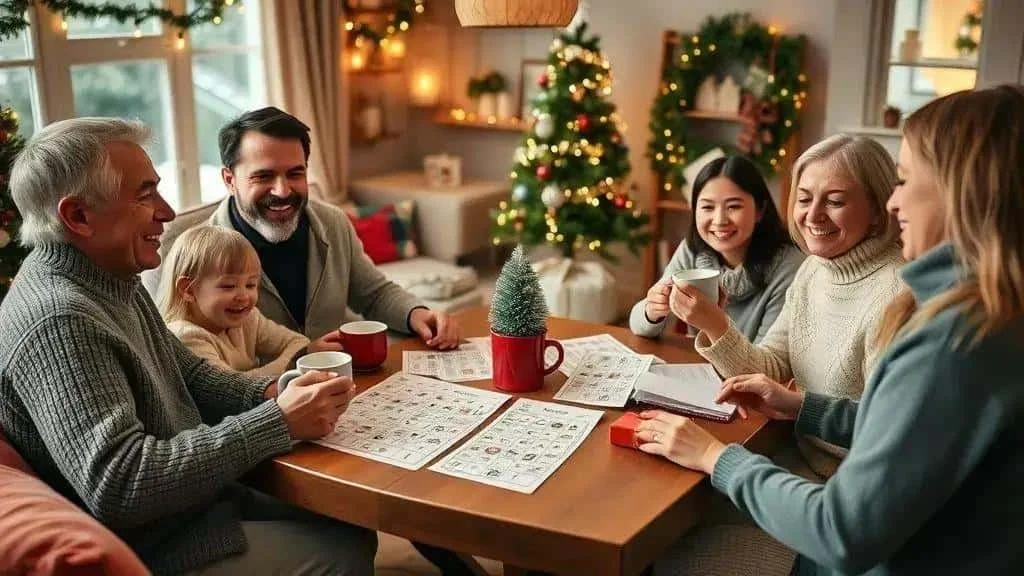
Illustrations in this article are conceptual images, not documentary photographs or evidence of a particular historical event, destination, venue or access route.
The pictures illustrate a homemade game; they are not printable playing cards or a downloadable bingo set. Follow the instructions to create and check your own cards.
How to prepare your Christmas bingo cards
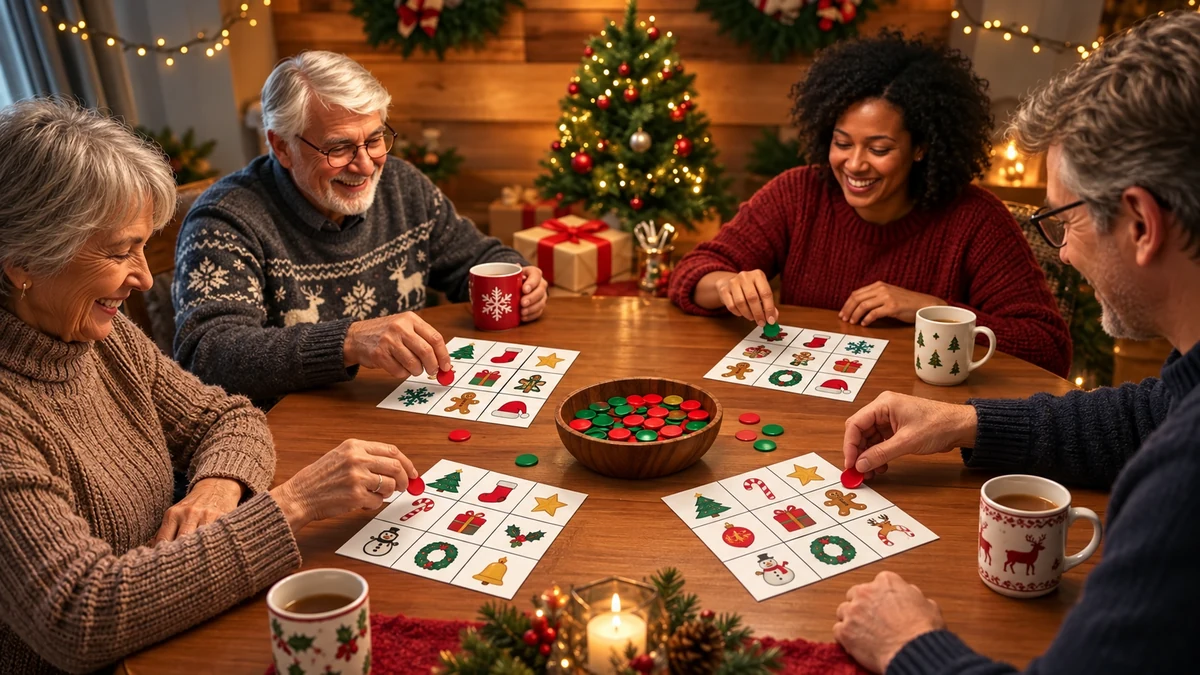
Create a set of homemade cards with a simple grid and festive symbols. For example, use a tree, present, star, bell, stocking, snowman, candle, robin and wreath in a three-by-three grid. Rearrange the same nine symbols on each card and make a matching set of calling slips. No download is required for this approach.
Printing and preparation, step by step
- Choose a layout: select a card size and grid that suit the players. Start with fewer, larger squares for a short family game.
- Print settings: use paper or light card supported by your printer. Check a test page before printing the set; colour is optional if the symbols remain distinct in black and white.
- Cutting and finishing: an adult can cut the cards along the margins. Rounded corners or reusable protective sleeves are optional, not essential.
- Marking the cards: pencils or crayons avoid loose counters around young children. For reusable laminated cards, use a suitable wipe-clean pen with adult supervision and keep caps out of reach.
- Prepare the sets: give each player one card and a way to mark it. Keep the calling slips and a master checklist with the caller.
Running the game
Explain the winning pattern before starting: a horizontal line, four corners, an X or a full house. Choose a caller who draws each picture or number at random, announces it clearly and shows it to the group. Put called slips aside so none is drawn twice.
Variations for different ages
- Young children: use recognisable Christmas pictures and a simple winning line. An adult can help with marking.
- Teenagers: offer optional riddles or short activities between rounds, without making participation a condition of winning.
- Adults: try different announced patterns and small themed prizes, such as a bookmark or a festive treat suitable for the recipient.
Practical tips and accessibility
Ask players what would help. A full A4 sheet with large squares may be easier than two small cards on one page. Use strong contrast, generous spacing and a comfortable marking method. A digital card can work if the player already uses an accessible viewing or annotation tool; test it before the game.
Prizes and organisation
Keep prizes modest: a paper decoration, homemade certificate or small gift can be enough. Offer non-food options, check ages and allergies, and arrange a well-lit space with comfortable seating. No entry fee or costly prize is needed for a family game.
Themes and layouts for printable cards
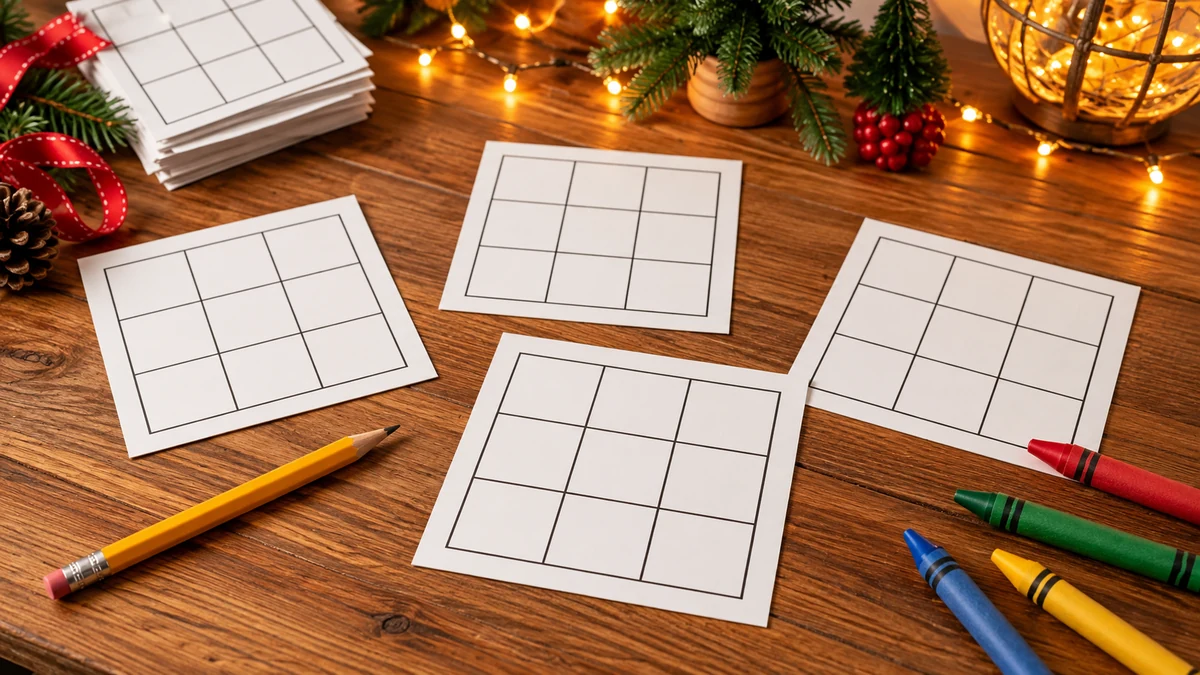
Choose a theme that fits your gathering, then use your own drawings or images you have permission to use. Simple, consistent pictures are easier to recognise than elaborate backgrounds.
Popular themes
- Classic Christmas: trees, presents and stars in red, green and gold.
- Children’s cards: large, clear pictures with distinct shapes and optional colour.
- Rustic and handmade: kraft-paper colours and simple hand-drawn details, with a plain area behind the symbols.
- Elegant: a restrained border and clear type, keeping decorative metallic effects away from essential information.
- Religious: a respectful selection of Nativity-related pictures for a group that welcomes that theme.
- Playful: original festive jokes or a colour theme. Avoid assuming that online memes or branded characters are free to reproduce.
Useful formats and sizes
Export your design as a print-ready PDF if your software supports it. A clear PNG can be useful for screen viewing. Possible layouts include:
- Two cards on an A4 sheet for players comfortable with smaller squares.
- One A5 card for an individual game pack.
- A 10 × 15 cm card for a compact game, provided the contents remain readable.
- A full-page or digital version for players who need larger symbols or zoom.
Designing for print
- For bitmap pictures, around 300 pixels per inch at the final print size is a useful quality target. This is different from the printer’s dots-per-inch setting.
- Use CMYK only when your print provider requests it; follow their file specifications rather than converting every home-printing design automatically.
- Leave clear margins. Add bleed and crop marks only if the printing and cutting process requires them.
- Start with clear text around 14–16 pt or larger and increase it to suit the players. Points and pixels are not interchangeable print measurements.
- Keep strong contrast between symbols and background. Do not rely on colour alone to distinguish squares.
Simple ways to personalise cards
Tools such as Canva, Google Slides or Word can be used to make a grid and add text or pictures. Check any template or image licence. Useful changes include:
- Choosing Christmas pictures the group can recognise easily.
- Changing borders and colours to match your decorations without reducing contrast.
- Rearranging the same set of symbols into different layouts, with no repeated symbol within a card.
Making the game accessible
Offer larger print, strong contrast and spoken as well as visual calls. Pictures may help some players, but they do not suit every visual impairment; ask about preferred formats and offer a playing partner where wanted.
Practical game packs
- Children’s pack: a picture card, an age-appropriate crayon and a simple non-food prize.
- Budget pack: an ordinary paper card and pencil, with no laminating or special equipment required.
- Decorative pack: printer-compatible card and a personalised envelope, while keeping the playing area easy to read.
Printing and assembling the cards
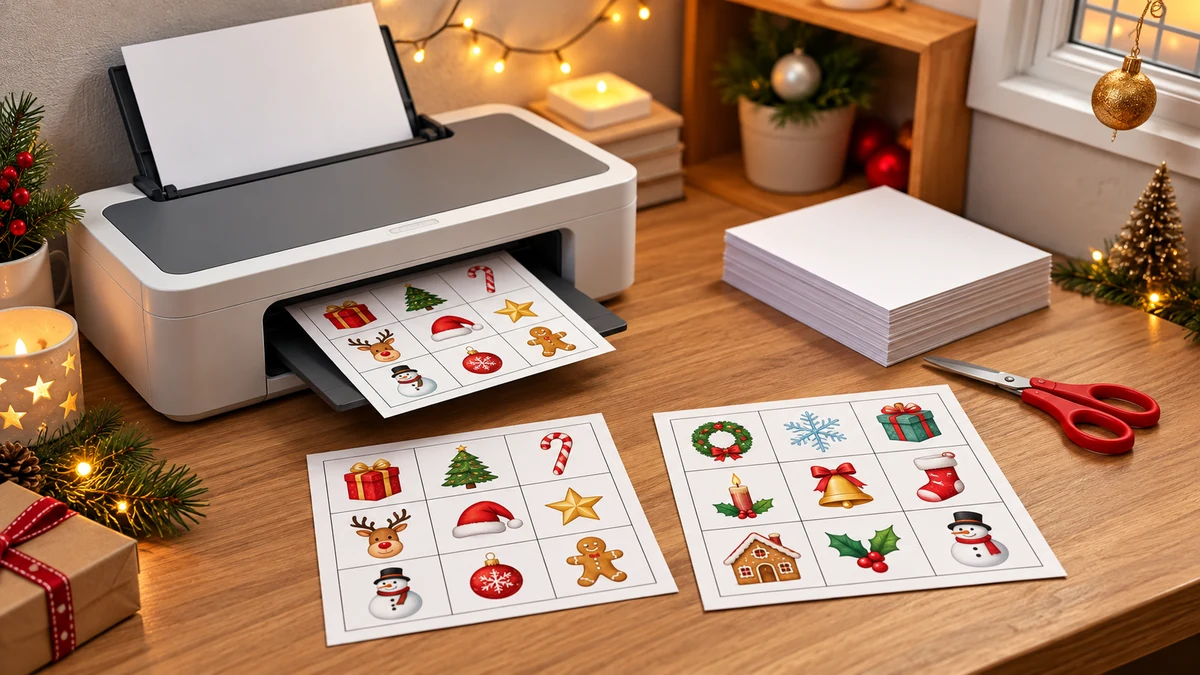
- Export carefully: save a good-quality PDF and check that text and symbols remain sharp. Vector text does not need a fixed image resolution. For professional printing, use the provider’s colour, bleed and crop-mark requirements.
- Choose suitable paper: card around 180–250 g/m² can be durable, but only if your printer supports that weight and finish. Ordinary paper is fine; do not feed heavy card into an incompatible machine.
- Printer and ink: either laser or inkjet printing can work. Use compatible paper and settings, let ink dry and do not assume the finished card is waterproof.
- Print settings: use actual size if exact dimensions matter and the design fits the printable area. Otherwise, a fit-to-page setting may help. Respect the printer’s margins and check that nothing is cropped.
- Test first: print one page and check alignment, colour, symbol size and readability with a player before producing the full set.
Cutting and finishing
- Cut safely: an adult should handle craft knives, guillotines or other sharp cutting equipment. Keep children away from the cutting area; ordinary scissors may be sufficient.
- Rounded corners: these are optional. Use a suitable craft punch if available, keeping tools and offcuts away from small children.
- Optional laminating: follow the laminator’s instructions for compatible pouch thickness and cutting. Let cards cool and check for sharp corners before use.
Assembling and organising the packs
- Markers and accessories: pencils are the simplest choice. Reusable counters can suit adults and older children, but avoid loose beans, buttons and coins where younger children might swallow them. Source: Child Accident Prevention Trust — toy safety
- Different card layouts: rearrange a shared symbol pool into unique cards. Keep the same grid size and winning rules for everyone, and check for accidental duplicate cards or repeated symbols within a card.
- Prepare packs: place one card and a suitable marking tool in each envelope. Keep the master calling set with the caller; number the cards if that helps you organise them.
Accessibility and practical details
- Readability: use a clear typeface, large symbols and strong contrast. A 14–16 pt starting size may still be too small for some players, so offer a larger version.
- Children’s version: replace numbers with clear pictures and fewer squares for a shorter game.
- Digital version: export a PDF or PNG with enough pixels and clear text for the screen being used. Test zoom and marking; a screen file’s DPI label alone does not determine readability.
- Storage: keep the cards and master slips together in a folder or labelled box for another Christmas.
Rules and variations for different ages
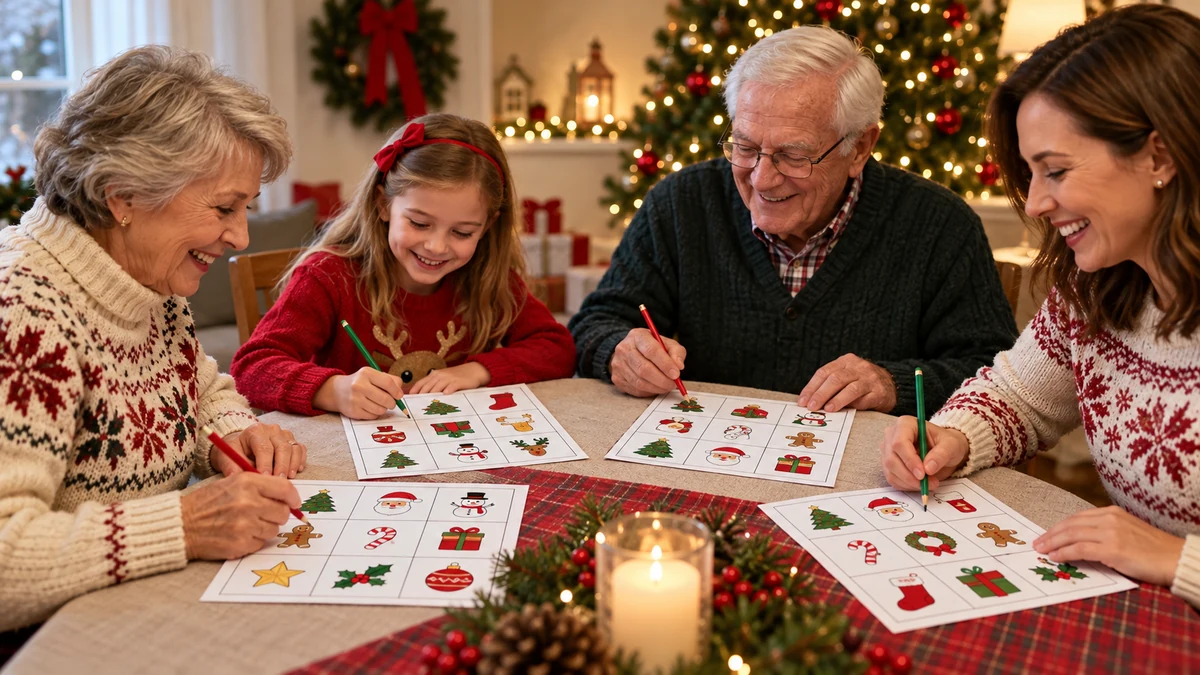
Give each player a card and a marking tool. The caller needs the complete calling set and a record of what has been drawn. Explain the winning pattern and how ties will be handled before starting.
Basic rules
- Draw: the caller draws one slip at random, says the picture or number and shows it to the players.
- Mark: players mark the matching square on their cards.
- Claim a win: a player who completes the announced pattern says “Bingo” or gives the agreed signal.
- Check: the caller compares the claimed pattern with the items already drawn before confirming the win.
- Mistakes: correct an accidental mark kindly and continue if the pattern is not complete. Explain fair-play expectations without automatically excluding a child for an honest error.
Winning patterns
- Line: one complete horizontal row, unless another direction was agreed in advance.
- Four corners: all four corner squares marked.
- X: both diagonals complete.
- T: the top row and centre column complete, on a grid that has a centre column.
- Full house: every square marked; suitable for a longer final round.
- Themed shapes: a tree or present outline can work on a larger grid, but show the exact required squares before play.
Variations by age and preference
- Young children: use fewer large pictures, visual calls and an adult helper if wanted.
- Older children and teenagers: offer optional short activities between rounds, keeping bingo wins based on the same rules for everyone.
- Adults: vary the announced patterns and prizes, while leaving enough time for everyone to mark their cards.
- Players with low vision: offer larger cards and preferred accessible marking methods. Different colours alone may not help, so ask the player what works.
- Team play: pairs can share reading and marking, with roles chosen by the players.
Formats and pace
- Short rounds: use a smaller grid or simpler winning pattern rather than rushing the calls.
- Themed series: try a line, then an X, then a full house, with a short break between rounds.
- Quiet bingo: display each call clearly and use a discreet winning signal for a group that prefers less noise. Keep spoken calls available if needed.
- Progressive patterns: move from simple to more demanding patterns, ending with a full house if the group still wants to play.
Confirming a winner
- Claim: the player announces the win or uses the agreed accessible signal.
- Check the pattern: the caller checks every required square against the drawn slips.
- If something does not match: explain the error, correct the mark and continue the round.
- Simultaneous wins: share the prize or use a fair tie-break agreed beforehand. Do not decide solely by who can shout or move fastest.
- Present the prize: confirm the result first. Photographs are optional and should only be taken or shared with appropriate permission.
Keeping the game relaxed and organised
- Explain the rules and display the winning pattern before each round.
- Call clearly and leave time for marking and questions.
- In a larger room, make sure everyone can hear or see the calls without making the volume uncomfortable.
- Keep a few varied, inexpensive prizes ready.
- Agree roughly how many rounds to play, with breaks and the option to stop.
- Keep routes clear, provide comfortable seating and offer larger or adapted cards as requested.
Creative, affordable prize ideas
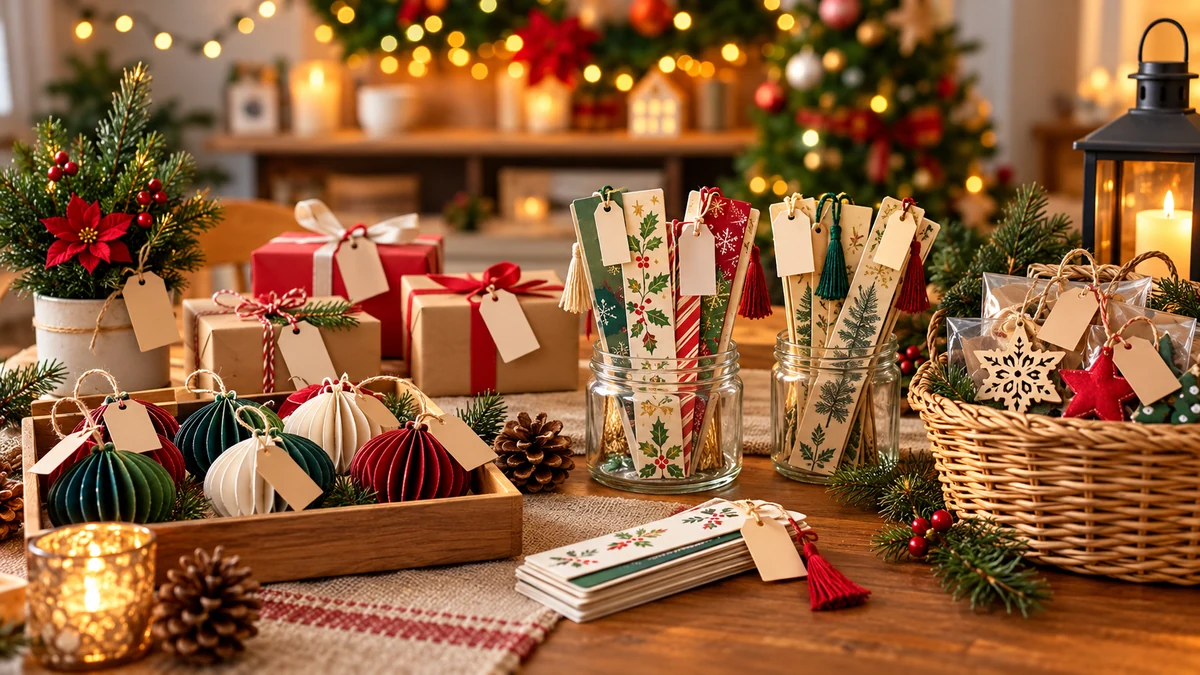
Small prizes
- Packaged treats: a suitable biscuit or chocolate can work if ingredients, allergies and age suitability are checked. Offer a non-food choice too.
- Christmas decorations: a paper ornament or other age-appropriate decoration can make a simple keepsake.
- Useful little gifts: notebooks, bookmarks or suitable pens can be practical options.
Prizes for children
- Small toys: choose reputable products with suitable age guidance, avoiding small parts for young children.
- Creative activities: an age-appropriate colouring book or craft activity can provide something to enjoy after the game.
- Treats: choose only items appropriate for the child’s age and dietary needs, with a non-food alternative available.
Prizes for adults
- Experience vouchers: a homemade promise of coffee together or a film evening can be more personal than an expensive gift card.
- Tasting gifts: a small jar of jam, bottle of olive oil or hot-chocolate sachet may suit the recipient; retain ingredient information.
- Help vouchers: offer a specific task you are genuinely happy to do, such as helping pack away decorations.
Handmade and reusable prizes
- Handmade gifts: a bookmark, small decoration or suitable homemade food gift can add a personal touch. For food, include ingredients and safe storage information.
- Reusable items: a folding shopping bag or fabric bookmark can be useful without elaborate packaging.
- Personalised certificates: add a drawing or a friendly message, keeping jokes kind and optional.
Prizes for different rounds
- Short rounds: a certificate or small decoration is enough.
- Middle rounds: combine two modest items or offer a simple experience voucher.
- Final round: choose something within your agreed budget, such as a small festive bundle. A larger cash prize is not necessary to make the ending enjoyable.
Presentation and organisation
- Wrapping: reuse small boxes, paper bags or decorated envelopes where practical.
- Labels: note age suitability and food ingredients so prizes can be matched appropriately.
- An inclusive finish: an optional small keepsake for everyone can end the session warmly, without adding another competitive draw.
Practical tips
- Always offer a non-food alternative where dietary restrictions could exclude someone.
- Compare prices and buy only what you need; bulk buying is not a saving if items go unused.
- Mix a few bought items with simple homemade gifts if you enjoy making them.
Turning bingo into a family Christmas activity
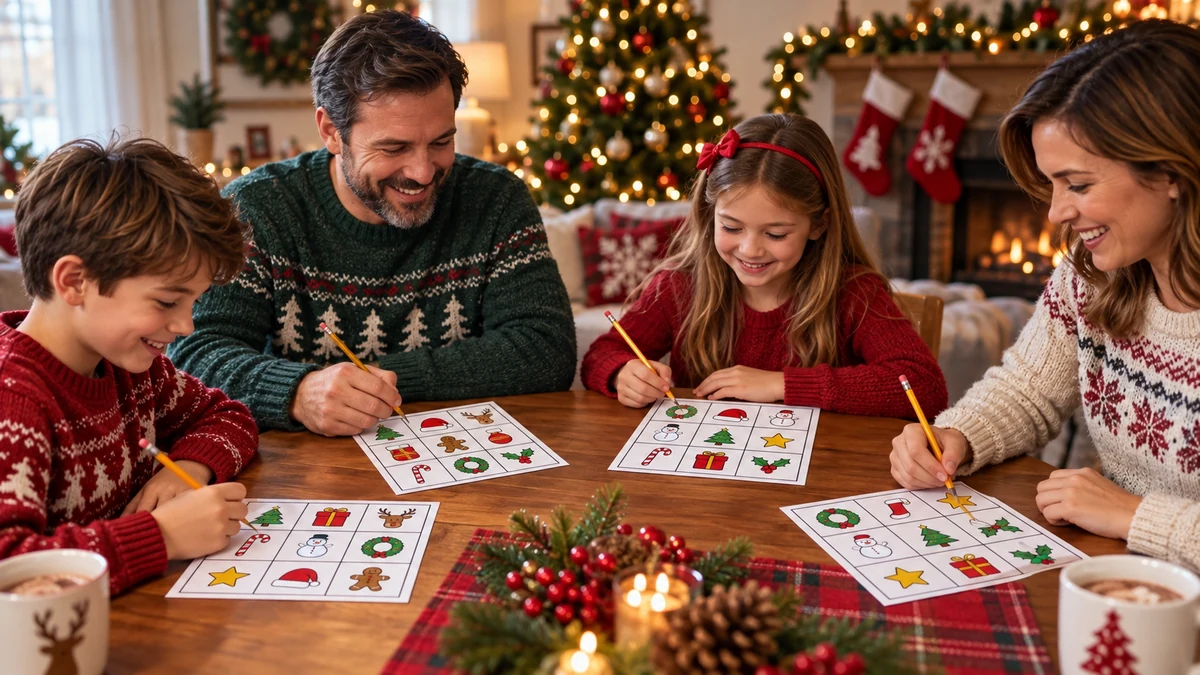
Adapt the cards, make calls clear and keep the rules simple. The aim is shared enjoyment, not an elaborate competition or expensive prize table.
Activities and age adaptations
- Pre-school children: use a few large pictures, a simple line and brief rounds, with an adult helping when needed.
- Primary-school children: mix recognisable pictures and numbers if appropriate. Offer an optional song or drawing activity between rounds.
- Teenagers and adults: try themed patterns or a friendly team format, avoiding timed marking that excludes slower players.
Materials and preparation
- Cards: prepare clear versions and offer a larger format for anyone who wants it.
- Marking tools: use age-appropriate pencils or crayons with supervision. Buttons, bottle tops and felt discs are not automatically safe for small children merely because they look large.
- Prizes: organise suitable choices by age and preference, including non-food options.
- Space: provide clear routes, comfortable seats and adequate light.
Simple, lively rules
- Demonstrate: show a completed winning pattern before starting.
- Visual calls: display the drawn picture while saying its name clearly.
- Round length: aim for a brief session, perhaps five to ten minutes for a simple round, and adjust to the group’s interest.
- Check calmly: an adult can compare the card with the drawn slips and explain the result.
Extra activities between rounds
- A quick craft break: offer colouring with suitable materials while people wait for the next round.
- A playful challenge: invite an optional festive sound or pose between games. Keep it separate from bingo marking so it does not change players’ chances of winning.
- Music and a pause: a short Christmas song can mark a break, at a volume everyone finds comfortable.
Safety and inclusion
- Suitable materials: keep small parts away from under-threes and children who mouth objects. Use supervised drawing to mark cards rather than loose counters for those players.
- Accessibility: ask about preferred card size, contrast and marking methods, and offer assistance without insisting on it.
- Allergies: keep food information available and offer non-food prizes. Do not rely on a vague “allergy-friendly” label.
Celebrating together
- Make teams: children and adults can share a card if they would enjoy that arrangement.
- Personalise the theme: use your own decoration pictures or family photographs with permission.
- Keep a memory: photograph the cards or finished crafts, or ask permission before photographing and sharing images of participants.
A homemade Christmas bingo game can be as simple as nine pictures, rearranged cards and a friendly caller. Add printing refinements or prizes only if they make the activity easier or more enjoyable.
Follow our updates for more family activities and practical Christmas ideas, and adapt each suggestion to the people taking part.
Thank you for reading! Visit the I Love Christmas blog for more seasonal inspiration and ways to celebrate together.
Christmas bingo: frequently asked questions
Is there a downloadable card pack with this article?
No. This article explains how to make your own cards. Start with a three-by-three grid, choose nine Christmas symbols, rearrange them across the cards and create matching calling slips.
What settings should I use to print the cards?
Use paper and settings supported by your printer, keep the design within its printable area and print one test page. Choose actual size when dimensions matter, or fit to page if needed. Check readability before printing the set.
Which marking tools suit children and adults?
Supervised pencils or crayons avoid loose small parts around young children. Adults and older children may use reusable counters or suitable wipe-clean pens, with small parts and pen caps kept away from younger children.
How can I adapt the cards for young children?
Use fewer large, recognisable pictures and brief rounds, with an adult helping if wanted. Demonstrate the winning pattern and leave plenty of time for marking.
How do we confirm a winner?
Compare the claimed pattern with the slips already drawn. Correct mistakes kindly. For simultaneous wins, share the prize or use a fair tie-break agreed before the game.
Can I use this idea at a paid or commercial event?
The guide describes a private family activity. Check the rights to any images or templates you use. If charging entry or organising a public or commercial bingo event, check the applicable rules with the relevant authority before proceeding; a free design does not provide permission to run such an event.
Sources and Further Reading
- Office for Product Safety and Standards — buying toys safely
- Child Accident Prevention Trust — toy safety