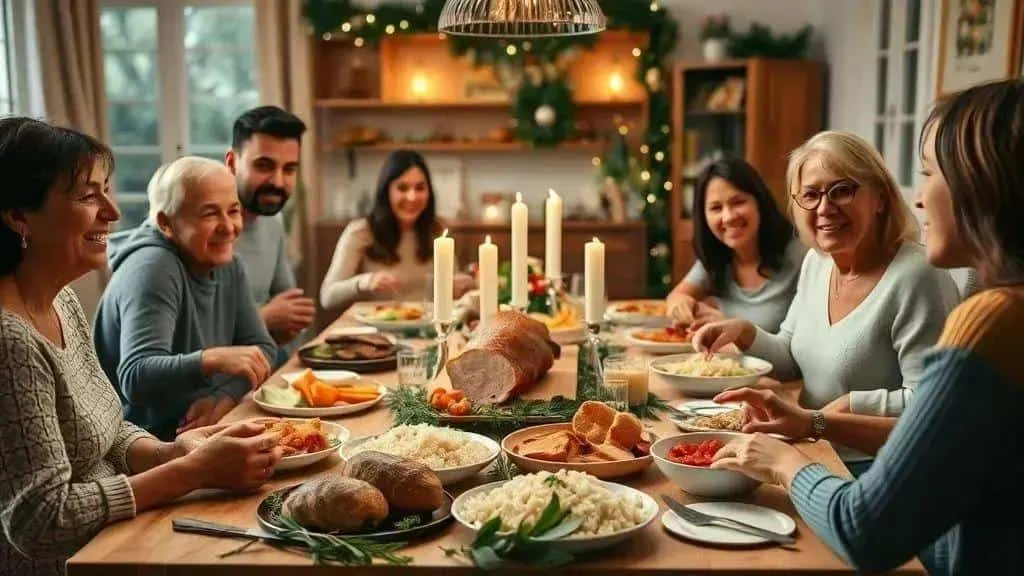
Christmas dinner has no single origin or fixed menu. Christian celebrations, regional food cultures, migration and changing family habits have shaped it over centuries. In Brazil, European, African and Indigenous influences help explain the varied dishes and memories shared around the festive table.
The history of Christmas dinner is about more than a meal: it brings together memories, rituals and affection. Where did the custom come from, how has it changed, and what could make your own celebration more meaningful? Here we explore its historical background, Brazil’s regional traditions and practical ideas to try at home.
Illustrations in this article are conceptual images, not documentary photographs or evidence of a particular historical event, destination, venue or access route.
The Historical Background of Christmas Dinner
The historical background of Christmas dinner includes the long-standing human custom of sharing food at important occasions. Seasonal feasts provide useful context, but a resemblance between two celebrations does not prove that one developed directly from the other.
Ancient Winter Festivals and Feasting
Long before modern Christmas celebrations, communities held festivals at different points in the year. Roman Saturnalia, held in December, included feasting and temporary departures from everyday social rules. It offers a comparison with later festive gatherings, rather than a complete explanation of the origins of Christmas dinner. Source: English Heritage — Relax like a Roman
Christmas and the Christian Calendar
Christmas developed as a Christian celebration of the birth of Jesus. As its observance spread, meals became part of religious and household festivities in different places. The history of 25 December is more complex than a simple claim that the Church replaced one pagan banquet; the date alone cannot establish the origin of a particular food custom.
Medieval Feasts and Social Differences
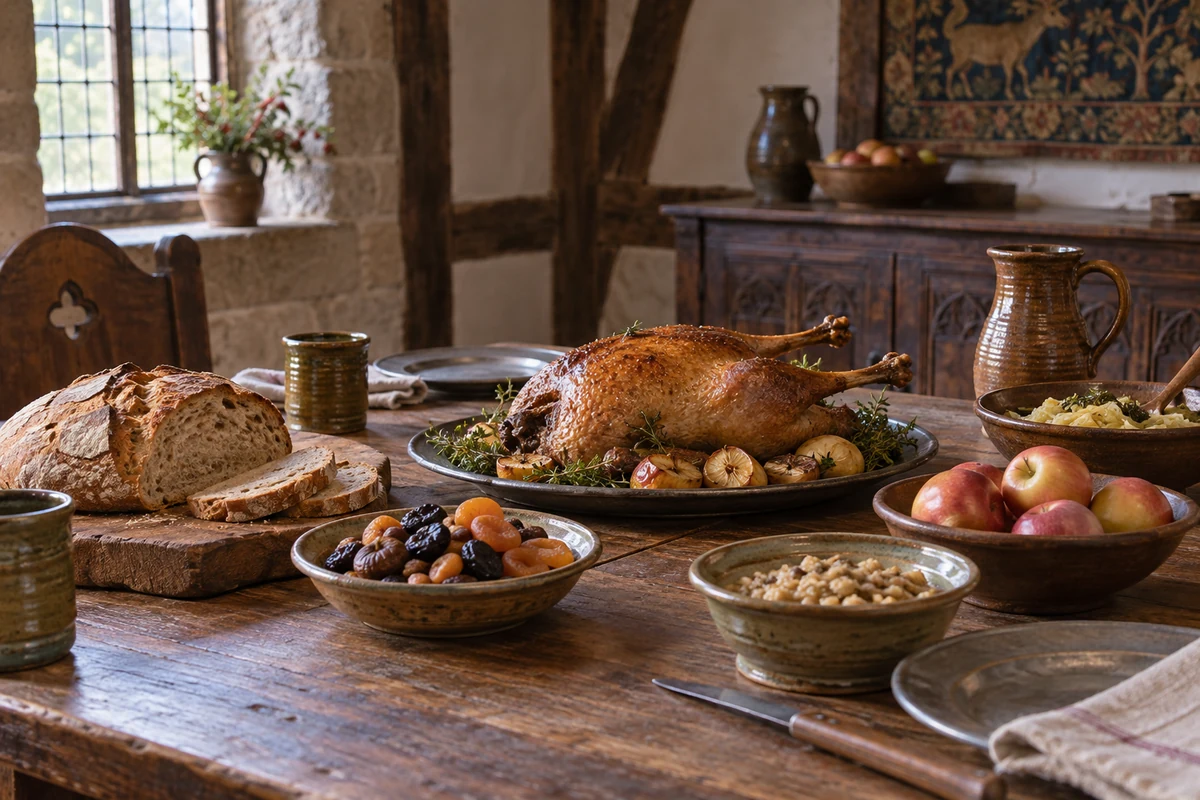
In medieval Europe, religious festivals were occasions for special meals. Wealthy households could serve elaborate dishes, including meat, bread and preparations with costly spices or dried fruit. Ordinary households had more limited resources, so there was no single medieval Christmas menu shared by everyone. Source: English Heritage — Medieval Christmas food
Migration, Ingredients and Local Adaptations
Recipes and food habits travelled through trade, migration and colonisation. In Brazil, European culinary practices encountered Indigenous food knowledge and African traditions, within a history that also included displacement and enslavement. Over time, local ingredients and household preferences helped create distinctive festive meals.
Christmas dinner is therefore best understood as a changing collection of traditions. Families preserve familiar elements while adapting their celebrations to different social, religious and cultural circumstances.
Religious Meaning and Seasonal Customs
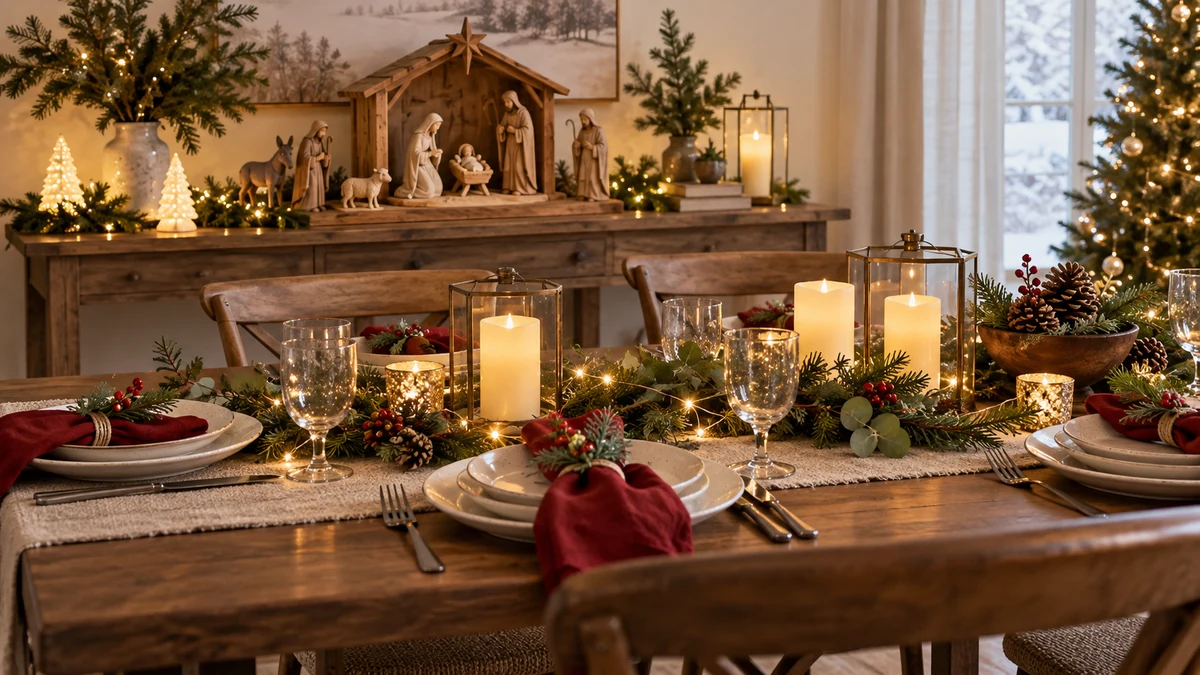
Christmas meals can bring together Christian observance, seasonal decoration and family routines. These elements do not all have the same history, and their meaning may differ from one household to another.
Cultural Exchange and Changing Meanings
The term syncretism describes the blending of religious traditions, but it should not be used as a blanket explanation for every Christmas custom. To understand a particular practice, we need evidence about where and when it developed, rather than assuming that all shared meals or decorations were adopted through the same process.
Comparing Seasonal Symbols
Some familiar decorations and activities can carry seasonal meanings, without necessarily having a single, continuous line of descent from an ancient festival:
- Greenery and branches can suggest continuing life during a northern winter.
- Candles and lights can express warmth, hope or religious meaning, depending on the setting.
- Community meals provide opportunities for sharing and hospitality in many different cultures.
Christian Meaning at the Table
For Christian families, a Christmas meal may include prayer, a Nativity display or reflection on the birth of Jesus. Sharing a family dinner should not be confused with the specific religious practice of Holy Communion; households and denominations observe the season in different ways.
Local Influences and Family Traditions
In Brazil, Indigenous, African and European influences have contributed to a varied food culture. The food on the table and the way people celebrate depend on local history, family background, personal choices and available ingredients.
How Christmas Dinner Varies across Brazil
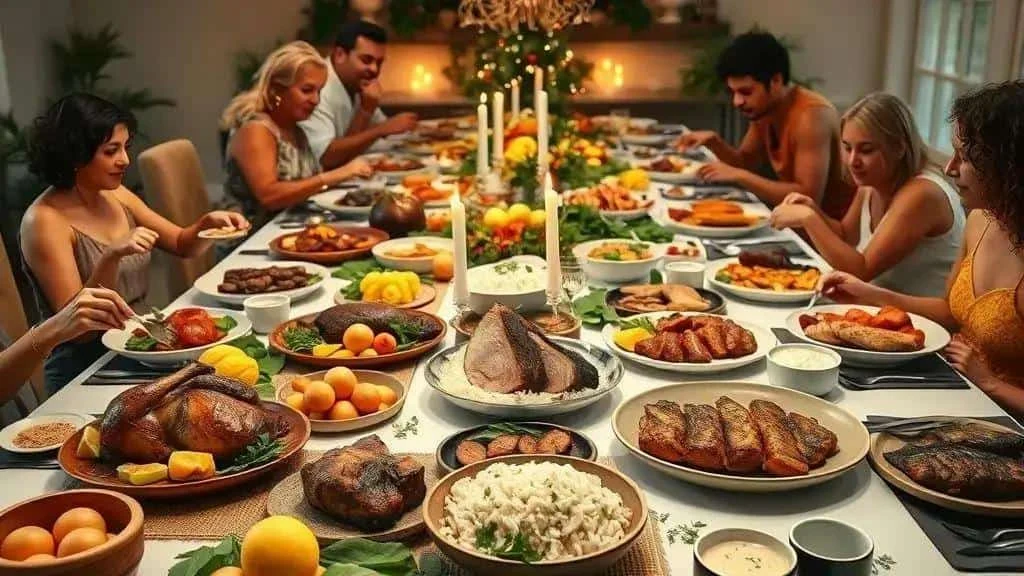
Brazil’s Christmas meal, often served on Christmas Eve, reflects a large and diverse country. The examples below are possibilities associated with different regional ingredients, not fixed menus that every family follows. Unlike a British Christmas, the celebration takes place during summer.
Northern Brazil
Northern ingredients can inspire a menu featuring roast tambaqui, an Amazonian fish, alongside cassava-based dishes and farofa made with toasted cassava flour. Local fruit can be used in salads and desserts. These are examples of regional choices rather than a universal northern Christmas dinner.
North-eastern Brazil
North-eastern food cultures include Indigenous, African and Portuguese influences. Families might choose dishes with carne de sol, a salted and dried beef speciality, fish stews or accompaniments using coconut and red palm oil. Coconut sweets, rapadura made from sugar cane and local fruit can also feature, depending on the household.
Central-western Brazil
Ingredients from the Cerrado can shape festive cooking in central-western Brazil. Pequi, a strongly flavoured regional fruit, may appear in rice dishes, alongside meat and different versions of farofa. Recipes and preferences vary substantially within the region.
South-eastern Brazil
Some south-eastern households serve pernil, a roast leg of pork, turkey, rabanadas or panettone. Fruit salads and cassava-based accompaniments may sit alongside these dishes. The region’s food is shaped by many communities, so it should not be described as exclusively European in character.
Southern Brazil
Southern Brazil also has diverse culinary traditions, including the influence of European migration. Some families include a barbecue, roast pork or poultry at Christmas, followed by pastries or fruit desserts. These are options within a varied regional food culture, rather than requirements for the celebration.
Bringing Regional Flavours to Your Own Meal
Choose ingredients that are available where you live and suit the people sharing your table:
- Replace turkey with roast fish if that better reflects your family’s tastes and local ingredients.
- Use toasted cassava flour to make farofa. Tucupi, a processed cassava liquid used in other Amazonian preparations, is a different ingredient and is not a direct substitute for the flour.
- Add local fruit to salads and desserts for colour and contrasting flavours.
- Include a regional speciality that recalls your family’s background or a place important to you.
These choices can connect the meal with local food culture. Seasonal ingredients may also help with budgeting, although availability and prices will vary.
Traditional Dishes and Their Food Histories
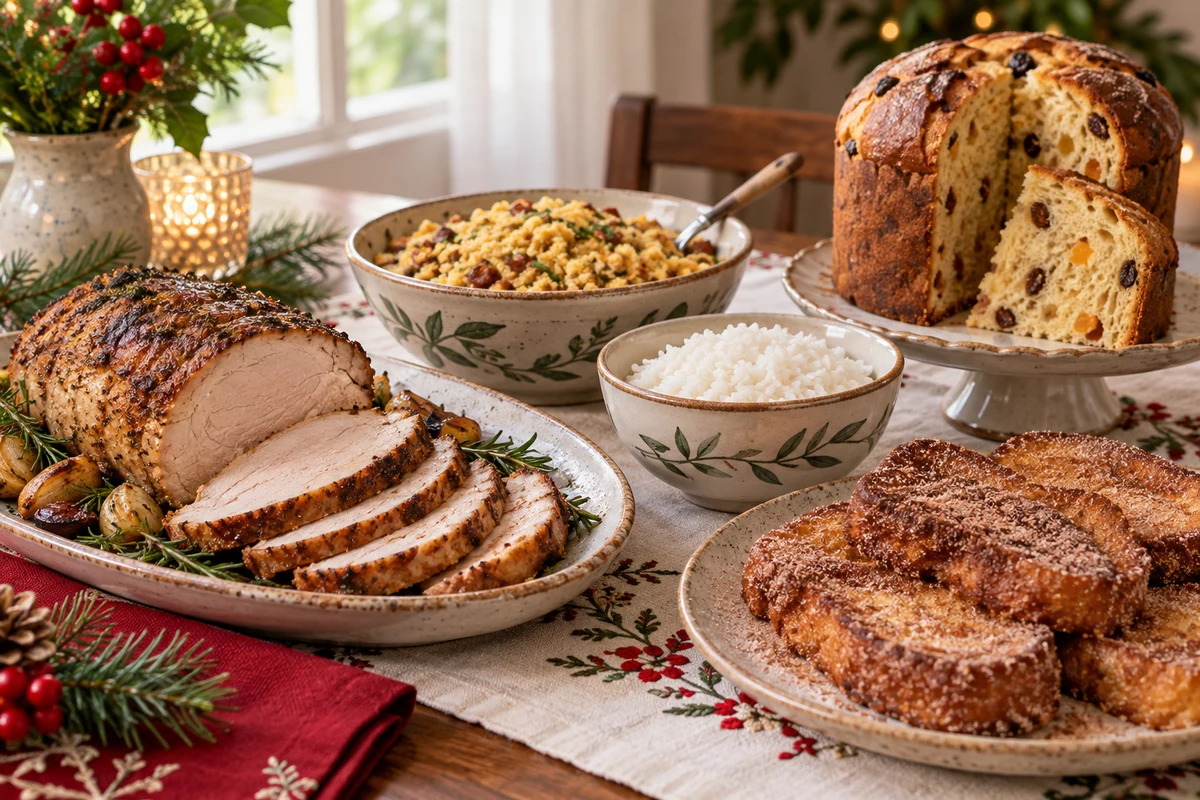
Festive dishes tell stories of migration, trade and adaptation. Brazil’s Christmas table draws on ingredients and knowledge from different communities, with recipes changing as they move between places and generations.
European Connections
Panettone is closely associated with Milan and is now a familiar Christmas treat in Brazil. Bacalhau, salted cod, reflects Portuguese culinary connections and appears in many Brazilian festive menus. Their histories are distinct: they did not arrive through one shared journey or acquire the same meaning in every household. Source: Italia.it — The history of pandoro and panettone
Indigenous and African Contributions
Indigenous knowledge of cassava and its processing is fundamental to Brazilian food culture, including the flour used in farofa. African and Afro-Brazilian culinary traditions have also shaped many regional preparations, including dishes using red palm oil. A modern recipe may combine several influences rather than belong to a single origin story. Source: IPHAN — Traditional cassava flour production and Indigenous knowledge
Familiar Foods on Brazil’s Christmas Table
- Roast pork and turkey are festive centrepieces in some households, seasoned with ingredients such as herbs, orange and garlic.
- Rabanadas are sweet slices of soaked and fried bread, related to European bread-based dishes and made in many Brazilian variations, sometimes using condensed milk or wine.
- Panettone reflects Italian influence and may be served plain, filled or with ice cream.
- Bacalhau can appear in salads, pies and baked dishes, including in families with Portuguese connections.
- Salpicão and fruit salads add variety. Salpicão often combines shredded chicken, vegetables and a creamy dressing, sometimes finished with crisp potato sticks; it is not necessarily a light dish simply because it is called a salad.
How Food Acquires Meaning
Beyond their flavours, familiar dishes connect generations. A recipe repeated each year can become part of a family’s story. Changing an accompaniment or adding a local ingredient can keep that tradition alive without losing its personal meaning.
Preserving and Renewing Christmas Dinner Traditions
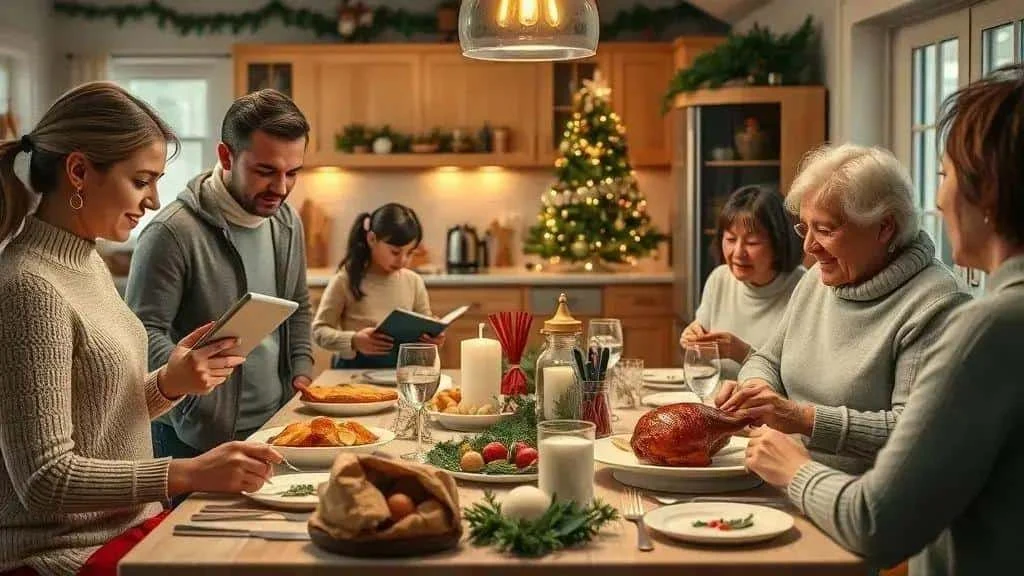
Keeping a Christmas dinner tradition alive can mean recording family recipes, adapting dishes to current tastes and finding ways for everyone to take part.
Record and Share Family Recipes
Write down quantities, preparation times and the small details an experienced cook may usually judge by eye. Use a notebook or digital document, and ask relatives to explain the steps that are missing from older handwritten recipes.
- Note variations: record suitable substitutions and how the seasoning changes.
- Make short videos: with permission, record a relative demonstrating a useful technique, such as preparing farofa.
- Share copies: give less experienced cooks a clear version they can follow and add their own notes to.
Involve Younger Generations
Invite children and young people to help with suitable, supervised tasks. Keep knives, hot pans and raw meat handling with a responsible adult, and choose activities appropriate to each child’s age.
- Set up activity areas: offer a space for arranging washed salad ingredients, decorating a dessert or making table decorations.
- Share responsibilities: one person can organise drinks, another the starter and another dessert, with adults overseeing food safety.
Simplify without Losing the Occasion
When time or money is limited, reduce the number of dishes or choose simpler preparations. A festive meal does not need to be elaborate to feel meaningful.
- Choose versatile ingredients: use the same suitable ingredient in more than one dish to reduce waste.
- Plan suitable dishes ahead: prepare components in advance where the recipe allows, keeping perishable food chilled until needed rather than leaving it on the table throughout the day.
Reduce Waste and Manage Costs
Plan your shopping, store leftovers safely and reuse decorations where possible. A realistic menu is often more useful than buying extra food just in case.
- Estimate portions: allow for the number of guests and the other dishes being served.
- Make the most of leftovers: cool them promptly and refrigerate within one to two hours. Eat refrigerated leftovers within 48 hours or freeze them. Suitable leftovers can become fillings or ingredients for another meal; follow safe reheating guidance and do not repeatedly reheat them. Source: Food Standards Agency — Cooking and leftovers
Create Small Rituals Worth Repeating
A song as the meal is served, a few shared messages or a toast of thanks can become a tradition. Let people join in comfortably without making participation compulsory.
- Share a memory: invite each person to recall a Christmas moment that matters to them.
- Make a wishes tree: hang cards with hopes for the coming year and use them as a starting point for conversation.
Bringing the Tradition Home
Christmas dinner has developed through changing food cultures, religious observance and family habits. Preserving a recipe can keep a memory alive, while small changes allow the celebration to remain meaningful for the next generation.
We hope these ideas inspire your next gathering. Try a regional accompaniment, ask a relative about an old recipe or introduce a simple ritual that makes everyone feel welcome.
Follow our social channels for more festive ideas, recipes and stories, and visit the I Love Christmas blog for more inspiration. Wishing you a Christmas full of good memories!
FAQ — Christmas Dinner Traditions
Where did Christmas dinner originate?
There is no single origin for every Christmas meal. Christian festivities, regional food cultures and household customs developed over centuries. Ancient winter feasts offer historical context, but similarities alone do not prove that today’s dinner came directly from one pagan festival.
Why do Christmas dishes vary across Brazil?
Local ingredients, migration, family preferences and Indigenous, African and European influences all contribute. There is considerable variation within each region as well as between them.
How can I preserve family recipes for future generations?
Record quantities and steps in writing or video, with the cook’s permission. Ask experienced relatives to explain their methods, then share clear copies with anyone learning to prepare the dish.
How can children and young people help with Christmas dinner?
Offer age-appropriate, supervised jobs such as setting the table, arranging prepared ingredients or decorating desserts. Adults should manage sharp tools, hot equipment and tasks involving raw meat.
How can I keep the meal affordable and reduce waste?
Plan portions, compare the cost of available seasonal ingredients and choose a manageable number of dishes. Store leftovers safely for later meals and use reusable decorations.
Can a Christmas meal include non-religious rituals?
Yes. Families can share music, memories or words of thanks without a religious ceremony. Respect the beliefs of those present and make participation optional.
Sources and Further Reading
- English Heritage — Relax like a Roman
- English Heritage — Medieval Christmas food
- Italia.it — The history of pandoro and panettone
- IPHAN — Traditional cassava flour production and Indigenous knowledge
- Food Standards Agency — Cooking and leftovers