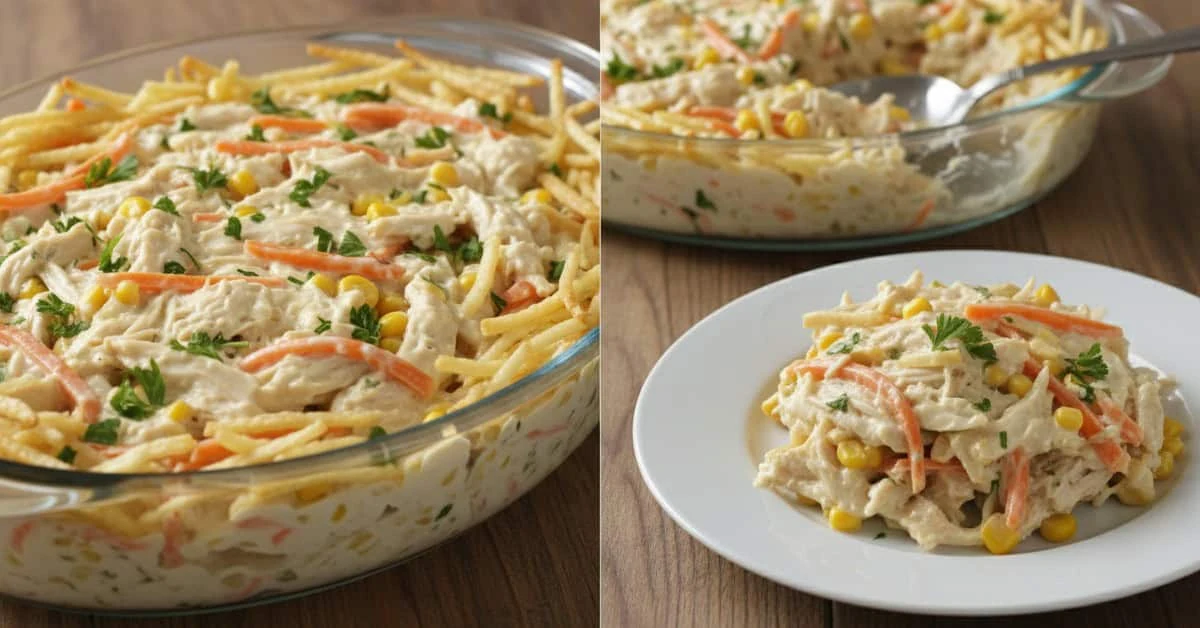
Christmas chicken salpicão is a Brazilian festive salad combining cooked shredded chicken, vegetables, fruit and a creamy dressing. Use chilled, safely prepared ingredients, add dressing gradually and keep refrigerated. Scatter batata palha, crisp shoestring potato sticks, over the salad only at serving time to preserve their crunch.
Christmas chicken salpicão brings a familiar Brazilian sweet-savoury flavour to the festive table. This traditional-style version includes apple, carrot, peas and sweetcorn, with practical preparation and variations.
Ingredients for traditional Christmas chicken salpicão
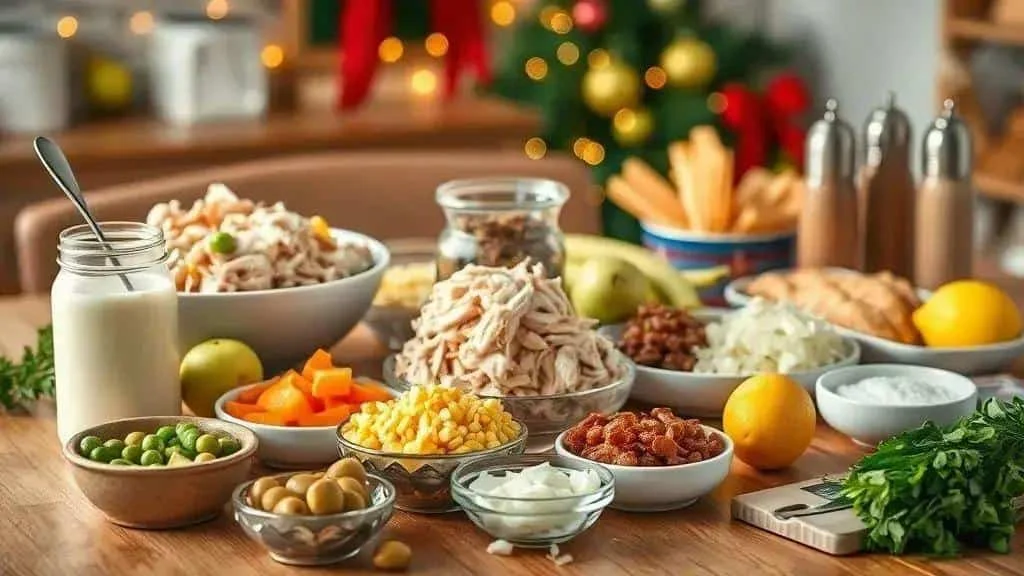
For traditional Brazilian Christmas chicken salpicão, gather the following ingredients. Chicken weight here means cooked, boneless meat, not the same weight of raw breast.
- 500 g cooked, shredded chicken breast – skin removed if preferred. Safely stored cooked turkey or drained ready-to-eat tinned chicken is an alternative.
- Up to 240 g mayonnaise – use a commercial product and add gradually. For a yoghurt dressing, start with 120 g plain Greek yoghurt and add more as needed; texture and flavour will differ.
- Up to 120 g cream, optional – single cream or a suitable soya-based alternative; omit if the dressing is already loose enough.
- 2 medium green apples, diced – washed, cored and peeled if preferred. Gala gives a sweeter flavour.
- 2 medium carrots, grated – raw for crunch, or cooked and fully chilled for a softer version.
- 200 g drained tinned sweetcorn – or frozen sweetcorn cooked according to the packet and chilled promptly.
- 75 g peas – cooked and chilled frozen peas, or drained ready-to-eat tinned peas.
- 50 g raisins, optional – soak firm ones in warm water for 5–10 minutes, then drain well and cool.
- 70 g sliced pitted green olives, optional – chopped pickled onions are an alternative with a different flavour.
- ½ small onion, finely chopped, optional – briefly rinse and drain well for a milder taste, or use a smaller amount of red onion.
- 150 g batata palha – Brazilian shoestring potato crisps, added at serving time. Crushed plain crisps or crispy onions are alternatives; check their ingredients and allergens.
- 10 g chopped parsley – or chives.
- Juice of ½ lemon – use some on the apple and the rest in the dressing. Up to 1 tablespoon cider vinegar is an alternative, added to taste.
- Salt and black pepper to taste – add gradually after accounting for mayonnaise and olives.
Practical ingredient notes
Cooking fresh chicken: start with enough raw boneless breast to yield 500 g cooked meat; around 650–750 g is a shopping estimate, but weigh after cooking. Gently poach in water with optional extra ½ onion and 1 bay leaf. Check 70°C for 2 minutes or 75°C for 30 seconds in the thickest part, then shred with clean forks and chill promptly. Do not wash raw chicken.
Dressing and texture: add mayonnaise and optional cream a little at a time. Keep the potato sticks separate until serving.
Dietary versions: use a suitable plant-based chicken alternative, vegan mayonnaise and plant-based cream for a vegan version. A yoghurt dressing or fewer potato sticks can change the nutritional profile; compare labels rather than assuming every substitute is lower in calories.
Storage: keep covered at 5°C or below and use within 48 hours of cooking the chicken, or sooner if another ingredient’s instructions require. Mixing the salad does not restart that clock.
How to make traditional Christmas chicken salpicão
- Cook chicken if needed: poach sufficient raw breast to provide 500 g cooked, shredded meat, using water to cover and optional extra onion and bay leaf. Around 20–25 minutes may suit some breasts, but size varies; check 70°C for 2 minutes or 75°C for 30 seconds rather than relying on time alone.
- Shred and chill: drain the fully cooked chicken and shred with clean forks once manageable. Spread in shallow portions and refrigerate within 2 hours. If reserving a little cooking stock, cool it separately and refrigerate promptly too. Both must be cold before salad assembly.
- Prepare vegetables and fruit: grate the carrots, dice the apples and toss the apple with part of the measured lemon juice. Drain the sweetcorn. Cook frozen peas according to their packet, then cool promptly; do not add hot vegetables to the cold salad.
- Prepare optional raisins: soak firm raisins for 5–10 minutes, then drain thoroughly and let them cool. Soft ready-to-eat raisins can be used directly.
- Mix the dressing: combine some of the mayonnaise with optional cream and the remaining lemon juice. Season lightly. You can add more mayonnaise later if needed rather than using the full amount immediately.
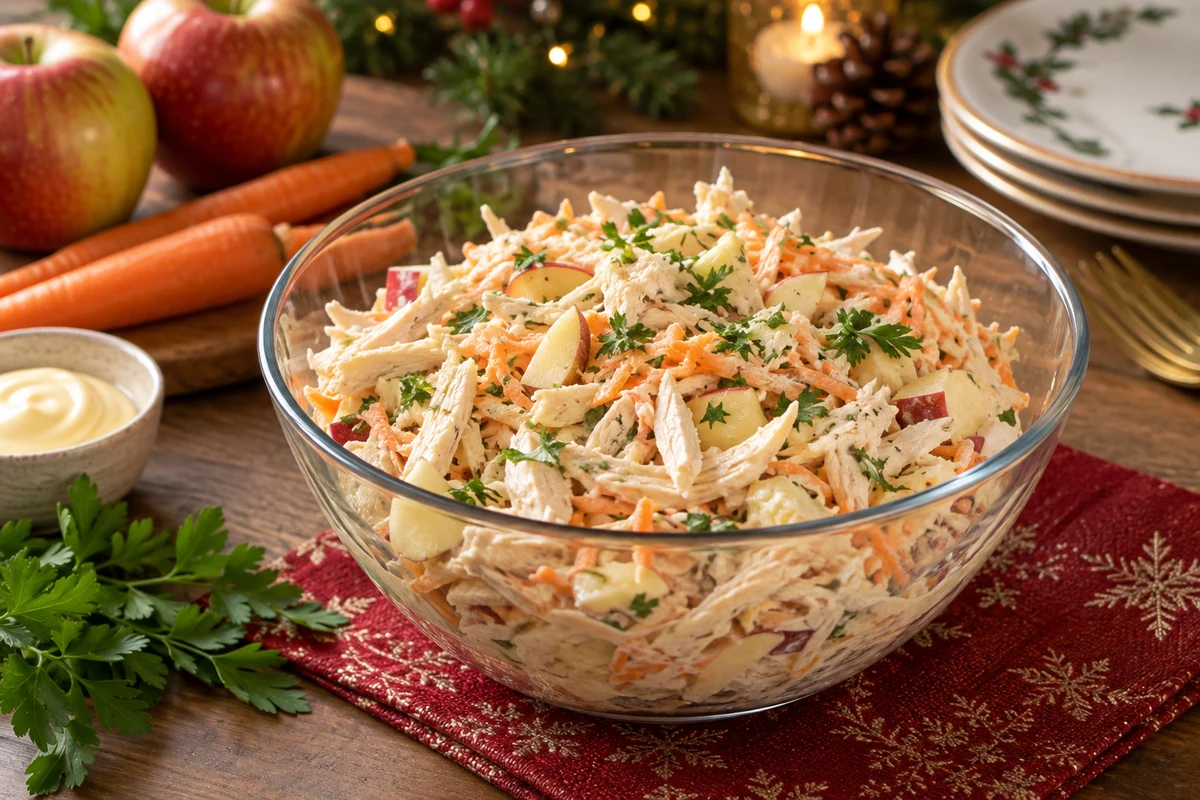
- Combine the salad: gently mix chilled shredded chicken, carrot, apple, sweetcorn, peas, optional raisins, olives and finely chopped onion. Add the parsley.
- Add dressing gradually: fold in enough to coat the ingredients without pooling. If still too dry, add a spoonful more dressing or 1–2 tablespoons safely chilled reserved chicken stock, never warm stock.
- Taste and adjust: use a clean spoon each time and add salt, pepper or lemon only as needed.
-
Practical tips
Crunch: keep the 150 g potato sticks separate until serving. Chilling: refrigerate the assembled salad for 30–60 minutes if desired; this resting time is not a substitute for cooling the chicken safely beforehand.
- Serve: spoon into a clean salad bowl, optionally lined with washed and dried lettuce. Add potato sticks and parsley just before taking it to the table, keeping the remaining salad chilled.
- Quick alternatives: replace some mayonnaise with plain Greek yoghurt, use cooked shredded turkey instead of chicken, or add toasted chopped nuts only if suitable for your guests.
- Storage: refrigerate covered at 5°C or below and use within the chicken’s original 48-hour cooked-storage window, or the shorter limit of any ingredient. Store potato sticks separately.
Christmas chicken salpicão variations
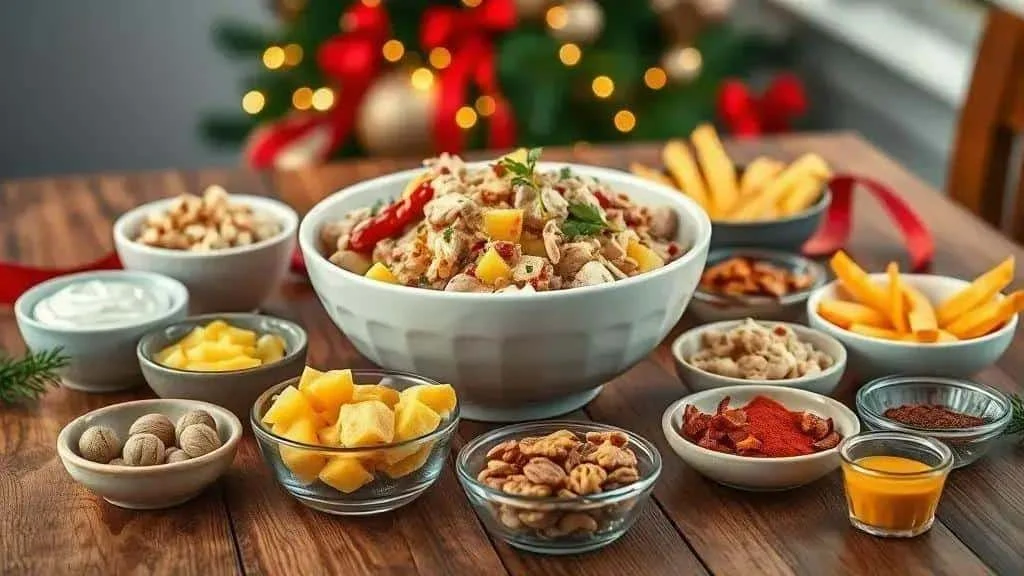
Try one of these variations on traditional Christmas chicken salpicão, adjusting dressing gradually.
Yoghurt-dressed version
A tangier dressing that can reduce richness, depending on the products chosen.
- Up to 240 g plain Greek yoghurt – in place of mayonnaise, added to taste and texture.
- Up to 60 g reduced-fat cream, optional – only if needed; yoghurt may already provide enough moisture.
- 100 g potato sticks instead of 150 g – add just before serving.
Vegan version
Replace all animal-derived ingredients and follow the preparation instructions for the alternative protein.
- 500 g prepared plant-based chicken alternative – cook if required by its label and chill promptly before mixing.
- Up to 240 g vegan mayonnaise – added gradually.
- Up to 120 g plant-based cream – optional; check soya, nuts and other allergens, and use no chicken stock.
With tropical fruit
Fruit adds a different sweet-savoury contrast. Drain it well to avoid a watery dressing.
- 1 medium mango, diced – replace part of the apple rather than adding too much extra fruit.
- About ½ measuring cup (120 ml) diced pineapple – fresh or well-drained tinned pineapple, replacing another portion of apple if desired.
- The main recipe’s ½ lemon – use to season and limit apple browning, not as a food-preservation treatment.
With toasted nuts
Nuts add a toasted flavour and extra texture; identify them clearly for guests.
- 60 g chopped walnuts or cashews – toast lightly and cool fully before adding.
- Reduce the potato sticks if you prefer a less heavily topped salad.
With bacon and smoked paprika
A richer version with a smoky, savoury flavour.
- 100–150 g diced bacon – cook thoroughly until crisp, drain and chill promptly before adding to the cold salad.
- Up to 1 teaspoon smoked paprika – stir into the dressing to taste.
With curry spices
A mild curry dressing changes the flavour while keeping the chicken-and-vegetable base.
- Up to 1 teaspoon curry powder – use a product suitable for an uncooked dressing or follow its preparation instructions; check allergens.
- A pinch of turmeric, up to ¼ teaspoon – optional for colour, subject to the product’s usage instructions.
Adapting any variation
Balance: use enough dressing to coat the listed ingredients; no fixed protein-to-vegetable ratio is necessary. Taste gradually: add salt and lemon in small amounts with a clean tasting spoon. Finish: keep crisp toppings separate until serving.
Choosing fresh ingredients on a budget
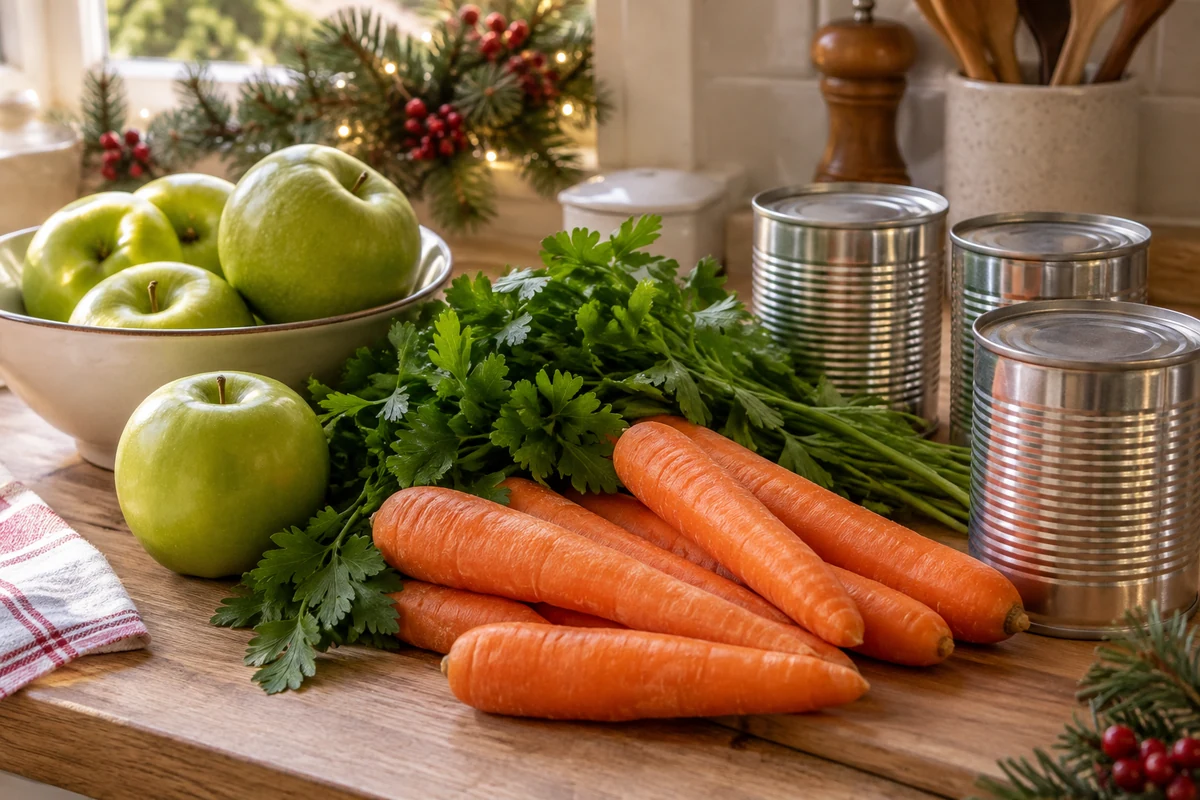
- Compare seasonal produce: apples and carrots are practical UK ingredients; buy sound produce at a sensible price rather than assuming a particular shop is always cheapest.
- Compare cooked yields: breast meat, a whole chicken or safely stored roast leftovers can work. Include bones, skin and cooking loss when comparing value.
- Check quality: choose firm apples and carrots without mould or deterioration. Follow date and storage instructions as well as appearance.
- Use price per kilogram: compare unit prices and the amount you will actually use.
- Use tinned and frozen vegetables appropriately: drain ready-to-eat tins; cook frozen peas or sweetcorn as directed before cooling and adding. Rinsing alone does not replace required cooking.
- Plan leftovers: buy for the portions needed. A sandwich made from leftover salad still follows the original chicken’s storage deadline.
Shopping checklist
- Apples: firm and undamaged; tart varieties balance the creamy dressing.
- Carrots: firm, without mould or serious deterioration.
- Chicken: buy from a reliable chilled or frozen supply, check packaging and use-by instructions, and transport promptly. Pink colour or normal smell cannot prove safety.
- Fresh herbs: choose sound leaves and buy a quantity you can use.
- Potato sticks: check the date, package condition and allergen information; keep dry until serving.
Storage and saving money
Produce storage: follow the produce’s storage guidance. Toss cut apple with a little lemon and refrigerate covered; lemon slows browning but does not extend safe storage indefinitely.
Plan the shop: use a list based on the recipe and compare offers with what you will actually eat.
Check substitutes: plain yoghurt can replace some mayonnaise, but price and calories depend on the product. Seeds are an optional texture change, not an automatically safe substitute for someone with a nut allergy.
Making use of offers
- Local shops and markets: compare prices and freshness; an end-of-day offer is useful only if you can store and use the food safely.
- Larger packs: raisins or nuts may cost less per kilogram, but account for storage, allergies and waste.
- Weekly offers: plan chicken and potato-stick purchases around genuine savings without exceeding use-by limits.
Presenting salpicão at Christmas

Assemble the chilled salpicão in clean dishes, keeping the salad refrigerated until service. Add crunchy garnishes only at the last moment.
Plating step by step
- Choose a dish: a white or clear salad bowl shows the colours; small bowls work for individual portions.
- Add an optional base: line the dish with washed, dried lettuce using clean utensils.
- Spoon in the salad: distribute gently without compressing, leaving room for the topping.
- Shape simply: a slight mound in the centre gives height without elaborate handling.
- Add crunch at service: scatter potato sticks over part of the surface just before serving.
- Add colour: use parsley or thin apple slices. If adding grapes, prepare them appropriately for guests; young children’s grapes should be cut lengthways into quarters, not merely halved.
- Keep garnish edible and simple: parsley and lemon zest are enough. Use flowers only if supplied specifically as edible, not ordinary decorative blooms.
- Provide serving utensils: offer a dedicated salad spoon and a separate bowl of potato sticks for guests to add themselves.
Alternative presentations
- Individual portions: layer a little lettuce and salad in small dishes, adding potato sticks just before serving.
- Pastry cases: fill fully baked, cooled savoury pastry cases with chilled salad shortly before service. Check wheat, egg and milk allergens in the pastry.
- Buffet service: use small bowls and replace with freshly chilled portions rather than continually topping up an old bowl. Keep the main batch refrigerated.
Finishing and keeping chilled
Colour: leave apple and carrot visible near the surface. Timing: assemble up to an hour ahead if useful, but keep refrigerated and add potato sticks only when serving.
Serving temperature: serve cold, keeping at 5°C or below until it goes to the table. Minimise time out and return leftovers promptly; do not leave it sitting through a long warm buffet.
Allergen information: use clean utensils and identify actual ingredients such as egg or mustard in mayonnaise, milk in cream, and any added nuts or soya. Check every product label rather than treating olives as a standard major allergen.
Common salpicão problems and how to avoid them
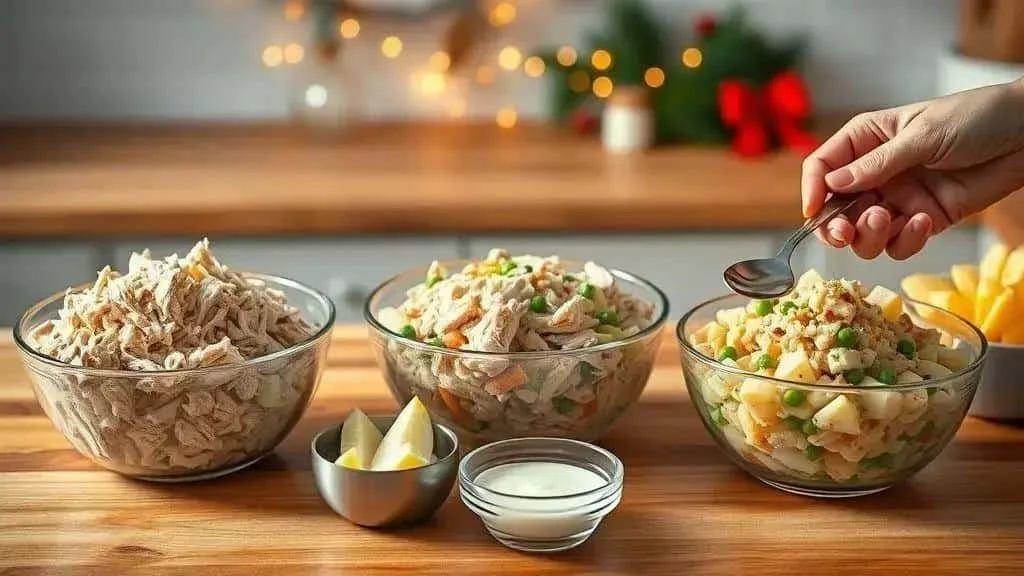
- Dry chicken: poach gently and stop when it has reached a safe cooking temperature. A small amount of safely cooled cooking stock can adjust the salad’s moisture; fixed cooking time alone is not enough.
- Soggy potato sticks: keep them dry and separate until the salad is being served.
- Too much dressing: fold it in gradually, stopping when the ingredients are coated without liquid pooling.
- Browning apple: cut near assembly time and toss with a little lemon juice. Normal browning is mainly a quality issue, not automatically spoilage.
- Overseasoning: add salt and lemon gradually and taste with a clean spoon between adjustments.
- Unbalanced texture: combine tender chicken with apple, grated carrot and a last-minute crisp topping.
Adjusting the finished salad
- If too dry: fold in a little more dressing or 1–2 tablespoons safely chilled stock, within the original storage window.
- If watery: carefully spoon off excess pooled liquid with a clean utensil and add a little safely chilled chicken or well-drained vegetables if available. Do not press kitchen paper into the mixed salad.
- If apple has browned: normal oxidation can be left if you do not mind its appearance. Replace for presentation only if desired; discard ingredients showing actual spoilage or unsafe storage.
- Adjust salt and acidity: add small amounts, fold gently and taste again with a clean spoon.
- Restore crunch at service: add fresh potato sticks or suitable toasted nuts, identifying any new allergens.
Avoiding last-minute problems
- Taste safely during assembly: all chicken and ingredients requiring cooking must already be fully cooked and chilled; use clean tasting utensils.
- Separate toppings: store crisp ingredients apart from the chilled salad until service.
- Allow cooling time: cook the chicken ahead, chill promptly and assemble the cold salad 30–60 minutes before serving, keeping it refrigerated throughout the wait.
Thank you for reading
We hope these ideas help you prepare a flavourful, practical Brazilian Christmas chicken salpicão.
Follow our social channels for more festive recipes and serving ideas, and share your results with us.
Visit the I Love Christmas blog for more Christmas food and inspiration.
Wishing you a happy Christmas and an enjoyable meal!
Christmas chicken salpicão: frequently asked questions
How should I store prepared salpicão?
Keep covered at 5°C or below and use within 48 hours of cooking the chicken, or sooner if another ingredient requires. Salad assembly does not restart the deadline. Keep potato sticks dry and separate until serving.
Can I use leftover roast chicken?
Yes, if it was cooled and refrigerated safely and is still within its original cooked-storage limit. Remove skin and bones as needed and shred. The salad must be eaten within that same deadline, not 48 new hours after mixing.
How do I keep the potato sticks crisp?
Keep them in their sealed packaging according to the label, dry and separate from the chilled salad. Add only to the portion being served.
What can replace mayonnaise?
Plain Greek yoghurt gives a tangier dressing; add gradually to the desired consistency. Vegan mayonnaise works for an animal-free version when the chicken and cream are also replaced. Check allergens and nutritional labels rather than assuming a substitute is always lighter.
Can I prepare salpicão ahead?
Yes. Cook and chill the chicken safely, prepare other components and keep them refrigerated. Mix 30–60 minutes before service if desired, keep cold and add the potato sticks at the last moment. Follow the earliest ingredient’s storage deadline.
How do I make vegan salpicão?
Use a suitable prepared plant-based chicken alternative, vegan mayonnaise and optional plant-based cream, with no chicken stock. Follow cooking and chilling instructions for the substitute and check all labels for allergens.
Sources and Further Reading
- Food Standards Agency: cooking food safely
- Food Standards Agency: chilling, freezing and defrosting food
- NHS: preparing food safely for babies and young children