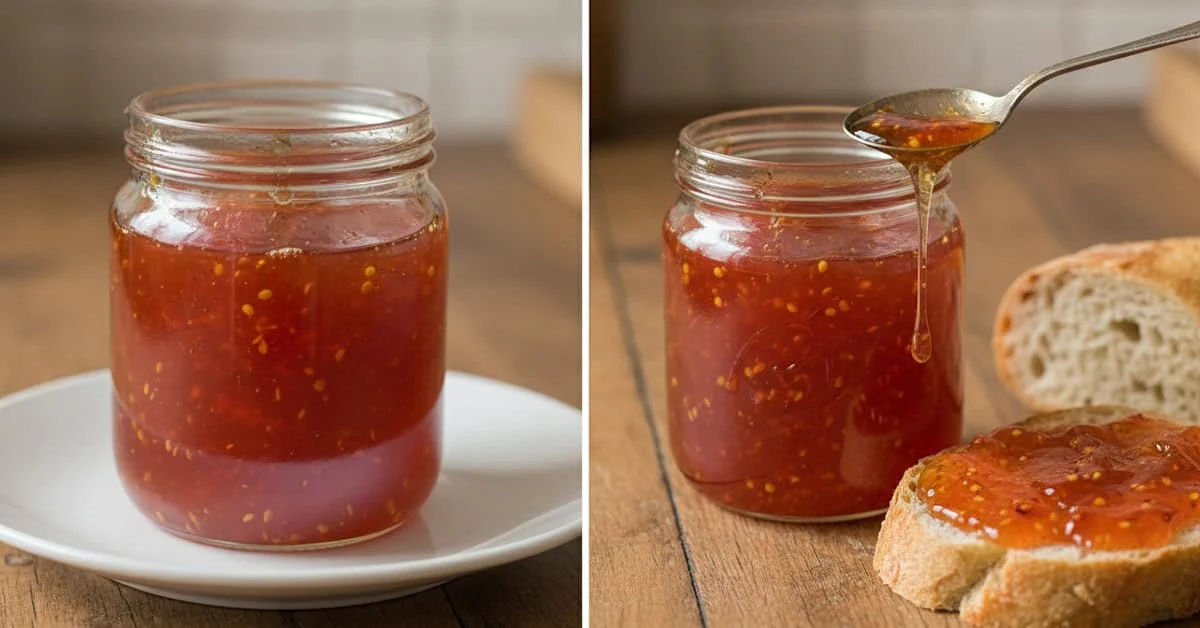
This homemade chilli jam combines red peppers and chillies with sugar, vinegar and grated apple for a sweet, tangy condiment. Serve with meat, cheese or sandwiches, adjusting the heat to suit your guests. This is a fridge recipe, not a validated preserve for cupboard storage: chill promptly, use within 48 hours or freeze small portions.
A spoonful of homemade chilli jam adds a sweet, sharp contrast to roast meat, a cheese board or a simple sandwich. This version starts with a mix of sweet peppers and fresh chillies, so you can choose a manageable level of heat rather than making an unexpectedly fiery batch.
Ingredients for homemade chilli jam
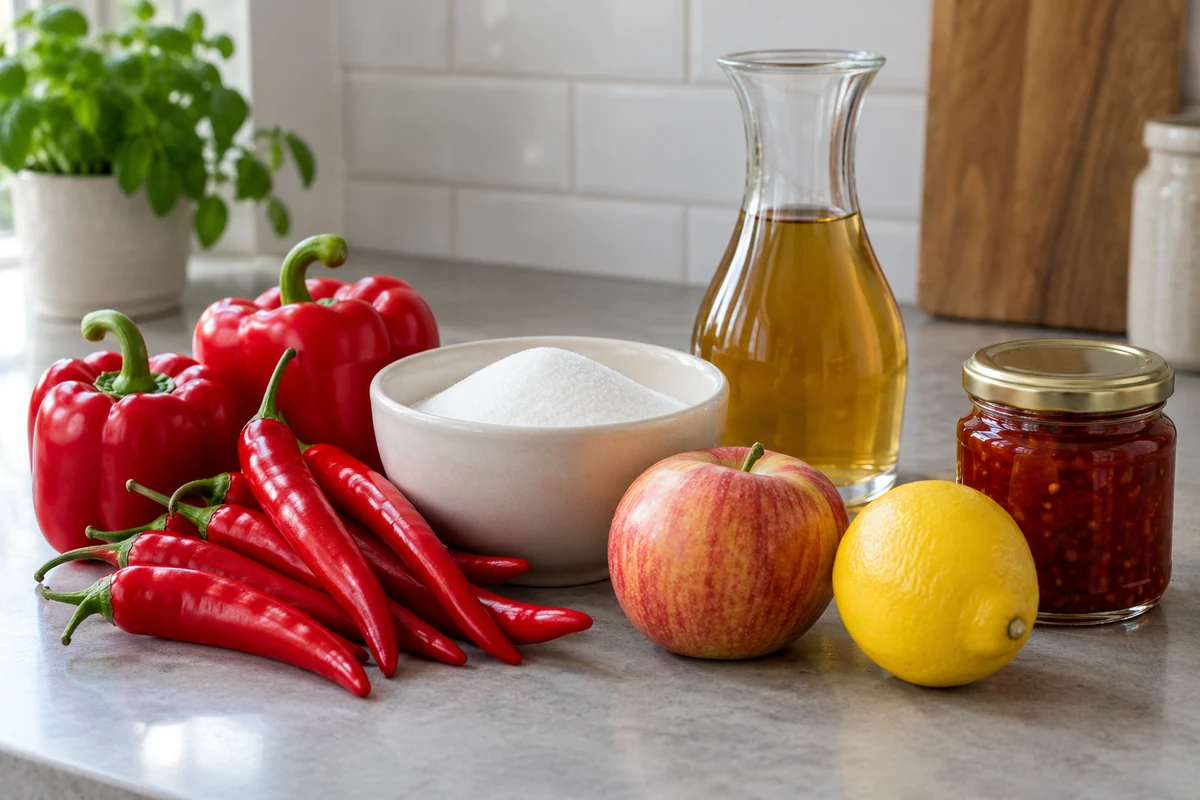
To make this homemade chilli jam, prepare the following ingredients. Weigh the peppers and chillies after removing their stalks and trimming:
- 500 g prepared red peppers and chillies combined – a starting mix is 400 g sweet red pepper and 100 g mild red chilli. For a milder result, replace more chilli with sweet pepper.
- 500 g granulated sugar – contributes sweetness and texture, but does not by itself make this recipe safe for cupboard storage.
- 150 ml cider vinegar labelled 5% acidity – provides tang; ordinary white vinegar of the same stated acidity gives a different flavour.
- 1 medium apple, cored and grated, about 150 g prepared weight – helps give body. Do not replace it with an arbitrary sachet of pectin: commercial pectins require their own proportions and method.
- 1 tbsp lemon juice – for flavour; its presence is not proof that the finished jam is safe to can.
- ½ tsp salt – to balance the sweetness.
- 1 tsp finely grated fresh ginger – optional.
- Small, clean, heatproof food containers with lids – suitable for refrigeration; use freezer-safe containers for portions you intend to freeze.
Substitutions and important notes
Chilli varieties vary greatly in heat. Removing the pale inner membranes as well as the seeds can reduce the heat, but does not guarantee a mild result. Sweet peppers are the most predictable way to dilute it. The apple helps the mixture thicken, although the final texture may be softer than a commercial jelly. All versions here need refrigeration; changing the vinegar, sugar or fruit does not establish a safe canning process.
How to make chilli jam
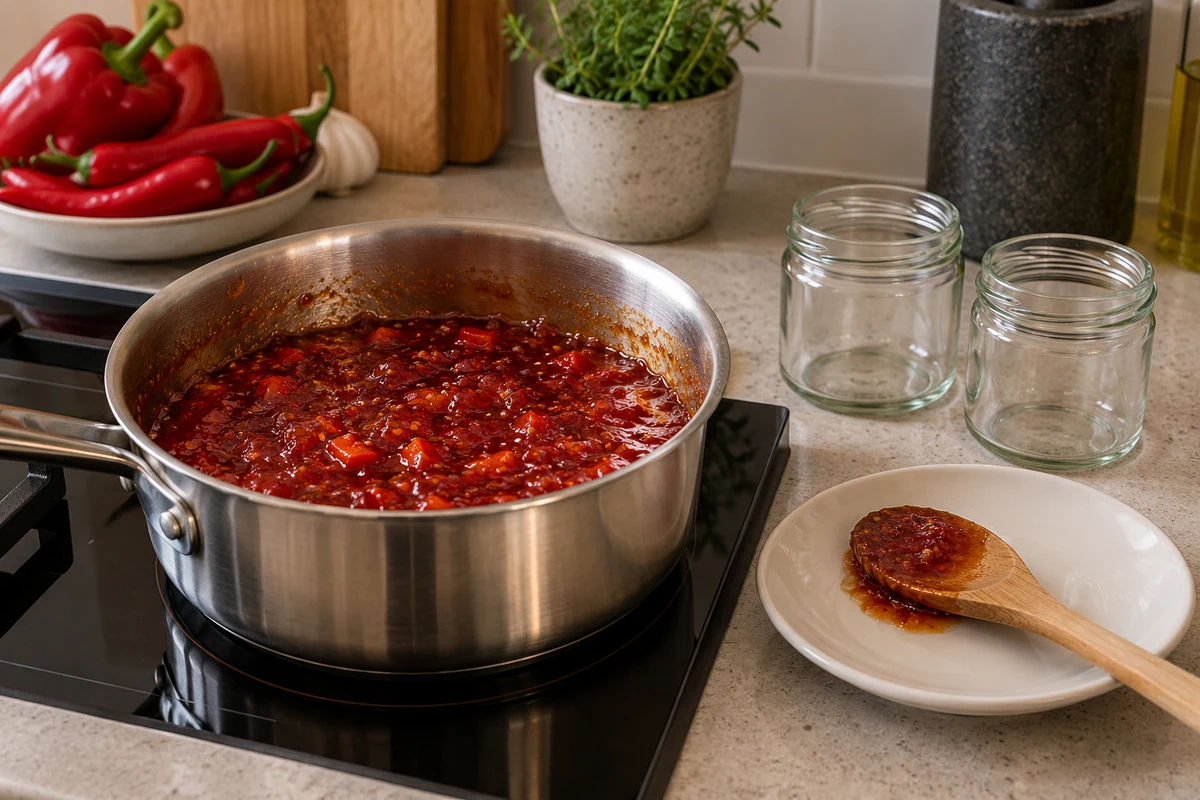
Use clean utensils and follow these steps for your chilli jam. Have small containers ready so you can cool it promptly after cooking.
- Prepare the containers: wash containers and lids thoroughly in hot soapy water, rinse and dry hygienically. Follow the manufacturer’s instructions for heat resistance. Clean jars alone do not make a recipe shelf-stable.
- Prepare the 500 g pepper mixture: wash the peppers and chillies, remove stalks and trim. Wear food-safe gloves when handling chillies. Remove membranes and seeds for a milder batch, then weigh the prepared mixture.
- Chop or process: finely chop the peppers and chillies, or pulse them with the grated apple and vinegar to a coarse mixture. Avoid blending so long that everything becomes completely smooth.
- Add the sugar: put the mixture in a wide, heavy-based saucepan with the sugar, salt, lemon juice and optional ginger. Stir over low heat until the sugar has dissolved.
- Simmer and reduce: bring to a steady simmer and cook, stirring regularly, until thickened. Start checking after about 20 minutes; the time depends on the pan and the water content of the ingredients. Take care with hot sugary splashes.
- Check the texture: put a small spoonful on a chilled plate, allow it to cool and push it gently. A light wrinkle or a thick, spoonable consistency is enough for this condiment. Apple-based batches may set softly. This test checks texture, not preservation safety.
- Cool and refrigerate: divide into small heatproof containers, allow heat to escape promptly and refrigerate within 1–2 hours. Keep at 5°C or below. Use within 48 hours or freeze promptly. Do not water-bath can this unvalidated recipe or store it in the cupboard.
Quick tips
- Control the heat: replace some or all of the chillies with sweet red pepper. Chilli ripeness alone does not reliably indicate heat.
- Using commercial pectin: choose a recipe specifically written for that product and follow its ingredient quantities. A 20 g sachet is not a universal substitute for an apple.
- Ginger and sugar: a teaspoon of ginger adds warmth. Replacing a small amount of granulated sugar with demerara changes the flavour; honey is not a direct substitute for all the sugar.
- Storage: keep every batch refrigerated from the start, whether the container has been opened or not. Use within 48 hours or freeze in portions.
Chilli jam variations: fruity, smoky and more
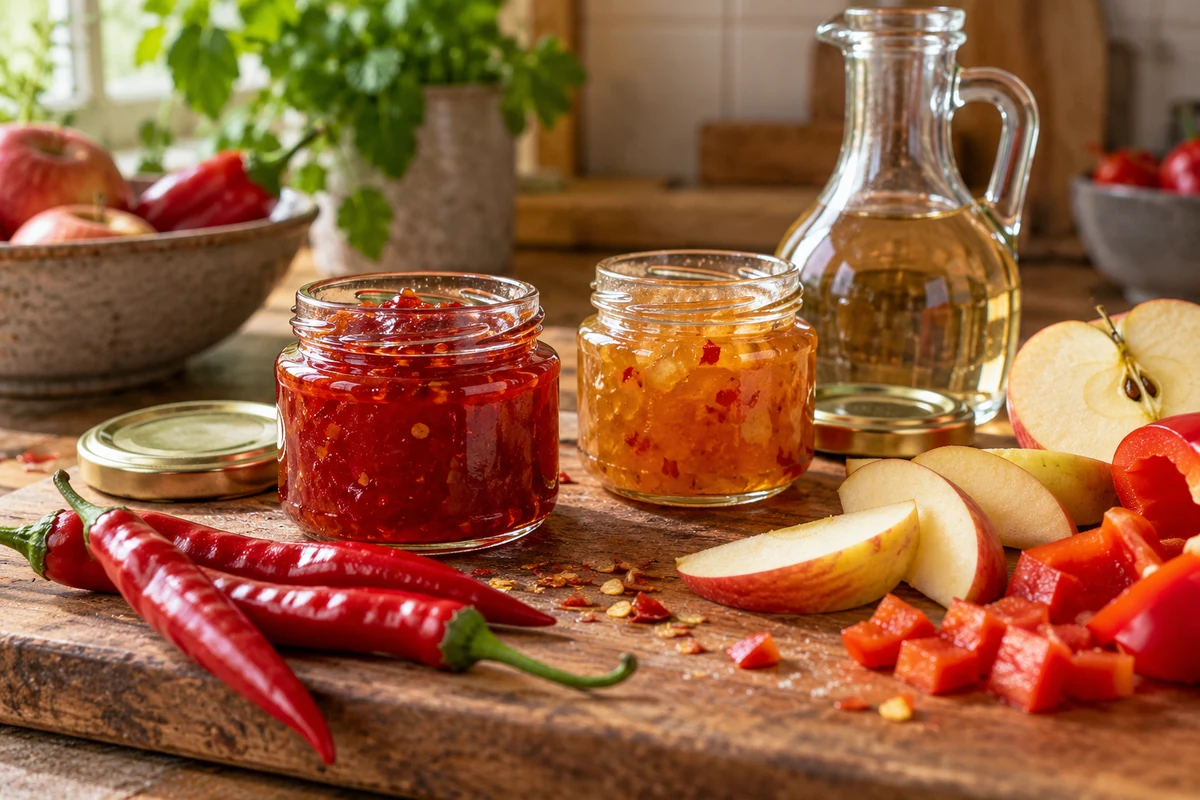
These ideas adapt the flavour of chilli jam. They remain short-storage refrigerated condiments, not canning recipes. Try a quarter batch first and expect the texture to change.
A fruity version
Mango or peach can soften the flavour alongside grilled chicken and mild cheese. Follow the main method with the quantities below, allowing extra time for the fruit to reduce.
- 500 g prepared red pepper and mild chilli mixture – use mostly sweet pepper for a gentle version.
- 300–400 g granulated sugar – this lower-sugar variation may be softer and more sauce-like than the main recipe.
- 200 g peeled mango or peach flesh, finely chopped.
- 150 ml cider vinegar labelled 5% acidity.
- 1 medium apple, cored and grated, about 150 g prepared weight.
- 1 tbsp lemon juice, plus the salt from the main recipe.
Finely chopped pineapple gives a different flavour, but its water content changes the cooking time. Keep the vinegar quantity rather than reducing it because the fruit seems juicy. Refrigerate promptly and use within 48 hours, or freeze.
A smoky version
Smoked paprika gives the base recipe a savoury edge for roast meat or burgers. Keep the apple, lemon juice and other base ingredients.
- 500 g prepared pepper and chilli mixture – optionally replace a small amount with finely chopped chipotle in adobo, allowing for its heat and salt.
- 500 g granulated sugar, as in the base recipe.
- 150 ml cider or white vinegar labelled 5% acidity.
- ½–1 tsp smoked paprika – start with less if also using chipotle; there is no need to add liquid smoke as well.
Taste a cooled spoonful before adding more smoky seasoning. Adobo can already be salty, so reduce the added salt initially and adjust at the end.
A hotter version
Increase the proportion of ordinary red chilli gradually, keeping the total prepared pepper mixture at 500 g. Very hot varieties need much smaller quantities.
- Start with the 500 g base mixture and replace a few grams at a time with a hotter chilli, wearing gloves. Do not begin with a large quantity of habanero.
- 500 g granulated sugar – retain the base quantity for the first test.
- 150 ml vinegar labelled 5% acidity, plus the apple, lemon juice and salt from the main recipe.
Test a small batch and taste only a tiny cooled amount. Heat varies even between chillies of the same variety, so a fixed weight of very hot chilli cannot guarantee the result you want.
Making a lower-sugar version
Reducing sugar changes both texture and keeping qualities. For a properly formulated low-sugar jam, use a recipe written for a low-sugar pectin product instead of improvising a one-for-one sweetener replacement.
- Pepper and chilli quantities: follow the chosen low-sugar recipe, not automatically the 500 g amount here.
- Sugar quantity: use the amount specified by that recipe and pectin manufacturer.
- Alternative sweeteners: do not assume erythritol or xylitol behaves like sugar in a jam. Choose a formulation explicitly designed for the product.
- Low-sugar pectin: the type, weight and any calcium solution must match the manufacturer’s method.
- Acid and liquid quantities: keep exactly to the selected recipe; texture is not a measure of safe acidity.
A chilled-plate test can help judge set but cannot validate shelf life. Unless using a tested preservation recipe and its full process, keep the result refrigerated for prompt use or freeze it.
Herbs and spices
A restrained amount of thyme or warm spice can work with pork. Use the full base recipe, including the apple and lemon juice.
- 500 g prepared pepper and chilli mixture.
- 500 g granulated sugar.
- 150 ml vinegar labelled 5% acidity.
- 1 tsp finely chopped fresh thyme, or ½ tsp finely chopped rosemary.
- 1 small cinnamon stick, or a small pinch of nutmeg, if liked.
Add herbs during the last few minutes of cooking. Remove a cinnamon stick before dividing into containers, and follow the same prompt refrigeration and 48-hour limit.
An optional adult-only flavour variation
A small amount of port or a spirit changes the flavour, but is optional and does not act as a reliable preservative.
- 500 g prepared pepper and chilli mixture, with the apple and lemon juice from the base recipe.
- 500 g granulated sugar.
- 150 ml vinegar labelled 5% acidity.
- Up to 2 tbsp cachaça, rum or port – optional; remove the pan from the heat before adding, away from a flame.
Stir in carefully and, if needed, return to a gentle heat briefly to combine. A minute or two of cooking does not make it alcohol-free. Label this version clearly and keep it separate from food for children or anyone avoiding alcohol.
Quick pairing ideas
- Fruity chilli jam: try with grilled chicken, brie or a small cheese board.
- Smoky chilli jam: works with ribs, burgers and mature cheeses.
- Hot chilli jam: use sparingly alongside beef or in a sandwich.
- Lower-sugar condiments: can suit savoury snacks, but their texture and storage instructions depend on the specific recipe used.
Practical notes
Make a quarter batch when testing a new combination. Use clean equipment, wear gloves for chillies and ventilate the kitchen if the vapour irritates. Check texture with a cooled sample, then chill the finished batch promptly; a firm set does not mean it is safe to keep at room temperature.
Pairing chilli jam with meat and cheese
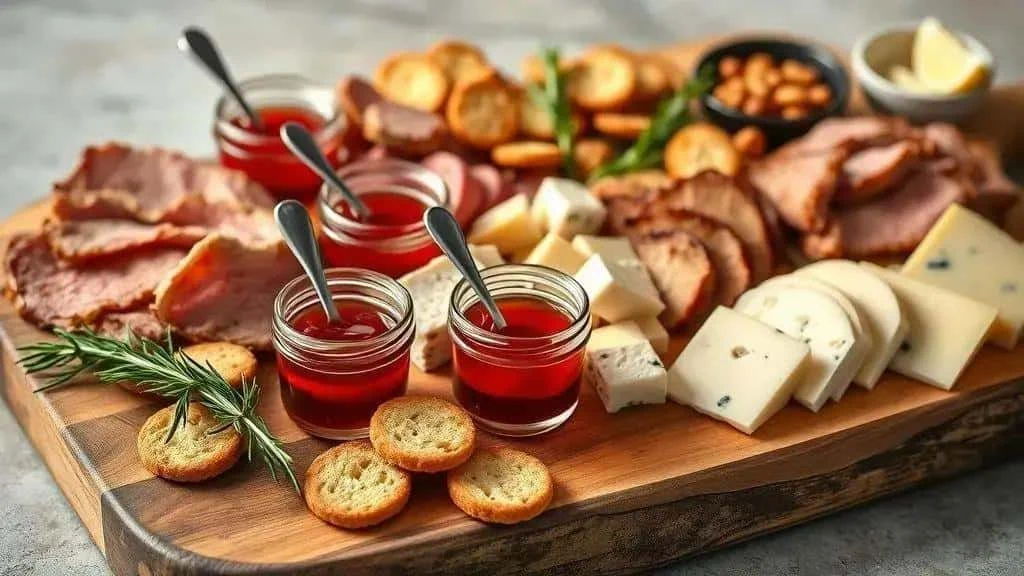
The jam’s sweetness contrasts with salty food, while its tang and heat can brighten a rich dish. Start with a small serving so it does not overwhelm everything else on the plate.
Meat
- Grilled beef or steak: serve a small spoonful alongside the meat rather than covering the whole portion.
- Pork ribs or loin: a fruity or smoky version can work as a finishing glaze. Use a separate portion for brushing, keeping it away from the main jar.
- Chicken or duck: try a mild fruity jam on the side, with a little added only after tasting the combination.
- Sandwiches and burgers: spread a thin layer for sweetness and heat without making the bread soggy.
Cheese
- Brie and camembert: serve with a mild fruity jam and toast or crackers.
- Fresh goats’ cheese: a small amount of tangy jam contrasts with the creamy cheese.
- Mature cheddar, manchego or Parmesan: a smoky variation can match their stronger flavour.
- Blue cheese: a sweeter, milder jam can balance the saltiness of Stilton or another blue cheese.
How much to serve
- For a cheese board: allow roughly 1 tbsp per person initially, offering more separately if wanted.
- Alongside a main course: a teaspoon to a tablespoon is usually enough, depending on heat and portion size.
- For glazing meat: brush on near the end of cooking so the sugar does not burn. Keep cooking utensils that touched raw meat away from ready-to-eat jam.
Serving tips
- Serve small amounts: spoon some into a serving bowl shortly before the meal and keep the main container refrigerated.
- Try the pairing first: taste a small amount with cheese or meat before adding it to an entire plate.
- Label the heat level: mark mild, medium or hot, and mention any alcohol or allergens in variations.
- Use clean utensils: provide a separate small spoon for each bowl and do not return served leftovers to the storage container.
Combinations to try
- Brie, mild mango chilli jam and thin toast.
- Pork ribs, smoky chilli jam and caramelised onions.
- A burger, a little hot chilli jam and mature cheddar.
- Goats’ cheese, mild chilli jam and walnuts, with nut allergens clearly identified.
The finishing touch
Test a small pairing before dressing the whole dish. Pay attention to the heat: adding another small spoonful is easier than undoing too much chilli. For a gathering, offer clearly labelled mild and hot options in separate bowls.
Cooling, packaging and storing chilli jam
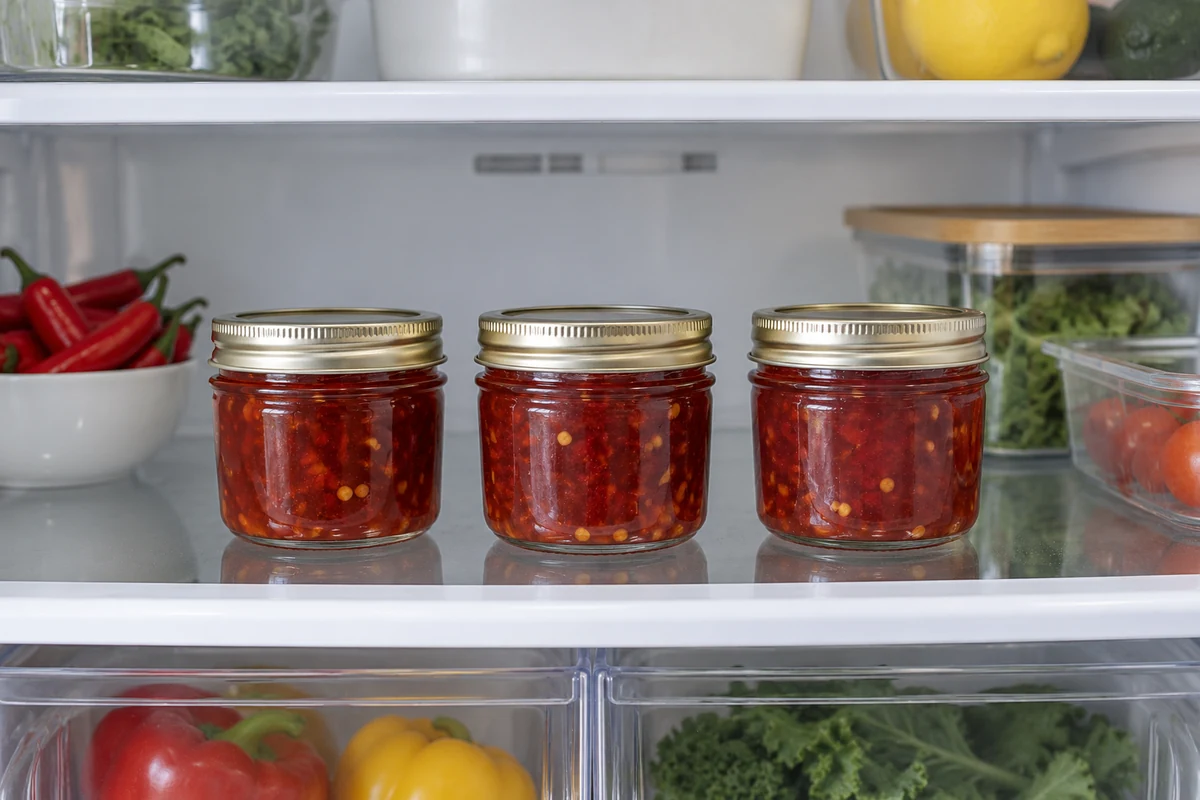
This chilli jam has not been validated for home canning. Treat it as a freshly cooked refrigerated condiment. The original suggestion of a year’s cupboard storage is not appropriate for this formulation.
Preparing clean containers
- Wash thoroughly: clean the containers and lids with hot soapy water, then rinse well.
- Follow the container instructions: use a suitable dishwasher cycle if permitted, and do not boil lids or heat jars in ways their manufacturer advises against.
- Dry hygienically: allow to air-dry on a clean surface and avoid touching the inside.
Portioning for the fridge, not canning
- Divide the cooked jam: use small containers that can tolerate the temperature, avoiding thermal shock to glass.
- Keep the rims clean: wipe away spills with a clean disposable towel before covering.
- Do not improvise a water-bath process: boiling a filled jar for an arbitrary 10–15 minutes does not validate an untested pepper preserve. For cupboard storage, use a research-tested recipe and its exact processing instructions instead.
- Cool promptly: refrigerate within 1–2 hours. A lid that pops or forms a vacuum does not prove the contents are safe for room-temperature storage.
Storage times for this recipe
- Refrigerate every container: keep at 5°C or below from the start, including unopened containers. Use within 48 hours of preparation.
- After opening: the original 48-hour limit still applies. Opening or reheating does not start a new storage period.
- Variations: do not assume a lower-sugar, fruit or herb version has a longer shelf life. Keep it cold and use promptly.
- Freezing: freeze fresh, cooled portions in suitable containers, leaving expansion space. Use within three months for quality; thaw in the fridge and use within 24 hours of full thawing.
When to discard a batch
- Visible mould: discard the whole contents rather than scraping off the surface.
- An unexpected fermented smell: discard it, but remember that harmful contamination does not always change the smell.
- Unusual gas or bubbling after storage: do not taste it to investigate.
- A bulging lid or damaged container: do not use the contents. Discard improperly stored jam even if the lid looks normal.
Useful storage precautions
- Label each container: include the preparation date, ingredients, heat level and instruction to keep refrigerated.
- Leave space when freezing: follow the container manufacturer’s expansion-space guidance rather than relying on canning headspace measurements.
- Avoid damaged containers: do not use cracked jars or lids that cannot close securely.
- Never taste to check safety: discard jam kept too warm or too long, even if its colour and aroma seem unchanged.
- If giving as a gift: deliver chilled with a cold pack, the preparation date and clear instructions to refrigerate immediately and use within the original 48 hours. It is not a cupboard hamper preserve.
Adjusting ingredients and chilli heat
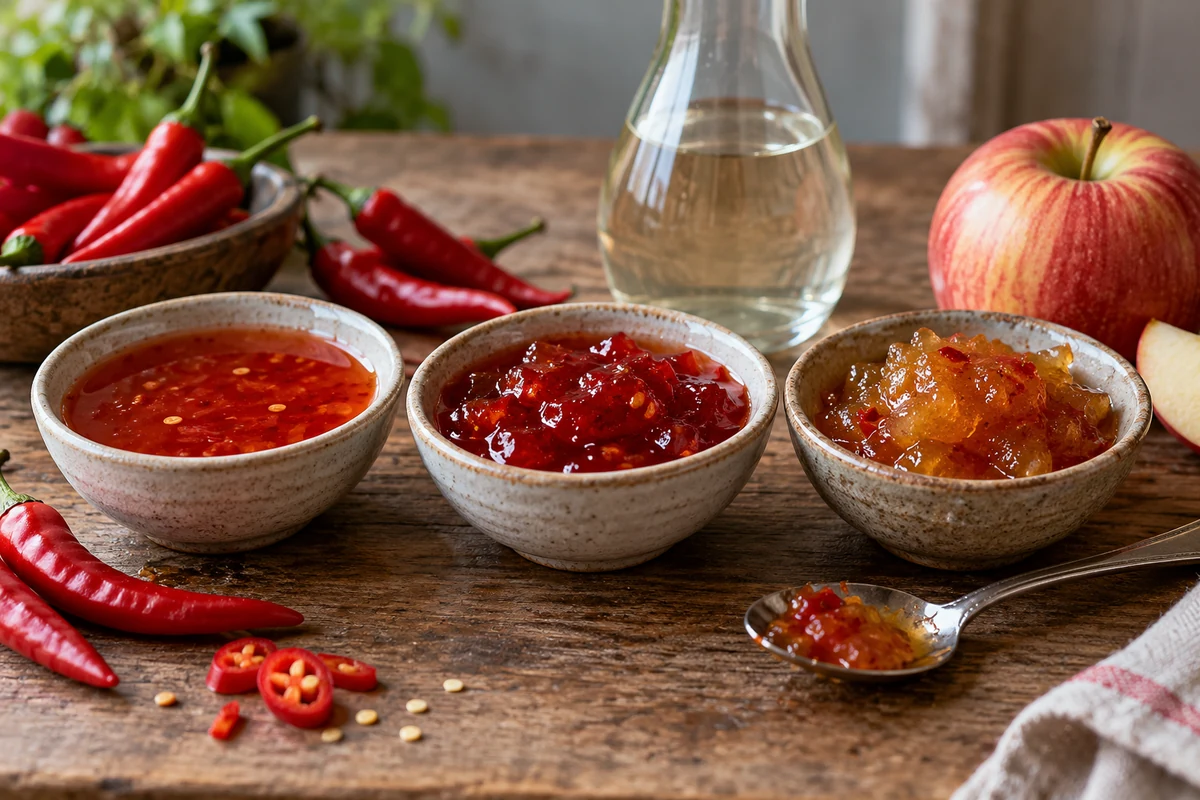
Adjusting the ratio of sweet pepper to chilli is the simplest way to control heat. Keep a note of the varieties used, because their strength can differ considerably.
Practical substitutions
- For a mild version: use more sweet red pepper within the 500 g total. Mild biquinho chillies are another option if available, but check their flavour first.
- For more heat: replace a small part of the mixture with a hotter chilli, starting with a few grams in a test batch rather than adding 100–150 g at once.
- Changing the sugar: up to 100 g demerara in place of granulated sugar changes the flavour. Do not substitute sweeteners weight-for-weight without a recipe designed for them.
- Apple and pectin: the grated apple contributes both bulk and texture. If using commercial pectin instead, follow a complete compatible recipe rather than guessing the sachet size.
- Changing vinegar: cider and white vinegar have different flavours. Use a product labelled 5% acidity and retain the stated quantity. None of these substitutions makes this a validated preserve.
Reducing the heat
- Remove the inner membranes: trim the pale ribs and remove the seeds while wearing gloves. Much of the chilli’s heat is associated with these inner tissues.
- Use more sweet pepper: replace some chilli within the total prepared weight, rather than simply making a larger batch by adding extra ingredients.
- Balance rather than disguise: extra sugar may make the jam taste sweeter but does not remove the chilli. A milder pepper mixture is a more controlled starting point.
- Avoid random dilution: adding water changes the texture and ingredient balance. If a finished batch is too hot, serve less or combine a small serving with a milder accompaniment.
Increasing the heat
- Retain more inner membrane: this generally gives a hotter result than carefully trimming it away, although the variety still matters most.
- Add stronger chillies cautiously: replace a few grams of the original mixture at a time when testing habanero, malagueta or another very hot variety.
- Do not over-reduce: prolonged cooking concentrates the mixture and can make it sticky or burnt. Stop when it reaches a spoonable consistency.
- Test a small batch: taste a tiny cooled amount before deciding to make the full quantity.
Checking flavour and texture
- Cool the sample: place a little freshly cooked jam on a chilled plate before tasting, as hot sugar can burn badly.
- Adjust gradually: it is easier to add a small amount of heat in a new test batch than to remove it from a finished one.
- Serve strong jam sparingly: pair a small amount with a mild cheese or plain food. Do not add cream to the storage batch or claim that more sugar neutralises the chilli.
Handling chillies
- Wear suitable disposable gloves: especially for strong chillies, and avoid touching your face or eyes.
- Ventilate the kitchen: keep your face away from the pan if the cooking vapour is irritating.
- Wash hands and utensils: use soap or washing-up liquid as appropriate after preparation, even if you wore gloves.
- Keep tasting portions separate: use a clean spoon each time and do not return samples to the main batch.
Chilli jam and its Brazilian inspiration
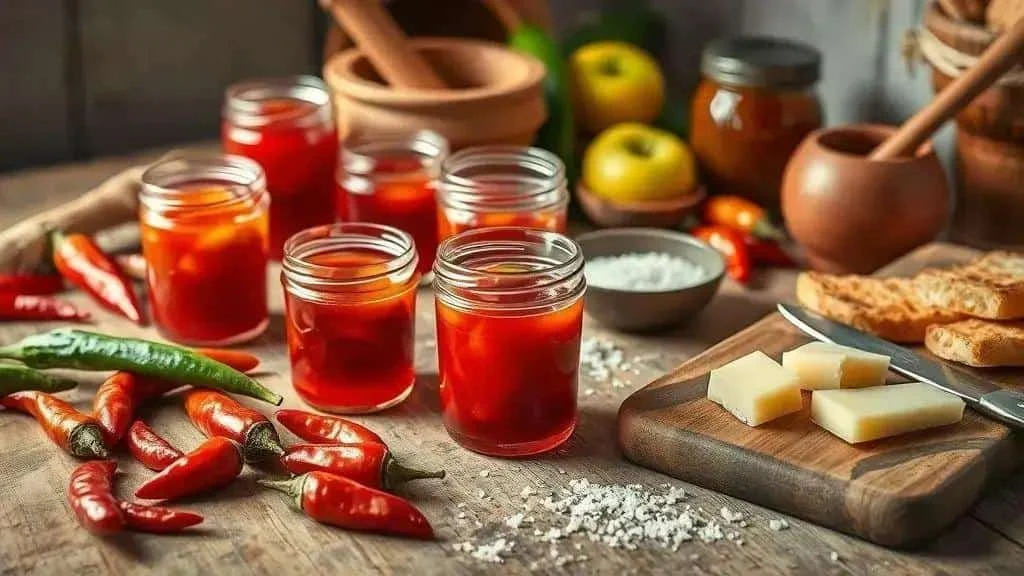
Brazilian geleia de pimenta is a useful inspiration for a condiment that balances sweetness and chilli heat. This article adapts that idea for a British kitchen without claiming a single documented origin for the recipe.
Ingredients and influences
Chillies have a long history in the cuisines of the Americas. Combining them with sugar, vinegar and fruit produces a sweet-and-sour condiment, but the particular proportions here should not be presented as an ancient or historically verified formula.
Different cooks use different fruits, chillies and seasonings. Those variations are a reason to describe the actual ingredients clearly, rather than assigning the dish a precise historical route without evidence.
A few useful observations
- Several ways to serve it: use as a condiment, a late-stage glaze or a small addition to a sauce, keeping storage portions separate from cooking utensils.
- Apple gives body: grated apple contributes pectin and fruit solids, although its variety and ripeness affect the final texture.
- Homemade and commercial products differ: a shop-bought preserve may have a validated formulation and production process. Its shelf life cannot be transferred to a homemade recipe.
Flavour ideas inspired by Brazil
Mango, pineapple and Brazilian fruits such as jabuticaba suggest different sweet-and-sharp combinations. Treat them as new recipe variations rather than assuming every fruit behaves the same way or supports the same preservation method.
For gatherings and gifts
A small bowl of chilli jam makes a colourful addition to a cheese board. Homemade gifts can be thoughtful too, provided the recipient receives clear ingredient and refrigeration instructions and the jam remains chilled during transport.
Flavour rather than health promises
Capsaicin gives chillies their heat. This sugary condiment is best enjoyed in small amounts for flavour; it should not be described as a treatment or a special health food.
Making a household favourite
Keep notes on the pepper varieties, sweetness and texture you prefer. That makes a successful small batch easier to repeat and helps you offer a consistent heat level to family or guests.
A versatile refrigerated condiment
Homemade chilli jam can bring sweetness, tang and heat to simple food. Begin with mild peppers, make a small test batch and keep the storage guidance as much a part of the recipe as the cooking method.
Thank you for reading. Find more festive recipes and serving ideas on the I Love Christmas blog, and follow our social channels for seasonal inspiration.
Try a small spoonful with your favourite cheese or roast, adjust the next batch to your taste and share the combination you enjoyed most.
Homemade chilli jam: frequently asked questions
How long can I keep this chilli jam?
This recipe is for refrigeration, not cupboard storage. Cool promptly, refrigerate at 5°C or below within 1–2 hours and use within 48 hours of making it, whether opened or not. Freeze fresh portions if you need longer storage; thaw in the fridge and use within 24 hours of full thawing.
Can I reduce the sugar and still get a firm set?
Reducing sugar changes the set. Use a complete recipe designed for a low-sugar pectin product and follow its proportions and method. An arbitrary pectin sachet or a one-for-one sweetener swap is not a reliable replacement.
How do I make it less spicy?
Use more sweet red pepper and less chilli within the 500 g total, and remove the chilli’s pale inner membranes. Start with a small batch. Adding sugar makes it sweeter but does not remove the heat.
How can I tell whether a batch should be discarded?
Discard jam with mould, unexpected gas, a bulging lid or other spoilage. Also discard any batch kept too warm or too long, even if it looks and smells normal. Never taste suspect food to check whether it is safe.
Can I give this jam as a homemade gift?
Yes, as a chilled, short-storage food. Use clean suitable containers, list the ingredients and preparation date, and transport with a cold pack. Tell the recipient to refrigerate immediately and use within the original 48-hour limit. For a shelf-stable hamper gift, choose a research-tested preservation recipe and its exact process instead.
Sources and Further Reading
- National Center for Home Food Preservation: storing home-canned jams and jellies
- Food Standards Agency: chilling food safely