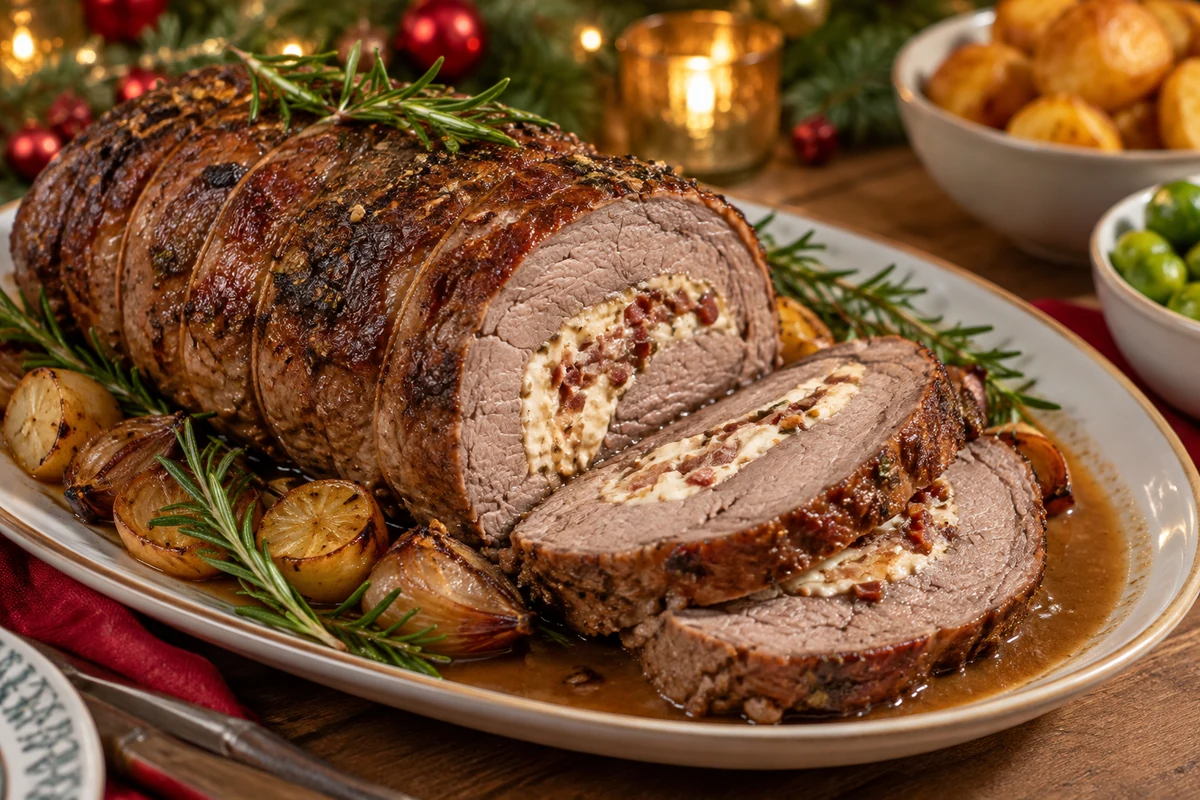
Christmas stuffed beef combines a butterflied beef joint with cooked bacon and cream cheese. Because the meat is opened, filled and rolled, both the centre and filling must be cooked thoroughly: this is not a roast to serve rare. Use a clean food thermometer, rest after cooking and carve across the grain.
Christmas stuffed beef is inspired by Brazilian lagarto recheado. Lagarto is the beef cut known as eye of round; ask a butcher for that cut or a suitable alternative prepared for rolling. This recipe has been editorially reviewed, but not kitchen-tested. A stuffed joint needs different safety checks from an intact rare roast.
Ingredients for stuffed beef with bacon and cream cheese
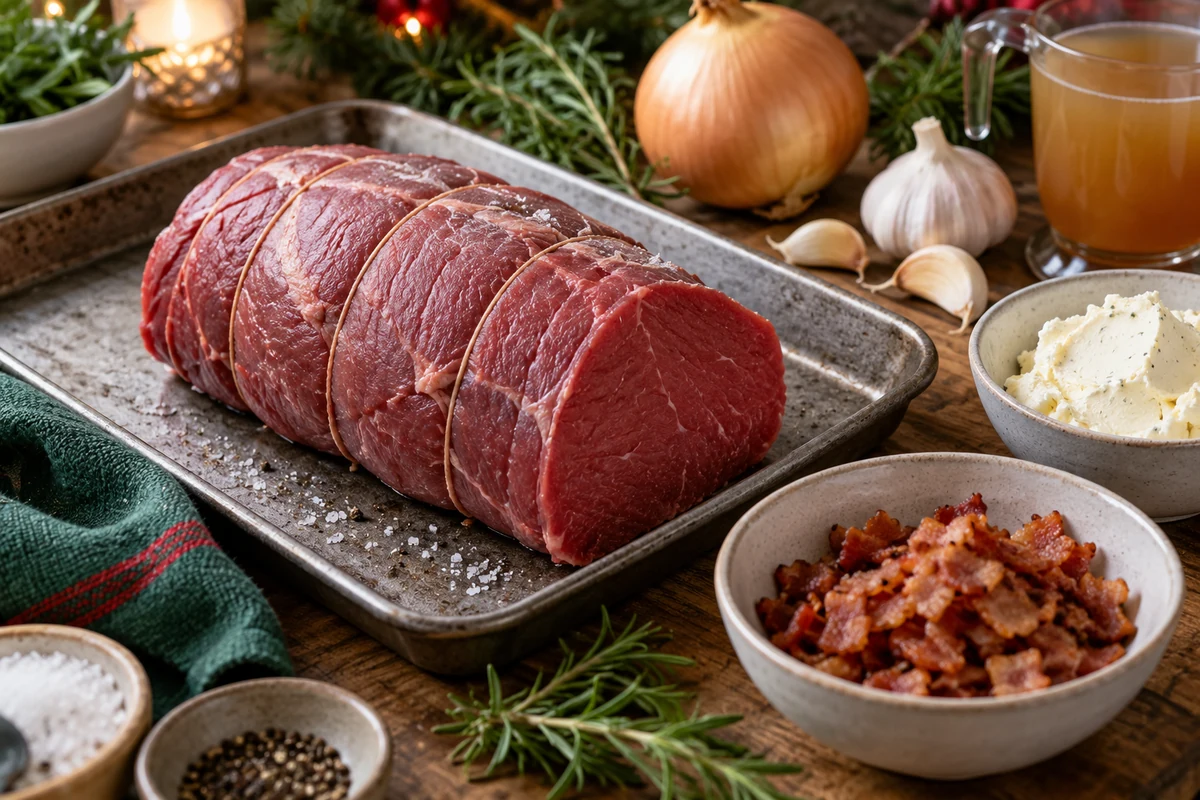
For stuffed beef with bacon and cream cheese, gather the following ingredients:
- 1.8–2.5 kg boneless beef joint suitable for butterflying and rolling – ask your butcher about eye of round and the best preparation. This makes a generous joint for around 6–8 people or more, depending on portions and sides.
- 200 g sliced bacon – cook fully before adding to the filling. Pancetta is an alternative, with its own cooking instructions.
- 300 g cream cheese or Brazilian requeijão – choose a firm product that will not make the filling runny.
- 1 medium onion, finely chopped – brown or red onion according to preference.
- 4 garlic cloves, chopped or crushed – or 1 tsp garlic powder.
- 3 tbsp olive or vegetable oil in total – 1 tbsp for seasoning and 2 tbsp for browning. This avoids counting the seasoning oil twice.
- 240 ml beef stock – plus extra if needed in the tin. Vegetable stock changes the flavour but does not make a beef dish vegetarian.
- 120 ml dry white wine, optional – use extra stock instead if avoiding alcohol; cooking does not guarantee that all alcohol disappears.
- 30 g butter, optional – for browning; omit if preferred and watch that it does not burn.
- 1 tbsp Dijon mustard, optional – check allergens.
- 1 tbsp chopped fresh rosemary – or 1 tsp dried rosemary; thyme is an alternative.
- 1 tsp sweet paprika – for colour and flavour. Sweet paprika is not necessarily smoked.
- Salt and black pepper, to taste – start with a little salt because bacon, cheese and stock already contain it, and about ½ tsp pepper if desired.
- Chopped parsley – to finish.
- Food-safe kitchen string – to hold the joint closed. Remove all string before serving.
Ingredient adjustments
You can use less bacon or a reduced-fat cream cheese if preferred, checking labels rather than assuming a fixed nutritional benefit. A little extra hard cheese changes both saltiness and texture. Keep some stock in the tin during cooking, but do not submerge the roll or overfill the stuffing.
How to make stuffed beef with bacon and cream cheese
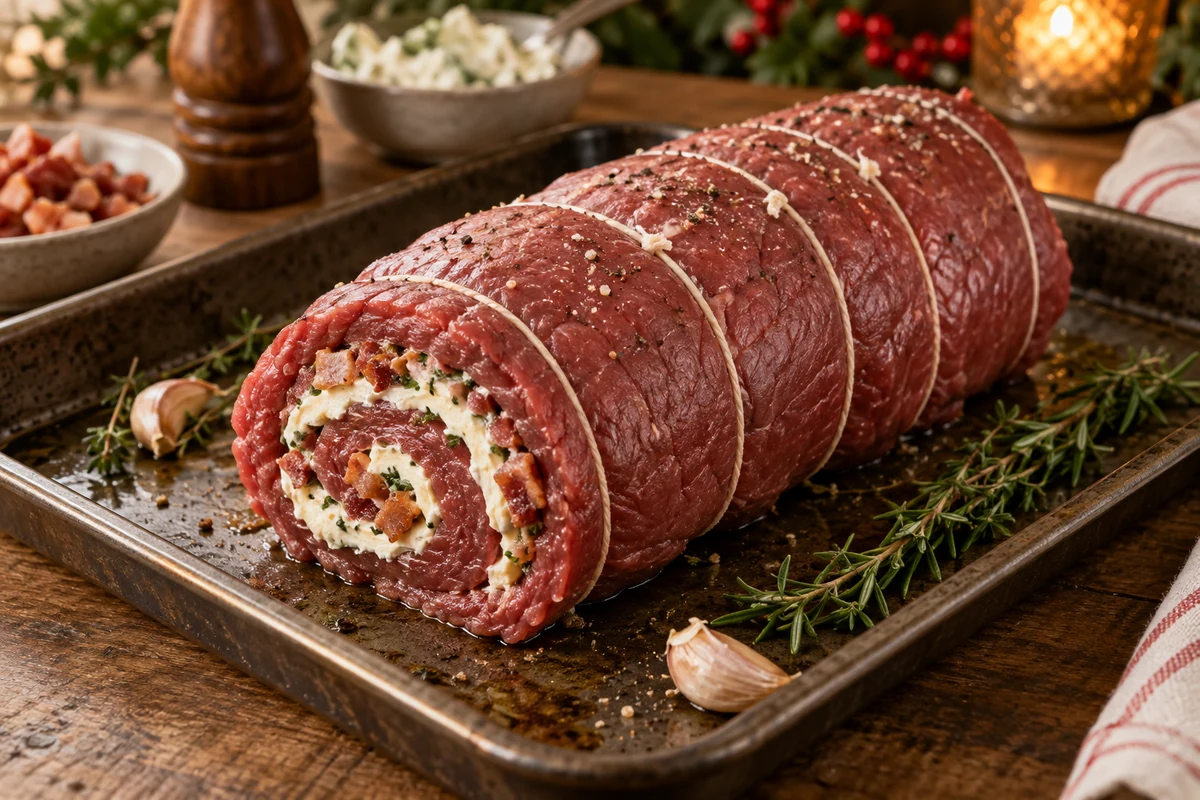
- Open the joint: ideally ask the butcher to butterfly it into an even sheet suitable for rolling. If doing this yourself, use a stable board and a sharp knife carefully. Pat dry with kitchen paper; do not wash raw meat.
- Season: rub the inside and outside with garlic, salt, pepper, rosemary, paprika and 1 tbsp of the oil. Spread the optional mustard thinly inside. Keep refrigerated if leaving it to take on flavour; do not marinate on the worktop.
- Prepare the filling: cook the bacon fully in a pan, then drain. Soften the onion in a little of the rendered fat and drain if needed. Cool promptly before spreading the cream cheese on the beef and adding bacon and onion, leaving clean borders.
- Roll and tie: roll evenly without forcing in excess filling. Secure with food-safe string at intervals, keeping the shape as uniform as possible. Keep chilled until the pan and oven are ready.
- Brown the outside: heat the remaining 2 tbsp oil and optional butter in a suitable pan. Brown each side, watching the butter carefully. Browning adds flavour; it does not seal juices in or cook the filling.
- Prepare the roasting tin: preheat to 180°C conventional/160°C fan. Transfer the browned joint to a tin with the 240 ml stock and 120 ml wine or extra stock. Cover loosely if the outside is already well coloured.
- Roast and check: cook until the centre of the rolled meat and filling meet the safe temperature below. Weight alone cannot give a reliable time for a stuffed joint because thickness and starting temperature matter; follow your butcher’s guidance and leave ample time for checking.
- Use a food thermometer: check several points in the thickest meat and filling, away from the tin. Reach 75°C for 30 seconds or 70°C for two minutes throughout. Do not serve this opened, rolled joint rare or rely on resting to finish an undercooked centre.
- Check the tin: every 20–30 minutes, add fresh stock if the liquid is drying out. Do not use a marinade that has touched raw meat as a finishing sauce.
- Rest after cooking: once fully cooked, cover loosely and rest for 15–20 minutes before carving.
- Carve and finish: remove all string and slice thinly across the grain. Bring the pan juices to a proper simmer for a sauce before serving them with the meat.
Quick preparation notes
Preparing ahead: keep the assembled joint covered in the fridge within all ingredient use-by limits, preferably cooking the next day. Filling changes: firmer ricotta or well-drained mozzarella change the texture. Checking doneness: a pink centre is not a suitable target for this rolled, stuffed joint; use a thermometer.
Texture and cooking tips for stuffed beef
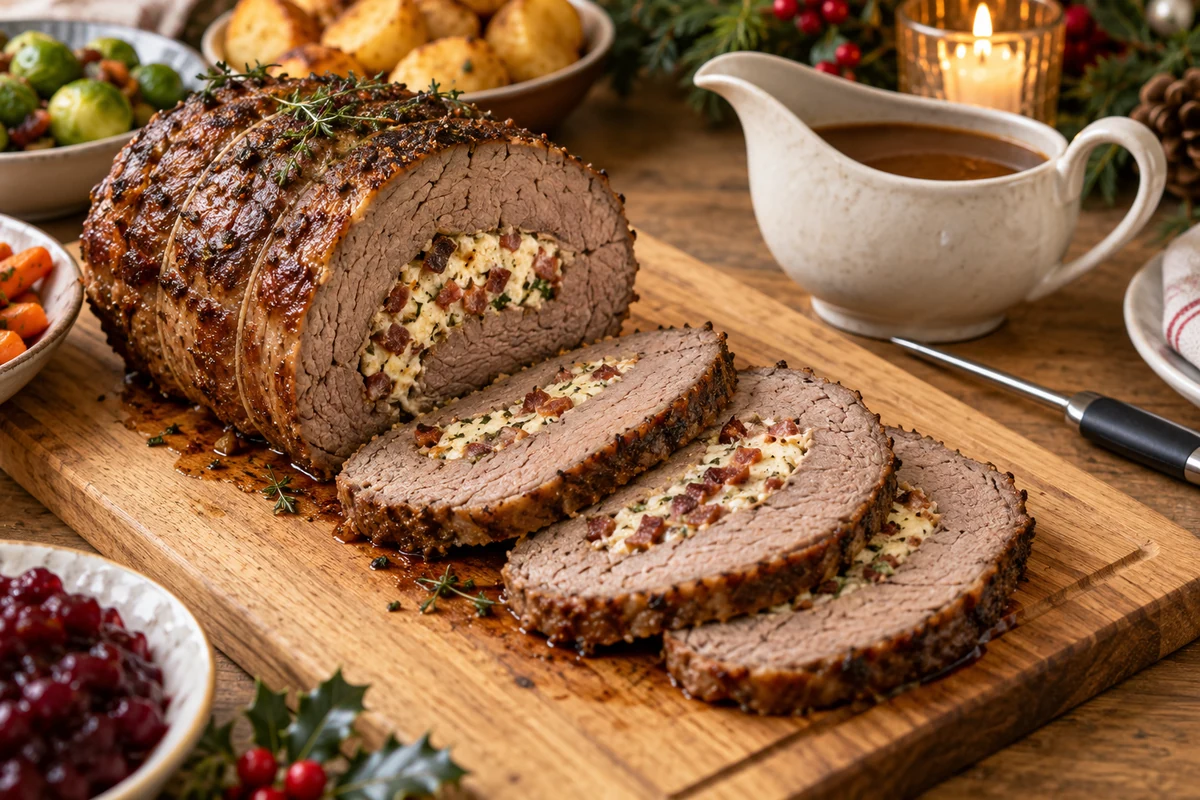
Eye of round is lean, so the result depends on the cut, how evenly it is rolled and how thinly you carve it. No technique guarantees a tender result, and food safety must take priority over a rare centre.
Seasoning ahead
Skip an extra brine by default: the recipe already contains salt from bacon, cheese and stock. If using a separate tested brining method, adjust the other seasoning and keep the meat refrigerated throughout.
Aromatic seasoning: the listed garlic, oil and herbs can be applied 30 minutes to a few hours ahead in the fridge. Extra acidic liquid is optional and may change the surface texture.
Browning and roasting
Brown for flavour: colour the surface in a hot pan, but do not describe the crust as a barrier that locks in juices.
Roast carefully: use the main method and check the centre. A generic low-and-slow instruction is not a validated cooking schedule for every stuffed joint.
Checking the centre temperature
Measure meat and filling: the target is 75°C for 30 seconds or 70°C for two minutes throughout. Rare-roast temperatures for intact beef do not apply to this opened and rolled preparation.
Resting and carving
Rest for 15–20 minutes: only after the centre has cooked fully. Cover loosely while preparing the serving platter.
Carve across the grain: use a sharp knife and thin slices to make a lean cut easier to eat.
Other practical details
- Tie evenly: string helps maintain a consistent shape, but does not replace checking the thickest part during cooking.
- Keep some liquid in the tin: check occasionally and top up with fresh stock as needed, without repeatedly opening the oven unnecessarily.
- Sous-vide requires a separate validated method: do not use a generic low-temperature timetable for this stuffed joint. Thickness, filling, equipment, handling and pasteurisation all matter; the recipe here is an oven method.
- Drain excess bacon fat: it helps keep the filling manageable. Additional butter is optional.
- Do not rely on colour alone: a small cut cannot verify every part of the filling. Use a clean food thermometer rather than aiming for a pink centre.
Finishing the sauce
Simmer the pan juices: skim excess fat and reduce with a little stock, tasting only after thorough heating. Fresh parsley can be added at serving time.
Filling variations and substitutions
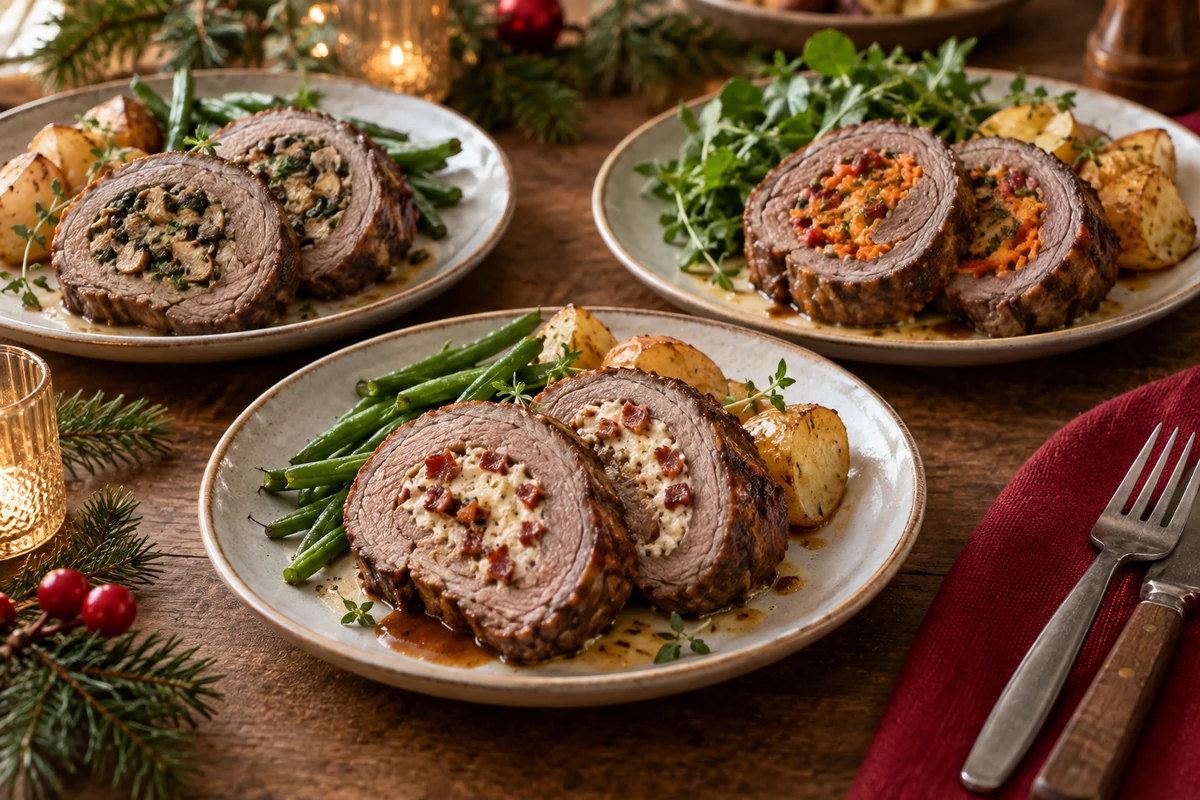
Change the filling of stuffed beef with bacon and cream cheese with one of these ideas. They are alternatives, not ingredients to combine into an oversized filling.
Filling options
- Base filling: 300 g cream cheese and 200 g fully cooked, drained bacon, with the cooked onion from the main recipe.
- Mozzarella and herbs: use 300 g well-drained mozzarella with 2 tbsp chopped parsley and chives instead of cream cheese, allowing room to close the roll.
- Ricotta and spinach: combine 250 g firm ricotta with 200 g cooked, squeezed spinach and 1 cooked garlic clove. This changes the filling; it does not automatically establish a low-calorie claim.
- Pancetta and hard cheese: use 150 g cooked, drained pancetta instead of bacon and add up to 50 g grated hard cheese to the cream cheese if there is enough room. Reduce extra salt.
- Mushroom and walnut filling: cook 300 g chopped cultivated mushrooms until their moisture evaporates, cool and combine with 50 g toasted walnuts and 150 g cream cheese or ricotta. The filling can be meat-free, but a beef roll is not vegetarian.
Choosing another cut
Eye of round is the Brazilian recipe’s starting point. A butcher may suggest a suitable topside joint or another boneless cut prepared for rolling. Cut names and butchery differ between countries; ask about the best method and adjust filling and timing rather than assuming all joints behave alike.
Alternative methods need their own instructions
- Oven method: follow the main preparation and verify the centre of both meat and filling. A fixed minutes-per-weight rule cannot account for every roll’s thickness.
- Sous-vide: use only a validated method specifically suitable for a stuffed joint, with appropriate equipment and handling. This article does not provide that separate procedure.
- Pressure cooker: follow the appliance manufacturer’s tested recipe, capacity, minimum liquid and pressure-release instructions. Do not use an arbitrary amount of liquid or a universal 40-minute timetable for this large roll.
- Covered barbecue: use an appropriate indirect-cooking method and verify the safe centre temperature, keeping raw meat and utensils away from cooked food.
Sauce and seasoning variations
- Wine sauce: about 120 ml red wine can replace extra stock in a separately simmered pan sauce if desired. Use stock when avoiding alcohol; reduction does not guarantee an alcohol-free sauce.
- Herbs: rosemary and thyme suit the roast, while parsley and chives can be added at the end.
- A festive accompaniment: serve a little cranberry sauce or fruit chutney alongside for a sweet-sharp contrast.
Variation tips
- Keep the filling firm: drain bacon and cooked vegetables before assembling so liquid does not make the roll difficult to close.
- Extra hard cheese: up to 50 g adds salt and flavour, but also changes the filling’s texture; use only if it fits without overfilling.
- Rest after cooking: allow 15–20 minutes once the meat and filling are fully cooked.
- Taste the filling safely: check cooked filling ingredients before they touch raw beef. Do not taste a mixture after raw-meat contact.
Side dishes and serving ideas
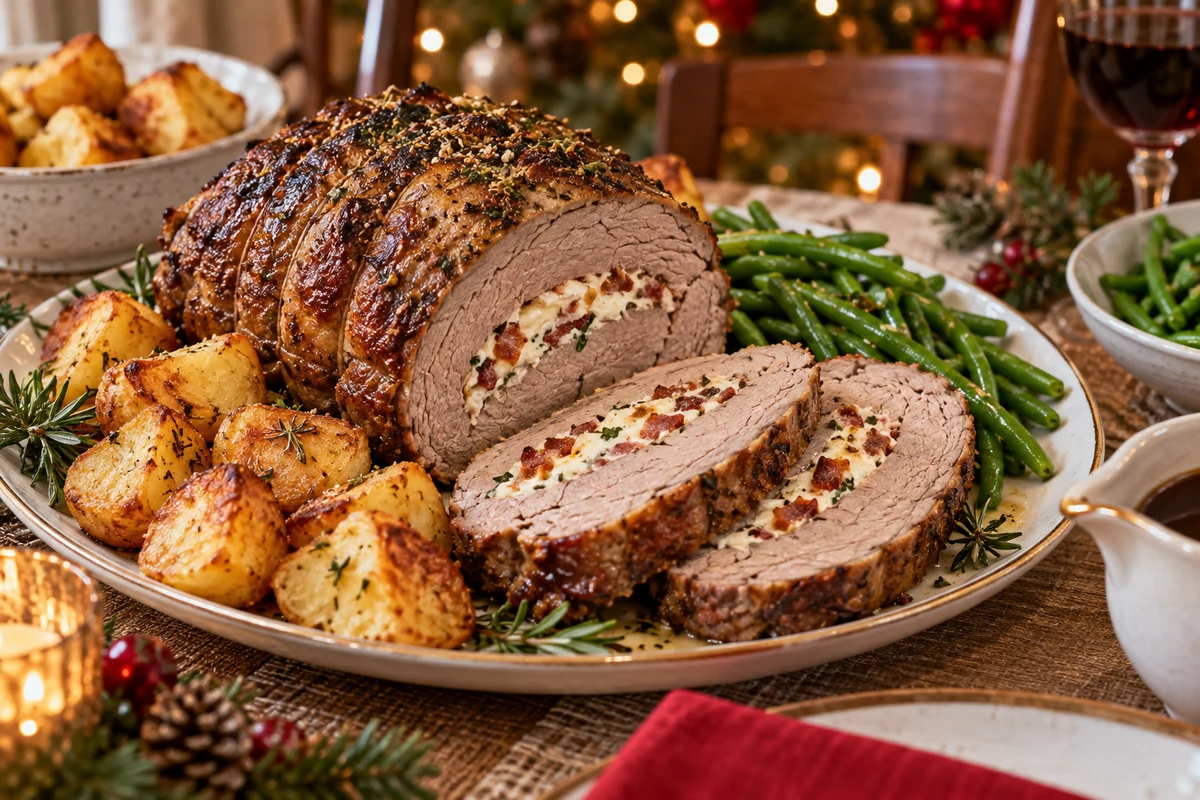
- Serve stuffed beef with bacon and cream cheese in thin slices. Around 200–250 g finished stuffed roast per adult is a generous main-course planning estimate with sides; appetite and the menu vary.
- Roast potatoes with rosemary: cook on a separate tray with oil and seasoning until tender and golden.
- Mashed potatoes: about 1 kg potatoes provides modest side portions for six people; add milk and butter to suit the desired texture and dietary needs.
- Cooked vegetables: green beans, carrots and peas add colour. Cook until tender, then finish with garlic and a little butter or oil if wanted.
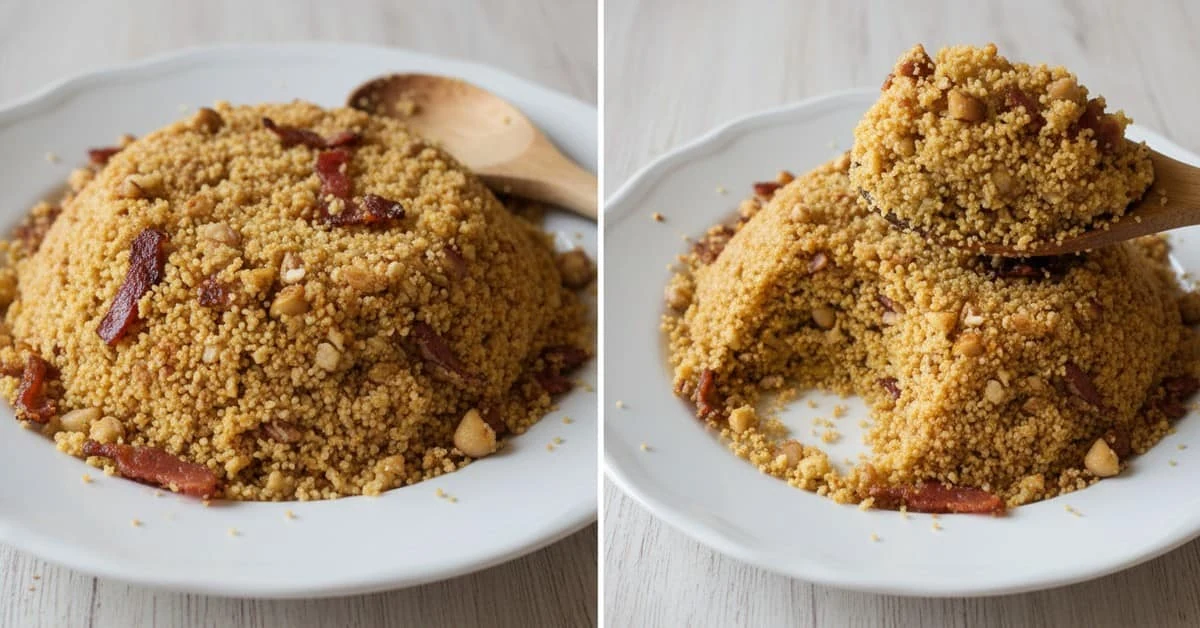
- Christmas farofa: use coarse toasted cassava flour sold for farofa, with optional dried fruit and nuts. It is not interchangeable with tapioca starch; identify nut and other allergens.
Salads and fresh accompaniments
- Green salad with citrus dressing: washed lettuce, rocket and cherry tomatoes provide a fresh contrast.
- Apple and walnut salad: add yoghurt or suitable shop-bought mayonnaise if preferred, keeping it chilled and identifying milk, egg and nut allergens.
- Fresh herbs: washed parsley or chives can finish the meat; keep woody stems off individual portions.
Sauces and condiments
- Pan sauce: skim the cooking juices, add about 120 ml stock or optional wine and simmer thoroughly before serving.
- Cranberry sauce or chutney: offer a small bowl separately so guests can choose the amount.
- Gravy: thicken simmering pan juices with a suitable flour or cornflour mixture, cooking it through and checking any gluten requirements.
Arranging the Christmas meal
Serve securely: put the sliced roast on a warm platter on a stable heatproof surface, with potatoes and vegetables in separate accessible dishes.
Garnish simply: caramelised onion, washed herbs and a little cranberry sauce add colour without hiding the slices.
Coordinate temperatures: finish hot sides near serving time and keep salads refrigerated until needed. For prolonged hot holding, use suitable equipment and guidance; an oven setting alone does not confirm the food’s temperature.
Drink suggestions
- Optional red wine: Merlot or Malbec can suit the roast if guests choose to drink alcohol.
- Optional sparkling or white wine: another choice according to personal preference, alongside alcohol-free drinks.
- Alcohol-free option: sparkling water with lemon or apple juice with a little cinnamon.
Planning the service
- Allow time to check doneness: build in preparation, roasting and a 15–20 minute rest, rather than planning a precise serving time from weight alone.
- Prepare some sides ahead: suitable sauces can be made the day before if cooled promptly and refrigerated. Follow specific storage instructions for chutneys rather than assuming homemade versions are shelf-stable.
- Plan leftovers: adjust portions to your guests. Divide leftovers into smaller portions, cool and refrigerate within one to two hours, and eat within 48 hours or freeze promptly. Reheat only once until steaming hot throughout.
- Vary textures: choose a creamy side, a fresh salad and an optional crunchy accompaniment without making more dishes than you can serve safely.
Enjoy your stuffed Christmas roast
For stuffed beef with bacon and cream cheese, an evenly prepared joint and careful centre-temperature checks are essential. Brown for flavour, cook the meat and filling through, rest and slice thinly across the grain.
Thank you for reading. Tell us which sides you chose and follow our updates for more festive cooking ideas.
Visit the I Love Christmas blog for seasonal recipes and serving inspiration.
Stuffed beef with bacon and cream cheese: frequently asked questions
How long does preparation and cooking take?
Allow roughly 30–45 minutes for preparation, plus roasting and 15–20 minutes of resting. Cooking time depends on the roll’s thickness and starting temperature as well as its weight; ask your butcher for guidance and check the centre rather than relying on a fixed minutes-per-500 g rule.
How can I avoid a watery filling?
Cook and drain the bacon, soften and drain the onion, and use firm cream cheese. Squeeze any added cooked spinach well and do not overfill. Browning the outside adds flavour but does not create a seal that traps juices.
Can I prepare and freeze it ahead?
If all ingredients are suitable for freezing, assemble with cooled cooked filling, wrap and freeze promptly before the raw meat’s use-by date. Aim to use within two to three months for quality. Defrost fully in the fridge, which may take several days for a large joint, and cook within 24 hours of complete defrosting.
Can I judge doneness without a thermometer?
Colour alone is unreliable for this rolled, stuffed joint. Use a clean food thermometer and check both meat and filling for 75°C for 30 seconds or 70°C for two minutes. Do not use a pink or medium-rare centre as the target.
How can I make sauce from the pan juices?
Remove the cooked joint, skim excess fat, add about 120 ml stock or optional wine and simmer thoroughly. Reduce to the desired consistency and adjust seasoning; use stock if avoiding alcohol.
Sources and Further Reading
- Food Standards Agency: Cooking Your Food
- Food Standards Agency: Chilling, Freezing and Defrosting Food
- ABIEC: Brazilian Beef Cuts Guide