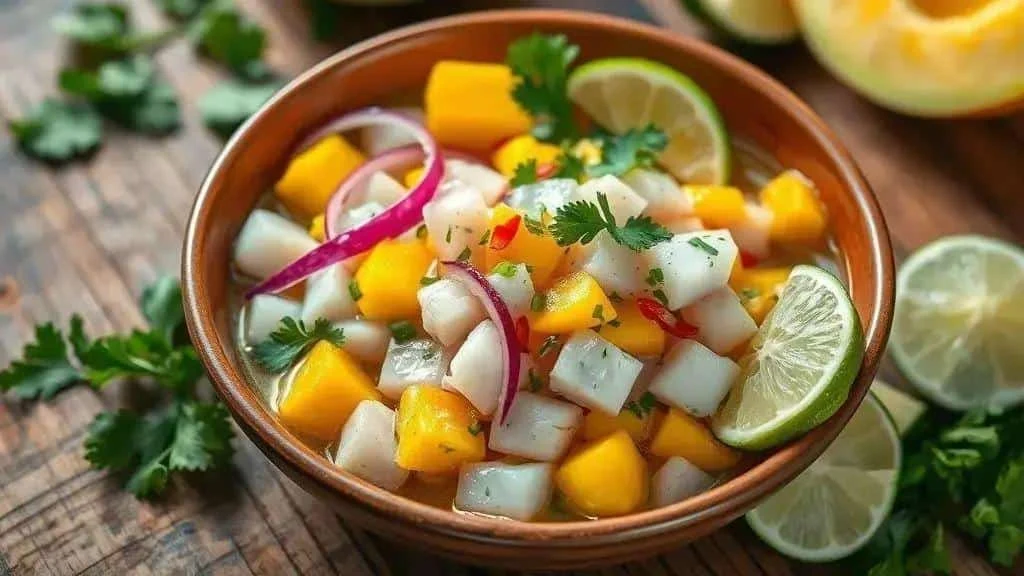
White fish ceviche with mango combines citrus-marinated fish, ripe mango, red onion, chilli and coriander. Lime changes the fish’s texture but does not make raw fish reliably safe. Use fish specifically supplied for raw consumption, follow the supplier’s handling instructions and serve promptly, or choose the fully cooked alternative below.
White fish ceviche with mango is a fresh-tasting starter for a summer lunch or celebration, with sweet fruit, sharp lime and a little chilli. The method below explains both the flavour balance and the precautions that matter when preparing raw fish.
Ingredients for White Fish Ceviche with Mango
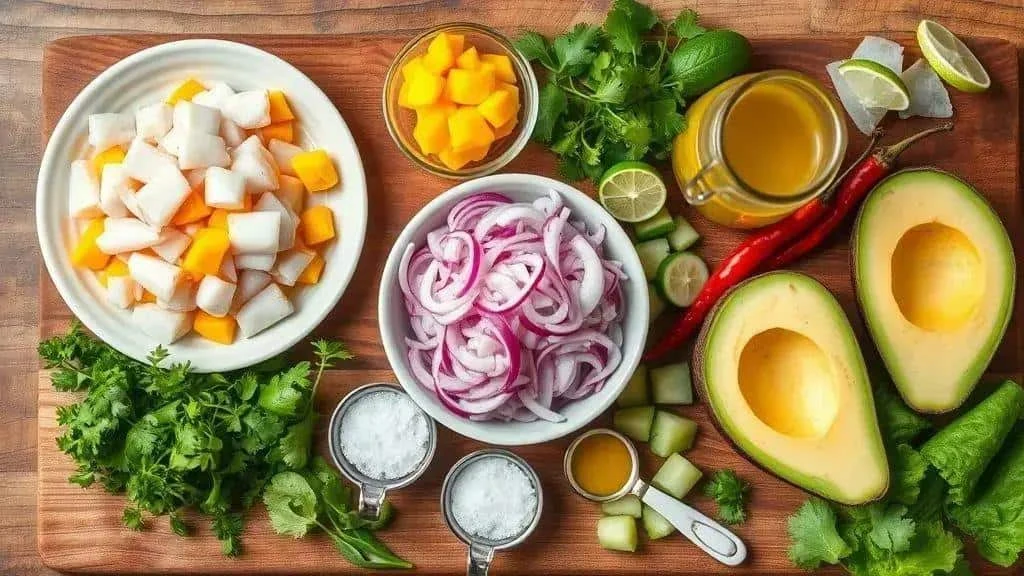
For this white fish ceviche with mango, you will need:
- 400 g boneless, skinless white fish fillet – such as sea bass or another suitable firm fish, cut into 1 cm cubes. For raw ceviche, ask a reputable supplier to confirm it is suitable for raw consumption, including any required parasite treatment. Fully cooked, chilled fish or cooked prawns offer an alternative.
- 1 ripe but firm mango – peeled, stoned and diced. Pineapple gives a sharper variation.
- ½ medium red onion – thinly sliced. A smaller quantity of white onion can be used instead.
- 120 ml freshly squeezed lime juice – measure the juice rather than relying on a fixed number of limes, since their yield varies. Lemon juice changes the flavour but is not necessarily less acidic.
- 1 fresh red chilli or jalapeño – finely chopped, with seeds and membranes removed if you prefer less heat. Use less chilli to taste.
- ½ loosely filled 240 ml cup of chopped fresh coriander – or chopped parsley if preferred.
- ½ small cucumber – deseeded and diced, optional. Thinly sliced radishes give a different crunch.
- 1 tbsp olive oil – optional, for richness and a glossy finish; it adds energy rather than making the dish lighter.
- Up to 1 tsp salt – start with less and adjust to taste.
- ¼ tsp ground black pepper – or to taste.
- 1 small avocado – diced just before serving, optional. Extra mango is another option, with a sweeter result.
- Washed lettuce leaves or tortilla chips – to serve.
Important Raw-Fish Precautions
Fresh appearance and a sashimi-grade description alone do not guarantee safety. Ask the supplier specifically about raw consumption and parasite controls, and keep the fish cold according to their instructions. Marinating for 15–25 minutes is a texture preference, not a safety treatment. Pregnant people and those more vulnerable to food poisoning should choose thoroughly cooked fish instead. Freezing addresses certain parasites but does not remove every microbiological risk.
How to Make White Fish Ceviche with Mango
- Choose and chill the fish: buy 400 g fish specifically supplied for raw consumption and follow its use-by and cold-storage instructions. If its suitability is uncertain, cook it thoroughly first, then cool promptly and refrigerate before making a ceviche-style salad.
- Cut evenly: check for bones and use a sharp knife to cut the raw fish into approximately 1 cm cubes on a board reserved for it. Prepare fruit and vegetables separately with clean equipment.
- Mix the citrus dressing: measure 120 ml lime juice and mix with a little of the salt and the black pepper. Add the optional tablespoon of olive oil here or at the end, not both. Taste a clean portion before it touches raw fish.
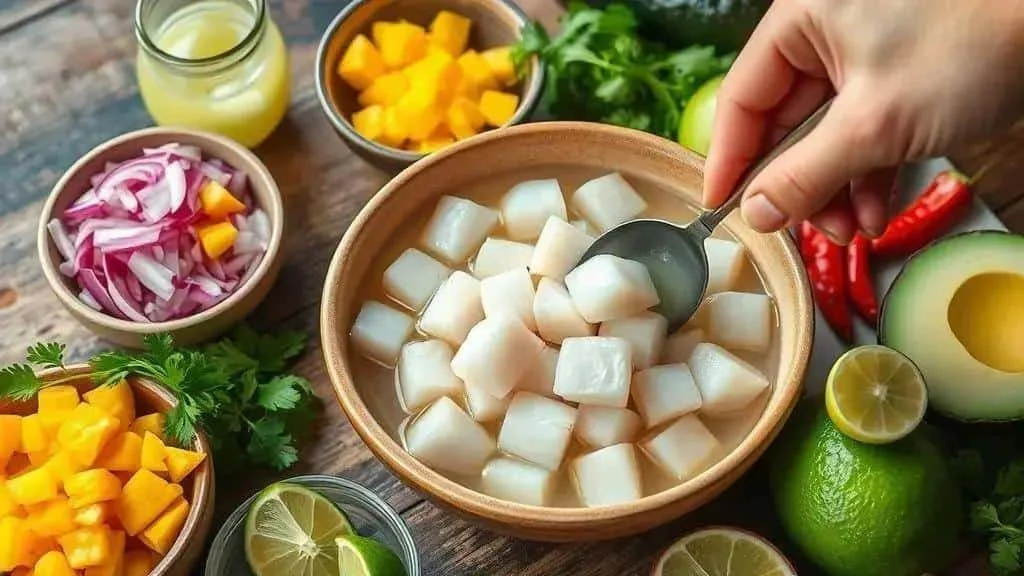
- Marinate for texture: place the fish in a clean glass or other non-reactive bowl, add the lime mixture, cover and refrigerate for roughly 15–25 minutes if you like a firmer texture. An opaque centre does not prove that harmful organisms have been destroyed. For fully cooked fish, simply dress it shortly before serving.
Essential Tips
Longer exposure to citrus can make the fish firmer or less pleasant; it is not a substitute for safe sourcing. Soak sliced onion in cold water for about five minutes if you want to soften its flavour, then drain. Keep all prepared ingredients chilled until assembly.
- Prepare the additions: dice 1 ripe mango, thinly slice ½ red onion, finely chop 1 chilli or less, and chop ½ cup coriander. If using, dice half a cucumber and prepare the avocado just before serving.
- Balance the acidity: if you prefer less dressing, drain off some of the liquid before assembling. Mango adds sweetness but does not neutralise the acidity or make the fish safer.
- Combine gently: fold the mango, onion, chilli, coriander and optional cucumber into the chilled fish, taking care not to crush the pieces.
- Adjust seasoning: add a little more salt or pepper if needed. If you reserved the optional tablespoon of oil, add it now. Do not taste raw fish or its dressing to assess whether it is safe.
- Finish and serve: fold in the avocado last and serve immediately with washed lettuce or tortilla chips. Keep portions small and the remaining prepared ingredients chilled.
- Storage: prepare raw ceviche shortly before eating and follow the fish supplier’s stricter limits. Do not rely on a blanket six-to-eight-hour allowance or save served leftovers. Freezing after marinating does not undo unsafe handling and damages the texture.
Choosing Fish and Mango
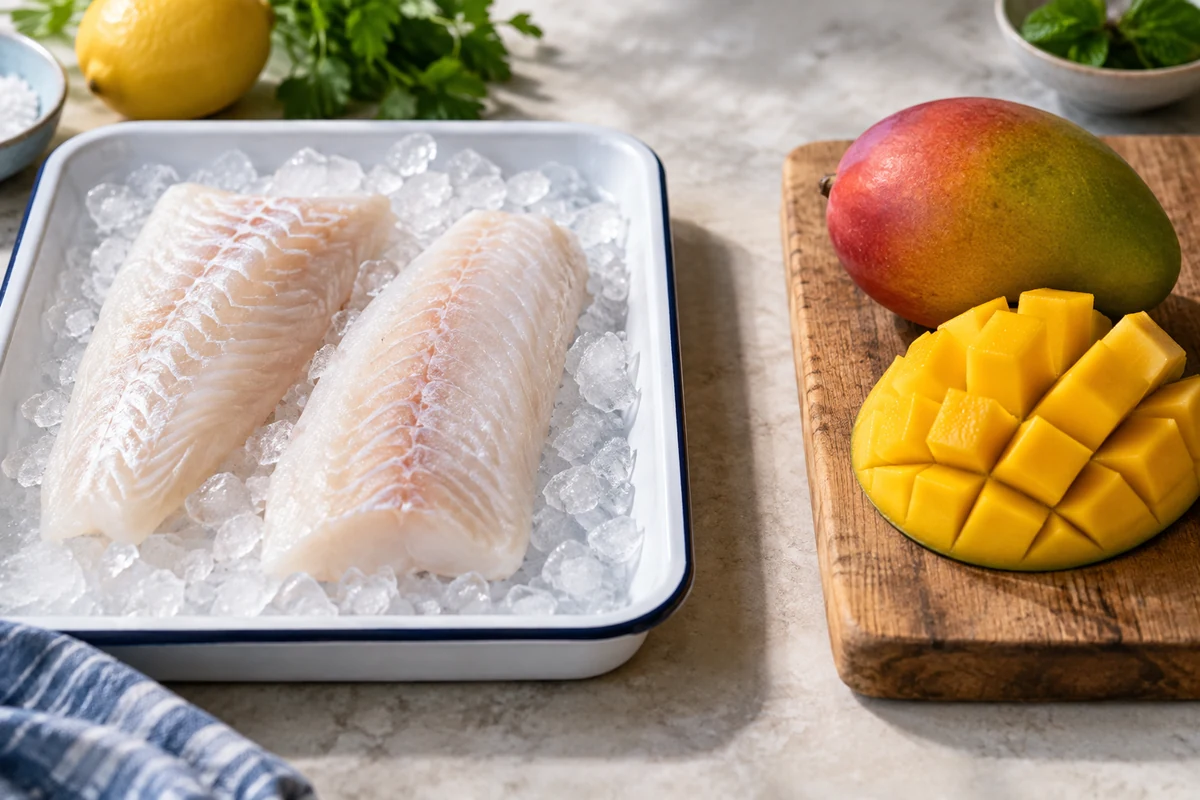
When selecting fish and mango, freshness and texture matter for quality, but they cannot establish the safety of raw fish on their own.
Fish: Quality Checks
- Smell: reject fish with an unpleasant or ammonia-like odour. A normal smell is not proof that it is safe to eat raw.
- Eyes: clear eyes on a whole fish can be a freshness cue, but they do not reveal parasite treatment or microbiological safety.
- Gills: their appearance can help a fishmonger assess freshness, but should not replace verified sourcing and storage information.
- Texture: avoid slimy or deteriorating fillets. Choose firm flesh appropriate for the recipe and follow the labelled use-by date.
- Supplier confirmation: explain that the fish will be eaten raw. Ask about the necessary parasite treatment or a valid exemption, and how to store and use it. Do not assume an ordinary domestic freezer reproduces a validated commercial treatment.
Choosing the Mango
- Firmness: choose ripe fruit that yields slightly to gentle pressure but is still firm enough to dice.
- Aroma: a pleasant fruity scent near the stalk can indicate ripeness.
- Condition: avoid mould, leaking areas and badly damaged flesh. Skin colour varies with the variety and is not a reliable ripeness test by itself.
- Ripening: let an uncut, underripe mango ripen at room temperature, then refrigerate when ready. Wash before peeling and cutting.
- Alternative fruit: ripe pineapple gives a sharper, firmer variation. Add it shortly before serving.
Food Safety
Raw ceviche carries risks that citrus and refrigeration do not eliminate. The marinating time below concerns flavour and texture only. Use fish specifically supplied for the purpose and follow its handling instructions. A thoroughly cooked fish-and-mango salad is the safer alternative, particularly for anyone vulnerable to food poisoning.
Buy from a reputable supplier and ask about storage and intended use. Wash produce before cutting; wash hands, clean utensils and keep raw fish separate from ready-to-eat ingredients. Keep everything cold until the final assembly.
White Fish and Mango Ceviche Variations
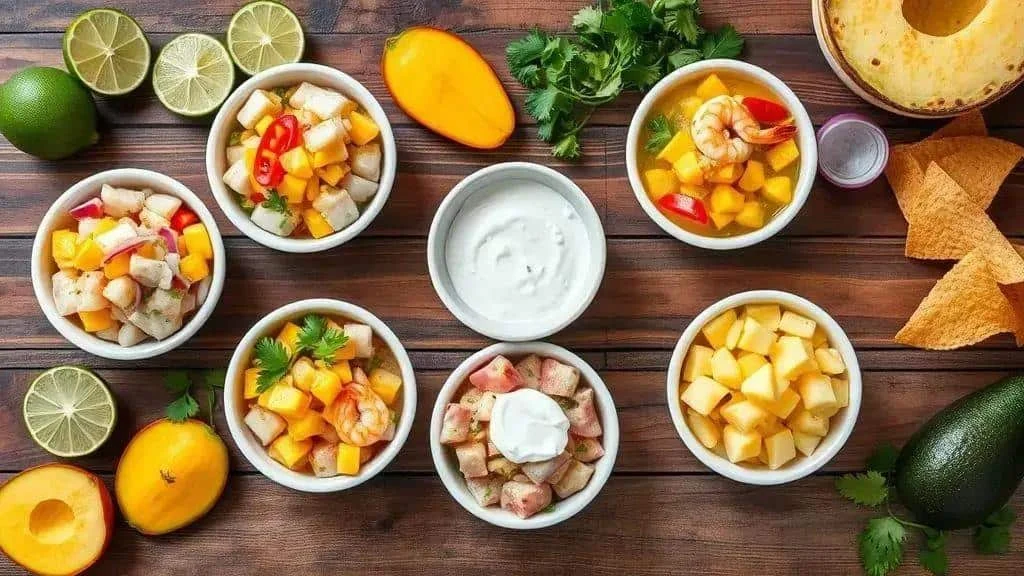
Small changes give white fish ceviche with mango a different character. Raw seafood substitutions need their own safety assessment; the simplest alternatives below use fully cooked seafood or vegetables.
1. Cooked Prawn and Mango Ceviche-Style Salad
Replace the fish with fully cooked, peeled prawns. Chill them before adding the dressing, then serve promptly.
- 400 g cooked prawns – ready to eat according to their label, or cooked thoroughly from raw and cooled promptly. Do not rely on a brief lime marinade to make raw prawns safe.
- Mango – use the same amount as in the main recipe.
- Tip: remove shells and tails before serving and keep the prawns refrigerated. This variation contains crustaceans rather than fish.
2. Tuna and Mango Variation
Tuna has a different, firmer texture. Fully cooked, cooled tuna can be dressed with the same fruit and herbs; a raw version requires fish specifically supplied for raw consumption and appropriate cold handling.
- 350–400 g tuna – prepare according to the chosen cooked or raw method. A sashimi-grade description does not replace supplier confirmation.
- Dressing time: raw tuna is sometimes marinated for about 10–12 minutes for texture, but that is not a safety threshold. Dress cooked tuna shortly before serving.
- Alternative: fully cooked, chilled salmon gives a richer flavour. Do not assume all raw salmon has suitable parasite controls.
3. Vegan Hearts of Palm and Mango Salad
Use ready-to-eat hearts of palm instead of fish for a plant-based version with a tender texture.
- 300 g drained tinned or jarred hearts of palm – sliced or cut into strips. Follow the label after opening.
- Mango – gives sweetness to balance the citrus dressing.
- Tip: add some cooked, drained chickpeas for a more substantial salad. Hearts of palm are not nutritionally equivalent to fish.
4. Pineapple and Mango Variation
Combine the two fruits for a sweet-sharp flavour. Adjust the amount of lime dressing to your preference.
- 150 g pineapple – cut into small pieces.
- Mango – keep the original amount, or use less if you prefer a higher proportion of fish to fruit.
- Note: add the pineapple shortly before serving to keep the mixture fresh and avoid an overly soft texture. It is not a food-safety treatment.
5. A Creamy Coconut Finish
A little coconut milk softens the flavour of the dressing and adds richness.
- 1 tbsp coconut milk – stir in at the final assembly rather than changing the initial marinade.
- Finishing flavours: coriander and chilli contrast with the creamy coconut.
- Alternative: plain yoghurt gives a tangier dressing and introduces milk as an allergen. Unsweetened coconut milk is not necessarily sweet.
Tips for Every Variation
Keep prepared ingredients chilled, assemble close to serving and adjust seasoning gradually. Marinating times change texture, not the underlying safety of raw seafood. Check allergens in the chosen variation and accompaniments.
Ceviche and Mango: Background and Flavour
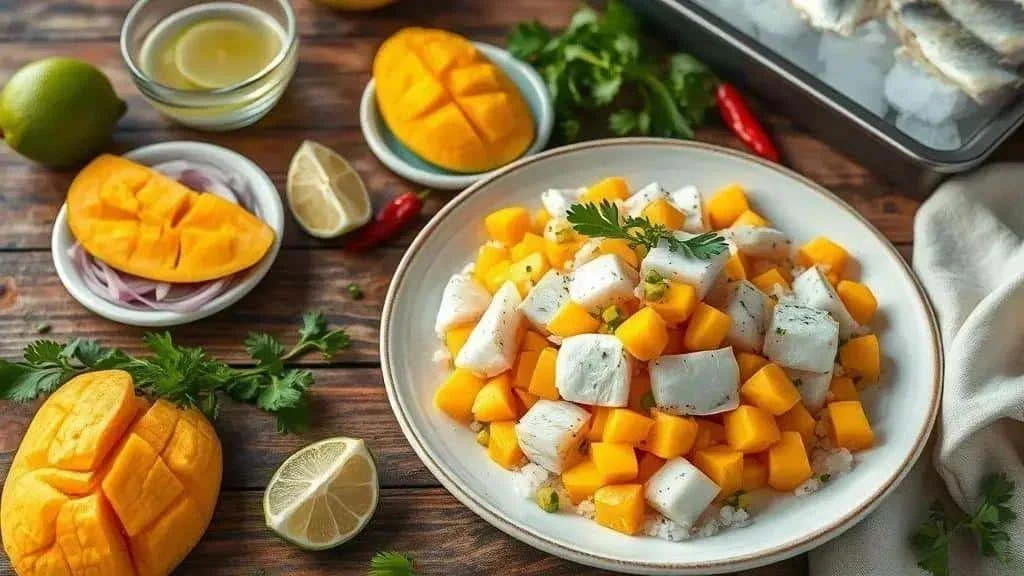
Ceviche and mango bring together sharp citrus, sweet fruit and contrasting textures. Here is some background to the dish and this variation.
Cultural Background
Ceviche is strongly associated with Peru and has many variations across Latin America. In 2023, UNESCO inscribed the practices surrounding Peruvian ceviche on its Representative List of the Intangible Cultural Heritage of Humanity. This mango version is an adaptation, not a claim to represent every traditional recipe.
What Lime Juice Does to Fish
Acid changes the structure of fish proteins, making the flesh appear firmer and more opaque. This is different from cooking with heat. The appearance must not be used as evidence that bacteria or parasites have been reliably destroyed.
Why Mango Works
Mango adds sweetness and juiciness alongside the sharp lime and savoury fish. Its soft flesh also contrasts with crisp onion and cucumber. Choose ripe but firm fruit so the pieces remain distinct.
Marinating Times Are About Texture
- Raw white fish: roughly 15–25 minutes for 1 cm cubes is a texture guide only, after suitable sourcing and handling have already been addressed.
- Cooked prawns: toss with the dressing shortly before serving. Do not substitute a short acid marinade for thorough cooking of raw prawns.
- Tuna: a shorter citrus exposure gives a different texture, but no particular number of minutes guarantees the safety of raw tuna.
Mango Varieties and Ripeness
- Varieties: Tommy Atkins, Palmer and Haden are examples you may encounter. Choose the best ripe-but-firm fruit available rather than relying on a variety name alone.
- Choosing well: look for a pleasant aroma and flesh that yields slightly without becoming mushy.
Nutritional Notes
Fish contributes protein, while mango, lime and vegetables add a range of nutrients and some fibre. The meal’s energy content depends on the portion size, optional oil or avocado, and accompaniments. These ingredients do not confer a special therapeutic benefit.
A Few More Details
- Ceviche is often assembled close to serving to preserve its fresh texture. Eating it promptly does not remove the risks associated with raw fish.
- Peruvian preparations may be served with corn, sweet potato or a citrus-based dressing known as leche de tigre; ingredients vary by region and cook.
- Mango can make the dressing taste less sharp through sweetness, even though the citrus remains acidic.
Practical Safety Reminder
Keep raw fish cold, use clean equipment and confirm its suitability with the supplier. Choose fully cooked fish or the vegetable variation if there is uncertainty. During pregnancy, follow NHS advice to avoid raw fish even if previously frozen.
Serving Your Ceviche
White fish ceviche with mango combines bright citrus, sweet fruit and fresh herbs for a summer starter. Choose the raw or fully cooked approach deliberately, and keep food safety separate from the question of how long to marinate for flavour.
Try the variations and adjust seasoning to suit your taste. Prepare modest quantities close to serving and keep ingredients chilled until needed.
Thank you for reading. Share your cooking photos if you wish, and visit the I Love Christmas blog for more recipes and seasonal ideas.
White Fish Ceviche with Mango FAQs
Which fish is best for ceviche?
Firm white fish such as sea bass can work, but raw ceviche requires fish specifically supplied for raw consumption with appropriate parasite controls. A sashimi-grade description alone is not enough. Fully cooked, chilled fish is an alternative.
How long should I marinate fish in lime juice?
About 15–25 minutes for 1 cm white-fish cubes gives a firmer texture, but this is not a safety treatment. Lime does not replace proper sourcing, parasite controls or cooking. Use fully cooked prawns for the prawn variation.
Can mango replace the lime juice?
Mango adds sweetness but does not replace the citrus flavour or neutralise its acidity. Use less dressing if you prefer a milder taste. Switching to lemon does not automatically make the dish less acidic, and neither juice makes raw fish reliably safe.
How can I prepare ceviche more safely?
Confirm raw suitability and handling instructions with the fish supplier, keep ingredients chilled and prevent cross-contamination. No raw-fish dish is risk-free. Use thoroughly cooked fish for a safer alternative, especially for people vulnerable to food poisoning.
Which substitutions work in this recipe?
Fully cooked prawns or cooked tuna work with the mango dressing. Pineapple provides a sharper fruit variation, and ready-to-eat hearts of palm make a vegan version. Raw seafood alternatives require their own suitability and safety checks.
How should I store leftover ceviche?
Make raw ceviche just before eating, follow the supplier’s limits and avoid keeping served leftovers. Do not assume a universal six-to-eight-hour storage window. Freezing the finished dish affects texture and cannot reverse unsafe handling.
Sources and Further Reading
- Food Standards Agency: fish and parasite treatment
- NHS: foods to avoid during pregnancy
- Food Standards Agency: chilling and storing food
- Food Standards Agency: cooking food safely
- UNESCO: ceviche practices in Peru