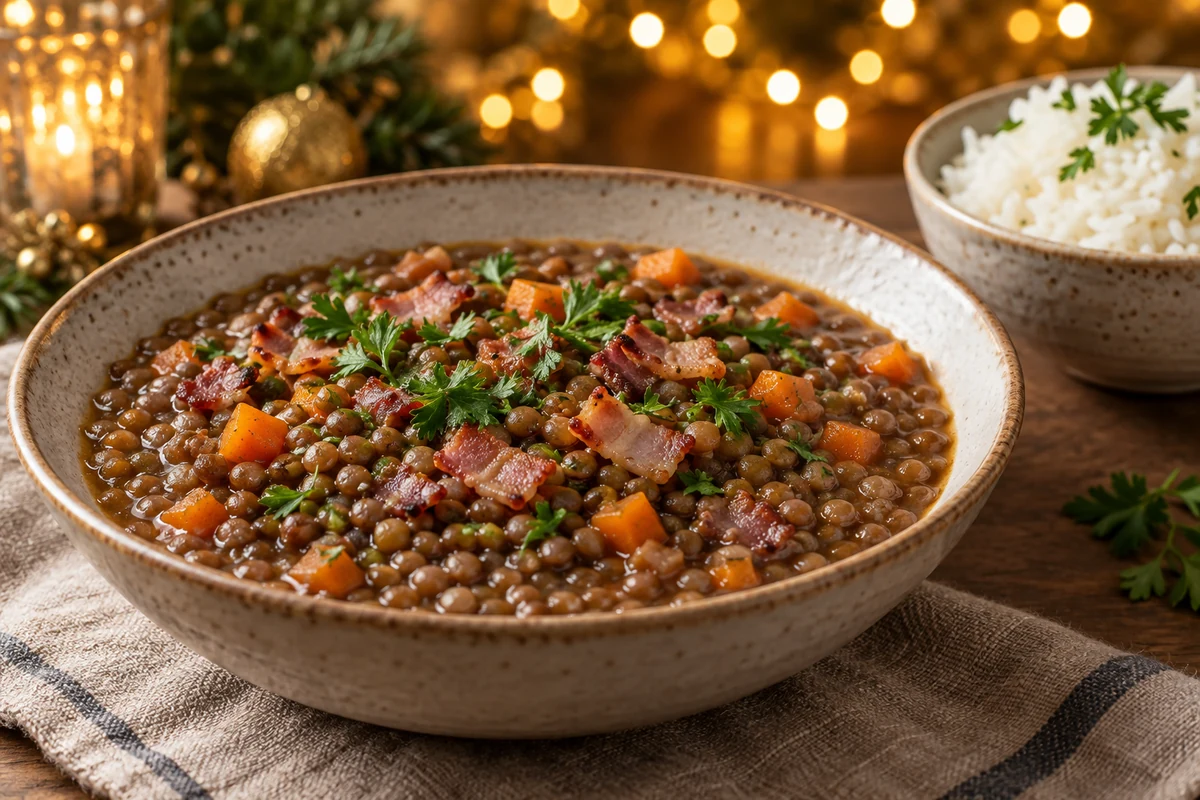
Eating lentils at New Year is a tradition associated with prosperity and abundance. Their small, rounded shape is often compared with coins. The custom expresses a wish for good fortune rather than causing financial success, while the lentils themselves make a versatile addition to a festive meal.
Have you heard of lucky New Year lentils? Here is a look at the belief behind the custom, a straightforward way to cook lentils and several ideas for serving them. You can enjoy the food and the family tradition without treating the superstition as a promise.
Illustrations in this article are conceptual images, not documentary photographs or evidence of a particular historical event, destination, venue or access route.
Where does the New Year lentil tradition come from?
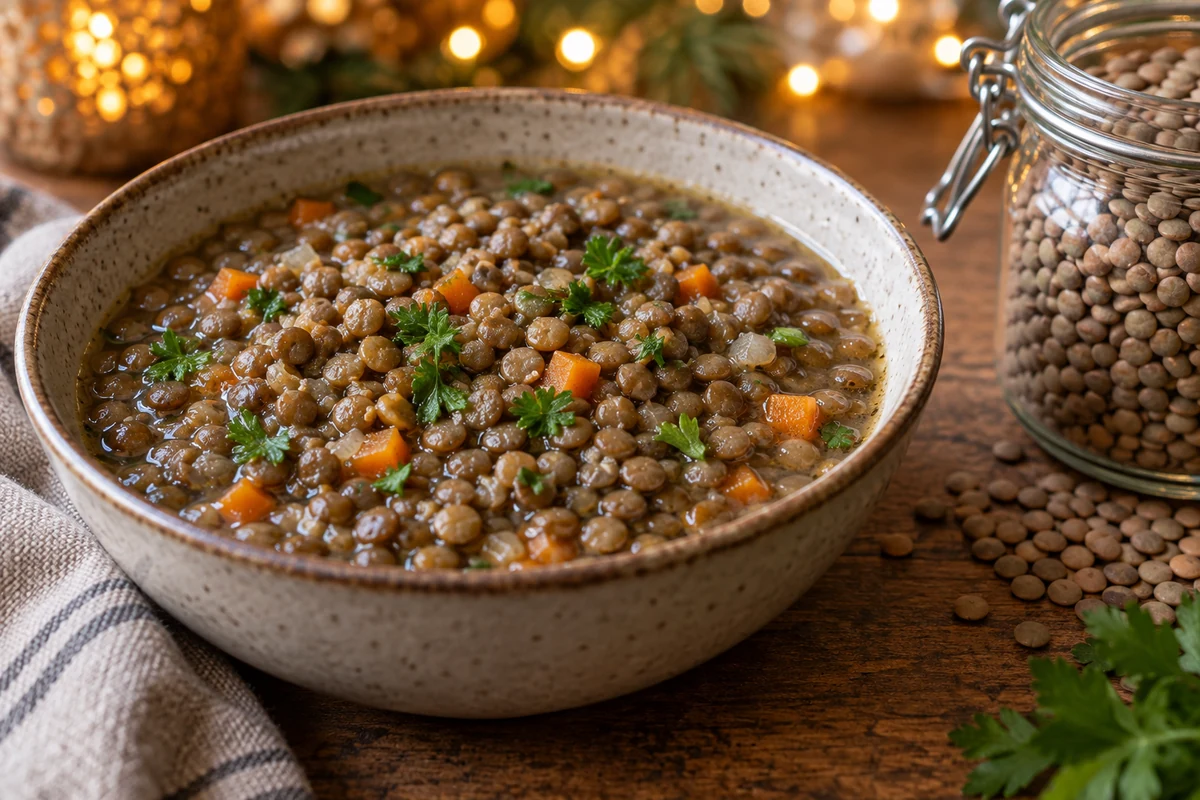
Lentils are particularly associated with Italian New Year celebrations, where they symbolise money and good fortune. Their resemblance to little coins is a common explanation. Accounts of the custom’s ancient origins vary, so it is safer to distinguish the well-established association from a precise, undocumented starting date. Source: Italia.it — Italian New Year traditions
Lentils as a symbol of prosperity: a generous dish suggests abundance, while the small round seeds evoke coins. Eating them expresses hope for the year ahead; it does not change someone’s financial prospects.
The tradition in Brazil
The custom is also familiar in Brazil and is often linked with Italian family and cultural traditions. Its route into individual households differs, so there is no need to assume a single origin story for every family’s celebration.
Lentils can be an economical, nourishing part of the meal. Some households mark the occasion with a spoonful at midnight; others keep a few dry lentils in a pouch as a symbolic keepsake. Neither practice is compulsory.
Today the food appears as a warm side dish, a chilled salad or part of a larger supper. Families can preserve the meaning of a tradition while choosing the preparation they enjoy most.
Lentils, prosperity and the symbolism of money
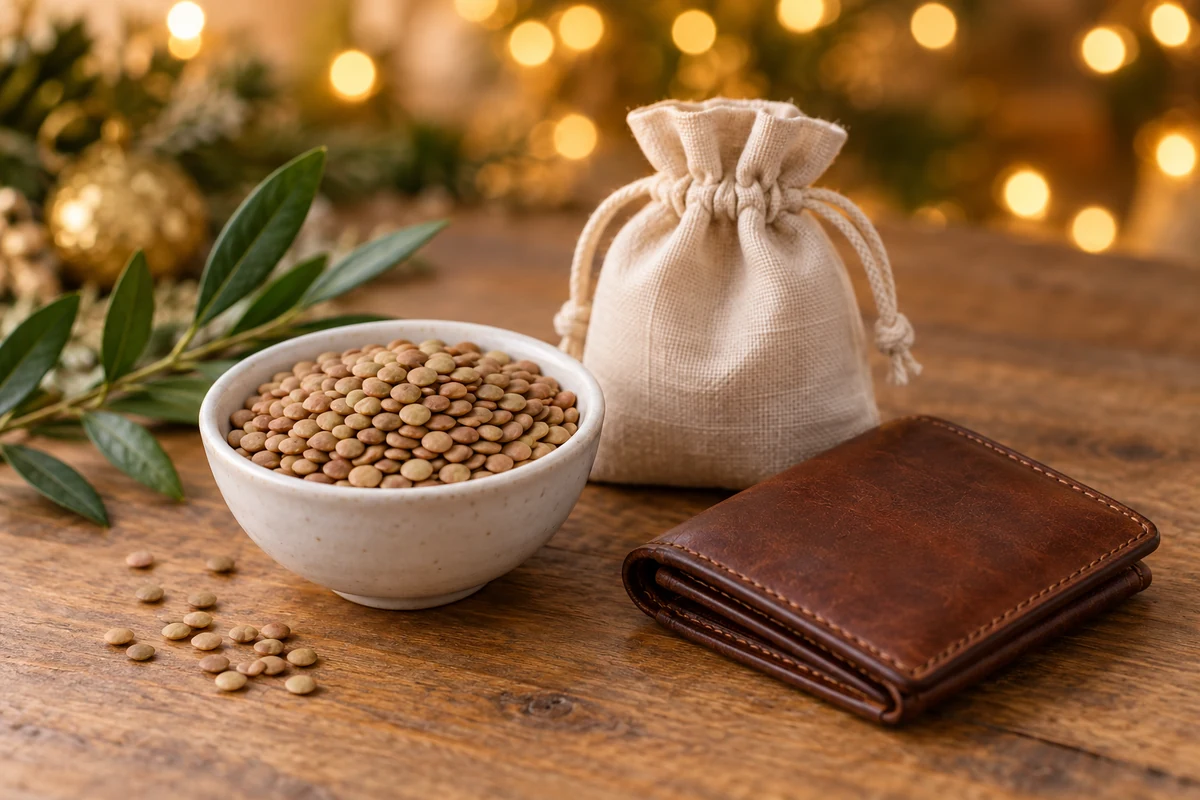
The association between lentils and money is a visual metaphor: their small, rounded shape resembles coins. This helps explain their role as a symbol of prosperity in New Year celebrations.
A full dish can represent plenty, while sharing it at the start of the year expresses wishes for security and wellbeing. Those meanings belong to the celebration rather than to a measurable effect of eating the food.
Cultural meanings
Depending on the household, the tradition may evoke financial hopes, family continuity or simply the comfort of a shared meal. Customs travel and change; their meaning does not have to be identical everywhere.
A personal reminder: if you find the ritual meaningful, you might use it as a moment to reflect on your plans. It is not evidence that eating lentils improves money management or produces wealth.
Common versions of the custom
- Eat a small serving of cooked lentils around midnight as a symbolic wish for good fortune.
- Keep a few dry lentils in a closed pouch or envelope as a keepsake. Do not put cooked food in a wallet or unrefrigerated bag.
- Include lentils in the meal or use a small, closed decorative container to represent abundance. Keep loose dried pulses away from young children and pets.
- Share a lentil recipe with relatives and talk about the memories attached to it.
Practices differ with personal beliefs and family habits. Participation should be optional: the shared meal is just as welcoming for someone who does not believe in lucky foods.
What lentils contribute nutritionally
Lentils are pulses that supply plant protein, fibre and several vitamins and minerals. They can form part of a varied diet, but no single food guarantees better health, energy or weight control. Source: NHS — The vegetarian diet
Nutrients to consider
- Protein: lentils contribute plant protein to meals. The amount depends on the portion and preparation; use the product’s nutrition information rather than assuming every half-cup serving has the same value.
- Fibre: lentils help add fibre to the diet. Fibre supports digestion; a lentil dish should not be presented as a treatment for blood-sugar problems. Source: NHS — Fibre in your diet
- Iron: lentils provide plant-based iron. Including vitamin C in the same meal can help absorption, but eating lentils is not a substitute for assessment or treatment of anaemia.
- Folate: this B vitamin contributes to normal cell processes. A varied diet matters more than relying on one festive dish. Source: NHS — Vitamins and minerals
- Minerals: lentils contribute minerals including potassium. The nutrient content of the finished meal depends on its ingredients and portion size; avoid treating it as a blood-pressure remedy.
- Naturally low in fat: plain lentils contain little fat, though added oil, butter, bacon or sausage changes the finished dish.
A useful everyday ingredient
Lentils can make a satisfying addition to meals, offering an alternative or complement to other protein foods. They do not automatically reduce calorie intake, improve metabolism or lower cholesterol; the overall pattern of eating is what matters.
Making the most of the meal
- Add a vitamin C source, such as lemon juice or tomatoes, alongside lentils to help your body absorb their iron.
- Drain and rinse tinned lentils, especially those packed in salted liquid; check the label for the salt content.
- Choose whole green or brown lentils when you want them to keep their shape. Split varieties soften differently and may need a different cooking time.
- A small serving, such as roughly half a cup of cooked lentils, may suit a side dish. This is a serving example, not a universal dietary recommendation; adjust to the meal and your needs.
Easy ways to use lentils regularly
- Add cooked lentils to a green salad for extra substance.
- Make a mash or stew with onion, tomato and herbs.
- Use them as the base for a homemade vegetable burger.
- Serve lentils with rice, or replace some of the rice with lentils to vary the meal’s protein and fibre sources.
Their versatility makes lentils useful well beyond New Year’s Eve. Choose a preparation that suits your preferences and the other foods on the table.
How to cook lentils for New Year: a simple recipe
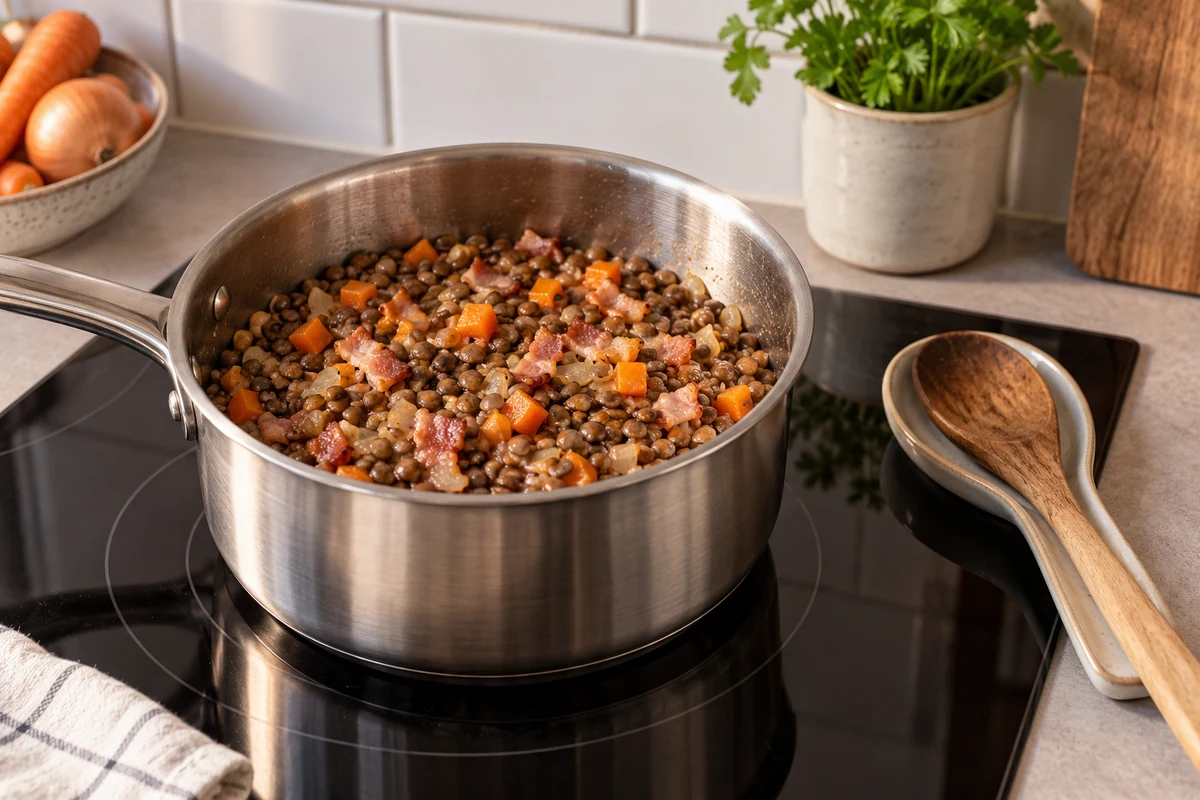
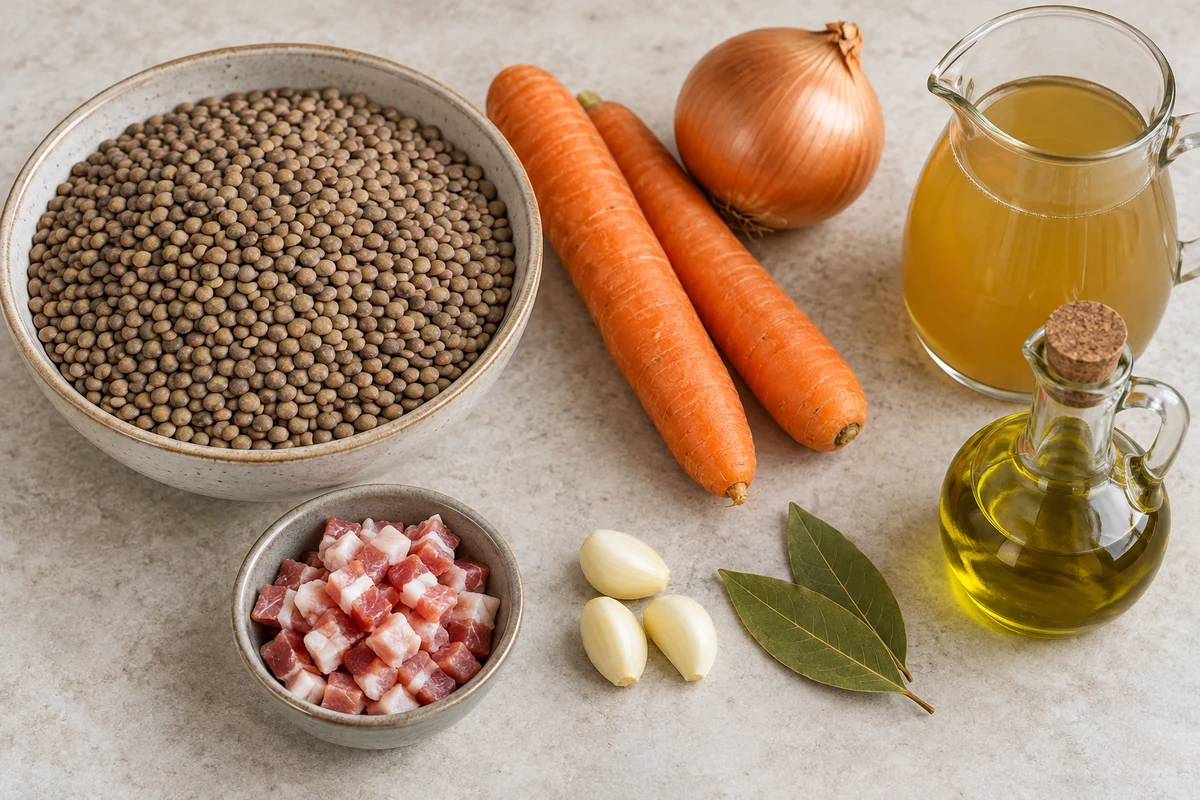
This straightforward dish starts with dried lentils and an onion-and-garlic base. Use the stated 200 g dry weight for the main recipe. The optional tinned version needs a different liquid amount and a shorter heating stage, as explained below. For the flexible cup-based variations, use one consistent household measuring cup rather than assuming a precise weight conversion.
Ingredients for New Year lentils
- 200 g dried green or brown lentils: sort and rinse them. For a quick variation, use two cups of drained tinned lentils; this is an alternative portion, not an exact dry-to-cooked weight equivalent.
- 1 litre water for dried lentils: adjust during cooking. Tinned lentils are already cooked and need only enough liquid to prevent sticking and achieve the consistency you want.
- 1 medium onion, chopped: a red onion also works.
- 2 garlic cloves, chopped: alternatively, use 1 teaspoon garlic paste, checking its ingredients and strength.
- 1 medium carrot, diced: optional, for colour and sweetness.
- 1 bay leaf: optional.
- 1 tablespoon olive oil: or another suitable vegetable oil.
- Salt to taste: season gradually at the end, particularly if using salty meat or tinned lentils.
- Black pepper to taste: optional.
- 2 tablespoons chopped parsley or coriander: to finish.
- Optional: 100 g chopped bacon or sausage: omit for a vegetarian dish; follow the product’s cooking instructions if using it.
Method
- Prepare the lentils: pick over the 200 g dried lentils, discard any stones or debris and rinse in a sieve under running water.
- Cook the onion: heat the tablespoon of oil in a medium saucepan. Add the chopped onion and cook for about 2–3 minutes, continuing until softened.
- Add the garlic: stir in the two chopped cloves and cook for about 30 seconds without burning them.
- Add the carrot and optional meat: stir in the diced carrot and, if using, the bacon or sausage. Let the carrot begin to soften and the meat brown; ensure the meat is thoroughly cooked by the end, following its packet instructions.
- Add dried lentils: stir the rinsed lentils into the pan for about a minute. If using tinned lentils, first cook the vegetables and any meat through, then add the drained lentils with a little liquid and heat until steaming throughout, following the tin’s instructions.
- Add water and bay: for the dried-lentil version, pour in the litre of water, add the bay leaf and bring to the boil.
- Simmer gently: reduce the heat, cover and start checking after 18–25 minutes. Follow the lentil packet’s guidance and continue until tender, adding water if necessary. Older lentils or different varieties may take longer. For a thicker dish, simmer uncovered towards the end rather than leaving excess broth.
- Adjust the seasoning: remove the bay leaf and season with salt and pepper. Simmer for another minute or two if needed.
- Finish with herbs: turn off the heat, stir in the chopped parsley or coriander and leave for five minutes before serving.
- Serve: transfer to a serving dish and enjoy as part of supper, at midnight if that is your custom. Keep any symbolic dry-lentil pouch separate: cooked lentils must not be stored unrefrigerated as an amulet.
Quick variations
- With tomato: add one chopped tomato to the onion mixture. Check that the lentils become fully tender, as acidity can affect softening.
- For a creamier texture: take out half a cup of cooked lentils, mash with a fork and stir back into the pan.
- As a cold salad: cook until tender but still holding their shape, cool promptly and mix with pepper, red onion, olive oil and balsamic vinegar. Keep chilled until serving.
More lentil recipes for a festive meal
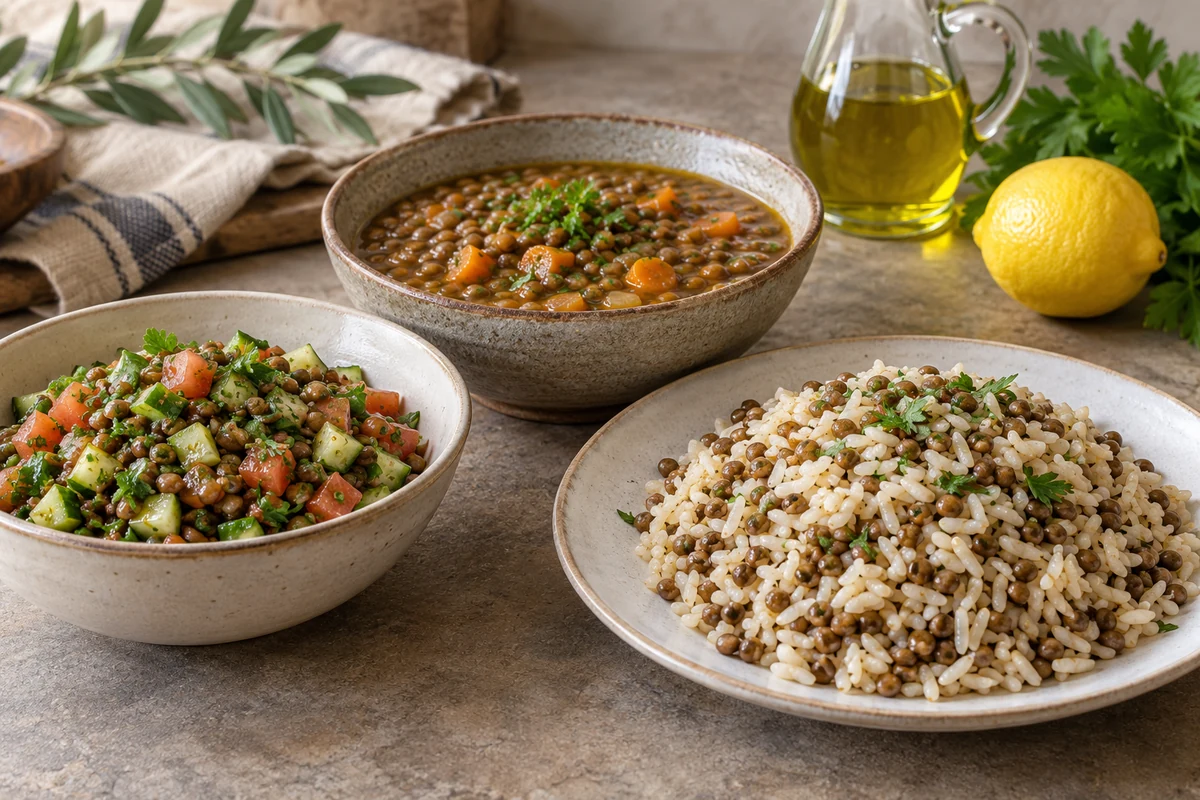
These variations use the same simple ingredient in different ways. Quantities given in cups are flexible household measures; keep the cup size consistent and adjust texture rather than treating them as exact gram equivalents. Check allergens in stock, breadcrumbs, oats and sauces.
A quick traditional lentil dish
- 200 g dried green or brown lentils: sorted and rinsed. Alternatively, use two cups of drained tinned lentils with the shortened method described above.
- 1 litre water for the dried version: adjust as the lentils cook. Do not add this full quantity to ready-cooked tinned lentils.
- 1 medium onion, chopped: use brown or red onion.
- 2 garlic cloves, chopped: or 1 teaspoon garlic paste.
- 1 medium carrot, diced: optional.
- 1 bay leaf: optional.
- 1 tablespoon olive oil: or vegetable oil.
- Salt and black pepper to taste.
- Rinse: pick over the dried lentils and wash them in a sieve.
- Soften the onion: heat the oil and cook the onion for about 2–3 minutes, or until softened.
- Add garlic and carrot: stir them in and cook for another minute without scorching the garlic.
- Add lentils: stir in the dried lentils for about a minute. For the tinned variation, cook the carrot until tender before adding the ready-cooked lentils.
- Cook: add the litre of water and bay leaf to the dried version, bring to the boil, then simmer gently. Start checking after 18–25 minutes and continue until tender, following the packet. Tinned lentils need only a little liquid and heating until steaming throughout.
- Season: remove the bay leaf, add salt and pepper to taste and rest for five minutes before serving.
Chilled lentil salad
- 2 cups cooked lentils: cooled promptly and chilled; drained tinned lentils are another option.
- 1/2 red pepper, chopped: for colour and crunch.
- 1/2 red onion, chopped: for a sharper flavour.
- 10 cherry tomatoes, halved: or one larger tomato, chopped.
- 1/4 cup chopped parsley: or coriander.
- Juice of 1 lemon: add gradually to taste.
- 2 tablespoons olive oil: or a suitable alternative oil.
- Salt and pepper to taste.
- Start with the lentils: put the cooked, cold lentils in a large bowl.
- Add vegetables: stir in the pepper, red onion and tomatoes.
- Dress the salad: mix in the lemon juice, oil, salt and pepper, tasting as you go.
- Finish: fold in the parsley and refrigerate for 20–30 minutes before serving. Adding dressing does not restart the storage time of previously cooked lentils.
Creamy lentil mash
- 1 cup cooked lentils: drained.
- 1/4 cup vegetable stock: add gradually and adjust to the texture you want.
- 1 garlic clove: lightly cooked until softened, without burning.
- 1 tablespoon olive oil: or 1 tablespoon butter for a non-vegan version.
- Salt and nutmeg to taste.
- Combine: put the lentils, stock, garlic and oil in a food processor or blender. Use cooled ingredients unless the appliance is designed for hot food, and follow its instructions; do not seal hot liquid in an unsuitable blender.
- Blend: process until smooth, adding a little more stock if needed.
- Season: add salt and a little grated nutmeg to taste.
- Heat before serving: transfer to a small saucepan and stir over a gentle heat until steaming hot throughout. Only reheat a portion once.
Simple lentil burgers
- 1 cup cooked lentils: drained thoroughly.
- 1/2 cup rolled oats: or breadcrumbs, to help bind the mixture.
- 1/2 onion, grated.
- 1 garlic clove, crushed.
- 1 tablespoon soy sauce: optional; check salt and allergen information.
- Salt, pepper and herbs to taste.
- Mash: crush the lentils with a fork, leaving some texture.
- Mix: add the oats, onion, garlic, optional soy sauce and seasoning. Combine thoroughly; let the oats absorb moisture before judging whether the mixture holds together.
- Shape: form four small, compact patties with clean hands. Handle gently; moisture levels affect how firmly they bind.
- Cook: fry in a little oil for roughly 3–4 minutes on each side, continuing as needed until browned and steaming hot through the centre. Time varies with thickness and pan heat.
More ways to vary the dishes
- Extra colour: add grated carrot or chopped pepper where it suits the recipe. Extra vegetables can change the moisture and binding of burgers.
- A citrus finish: a little lemon juice adds brightness and vitamin C.
- A creamy version: mash some lentils with a little plant-based cream, adding it gradually to the consistency you prefer.
- Save time: use drained tinned lentils and remember that they need heating, not the full dry-lentil cooking process.
New Year lentil customs and superstitions
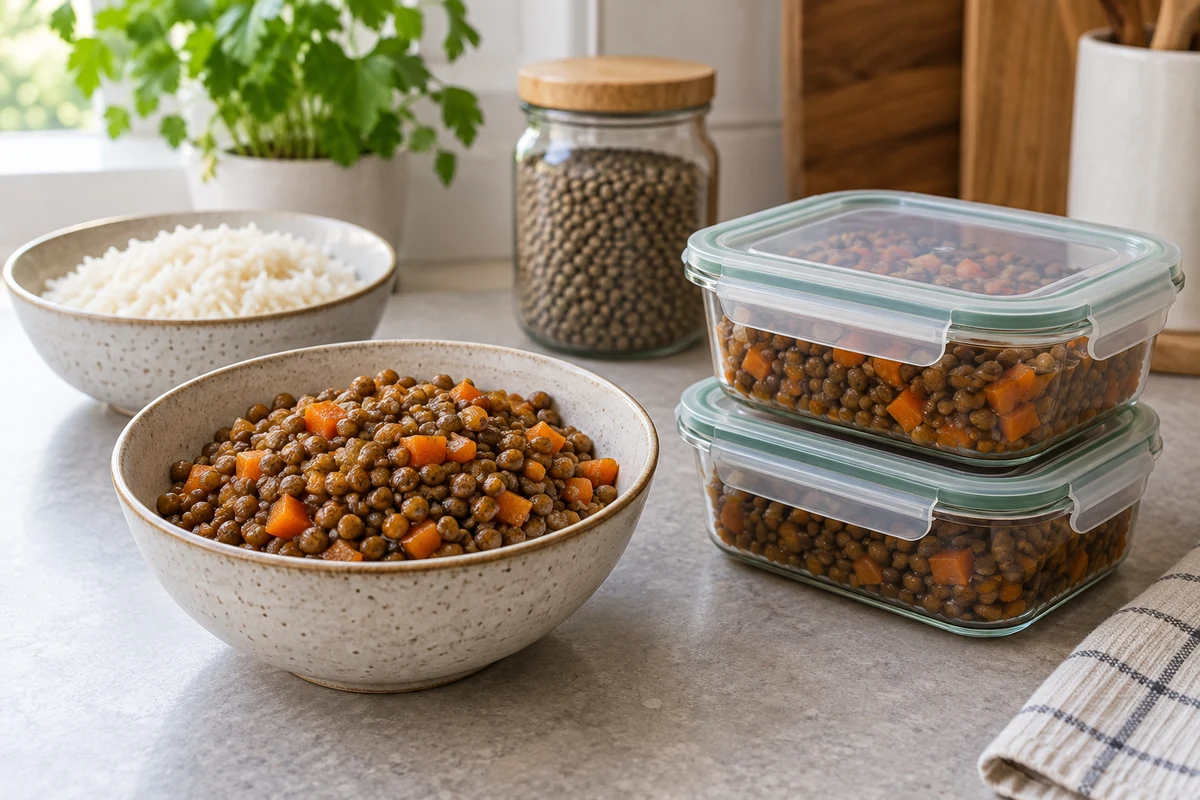
Some families enjoy lentil rituals as a way of expressing hope at New Year. Treat these as optional symbolic customs, not methods for attracting money or preventing financial problems.
Familiar customs
- Eating lentils at midnight: a small spoonful of cooked lentils can mark a wish for prosperity. There is no need to rush or make them the year’s first food.
- Keeping dry lentils in a wallet: a closed pouch or envelope can hold a few dry lentils as a personal symbol. Keep them separate from food intended for cooking.
- A display by the entrance: if you choose this custom, use a closed container out of reach of children and pets rather than leaving loose pulses on a plate.
- A symbolic gift: share a small, clearly labelled pouch with someone who enjoys the tradition. A written wish is an equally suitable alternative.
A simple midnight celebration
- Prepare a small dish of cooked lentils and keep it safely hot, or refrigerate promptly and reheat once until steaming throughout before serving.
- Bring it to the table shortly before you plan to eat, rather than leaving it out all evening.
- Around midnight, enjoy a normal mouthful at your own pace and, if you wish, think about something you hope for in the coming year.
- If you want a keepsake, put a few separate dry lentils in a closed pouch. Do not save cooked lentils in it.
Practical, responsible ways to keep the custom
- Avoid waste: cooking and sharing a meal is enough. Do not return handled or displayed lentils to the food supply; a drawing or note can replace a display of loose food.
- Keep symbolism in perspective: you can write down a personal goal, but practical decisions and circumstances determine financial outcomes, not the ritual.
- Respect different beliefs: let guests take part, adapt the custom or simply enjoy supper.
- Use what you cook: prepare an appropriate amount and serve it as food instead of setting cooked portions aside as decorations.
- Store food safely: cool leftovers promptly and refrigerate within two hours. Eat refrigerated leftovers within 48 hours or freeze them; reheat only once, until steaming hot throughout. Source: Food Standards Agency — Cooking and leftovers
Small touches for the occasion
- Use a battery-powered candle for atmosphere and invite anyone who wishes to share a hope for the new year.
- Write your intention on a small card and keep it as a reminder. A lentil pouch is optional.
- Ask before taking or sharing a family photograph, and respect anyone who prefers not to be included.
A tradition you can make your own
Eating lentils at New Year can combine a shared meal with hopes for the future. Their symbolic meaning is part of the celebration, not a guarantee of luck or prosperity.
Lentils also offer a useful everyday ingredient for stews, salads, mash and burgers. Enjoy them as part of a varied diet, whether or not you follow the New Year custom.
Thanks for reading. Follow our social channels for more seasonal ideas and visit the I Love Christmas blog for recipes and traditions.
New Year lentils: frequently asked questions
What does eating lentils at New Year mean?
It is a symbolic custom linking their small, rounded shape with coins and prosperity. Sharing them expresses hope for abundance rather than causing good fortune.
How do people follow the lentil custom at midnight?
Some enjoy a small serving of cooked lentils around midnight. Others keep a few separate dry lentils in a closed pouch. Neither is necessary, and cooked food must be stored safely rather than kept as an amulet.
Does eating lentils make you rich?
No. The tradition is symbolic, and there is no evidence that eating lentils produces wealth. Enjoy it for its meaning or the food, without relying on it for financial results.
What is a good way to serve lentils at supper?
Try a warm seasoned side dish, a chilled salad or a creamy mash. Choose a preparation that suits the rest of your menu and your guests’ dietary needs.
Can I use tinned lentils instead of dried ones?
Yes. Drain and rinse them, and follow the tin’s instructions. They are already cooked, so reduce the added liquid and heating time; do not follow the full dried-lentil method unchanged.
How should I store leftover lentils?
Cool promptly and refrigerate in a suitable container within two hours. Eat within 48 hours or freeze. Reheat only once, until steaming hot throughout, and keep track of when the lentils were originally cooked.
Sources and Further Reading
- Italia.it — Italian New Year traditions
- NHS — The vegetarian diet
- NHS — Fibre in your diet
- Food Standards Agency — Cooking and leftovers
- NHS — Vitamins and minerals