Plan a festive spread with seven New Year’s Eve canapé recipes. Choose crisp bases, prepare fillings ahead where suitable and assemble close to serving. Find portion guides, vegetarian and vegan variations, allergen checks and practical advice for keeping food chilled or properly hot.
These New Year’s Eve canapé recipes offer seven colourful ideas for entertaining family and friends. Explore simple combinations, vegetarian options and presentation tips, with advice on preparing ahead without compromising freshness.
Why Canapés Work Well at New Year

Canapés are small, varied bites that suit a sociable party. Guests can try several flavours while chatting, without needing to sit down for every course.
Practical Advantages
- Easy to eat: many need no cutlery, making service and clearing up simpler.
- Preparation ahead: some components can be made in advance and assembled shortly before serving.
- Portion planning: counting pieces helps you estimate quantities and reduce waste.
- Drinks pairings: offer them with sparkling wine, cocktails or alcohol-free drinks according to your guests’ preferences.
Colour, Texture and Presentation
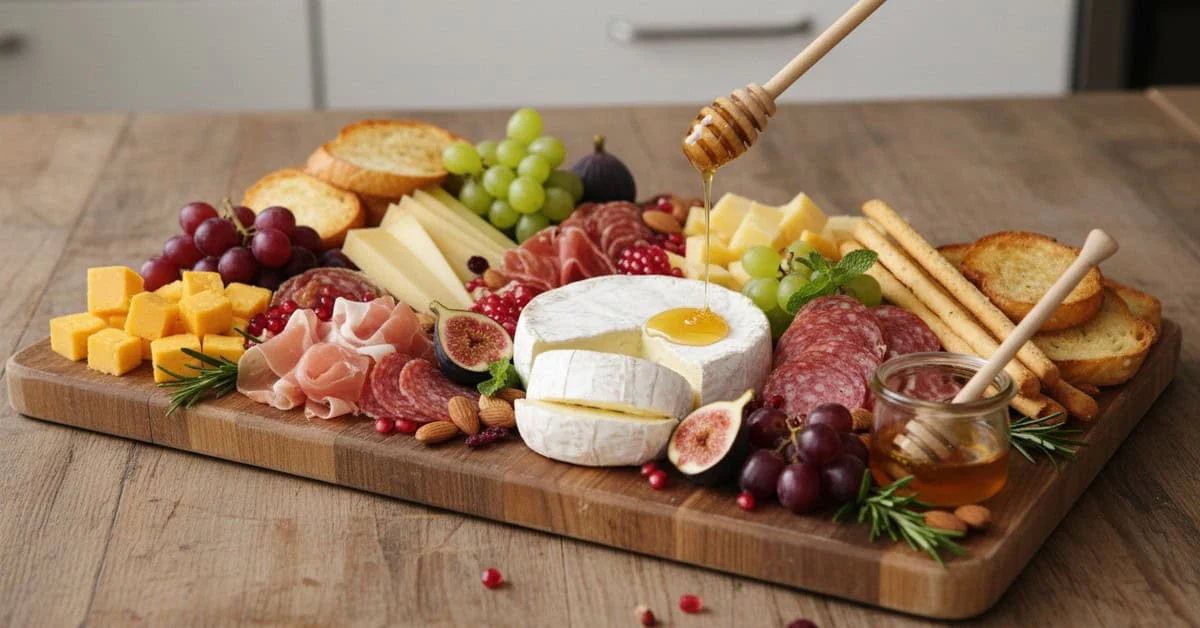
Small portions allow you to combine contrasting colours, crisp bases and fresh garnishes. A neat arrangement makes the spread inviting without complicated decoration.
Variety and Flexibility
- Choice: include fish, meat, vegetarian and vegan options to suit the group.
- Budget swaps: less expensive ingredients can make equally appealing combinations, though the flavour will change.
- Dietary information: clearly identify ingredients and suitable options after checking every component. Lactose-free and milk-free are not the same thing.
Quick Party Tips
- Prepare suitable fillings the day before and refrigerate; assemble damp toppings on crisp bases close to serving.
- Keep vegetarian and vegan trays separate from meat and fish, with their own utensils. Vegetarian dishes may still contain allergens.
- Around 6–10 small pieces per person may suit a gathering with other food; adjust for duration, piece size and whether a meal follows.
- Use edible garnishes such as washed herbs, fruit or microgreens, prepared according to their instructions.
- Arrange platters at stable, accessible heights without making guests reach across food.
Planning Quantities and a Canapé Station

A simple serving plan helps guests find their preferred options while making replenishment easier. Estimate quantities first, then organise chilled and hot storage as well as the display.
Estimating Quantities
These are starting points rather than fixed catering rules. Consider the size of each canapé, the length of the gathering and the other food available:
- 6–8 pieces per person when a full dinner and dessert follow.
- 10–12 pieces per person for a short drinks reception without dinner; small bites alone may not replace a meal.
- 12–15 pieces per person may be a starting point for a longer event, alongside more substantial food where needed.
- Menu balance: choose a mix of cold, hot and plant-based dishes. These categories overlap, so do not treat them as mutually exclusive percentages.
- A small reserve: allow roughly 10–15% extra if appropriate, using your knowledge of the group rather than assuming appetites from age.
Setting Up Step by Step
- Choose the location: leave enough room for people to approach without blocking a busy doorway.
- Plan the flow: start with plates and spread popular choices across the table to reduce crowding.
- Vary the display: use stable stands, boards and trays at different heights where accessible.
- Separate food types: provide distinct hot, chilled and plant-based areas, with clear ingredient information.
- Provide utensils: give each tray its own tongs or serving fork. Keep sharp cocktail sticks away from young children.
- Plates and napkins: place small plates and napkins where guests start serving themselves.
- Control food temperature: keep cold reserves refrigerated at 5°C or below. Use suitable equipment to hold hot food at 63°C or above, checking the food itself rather than just an oven setting.
- Replenish in small batches: check trays every 20–30 minutes and replace with fresh small portions as needed. Keep reserves safely chilled or hot until required.
- Show allergen information: label dishes clearly with relevant ingredients, such as milk, egg, wheat, fish, nuts or mustard. Keep a full ingredient list available; a hidden or vague kitchen note is not enough for guests to choose confidently.
- Keep decoration simple: gentle lighting and small edible garnishes can improve presentation without obstructing service.
Equipment Checklist
- Small plates, with extras for replacement.
- Plenty of napkins.
- Separate serving tongs, forks and suitable cocktail sticks.
- Stable trays, boards and serving stands.
- Suitable hot-holding equipment and a clean food thermometer.
- Chilled storage and, if used, properly managed chilled display trays.
- Waste bags and clean containers for safely stored unused food.
- Washed edible garnishes, such as herbs or fruit.
Reducing Waste
- Put out small quantities and replenish when needed.
- Match the number of plant-based options to your guests’ needs.
- Use versatile ingredients, but only reuse food that has remained within its safe storage conditions and use-by date.
Seven New Year’s Eve Canapé Recipes

1. Smoked salmon and cream cheese canapés
Smoked Salmon Canapé Ingredients
- 120 g smoked salmon — thinly sliced. Cold-smoked or cured fish should not be served uncooked to pregnant or immunocompromised guests; offer a thoroughly cooked alternative.
- 200 g cream cheese — keep chilled until preparation. Whipped ricotta gives a different texture but is still dairy.
- 1 tbsp chopped fresh dill — or chives.
- 12 small toasts or blinis — choose a size that can hold the topping.
- Zest of 1 lemon and black pepper to taste.
How to Make Smoked Salmon Canapés
- Mix the cheese: stir cream cheese, chopped dill and lemon zest until smooth.
- Prepare the bases: place cooled toasts or prepared blinis on a clean platter.
- Add the cheese: divide between the 12 bases as their size allows. Refrigerate any unused mixture; 200 g is more than twelve small teaspoonfuls.
- Add salmon: divide the fish evenly over the bases.
- Finish: add black pepper and a little extra dill. An optional teaspoon of olive oil can be divided over the whole batch.
Variations
- Mashed avocado can replace cream cheese, but check the bases as well before describing the whole canapé as milk-free.
- Try parsley and lemon zest instead of dill.
2. Goat’s cheese and chilli jam crostini
Goat’s Cheese Crostini Ingredients
- 150 g spreadable pasteurised goat’s cheese without a white mould rind — keep chilled until preparation.
- Up to 6 tbsp chilli jam — add to taste, or use apricot jam with a little chilli.
- 12 toasted baguette slices.
- Up to 50 g toasted chopped walnuts — optional; label the nut ingredient clearly.
How to Make Goat’s Cheese Crostini
- Toast the baguette: cut thin slices, toast until lightly golden and cool before topping.
- Spread the cheese: divide it evenly between the slices.
- Add jam: start with a teaspoon per canapé, adding more to taste from the amount provided.
- Finish: scatter with optional chopped nuts and serve promptly.
Variations
- Try honey and pistachios for a sweeter version; this is not vegan.
- Use a suitable plant-based spread and vegan bread and jam for a vegan version; nut-based spreads introduce a nut allergen.
3. Mini tomato bruschetta
Mini Bruschetta Ingredients
- 4 ripe tomatoes — deseeded and finely diced.
- 1 garlic clove — grated or finely chopped.
- 6 tbsp extra virgin olive oil — use some for the topping and reserve a little for finishing if desired.
- Fresh basil leaves — washed and torn shortly before serving.
- 12 small ciabatta or baguette slices — toasted.
- Salt and pepper to taste.
How to Make Mini Bruschetta
- Mix the topping: combine tomatoes, garlic, most of the oil, basil, salt and pepper. Keep chilled if not using straight away.
- Toast: crisp the bread in the oven or a pan and let it cool slightly.
- Assemble: spoon tomato mixture over each slice immediately before serving.
- Finish: add basil and a little of the reserved oil if desired.
Variations
- Add grated hard cheese for a salty finish. Parmesan is not vegetarian; choose a labelled vegetarian alternative where needed.
- Use freshly slow-roasted tomatoes for a more concentrated flavour.
4. Cucumber with ricotta and herbs
Cucumber Canapé Ingredients
- 2 cucumbers — washed and cut into thick rounds; yield depends on their size and the slice thickness.
- 200 g ricotta — beaten smooth; choose a vegetarian product if required. Soft tofu is a plant-based alternative.
- 1 tbsp chopped chives.
- Juice of half a lemon — add gradually to taste.
- Salt and pepper to taste.
How to Make Cucumber Canapés
- Mix the topping: combine ricotta, chives, lemon juice, salt and pepper until creamy.
- Prepare cucumber: slice evenly and blot excess surface moisture with clean kitchen paper.
- Assemble: spoon a small amount of topping onto each round until the mixture is used up.
- Finish: add washed microgreens or lemon zest, keeping the canapés chilled until service.
Variations
- A little honey adds a sweet contrast, but makes a plant-based version unsuitable for vegans.
- Crumbled feta gives a saltier variation; check vegetarian suitability if needed.
5. Prosciutto and melon bites
Prosciutto and Melon Ingredients
- 12 bite-sized cantaloupe melon cubes — prepare from washed fruit with clean utensils.
- 120 g prosciutto — cut into thin strips. For pregnant guests, use a suitable fully cooked ham instead of uncooked cured meat.
- Cocktail sticks — optional; remove them before offering food to children.
- Mint leaves — washed, for decoration.
How to Make Prosciutto and Melon Bites
- Wrap: divide the ham between the melon cubes and wrap each one.
- Secure: use a cocktail stick if needed.
- Arrange: place on a clean platter, add mint and refrigerate until serving.
Variations
- Try firm pear instead of melon for another sweet and savoury combination.
- Finish with a small amount of balsamic glaze if desired.
6. Mini leek quiches
Mini Leek Quiche Ingredients
- 1 ready-rolled sheet of puff pastry — pack size and tin size determine the yield; have sufficient pastry for the filling.
- 2 medium leeks — washed thoroughly and thinly sliced, plus a little olive oil for softening them.
- 3 eggs — beaten.
- 150 ml cream — a suitable plant-based cooking cream can replace it, but also check the pastry before claiming the quiches are milk-free.
- Salt, pepper and nutmeg to taste.
How to Make Mini Leek Quiches
- Preheat: set the oven to 180°C, or 160°C fan, checking the pastry instructions as well.
- Soften the leeks: cook in a little oil until tender, then allow to cool slightly.
- Mix the custard: whisk eggs, cream, salt, pepper and nutmeg together.
- Line the tins: cut pastry circles to fit mini tart tins and divide the leeks between them.
- Fill: add the egg mixture, leaving room for expansion rather than overfilling.
- Bake: start checking at 18–22 minutes. The pastry must be cooked and the egg filling set and hot through; larger tins may need longer. Do not taste raw filling.
Variations
- Add grated Gruyère, or a labelled vegetarian hard cheese where appropriate.
- Replace leek with cooked spinach, squeezing it well to remove excess moisture.
7. Fig, Brie and honey tartines
Fig and Brie Tartine Ingredients
- 6 fresh figs — washed and thinly sliced.
- 150 g Brie — sliced. Pregnant guests should avoid it unless cooked until steaming hot, or have an appropriate alternative.
- 12 small rustic bread slices — lightly toasted.
- Honey, to drizzle — or apricot jam.
- Chopped walnuts or pistachios — optional, for crunch.
How to Make Fig and Brie Tartines
- Toast: lightly crisp the bread.
- Add Brie: arrange cheese on each slice. Brief warming will soften it, but does not make it suitable for vulnerable guests; choose a suitable alternative or cook until steaming hot throughout.
- Add figs: arrange the fruit over the cheese.
- Finish: drizzle with honey and add optional chopped nuts.
Variations
- Pasteurised soft goat’s cheese without a white mould rind gives a tangier alternative.
- Try caramelised pear when fresh figs are unavailable or out of season.
Smoked Salmon Canapé Ingredients

The following quantities make about 12 smoked salmon canapés, depending on base size. Keep dairy and fish chilled, and use a thoroughly cooked fish alternative for pregnant or immunocompromised guests.
Ingredients
- 120 g smoked salmon — thinly sliced. Cold-smoked trout and cured salmon carry similar considerations; changing the fish does not remove that concern.
- 200 g cream cheese — keep chilled until preparation. Whipped ricotta is still dairy; use a suitable plant-based spread for a milk-free topping.
- 1 tbsp chopped fresh dill — or 1 tbsp chopped chives.
- 12 blinis or small toasts — small toasted baguette slices also work.
- Zest of 1 lemon.
- Freshly ground black pepper to taste.
- 1 tsp lemon juice — optional, to loosen the cheese slightly.
- 1 tsp extra virgin olive oil — optional, divided over the batch to finish.
How to Make Smoked Salmon Canapés
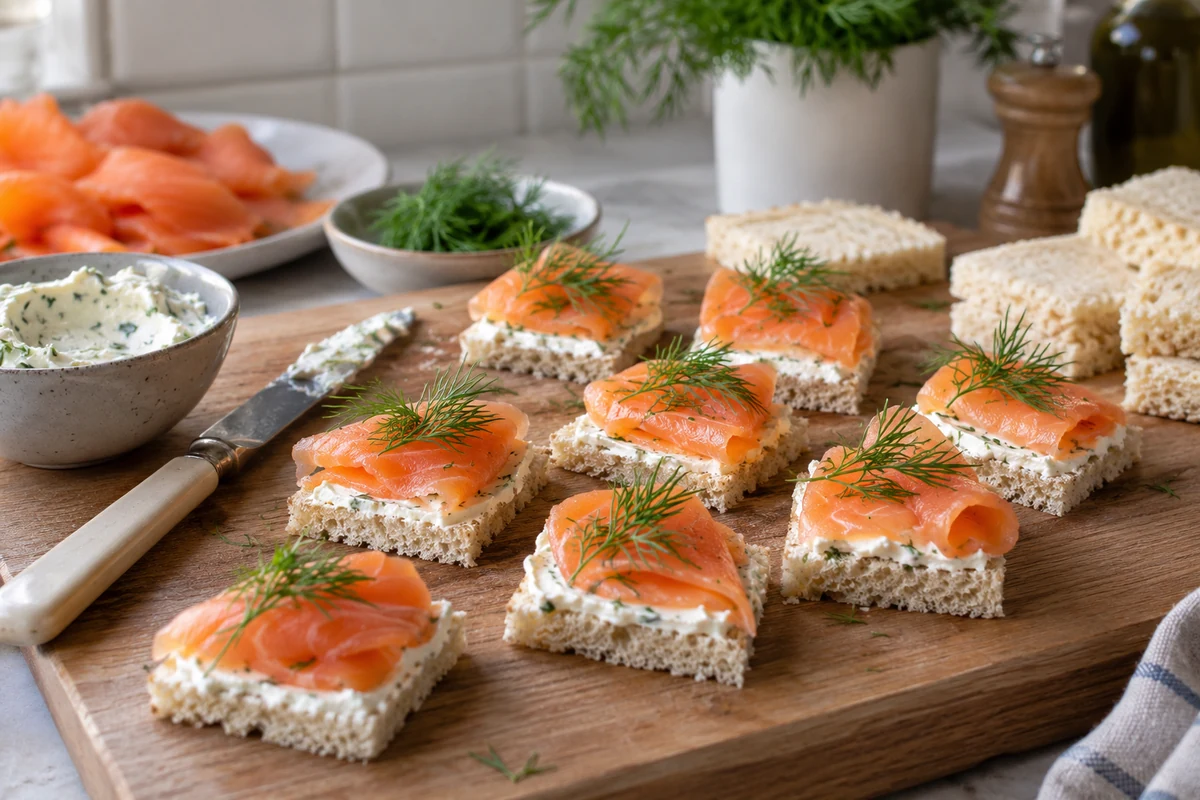
To assemble the smoked salmon and cream cheese canapés, prepare the components first and work in a small batch close to serving.
- Organise: gather the salmon, cream cheese, dill, bases, lemon, a clean knife, a small spreading knife and a platter.
- Mix the spread: combine the cream cheese with optional lemon juice, dill, some zest and a little pepper.
- Prepare the bases: heat ready-made blinis according to the packet or toast the bread until lightly golden. Cool before adding chilled fish and cheese.
- Cut the salmon: slice into strips or small rectangles to fit the bases, removing any skin or bones found.
- Add the cheese: divide between the bases as appropriate, leaving a narrow border. If the bases are very small, use less and refrigerate the remaining spread rather than overloading them.
- Add salmon: divide the fish evenly and fold the slices loosely for a little height.
- Finish: add remaining zest, pepper, a little dill and optional oil.
- Timing: assemble close to serving and refrigerate if there is a delay. Very porous bases are best topped at the last moment.
- Larger batches: multiply the ingredients as required and keep reserves chilled while assembling small trays.
- Storage and alternatives: follow the shortest use-by or opened-pack instruction among the ingredients. Eat freshly assembled canapés the same day where possible; never treat a generic 24-hour guide as permission to exceed a product’s limit.
Practical Tips
- Presentation: a small washed dill sprig or suitable microgreen is enough decoration.
- Balance: avoid an oversized cheese layer that overwhelms the salmon or base.
- Service: arrange in one layer rather than stacking.
Goat’s Cheese Crostini Ingredients
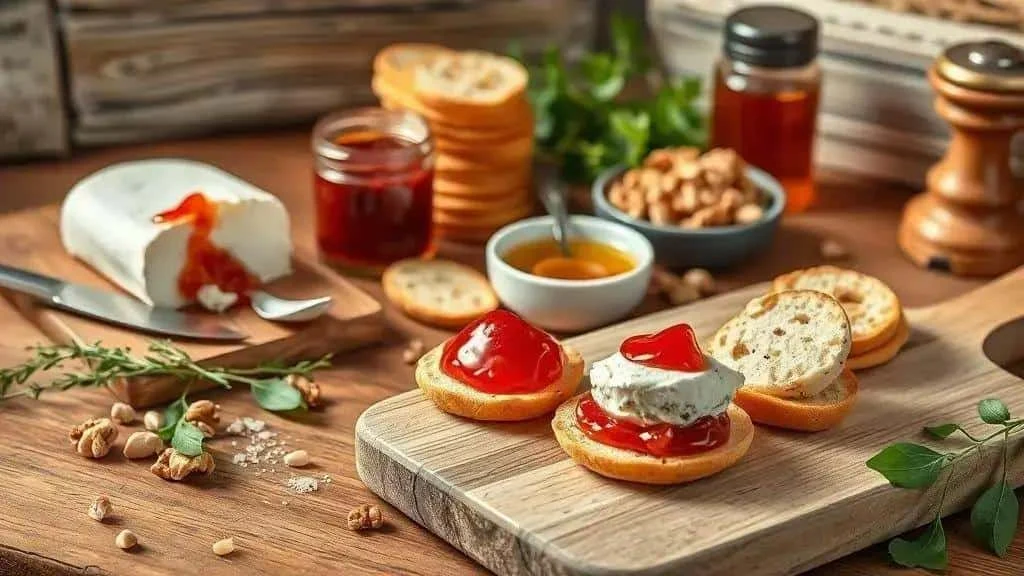
These quantities make about 12 crostini. Use a spreadable cheese so there is no need to leave it warming on the counter, and choose chilli jam with a heat level your guests enjoy.
Ingredients
- 150 g spreadable pasteurised goat’s cheese without a white mould rind — cream cheese is another dairy option; a suitable plant-based spread is needed for a vegan version.
- Up to 6 tbsp chilli jam — start with less and adjust to taste; apricot jam with chilli is an alternative.
- 12 baguette slices — or ready-made crostini.
- Up to 50 g walnuts or pistachios — lightly toasted and finely chopped; optional. Flaked almonds are another nut-containing option.
- 1 tbsp honey — optional, omitted for vegans.
- 1 tbsp extra virgin olive oil — optional, for brushing the bread.
- Flaky salt and black pepper — use sparingly to finish.
- Thyme leaves or baby rocket — washed, for decoration.
How to Make Goat’s Cheese Crostini
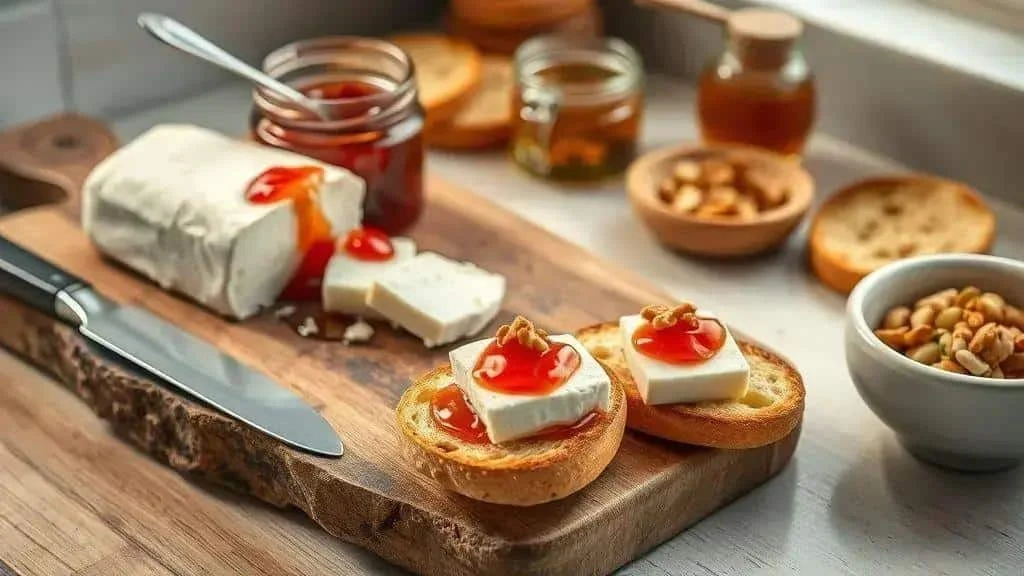
Follow these steps for neatly assembled goat’s cheese and chilli jam crostini.
- Organise: gather the chilled cheese, jam, bread, optional nuts and honey, plus a spreading knife and clean platter.
- Toast: lightly brush the bread with optional oil and bake at 180°C, or 160°C fan, for roughly 5–7 minutes until golden. Cool on a rack.
- Soften the texture: stir or briefly beat the spreadable cheese with a fork until smooth.
- Portion: divide the 150 g cheese evenly between 12 slices, leaving a small border.
- Add jam: start with 1 tsp per piece, then add more to taste from the measured allowance. You need not use all 6 tbsp.
- Add crunch: scatter a little of the optional chopped nuts over each crostino.
- Finish: add optional honey, pepper and a little flaky salt if needed. Omit honey for a vegan version.
- Arrange: display in one layer and garnish sparingly with thyme or rocket.
- Timing: assemble close to serving. If made 30–40 minutes ahead, cover and refrigerate rather than leaving them out to warm.
- Alternatives: ordinary cream cheese is neither vegan nor reliably lactose-free. Use an appropriate labelled alternative and check bread, jam and toppings too.
Quick Tips
- Go gently with jam: a small amount often balances the cheese better than a thick layer.
- Try one first: check the flavour balance before assembling the whole batch.
- Change the base: try other crostini or firm, thin pear slices for a different presentation.
Variations and Ingredient Swaps
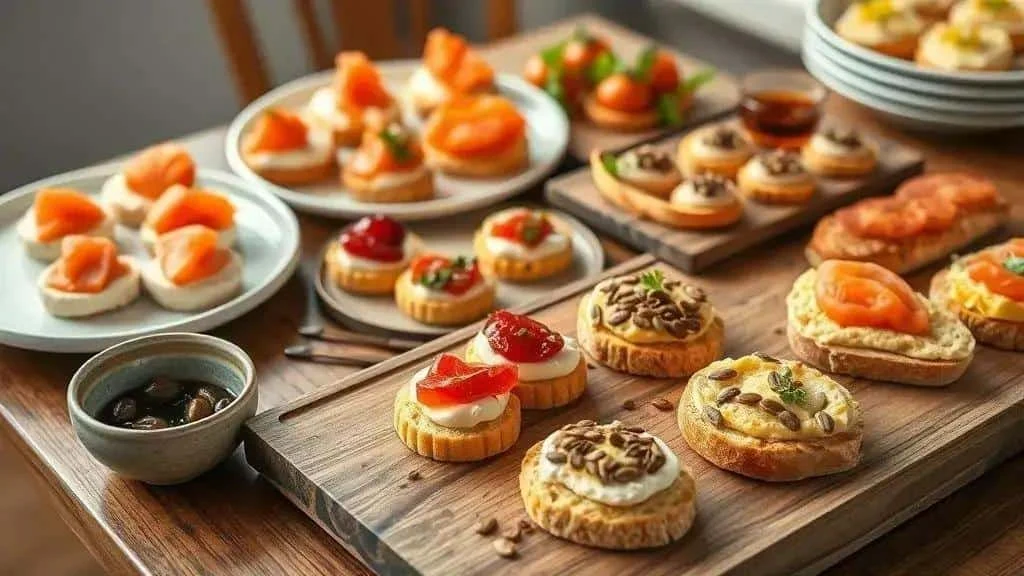
Ingredient swaps can help with budget, seasonality and dietary needs. Check the whole recipe and test the result rather than assuming every replacement works identically.
Swaps for Dietary Requirements
- Milk-free or lactose-free: a suitable plant-based spread can replace cream cheese. Ordinary ricotta still contains milk and lactose; lactose-free dairy still contains milk proteins and is unsuitable for milk allergy.
- Vegan: use an appropriate cashew spread or seasoned tofu instead of dairy cheese, checking bread, pastry, honey and all other components as well.
- Gluten-free: use labelled gluten-free blinis or bread, or suitable grilled polenta rounds. Check toppings and preparation surfaces for cross-contact too.
- Fish-free: replace salmon with cooked chicken or marinated beetroot. Smoked trout is still fish and is not a fish-allergy alternative; fish, crustaceans and molluscs are distinct allergens.
- Without nuts: suitable toasted pumpkin or sunflower seeds can replace the optional nuts, but check the person’s needs and the product’s cross-contact information.
Swaps for Texture and Flavour
- Creamy cheese: whipped ricotta can replace cream cheese for a different texture; add a little lemon juice to taste. Fat content depends on the products used.
- Pastry: try a suitable gluten-free pastry or shortcrust case, following its cooking instructions. Cooked potato slices can serve as bases for cold toppings, but do not behave like pastry quiche cases.
- Sweet and savoury: apricot jam is a milder alternative to chilli jam. A little honey works with cheese but is not vegan.
- Crisp bases: toasted baguette slices make crostini; labelled gluten-free polenta rounds offer another option.
Flavour and Budget Ideas
- Economical fish topping: well-drained tinned sardines with lemon and herbs can replace salmon, while remaining a fish-containing dish.
- A tangy finish: add a little balsamic glaze or honey to goat’s cheese, adjusting sweetness to taste.
- Yoghurt variation: yoghurt changes the acidity and texture of a quiche filling. Use a tested yoghurt-based recipe rather than assuming 120–130 g replaces 150 ml cream with an identical result.
Testing Before Service
- Check a sample: assemble one canapé with each planned substitution before making a large batch.
- Adjust seasoning: taste safely prepared components and add salt, acidity or sweetness gradually.
- Check texture: see how quickly the topping softens its base and assemble closer to service if needed.
- Label clearly: record actual ingredients and dietary suitability on visible dish labels, with a full ingredient list available.
Practical Tips
- Keep portions consistent: choose a sensible topping amount for each base and repeat it, without assuming one teaspoon suits every recipe.
- Use versatile ingredients: a suitable spread can serve several combinations, provided allergens and storage are managed.
- Brief anyone helping: record substitutions, assembly times and storage arrangements so everyone uses the same information.
Presentation, Preparation and Storage
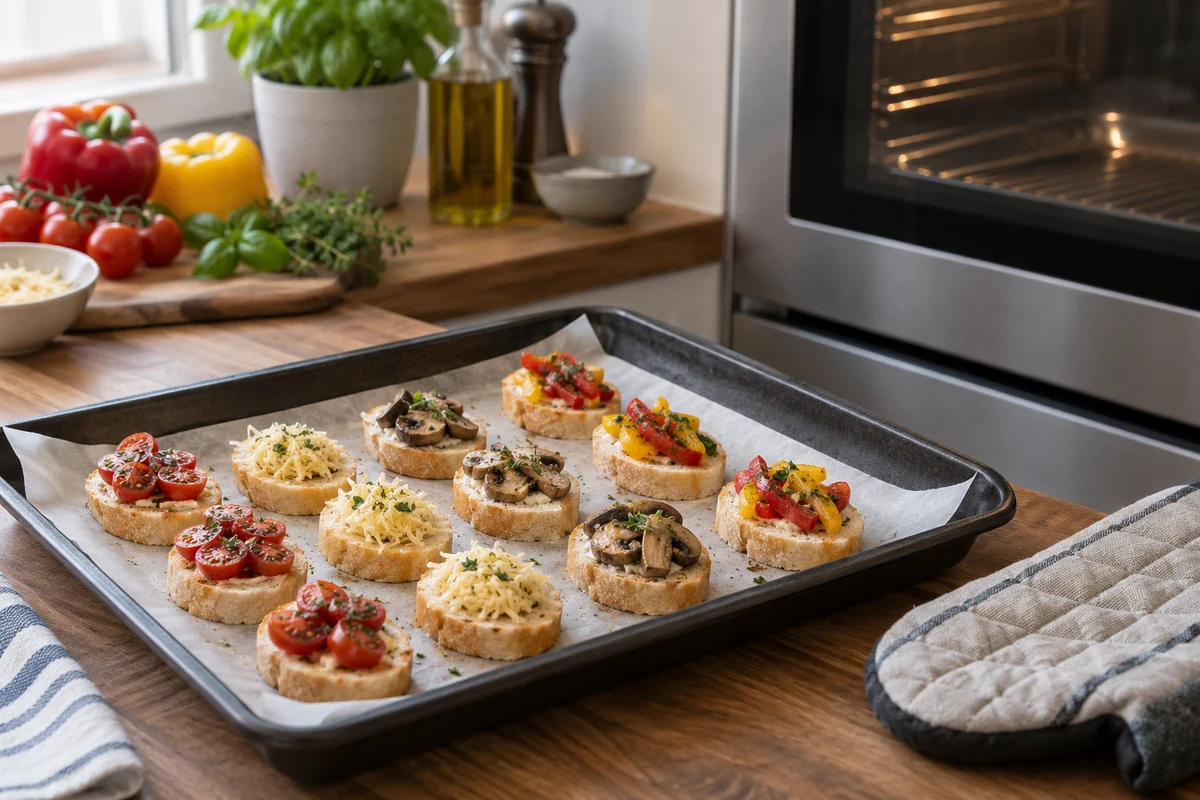
Thoughtful presentation makes canapés easy to choose and serve. Keep food safety and clear ingredient information part of that plan.
Visual Presentation
- Different heights: use stable serving stands and boards without making dishes hard to reach.
- Colour contrasts: combine pale cheese, orange salmon, red tomatoes and green herbs where appropriate.
- Visible textures: make crisp bases and creamy toppings easy to distinguish, and clearly identify nut toppings.
- Even portions: use consistent amounts within each recipe for a tidy tray.
- Edible garnish: small amounts of washed herbs, citrus zest or suitable seeds can add both colour and flavour.
Layout and Access
- Simple flow: place plates and napkins first, then arrange the food so guests can move along easily.
- Separate trays: keep meat, fish and plant-based dishes distinct. Plant-based food may still contain allergens, so label all dishes individually.
- Easy access: leave space between trays and avoid stacking food.
Preparation Schedule
- Make a timetable: group tasks such as toasting, preparing spreads and chopping ingredients.
- Prepare bases appropriately: toast bread in advance and store it dry once cool. Follow blini packet instructions and assemble moist combinations near serving time.
- Prepare fillings: suitable spreads can be made the day before and refrigerated in covered containers. Follow the shortest use-by or opened-pack limit; 48 hours is not suitable for every ingredient.
- Finish late: add herbs, zest and delicate garnishes just before service.
- Serve in batches: check trays every 20–30 minutes, keeping reserves refrigerated or safely hot. Do not mix fresh food into old trays to reset their time out.
Storage and Food Safety
- Cold food: keep salmon, dairy and spreads at 5°C or below until service. Ice beneath a tray does not guarantee the food stays cold; check conditions and use small portions.
- Hot food: cook quiches fully and hold them at 63°C or above in suitable equipment if not serving immediately. An oven setting alone does not establish the food’s temperature.
- Fruit combinations: assemble melon and ham shortly before service and keep chilled to preserve both safety and texture.
- Uncontrolled display: as a cautious home-party rule, limit perishable trays to 2 hours outside temperature control, less in hot conditions. Track the total time out rather than restarting it after a brief return to the fridge.
- After the party: refrigerate only food that has been kept safely. Do not save exposed buffet leftovers when time or handling is uncertain. Use untouched chilled reserves within their existing label limits; assembly does not create a new use-by period.
Keeping the Display Fresh
- Replace trays: put out a freshly prepared small tray when required rather than disguising older food with new leaves.
- Use proper equipment: cloths or insulated covers do not replace temperature-controlled hot holding.
- Final touches: add a little zest, oil or seasoning just before a fresh batch is served.
Adapting for Vegetarian, Vegan and Other Dietary Needs
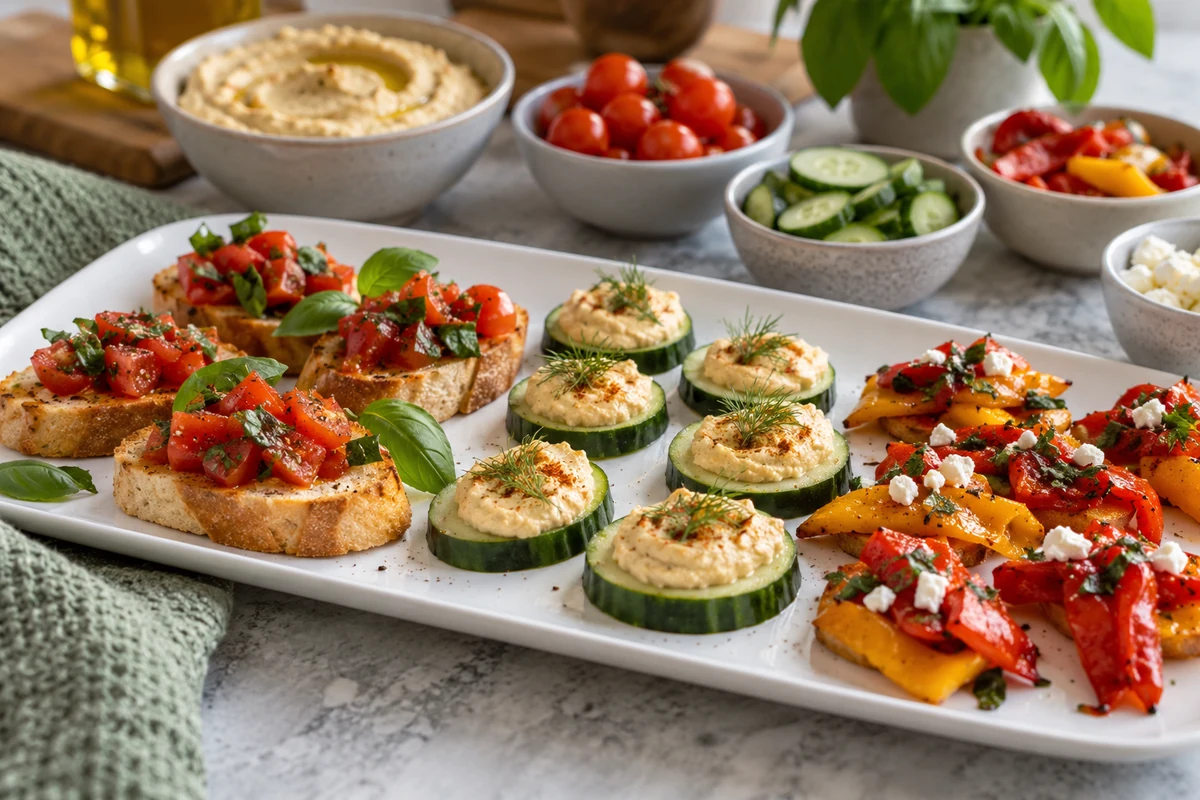
Plan the complete dish: a useful substitution must suit the guest and the recipe, including the base, garnish and preparation method.
Dietary Adaptations
- Vegetarian: replace ham or fish with roasted pear or sautéed mushrooms; about 250 g mushrooms can provide a topping for 12 small pieces. Check cheese rennet where relevant.
- Vegan: use around 200 g of a prepared cashew spread or seasoned tofu spread instead of cream cheese. Adjust moisture and seasoning to the product, and check all remaining ingredients.
- Lactose-free: choose a labelled lactose-free product or appropriate plant-based spread. Ordinary ricotta is not a reliable lactose-free substitute; lactose-free dairy is not milk-allergy safe.
- Gluten-free: replace 12 ordinary blinis with 12 suitable gluten-free blinis or grilled polenta rounds, checking the whole recipe and avoiding cross-contact.
- Without nuts: omit the optional nuts or use suitable pumpkin or sunflower seeds after checking the guest’s requirements and product labelling.
- Fish-free: use 120 g thinly sliced marinated beetroot or fully cooked chicken in place of the salmon, with separate utensils and ingredient checks.
- Egg-free quiches: tofu-based fillings require their own tested recipe. Do not assume a fixed tofu and cornflour substitution will reproduce the setting and baking behaviour of three eggs and cream.
Adapting a Recipe Step by Step
- Identify allergens: read all labels, including dairy, eggs, wheat, nuts, fish, mustard and any other relevant ingredients.
- Choose an appropriate replacement: look for similar texture and a suitable ingredient list. Equal weights are a starting point, not a guarantee of equivalent behaviour.
- Make a sample: test a small portion for texture and taste before scaling up.
- Adjust flavour: add seasoning gradually; do not assume every replacement needs more salt.
- Check the base: if it softens too quickly, adjust the topping moisture or assemble nearer service.
- Record the final recipe: note quantities and ingredients so the batch and its allergen information remain consistent.
Service and Safety Tips
- Avoid cross-contact: use properly cleaned or separate equipment for dishes prepared for someone with an allergy.
- Clear information: label serving trays and keep a full written ingredient list available, rather than relying on memory or an unmarked kitchen diagram.
- Storage: tofu, prepared beetroot and plant-based spreads also need appropriate refrigeration and use-by checks; being vegan does not make a topping shelf-stable.
- Final assembly: add fresh herbs and zest just before serving.
- Discuss requirements: ask guests about their needs in advance. Never test allergy safety by asking someone to taste a potentially unsuitable dish.
Ready to Plan Your New Year’s Eve Spread?
Choose the recipes that suit your guests and kitchen, test any unfamiliar substitutions and keep the presentation simple.
Prepare the serving area ahead, keep ingredients properly stored and assemble fresh small batches as needed.
Thank you for reading. Visit the I Love Christmas blog and our social channels for more festive recipes and entertaining ideas.
Frequently Asked Questions About New Year’s Eve Canapés
How many canapés should I allow per person?
Start with 6–8 small pieces before dinner, around 10–12 for a short drinks reception, or 12–15 for a longer event alongside more substantial food where needed. Adjust to size, duration and appetites, with a small reserve if appropriate.
Can I prepare canapés ahead?
Suitable fillings can be prepared the day before and refrigerated within their label limits. Toast bread ahead, cool and store dry, then add moist toppings close to serving. Keep assembled perishable canapés chilled until needed.
How can I adapt recipes for dietary requirements?
Check every component, including bread and garnishes. Plant-based spreads can replace dairy, suitable gluten-free bases can replace wheat bread, and optional nuts can be omitted. Ordinary ricotta is not dairy-free, and trout is not a fish-free substitute for salmon.
How should I keep canapés during the party?
Keep cold reserves at 5°C or below and hot food at 63°C or above, checking food temperature. Serve small batches and limit time outside temperature control; ice or an oven setting alone is not a reliable check.
How do I stop the bases becoming soggy?
Toast bread well, let it cool and avoid overly wet toppings. A thin suitable spread may help, but assembling moist combinations just before serving is the most useful step.
Sources and Further Reading
- UK Government: cooking food safely
- Food Standards Agency: chilling food
- Food Standards Agency: allergen guidance
- NHS: foods to avoid during pregnancy
- Food Standards Agency: cold-smoked and cured fish advice
- NHS: listeriosis